About this sheet
Antique Oriental Arms and Daggers Study from Maximilian in Bavaria, 1846
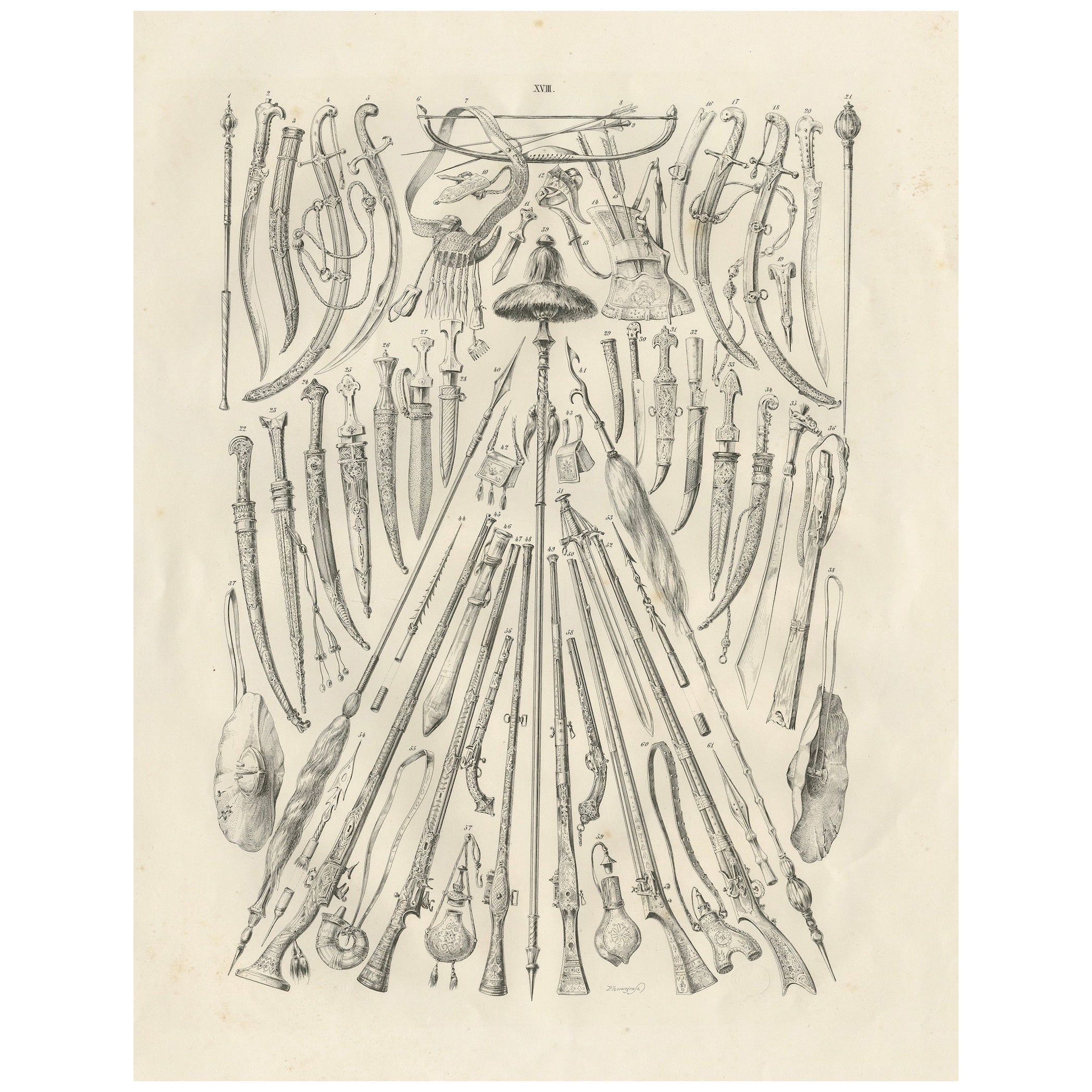
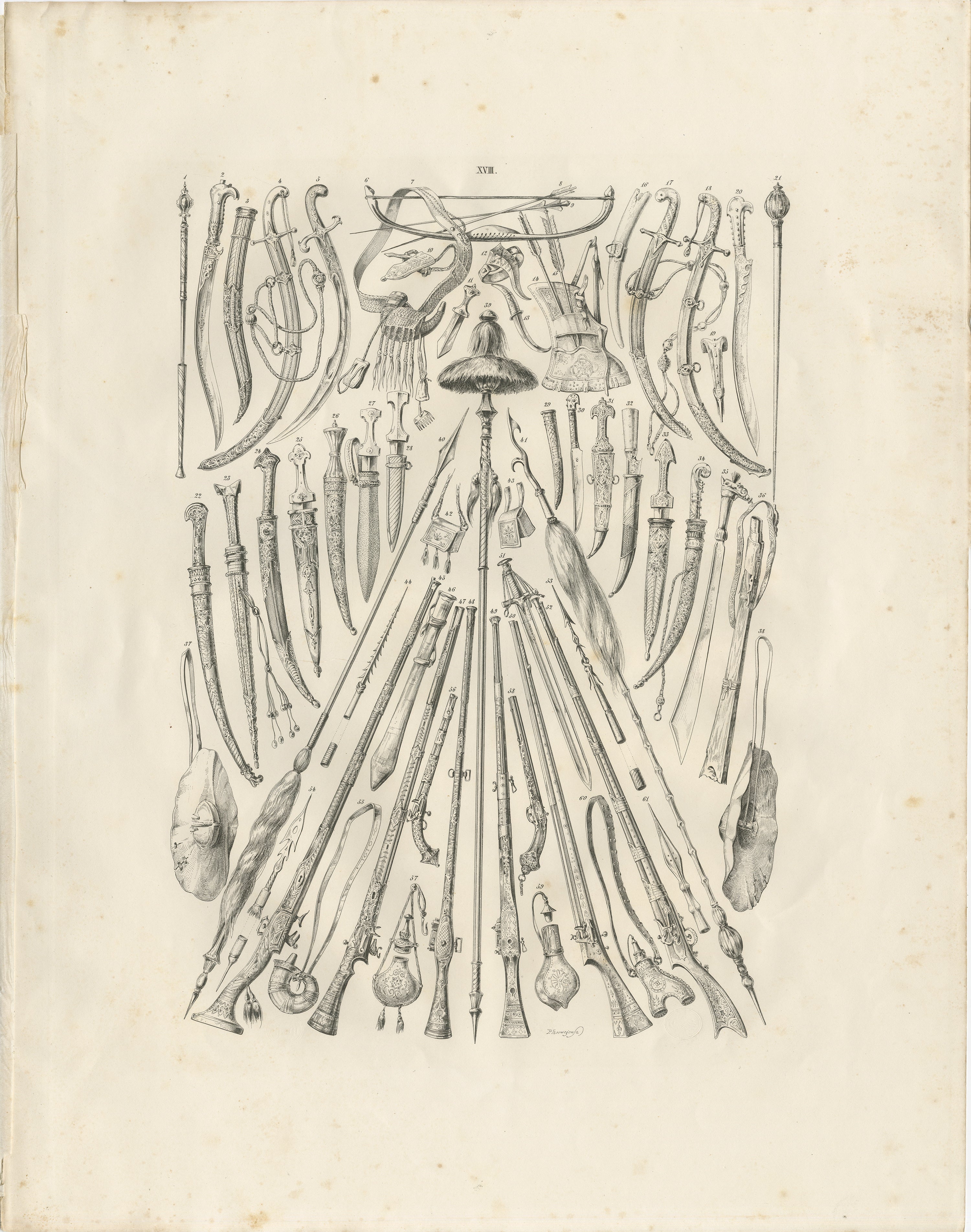
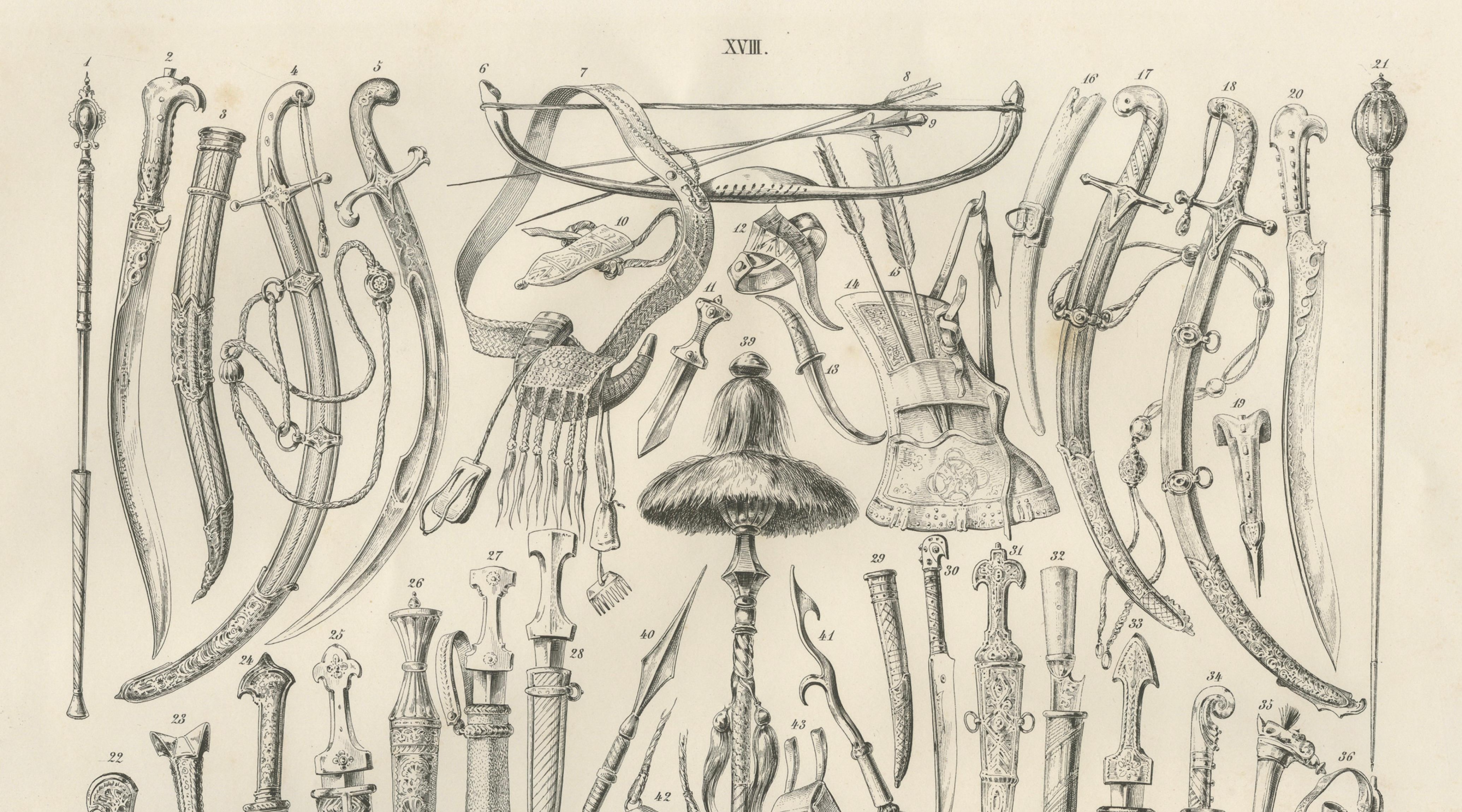
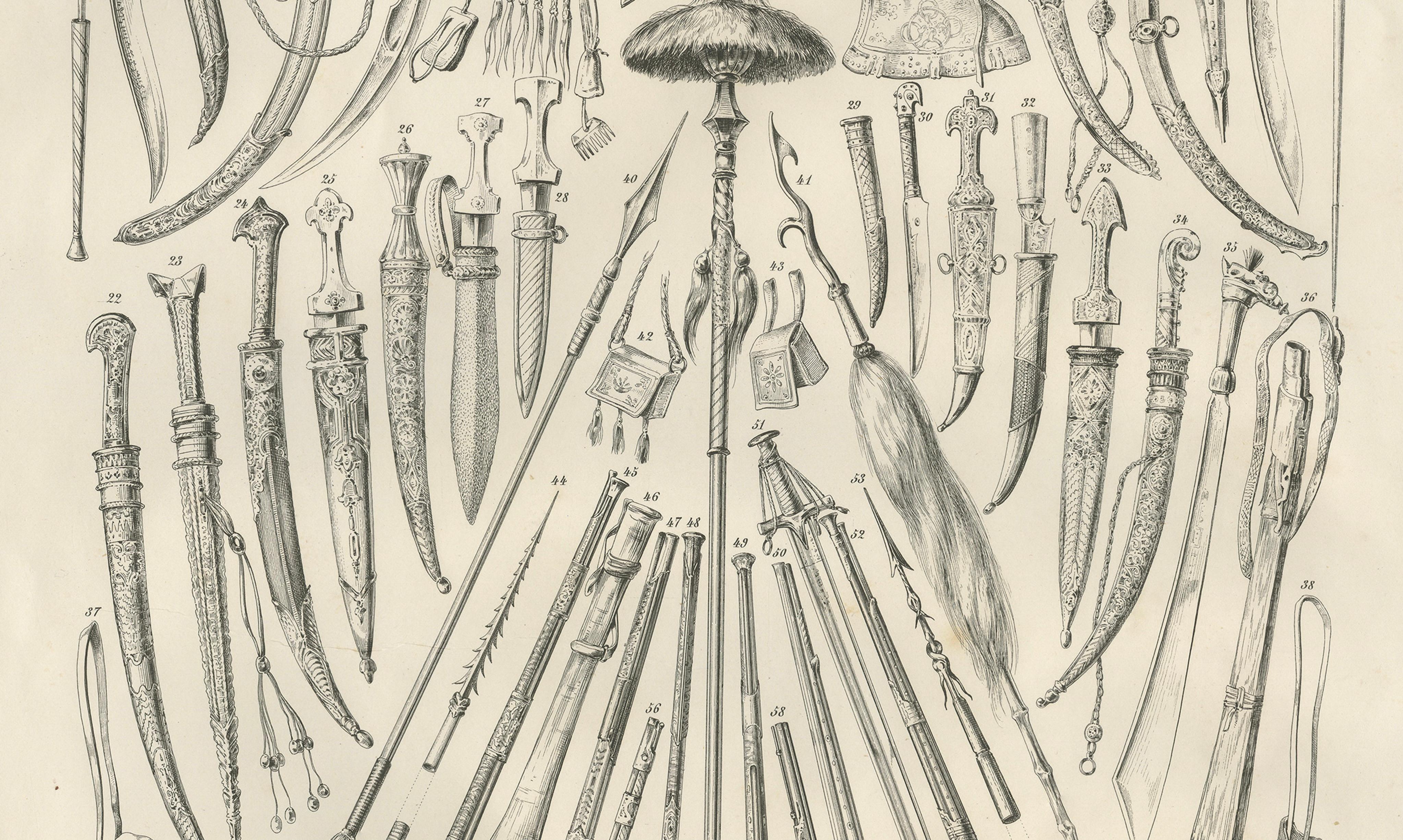
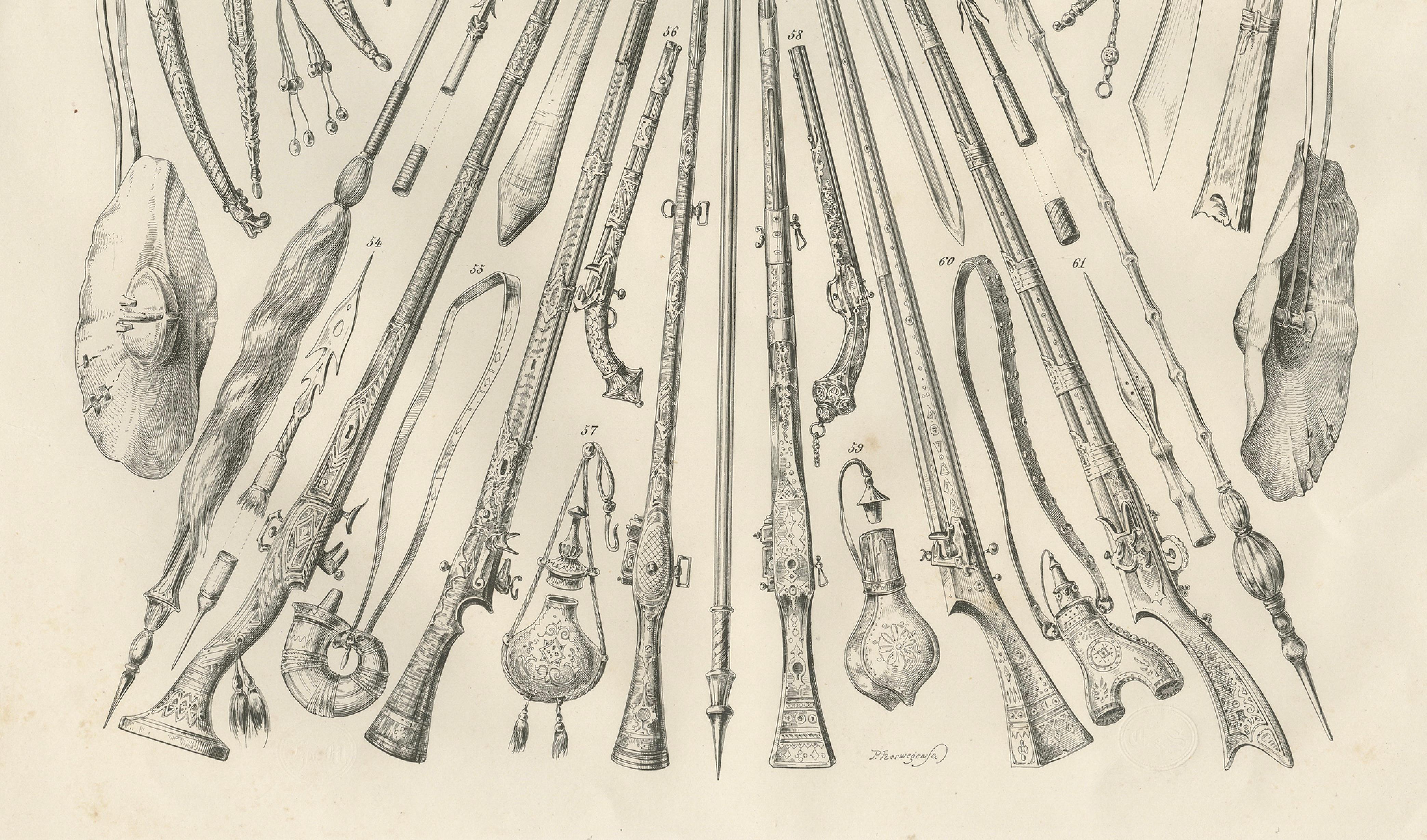
This exceptionally rich and visually striking 19th-century Orientalist engraving presents a comprehensive study of Middle Eastern weapons, ceremonial arms, and military accessories as observed during the celebrated expedition of Duke Maximilian of Bavaria. The plate is arranged as a dense encyclopedic composition, displaying an extraordinary array of curved sabres, daggers, sheathed blades, decorated scabbards, maces, smoking pipes, powder flasks, drinking vessels, tassels, and accessories, all meticulously rendered and individually numbered.
Unlike narrative battle scenes or architectural views, this engraving functions as a true ethnographic and material-culture document. Each object is isolated against the page with scientific precision, allowing the viewer to study form, ornament, and function in detail. The variation in blade curvature, grip design, scabbard relief, and decorative metalwork reveals the diversity of arms in use across Egypt and the broader Middle East during the first half of the 19th century.
The print originates from the important travel publication documenting the oriental journey of Duke Maximilian of Bavaria, with drawings executed by Heinrich von Mayr and explanatory text by Dr. Sebastian Fischer. Von Mayr’s draftsmanship here is at its most analytical and exact. The fine steel-engraved line captures engraved metal surfaces, braided cords, carved handles, and textile tassels with remarkable clarity, transforming functional objects into works of visual rhythm and ornamental beauty.
Historically, such plates played a crucial role in shaping European understanding of Islamic military culture, personal arms, and ceremonial display. These weapons were not merely tools of warfare but objects of status, craftsmanship, and identity. This engraving documents that world at a pivotal moment, just before industrial mass production and military standardization began to replace traditional hand-crafted arms.
Artistically, the strength of this sheet lies in its symmetrical balance and visual density. The eye moves from bold scimitar curves at the top to elongated muskets and staffs at the center, and finally down to richly ornamented flasks and pipes at the base. The composition has the visual authority of a museum display case, making it both intellectually compelling and highly decorative.
Today, this work holds outstanding appeal for collectors of Orientalist art, Islamic arms and armor, ethnographic studies, and 19th-century exploration imagery. It also performs superbly as an interior design statement in libraries, studies, private collections, equestrian rooms, and historic or industrial-style interiors where material culture and craftsmanship are key visual themes.
Condition report:
Good antique condition. Light overall age-related toning and scattered foxing, most visible in the outer margins. Minor edge wear consistent with age. The engraved image remains crisp and highly detailed. Faint plate impression visible.
Framing tips:
A wide ivory, parchment, or light stone-colored mat will enhance contrast and preserve the archival character of the sheet. A black, dark walnut, or softly antiqued gilt frame will give the work a strong museum presence. UV-protective glass is recommended to protect the fine engraved lines.
Technique: Steel engraving
Maker: Heinrich von Mayr, Germany, 1846
Keywords: antique oriental weapons engraving
19th century middle east arms print
orientalist dagger sword study
arabian weapons antique illustration
ottoman arms and daggers engraving
islamic weapons ethnographic print
orientalist arms collection plate
heinrich von mayr weapons engraving
maximilian of bavaria expedition arms
antique middle east military objects
orientalist knives swords antique art
ethnographic islamic weapons print
museum quality oriental weapons study
antique ceremonial weapons engraving
orientalist military equipment illustration