About this sheet
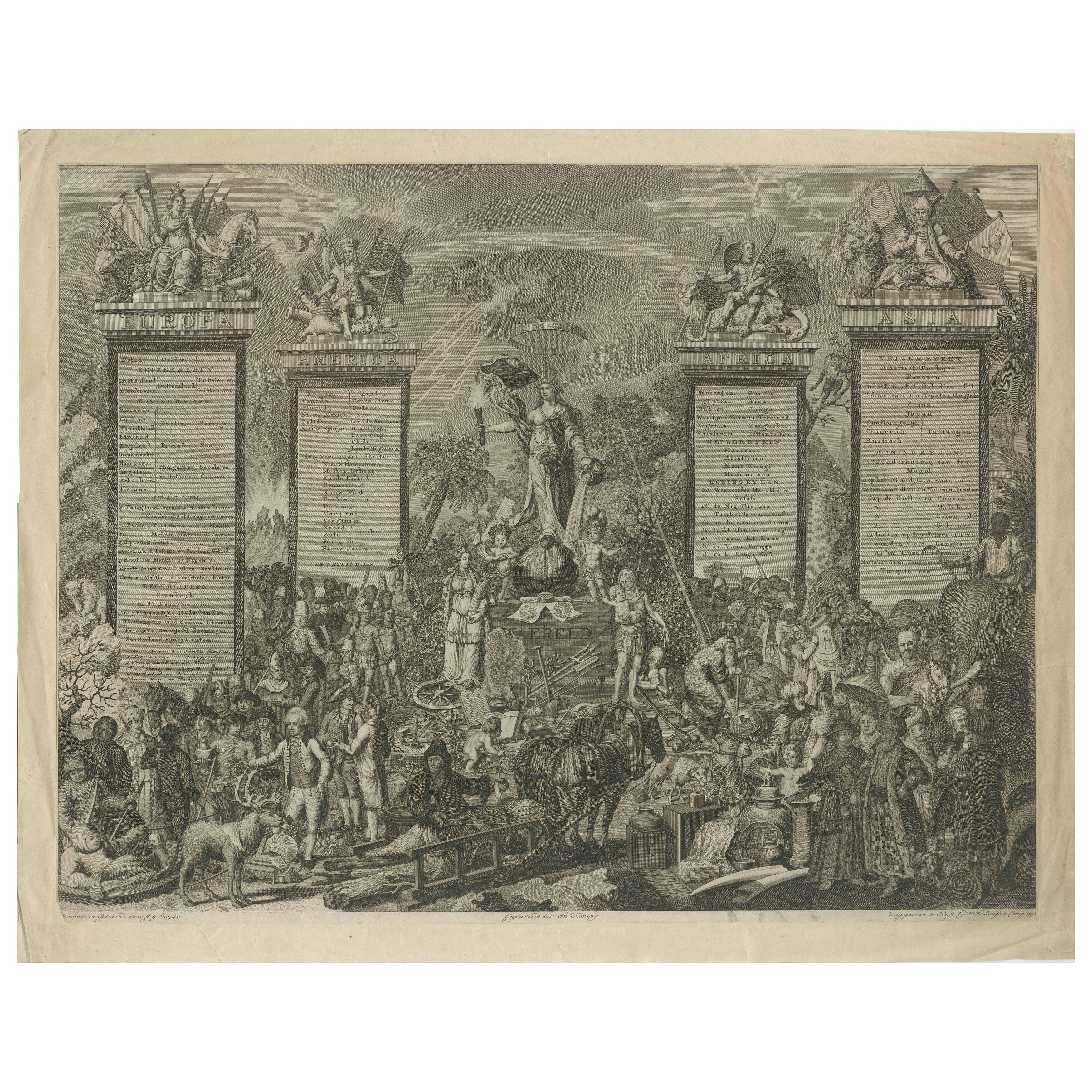
Allegorical Engraving of the Four Continents and the World, Banse, 1798
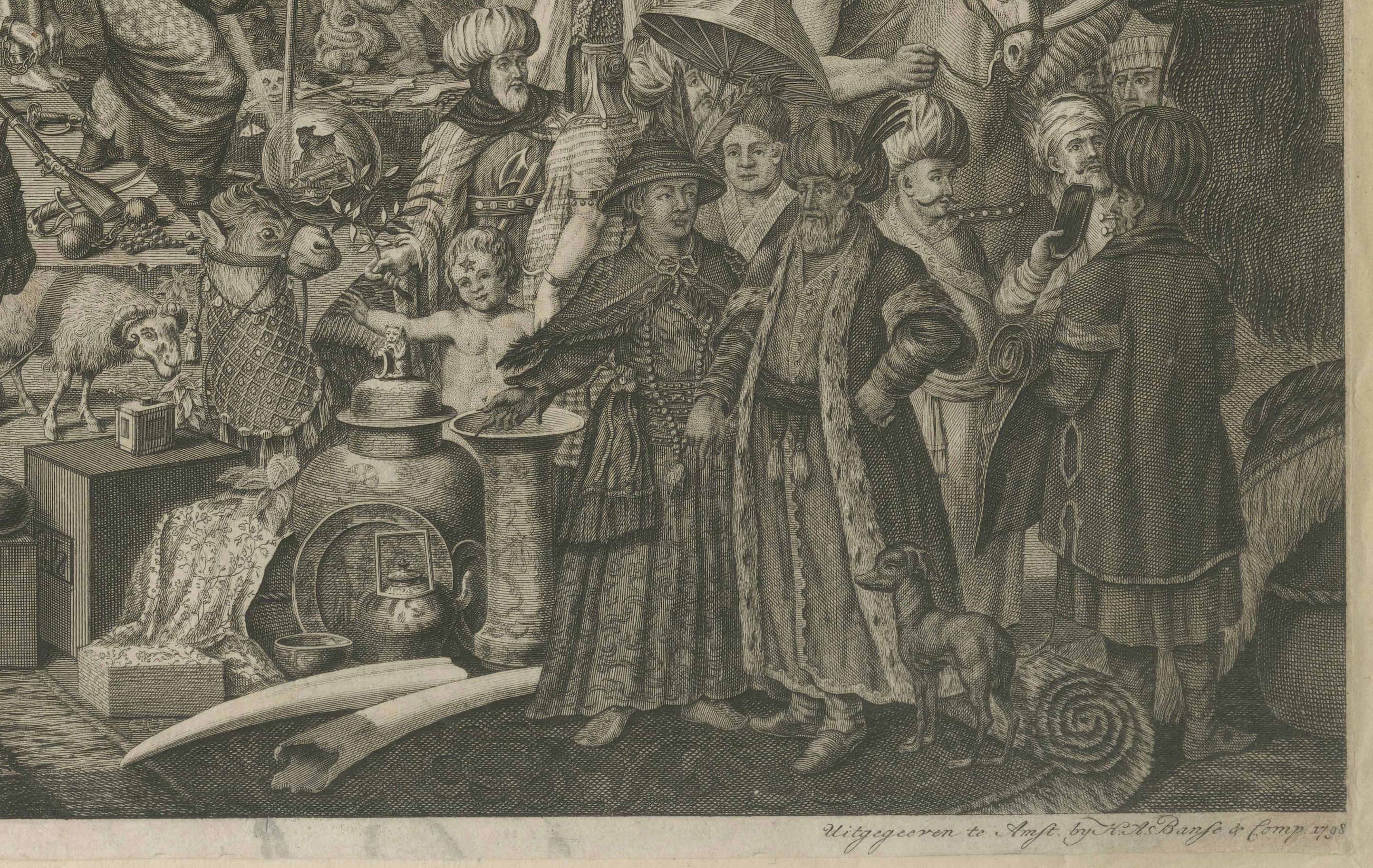
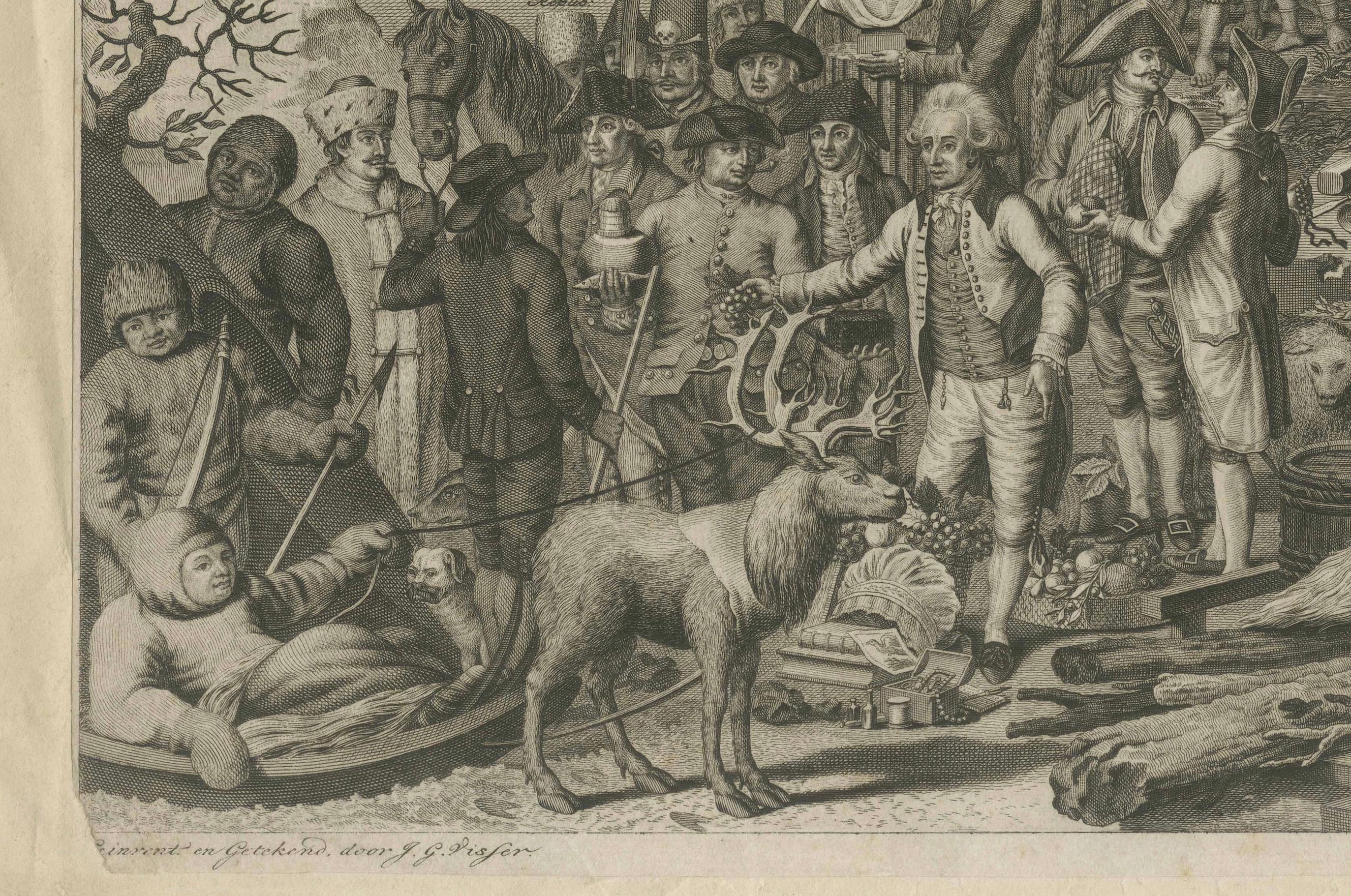
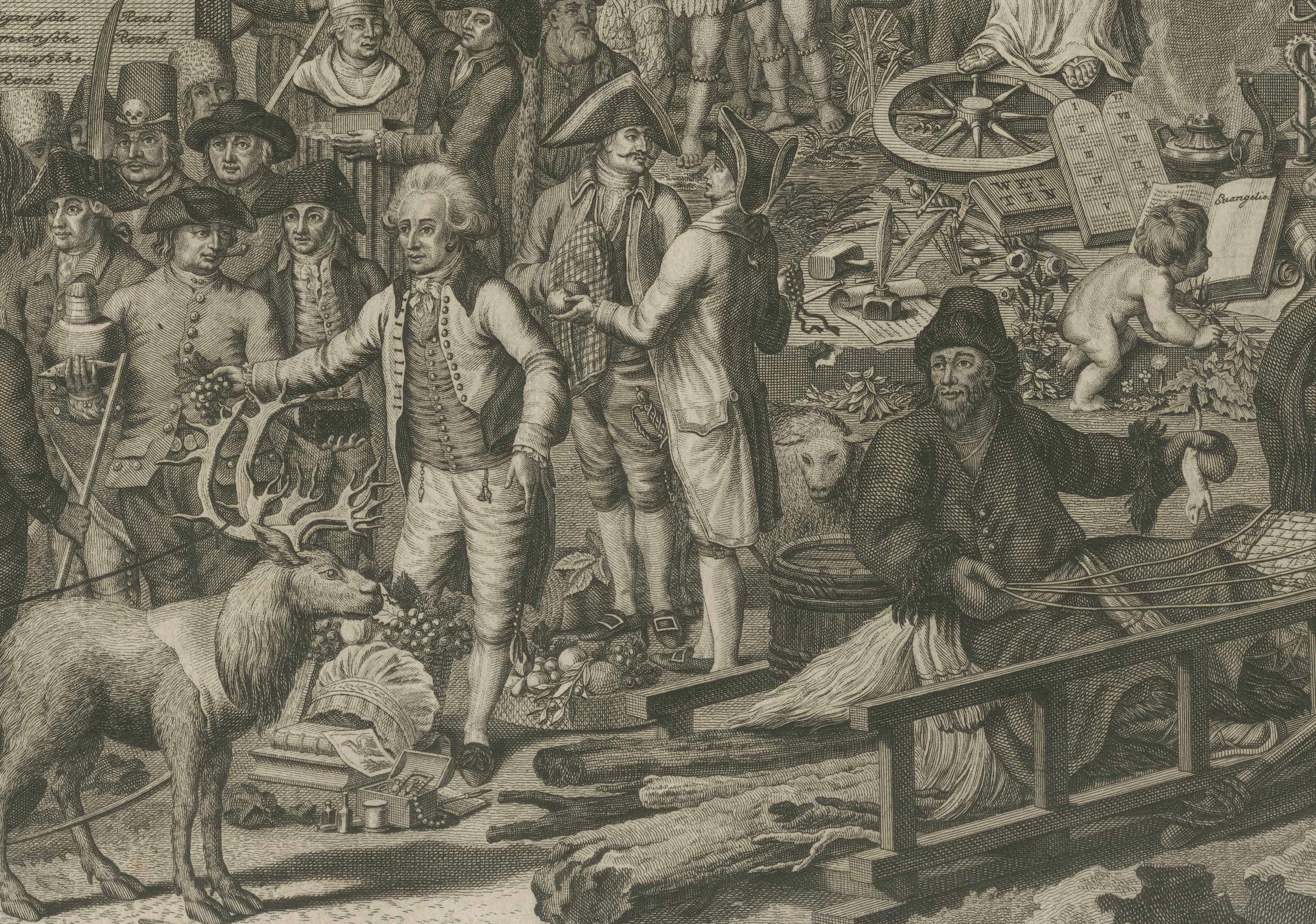
This rare and finely executed allegorical engraving, published in Amsterdam by H.A. Banse in 1798, presents a grand symbolic vision of the world and its continents. The large composition, after Jan Gerritsz. Visser, is filled with detailed allegorical and ethnographic elements.
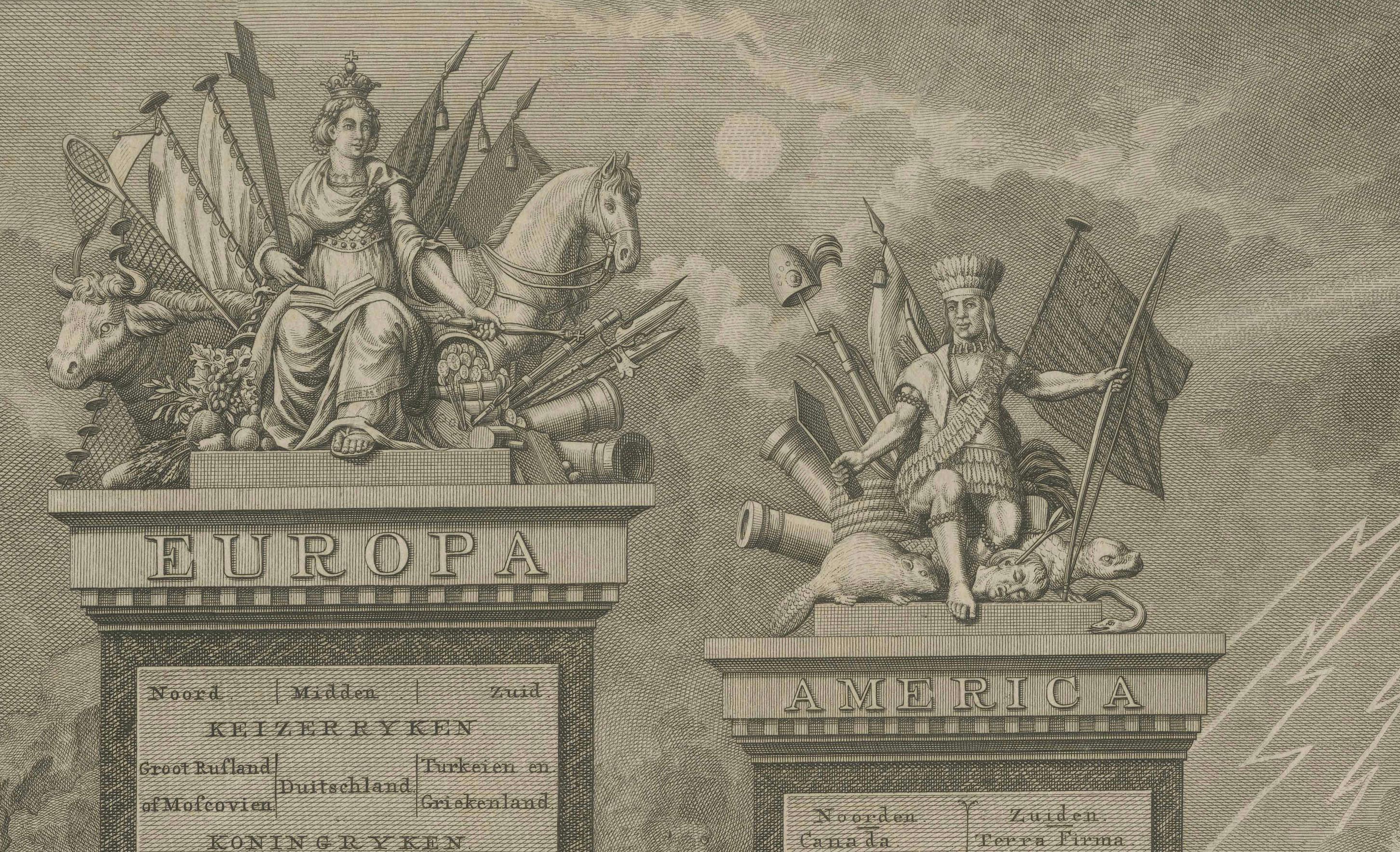
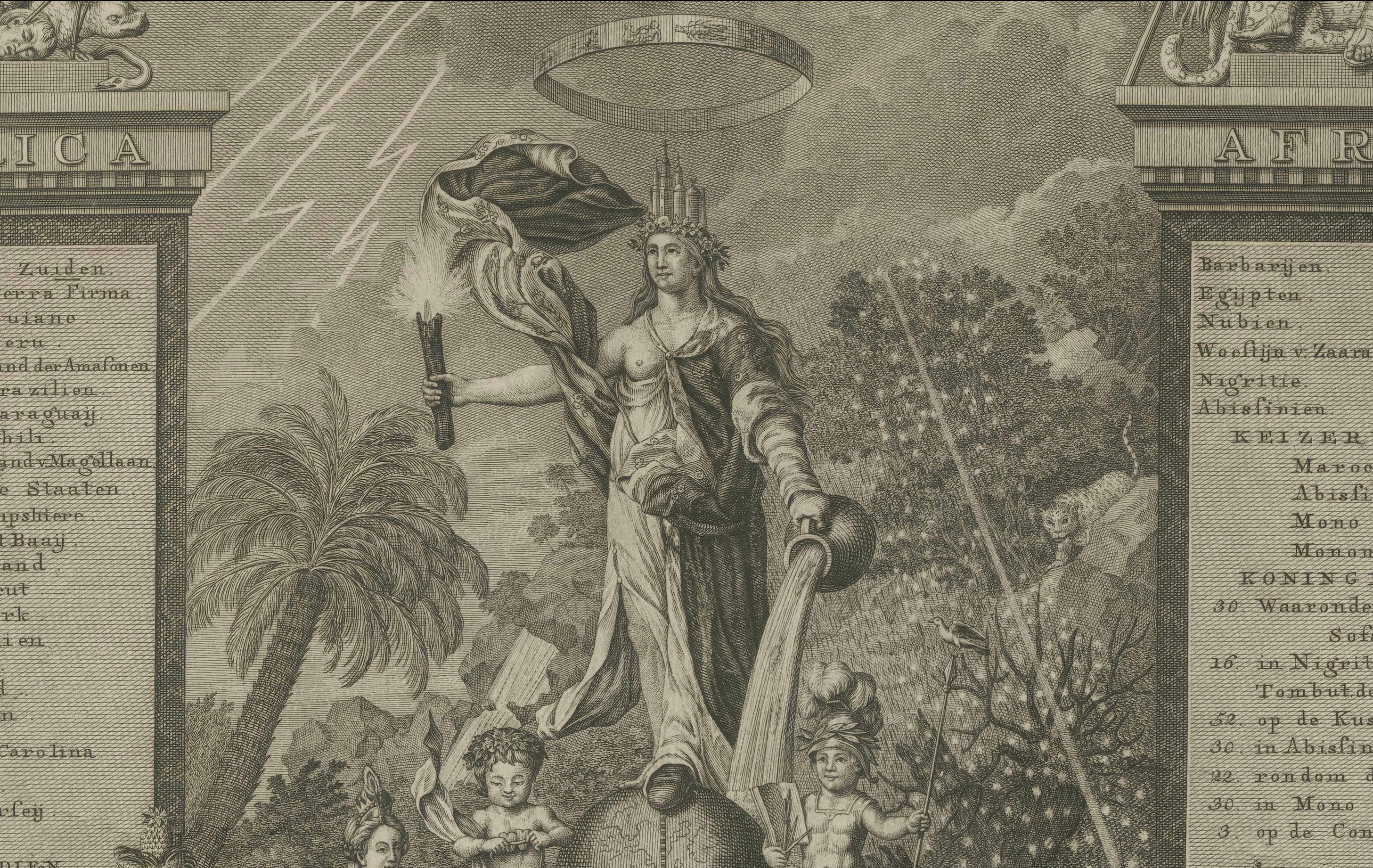
At the center, a crowned female figure personifying the World stands upon a globe, holding a scepter and scales as emblems of balance and sovereignty. She is flanked by four monumental columns, each topped with allegorical representations of the continents:
Europe, enthroned with symbols of military power, learning, and commerce;
America, with a feathered headdress, bow, and tropical animals;
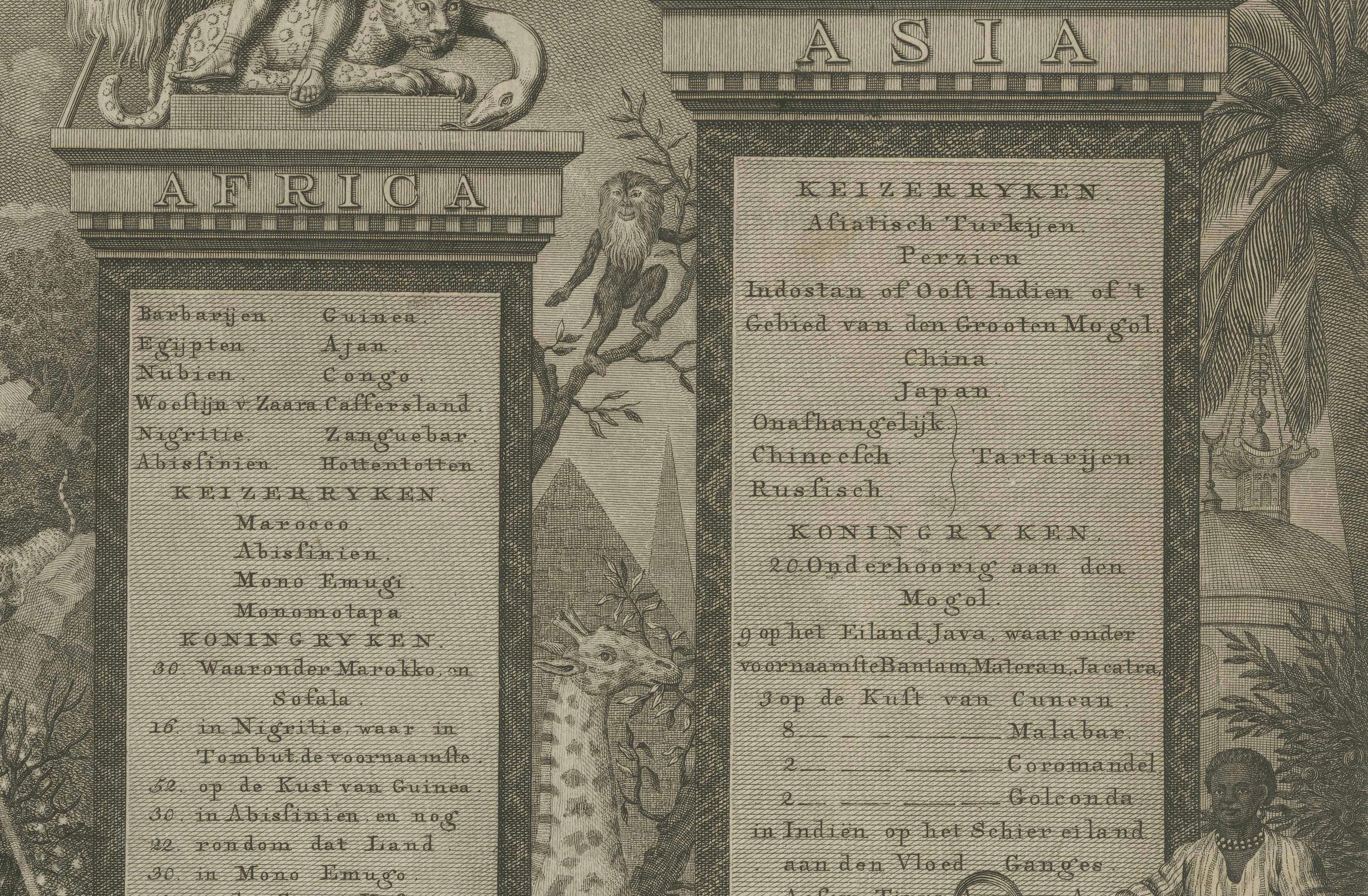
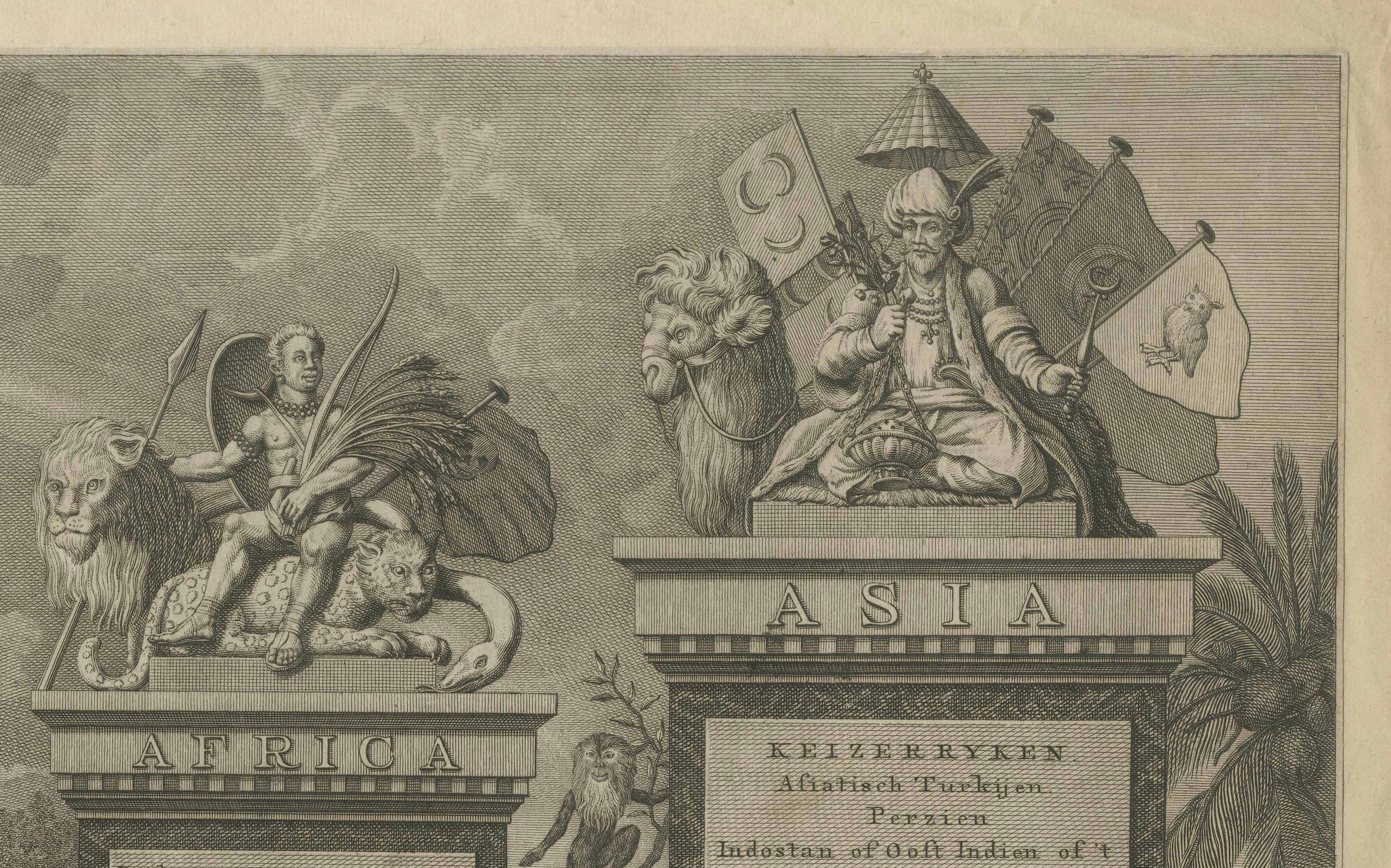
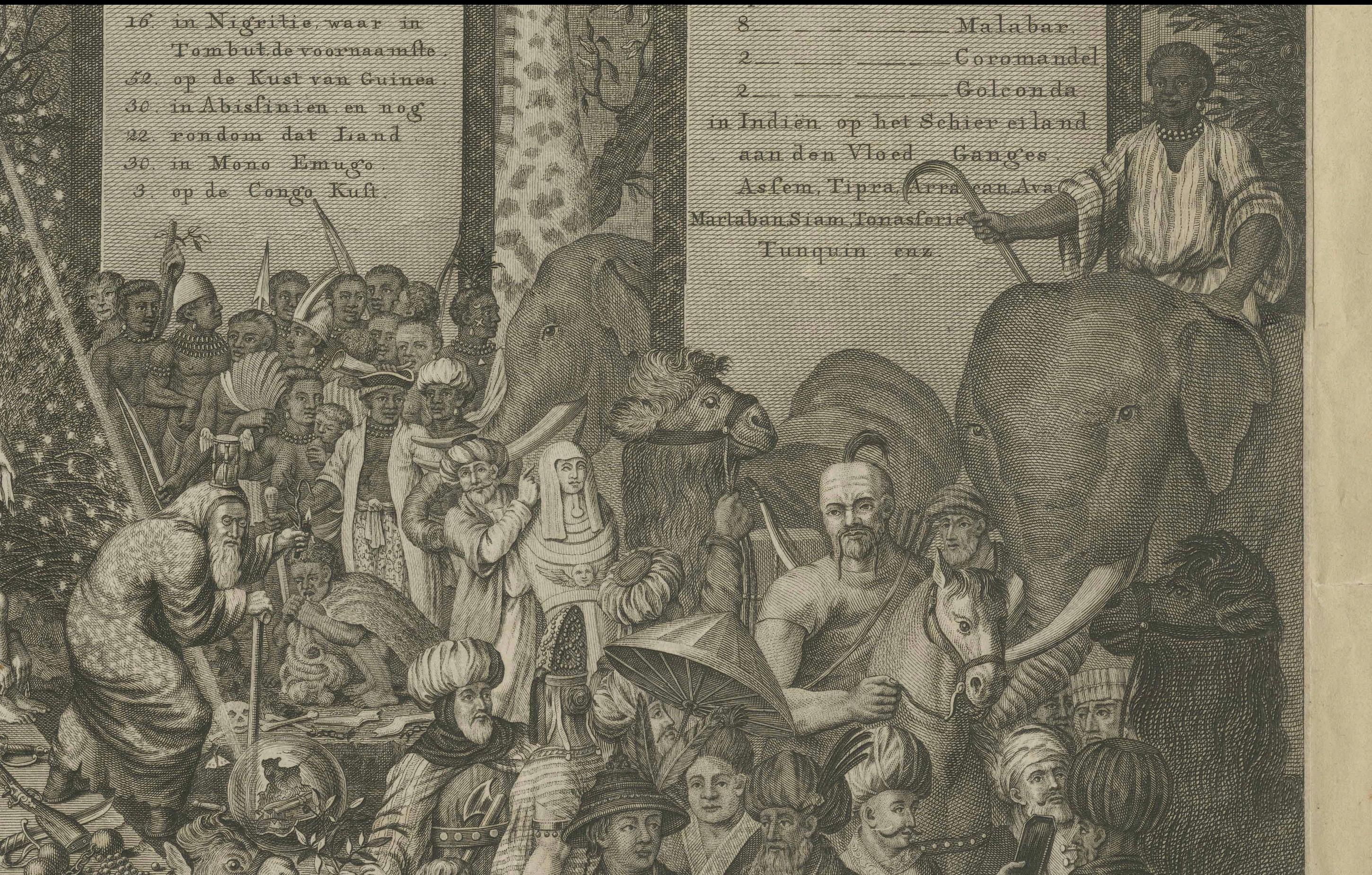
Africa, accompanied by a lion and elephant, with symbols of exotic wealth;
Asia, under the crescent banner, richly adorned with luxury goods and elephants.
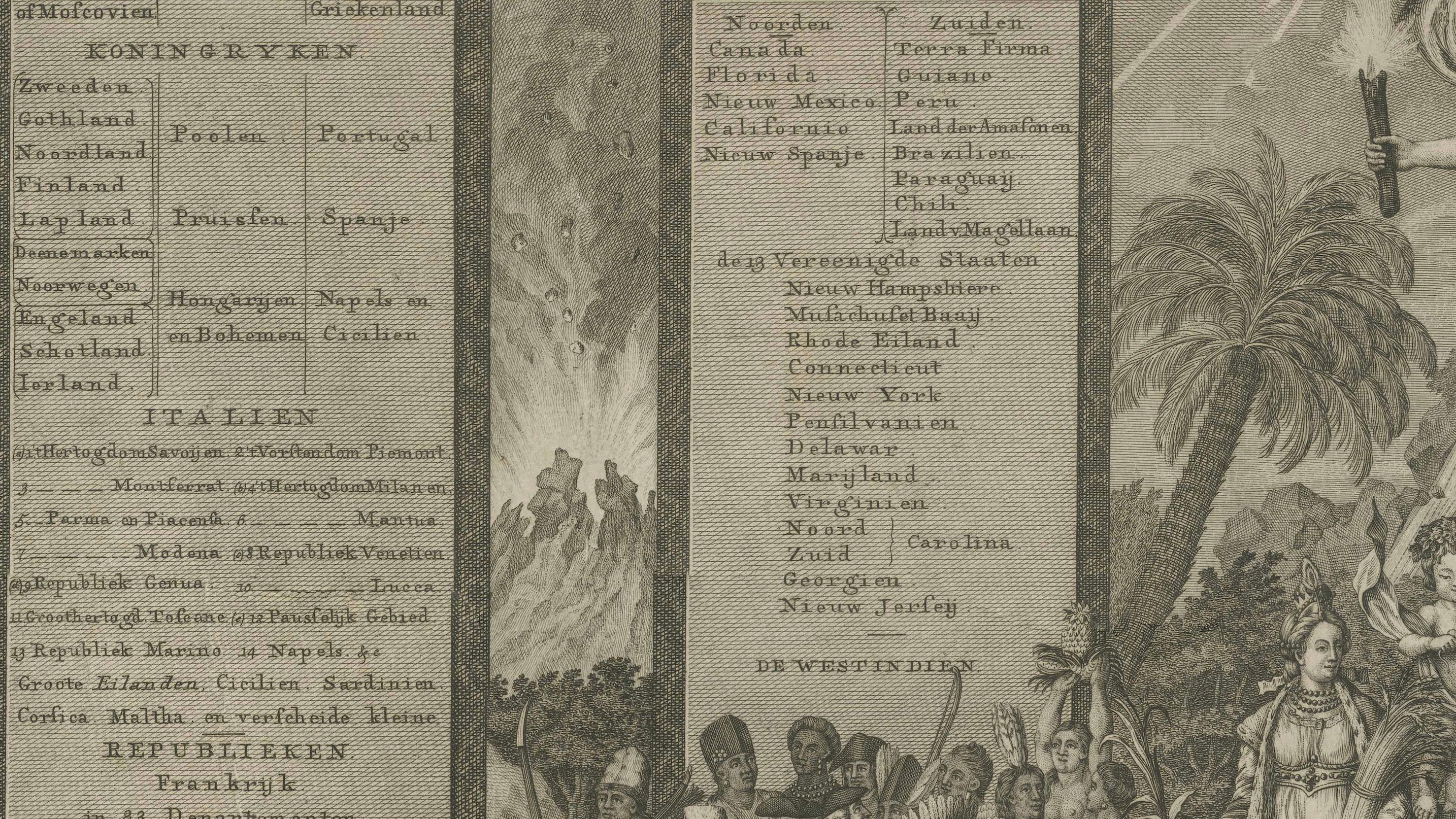
On the panels of the columns are inscribed the names of the principal kingdoms and peoples associated with each continent, reflecting 18th-century European perceptions of world geography. In the foreground, a rich assembly of human figures from different nations and cultures is depicted in a detailed ethnographic panorama. Exotic animals, trade goods, costumes, and tools are carefully drawn, emphasizing both diversity and abundance.
This engraving exemplifies the Enlightenment-era fascination with systematizing knowledge of the world and visualizing global unity through allegory. Such works were not only decorative but also pedagogical, intended for educated audiences eager to learn about the expanding horizons of Europe’s global contact.
Condition report:
The engraving itself is in good condition with a clear impression. It has been mounted on an old backing sheet of handmade paper. The print remains intact and well-preserved, while the backing shows some tears and wear, not affecting the image. Strong lines and excellent detail.
Framing tips:
This monumental print would be best presented in a large frame with a neutral ivory mount, allowing the intricate details to be appreciated. A dark wood or ebonized frame would enhance the strong contrasts of the engraving, while a gilt frame would underscore its allegorical grandeur.
Technique: Engraving
Maker: After Jan Gerritsz. Visser, published by H.A. Banse, Amsterdam, 1798