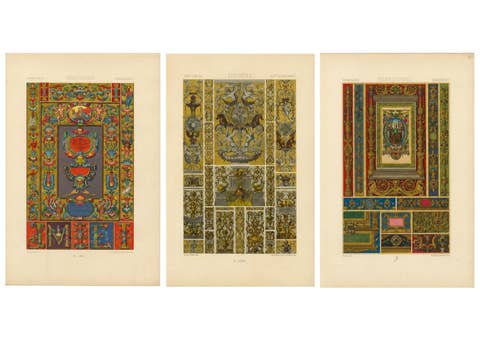
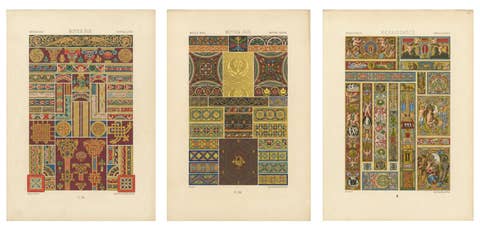
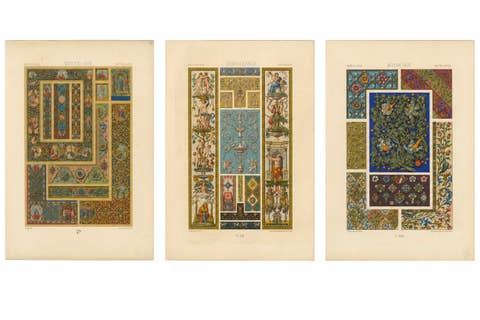
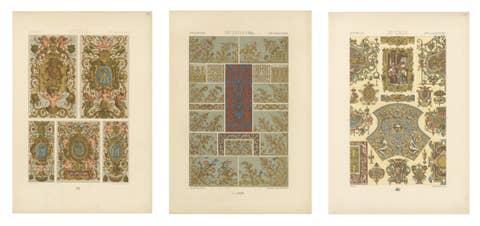
Une des Faces de la Pyramide de Peunom – Peunom Pyramid Facade c.1873-1875
€ 690
Original antique · The actual sheet photographed · Certificate of authenticity on request · Sold unframed · Worldwide shipping from € 15 (rates)
Date
1873
Sheet size
36.2 × 49.8 cm (14.3 × 19.6 in)
Condition
Good
Reference
BG-13458-4
What the condition grades mean
Excellent
Bright and clean, with no faults worth mentioning.
Very good
Only light signs of age, such as faint toning.
Good
Normal signs of age for a sheet of this period: toning, some foxing, small marks or neat old repairs.
Fair
Clear faults such as staining, tears or repairs, priced to match.
Every fault we see is written in the condition note, and the whole sheet is shown uncropped in the photos.
Condition
Condition summary: Very good condition with clean paper and strong impressions. Slight age-toning and minimal foxing along the margins but no tears or repairs. Paper remains firm and crisp, ideal for framing.
About this sheet
Une des Faces de la Pyramide de Peunom – Peunom Pyramid Facade c.1873
This antique print presents a detailed architectural elevation of one of the faces of the Peunom pyramid. The engraving depicts the intricate decorative structure, with layered levels adorned with symbolic carvings, relief panels, and stylised crown motifs. The central entrance is richly framed with geometric and floral ornamentation, demonstrating the grandeur of this monumental structure. A small human figure is included at the base for scale, emphasizing the pyramid’s impressive height and the monumental quality of its design.
This print originates from ‘Voyage d'exploration en Indo-Chine effectué pendant les années 1866, 1867 et 1868 par une Commission Française,’ the seminal exploration account by Francis Garnier, published between 1873 and 1875. Garnier, a French naval officer and explorer, envisioned opening up the Mekong River as a trade route into China to secure French economic expansion and challenge British dominance in Southeast Asia. The publication remains one of the most beautifully illustrated works on Indo-China, featuring detailed plates of architecture, landscapes, and ethnographic subjects gathered during the expedition.
The technique used here is engraving, which allowed for precise linear detail and fine shading ideal for architectural subjects. Each line was incised onto a metal plate, inked, and pressed onto paper to produce a sharp, durable image. Such engravings were critical in documenting Asian monuments for European audiences and scholars in the 19th century, long before the widespread use of photography.
Condition summary: Very good condition with clean paper and strong impressions. Slight age-toning and minimal foxing along the margins but no tears or repairs. Paper remains firm and crisp, ideal for framing.
Framing tips: A light cream or pale stone mount will emphasize the architectural detail, while a simple black, dark oak, or mahogany frame will enhance its scholarly and decorative character. UV-protective glass is recommended to maintain the engraving’s clarity over time.