About this sheet
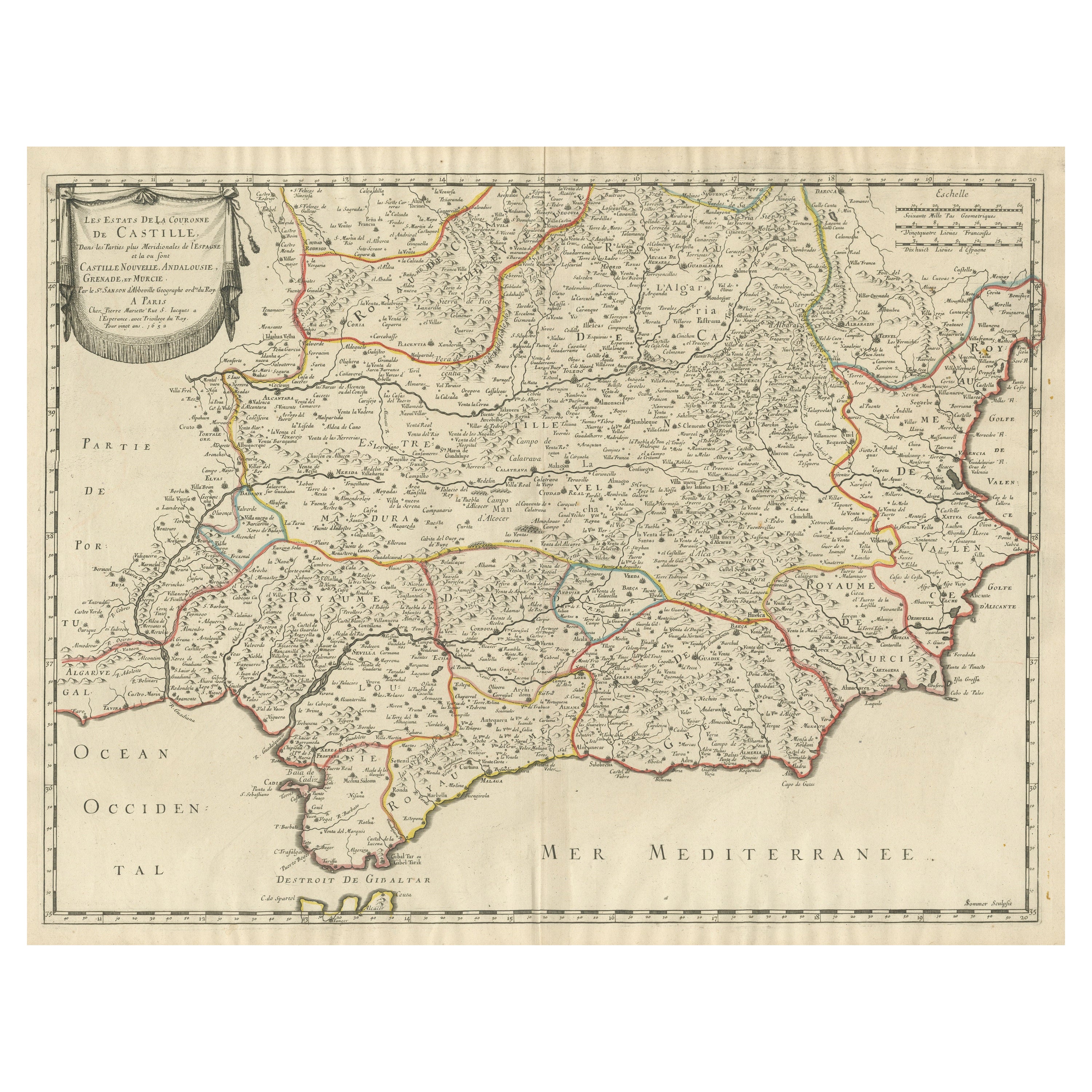
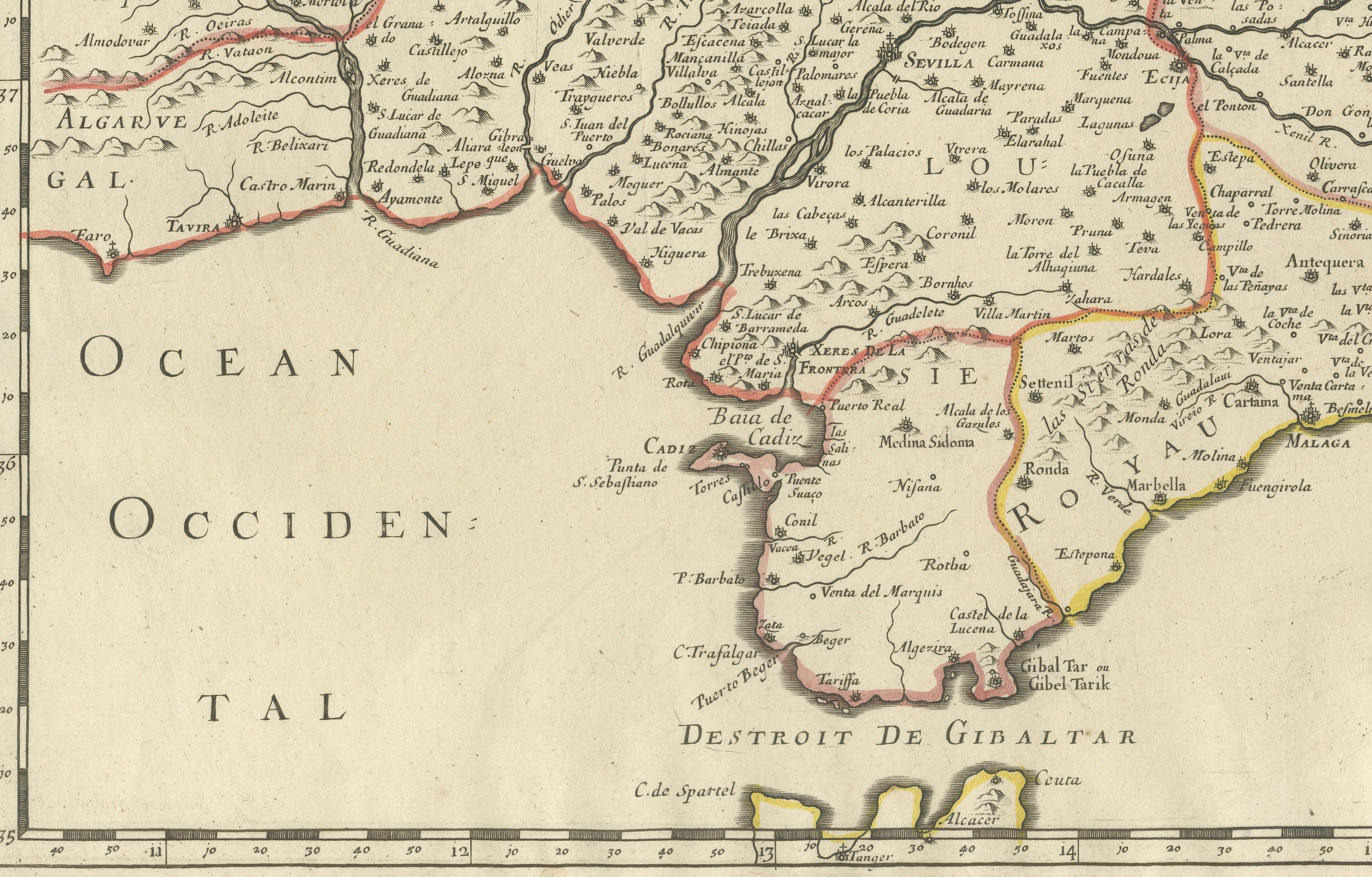

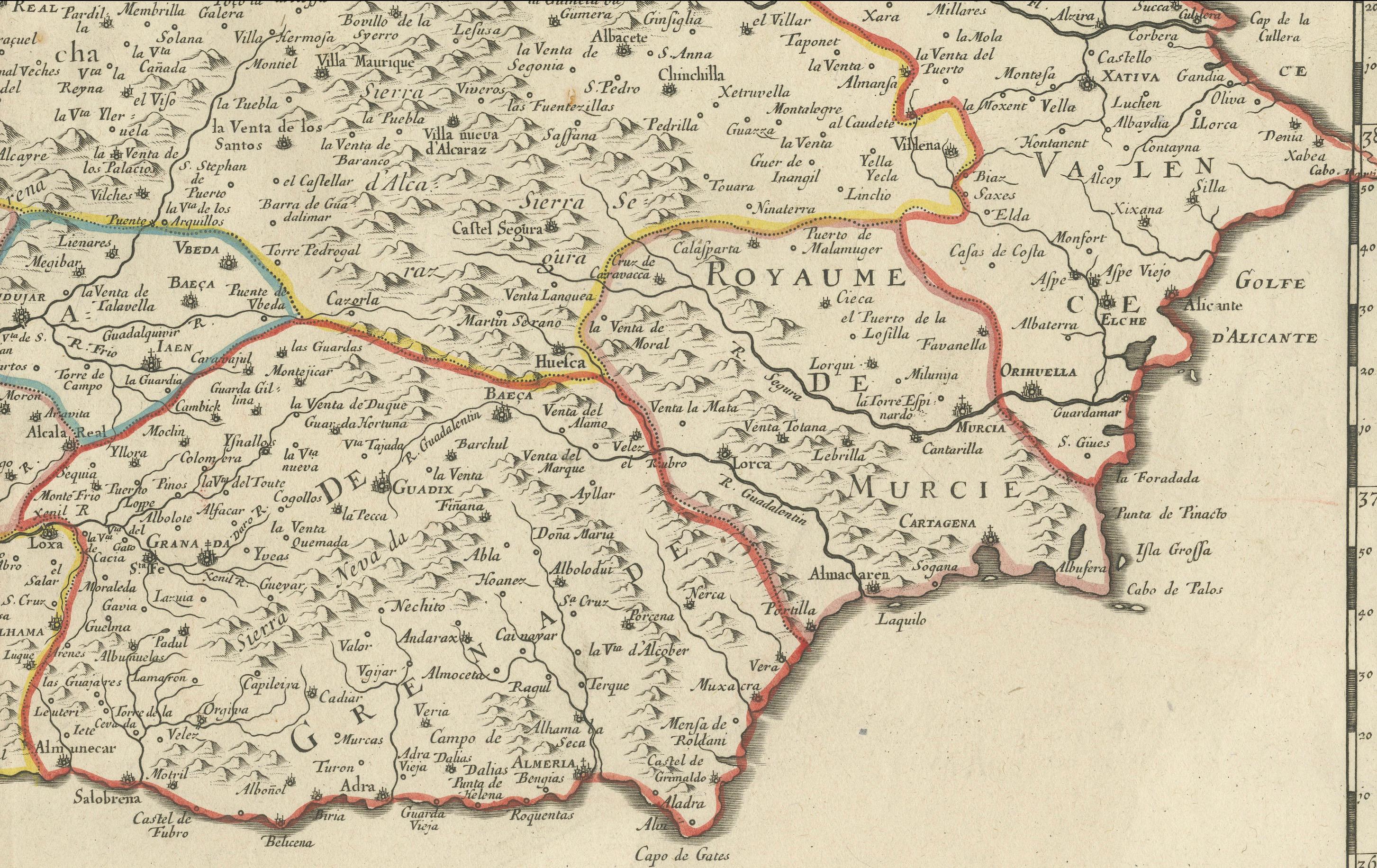
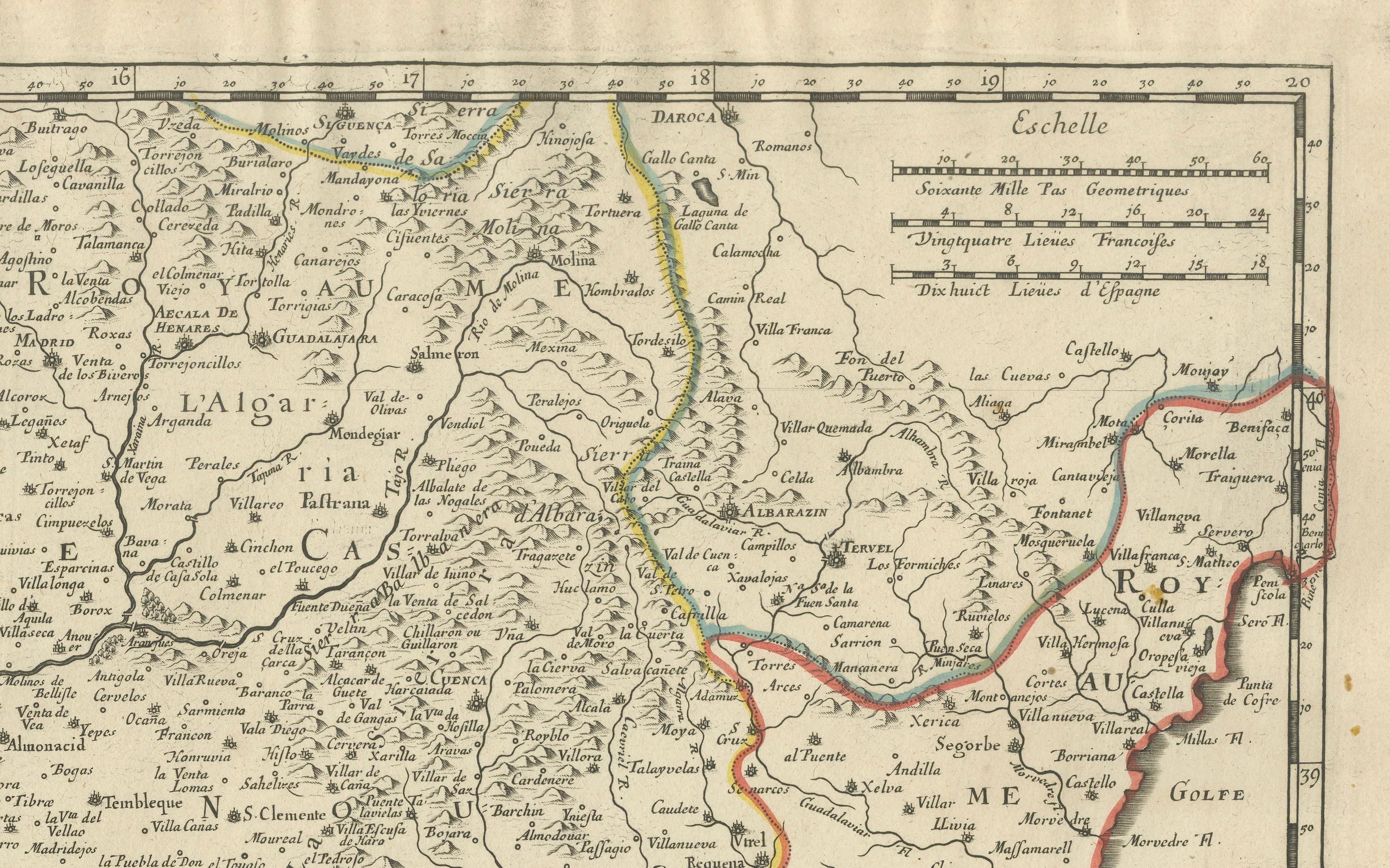
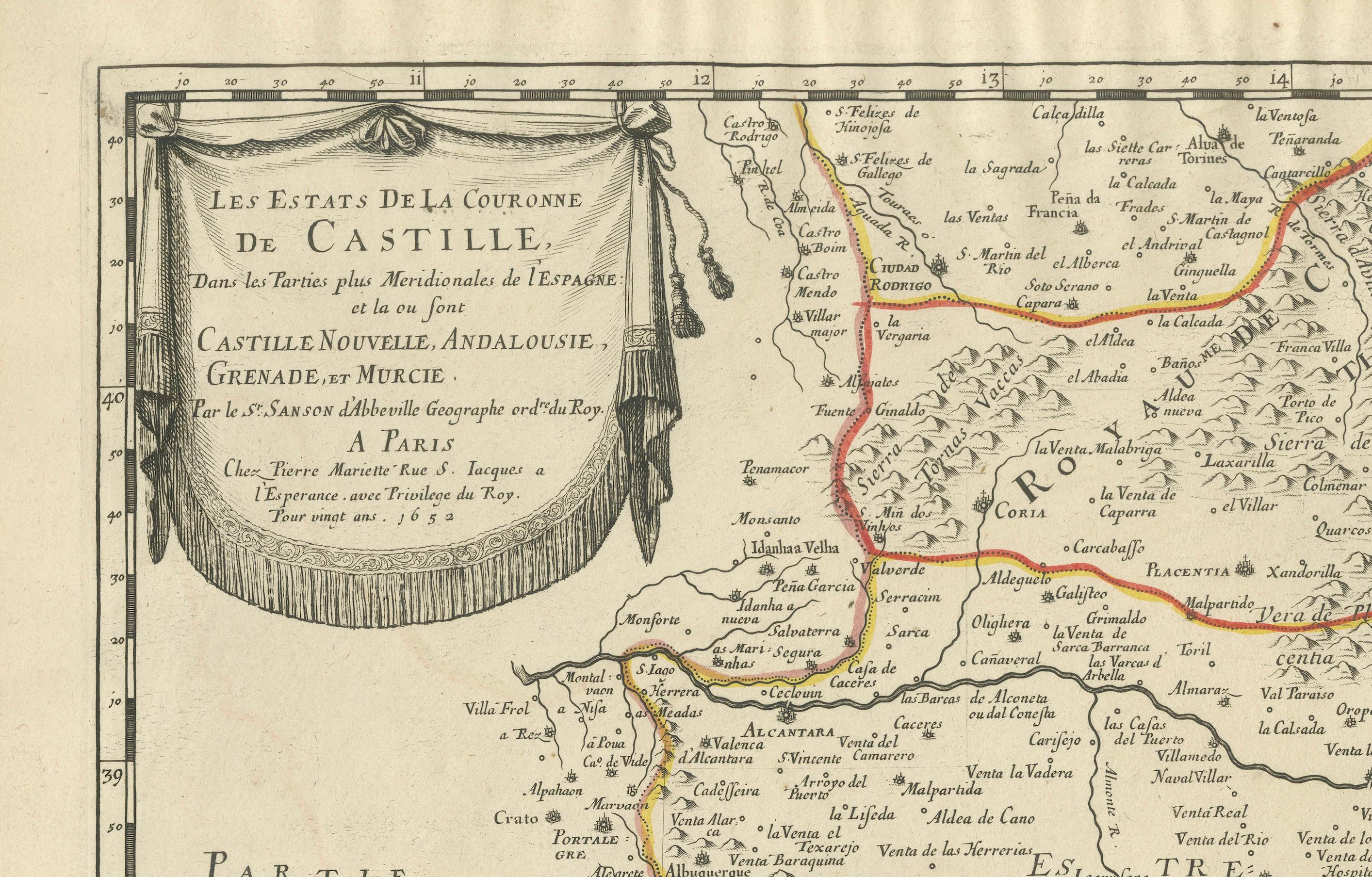
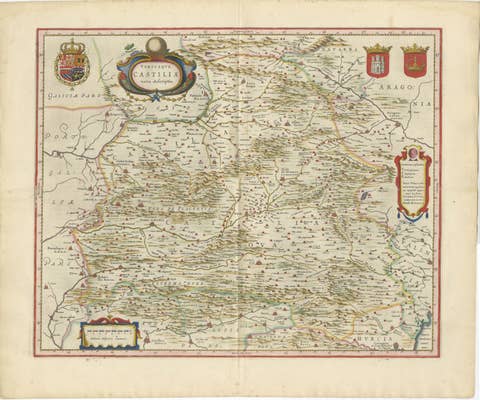
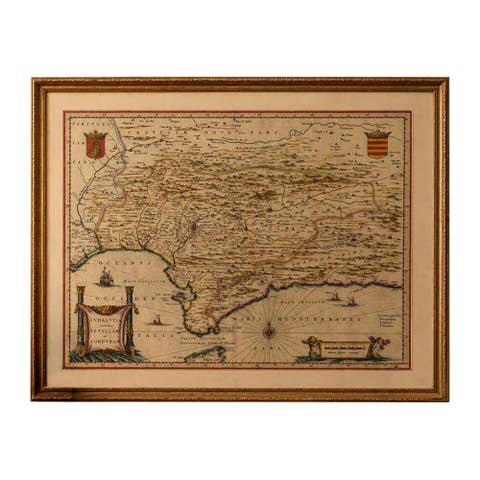
This antique map, titled 'Les Etats de la Couronne de Castille', represents the southern regions of the Crown of Castile, specifically the territories of Andalusia, Granada, and Murcia. Created by the renowned French cartographer Nicolas Sanson and published by Pierre Mariette, it is a piece dating back to around 1652.
The map is intricately detailed, featuring the names of many towns and geographical features in a dense, script-like font. The boundaries of each region are outlined in colored lines, with Andalusia, Granada, and Murcia distinctly marked. Major rivers and mountain ranges are illustrated, providing a sense of the varied topography of the region.
The cartouche in the upper left corner is an elegant design, typical of the period's style, with the title of the map inscribed within. The map includes a scale bar (‘Echelle’) in the upper right corner, which would allow the viewer to understand distances on the map.
While the map itself is designed for practical use, it also serves as a historical document, showing the division of territories and the extent of the Spanish empire's reach in the mid-17th century. It's a fine example of cartographic artistry from the time, combining functionality with aesthetic detail.
When people search for antique maps or historical information about the area covered in the map, which represents the southern parts of the Crown of Castile during the mid-17th century, they often look for famous cities and landmarks that are still relevant and popular today. From the current sources, several key locations stand out as statistically significant:
1. **Granada**: Known for the Alhambra fortress complex, the old town Albaicin neighborhood, and its cathedral, Granada is a city rich in history and culture. Its Moorish influence and beautiful landscapes make it a frequent search subject for those interested in Andalusian heritage
2. **Cádiz**: As one of the oldest cities in Western Europe, founded by the Phoenicians around 1100 BC, Cádiz is renowned for its beaches like La Caleta, historic quarter, and ancient buildings such as the Santa Catalina Fortress. The intricate network of narrow streets and landmarks like the church of Santa Cruz and the Roman theater make it a city of interest
3. **Jerez de la Frontera**: Known as the birthplace of sherry, this city is celebrated for its sherry bodegas, the Alcázar, and its cathedral. It's also considered the cradle of flamenco dance, adding to its cultural allure
4. **Marbella**: Famous for its Old Town and beaches, Marbella strikes a balance between modern luxury and traditional Andalusian charm, featuring whitewashed buildings and flower-laden streets
5. **Malaga**: As the birthplace of Picasso, Malaga is a culturally dynamic city with historic sites such as the Alcazaba fortress and the old Roman Amphitheater. It's also a hub for galleries, restaurants, and nightlife
6. **Ronda**: This town is known for its dramatic location on the El Tajo Gorge and its historical association with bandoleros (bandits). It's famous for its Puente Nuevo bridge and its place in the tradition of bullfighting
These cities, among others like Seville and Cordoba, are not only key historical locations but also remain vibrant and sought-after travel destinations today.