About this sheet
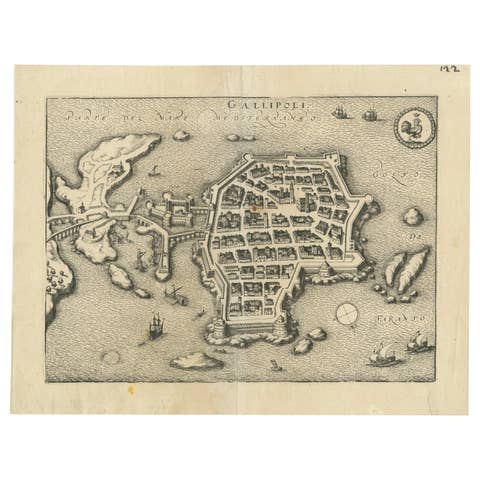
Gallipoli Fortifications: A 1688 Bird’s-Eye Map by Mattheus Merian
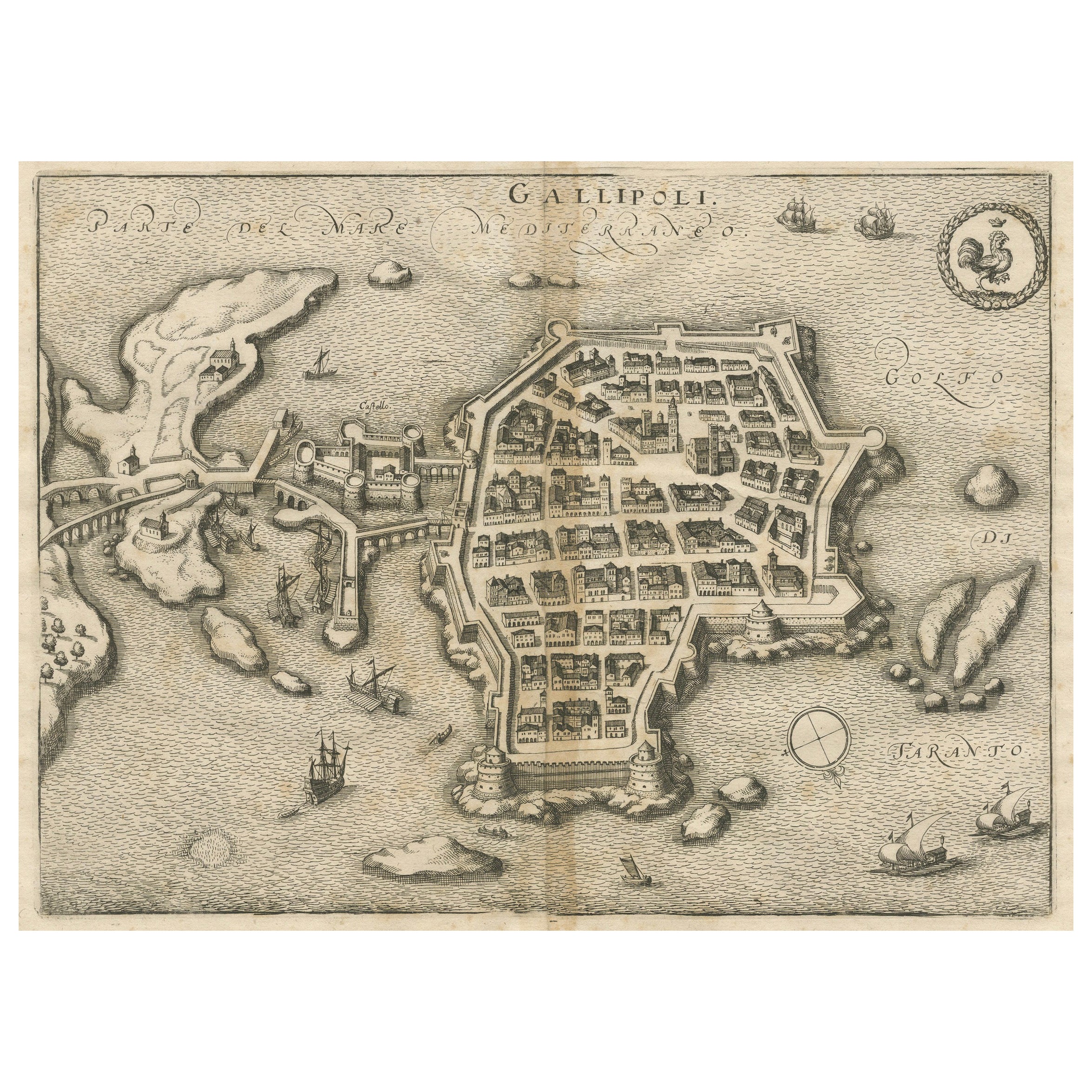
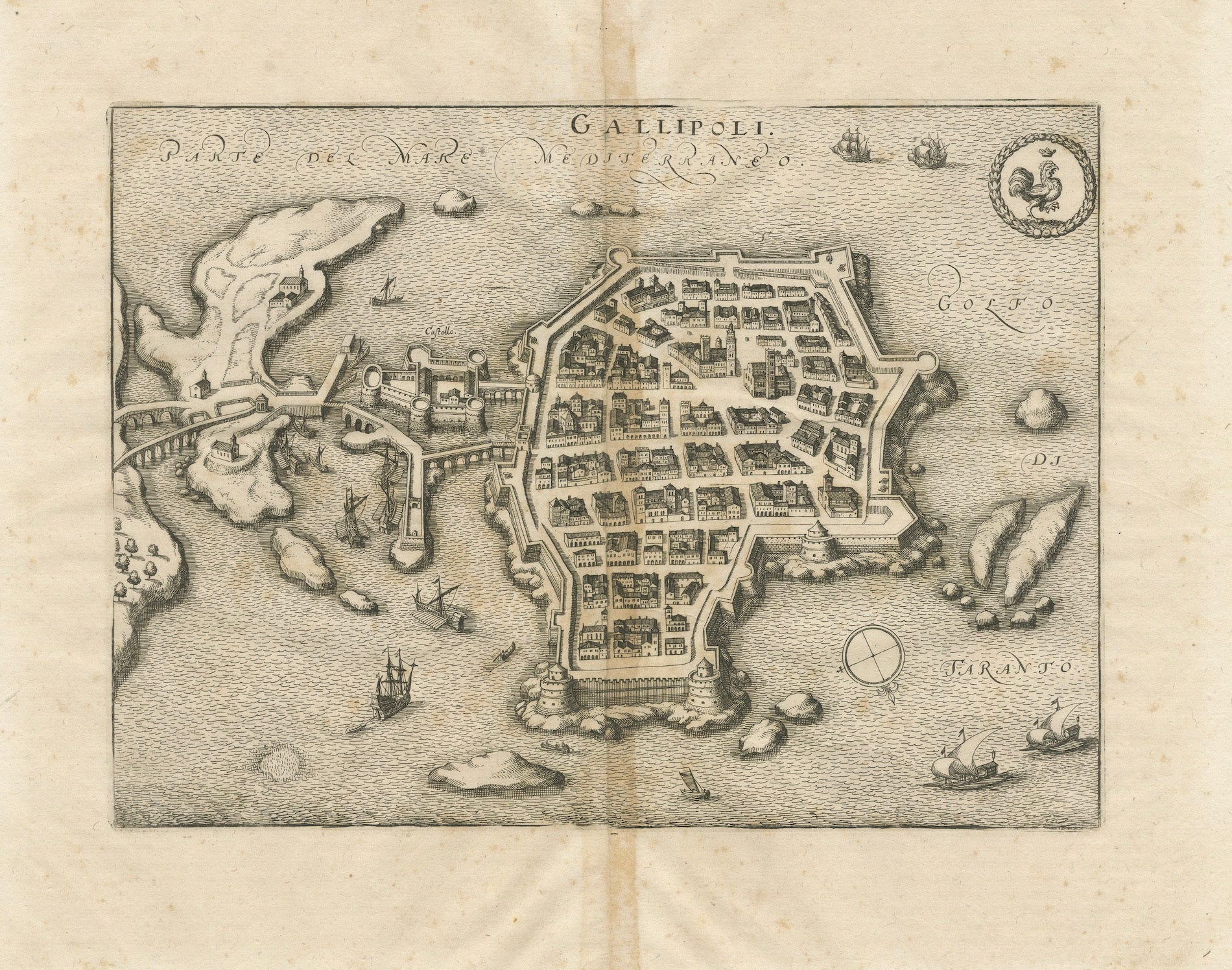
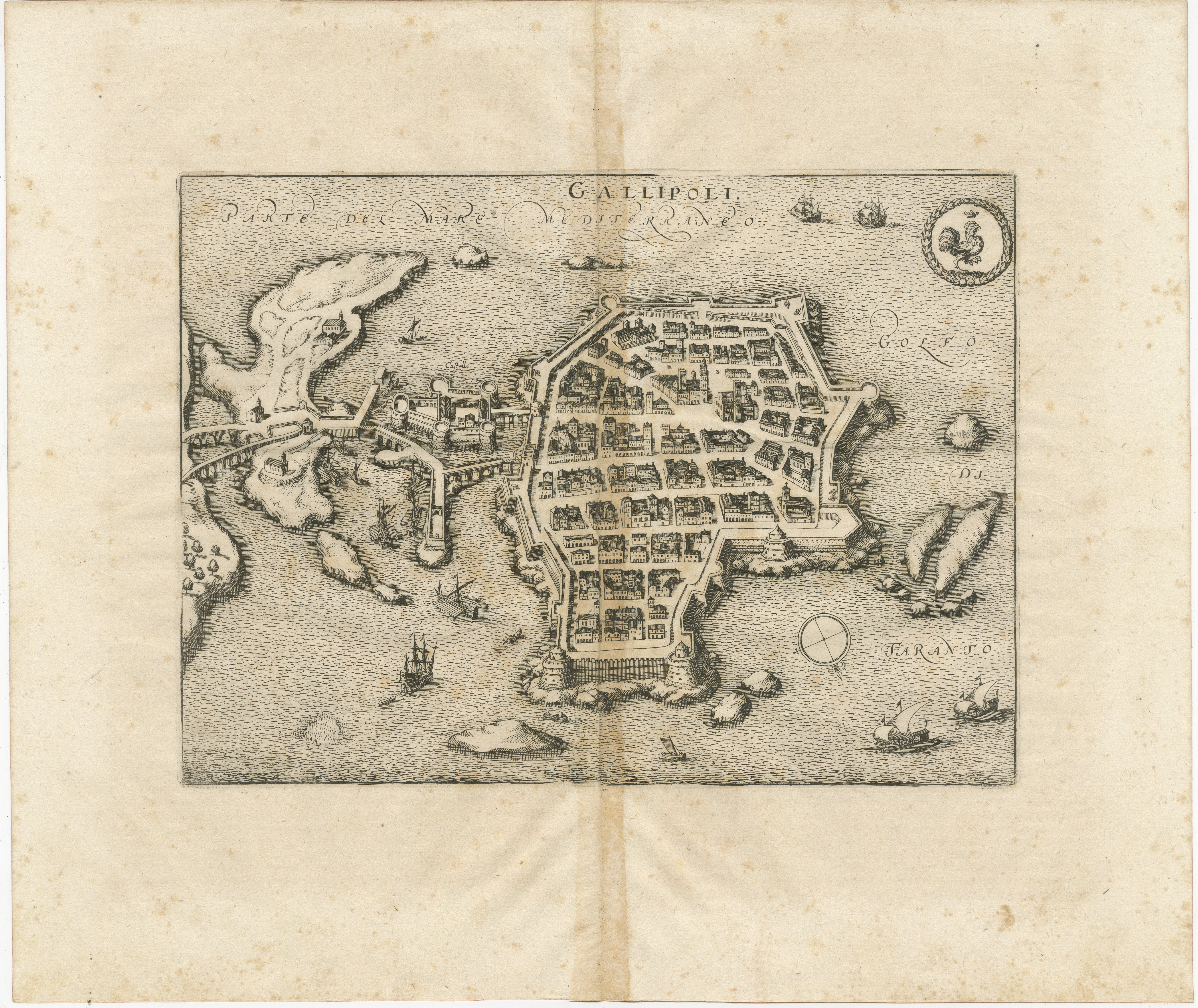
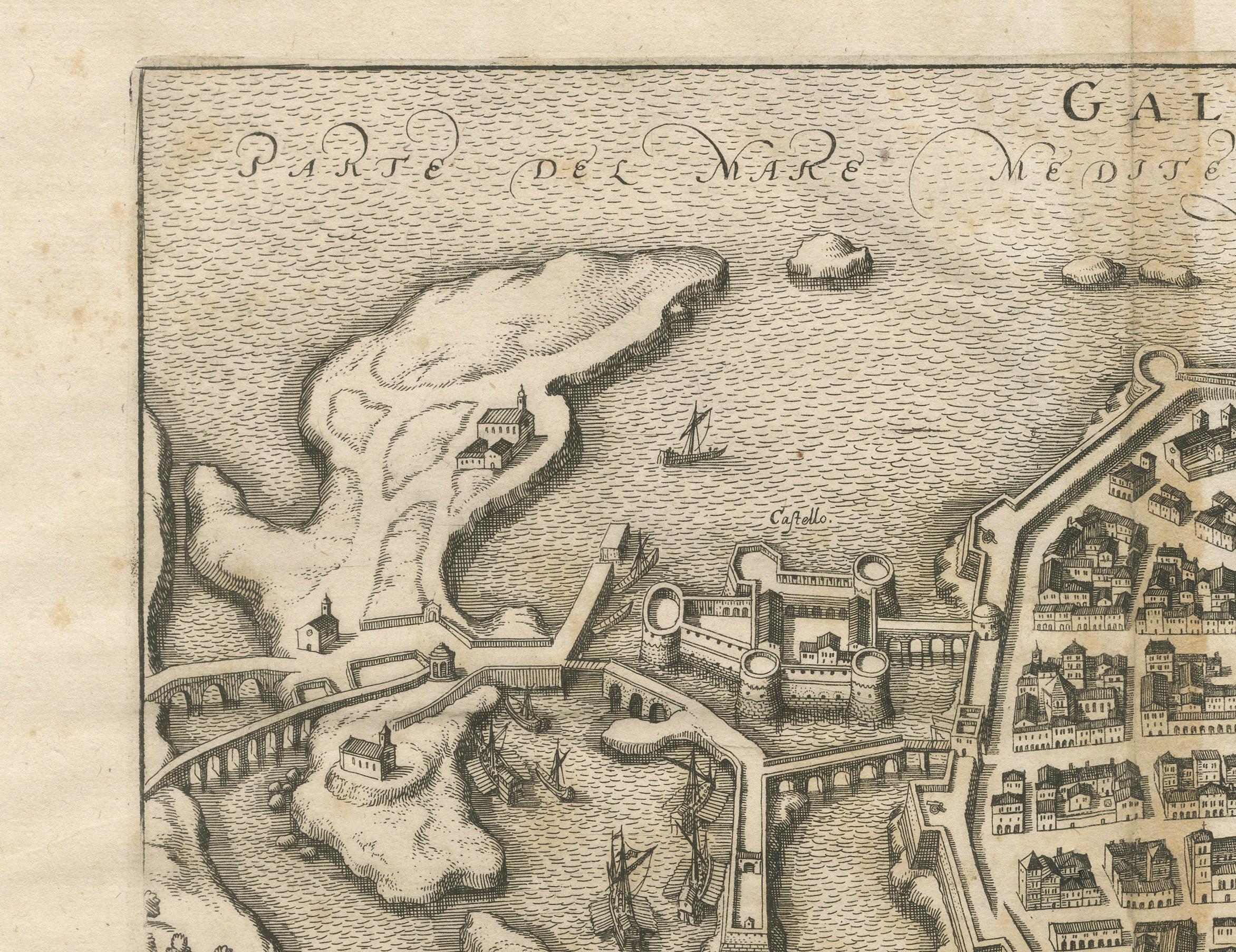
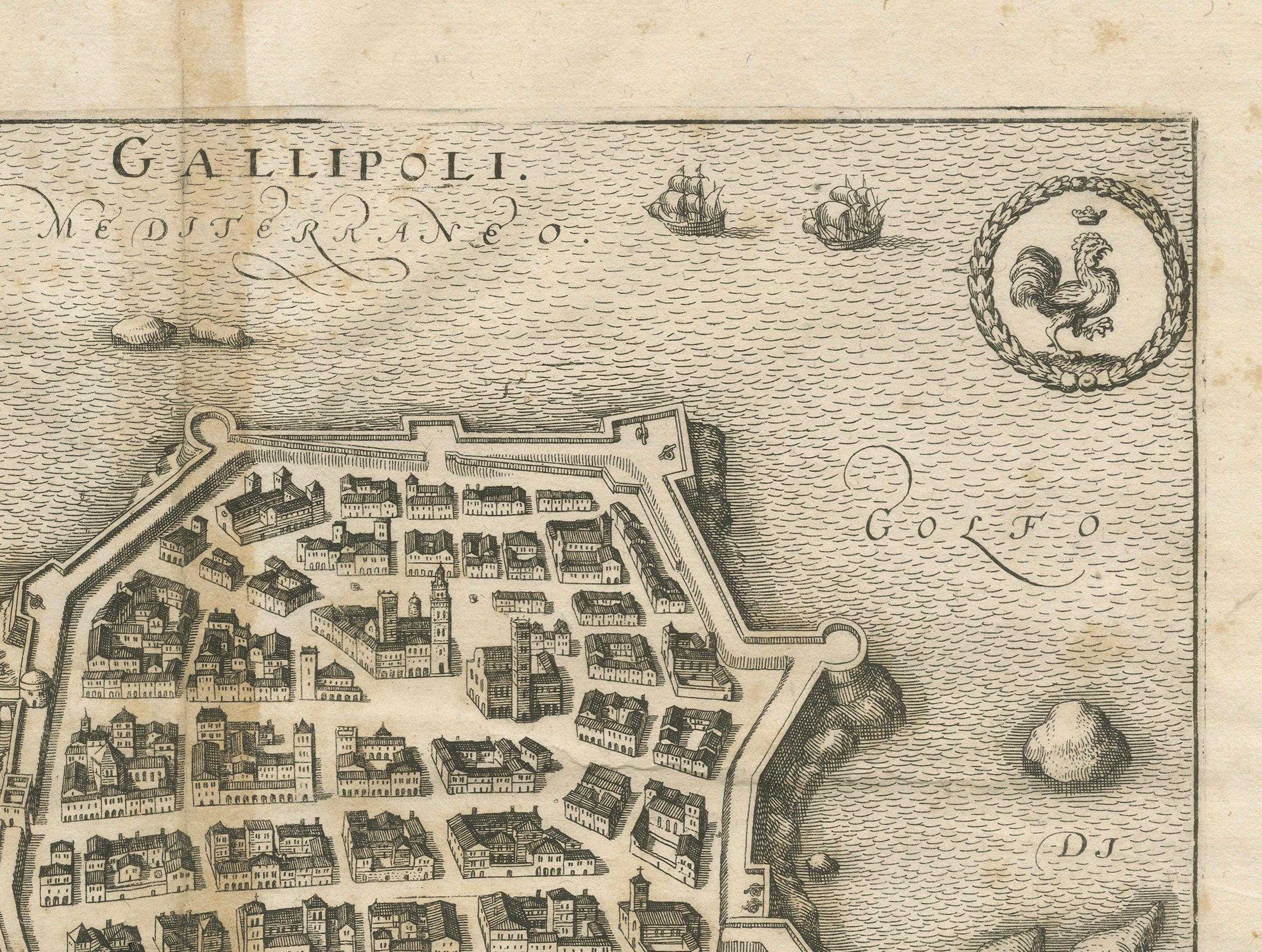
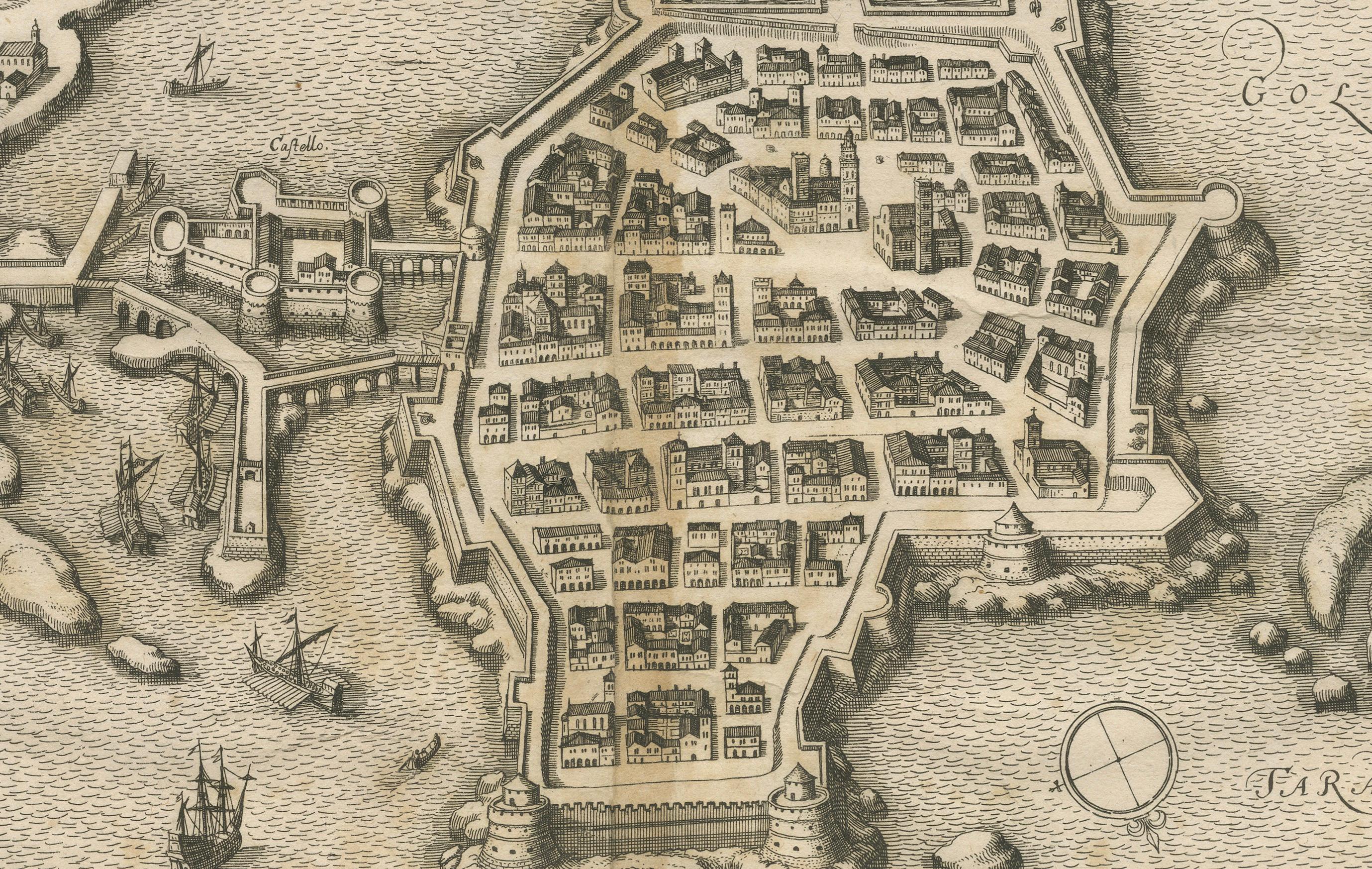
This exquisitely detailed map of Gallipoli, crafted by the renowned engraver Mattheus Merian, offers a unique bird’s-eye perspective of the fortified town as it stood in the early 17th century. Situated on a rocky island in the Ionian Sea, Gallipoli is depicted with remarkable accuracy, highlighting its strategic importance and architectural intricacies. The map is oriented unconventionally with north in the lower right corner, inviting viewers to explore the town’s layout from a distinct vantage point. Prominent features include the robust city walls, intricate street patterns, and the bustling harbor, animated with tiny, detailed ships that underscore the town’s vibrant maritime activities.
The upper right corner of the map is adorned with Gallipoli’s city arms, emphasizing local pride and heritage. Each building, pathway, and fortification is rendered with meticulous care, reflecting Merian’s dedication to combining artistic beauty with geographical precision.
About the Maker:
Mattheus Merian the Elder (1593-1650) was a notable Swiss-German engraver and publisher. Born in Basel, Switzerland, he later moved to Frankfurt, where he established his publishing house. Merian is renowned for his detailed town plans and bird’s-eye views, which were among the most sought after in the 17th century for their accuracy and aesthetic appeal. His works serve not only as historical documents but as masterpieces of engraving and design, providing a unique window into the urban and cultural landscapes of the time.
Today, Gallipoli, located in the Apulia region of southern Italy, is a picturesque town that beautifully blends historical charm with modern amenities. Divided into two main sections, the town features an old city on a limestone island and a more modern mainland area, connected by a 17th-century bridge. The old town is renowned for its fortified historical center, surrounded by impressive beaches and a vibrant street scene, making it a popular tourist destination.
The historical significance of Gallipoli is reflected in its architecture and urban layout, which bear traces of Greek, Roman, Byzantine, and Norman influences over the millennia. The city's most iconic structures include the Angevin-Aragonese Castle and the Baroque Cathedral of Sant'Agata. Gallipoli's strategic coastal location made it a vital maritime hub throughout history, a role that continues to influence its culture and economy today.
Gallipoli's role in wartime history, particularly during the Ottoman period when it served as a fortress, has left a lasting mark on its cultural and architectural heritage. Despite these turbulent times, the town has managed to preserve its unique southern Italian charm, characterized by colorful fishing boats, stone churches, and ancient city walls that offer a glimpse into its storied past.
The town nowadays offers a mix of attractions from relaxing on Baia Verde beach, exploring historical sites like the Castello di Gallipoli, to enjoying local cuisines and crafts in the historic center. The blend of its rich history, stunning natural beauty, and contemporary cultural offerings makes Gallipoli a compelling destination for travelers.