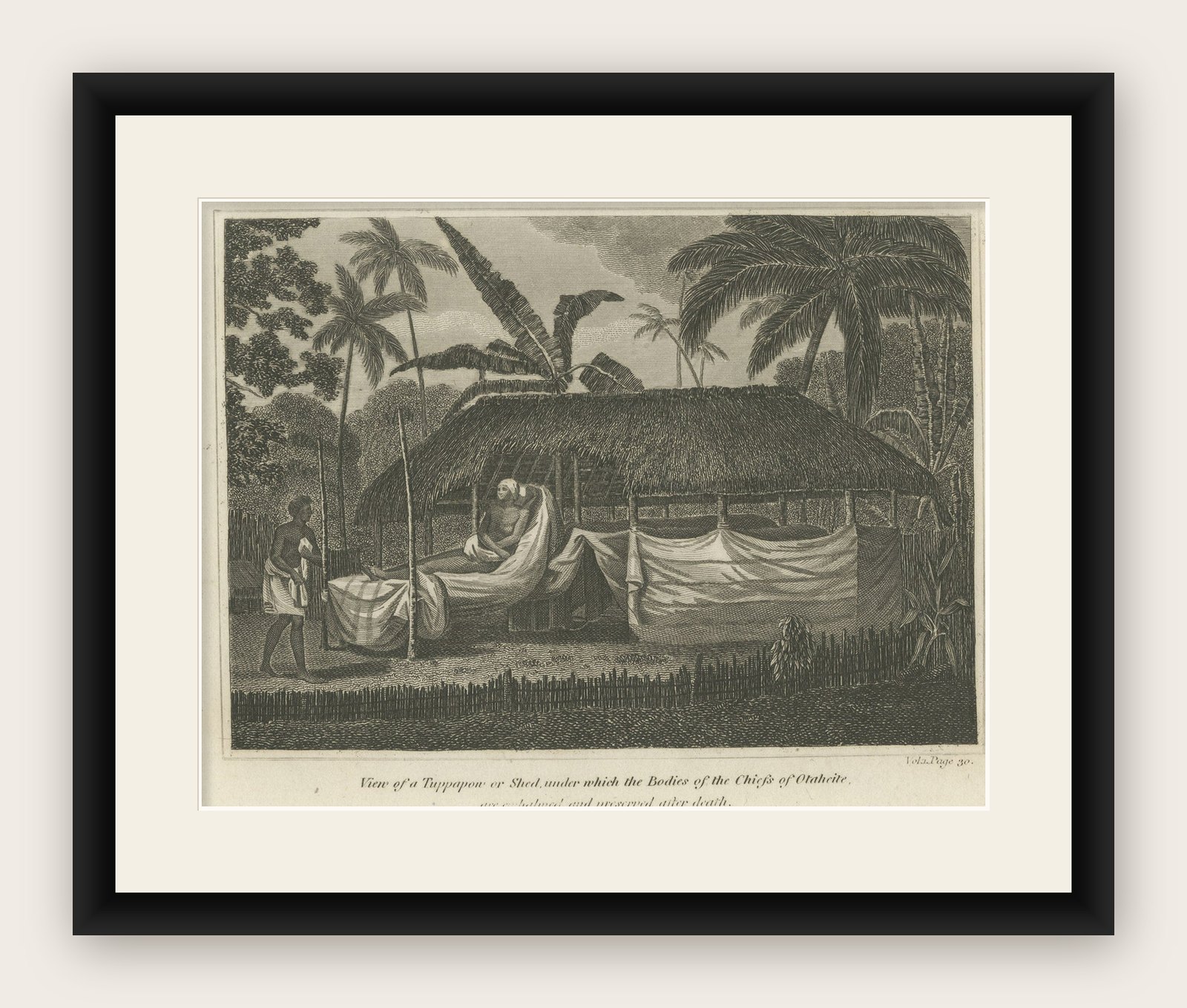
Mourning the Chief: Engraving of The Morai at Otaheite, now called Tahiti, 1817
€ 490
Original antique · The actual sheet photographed · Certificate of authenticity on request · Sold unframed · Worldwide shipping from € 15 (rates)
Date
1817
Sheet size
20 × 26.5 cm (7.9 × 10.4 in)
Condition
Good
Reference
BG-13597-2
What the condition grades mean
Excellent
Bright and clean, with no faults worth mentioning.
Very good
Only light signs of age, such as faint toning.
Good
Normal signs of age for a sheet of this period: toning, some foxing, small marks or neat old repairs.
Fair
Clear faults such as staining, tears or repairs, priced to match.
Every fault we see is written in the condition note, and the whole sheet is shown uncropped in the photos.
Condition
Good. Minor signs of aging and wear. Moister spot visible on the right side but in the margin outside the image. Study the images carefully.
About this sheet
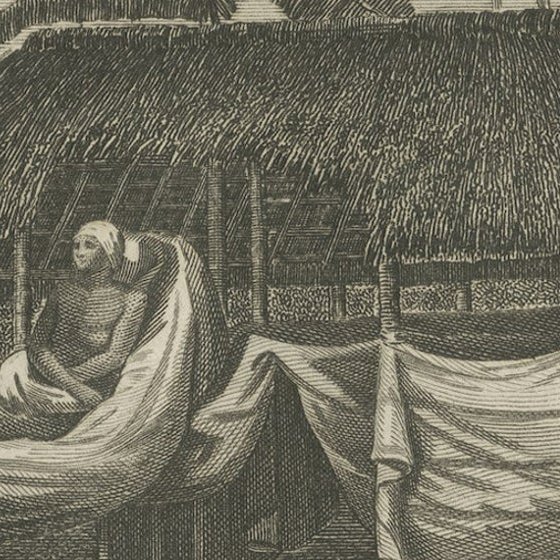
An original historical engraving from G. Alexander Cooke's "Geography," published in 1817. The engraving is titled "View of a Tuppapon or Shed under which the Bodies of the Chiefs of Otaheite are embalmed and preserved after death." It depicts a traditional practice in Otaheite (Tahiti) where the bodies of chiefs were embalmed and preserved post-mortem.
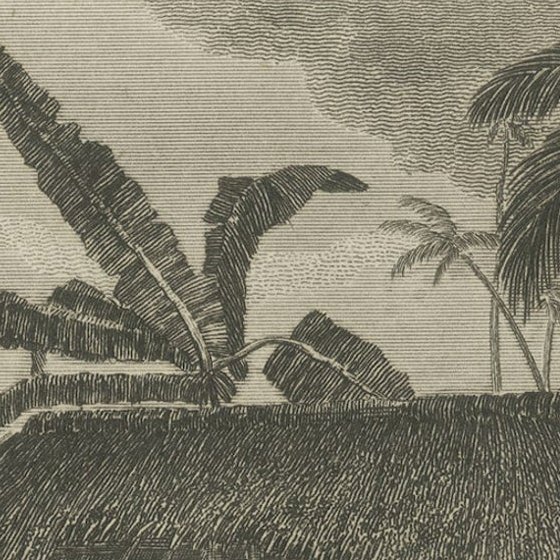
The scene shows a thatched structure or shed, known as a Tuppapon, where the process takes place. There is a person attending to a body inside the shed, and another figure standing outside, suggesting a respectful vigil or guard. The backdrop includes lush tropical vegetation, indicative of the island's environment.
Engravings like this were common in travel literature of the 18th and 19th centuries, serving to document and share the customs and practices of different cultures around the world with a European audience. They played a crucial role in the dissemination of geographical and anthropological knowledge during this era.