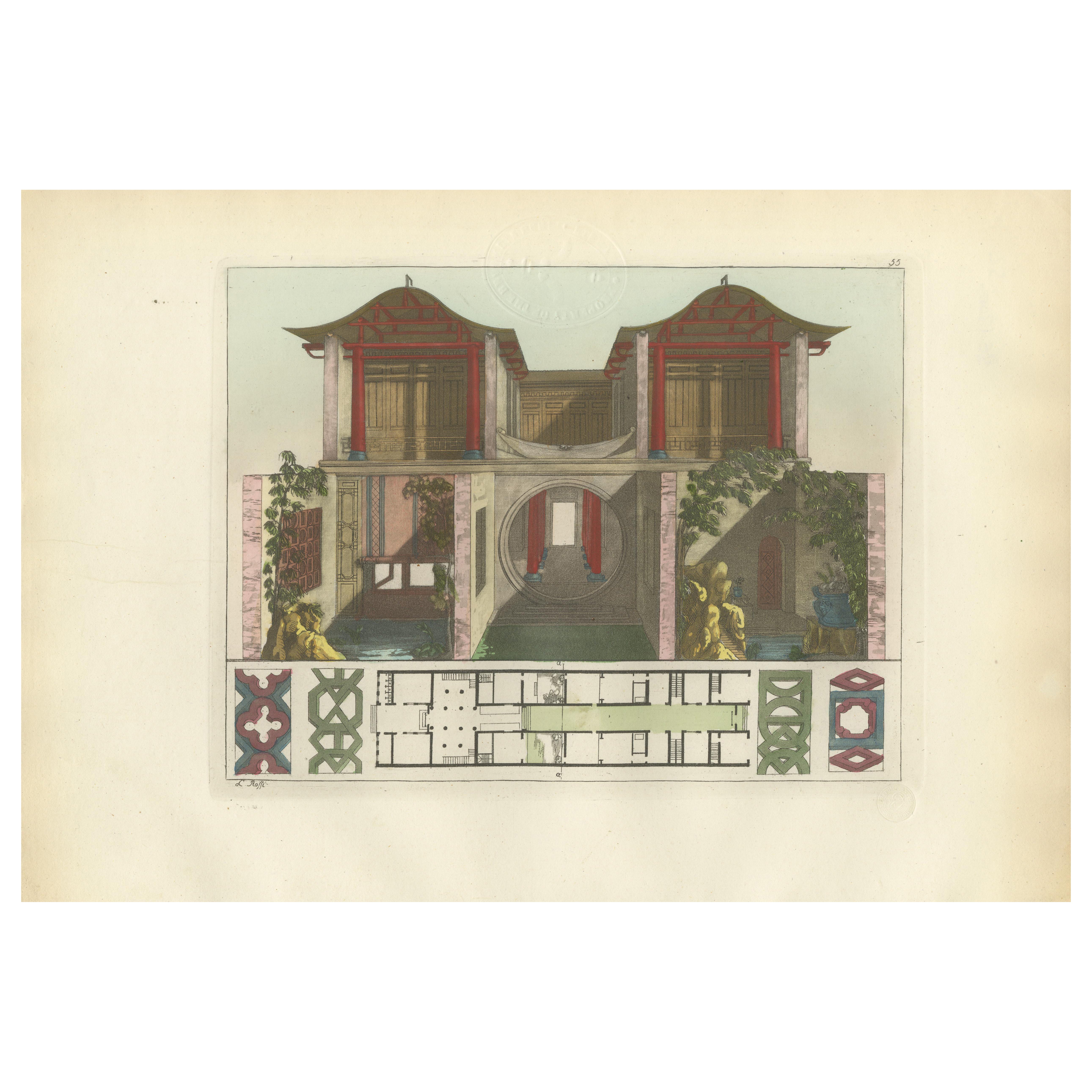
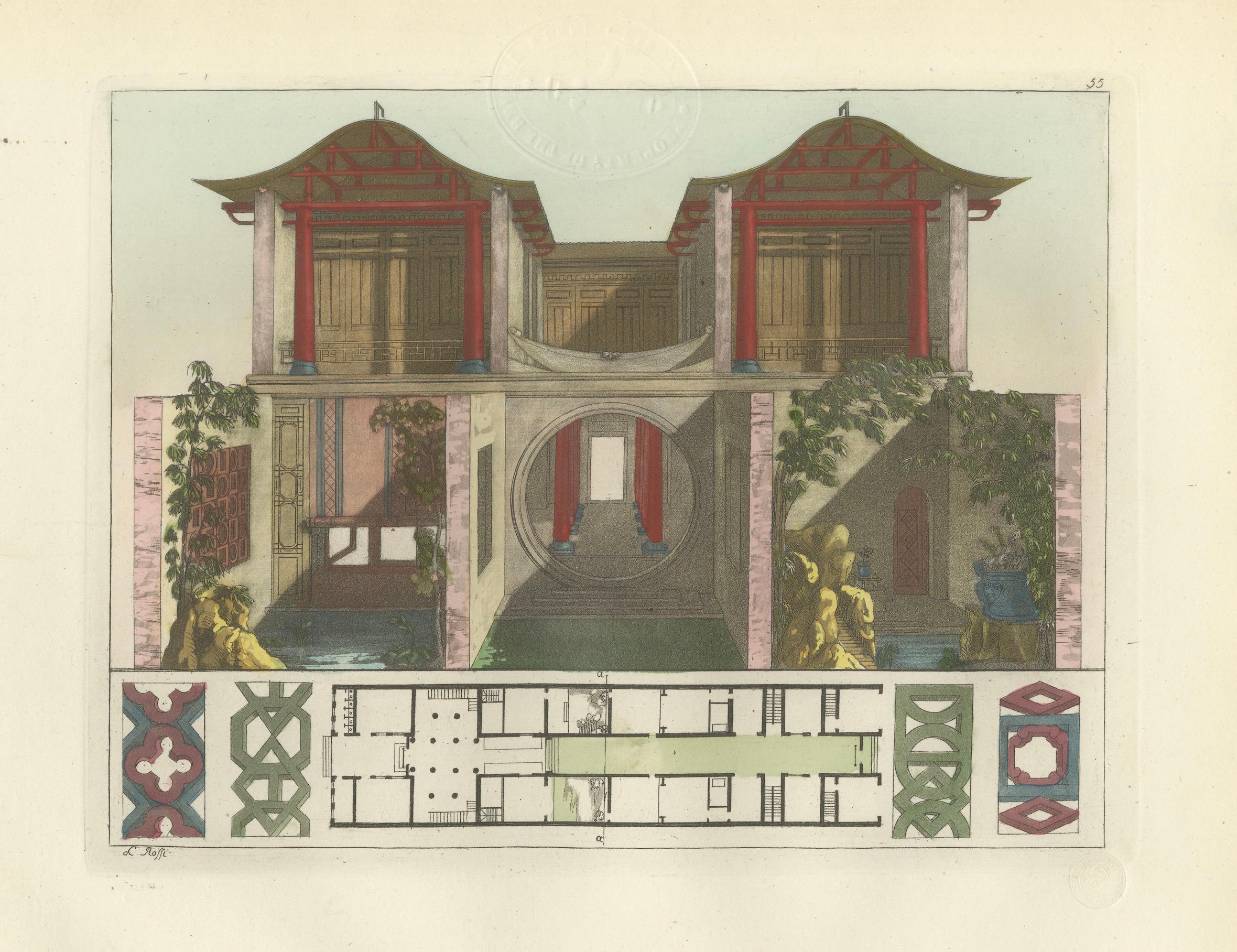
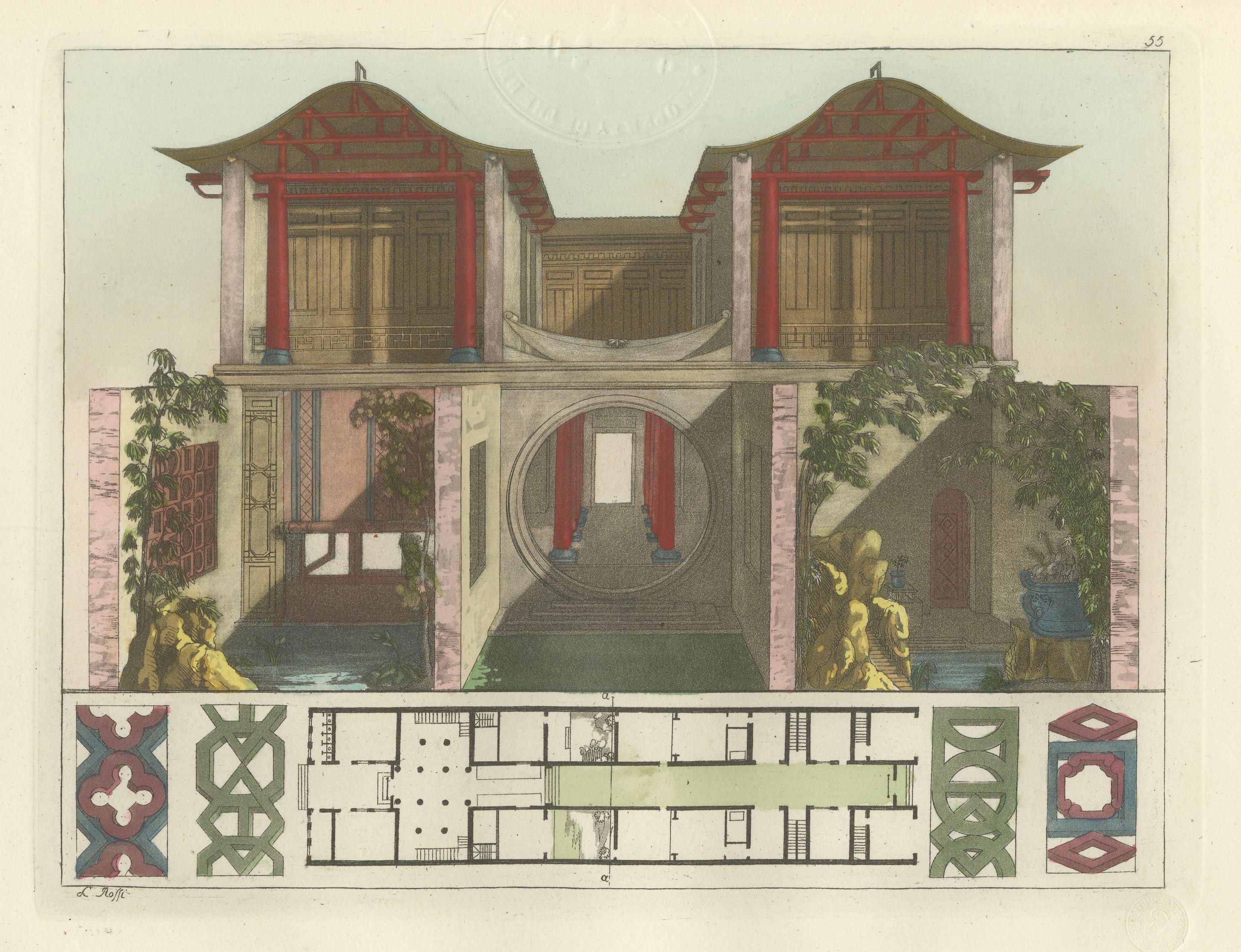
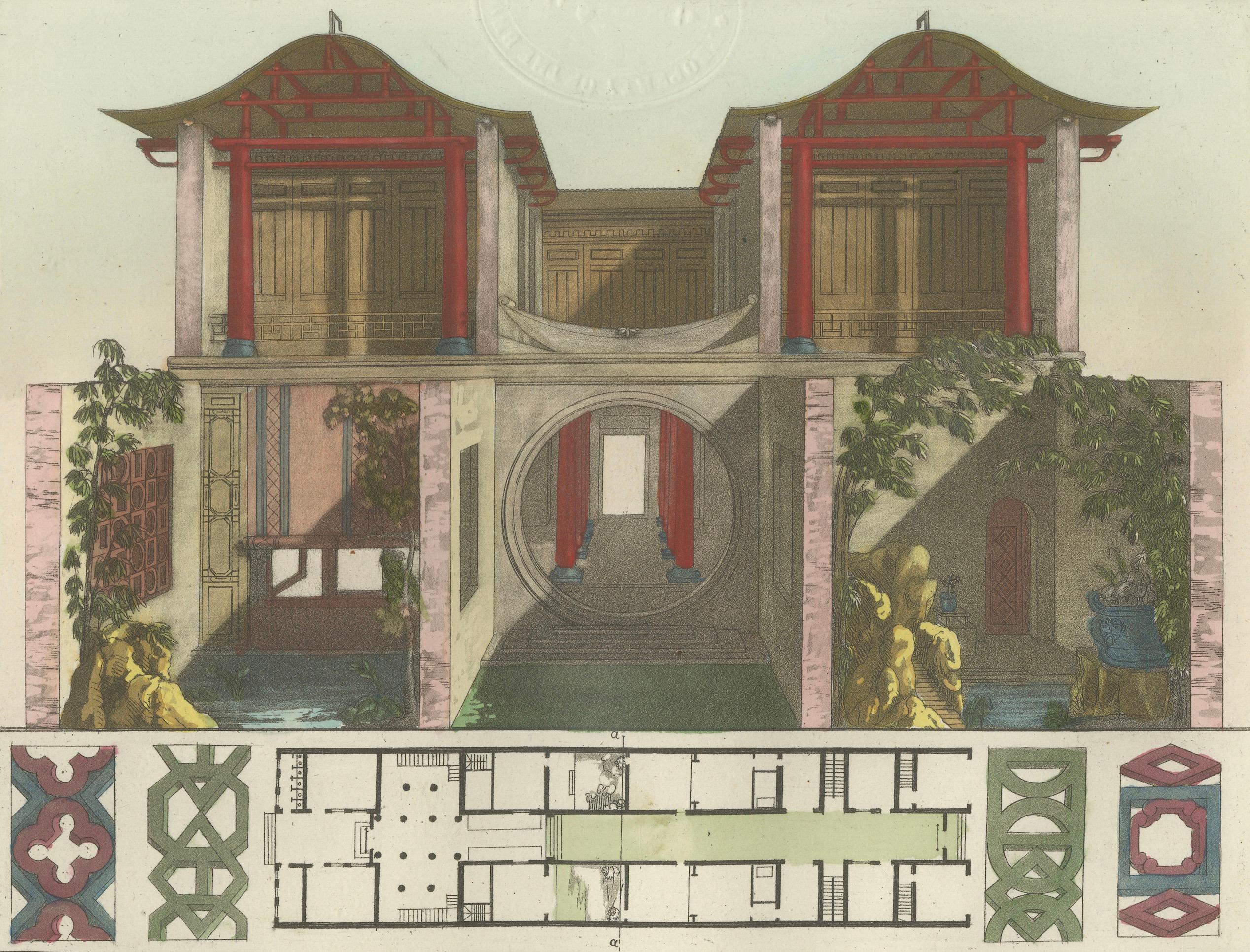
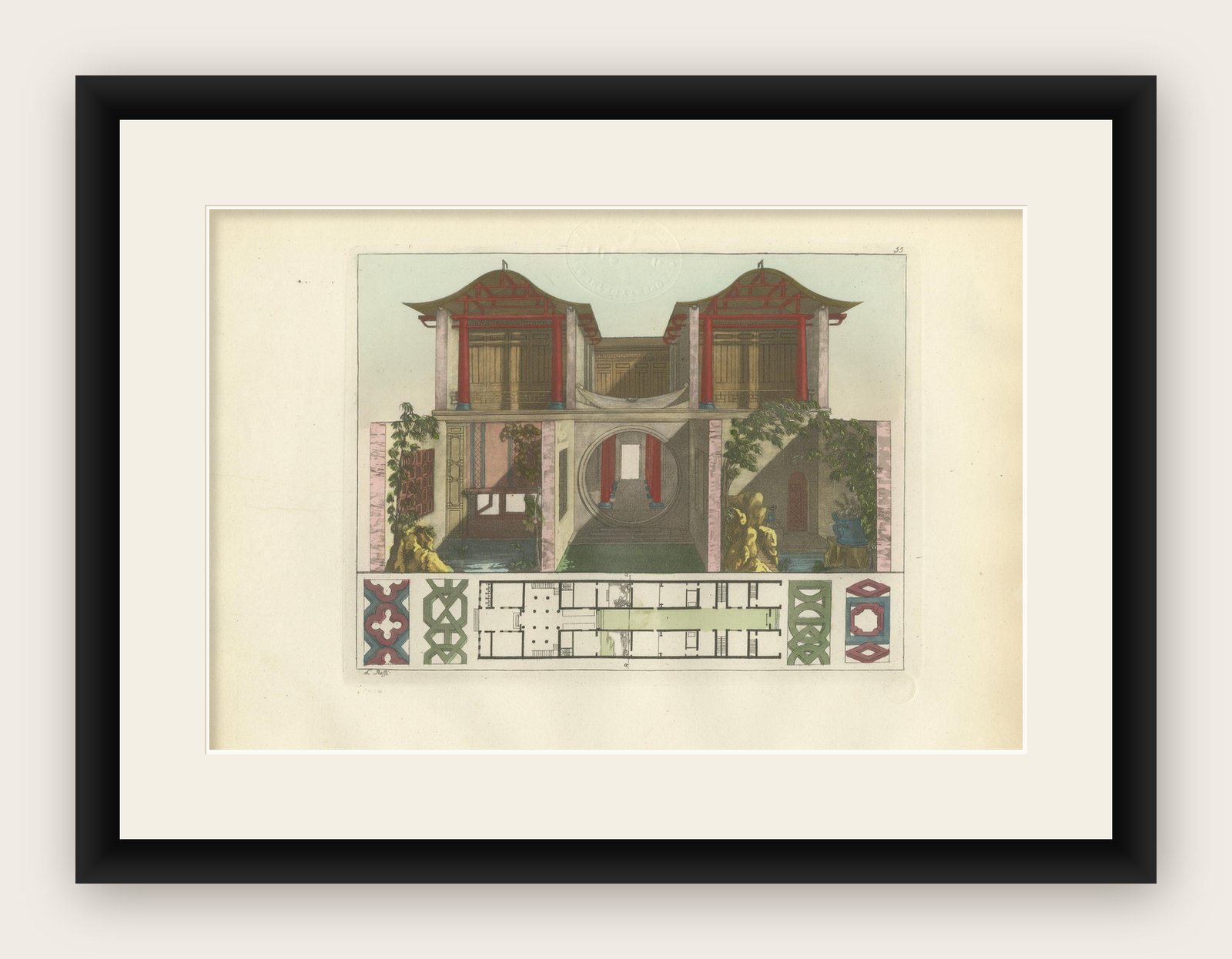
Chinese Canton House Architectural Elevation and Floor Plan, Ferrario 1815
€ 430
Original antique · The actual sheet photographed · Certificate of authenticity on request · Sold unframed · Worldwide shipping from € 15 (rates)
Date
1815
Mapmaker / artist
Giulio Ferrario (publisher/author), Italy, circa 1815
Technique
Hand-colored copperplate engraving
Sheet size
25.4 × 35.4 cm (10.0 × 13.9 in)
Condition
Good
Reference
BG-13000-55
What the condition grades mean
Excellent
Bright and clean, with no faults worth mentioning.
Very good
Only light signs of age, such as faint toning.
Good
Normal signs of age for a sheet of this period: toning, some foxing, small marks or neat old repairs.
Fair
Clear faults such as staining, tears or repairs, priced to match.
Every fault we see is written in the condition note, and the whole sheet is shown uncropped in the photos.
Condition
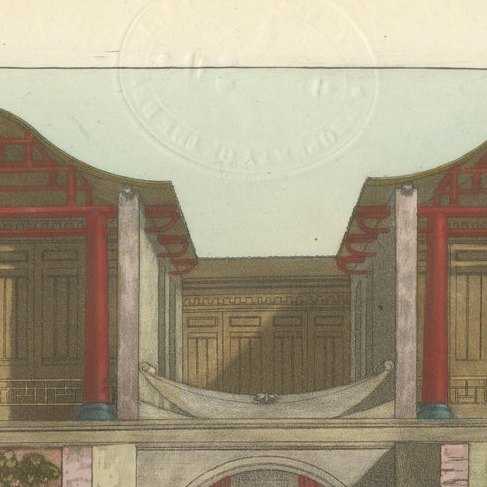
Very good antique condition consistent with age. Light age toning to the margins, minor spotting and handling marks visible. Plate mark present. Original embossed blind stamp visible as issued.
About this sheet
Chinese Canton House Architectural Elevation and Floor Plan, Ferrario 1815
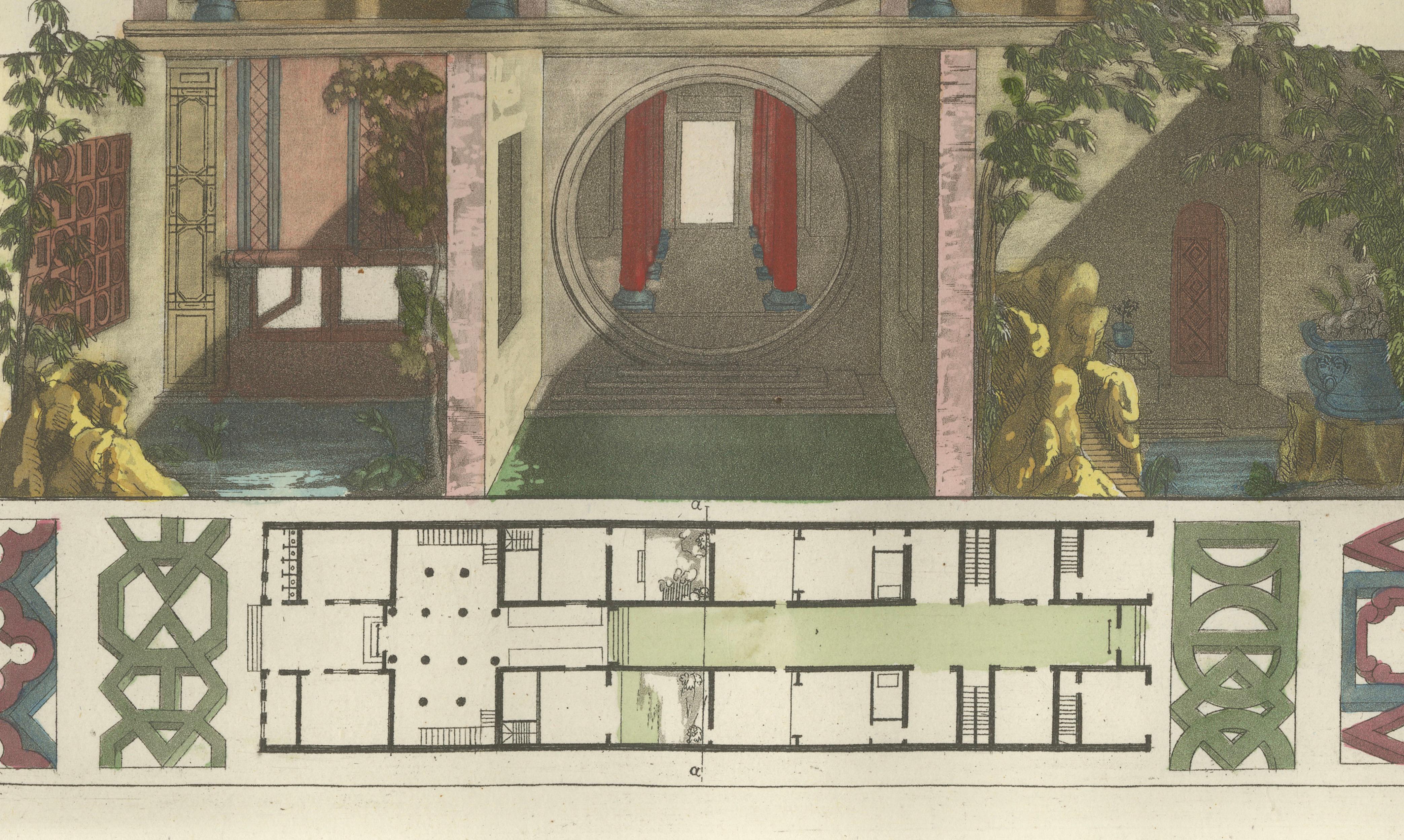
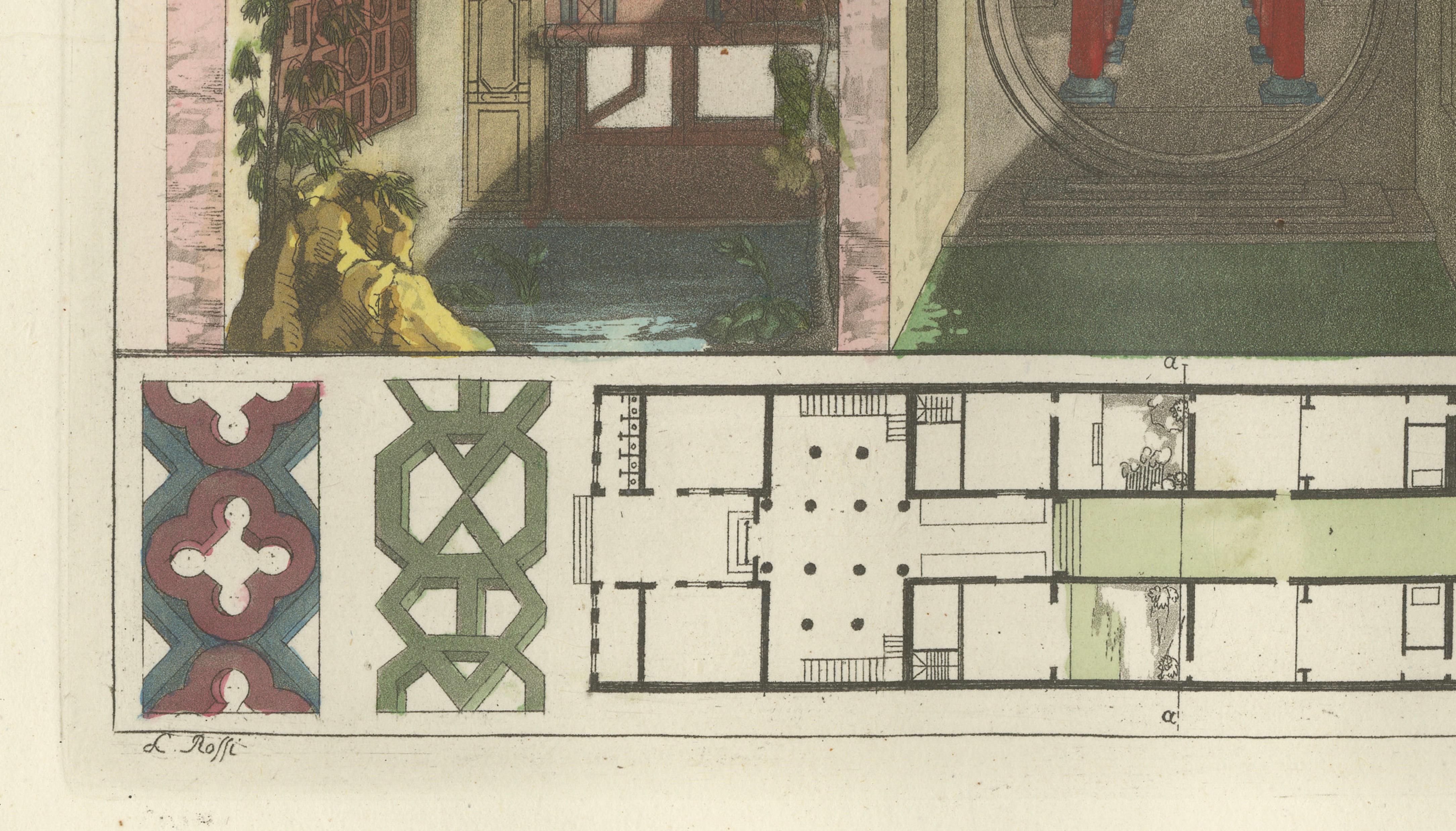
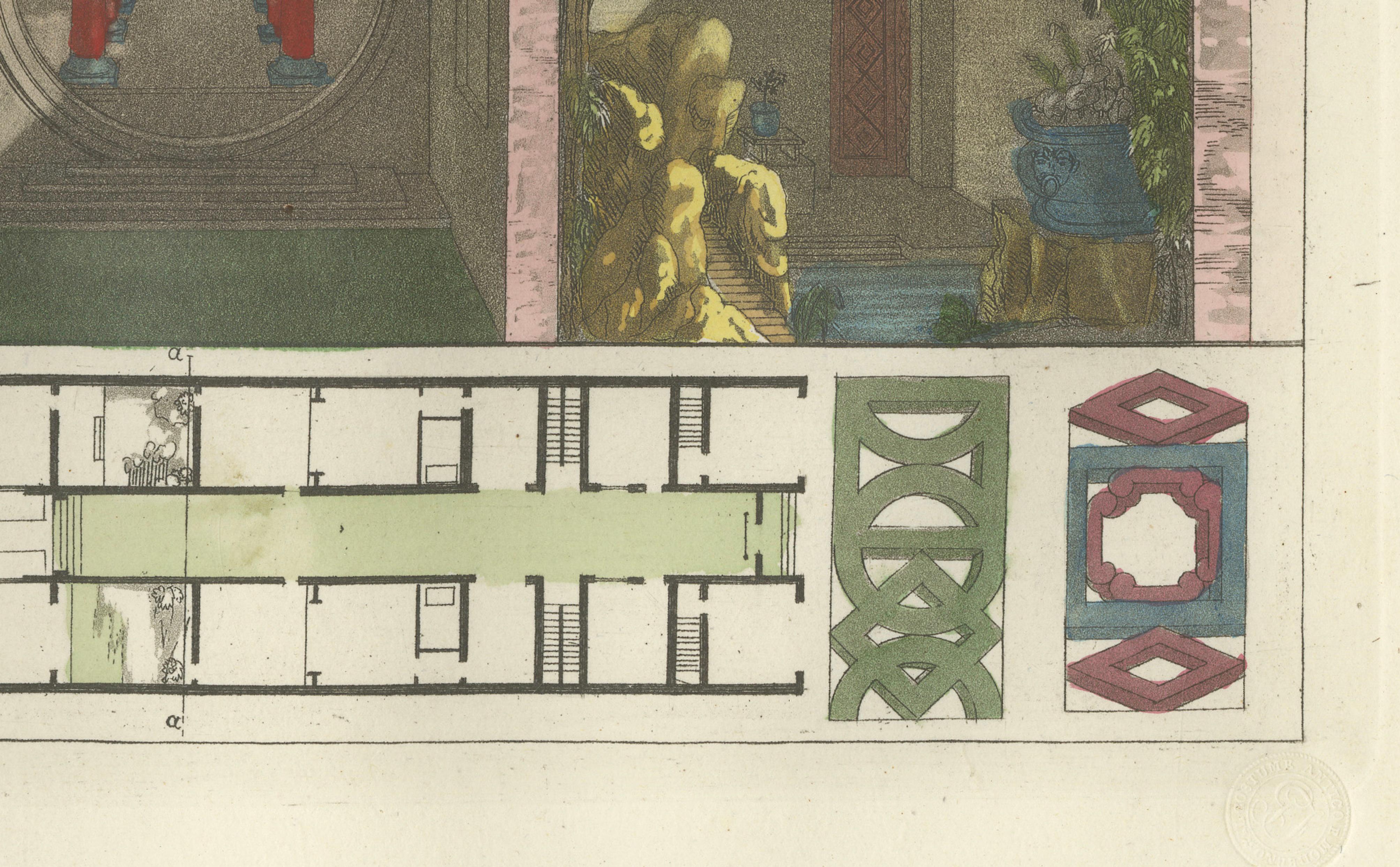
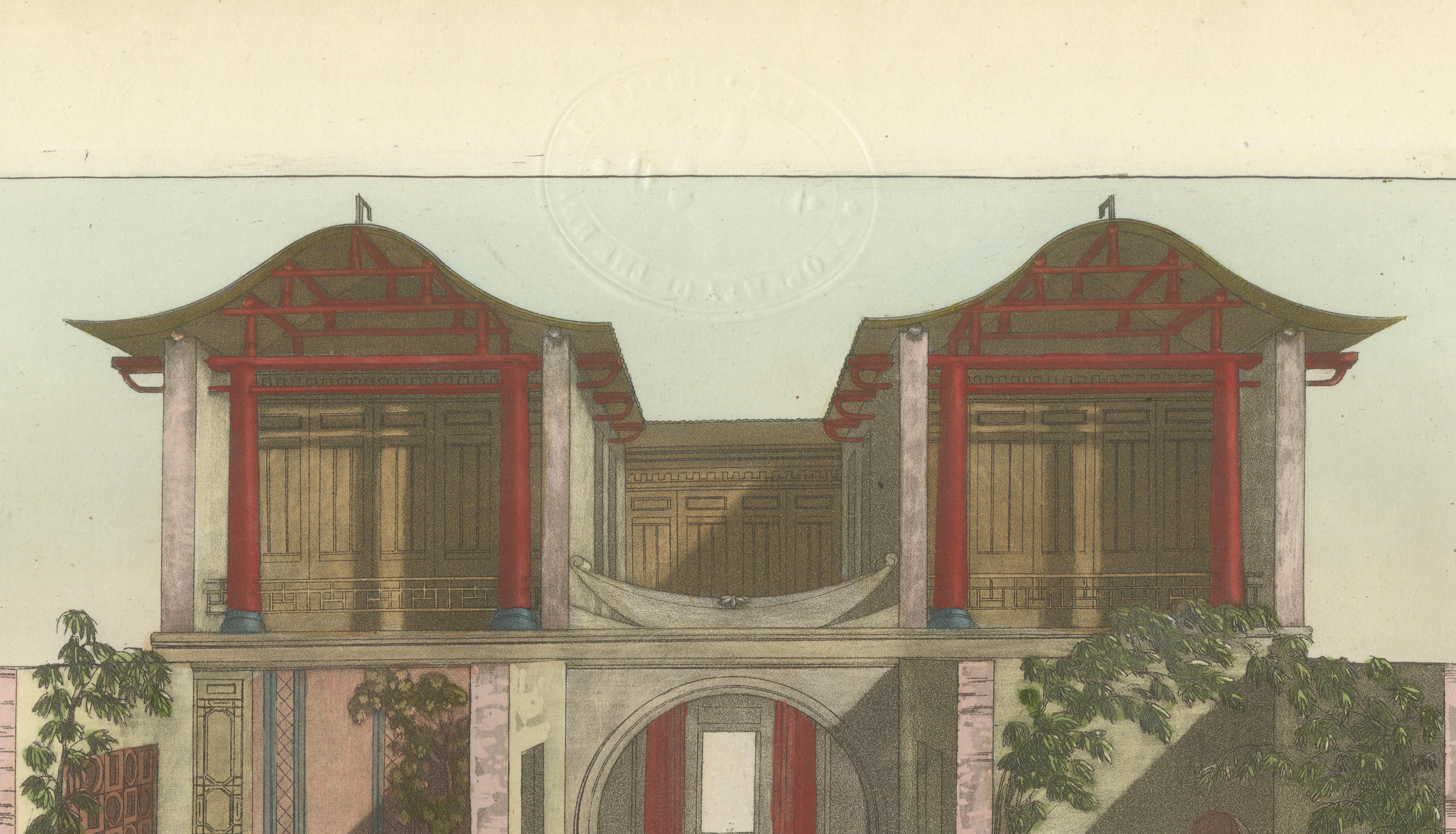
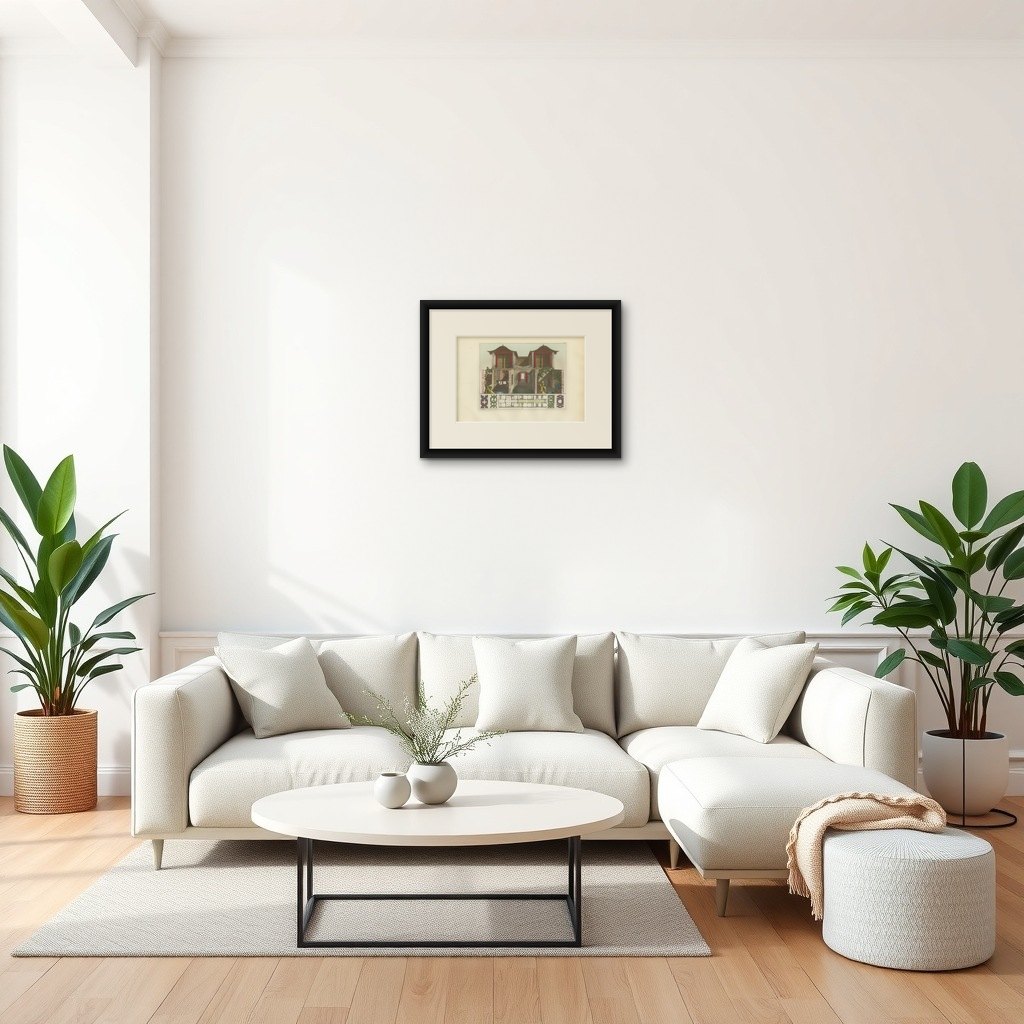
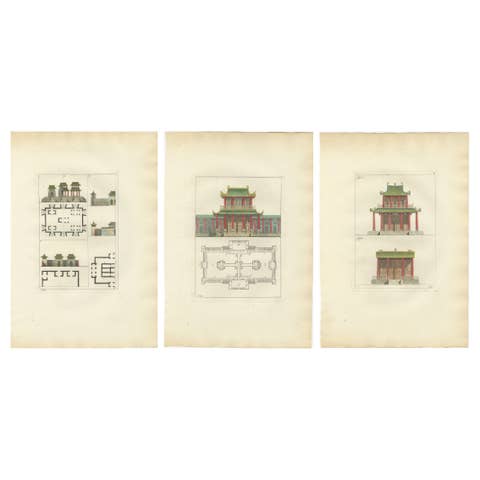
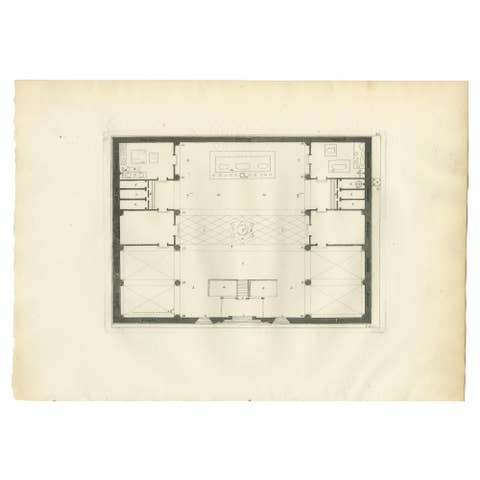
This finely hand-colored copperplate engraving depicts a traditional Chinese house, presented through a sophisticated architectural composition combining elevation, sectional perspective, and detailed floor plan. Published in the early nineteenth century as part of Giulio Ferrario’s monumental work Il Costume Antico e Moderno di Tutti i Popoli del Mondo (Italy, circa 1815), the print reflects Europe’s growing fascination with Asian architecture and decorative culture during the height of the Chinoiserie movement.
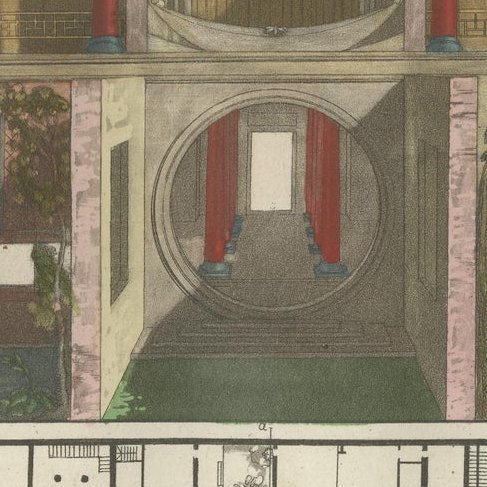
The engraving offers both artistic appeal and documentary value. The upper section presents the architectural façade, showing characteristic Chinese rooflines with sweeping eaves, structural red columns, and balanced symmetry typical of traditional design principles. Below, a carefully rendered floor plan reveals the functional organization of the building, illustrating spaces such as an interior courtyard, domestic quarters, service areas, and a shopfront facing the street. This combination of exterior and interior views provides insight into spatial planning and daily life, making the print particularly compelling for collectors interested in architectural history or cross-cultural design exchange.
Ferrario’s publication aimed to create a visual encyclopedia of world cultures, combining ethnographic curiosity with artistic refinement. European audiences of the period were deeply fascinated by China’s architectural traditions, and such plates served as both educational material and sources of decorative inspiration. Today, the engraving stands as an important example of early nineteenth-century European interpretations of Chinese architecture, blending scholarly observation with the aesthetic sensibilities of the Enlightenment era.
The print also holds strong decorative appeal. Its structured layout, balanced composition, and refined hand coloring make it ideal for display within sophisticated interiors. It pairs especially well with Asian-inspired or contemporary luxury settings, including hotel-style interiors or curated gallery walls, where architectural imagery provides both visual depth and intellectual interest.
Framing tips: A dark walnut, black lacquer, or deep-toned frame with a generous ivory or warm off-white mat enhances the architectural symmetry and emphasizes the detailed plan. Museum glass is recommended to preserve the hand coloring and reduce reflections.