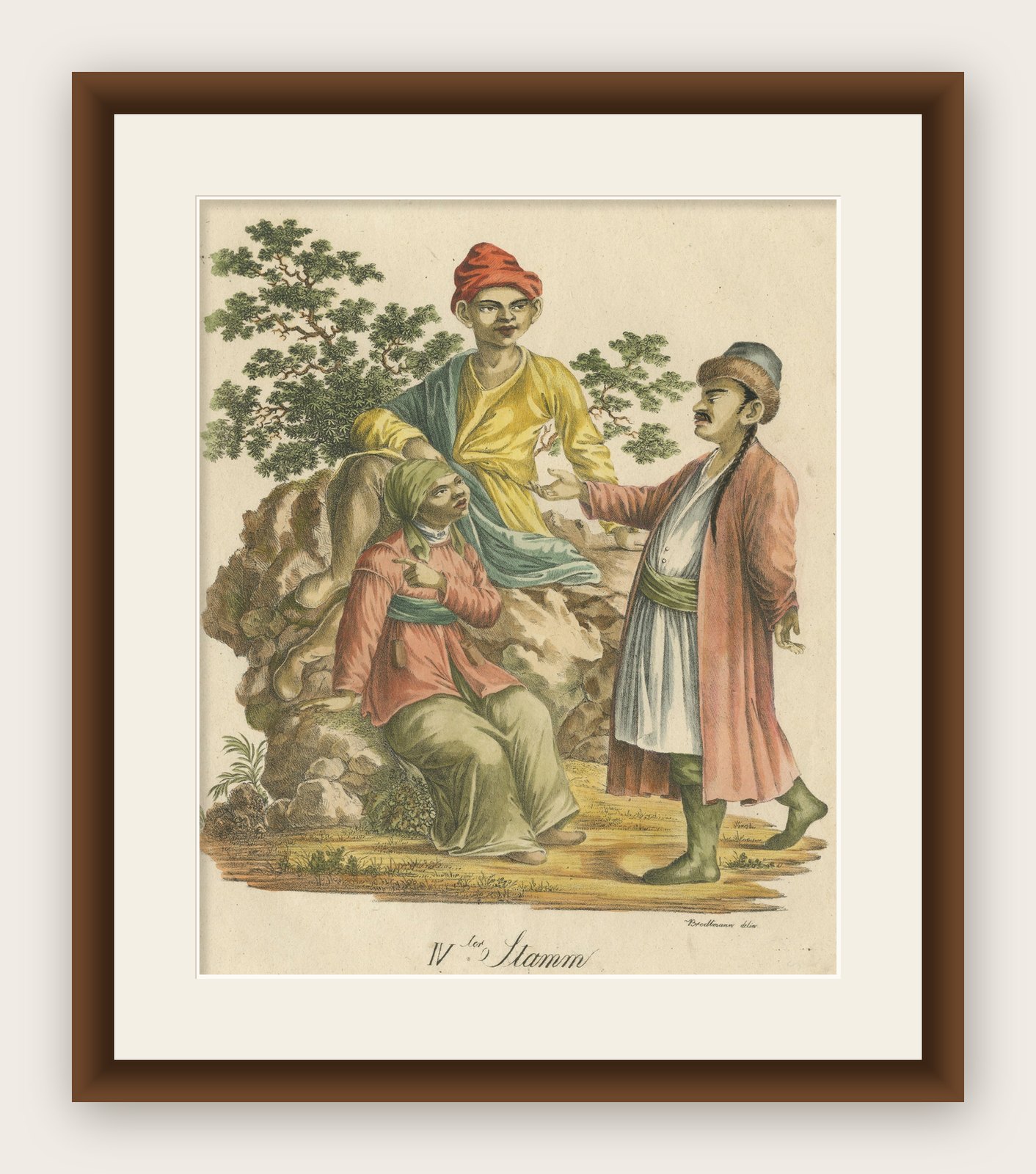
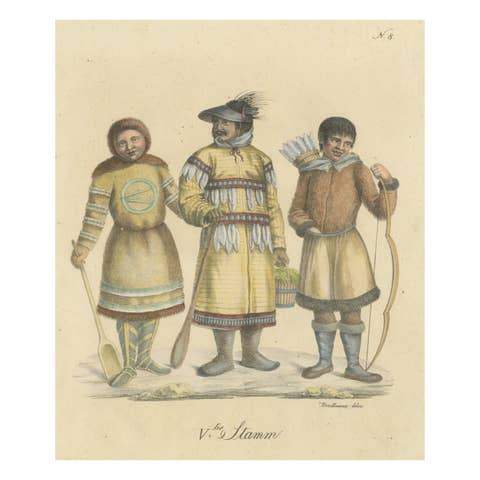
IVter Stamm – Kalmyk, Mongolic Woman and Japanese c.1816
€ 660
Original antique · The actual sheet photographed · Certificate of authenticity on request · Sold unframed · Worldwide shipping from € 15 (rates)
Date
1816
Sheet size
43 × 33.5 cm (16.9 × 13.2 in)
Condition
Good
Reference
BG-13581-3
What the condition grades mean
Excellent
Bright and clean, with no faults worth mentioning.
Very good
Only light signs of age, such as faint toning.
Good
Normal signs of age for a sheet of this period: toning, some foxing, small marks or neat old repairs.
Fair
Clear faults such as staining, tears or repairs, priced to match.
Every fault we see is written in the condition note, and the whole sheet is shown uncropped in the photos.
Condition
Condition summary: Good state with strong paper, minimal toning, no tears or repairs noted. Colors remain fresh and well-preserved, with only light age-related foxing near the edges. Paper is firm with a slight sheen typical of early lithographs.
About this sheet
IVter Stamm – Kalmyk, Mongolic Woman and Japanese c.1816
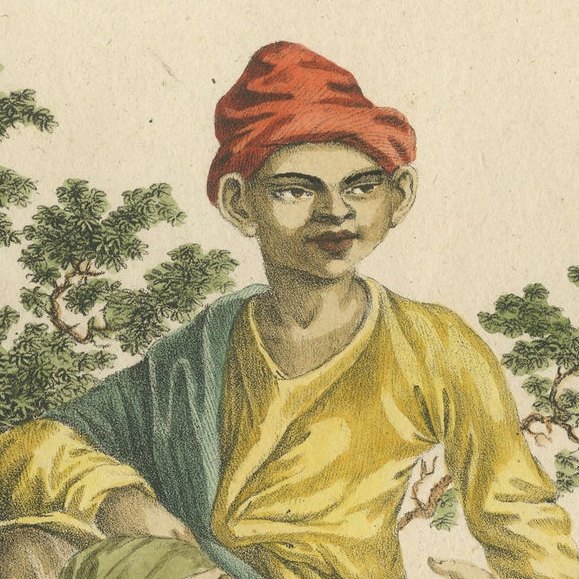
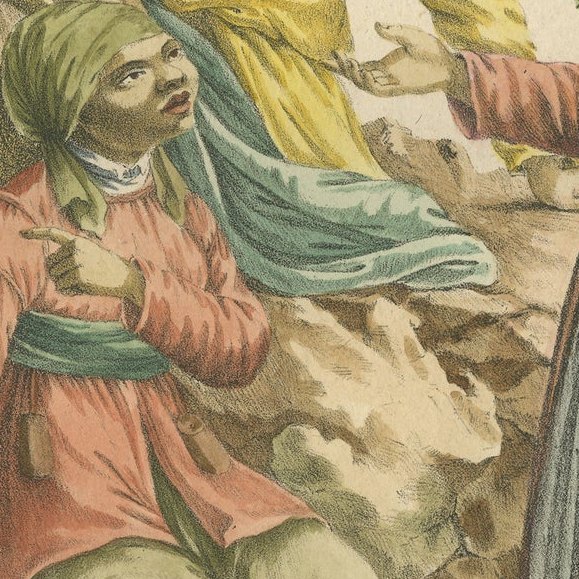
This antique print depicts three figures identified as a Kalmyk man, a Mongolic woman, and a Japanese man. The Kalmyk figure, seated to the left, wears a green head covering and reddish tunic with trousers, suggesting traditional steppe attire. The Japanese man, standing to the right, is dressed in a long pink robe tied with a green sash and wears a hat typical of early 19th-century Japanese travel or merchant dress. Between them, seated on a rock, is the Mongolic woman in a yellow robe with a red headscarf, highlighting her cultural attire with its distinct East Asian influence.
This lithograph was produced by Karl Joseph Brodtmann around 1816 and is part of his series ‘Naturhistorische Bilder-Galerie,’ an important early 19th-century work that combined ethnographic depiction with natural history and zoological plates. Brodtmann’s prints are notable for their delicate hand-coloring and their role in disseminating knowledge about distant peoples in a pre-photography era when European curiosity about Asia was growing rapidly. This print reflects contemporary European perspectives on Asian ethnicities, their costumes, and physiognomies, often presented in idealized or stereotypical ways but valuable today as cultural and historical artefacts.
The lithographic technique used here, with careful linear shading and subtle coloring, typifies Brodtmann’s style. His works remain sought after for their scientific and ethnographic relevance and as examples of early lithography, a relatively new printmaking process in the early 19th century that allowed mass publication with fine detail.
Condition summary: Good state with strong paper, minimal toning, no tears or repairs noted. Colors remain fresh and well-preserved, with only light age-related foxing near the edges. Paper is firm with a slight sheen typical of early lithographs.
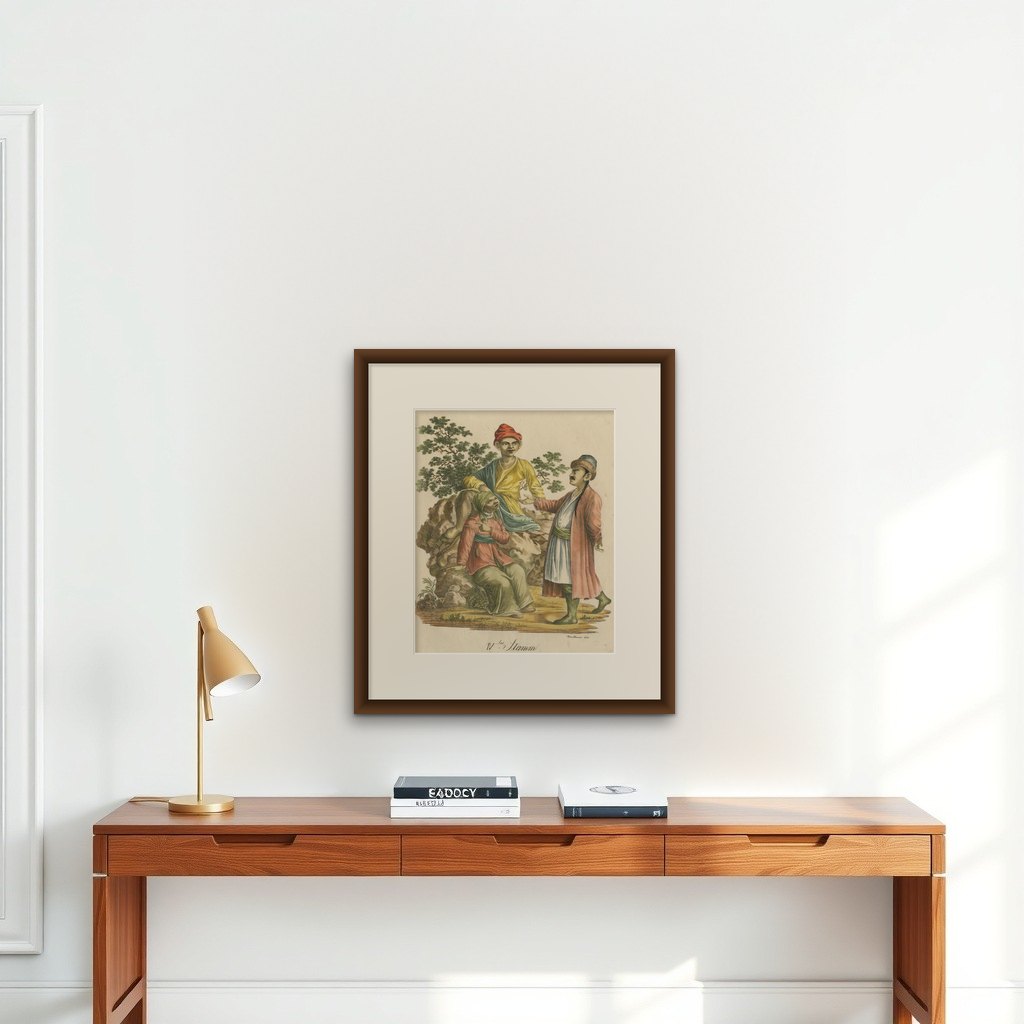
Framing tips: This print would suit a light cream or soft olive mount to complement the earthy tones of the costumes. A simple walnut or dark teak wood frame can enhance its historic character, while a black frame with a gold inner line will give it a museum-quality presentation. UV-protective glass is recommended to preserve the colors of the hand-finished lithograph.