About this sheet
Antique Chinese Architecture Design Prints — Temple Elevations & Plans, Ferrario 1815
This refined set of three hand-colored copperplate engravings originates from Giulio Ferrario’s monumental early nineteenth-century publication Il Costume Antico e Moderno (Ancient and Modern Costumes of all the Peoples of the World), published in Florence, Italy, in 1815. Designed as an ambitious visual survey of global cultures, architecture, and decorative traditions, Ferrario’s work reflects the Enlightenment-era fascination with ethnography, design history, and cross-cultural artistic exchange.
This prints are offered unframed, allowing the buyer full freedom of framing choice.
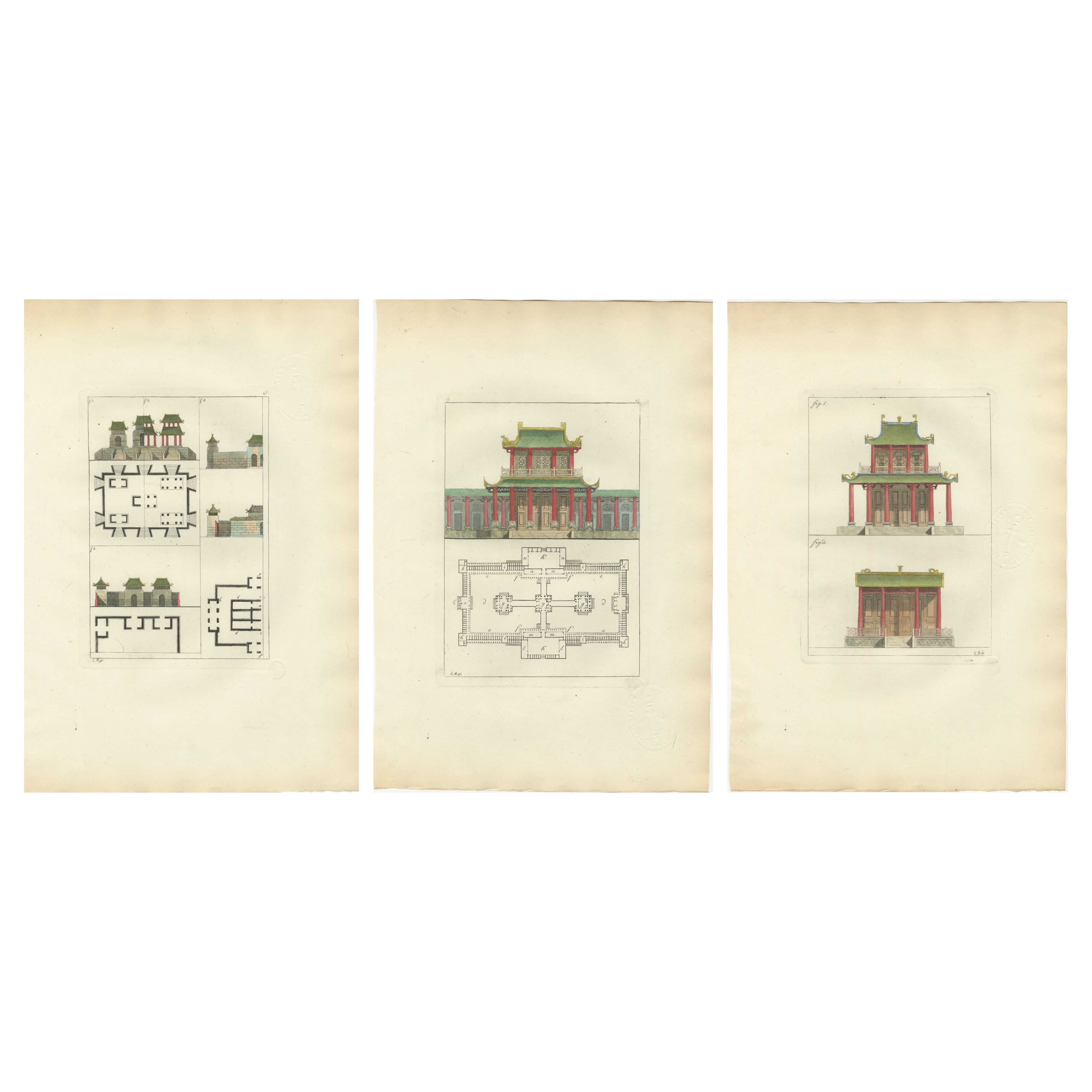
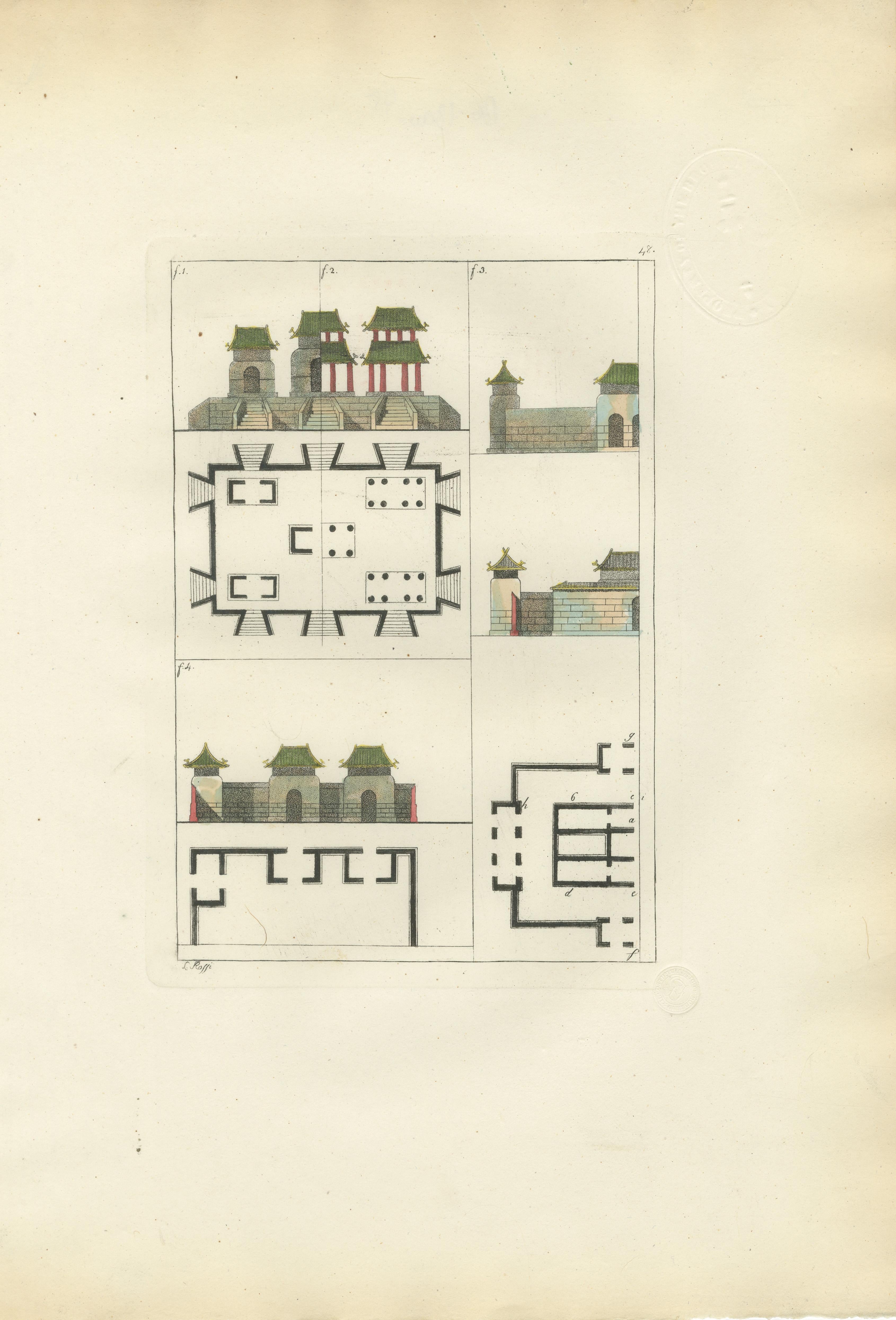
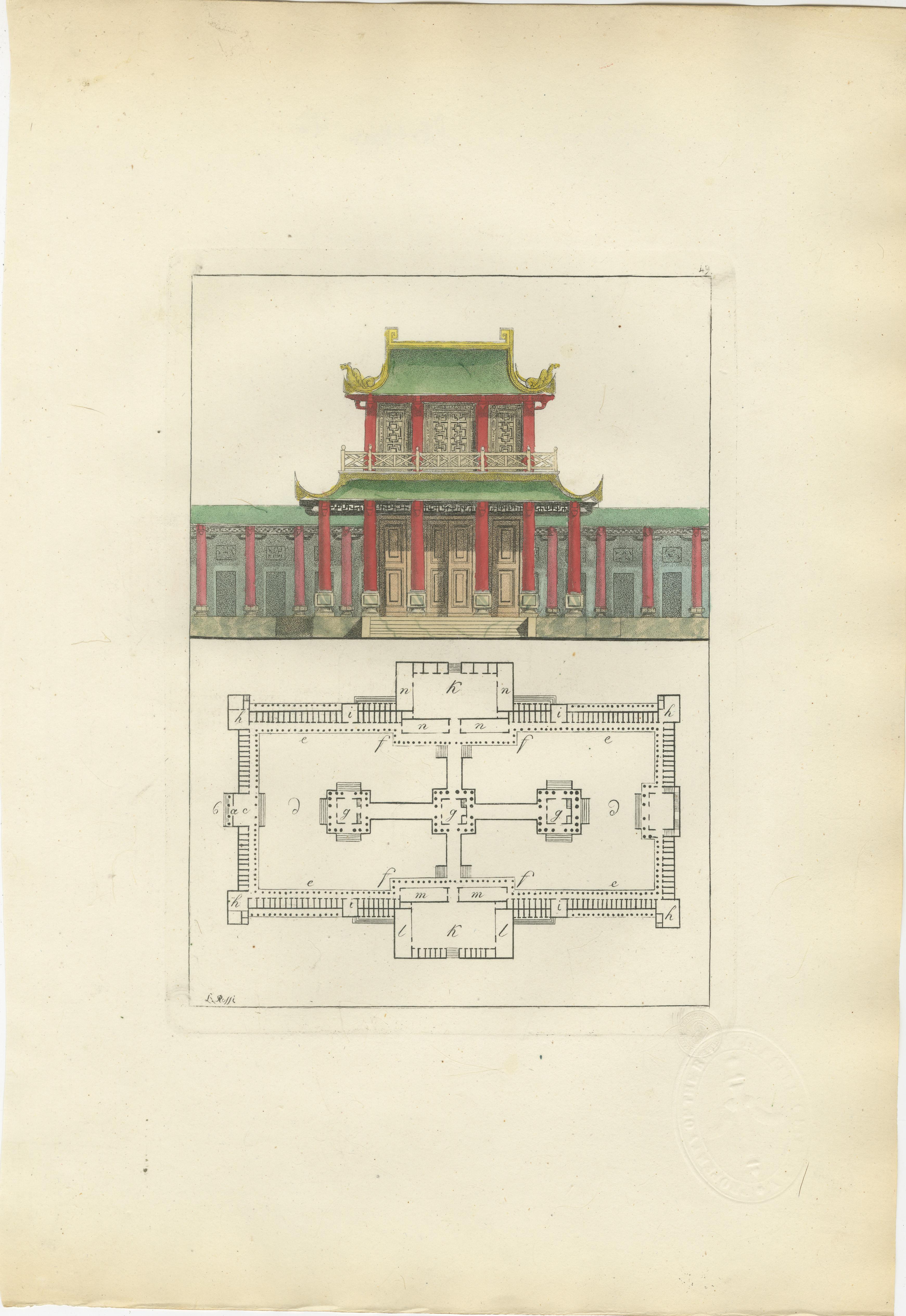
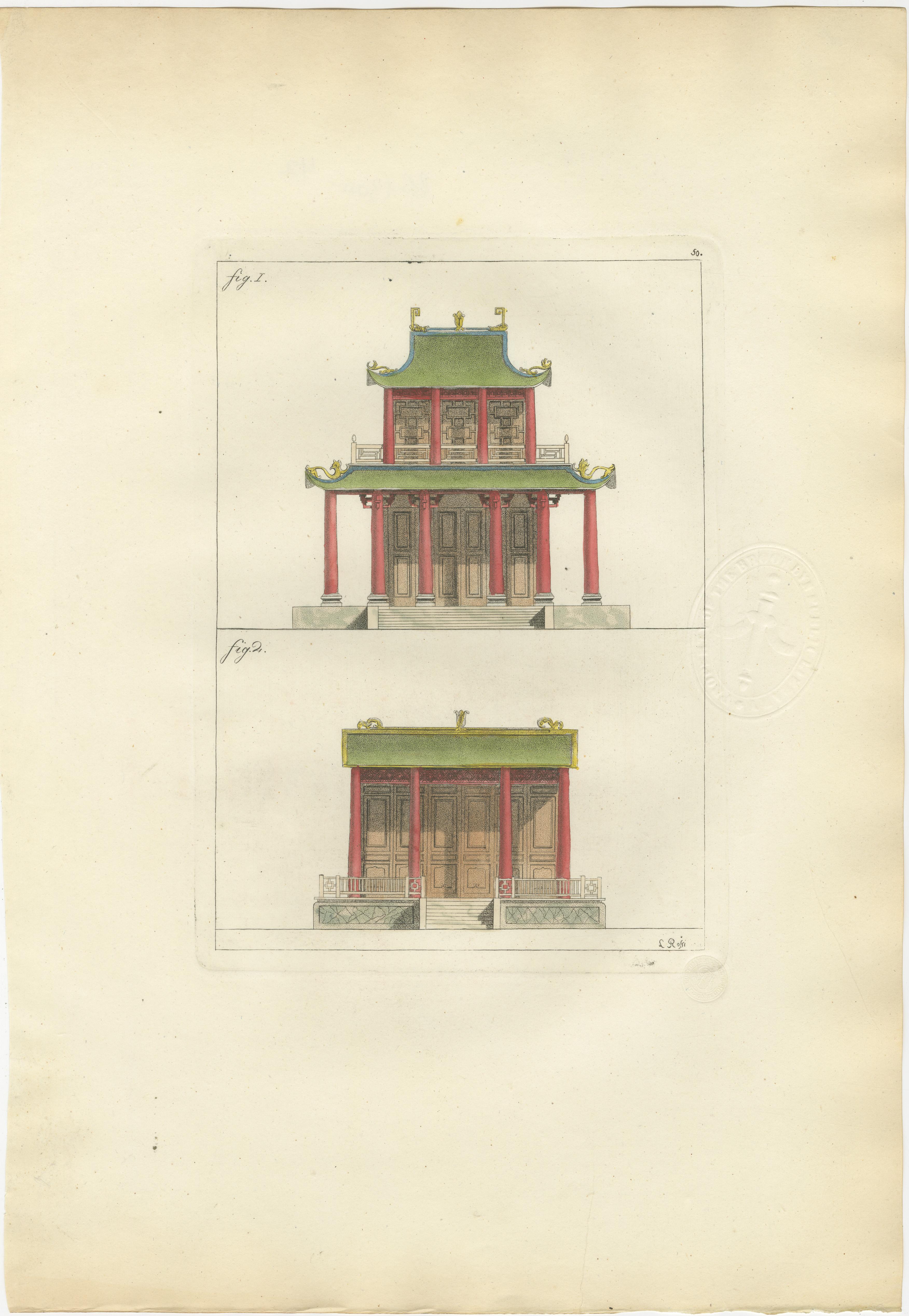
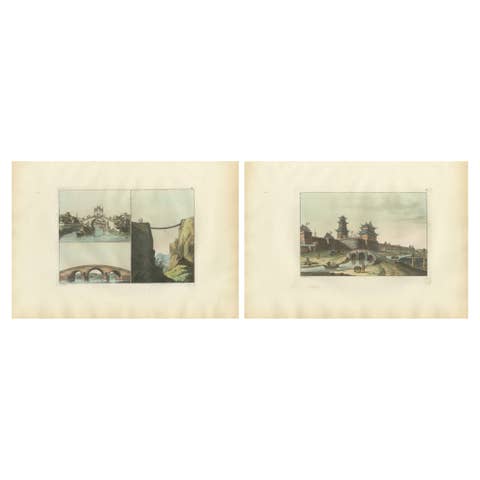
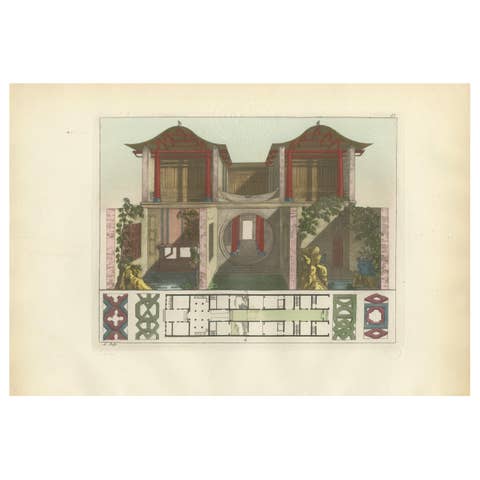
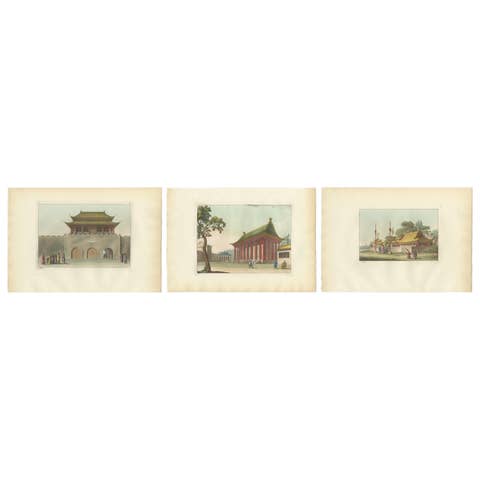
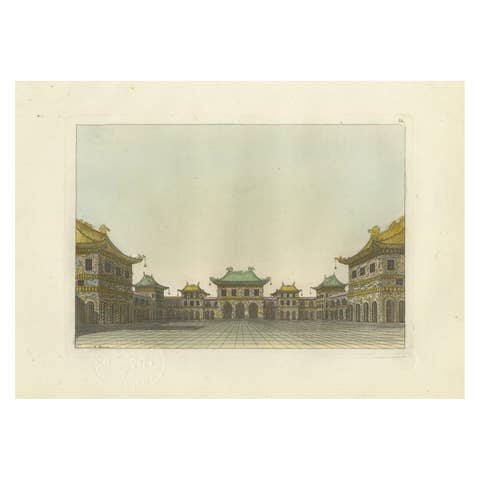
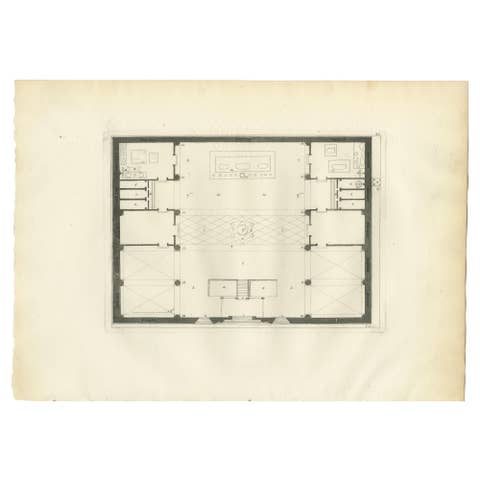
The present group illustrates Chinese architectural studies, including temple façades, pavilions, structural elevations, and architectural plans. The plates combine detailed elevations with schematic floor plans and sectional views, demonstrating both aesthetic refinement and technical precision. Characteristic features of traditional Chinese architecture are highlighted, including tiered pagoda-style roofs, curved eaves, symmetrical layouts, and red-columned façades supporting green tiled roof structures. The careful hand coloring emphasizes the architectural geometry while retaining the scholarly clarity of the engraved lines.
Produced for a European audience eager to explore global artistic traditions, these engravings represent early nineteenth-century interpretations of Chinese architectural design. Such plates served as visual references for architects, designers, and collectors interested in exotic forms and ornamental systems. Today they are appreciated both as historical documents and as sophisticated decorative works, combining architectural study with elegant composition.
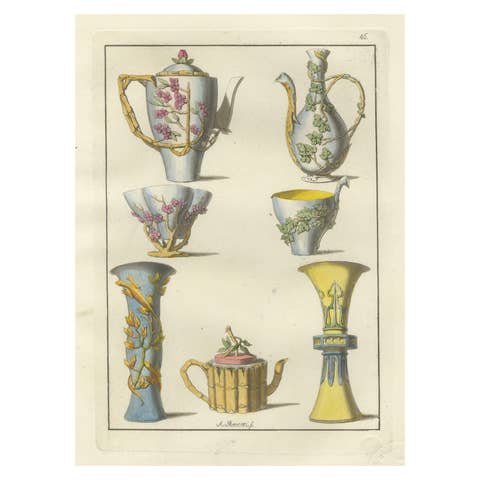
As a set, the three engravings create a visually balanced narrative: one plate presenting multiple structural views and plans, a central symmetrical temple elevation acting as the focal point, and a complementary plate showing pavilion forms and variations. This cohesive arrangement makes the group especially suitable for display as a curated ensemble, offering intellectual depth alongside decorative appeal.
Ferrario plates remain highly sought after by collectors of ethnographic prints, architectural studies, and decorative arts imagery. Their refined scale and harmonious color palette make them particularly attractive to interior designers seeking historically rich yet visually clean wall compositions.
Condition report:
Good condition consistent with age. Plate marks visible. Light toning, minor foxing, and occasional handling wear typical of early nineteenth-century paper. Original embossed blind stamp visible on the sheets, as issued, with possible light overlap into the image area. Overall strong impressions with attractive contemporary hand coloring.
Framing tips:
This set benefits from uniform framing to emphasize cohesion. Dark walnut, ebonized, or gilt frames paired with generous ivory or off-white mats enhance the architectural lines and subtle coloration. Hanging the three prints in a horizontal row with equal spacing creates a balanced gallery-style presentation ideal for both classic and contemporary interiors.
Technique: Hand-colored copperplate engravings
Maker: Giulio Ferrario (publisher), engravings after Andrea Bernieri and workshop, Florence, Italy, 1815
Keywords:
Giulio Ferrario, Il Costume Antico e Moderno, Chinese architecture print, antique architectural engraving, Chinese temple design, pagoda architecture, architectural elevation print, architectural plan engraving, antique design study, ethnographic architecture illustration, hand-colored copperplate engraving, Italian engraving 1815, Enlightenment era print, Asian architecture illustration, antique Chinese building print, decorative architectural print set, antique architectural study, collectible antique prints, interior designer wall art, neoclassical ethnographic illustration, historical architecture engraving, antique design reference, Chinese pavilion architecture, architectural history print, museum quality antique engraving, early nineteenth century Italian printmaking, architectural decorative art.