About this sheet
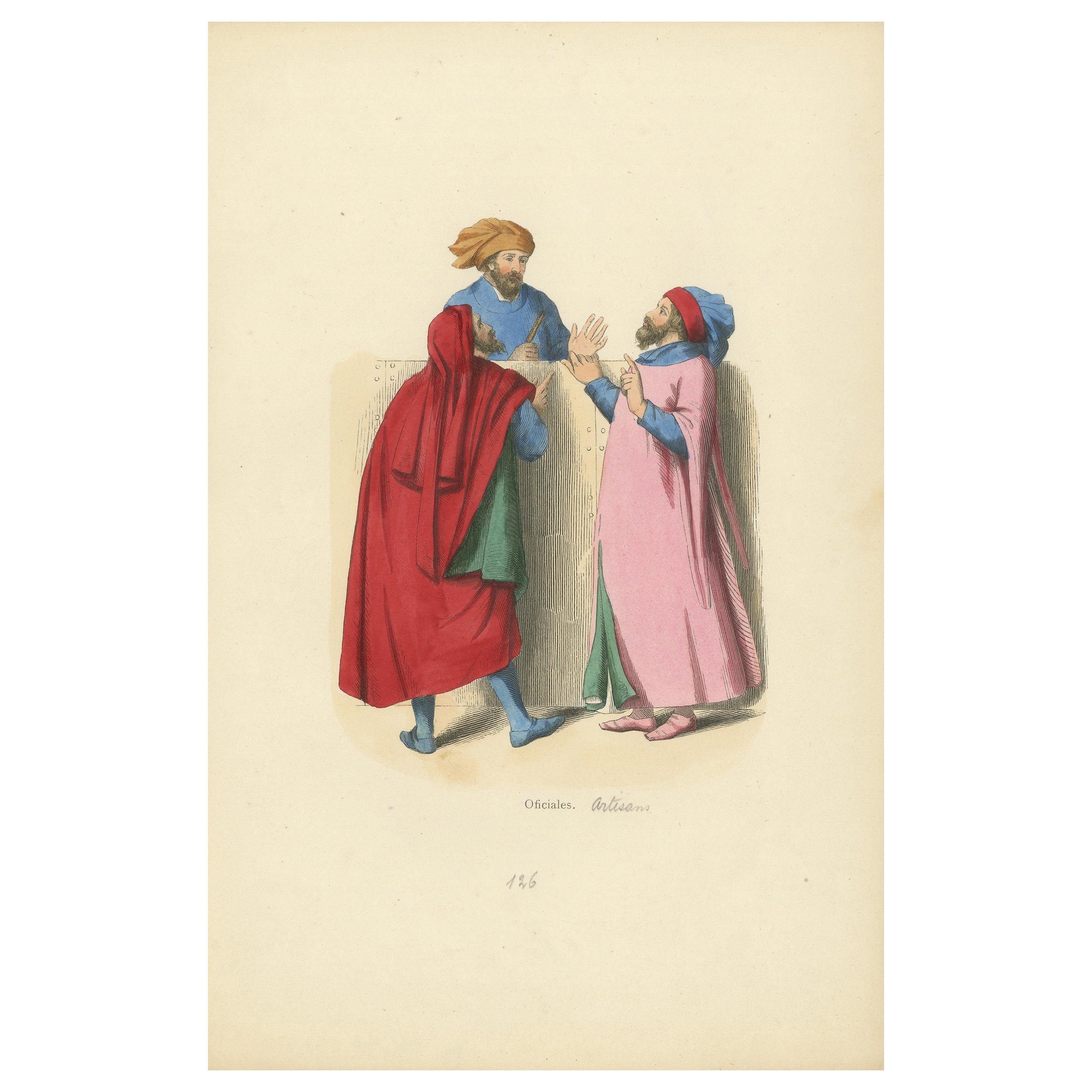
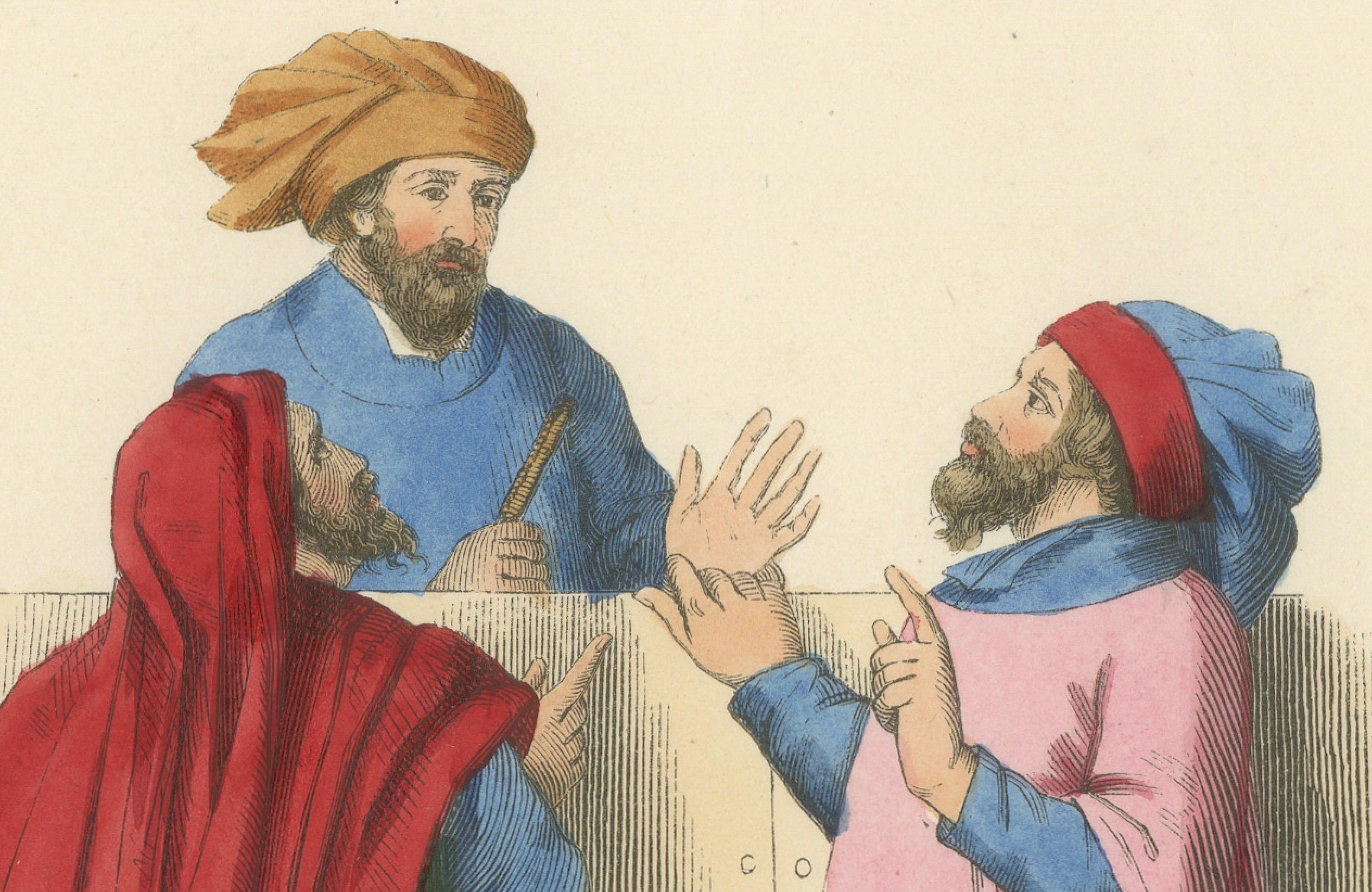
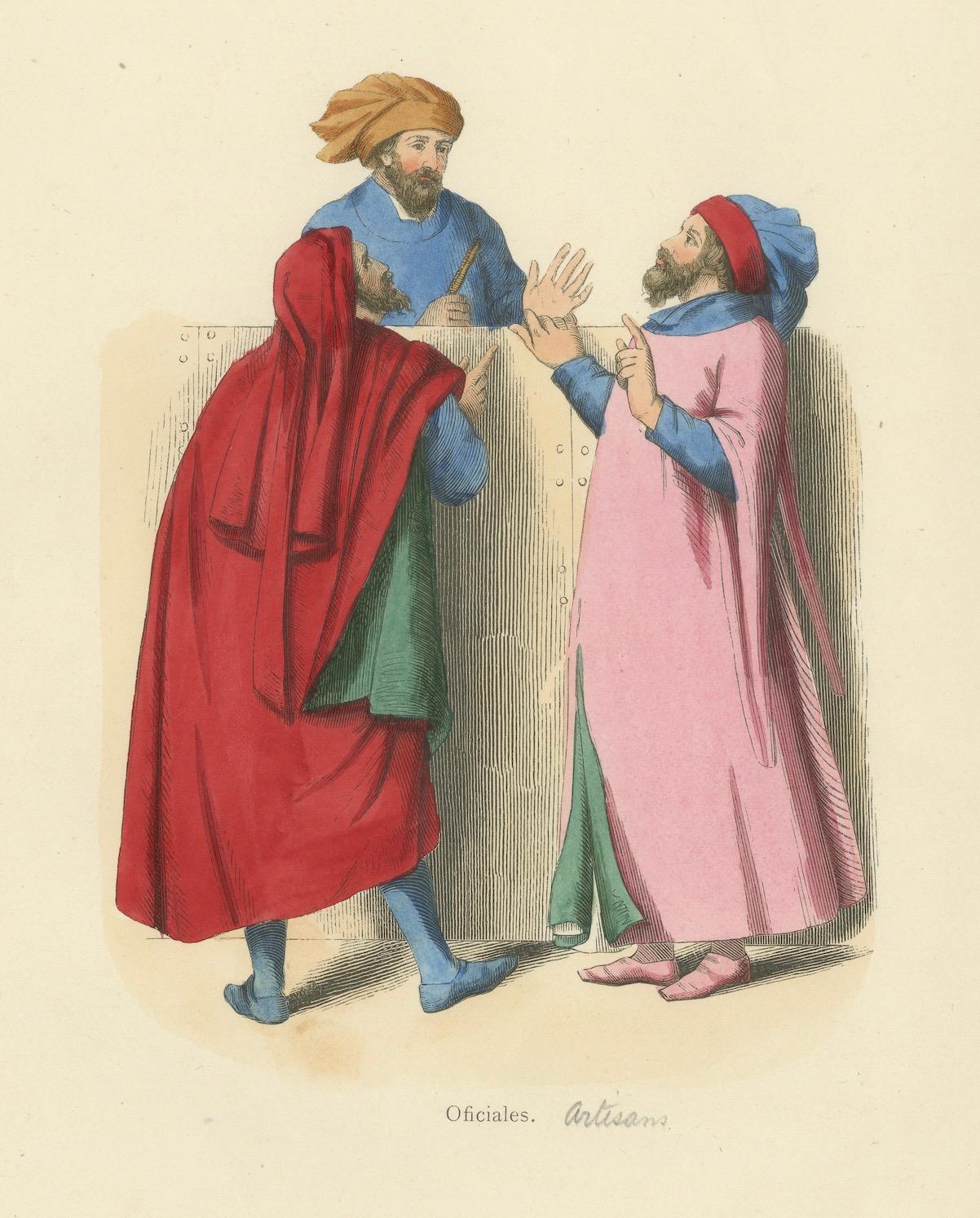
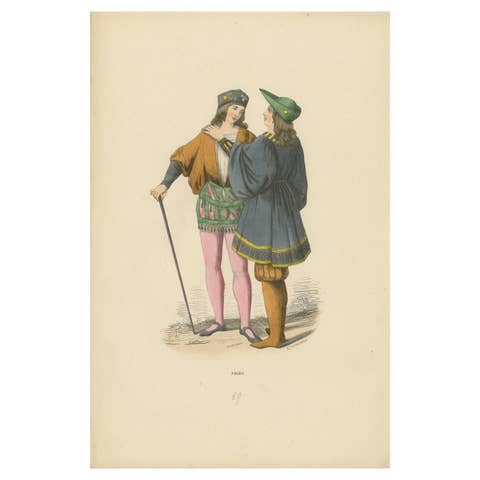
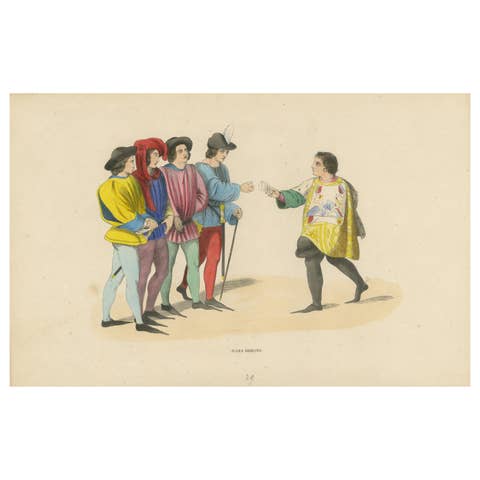
This vibrant lithograph, extracted from the 1847 publication "Costume du Moyen Âge," illustrates a lively exchange between two medieval officials, possibly in the streets of Antwerp. The scene is imbued with a sense of dynamic interaction, as one official, draped in a striking red cloak over a green tunic and blue leggings, gestures emphatically towards his colleague. This official's turban-like headdress, a rich caramel color, suggests a blend of cultural influences within the medieval period.
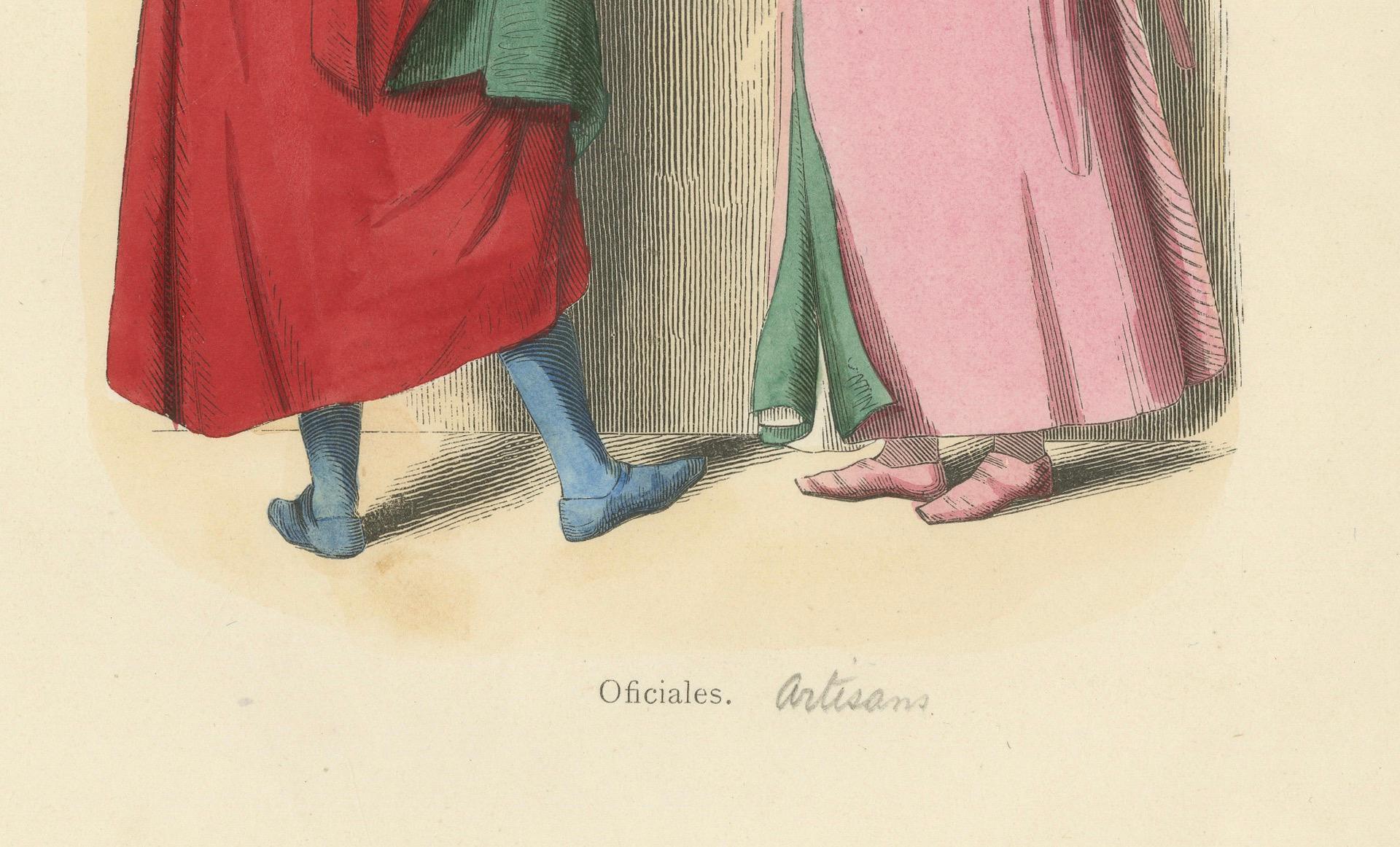
The second official, engaged in conversation, is adorned in a long, rose-colored robe and a contrasting blue headdress, his hands raised in a gesture that might indicate explanation or argument. Both figures wear pointed shoes, a fashion characteristic of the era, and their facial expressions are animated, capturing the essence of their discussion.
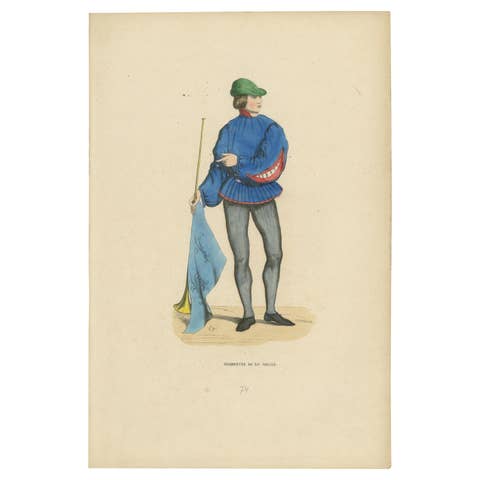
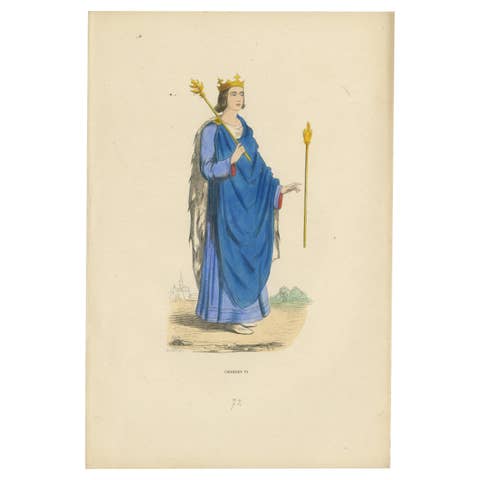
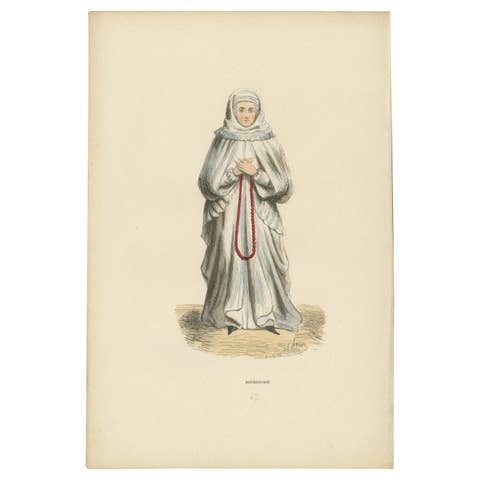
Set against a neutral background, the focus is on the rich colors of their garments and the implied motion of their exchange. The artist's use of color and attention to the details of the clothing serve not only to distinguish the individuals’ status and roles but also to provide insight into the fabrics, styles, and sartorial customs of the time.
The lithograph serves a dual purpose: as a faithful reproduction of medieval attire and as a snapshot of the social dynamics of the period. It is a visual narrative that speaks to the daily life of officials in medieval society, offering a glimpse into the interpersonal communication and vibrant street life of the time. The image is a testament to the publication's goal of portraying the intricate details of medieval customs, costumes, and societal interactions with historical accuracy and artistic finesse.
The colors have a nice glow over them. Historically, egg whites, known as glair, and sometimes egg yolk were indeed used in illumination and painting, particularly in manuscripts, to give colors a brighter appearance and to add a sheen or gloss to the work. This technique was quite common during the Middle Ages and into the Renaissance.
Egg whites can be applied as a varnish over pigments to enhance their brightness and to protect the colors. This application could make the colors appear more vivid and also add a slight glossy sheen to the surface of the image.
Egg yolk, on the other hand, was commonly used as a binding agent in paint. It forms the basis of tempera paint, a medium that was widely used before the advent of oil painting. Egg yolk helps to create a durable and long-lasting color that adheres well to various surfaces.
In the context of the print from 1847, it's less likely that egg whites or yolks were used directly on the print, as by that time, commercial printing processes would have been more advanced and less reliant on such manual methods. However, if this print is a representation of an earlier style or is meant to mimic the appearance of hand-painted manuscripts, the original artists might have employed techniques or materials that gave a similar effect to those achieved with egg-based binders and varnishes.