About this sheet
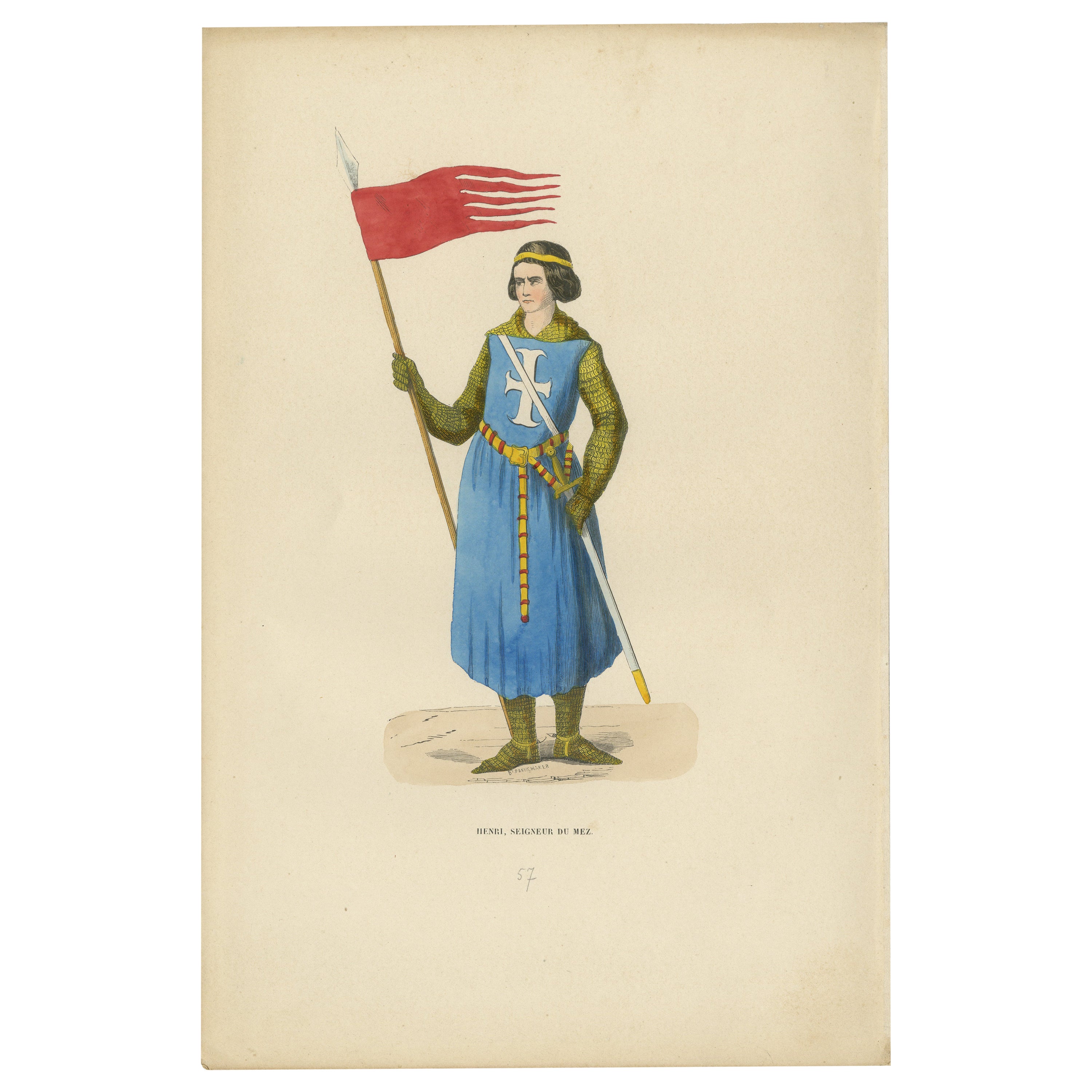
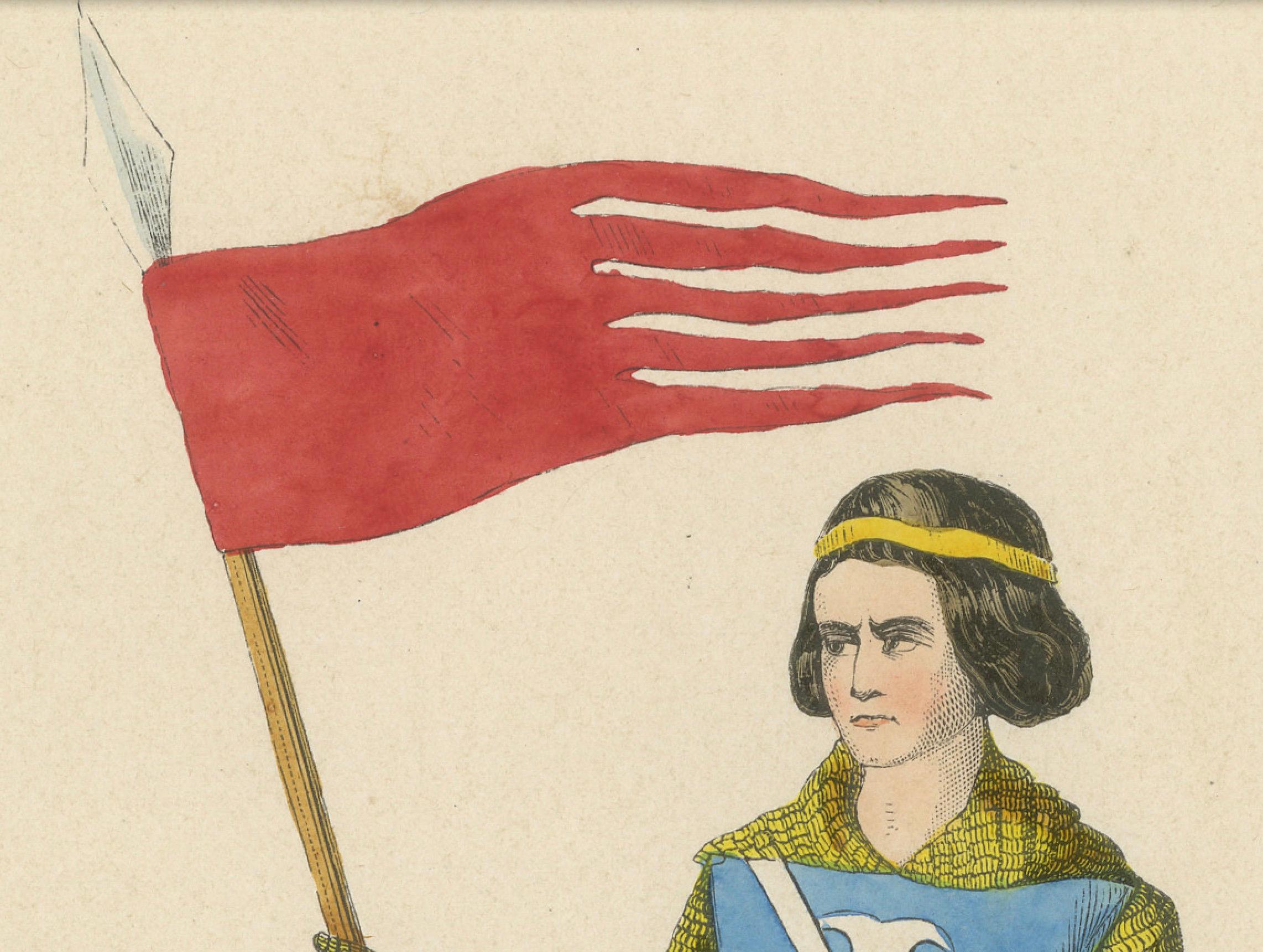
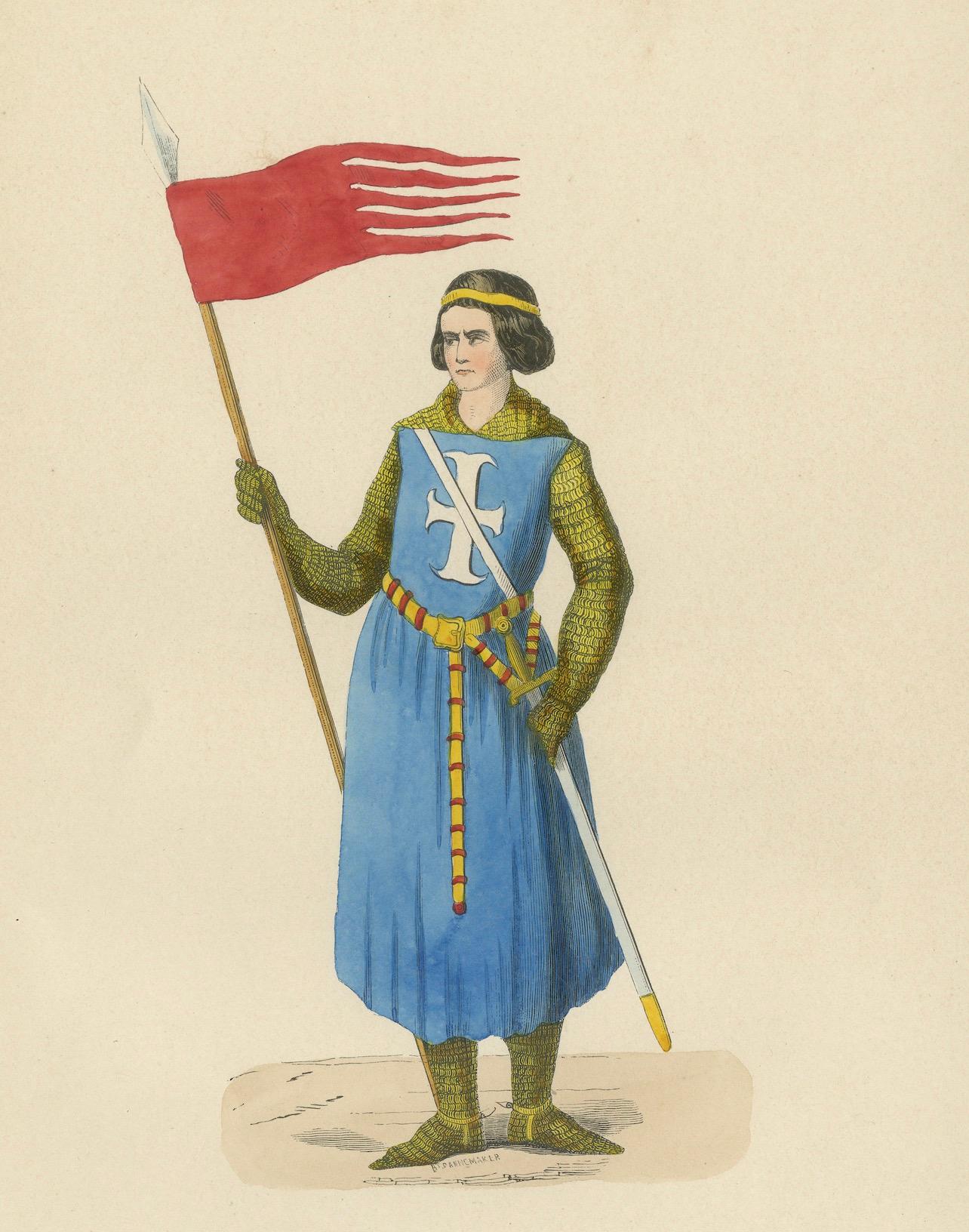
This colorful print from the "Costume du Moyen Age" series likely depicts Henri, Seigneur du Mez, a lord or knight from the Middle Ages. He stands in a proud and upright pose, holding aloft a red banner that flutters to the side, its frayed ends suggesting it has seen the test of wind and battle. The banner is affixed to a long wooden pole, topped with a metal spearhead, indicating its dual purpose for display and combat.
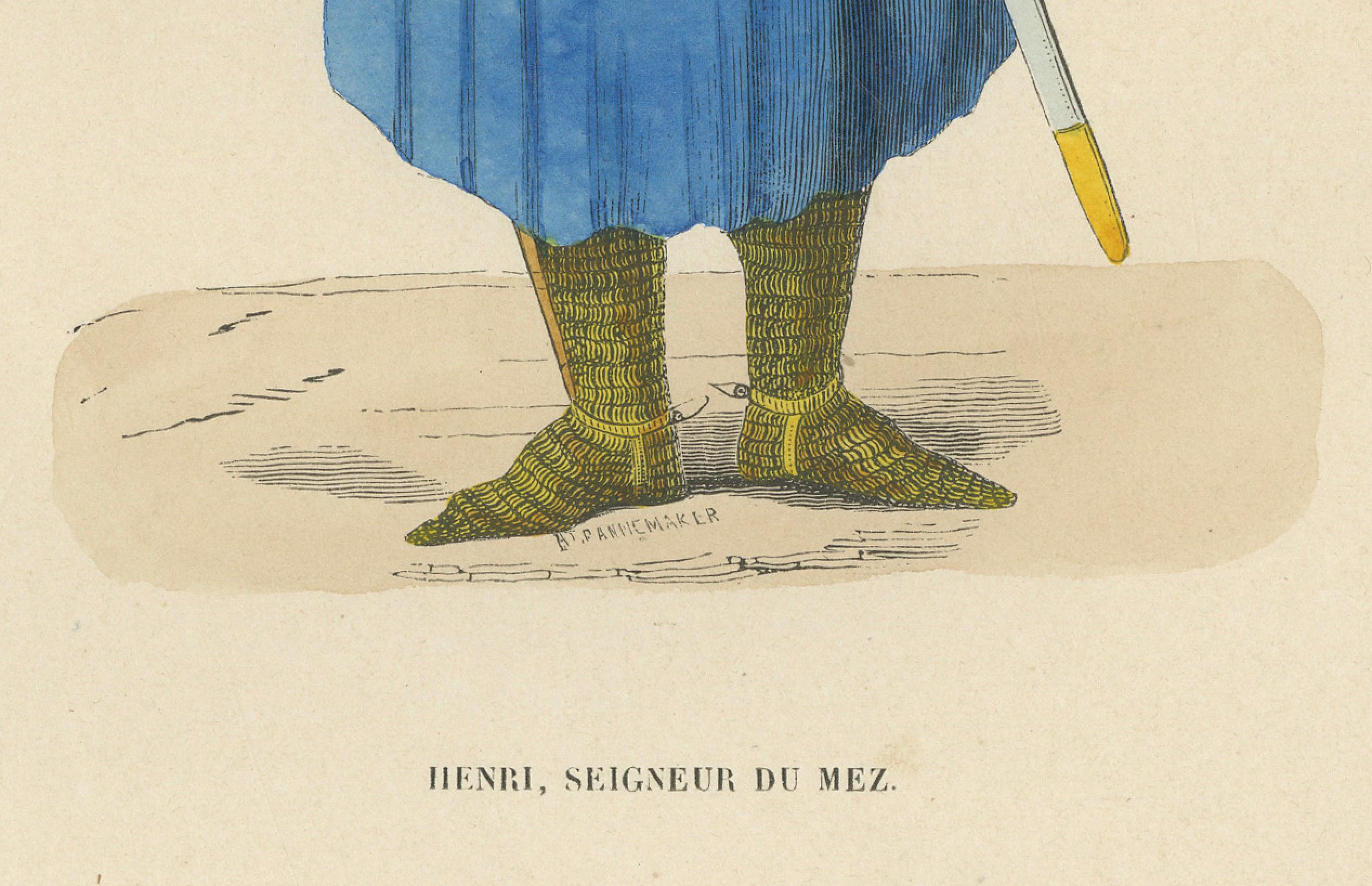
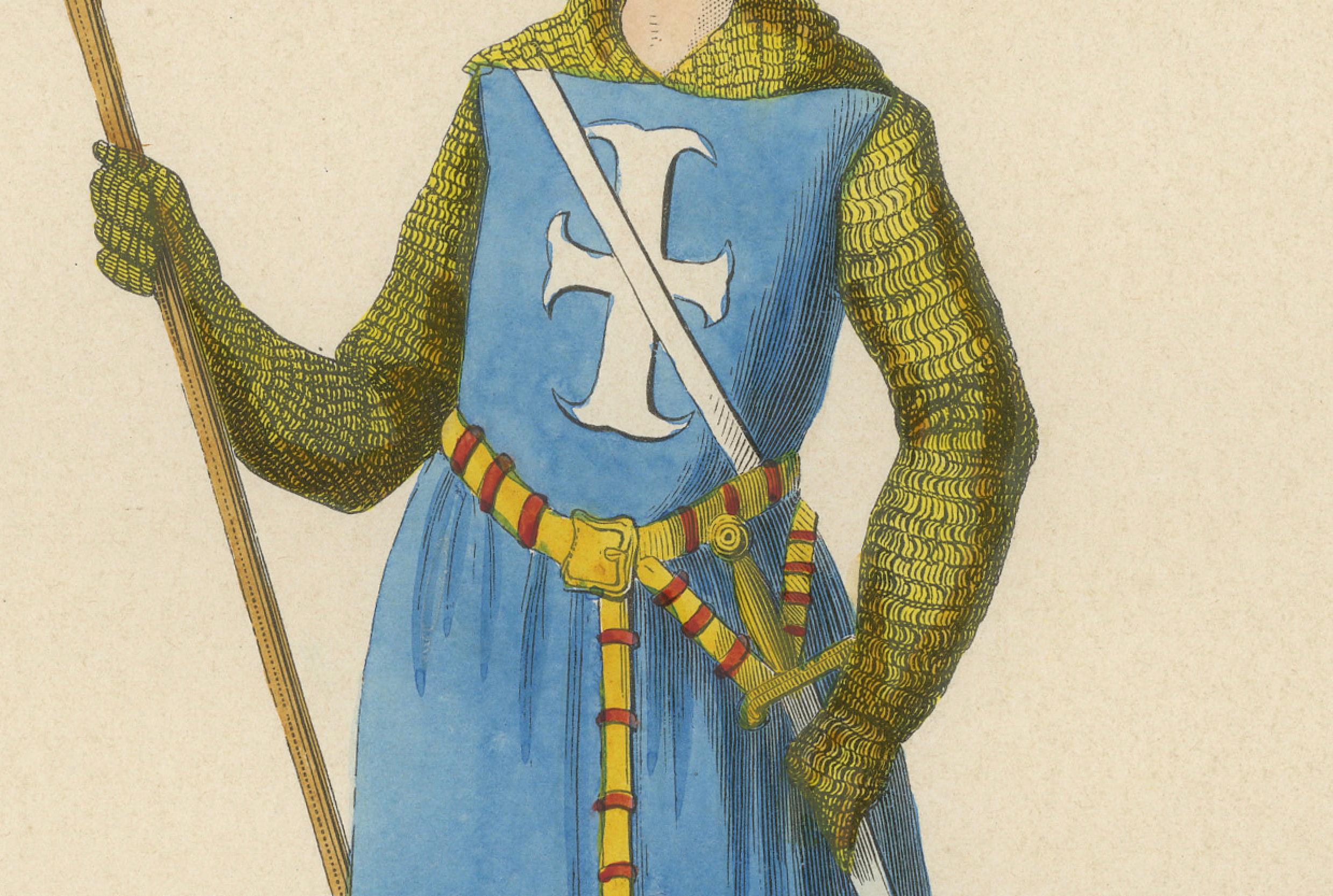
The knight is clad in a blue tunic emblazoned with a white cross, a symbol that may represent his faith, his liege, or his region. Beneath the tunic, he wears a chainmail hauberk, which extends to his wrists and knees, providing a detailed look at the protective gear of the time. His legs are also covered in chainmail, and he wears green hose underneath, a common element in medieval attire.
Around his waist, a multicolored belt cinches the tunic, providing a splash of contrasting color that matches the yellow and red stripes on the banner pole. His feet are shod in practical, sturdy shoes suitable for marching or standing in formation.
The lord's head is adorned with a simple yet elegant black headband, and his expression is one of determination and resolve, fitting for a man of his station. His short, dark hair frames a face that is serious, perhaps reflecting the gravity of his responsibilities as a lord and a warrior. This print captures the essence of medieval knighthood: the nobility, the heraldry, and the martial spirit that characterized the feudal lords of the era.
The colors have a nice glow over them. Historically, egg whites, known as glair, and sometimes egg yolk were indeed used in illumination and painting, particularly in manuscripts, to give colors a brighter appearance and to add a sheen or gloss to the work. This technique was quite common during the Middle Ages and into the Renaissance.
Egg whites can be applied as a varnish over pigments to enhance their brightness and to protect the colors. This application could make the colors appear more vivid and also add a slight glossy sheen to the surface of the image.
Egg yolk, on the other hand, was commonly used as a binding agent in paint. It forms the basis of tempera paint, a medium that was widely used before the advent of oil painting. Egg yolk helps to create a durable and long-lasting color that adheres well to various surfaces.
In the context of the print from 1847, it's less likely that egg whites or yolks were used directly on the print, as by that time, commercial printing processes would have been more advanced and less reliant on such manual methods. However, if this print is a representation of an earlier style or is meant to mimic the appearance of hand-painted manuscripts, the original artists might have employed techniques or materials that gave a similar effect to those achieved with egg-based binders and varnishes.