About this sheet
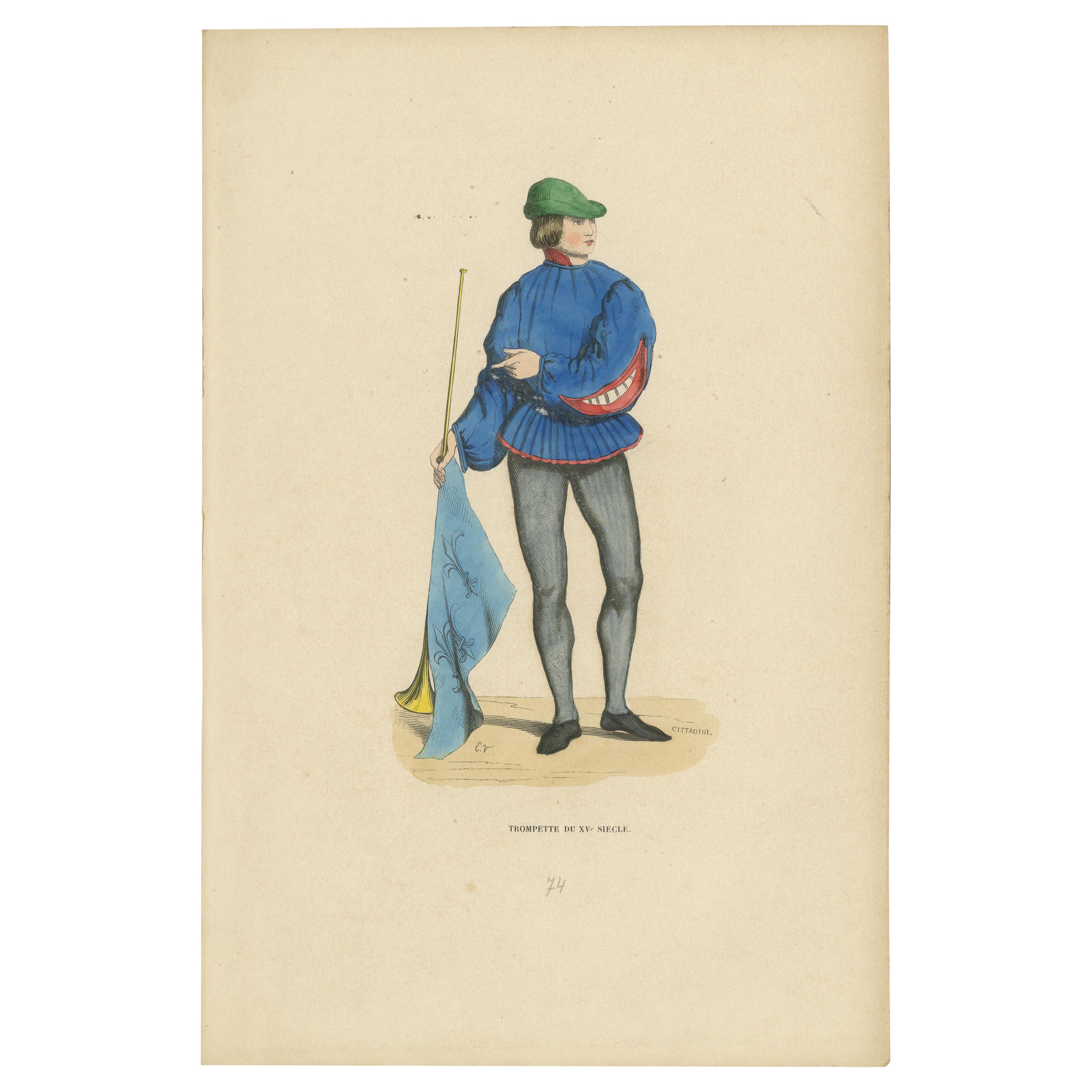
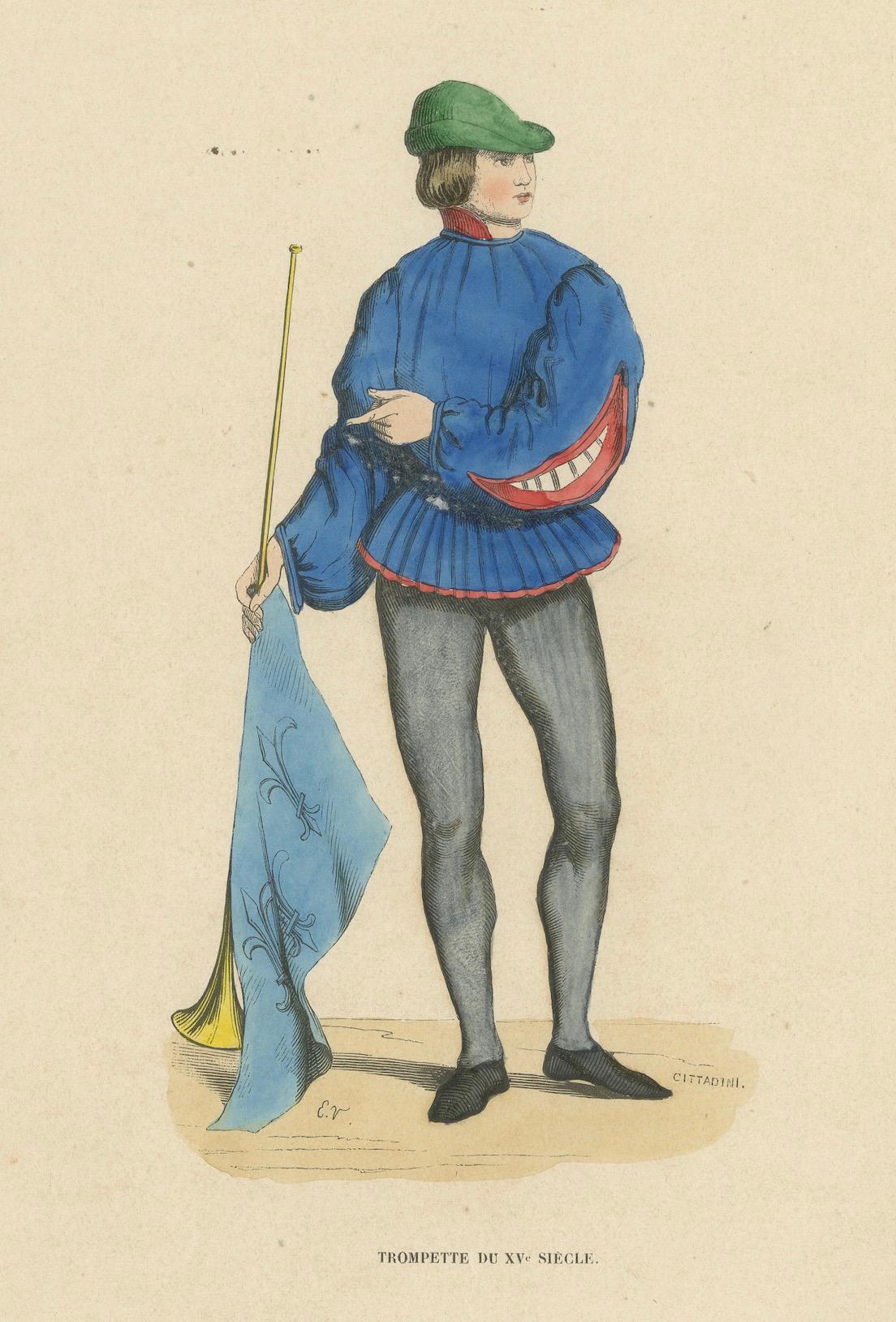
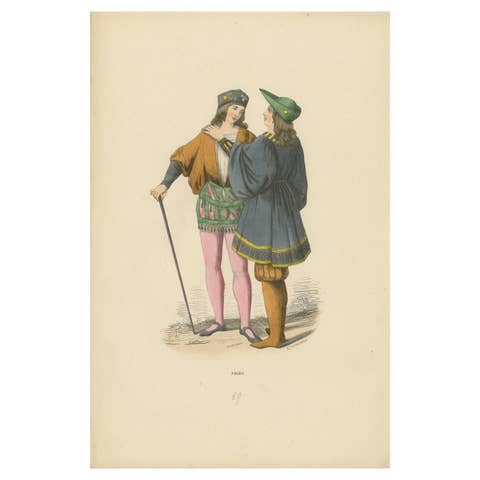
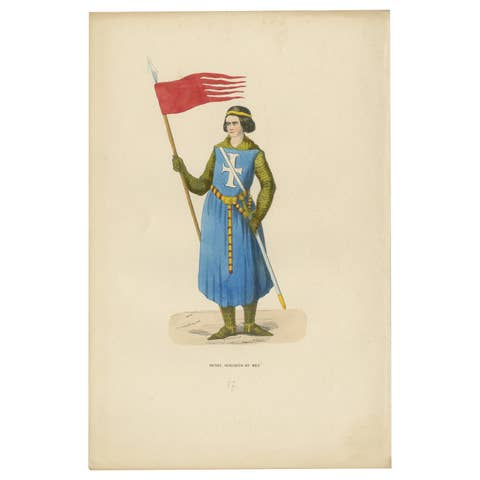
This print depicts a trumpeter from the 15th century, known as a herald, who served the crucial role of conveying messages and announcements in a time before modern communication methods. His attire is both practical for his duties and indicative of his position as an important figure in disseminating information and royal proclamations.
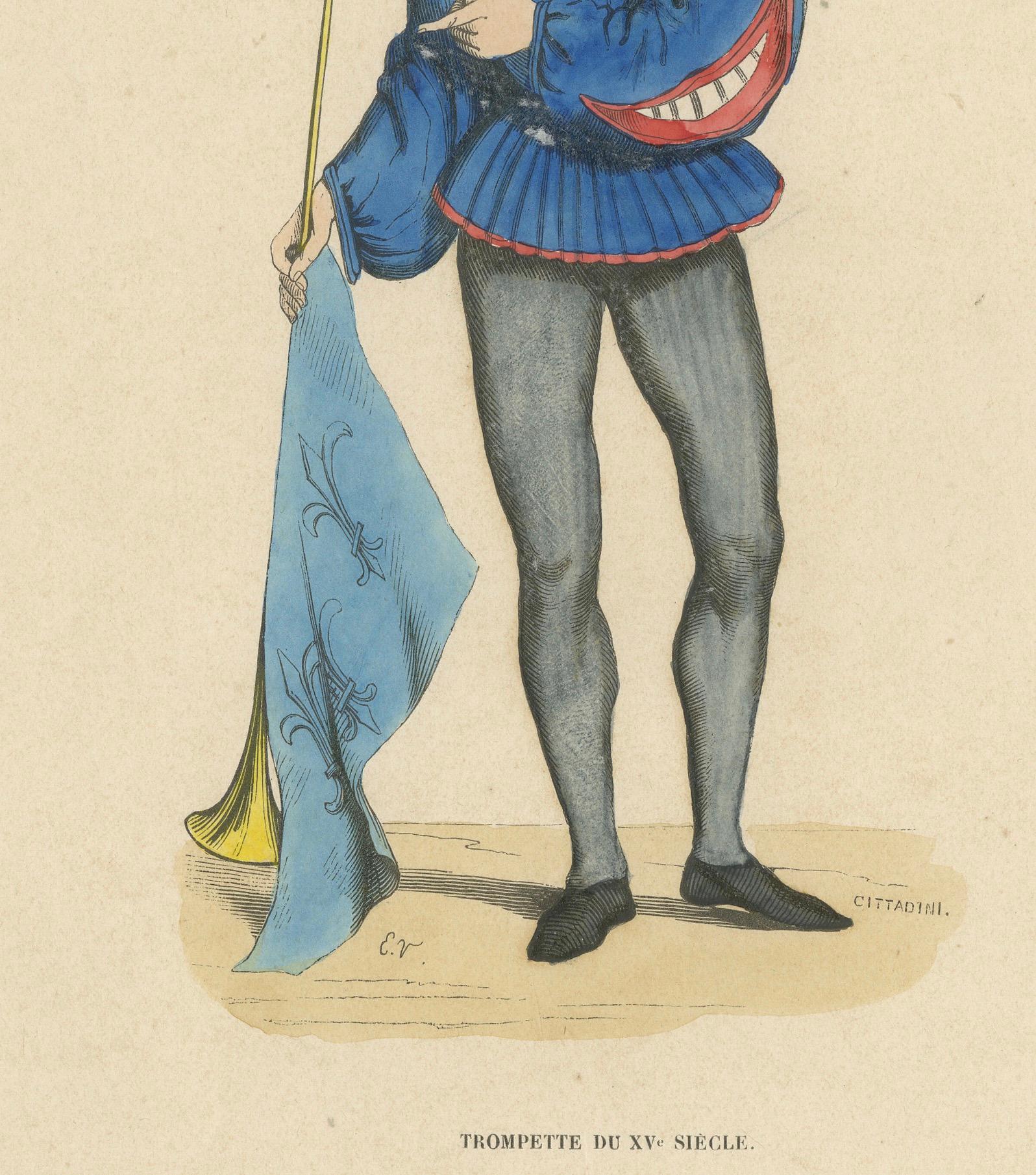
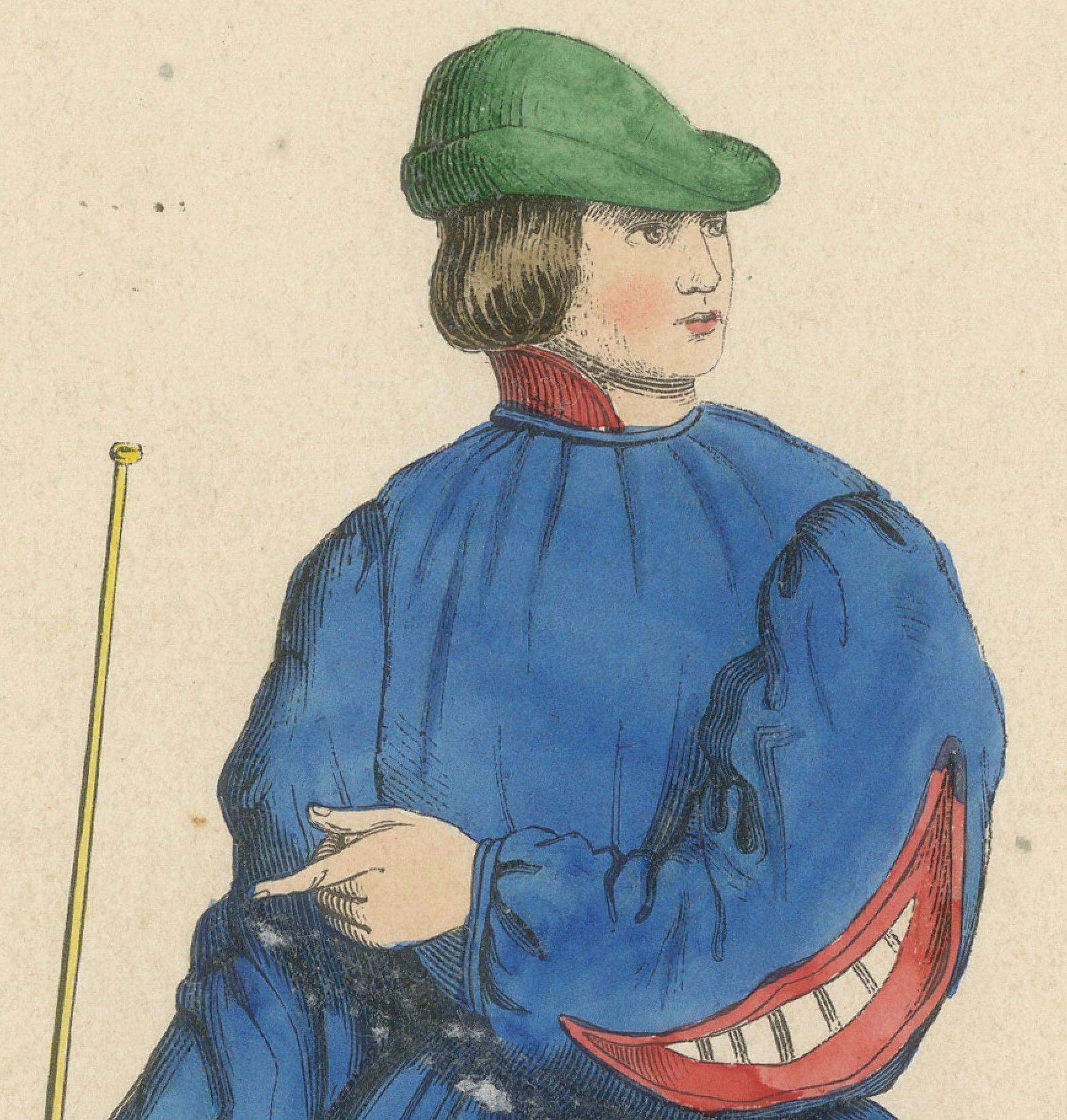
He is dressed in a vibrantly colored blue jacket with a high collar, which is both stylish and bold, likely designed to make him stand out in a crowd. The jacket is accented with a red band that adds a striking contrast. Beneath the jacket, his leggings are a darker shade, fitted tightly to his legs, a common style of the era that allowed for ease of movement.
The trumpeter's hat is a flat cap style, common in the Renaissance period, which is both functional and fashionable. The green color of the cap matches well with the red and blue of his outfit, making him highly visible, which would be essential in his role.
In his hand, he holds a long trumpet, an instrument used for signaling and making public declarations. The trumpet is adorned with a decorative banner that is likely to bear the emblem or coat of arms of the noble or royal he serves.
His posture is relaxed yet alert, capturing the readiness required of someone whose job it was to attract attention and deliver news. The look on his face is one of concentration, perhaps listening for his cue to play or announce the next message.
This image offers a glimpse into the life and duties of a Renaissance trumpeter, whose role was integral to the ceremonies and communication of the day.
The colors have a nice glow over them. Historically, egg whites, known as glair, and sometimes egg yolk were indeed used in illumination and painting, particularly in manuscripts, to give colors a brighter appearance and to add a sheen or gloss to the work. This technique was quite common during the Middle Ages and into the Renaissance.
Egg whites can be applied as a varnish over pigments to enhance their brightness and to protect the colors. This application could make the colors appear more vivid and also add a slight glossy sheen to the surface of the image.
Egg yolk, on the other hand, was commonly used as a binding agent in paint. It forms the basis of tempera paint, a medium that was widely used before the advent of oil painting. Egg yolk helps to create a durable and long-lasting color that adheres well to various surfaces.
In the context of the print from 1847, it's less likely that egg whites or yolks were used directly on the print, as by that time, commercial printing processes would have been more advanced and less reliant on such manual methods. However, if this print is a representation of an earlier style or is meant to mimic the appearance of hand-painted manuscripts, the original artists might have employed techniques or materials that gave a similar effect to those achieved with egg-based binders and varnishes.