About this sheet
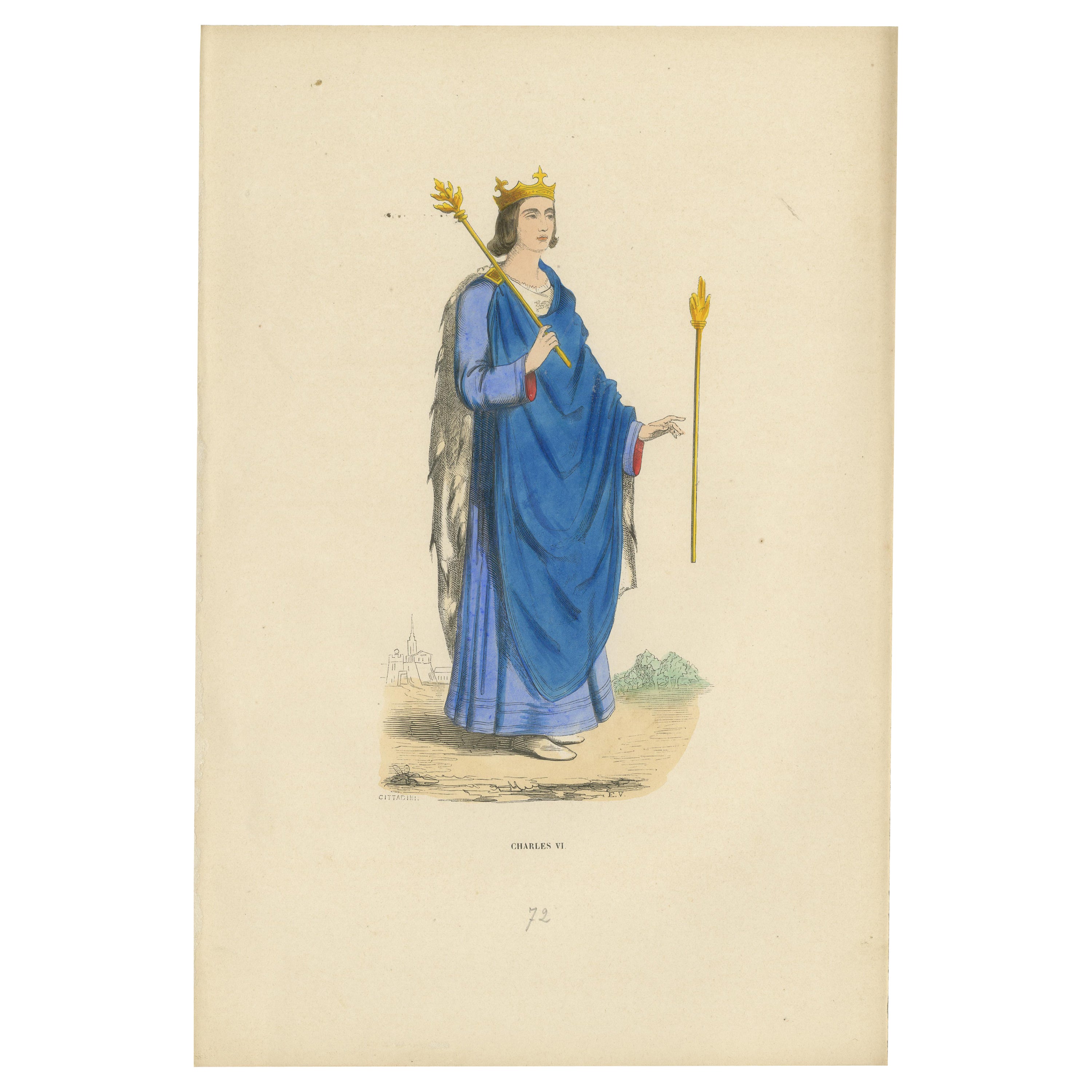
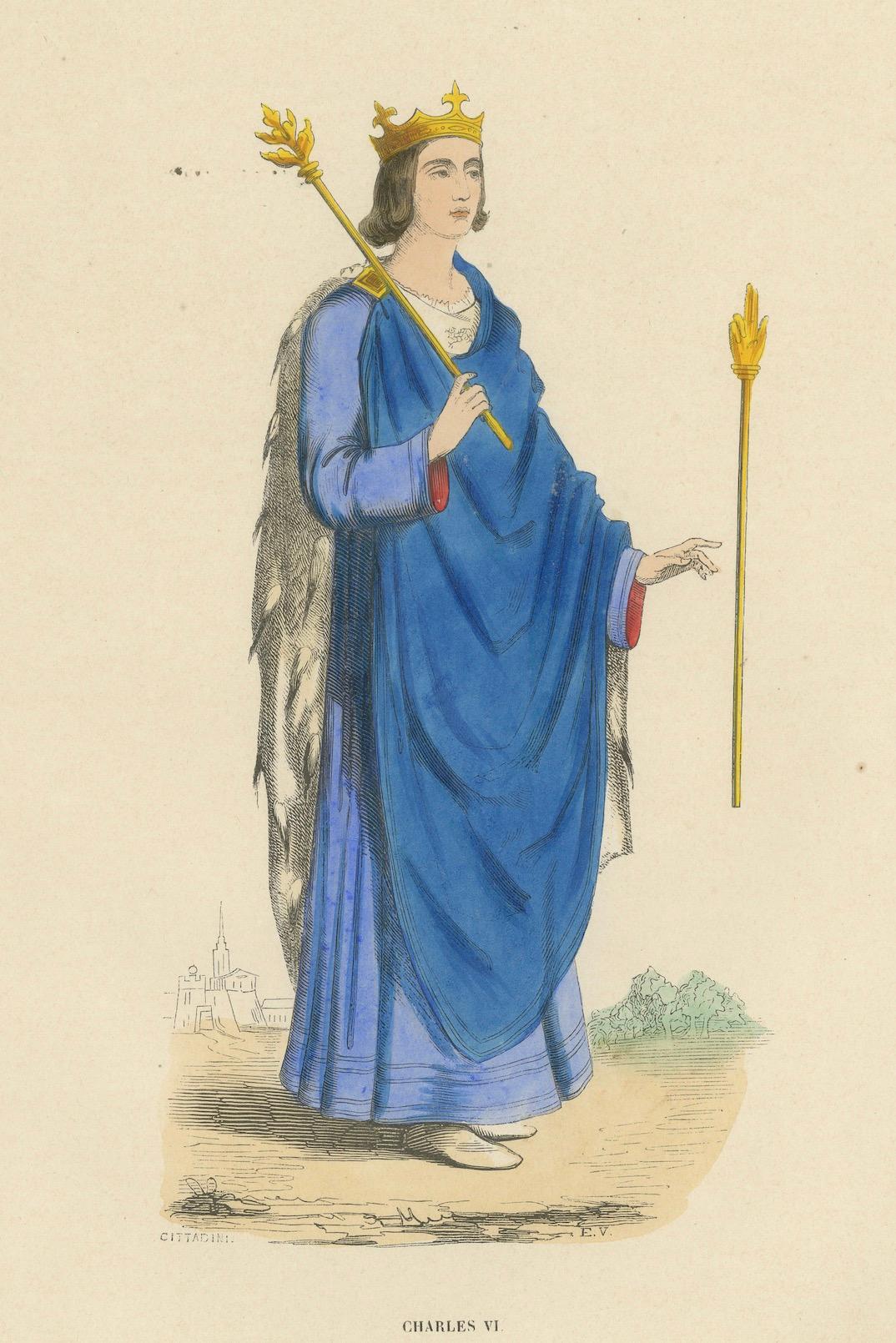
This print depicts Charles VI of France, known as Charles the Well-Beloved, later nicknamed Charles the Mad due to his periodic bouts of insanity. He stands with regal dignity, clothed in the royal color of blue, which covers him from shoulders to feet in a grand, flowing robe. The robe is fastened at the neck with a golden clasp and is trimmed with fur, indicating his royal status and the luxurious fashion of the time.
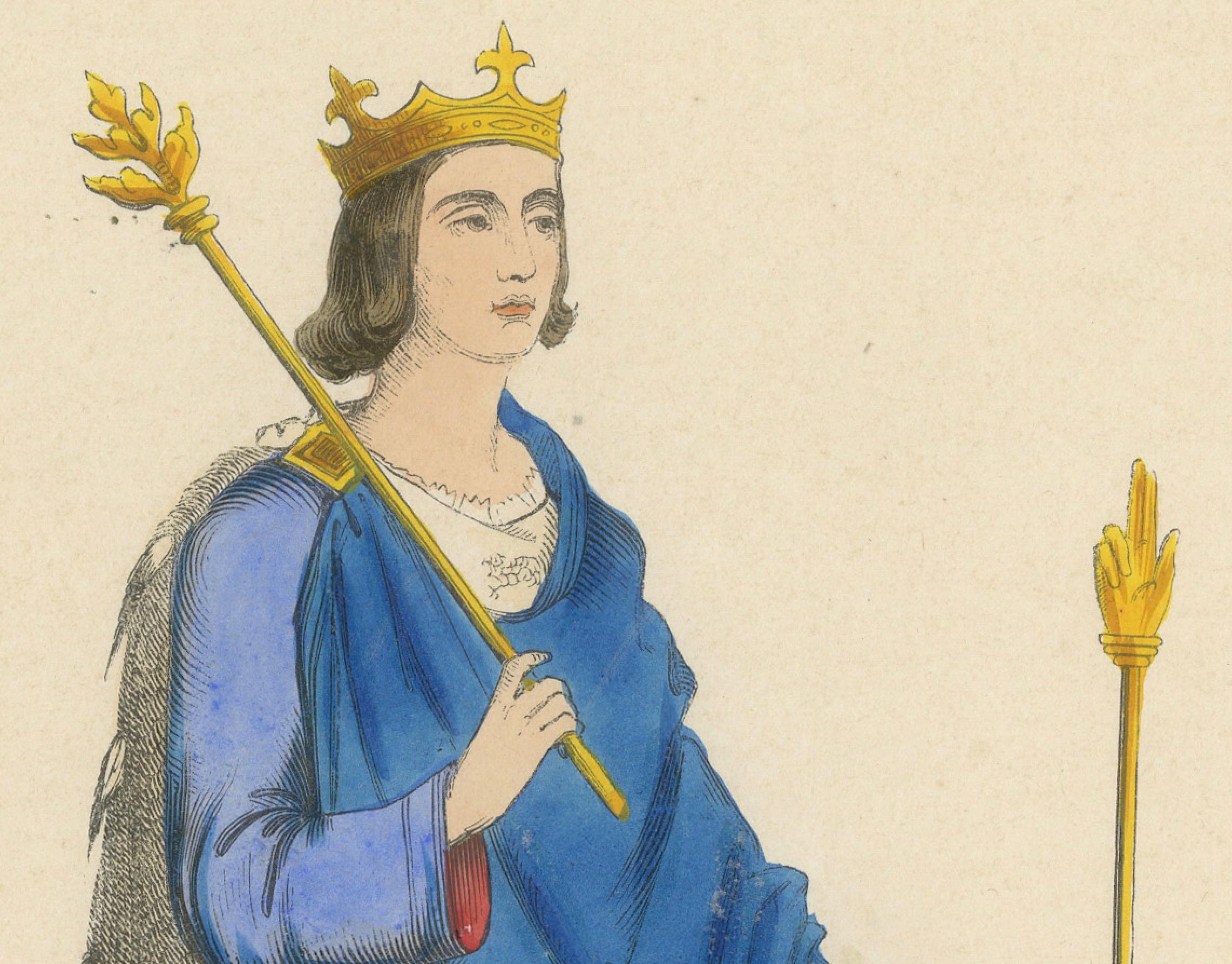
In his right hand, he holds a golden scepter topped with a fleur-de-lis, symbolizing his divine right to rule as the King of France. His left hand appears to gesture, perhaps in the midst of making a proclamation or giving an order. The scepter's design is echoed by the staff he stands beside, reinforcing his authority.
Charles wears a simple golden crown atop his head, befitting his royal station. His expression is contemplative with a hint of solemnity, possibly reflecting the weight of his responsibilities as king. His gaze is directed forward, seemingly looking beyond the immediate surroundings.
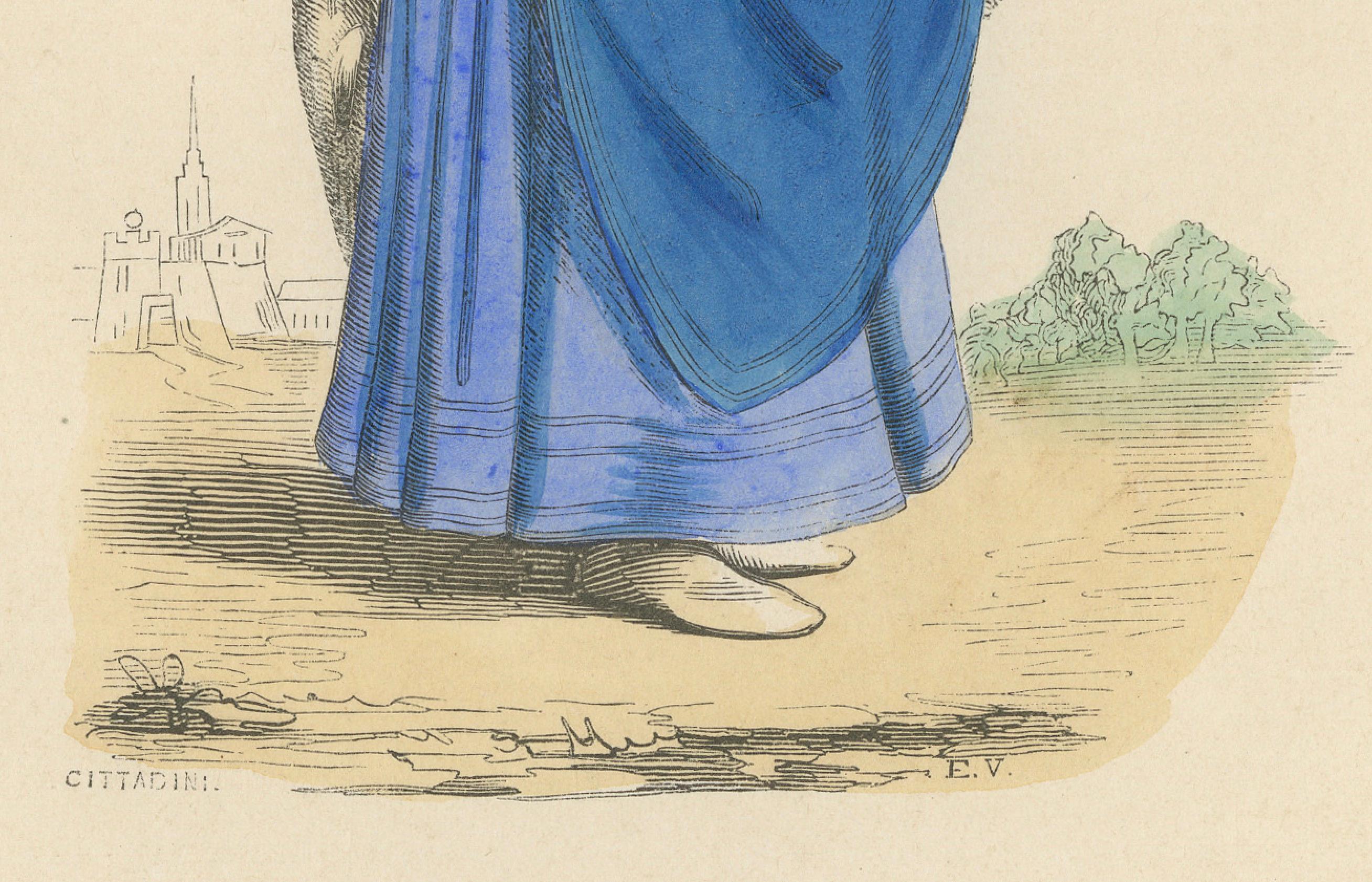
The background includes a faint outline of a castle or citadel, situating the monarch within his domain. The setting is minimalistic, ensuring the focus remains on the figure of the king and the symbolism of his regalia. This print captures the essence of a monarch who was both beloved and troubled, a figure of significant historical complexity.
The colors have a nice glow over them. Historically, egg whites, known as glair, and sometimes egg yolk were indeed used in illumination and painting, particularly in manuscripts, to give colors a brighter appearance and to add a sheen or gloss to the work. This technique was quite common during the Middle Ages and into the Renaissance.
Egg whites can be applied as a varnish over pigments to enhance their brightness and to protect the colors. This application could make the colors appear more vivid and also add a slight glossy sheen to the surface of the image.
Egg yolk, on the other hand, was commonly used as a binding agent in paint. It forms the basis of tempera paint, a medium that was widely used before the advent of oil painting. Egg yolk helps to create a durable and long-lasting color that adheres well to various surfaces.
In the context of the print from 1847, it's less likely that egg whites or yolks were used directly on the print, as by that time, commercial printing processes would have been more advanced and less reliant on such manual methods. However, if this print is a representation of an earlier style or is meant to mimic the appearance of hand-painted manuscripts, the original artists might have employed techniques or materials that gave a similar effect to those achieved with egg-based binders and varnishes.