About this sheet
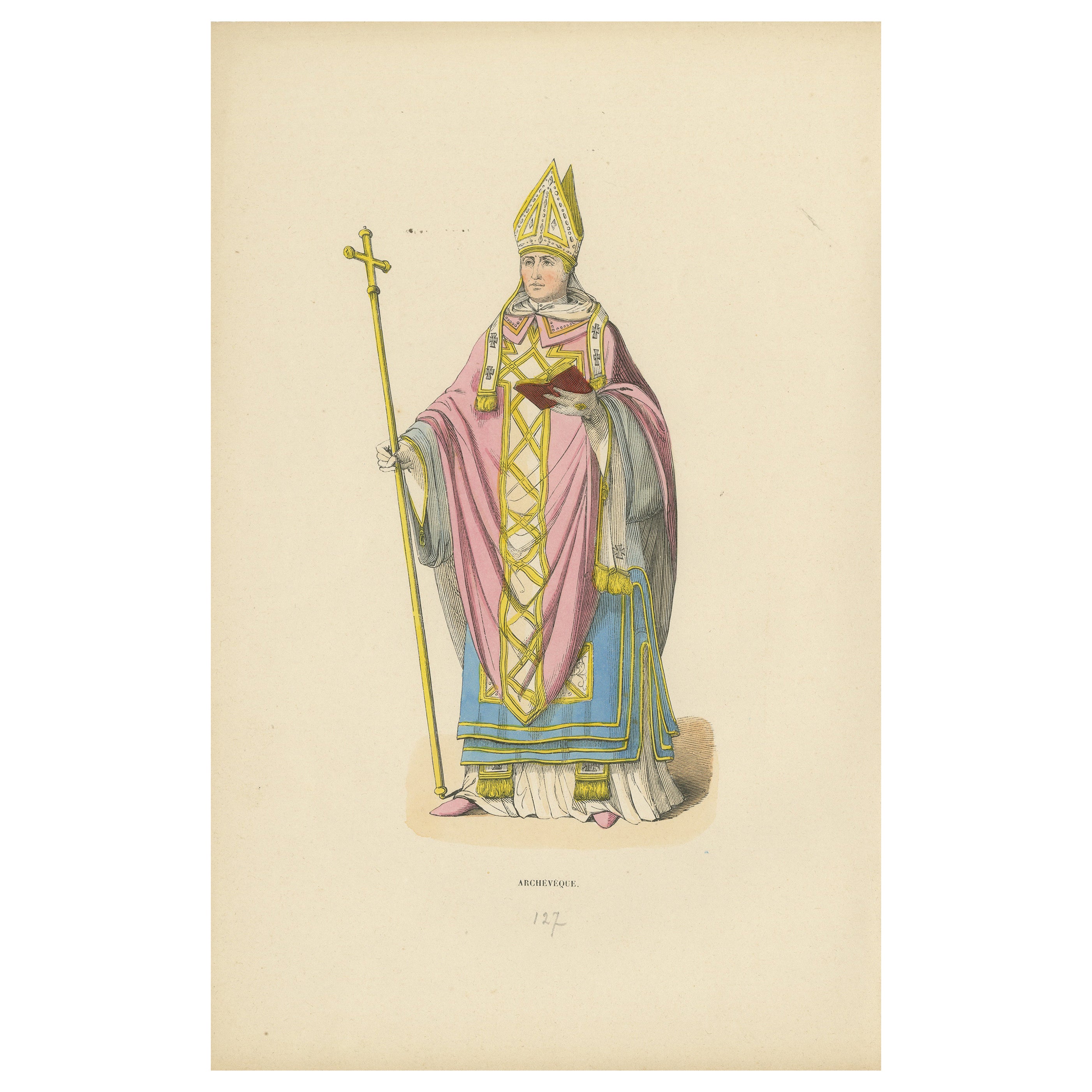
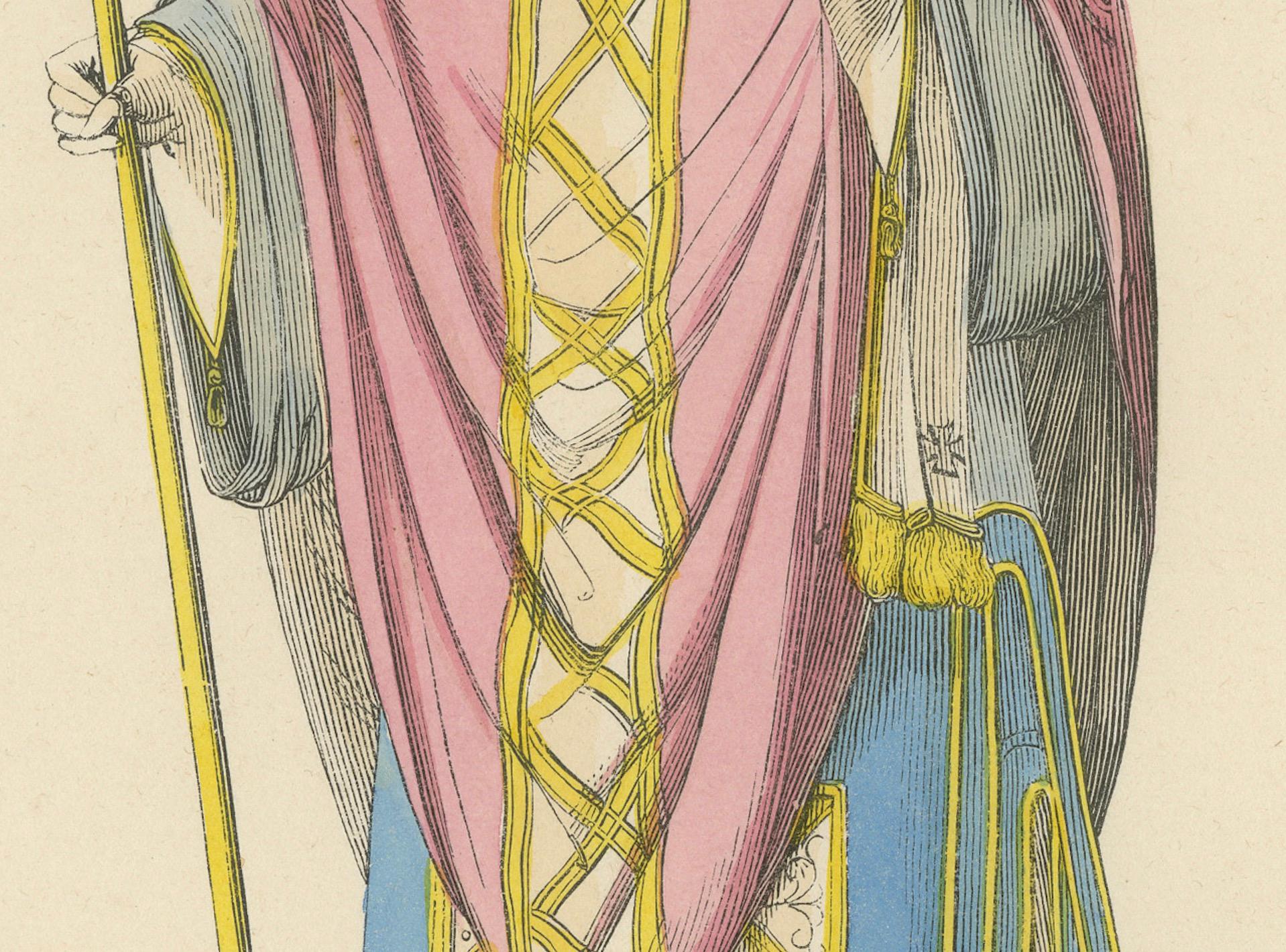
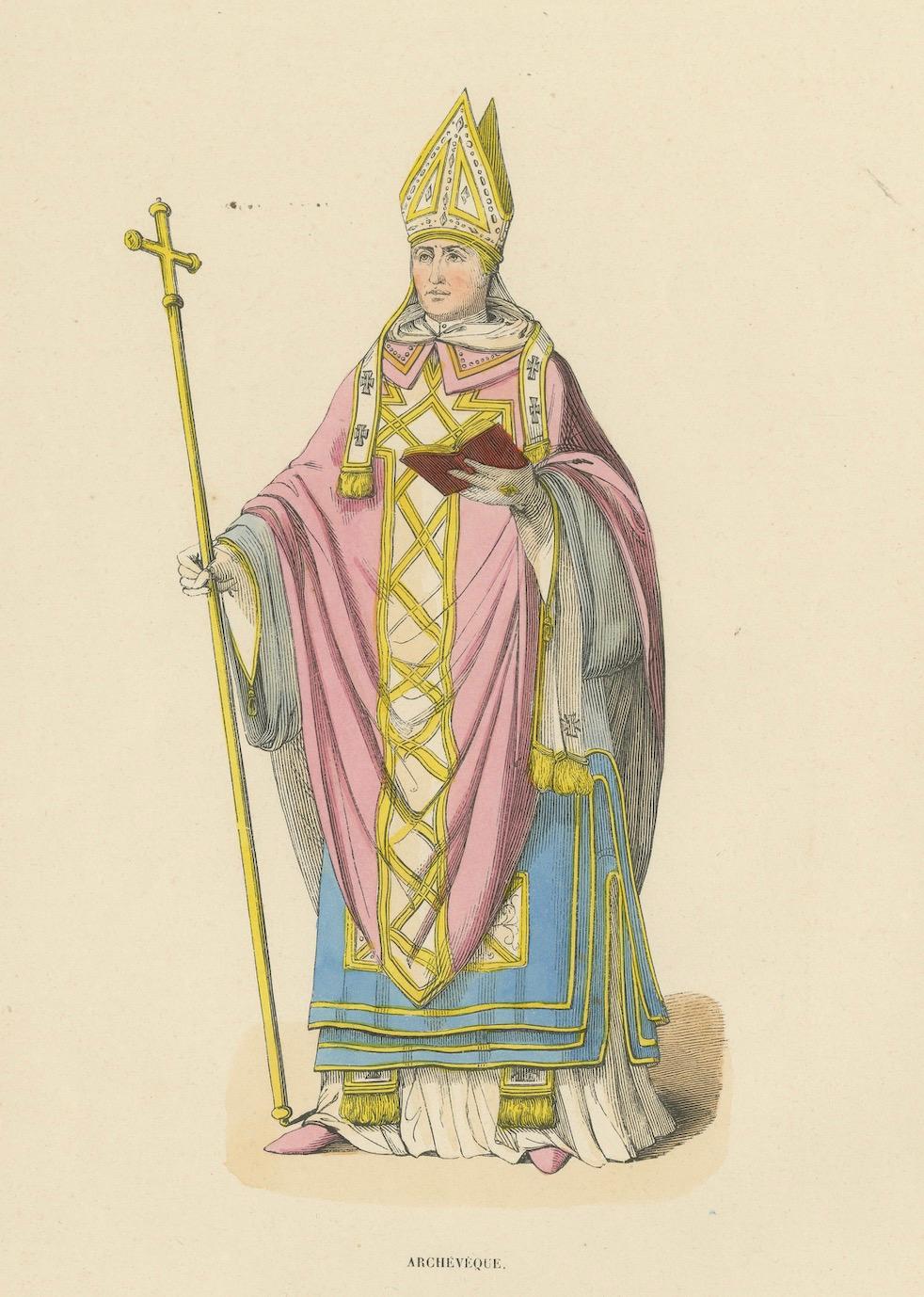
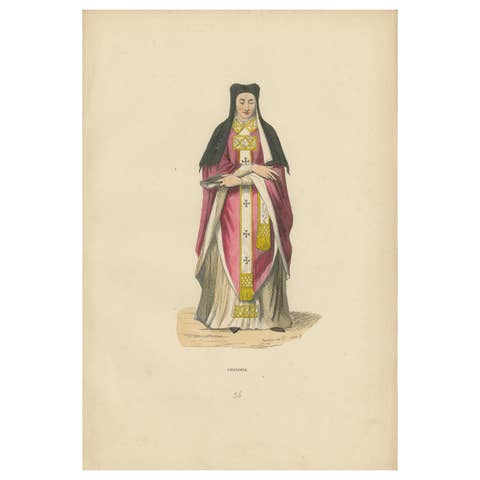
This historically rich lithograph from the 1847 edition of "Costume du Moyen Âge" depicts an archbishop in full ecclesiastical regalia, standing with an air of solemn dignity. The figure is adorned in a chasuble of pale rose, edged with intricate gold embroidery that speaks to the high office he holds. Over this, a laced, ornate stole crosses his chest, a traditional vestment symbolizing his ordained status and the responsibilities thereof.
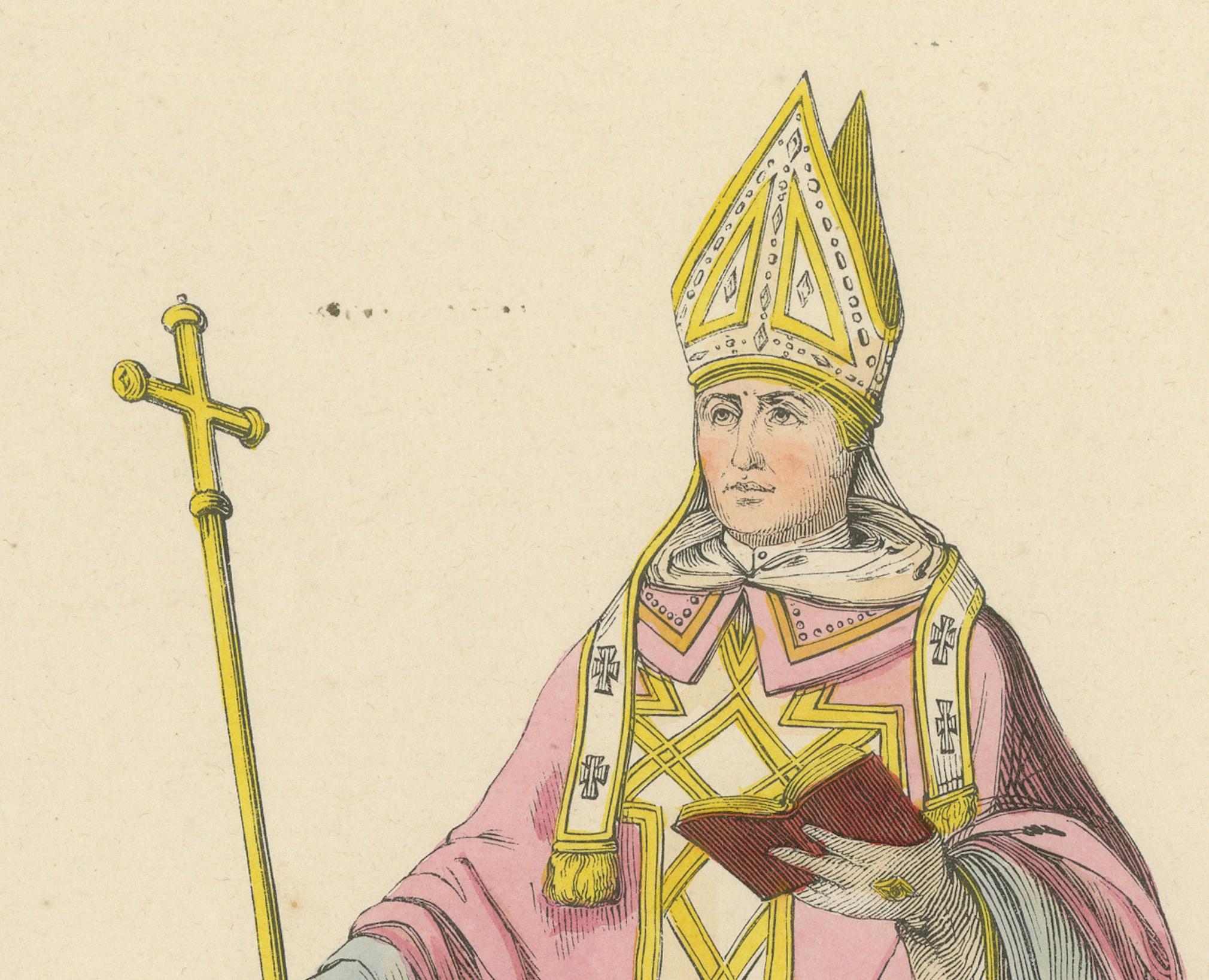
The archbishop's miter, the liturgical headdress, rises in pointed splendor, its golden embellishments complementing the stole, while his expression is one of contemplation and piety. In his left hand, he holds a crosier, a staff that signifies his pastoral governance, its curve ending in a cross that serves as a potent Christian symbol.
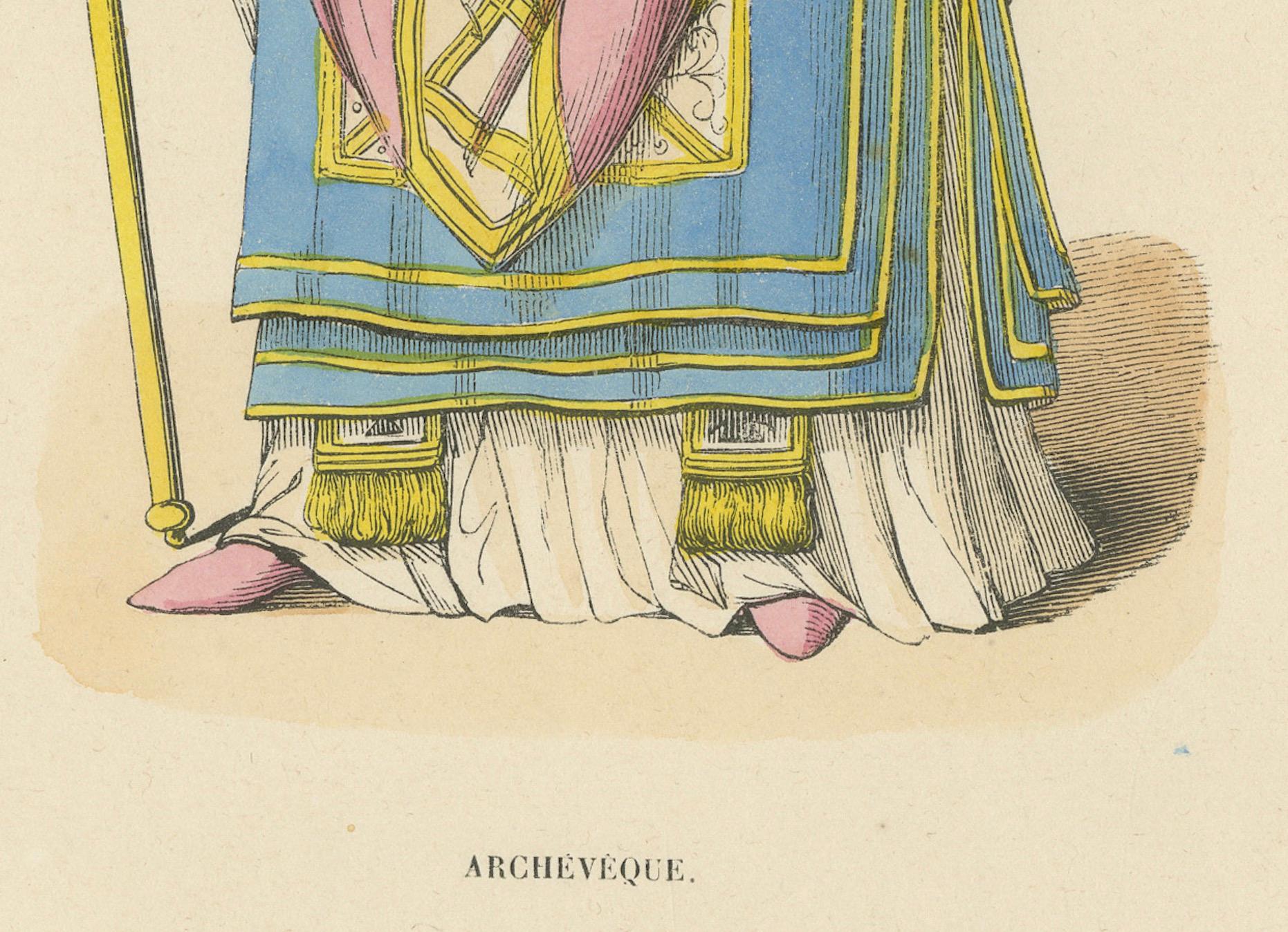
The book clutched in his right hand likely represents the Holy Scriptures or a liturgical text, reinforcing his role as a spiritual leader and teacher. His feet, shod in pointed pink shoes peeking from beneath the flowing vestments, bring a hint of the personal to the grandeur of his office.
This lithograph is a testament to the detailed study of the vestments and symbols of power within the medieval church hierarchy. The attention to the fabrics, colors, and accessories provides a vivid portrayal of the archbishop's role in both religious ceremony and the broader societal structure. The image serves as a visual exploration into the Middle Ages, presenting the regal and spiritual aspects of the time with historical accuracy and artistic integrity.
The colors have a nice glow over them. Historically, egg whites, known as glair, and sometimes egg yolk were indeed used in illumination and painting, particularly in manuscripts, to give colors a brighter appearance and to add a sheen or gloss to the work. This technique was quite common during the Middle Ages and into the Renaissance.
Egg whites can be applied as a varnish over pigments to enhance their brightness and to protect the colors. This application could make the colors appear more vivid and also add a slight glossy sheen to the surface of the image.
Egg yolk, on the other hand, was commonly used as a binding agent in paint. It forms the basis of tempera paint, a medium that was widely used before the advent of oil painting. Egg yolk helps to create a durable and long-lasting color that adheres well to various surfaces.
In the context of the print from 1847, it's less likely that egg whites or yolks were used directly on the print, as by that time, commercial printing processes would have been more advanced and less reliant on such manual methods. However, if this print is a representation of an earlier style or is meant to mimic the appearance of hand-painted manuscripts, the original artists might have employed techniques or materials that gave a similar effect to those achieved with egg-based binders and varnishes.