About this sheet
Antique VOC Governance Chart Engraving — Dutch East India Company, Chatelain, c.1707–1719
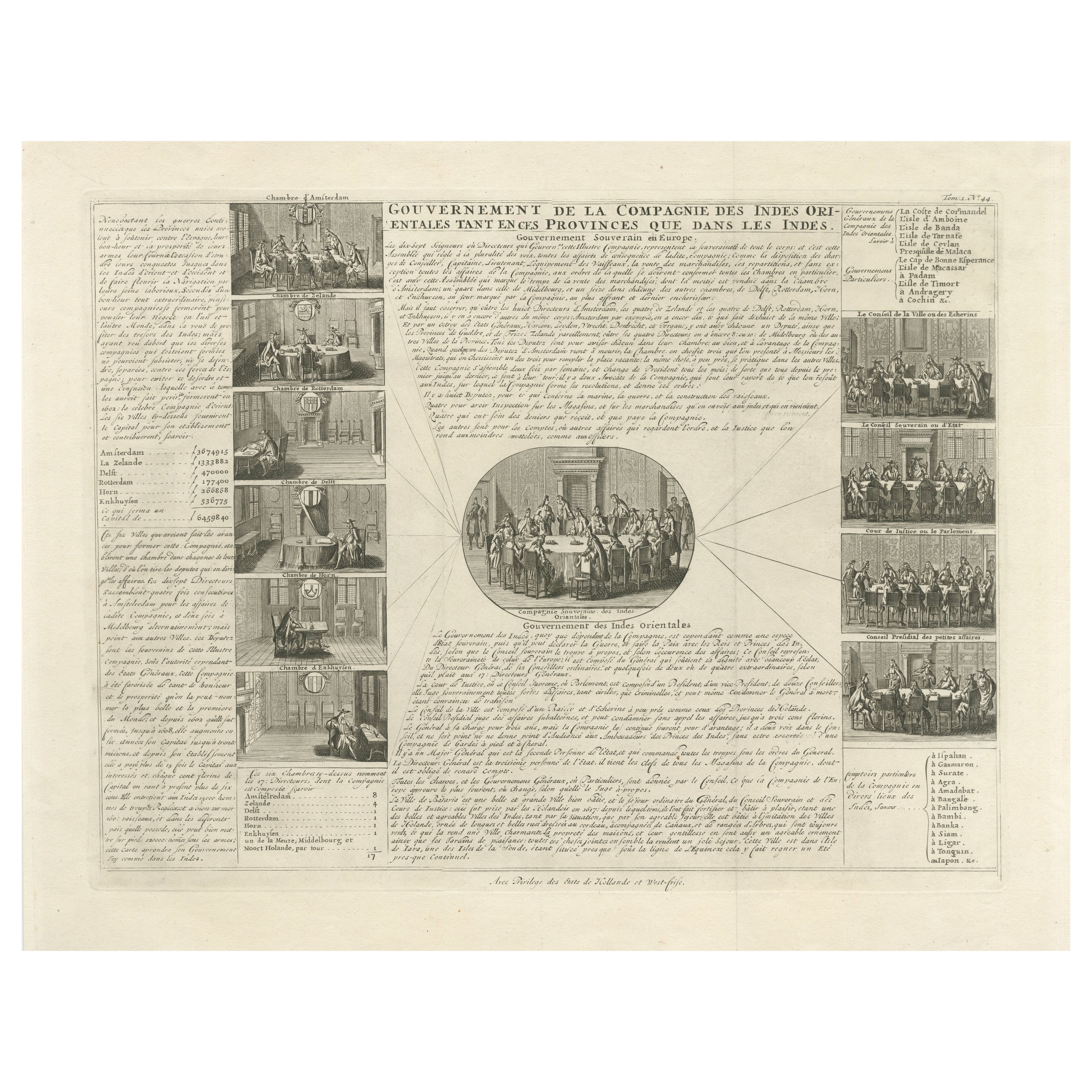
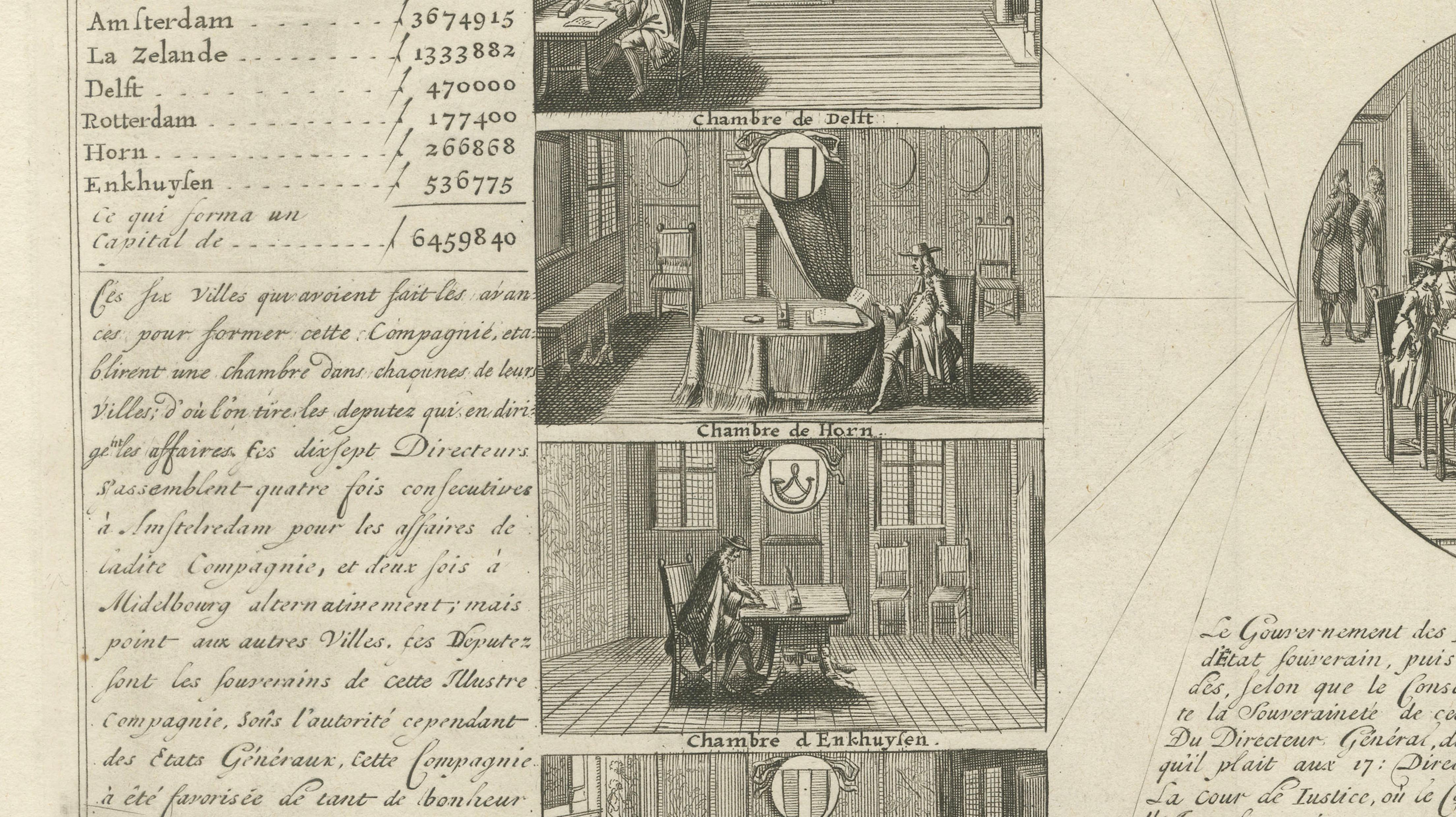
This remarkable early 18th-century copperplate engraving titled “Gouvernement de la Compagnie des Indes Orientales tant en ces Provinces que dans les Indes” was published in Amsterdam by Henri Abraham Chatelain as part of the monumental Atlas Historique, produced between approximately 1707 and 1719. The print presents a sophisticated visual overview of the administrative and political organization of the Dutch East India Company (VOC), one of the most powerful global trading enterprises of the early modern period.
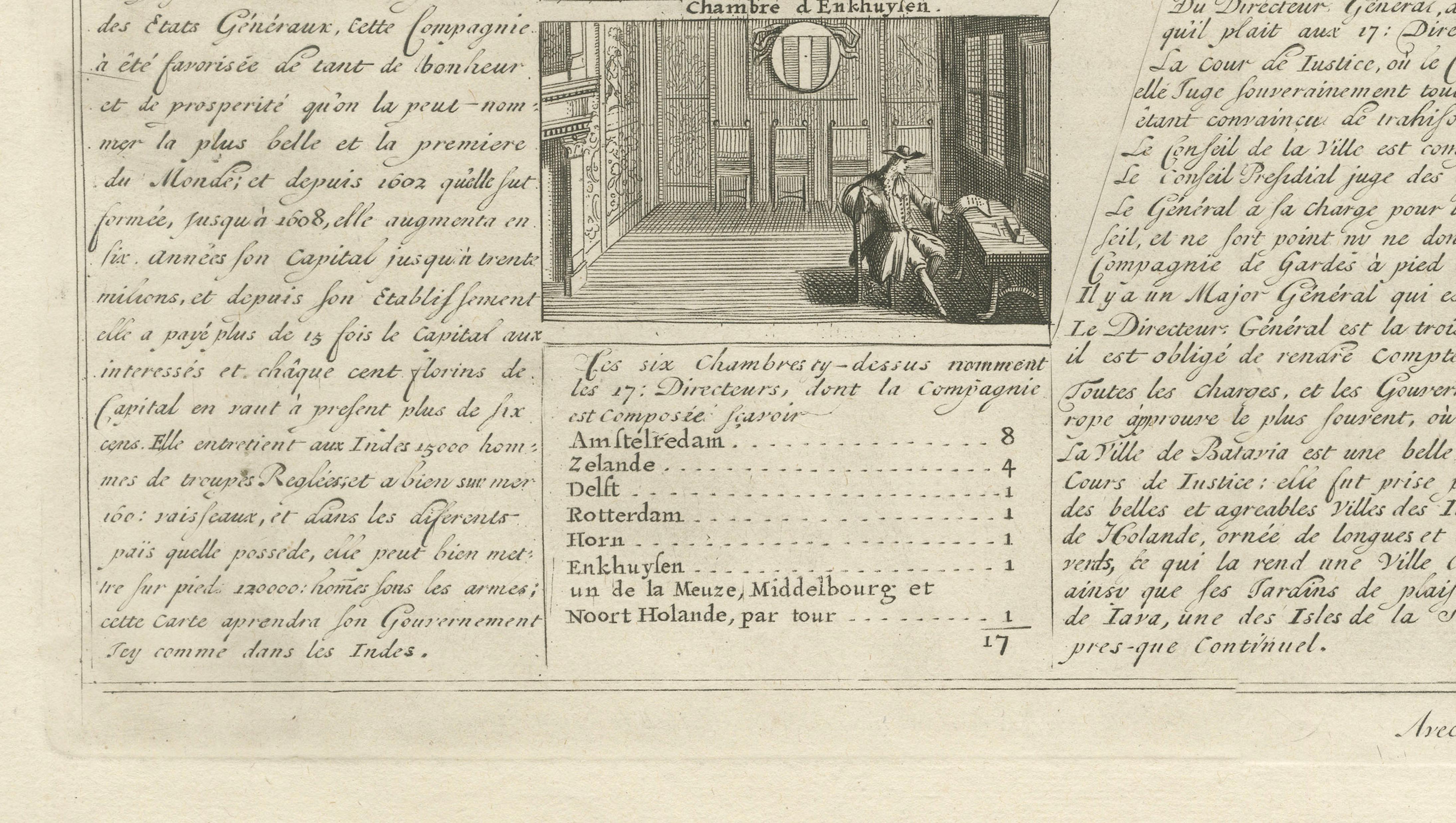
Designed as both an educational and decorative plate, the composition combines detailed textual analysis with multiple engraved vignettes illustrating the various governing bodies and administrative chambers. The upper section describes the “Sovereign Government in Europe,” showing the management structure within the Dutch Republic, including the influential Heren XVII (Council of Seventeen), who directed the company’s worldwide operations. Along the left side, finely engraved interior views depict the chambers of Amsterdam, Zeeland, Delft, Rotterdam, and other provincial offices, emphasizing the decentralized yet coordinated structure that made the VOC highly effective.
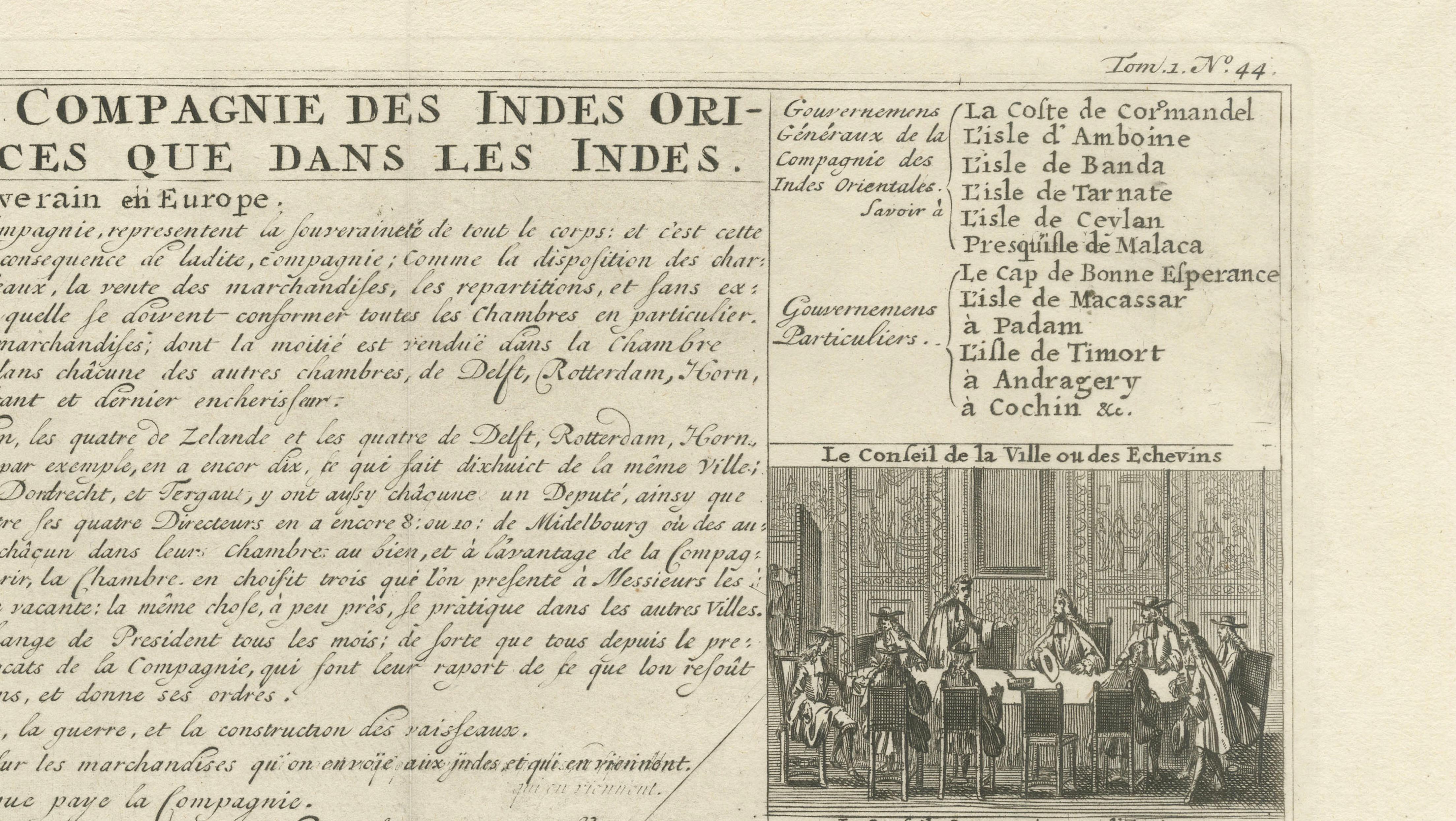
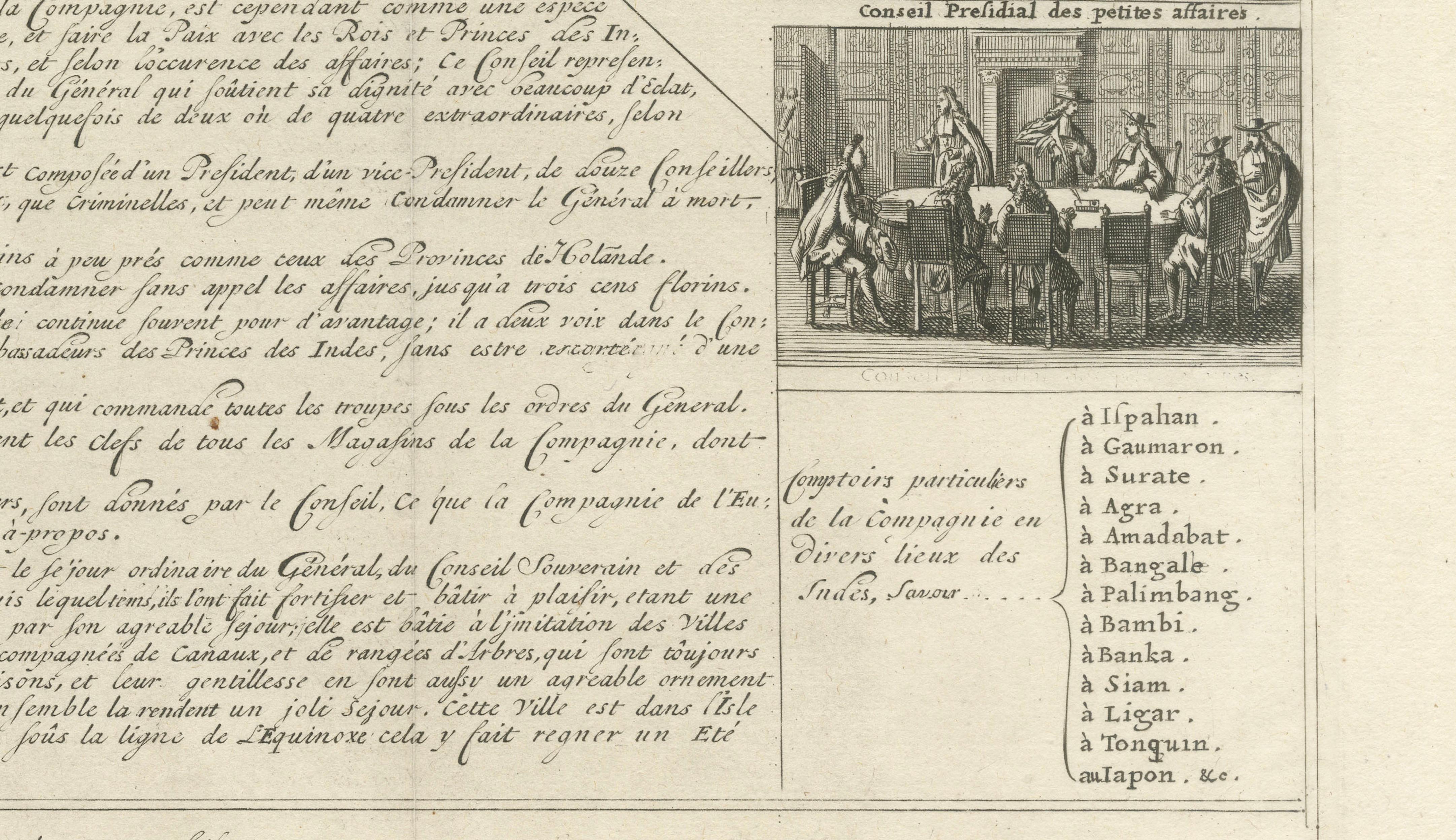
The central circular vignette illustrates a formal council meeting, visually representing the decision-making process at the heart of the company’s governance. On the right side, additional scenes portray judicial and administrative functions within the company’s overseas territories, illustrating how European authority extended into the East Indies. Lists of key regions and trading locations — including Ceylon (Sri Lanka), Malacca, Cochin, Timor, and other Asian centers — underline the vast geographic scope of VOC activities.
As a historical document, this engraving offers a fascinating insight into Enlightenment-era attempts to diagram complex institutions visually. It is also deeply relevant for collectors interested in Dutch colonial history, global trade networks, or the early cartographic and encyclopedic tradition. For Bartele Gallery’s focus on Dutch East Indies material, this plate represents an especially compelling example of how European publishers communicated the structure of overseas empires.
Decoratively, the engraving works exceptionally well in both academic and contemporary interiors. The architectural layout, structured typography, and balanced arrangement of imagery give it a strong graphic presence suitable for study rooms, libraries, or gallery walls focused on maritime history or global exploration.
These are original print(s) from the year of publication, not later reproductions. The print is offered unframed, enabling custom framing to personal or interior preferences. Any framed images shown are for visual inspiration only.
Condition report: Good antique condition consistent with early 18th-century copper engravings. Age-related toning present; light handling wear to margins. Central vertical fold line visible as typical for atlas plates; plate impression visible.
Framing tips: A dark walnut or black-stained frame with a wide ivory mat enhances the historical gravitas and architectural symmetry of the design. Museum-quality UV glass is recommended to preserve the paper and engraved detail.
Technique: Copperplate engraving
Maker: Henri Abraham Chatelain, Amsterdam, circa 1707–1719