About this sheet
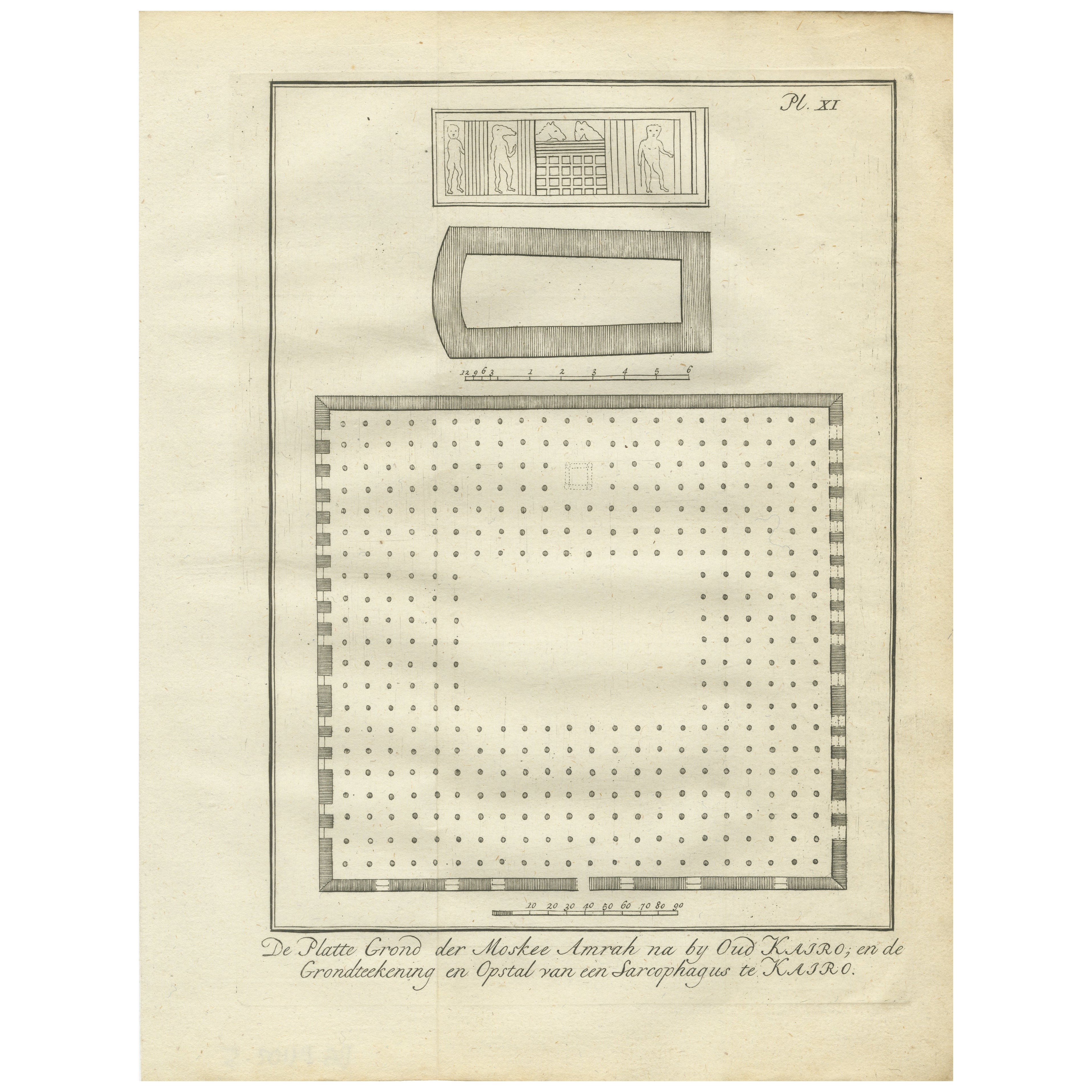
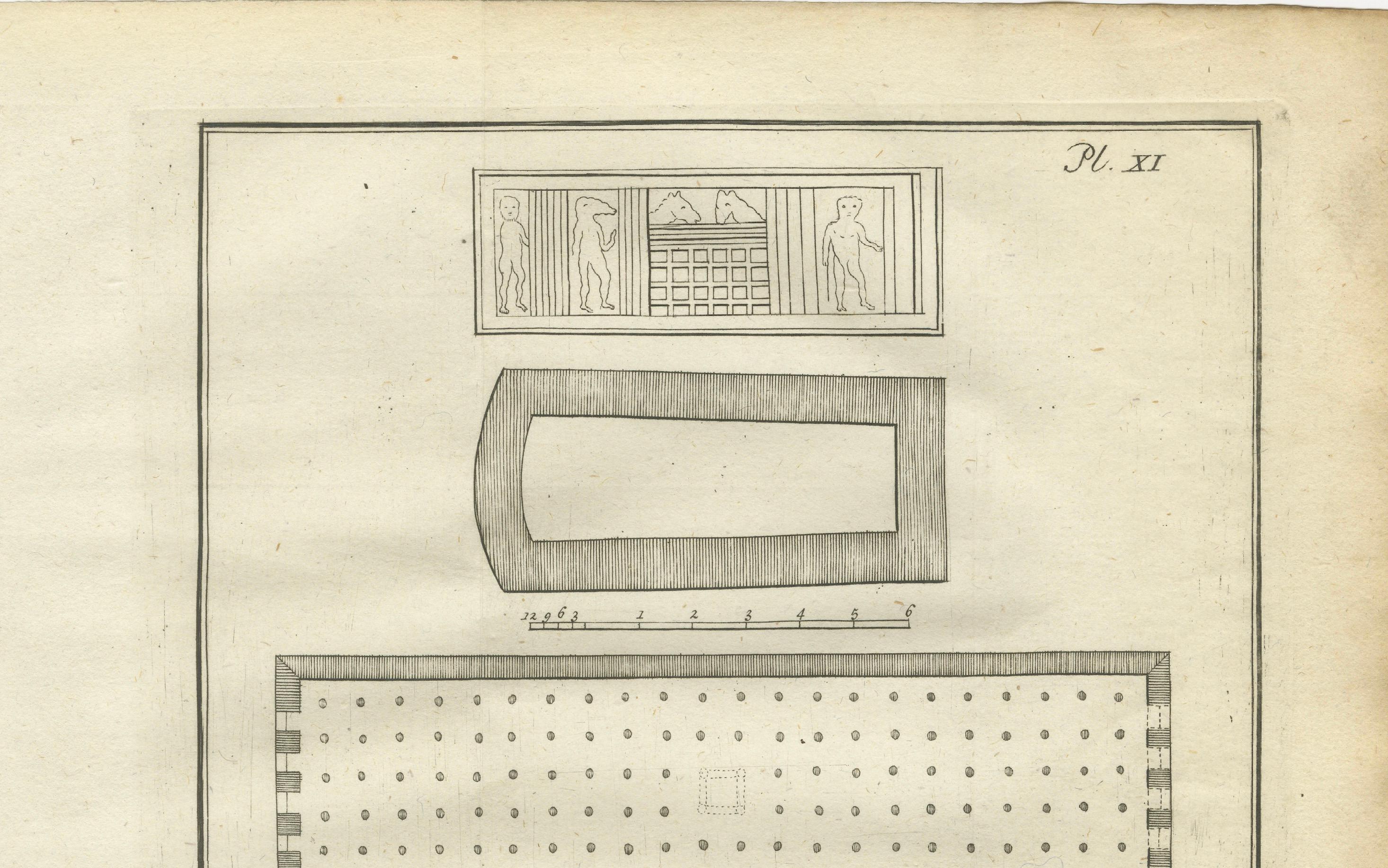
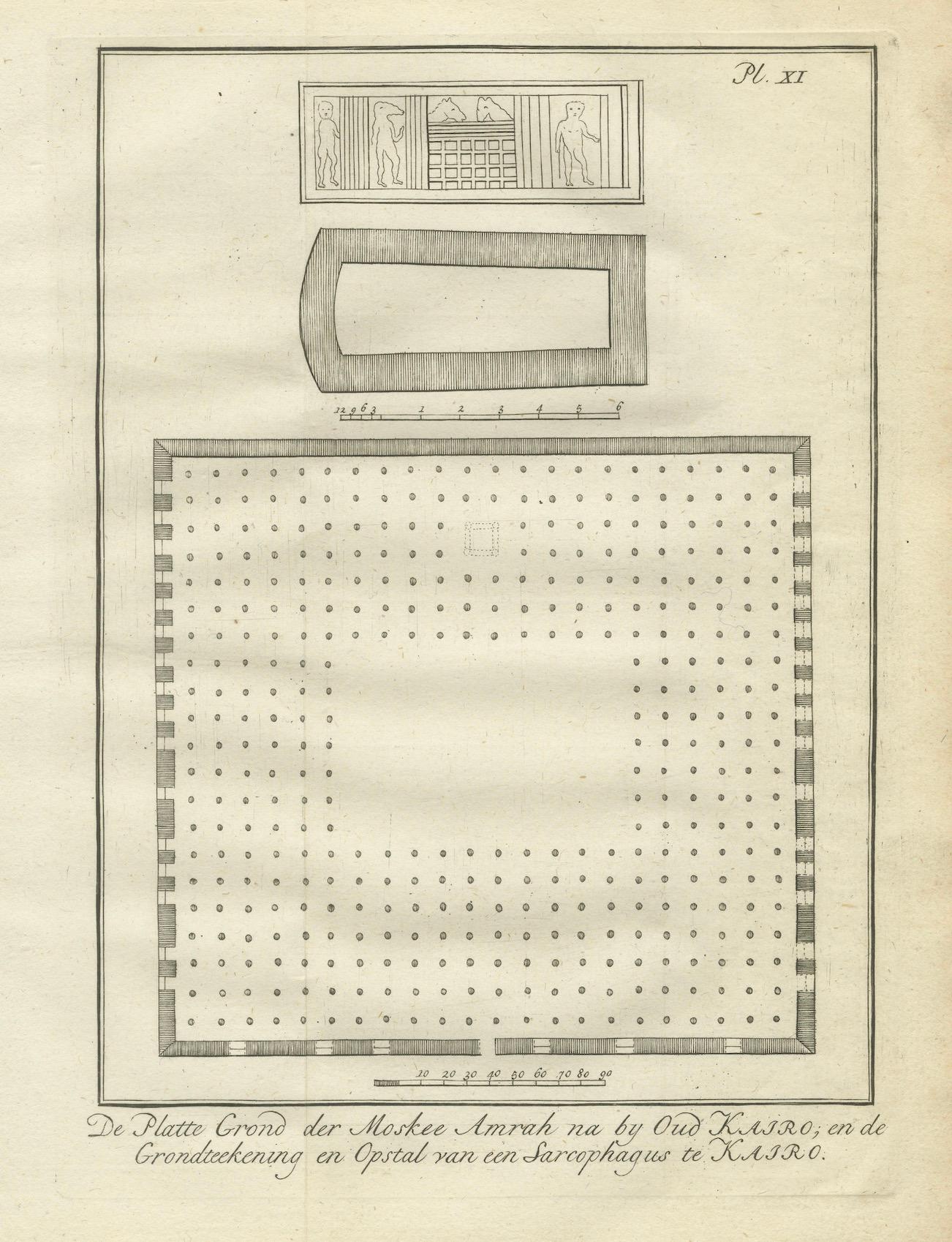
This antique architectural engraving from 1776 features a detailed plan of the historic Mosque of Amr ibn al-As in Old Cairo, along with the layout and elevation of an ancient sarcophagus. It is Plate XI from the Dutch edition of Richard Pococke’s widely read travel account through Egypt and the Levant.
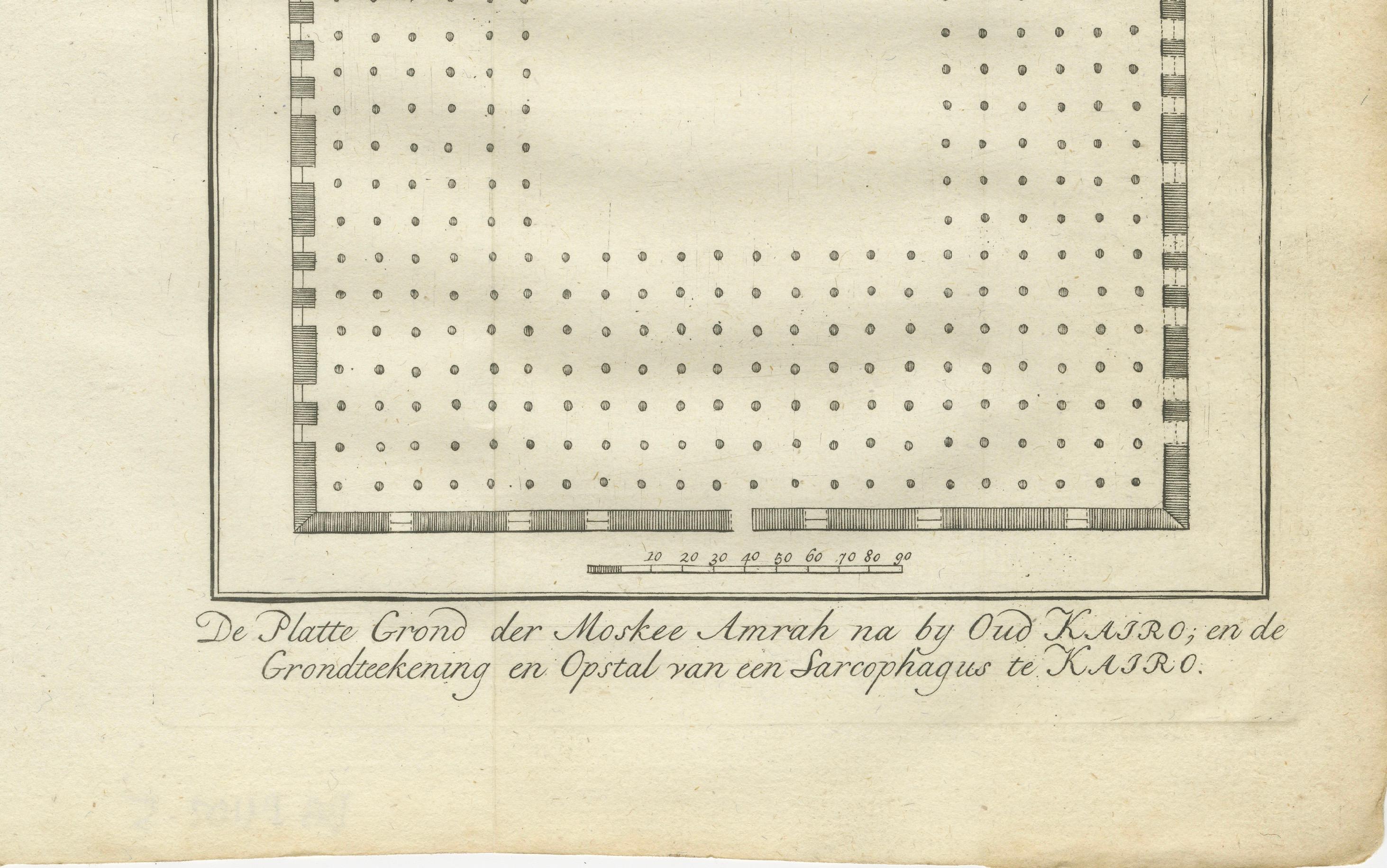
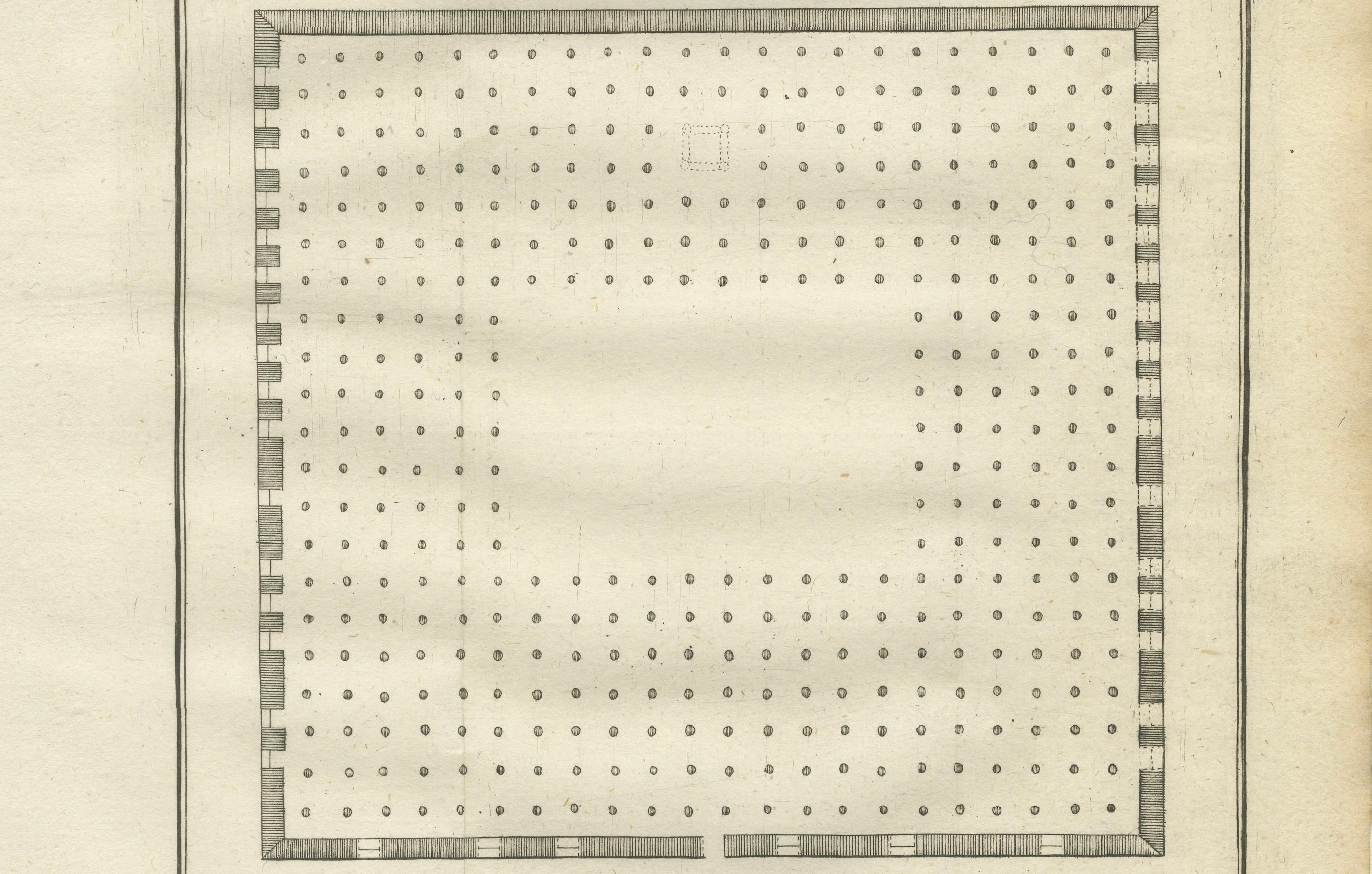
The lower half of the plate is occupied by a floor plan of the mosque, showing its rectangular structure filled with evenly spaced columns, forming a large hypostyle prayer hall. The perimeter walls include evenly spaced doorways or entrances, and the clear geometry emphasizes the symmetry and scale of early Islamic architecture in Egypt. The Mosque of Amr is considered the first mosque built on the African continent, originally constructed in the 7th century and subsequently rebuilt and expanded over the centuries.
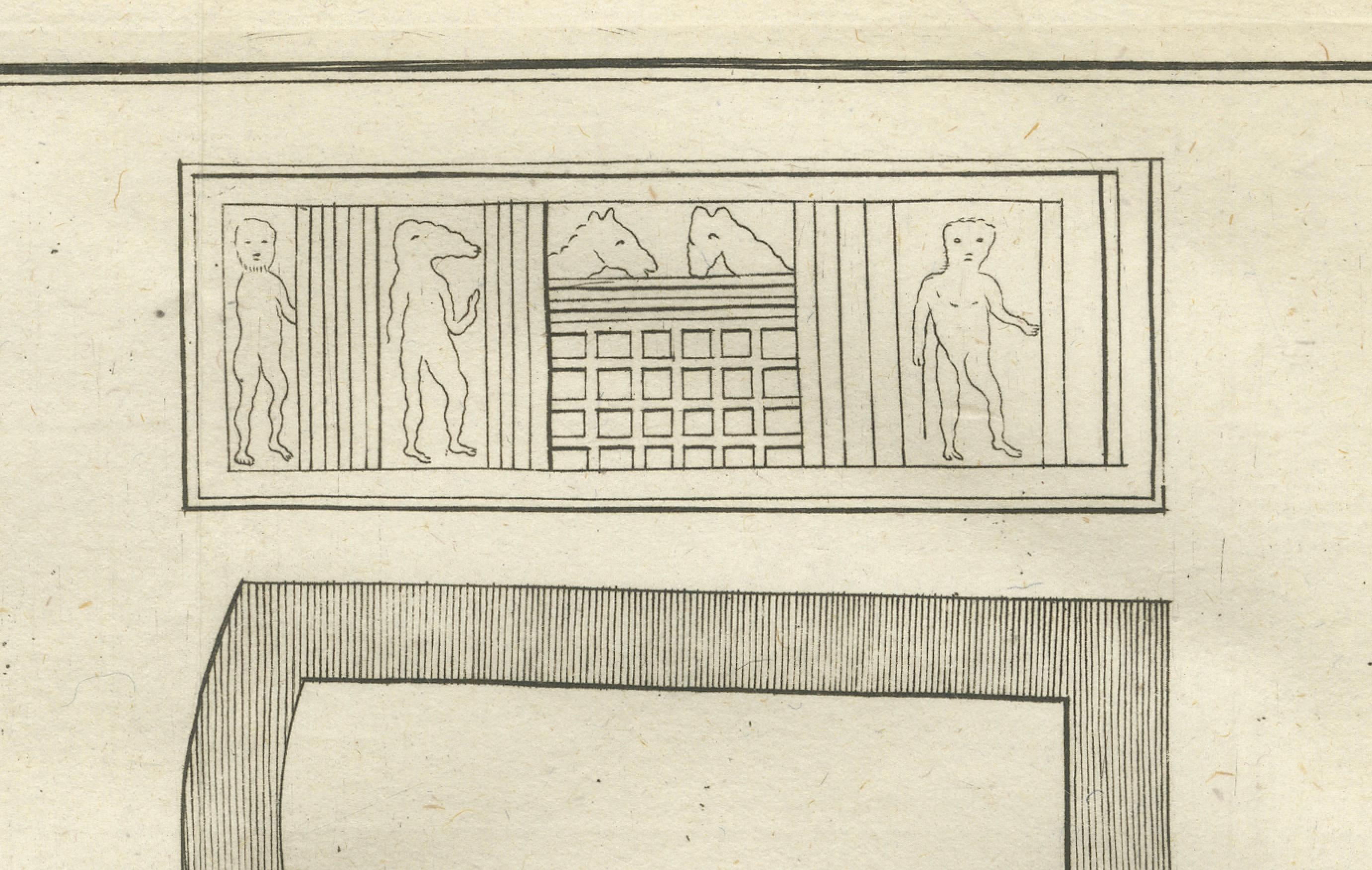
Above the mosque plan, two smaller illustrations are shown. One is the ground plan of a sarcophagus, possibly of Roman or early Christian origin, and the other is its elevation with decorative reliefs. These carvings include human figures and geometric or architectural motifs, presented in a schematic manner.
The Dutch caption beneath the plate translates as "The ground plan of the Mosque Amrah near Old Cairo, and the ground plan and elevation of a sarcophagus in Cairo." This engraving comes from *Beschryving van het Oosten en van eenige andere landen* (Description of the East and Some Other Lands), the Dutch edition of Pococke’s travel narrative, translated and annotated by Ernst Willem Cramerus and published in 1776 in Utrecht, Rotterdam, and Amsterdam.
This print is a valuable historical record of two different layers of Cairo’s rich architectural heritage: early Islamic religious structures and funerary monuments from antiquity.
Condition report:
Very good condition. Mild age toning throughout. A faint central crease from folding. Slight edge wear, especially near the right margin. Wide margins with plate mark clearly visible. Blank on verso.
Framing tips:
A dark wood or black frame with a wide cream mat would best highlight the architectural layout and fine linework. Ideal for display in a room with Islamic art, early archaeology, or historic architectural interest.
Technique: Engraving
Maker: Unknown engraver after Richard Pococke, Netherlands, 1776