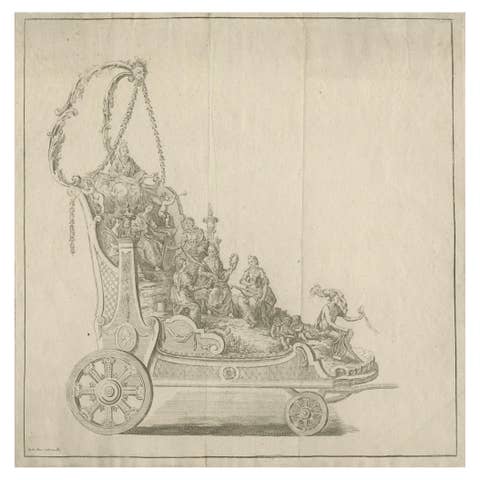
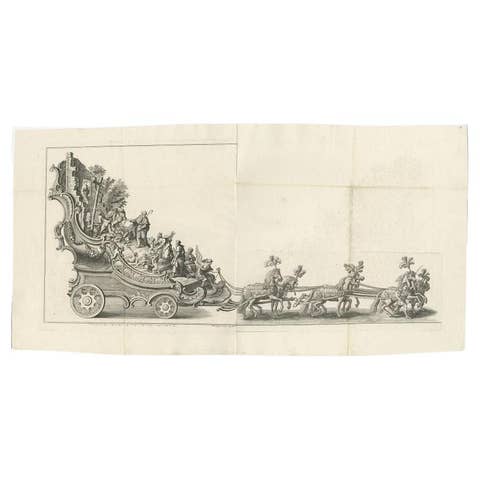
Funerary Procession & Tomb Façade of Osymandias, Thebes – Pair of Views, c.1776
€ 240
One of a kind: this is the sheet in the photographs. Ships from Langweer, the Netherlands.
Date
1776
Sheet size
27.3 × 25 cm (10.7 × 9.8 in)
Condition
Good
Reference
BG-14102-27, -28
Condition
Both plates in very good condition. Light even toning, slight edge wear and faint creases to margins, typical for age. Folding lines as issued. Strong impressions with excellent detail.
About this sheet
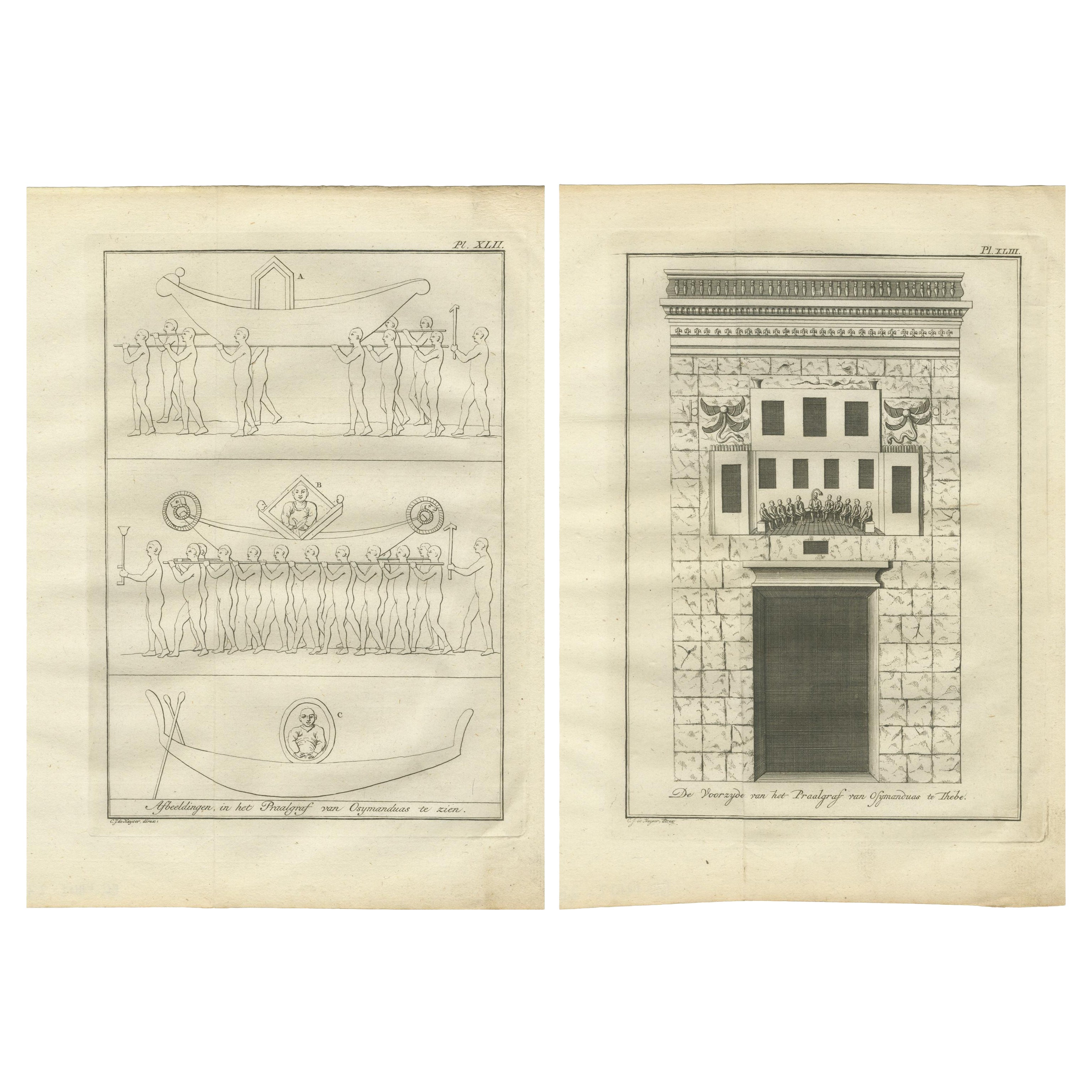
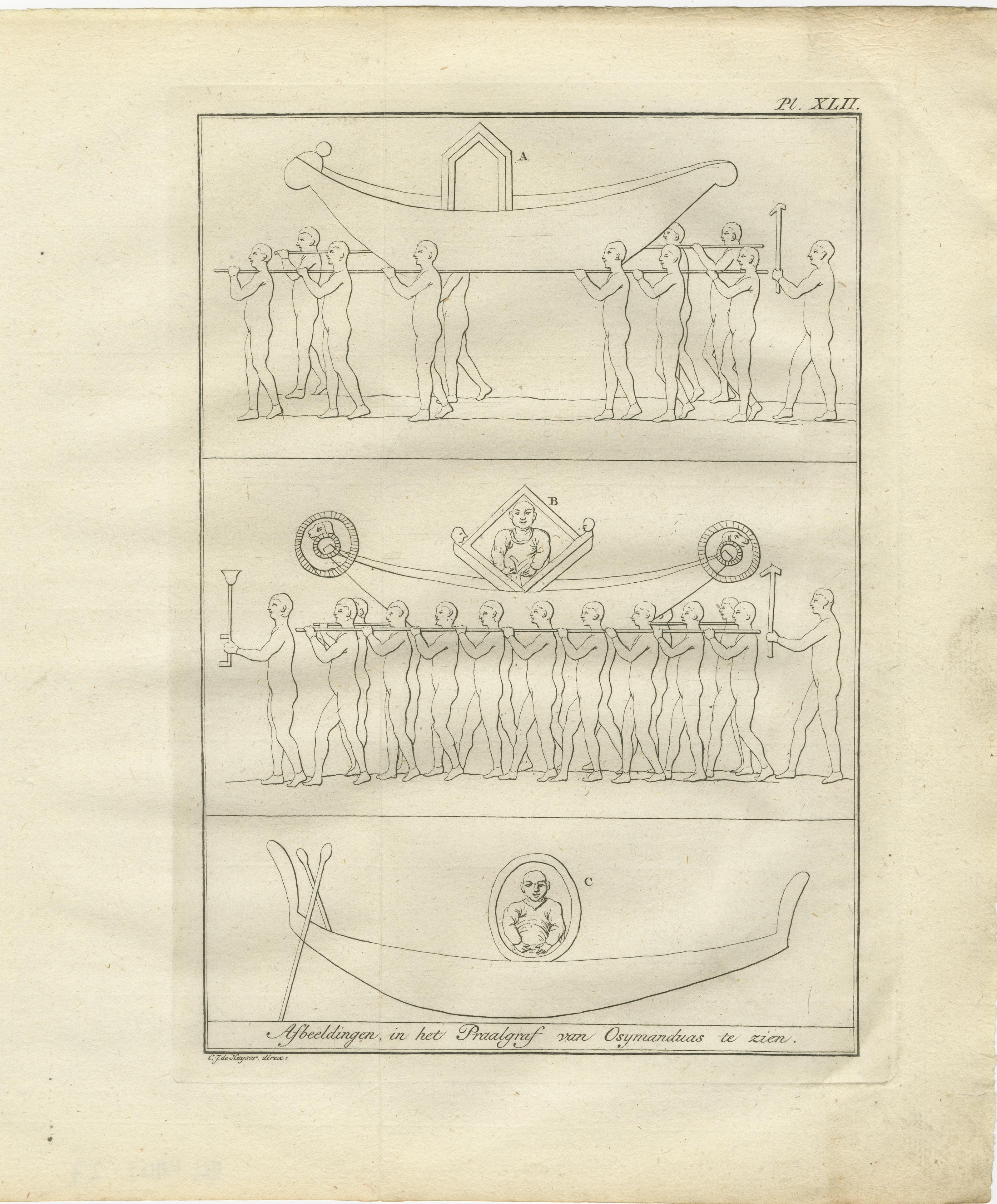
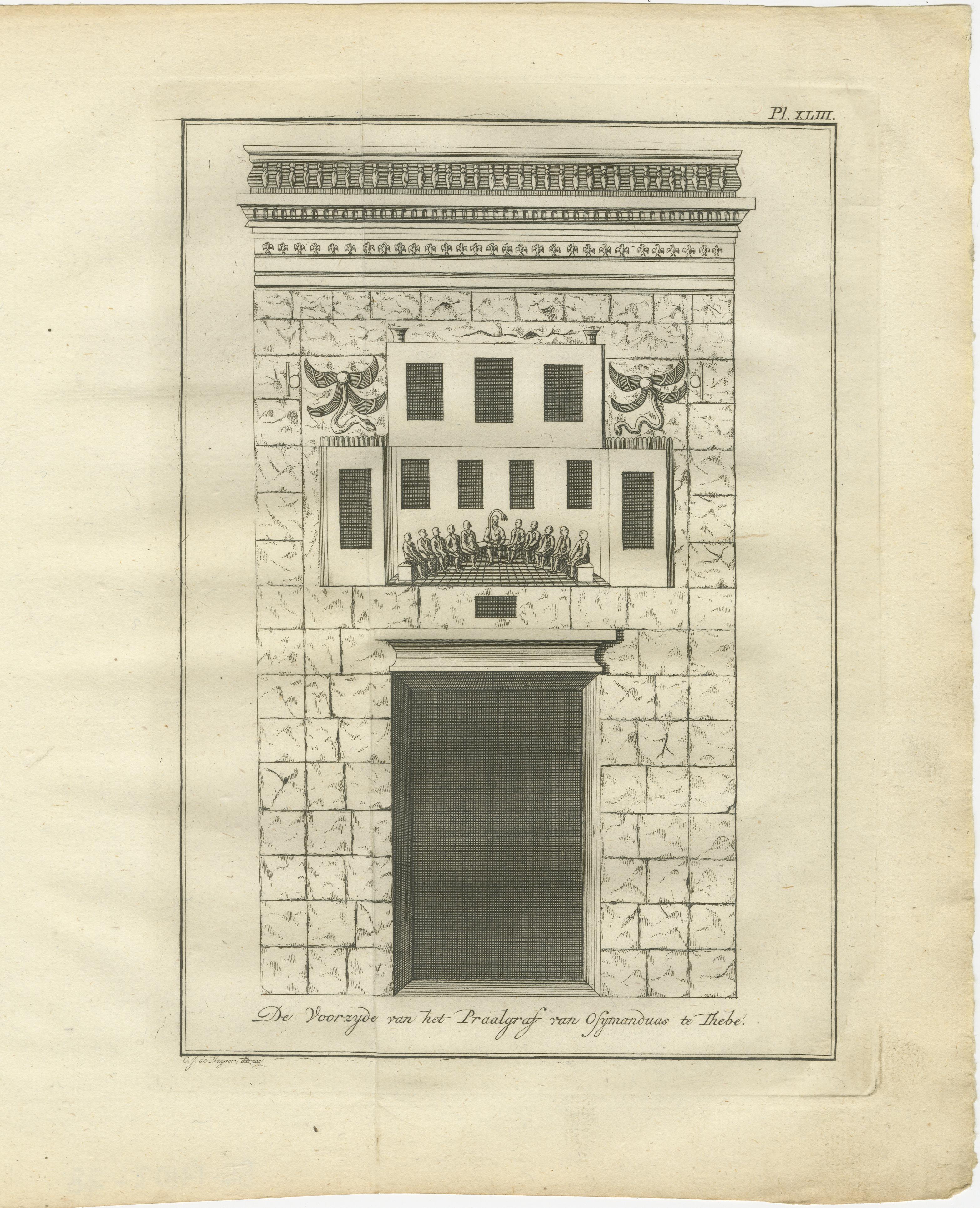
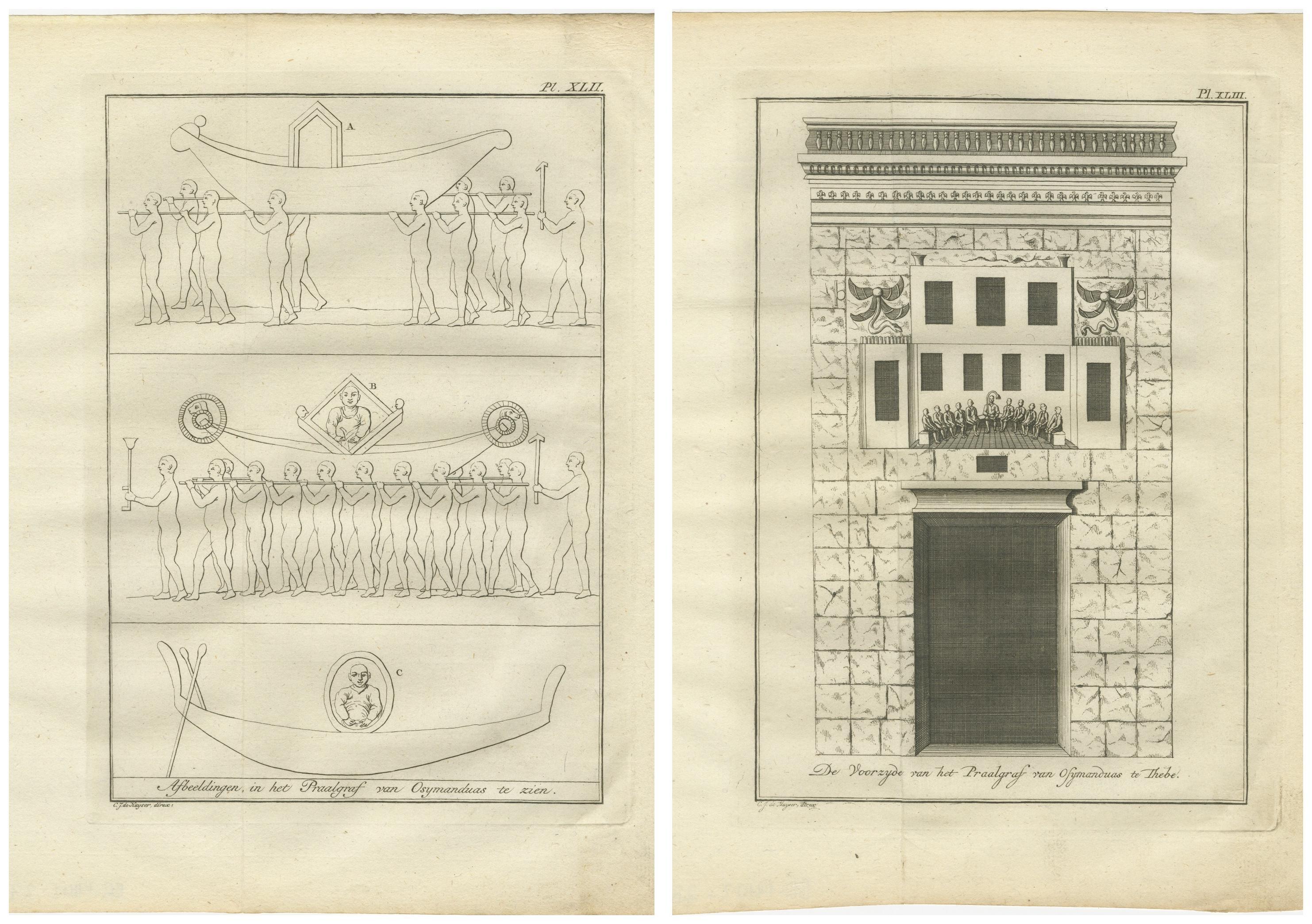
Funerary Procession & Tomb Façade of Osymandias, Thebes – Pair of Views, c.1776 This pair of antique engravings presents detailed illustrations relating to the monumental tomb of Osymandias (the Greek name for Ramses II) at Thebes, one of ancient Egypt's most iconic pharaohs. These plates document both the symbolic funerary processions and the architectural features of his grand sepulchre as interpreted by European scholars in the 18th century.
The left engraving (Pl. XLII) displays three horizontal registers depicting ancient Egyptian figures carrying sacred barques. These ceremonial boats—rich in symbolism—were part of religious rites performed in honor of the deceased ruler. The upper boat bears a shrine, the middle features a stylized portrait of Osymandias flanked by solar and serpent motifs, and the bottom boat shows a solitary image of the pharaoh. The simplified outlines of the figures reflect the neoclassical drawing conventions used to record wall reliefs and temple art during archaeological expeditions.
The right engraving (Pl. XLIII) shows the façade of the famed tomb, likely inspired by early depictions of the Ramesseum—the mortuary temple of Ramses II. The structure features an elaborately ornamented façade with false windows, sculptural friezes, and a broad central doorway, above which a relief of seated figures—priests or family—suggests a funerary council or court scene. The stone block patterning mimics the immense scale and regularity of Egyptian masonry.
These engravings originate from a late 18th-century Dutch publication documenting ancient Egypt’s monumental architecture, based on accounts by travelers and antiquarians. They reflect the Enlightenment-era fascination with Egyptian civilization and contribute to our historical understanding of how Europeans interpreted Egypt’s pharaonic legacy.
Condition summary: Both plates in very good condition. Light even toning, slight edge wear and faint creases to margins, typical for age. Folding lines as issued. Strong impressions with excellent detail.
Framing tips: Display these plates as a matched pair. A double mount in off-white with a dark oak or black wooden frame will bring out the engraving detail. Ideal for classical, neoclassical, or study interiors.
Technique: Engraving Maker: Unknown (Netherlands, circa 1776)