About this sheet
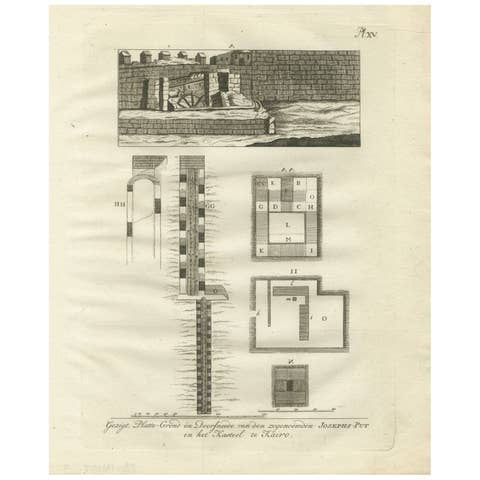
Hall of Joseph’s Granaries in Egypt – Floor Plan and Elevation Engraving, 1776
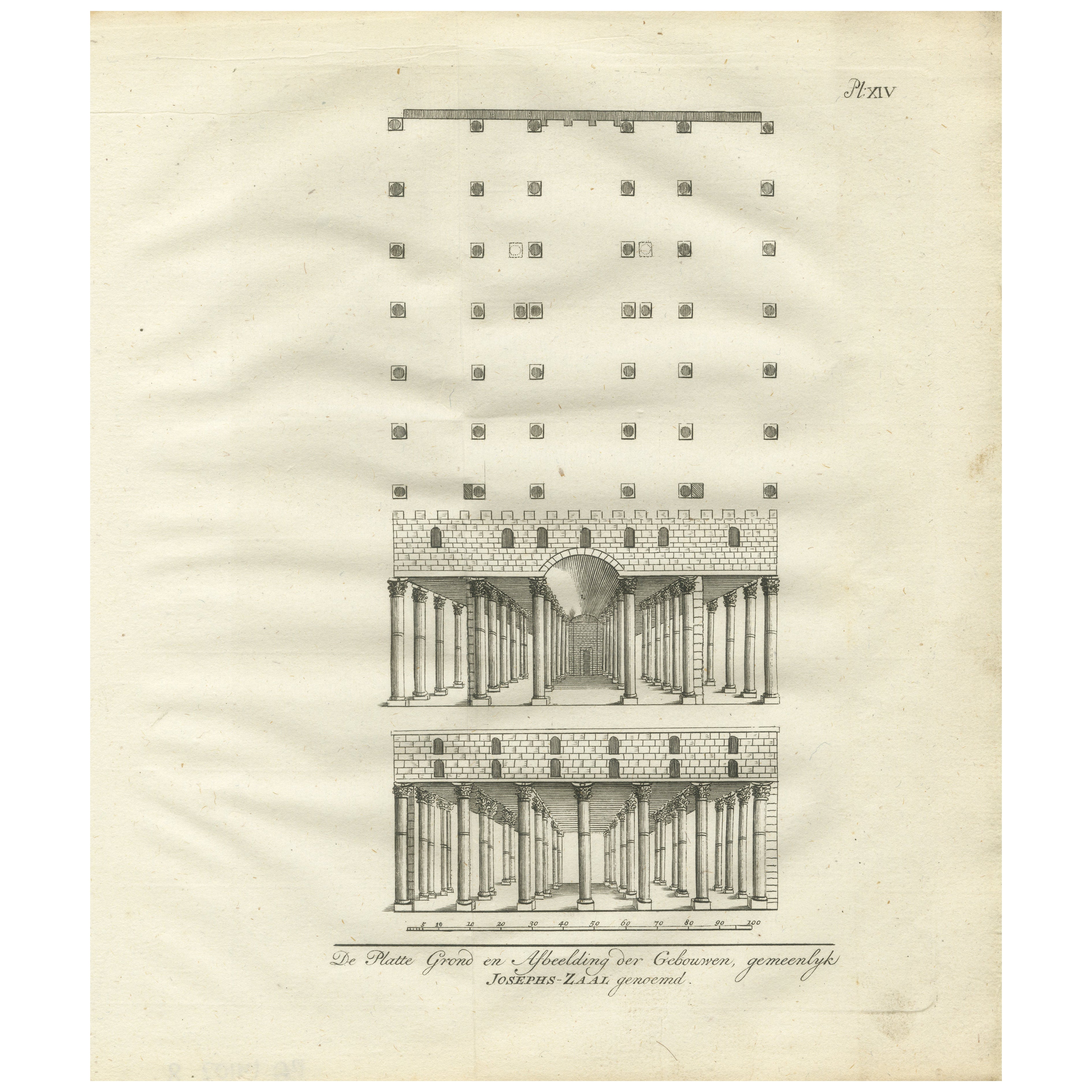
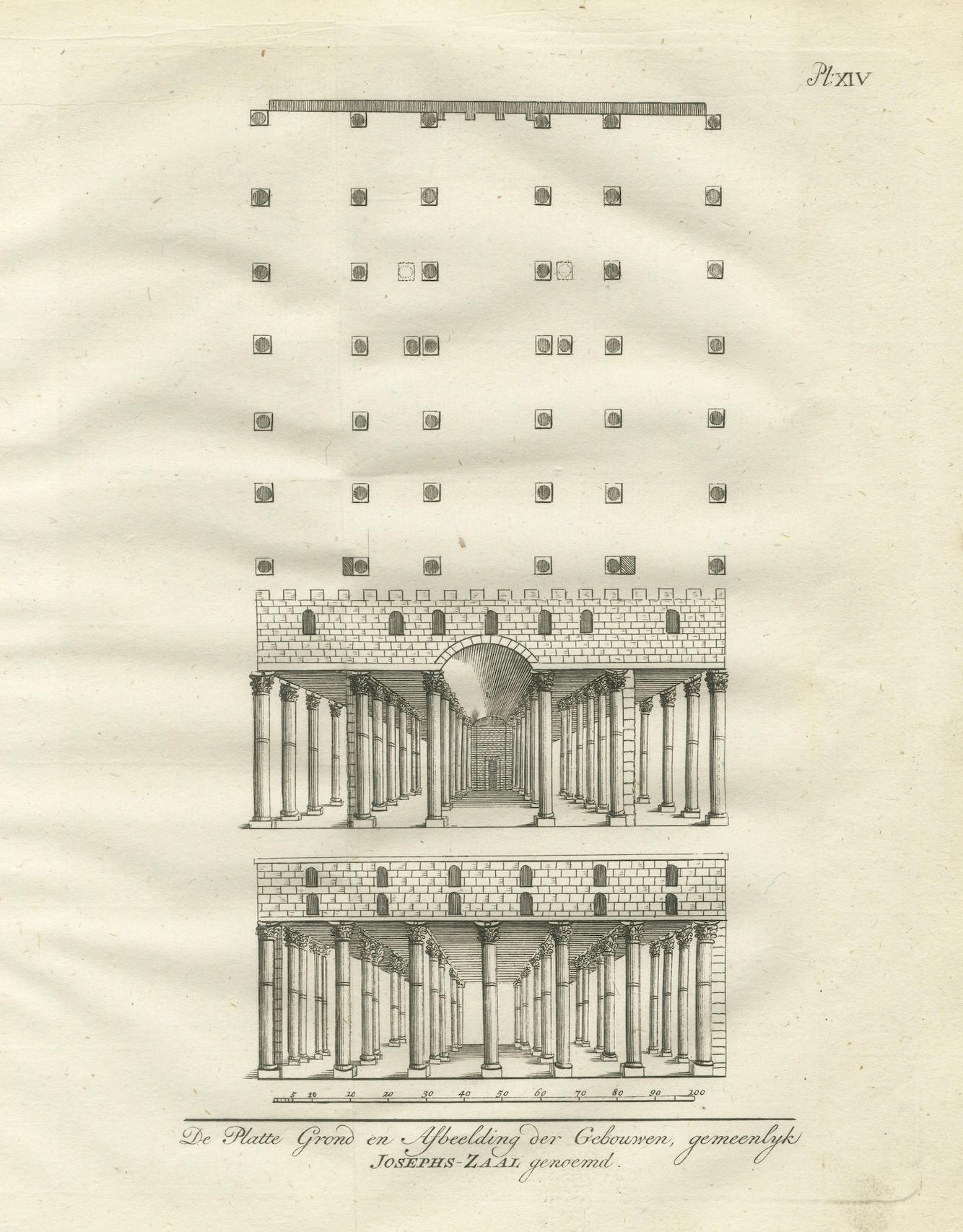
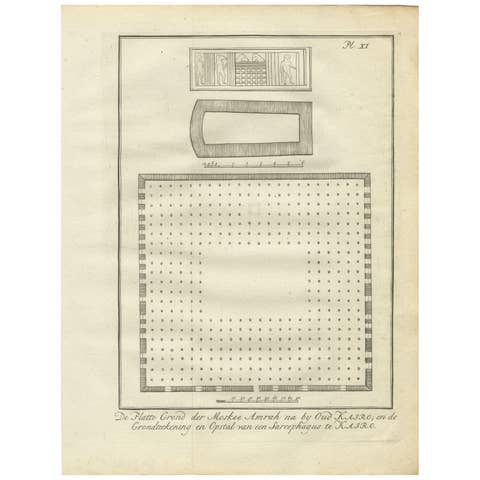
This antique architectural engraving from 1776 shows the floor plan and structural elevation of a large hypostyle hall traditionally referred to as the "Granaries of Joseph" in Egypt. Labeled Plate XIV, the image originates from the Dutch edition of Richard Pococke’s travel account and reflects the European interpretation of ancient or monumental storage buildings often attributed to biblical figures.
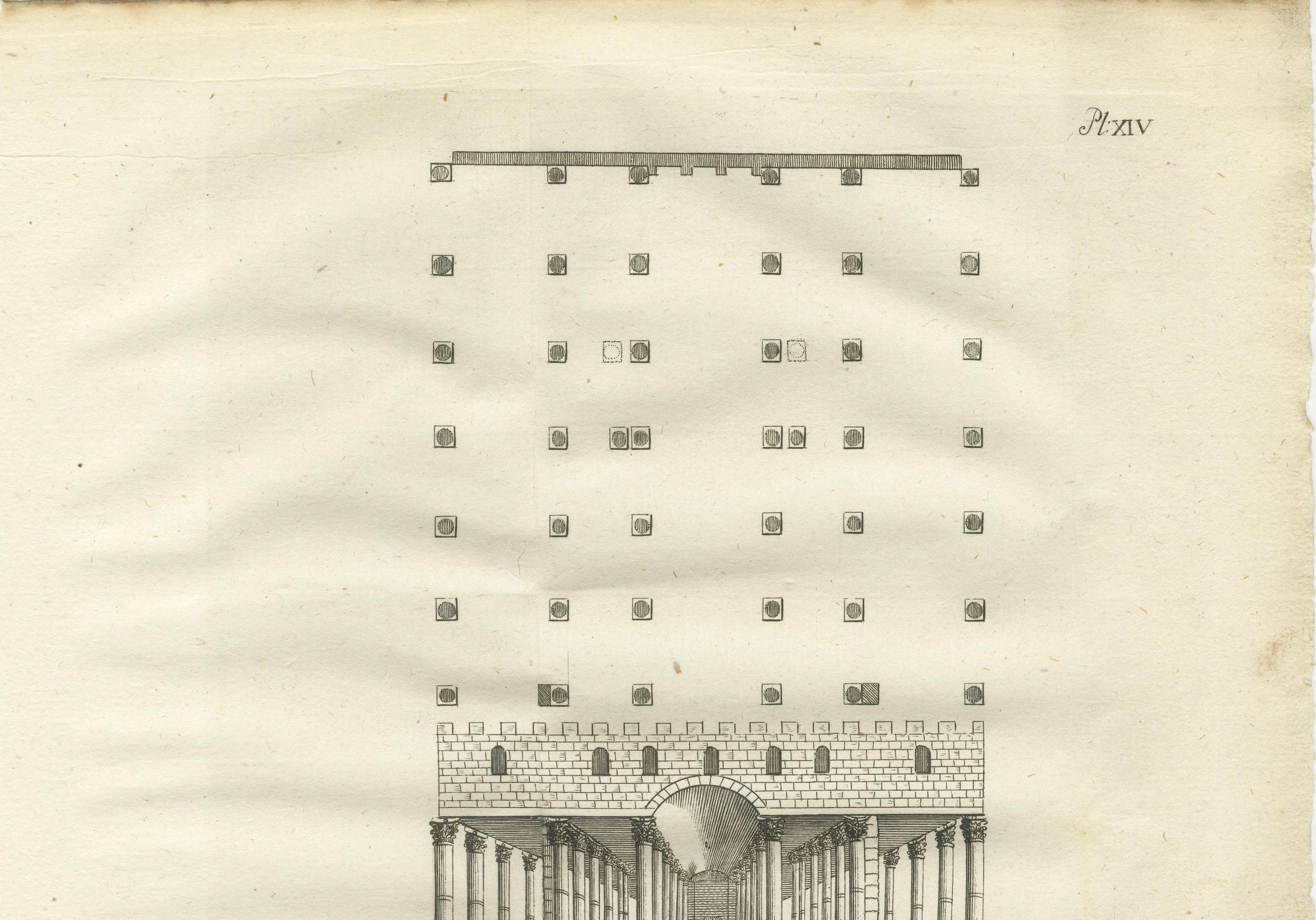
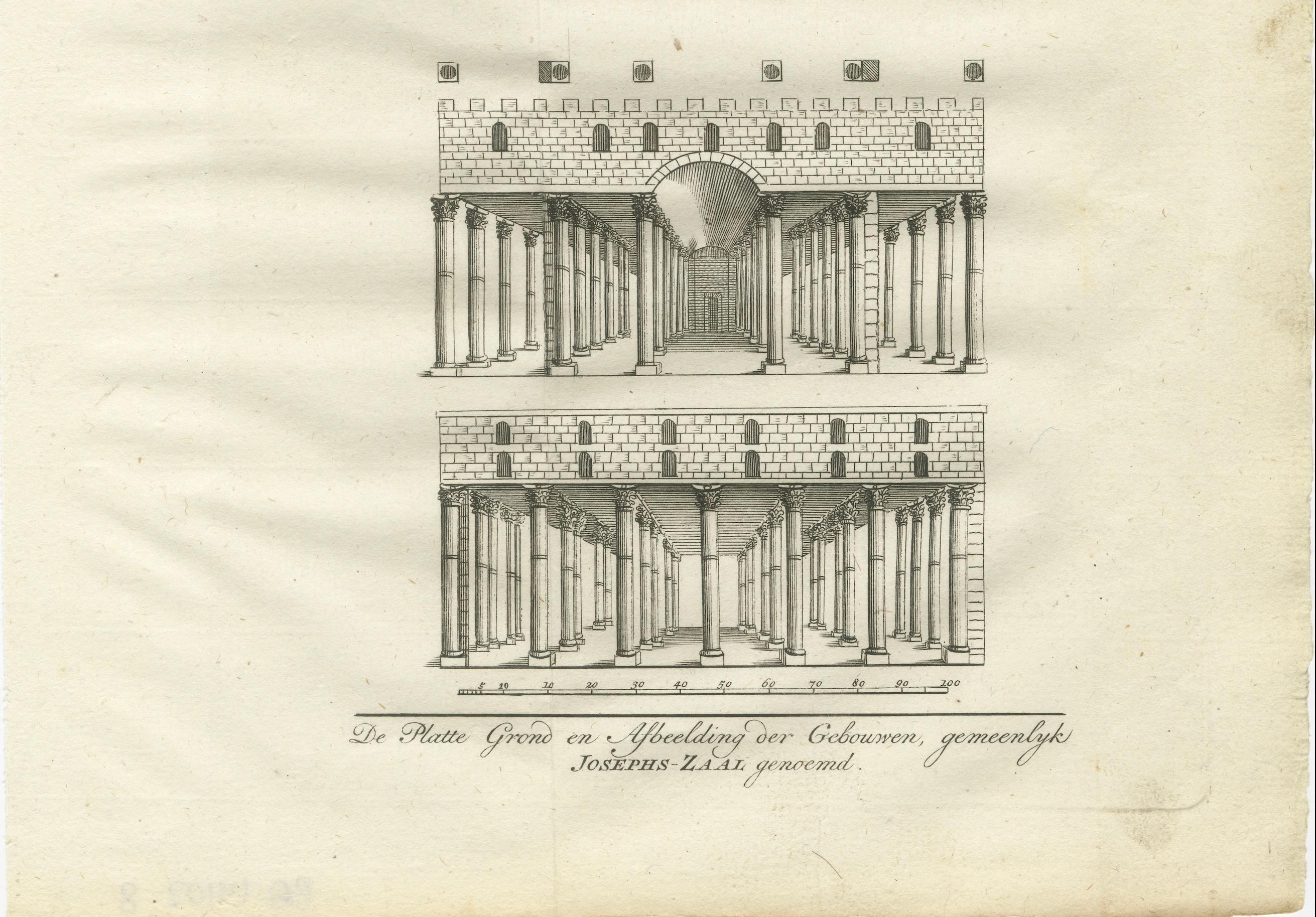
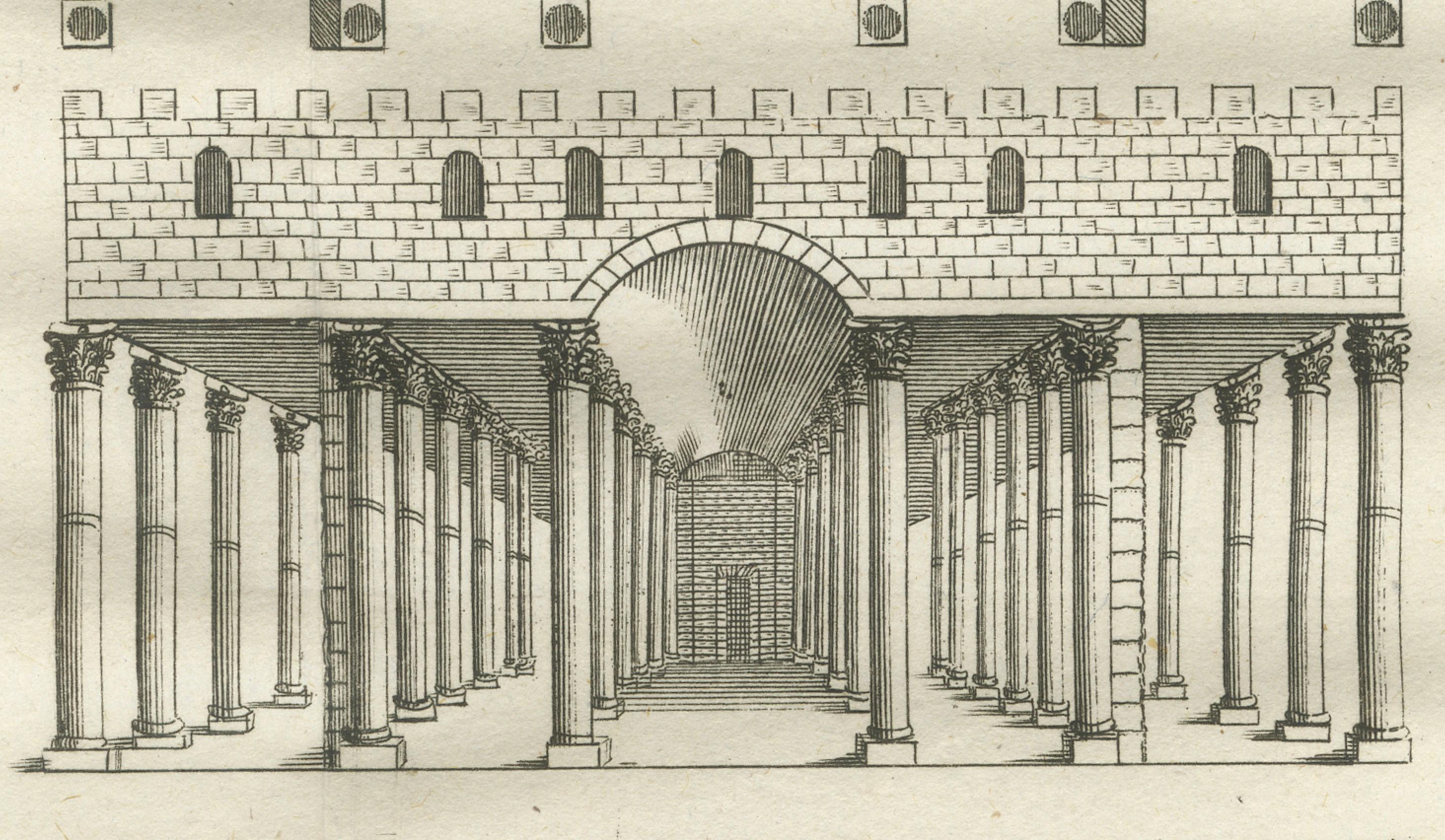
At the top of the print is a grid-like floor plan with evenly spaced dots and small rectangular forms, representing columns and structural supports. Below are two elevation views of the vast interior. The upper elevation shows a vaulted central aisle flanked by rows of tall classical columns supporting arches and an upper gallery. The crenellated roofline suggests a fortified exterior, while the interior emphasizes symmetry, rhythm, and architectural balance.
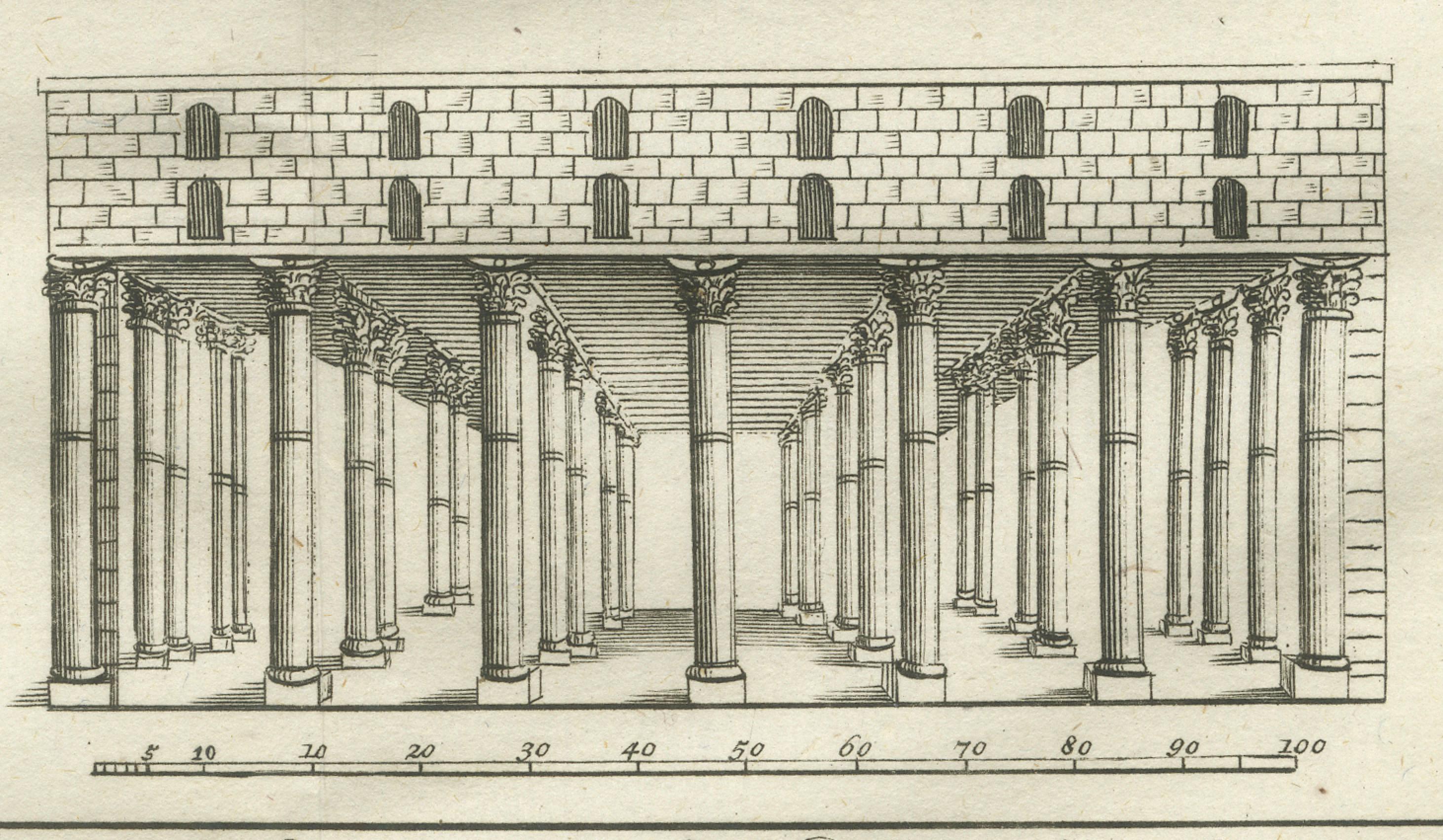
The lower elevation offers a slightly different perspective, possibly a cross-section or side view, again emphasizing the forest of columns and the spaciousness of the hall. These buildings were historically interpreted by European travelers as the biblical granaries of Joseph, based on the Old Testament story where Joseph stored grain in Egypt to prepare for seven years of famine. In reality, the structure likely had a different function, possibly religious or civic, but the association with Joseph was a common interpretation in the 17th and 18th centuries.
The Dutch caption reads, "De Platte Grond en Afbeelding der Gebouwen, gemeenlyk Josephs-Zaai genoemd," which translates to "The floor plan and depiction of the buildings commonly called Joseph's Granaries."
This plate is from *Beschryving van het Oosten en van eenige andere landen* (Description of the East and Some Other Lands), translated by Ernst Willem Cramerus and published in 1776 in Utrecht, Rotterdam, and Amsterdam. Pococke’s book is one of the earliest and most comprehensive European surveys of the monuments and topography of Egypt.
Condition report:
Very good condition. Slight toning and a few small foxing spots in the margins. Central vertical crease from original binding. Strong impression with wide borders. Verso blank.
Framing tips:
Best presented in a classic black or dark walnut frame with an off-white or ivory mat to draw attention to the delicate architectural detail. Ideal for display in a study, library, or collection related to architecture, antiquity, or biblical history.
Technique: Engraving
Maker: Unknown engraver after Richard Pococke, Netherlands, 1776