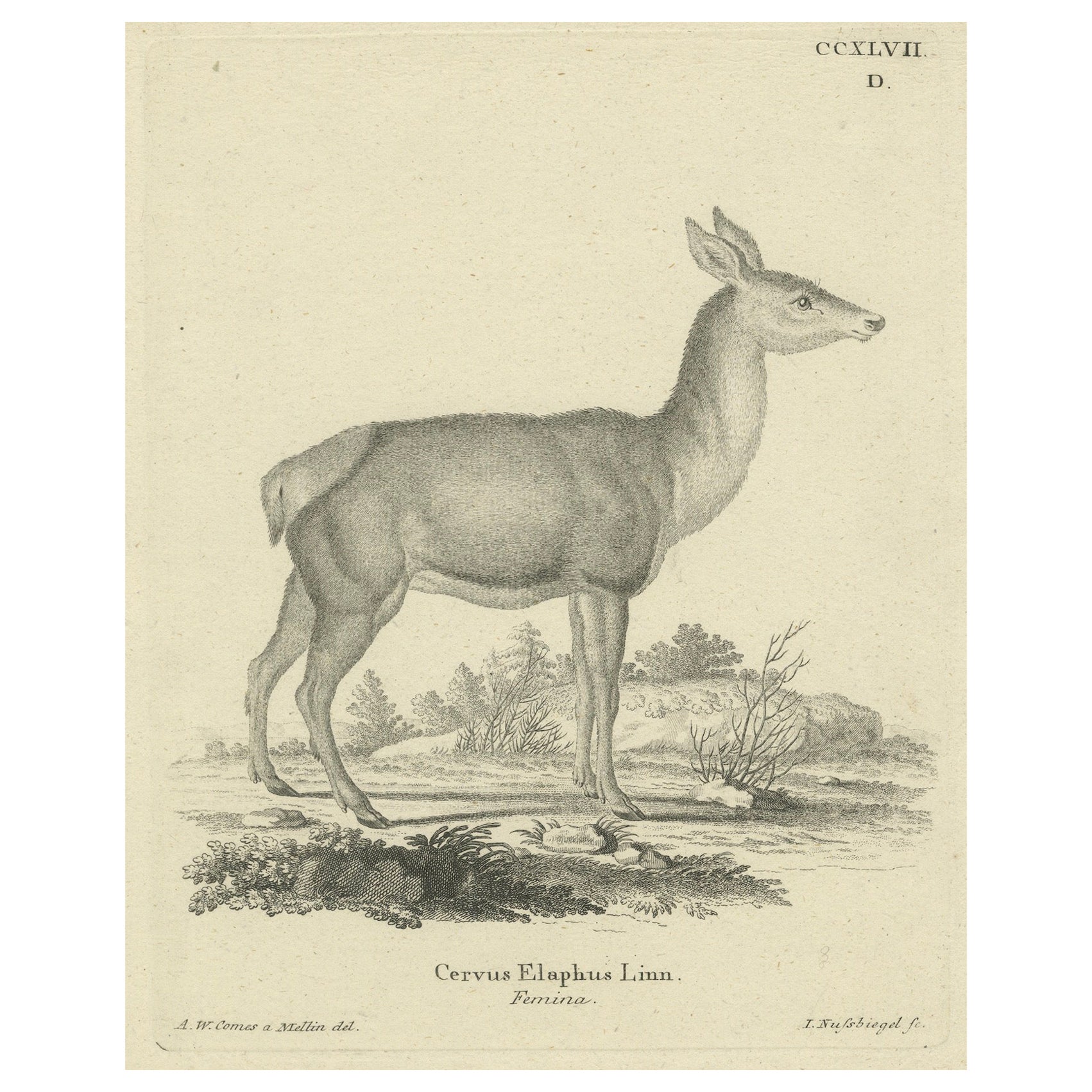
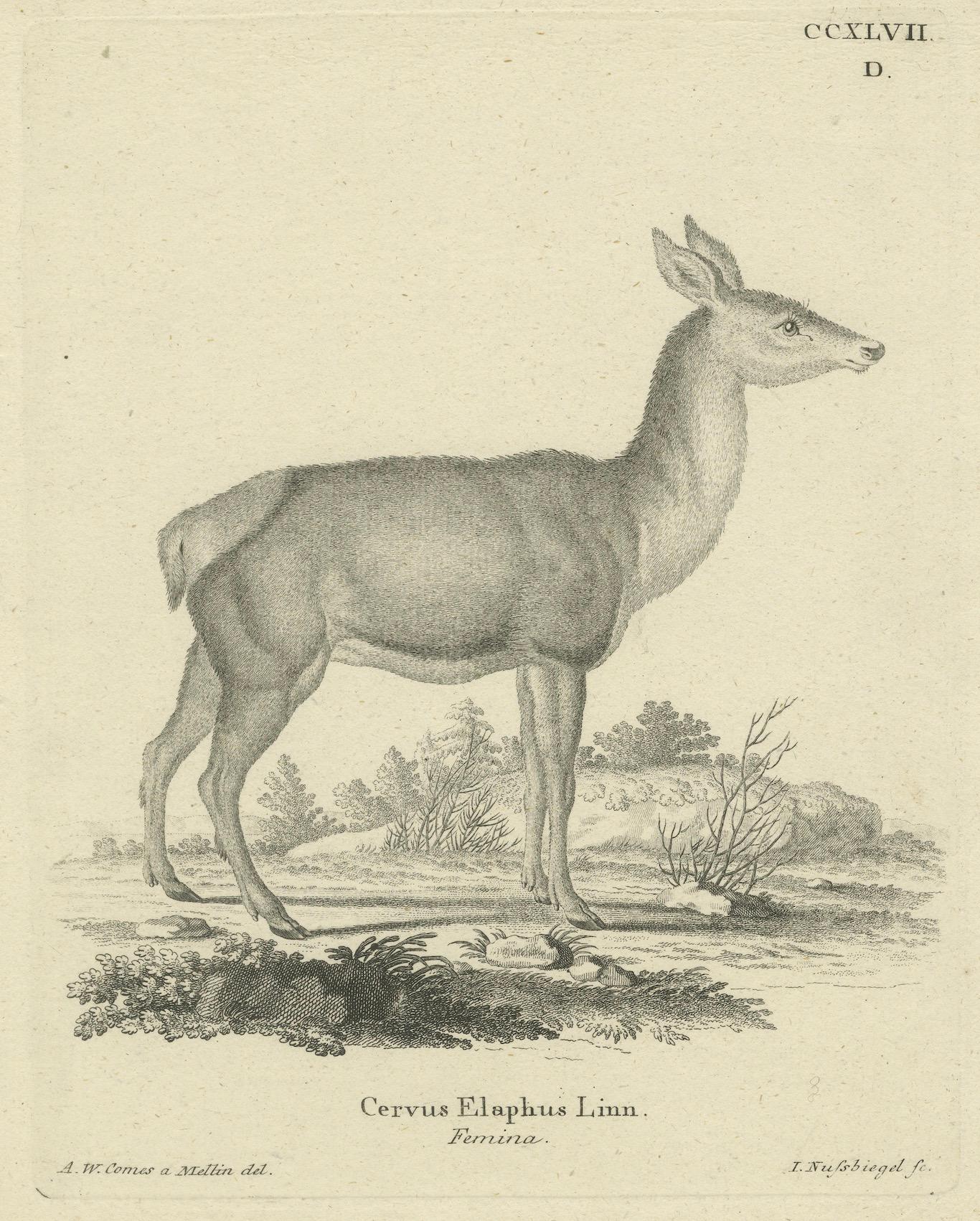
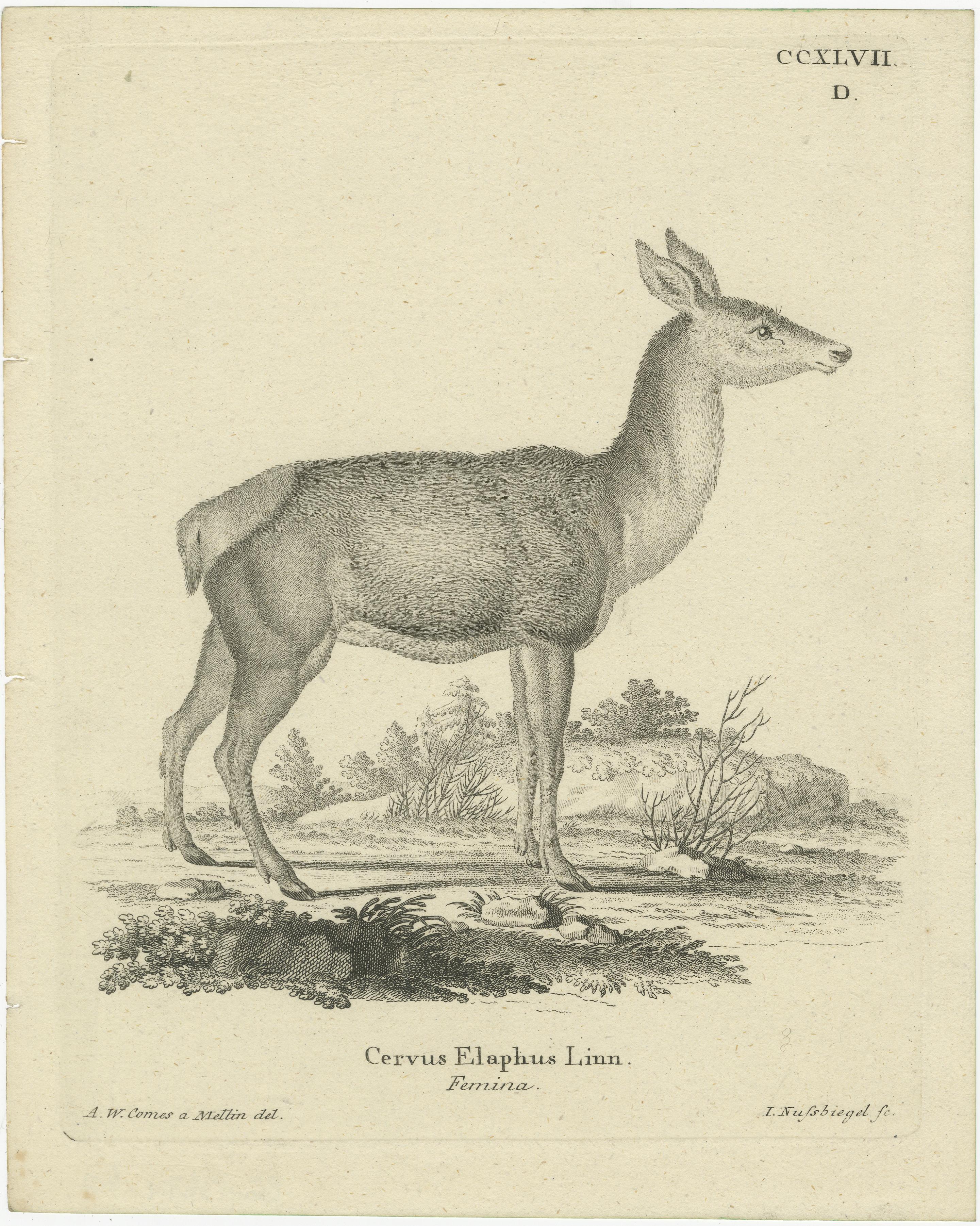
Antique Engraving of a Red Deer Hind (Cervus elaphus Linn. – Femina), c.1800
€ 230
One of a kind: this is the sheet in the photographs. Ships from Langweer, the Netherlands.
Date
1800
Sheet size
25 × 20.2 cm (9.8 × 8.0 in)
Condition
Good
Reference
BG-13674-67
Condition
Good condition with mild age toning and minor handling marks consistent with age. Strong impression on laid paper with a visible plate mark and wide margins. Slight binding traces along the left edge, otherwise clean and well preserved.
About this sheet
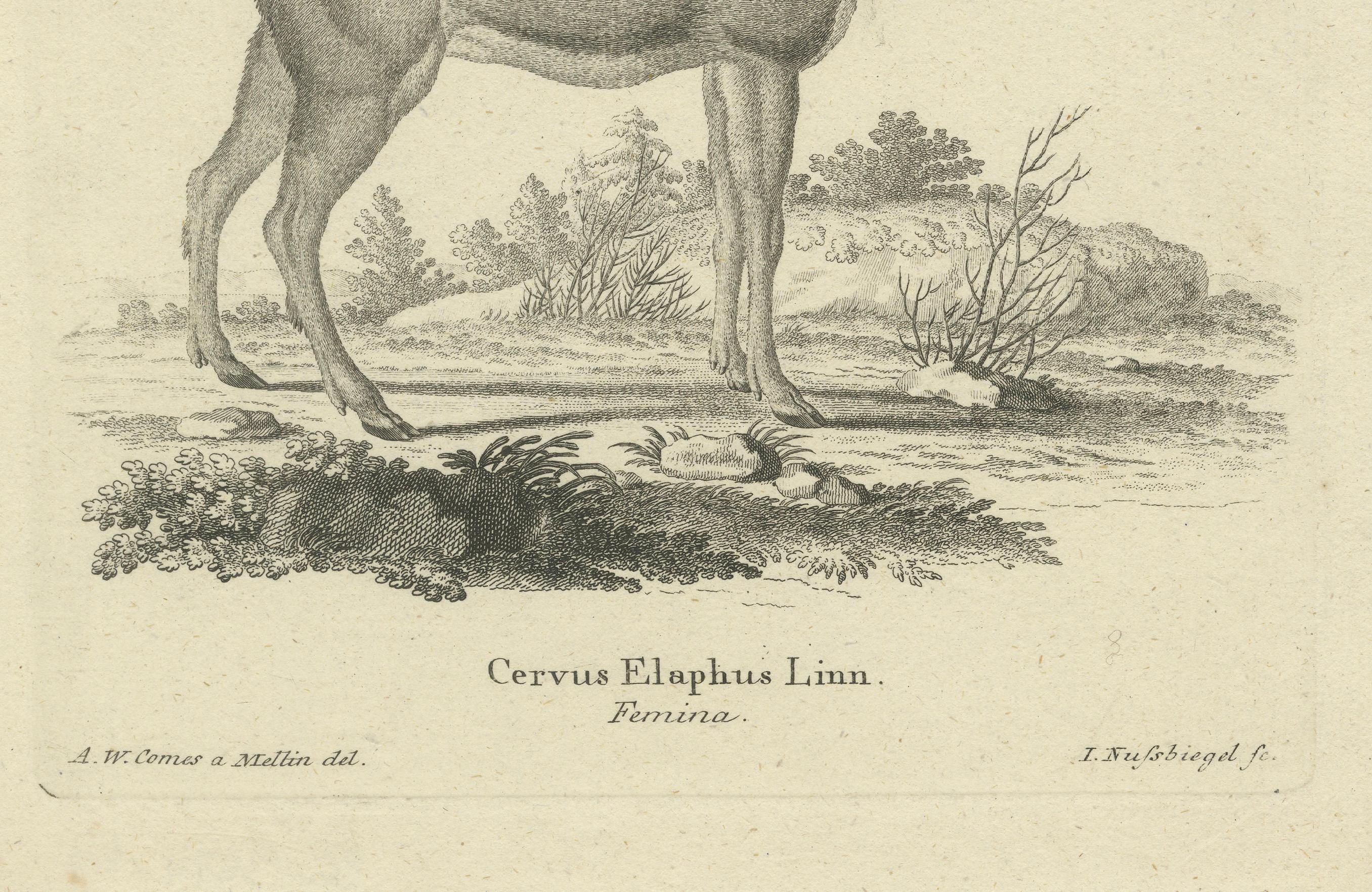
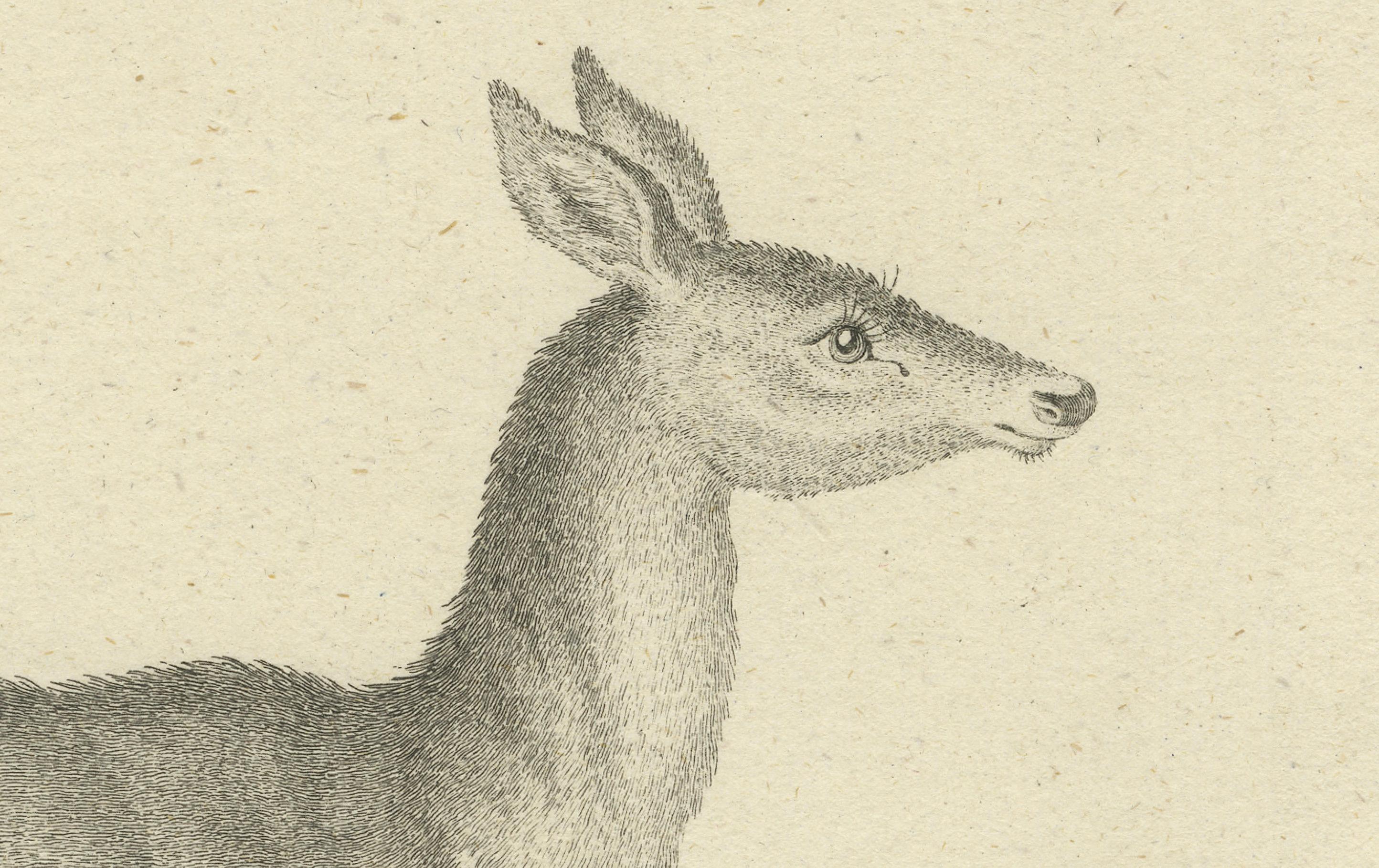
Antique Engraving of a Red Deer Hind (Cervus Elaphus Linn. – Femina), drawn by A.W. Comes a Mellin, engraved by J. Nußbiegel, circa 1800 This elegant zoological engraving depicts the Red Deer hind (Cervus Elaphus Linn. – Femina), drawn by A.W. Comes a Mellin and engraved by Johann Nußbiegel around 1800. The plate belongs to one of the great German natural history works of the late 18th to early 19th century, combining artistic sensitivity with scientific precision in the documentation of European wildlife.
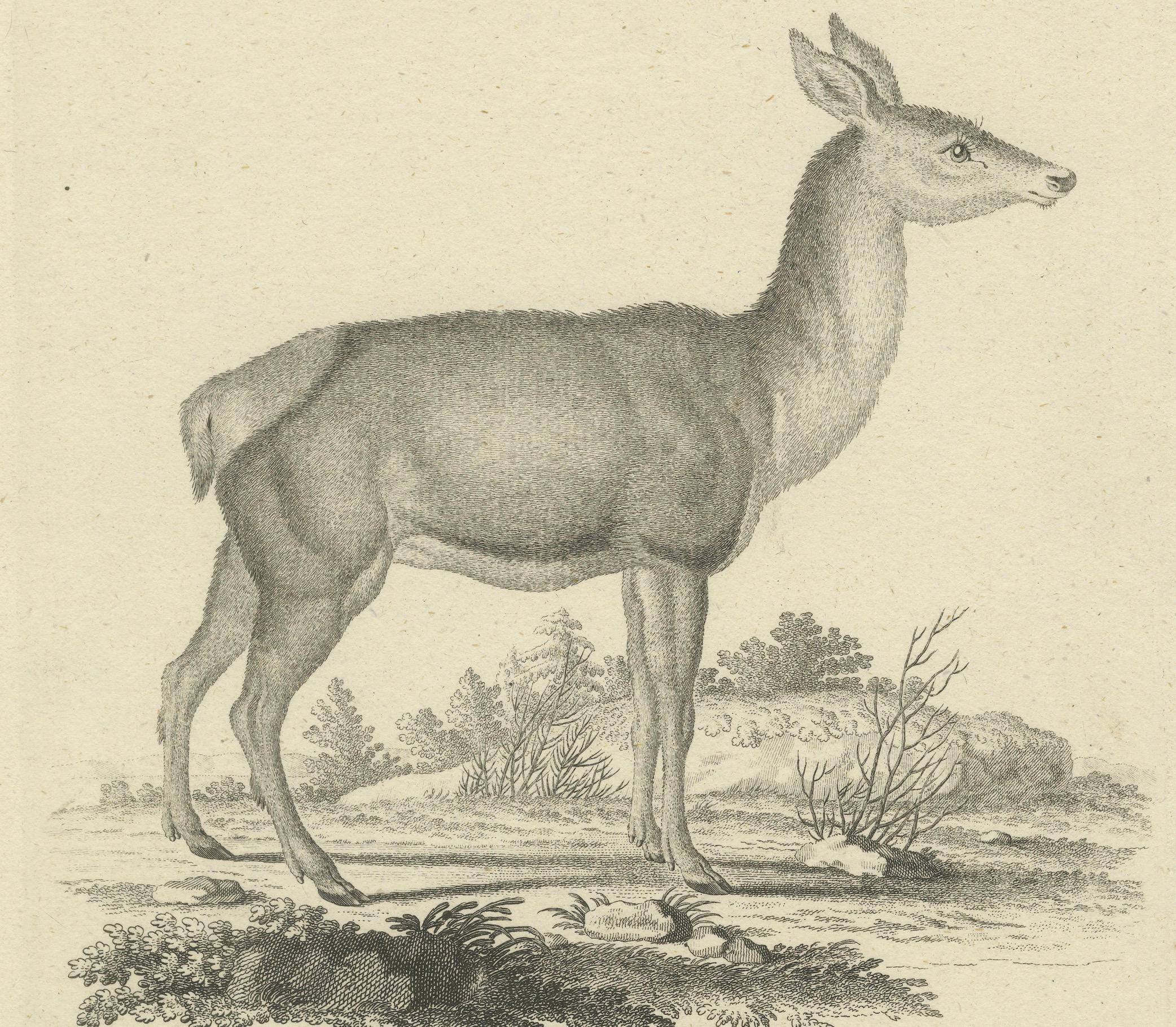
The engraving presents the female red deer standing gracefully in profile within a natural landscape of shrubs and gentle terrain. Comes a Mellin’s fine draftsmanship captures the animal’s slender build, alert expression, and the delicate structure of its limbs, while Nußbiegel’s expert engraving translates these qualities into fine tonal gradations and meticulous texture. The subtle shading and careful modeling of the fur give the image a lifelike realism that exemplifies the best of Enlightenment-era natural history art.
The red deer, one of Europe’s most noble and enduring species, was a familiar yet revered subject among naturalists of the period. Works like this plate were intended both to educate and to celebrate nature’s diversity, reflecting the intellectual and aesthetic ideals of the time. Nußbiegel’s technical precision and Comes a Mellin’s graceful composition together produce a scientifically accurate yet artistically harmonious portrayal.
Condition report: Good condition with mild age toning and minor handling marks consistent with age. Strong impression on laid paper with a visible plate mark and wide margins. Slight binding traces along the left edge, otherwise clean and well preserved.
Framing tips: A light ivory or cream mat will highlight the subtle tonal qualities of the engraving. Pair with a walnut, oak, or black wooden frame for a refined and timeless presentation, suitable for study or natural history display.
Technique: Engraving on laid paper Delineator: A.W. Comes a Mellin Engraver: Johann Nußbiegel Maker: German, circa 1800