About this sheet
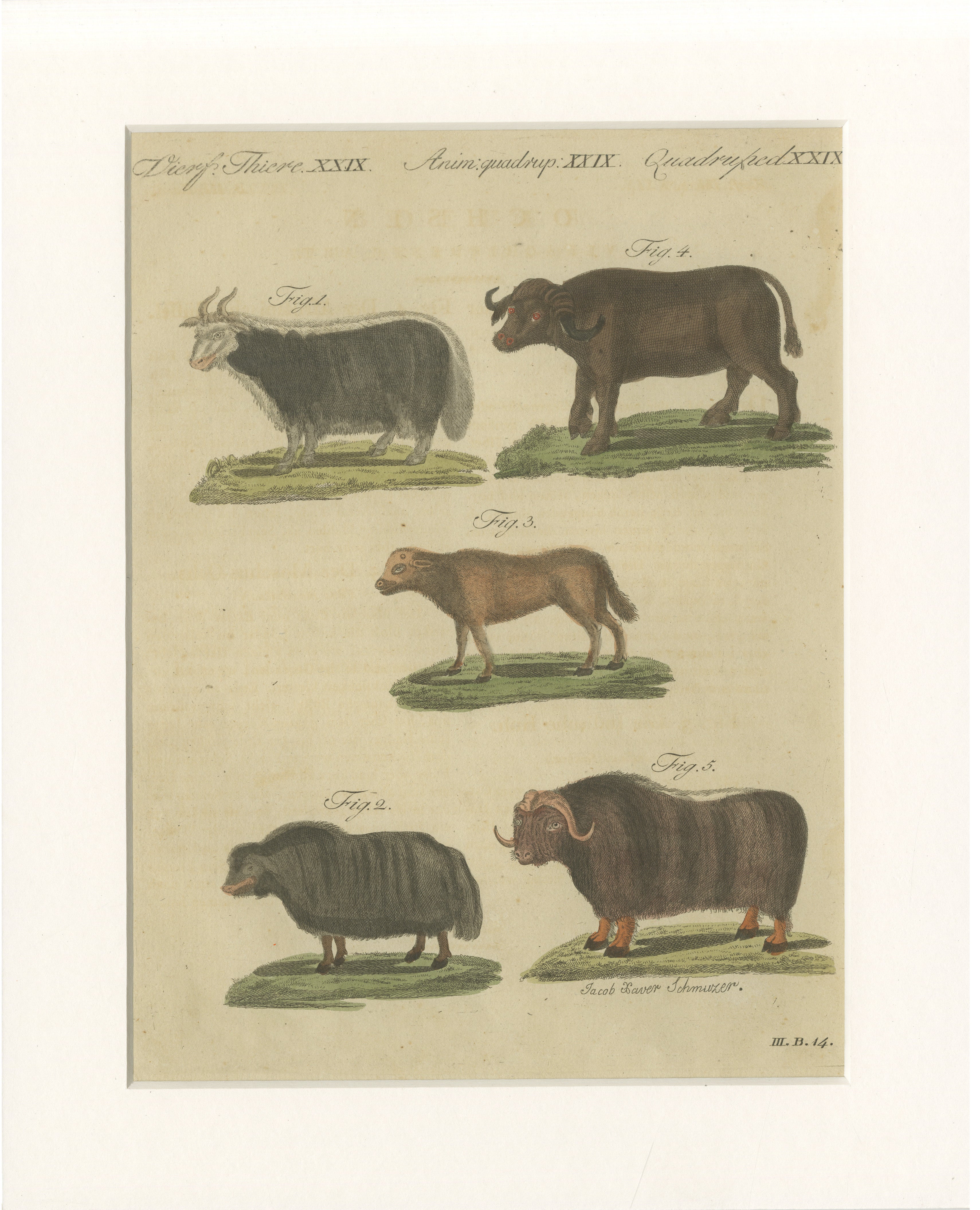
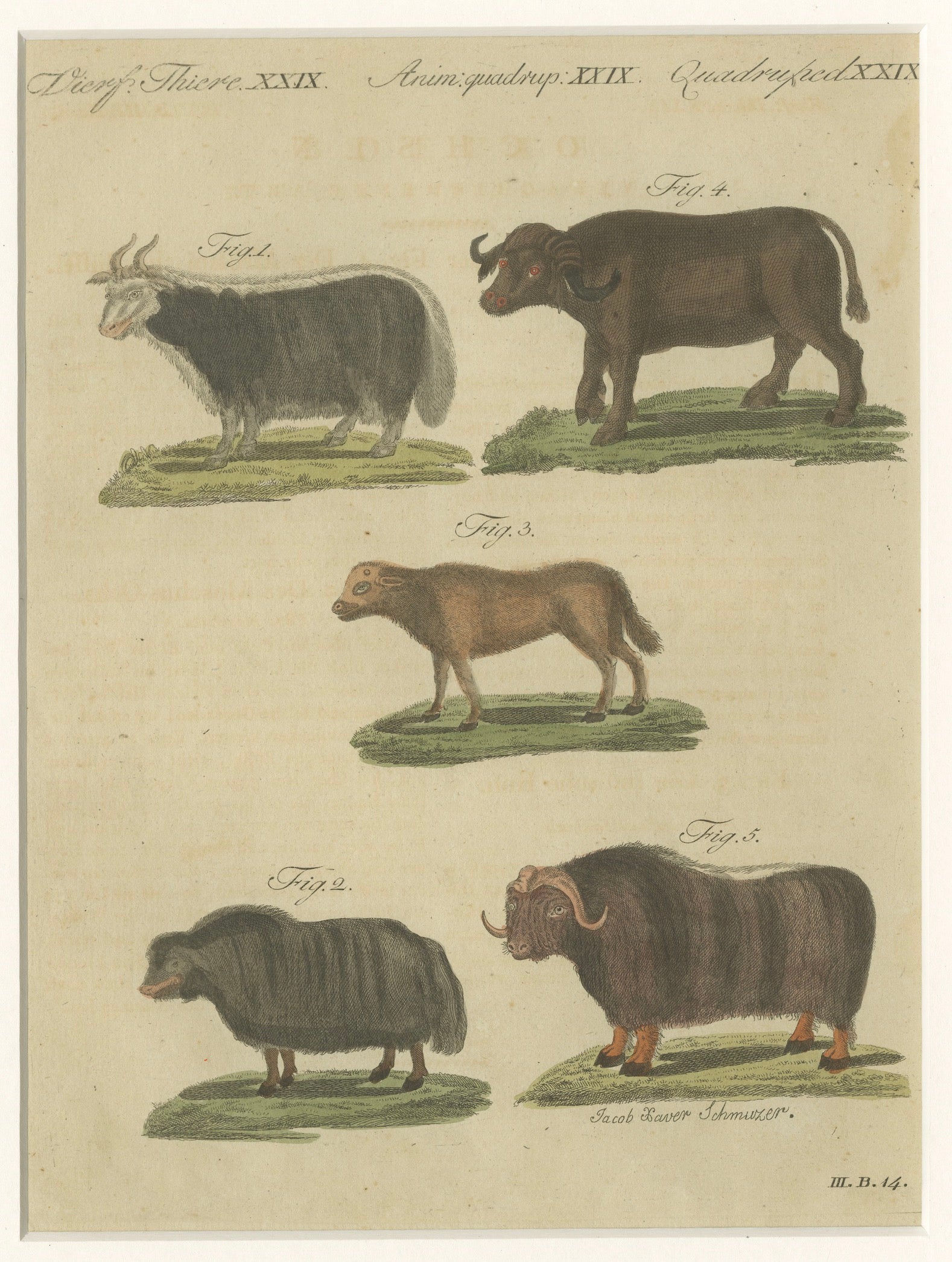
Original antique hand-colored copper engraving depicting five unusual breeds and species of cattle and bovids from different parts of the world, published in Friedrich Justin Bertuch’s celebrated “Bilderbuch für Kinder” around 1800.
The plate is headed “Vierfüßige Thiere XXIX / Anim. quadrup. XXIX / Quadrupèdes XXIX” and presents five striking horned and domesticated or semi-wild bovids.
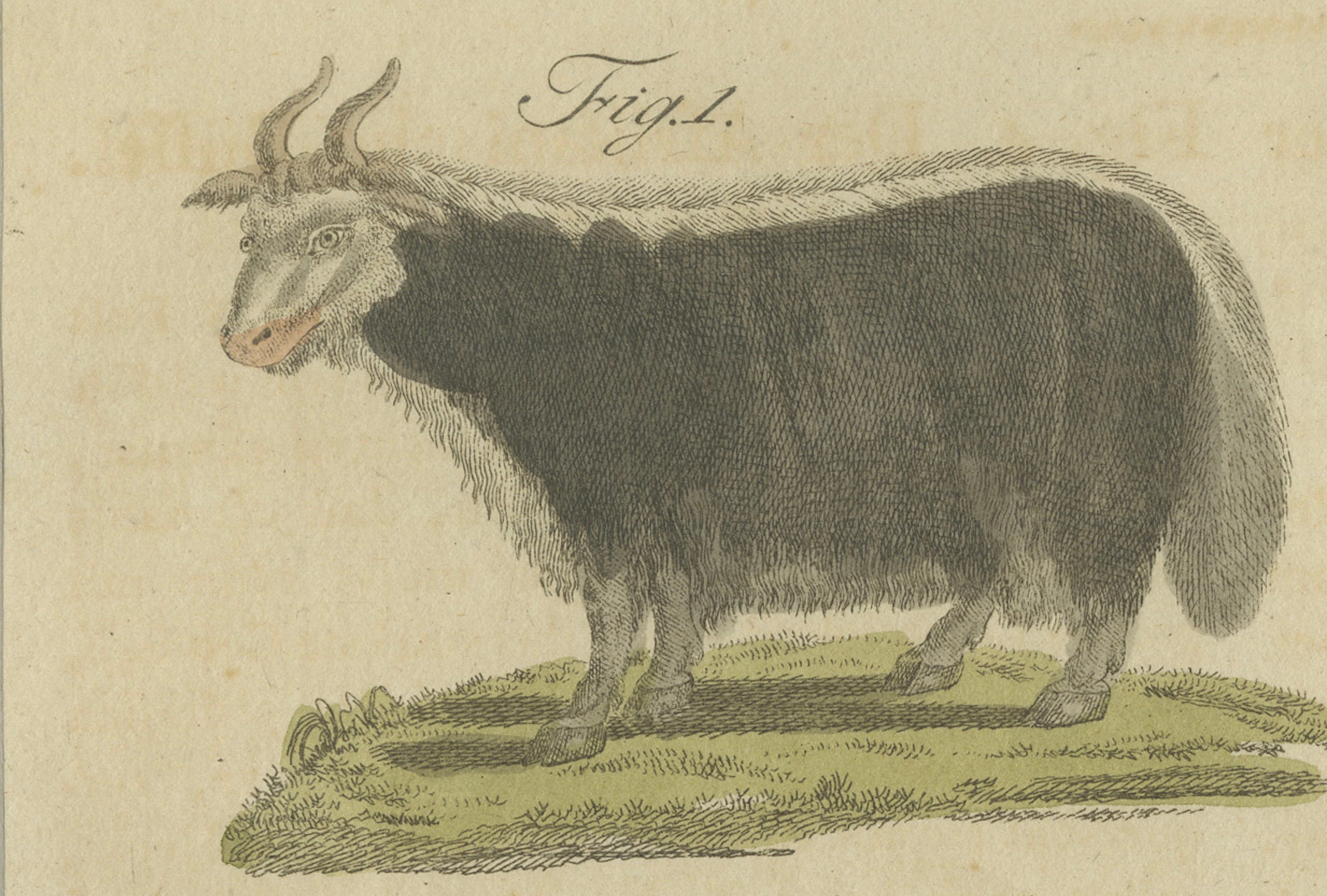
Fig. 1 – Yak / Grunting Ox
A long-haired, horned bovine of Central Asia and the Himalayan regions, recognizable by its heavy shaggy coat, bushy tail and sweeping horns. Yaks were still highly exotic animals to European readers around 1800 and frequently appeared in early natural-history works under names such as the Grunting Ox or Tartarian Ox.
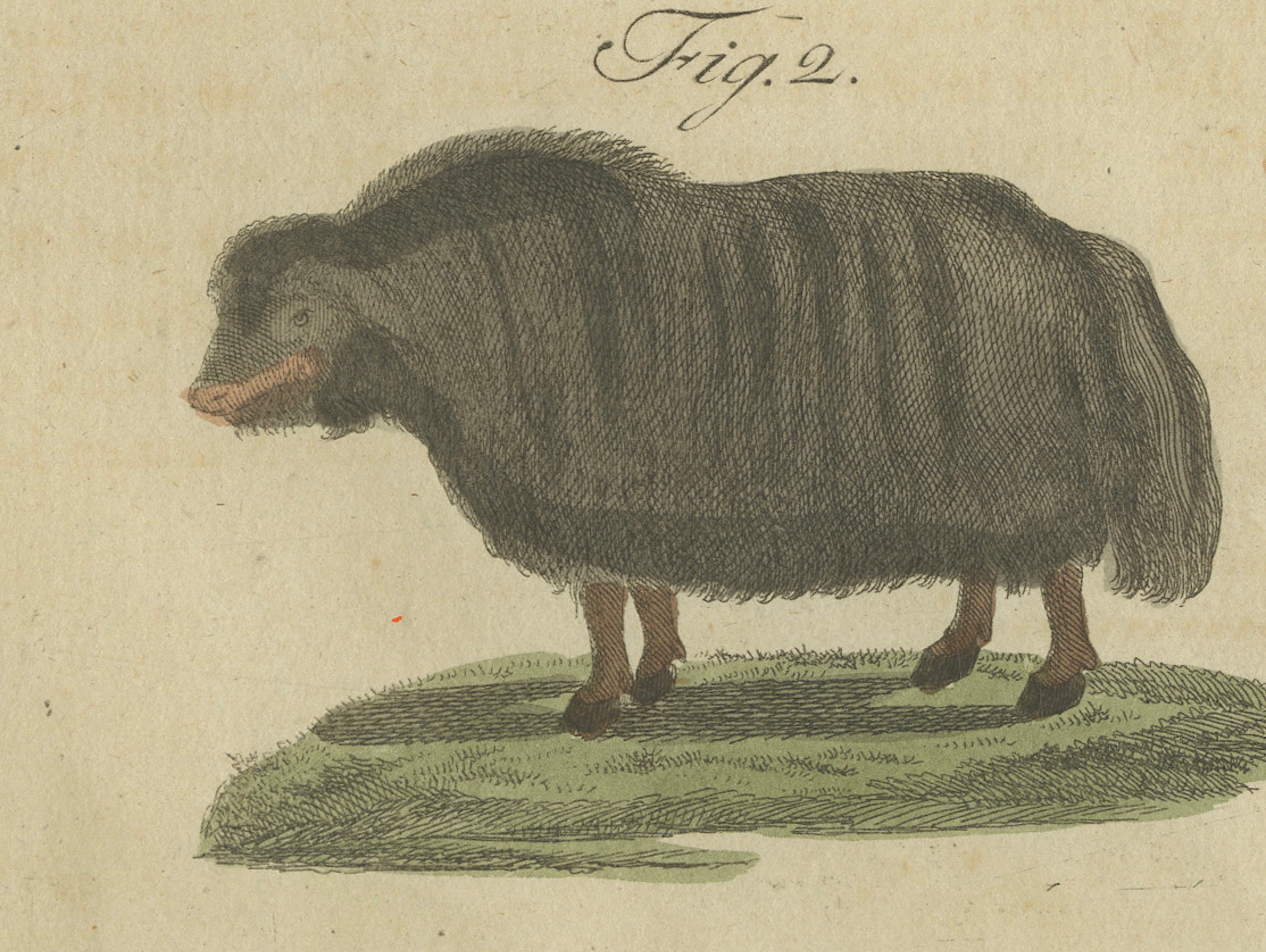
Fig. 2 – Small Shaggy Cattle / Dwarf Ox Type
A compact, heavily coated bovine represented with a low body and short legs. Such unusual regional cattle varieties were of considerable interest to 18th-century European naturalists, who attempted to classify both wild bovids and the many geographically distinct forms of domestic cattle.
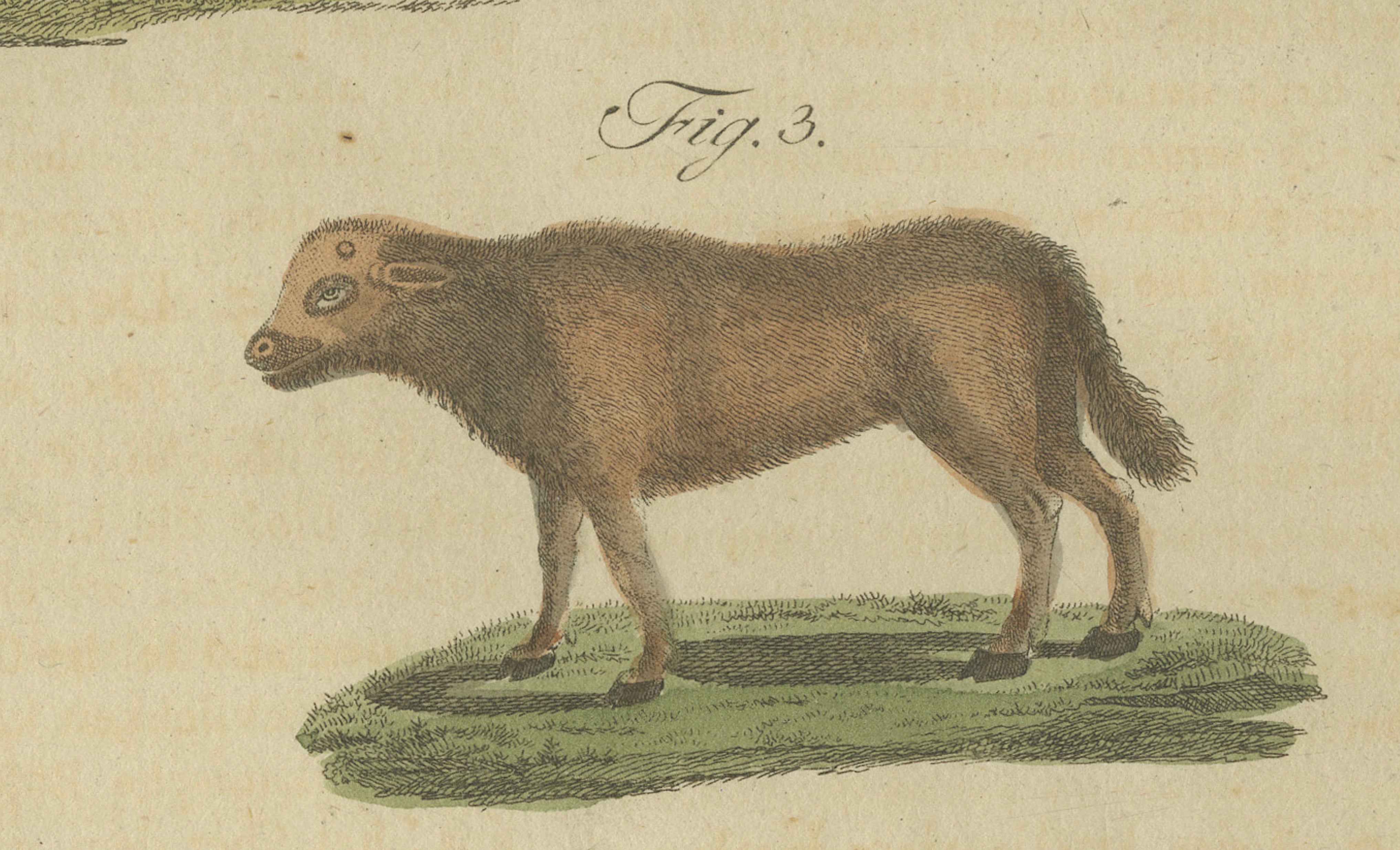
Fig. 3 – Small Wild or Dwarf Bovid
A smaller brown bovine shown in profile. Its compact proportions distinguish it clearly from the larger cattle represented elsewhere on the plate.
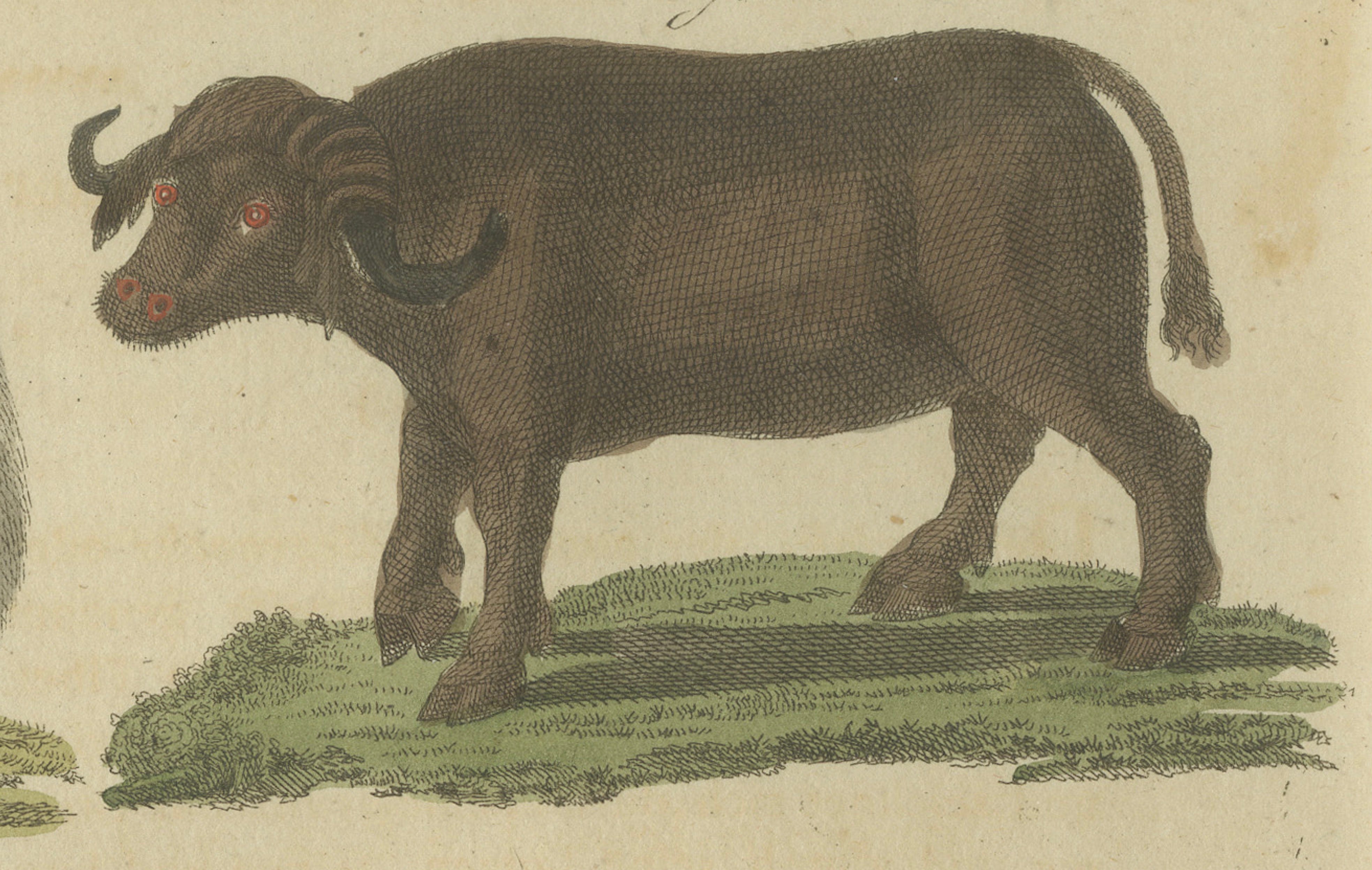
Fig. 4 – Buffalo
A powerful dark buffalo distinguished by its massive body and heavy curved horns. Buffaloes were widely described in European natural-history literature as exotic relatives of domestic European cattle and were associated particularly with Asia and warmer regions of the Old World.
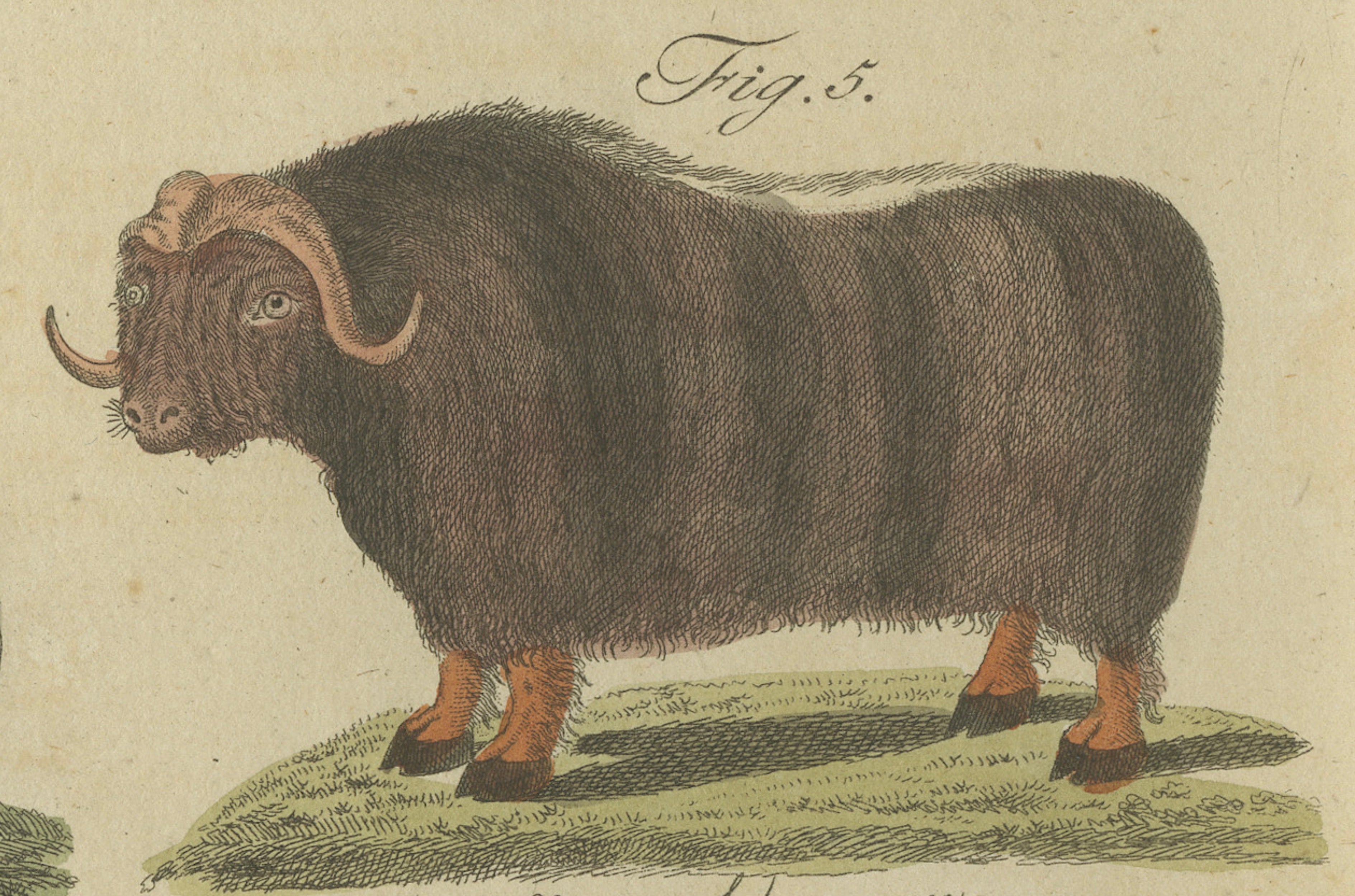
Fig. 5 – Shaggy Yak or Musk-Ox Type
An impressive long-haired horned animal with a dense dark coat, curved horns and contrasting lower legs. The image reflects the fascination of early European naturalists with heavily coated cattle and bovids from the colder regions of Asia and the far north.
The plate provides an appealing glimpse into late 18th-century zoological classification. At the time, relationships between domestic cattle, buffaloes, yaks, wild oxen and other bovids were still being investigated, and historical names do not always correspond neatly with modern zoological classifications.
Friedrich Justin Bertuch (1747–1822) was a German publisher, writer and patron of the arts. His monumental “Bilderbuch für Kinder” (Picture Book for Children), first published in Weimar in 1790, became one of the great illustrated educational encyclopedias of the late 18th and early 19th centuries.
Its hundreds of engraved and hand-colored plates introduced readers to animals, plants, geography, science, technology, antiquity and cultures from around the world.
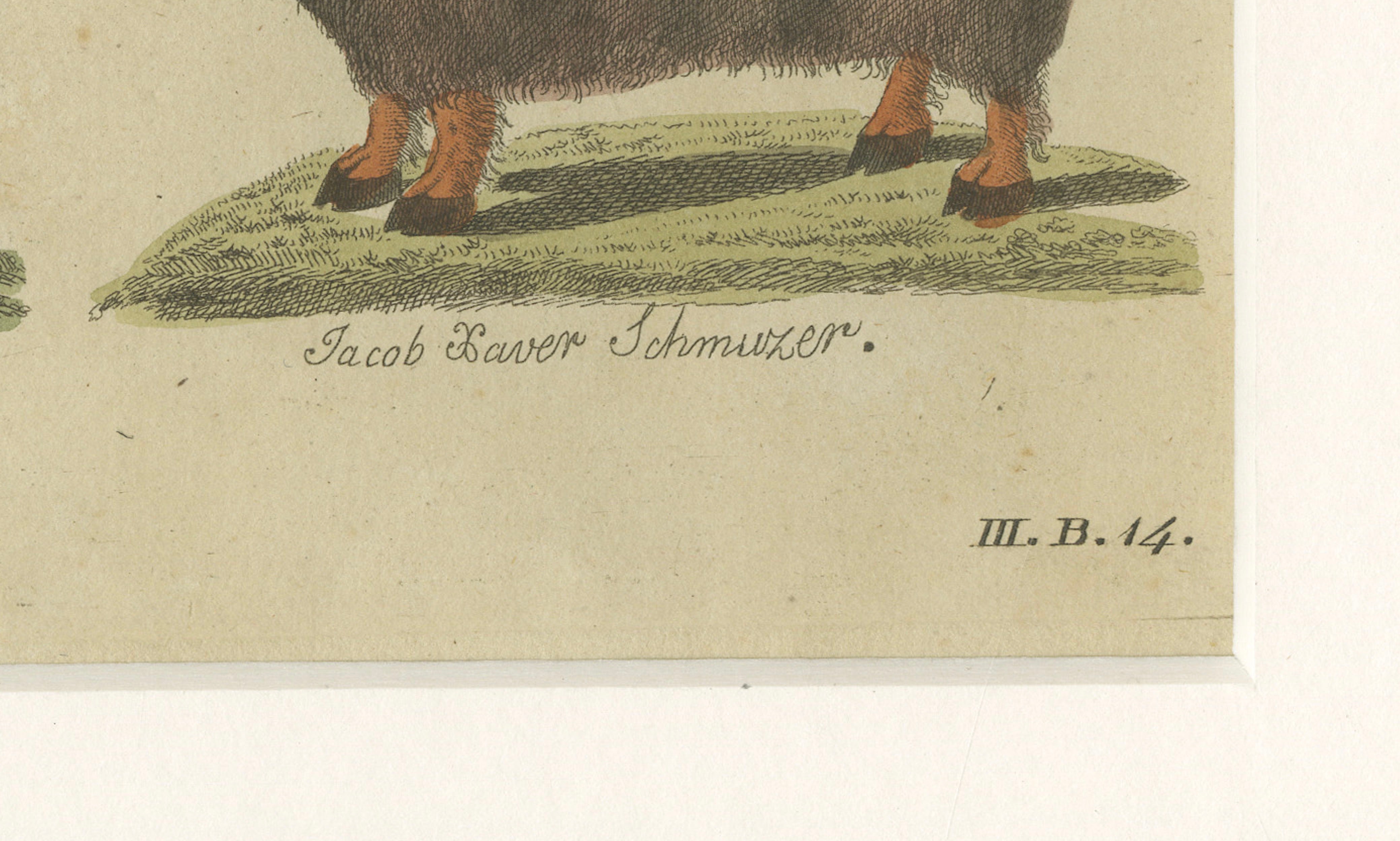
The engraving is signed in the plate “Jacob Xaver Schmuzer.”
The combination of five unusual cattle types, their contrasting horns and coats, and the restrained original hand coloring makes this an especially decorative natural-history plate for a country-house, farmhouse, library or natural-history interior.
Publication: Bilderbuch für Kinder
Place: Weimar, Germany
Plate: Vierfüßige Thiere XXIX / Anim. quadrup. XXIX / Quadrupèdes XXIX
Subject: Exotic cattle, bovids, yak and buffalo
Good antique condition with overall age-related toning, scattered foxing and spotting and some visible offsetting or show-through from printed text. Minor marks and imperfections are consistent with the age of the engraving. The original hand coloring remains attractive. Please study the photographs carefully as they form part of the condition description.
The engraving is loosely inserted in an acid-free matting board.
Please note: This is an original antique hand-colored copper engraving from around 1800, not a modern reproduction. The print is sold unframed. Framed images or interior views, if shown, are for presentation and inspiration only.
Other companion animal and natural-history plates from Bertuch’s “Bilderbuch für Kinder” are also available separately.