About this sheet
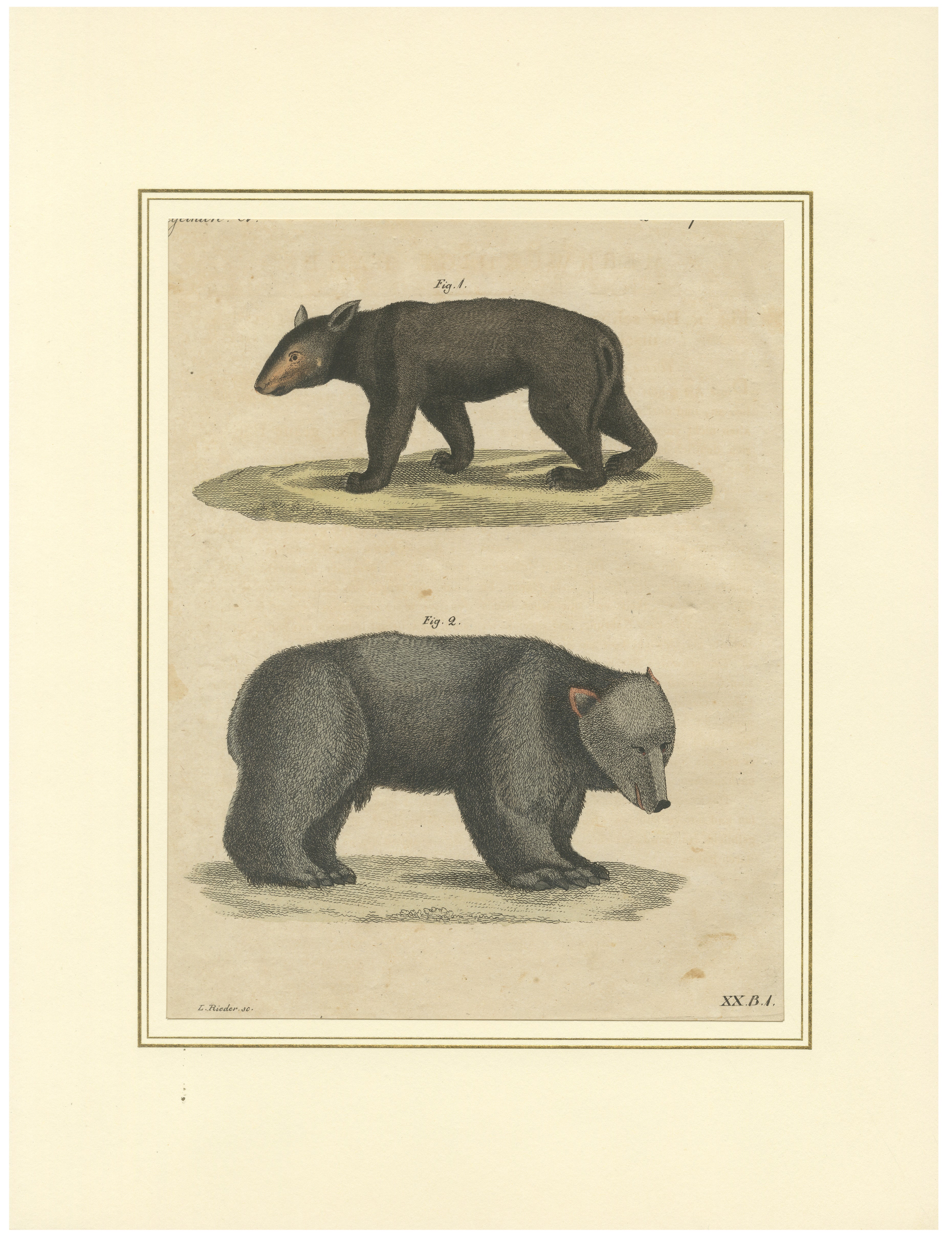
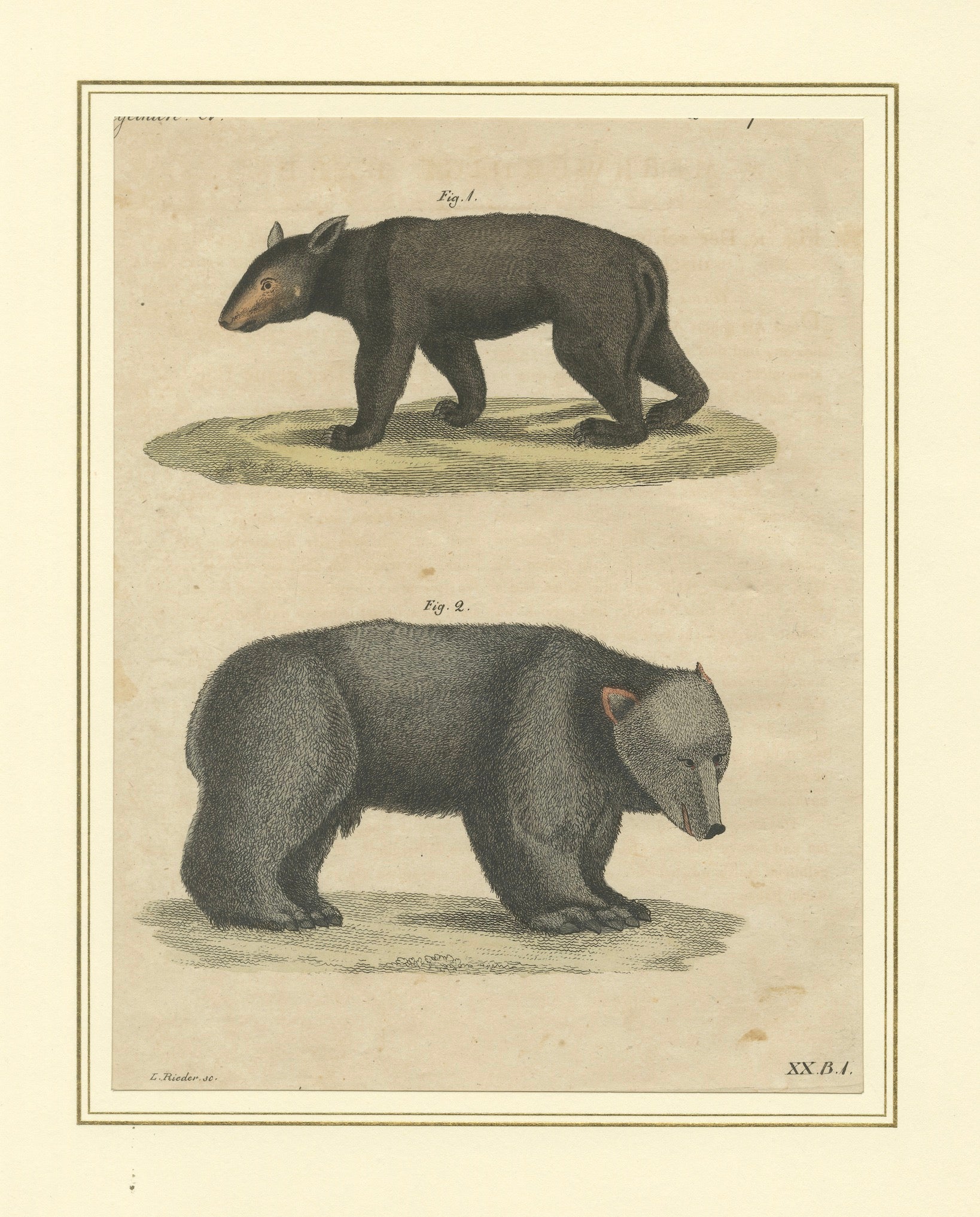
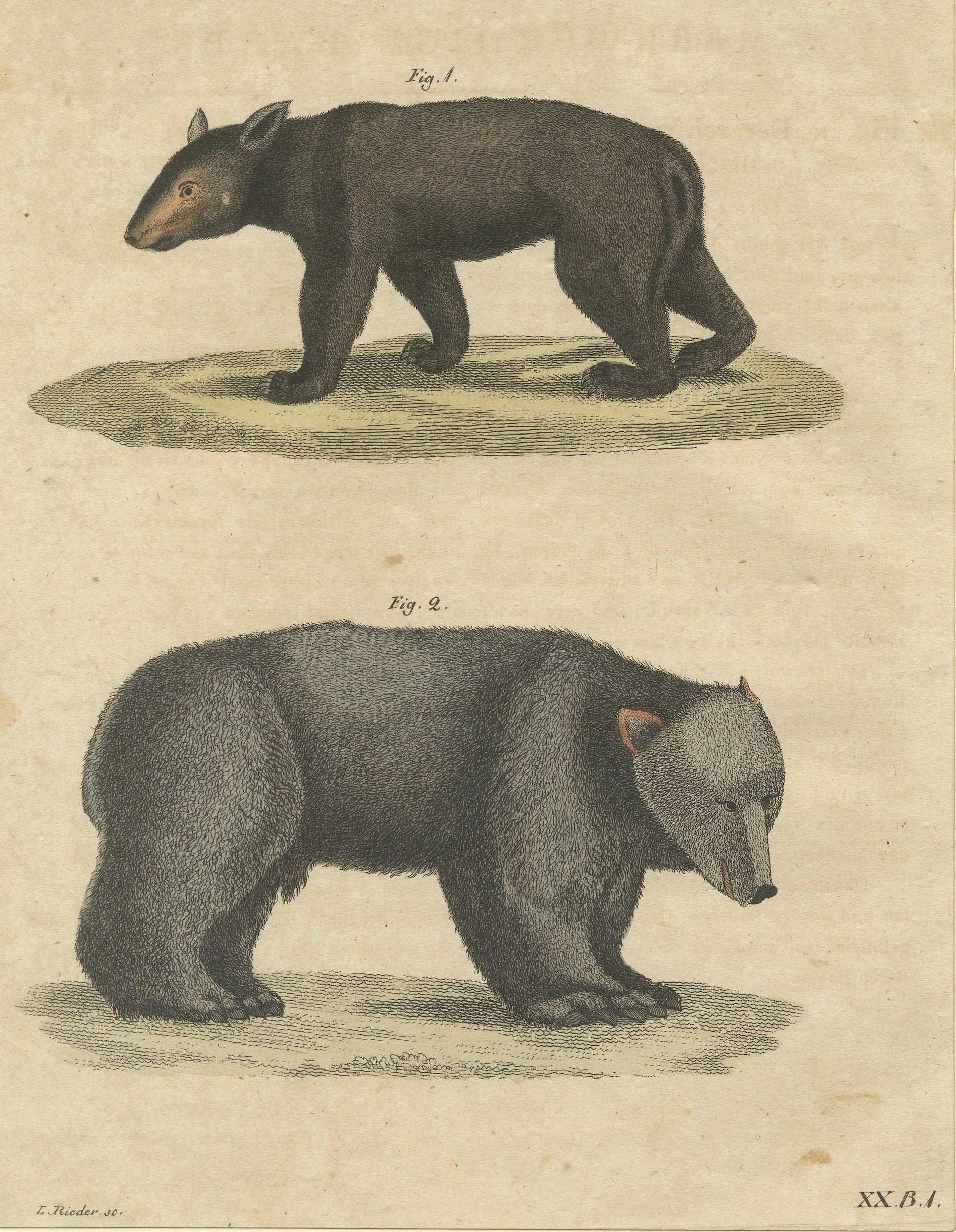
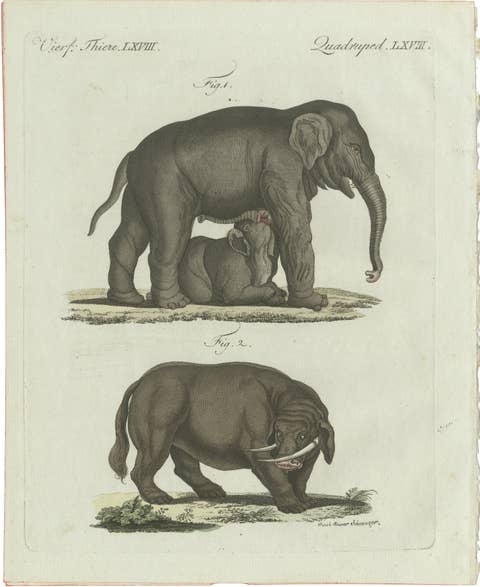
Original antique hand-colored copper engraving depicting two remarkable exotic mammals – a South American tapir and a bear – published in Friedrich Justin Bertuch’s celebrated “Bilderbuch für Kinder” around the turn of the 19th century.
The plate presents two large quadrupeds in profile, beautifully engraved and delicately finished with original hand coloring.
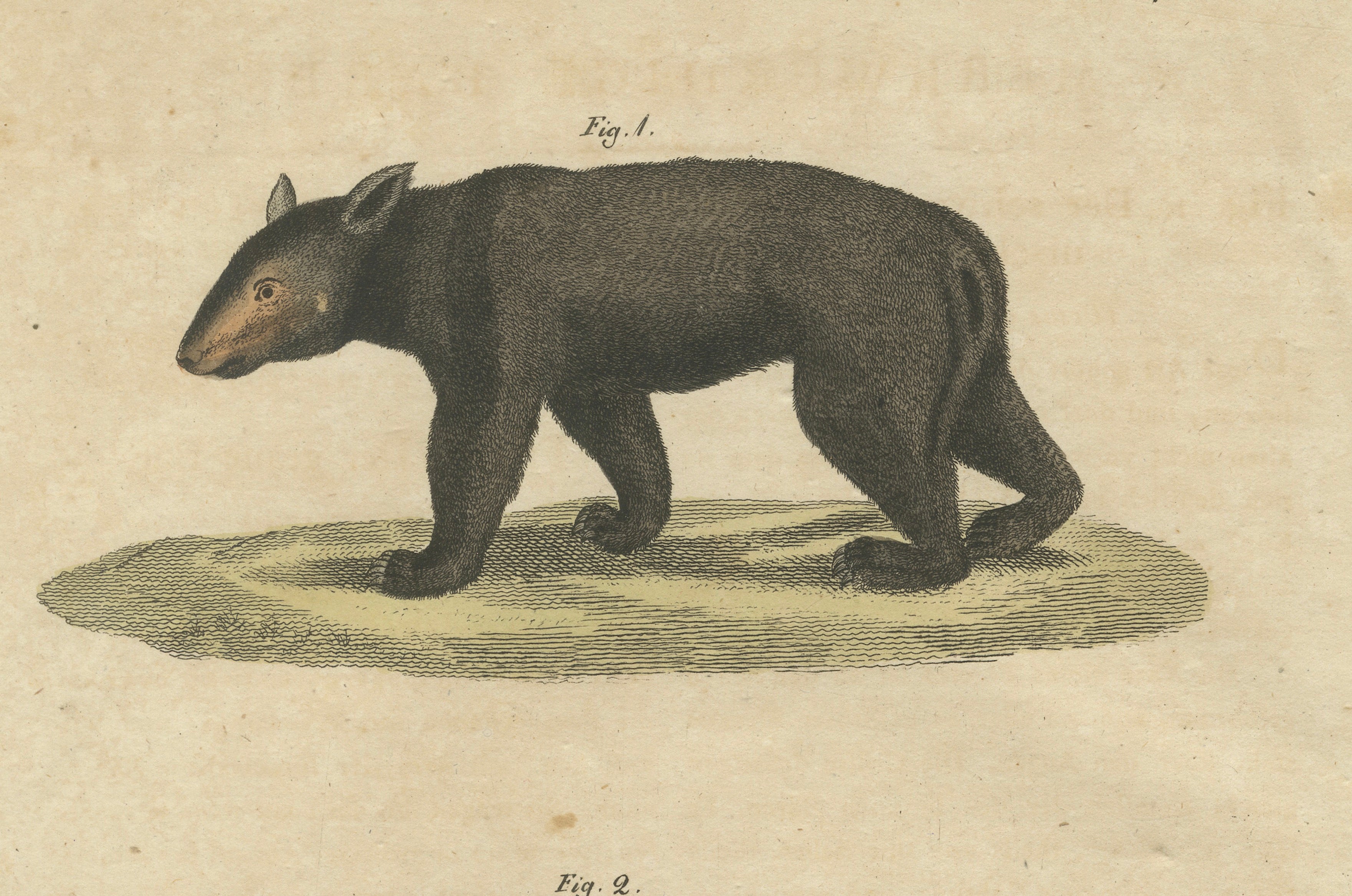
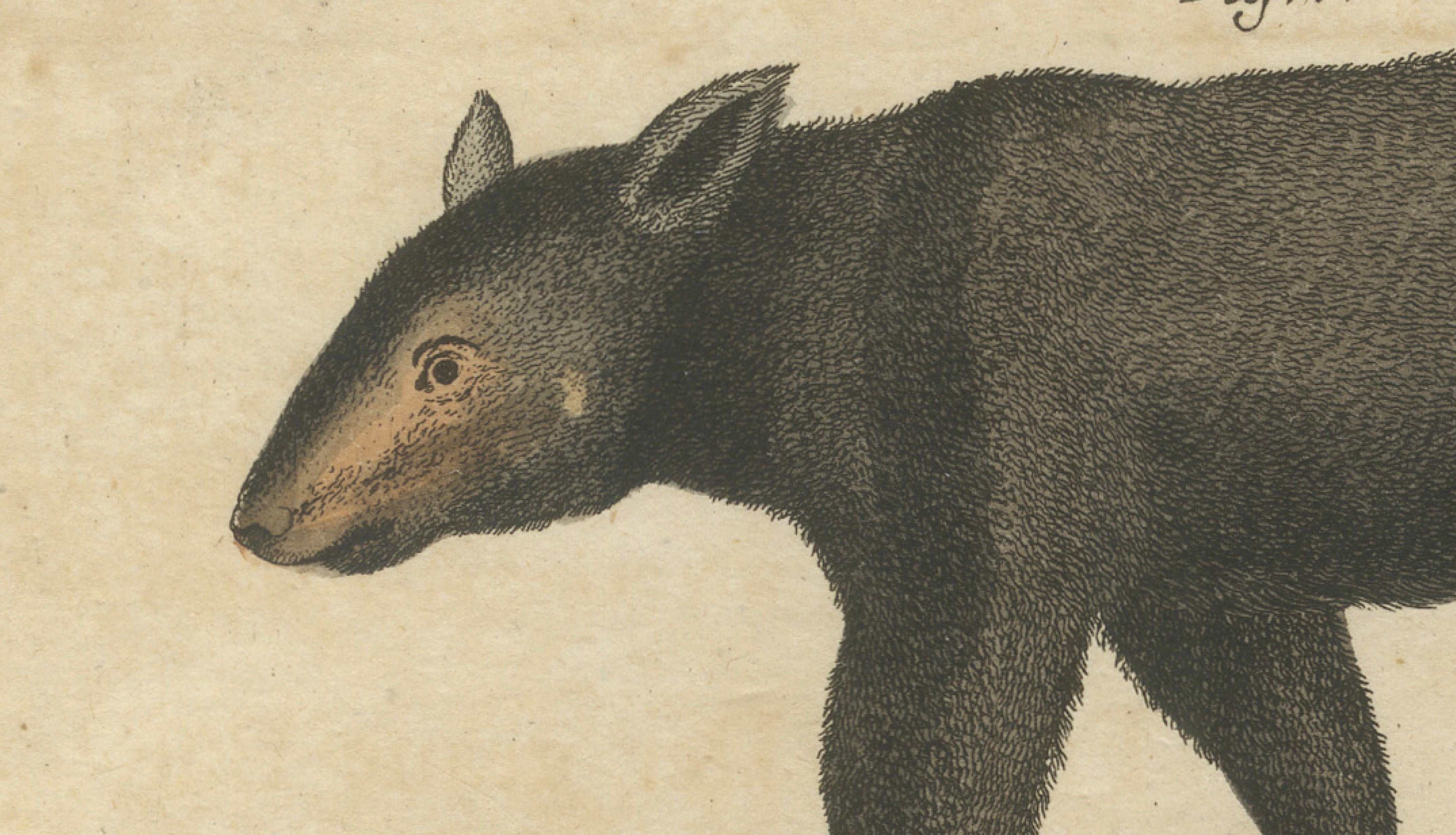
Fig. 1 – South American Tapir / Brazilian Tapir
Modern name: South American Tapir / Lowland Tapir
Scientific name: Tapirus terrestris
The upper animal represents the South American Tapir, one of the most distinctive mammals of the tropical Americas.
Native to large parts of South America, particularly Brazil and the Amazon basin, the tapir is immediately recognizable by its heavy rounded body, short legs and characteristic elongated, flexible snout.
Early European naturalists sometimes compared its general appearance to that of a pig, although the tapir is not closely related to pigs. Modern zoology places tapirs among the odd-toed ungulates, making them relatives of horses and rhinoceroses.
Its short trunk-like snout is highly flexible and is used to grasp leaves, fruit and other vegetation.
The South American Tapir was one of the most remarkable large mammals encountered by Europeans in the New World and consequently became a popular subject in early natural-history publications.
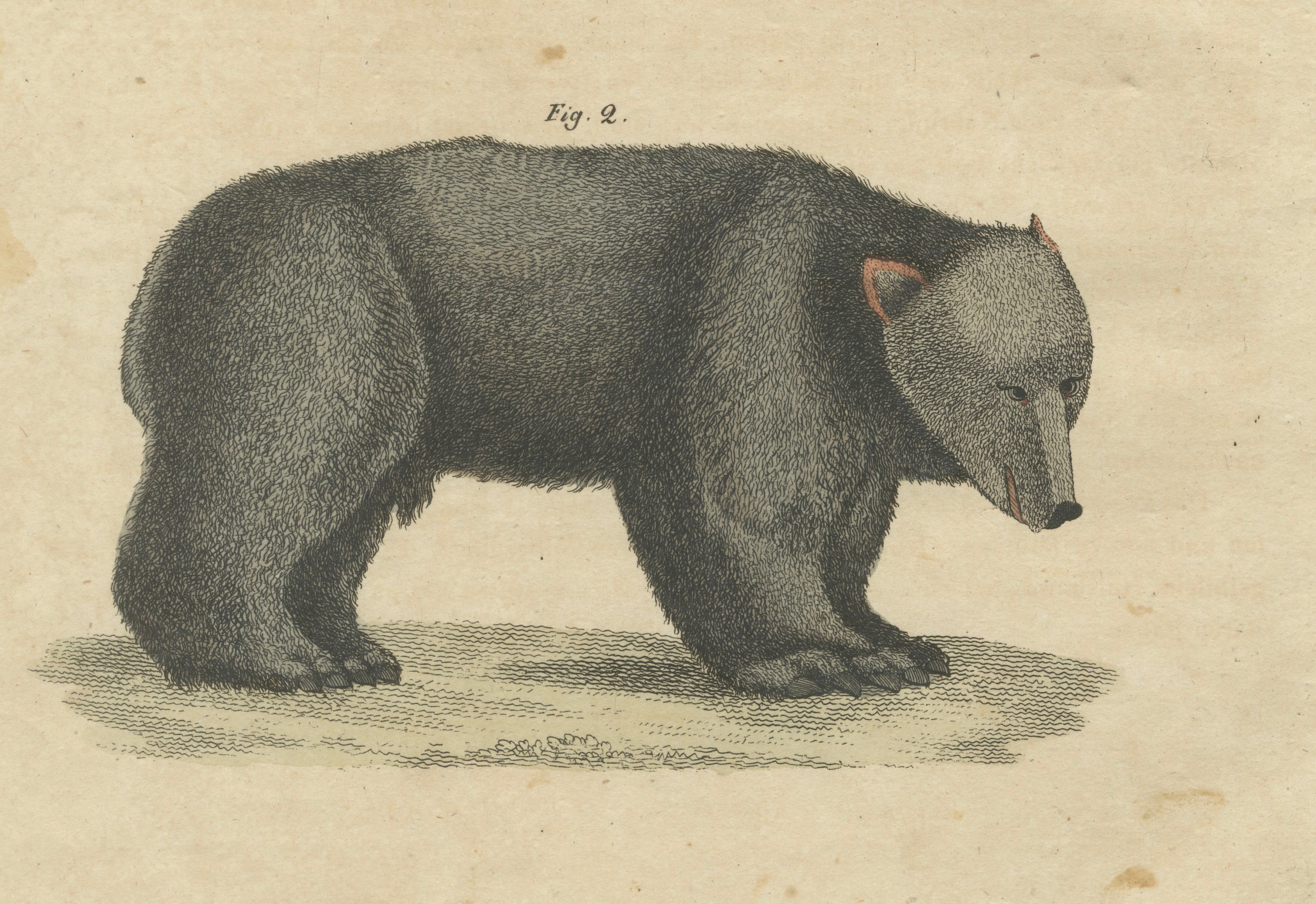
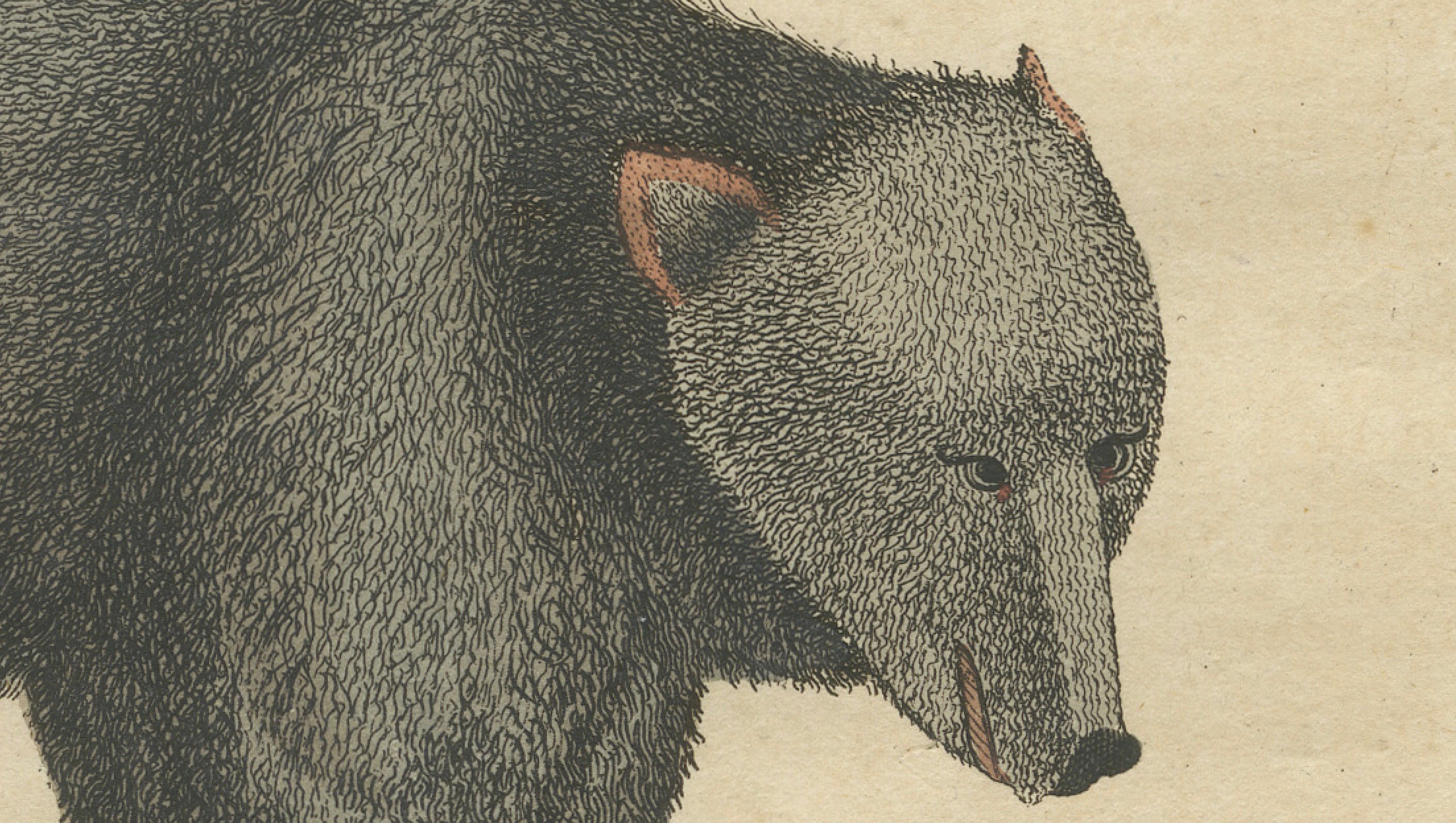
Fig. 2 – Bear
The lower half of the engraving is occupied by a large, heavily built bear with a dark coat and contrasting paler head and muzzle.
The animal is represented with the powerful body, plantigrade stance and heavy limbs characteristic of bears.
Because historical zoological classifications and vernacular names for bears changed considerably during the late 18th and early 19th centuries, the precise modern species represented by this historical illustration is not stated here without further documentary confirmation.
The juxtaposition of the tapir and bear reflects the broad educational purpose of Bertuch’s Bilderbuch, which introduced European readers to both familiar and newly documented mammals from different parts of the world.
Friedrich Justin Bertuch (1747–1822) was a German publisher, writer and patron of the arts. His monumental “Bilderbuch für Kinder” (Picture Book for Children), first published in Weimar in 1790, became one of the great illustrated educational encyclopedias of the late 18th and early 19th centuries.
Its hundreds of engraved and hand-colored plates introduced readers to animals, plants, geography, science, technology, antiquity and cultures from around the world.
The engraving is signed at lower left:
“L. Rieder sc.”
indicating the engraver L. Rieder.
The plate is marked XX. B. 1 at lower right.
The strong contrast between the streamlined tapir above and the massive dark bear below gives this zoological plate considerable decorative appeal and makes it particularly suitable for a natural-history collection, library, study or cabinet-of-curiosities interior.
Technique: Original hand-colored copper engraving
Publisher: Friedrich Justin Bertuch / Industrie-Comptoir
Publication: Bilderbuch für Kinder
Place: Weimar, Germany
Date: late 18th / early 19th century, circa 1800
Engraver: L. Rieder
Plate reference: XX. B. 1
Subjects: South American Tapir and Bear
Fig. 1:
South American Tapir / Brazilian Tapir / Lowland Tapir
Scientific name: Tapirus terrestris
Fig. 2:
Bear / Ursus species
Condition:
Good antique condition with overall age-related toning, scattered foxing and spotting and some visible show-through or offsetting from printed text. Several small brown stains and marks are visible, particularly toward the lower right. Minor handling and age-related imperfections are consistent with an original print more than 200 years old. The original hand coloring remains attractive.
The engraving is loosely inserted in an acid-free matting board.
Please study the photographs carefully as they form part of the condition description.
Please note: This is an original antique hand-colored copper engraving from around 1800, not a modern reproduction. The print is sold unframed. Framed images or interior views, if shown, are for presentation and inspiration only.
Other companion animal and natural-history plates from Bertuch’s “Bilderbuch für Kinder” are also available separately.
Keywords: Friedrich Justin Bertuch, Bilderbuch für Kinder, tapir, South American Tapir, Brazilian Tapir, Lowland Tapir, Tapirus terrestris, antique tapir print, bear engraving, antique bear print, Ursus, South American wildlife, Brazilian wildlife, exotic mammals, quadrupeds, natural history illustration, antique zoology, L Rieder, hand-colored copper engraving, cabinet of curiosities, Wunderkammer, German engraving, Weimar, circa 1800, original antique print