About this sheet
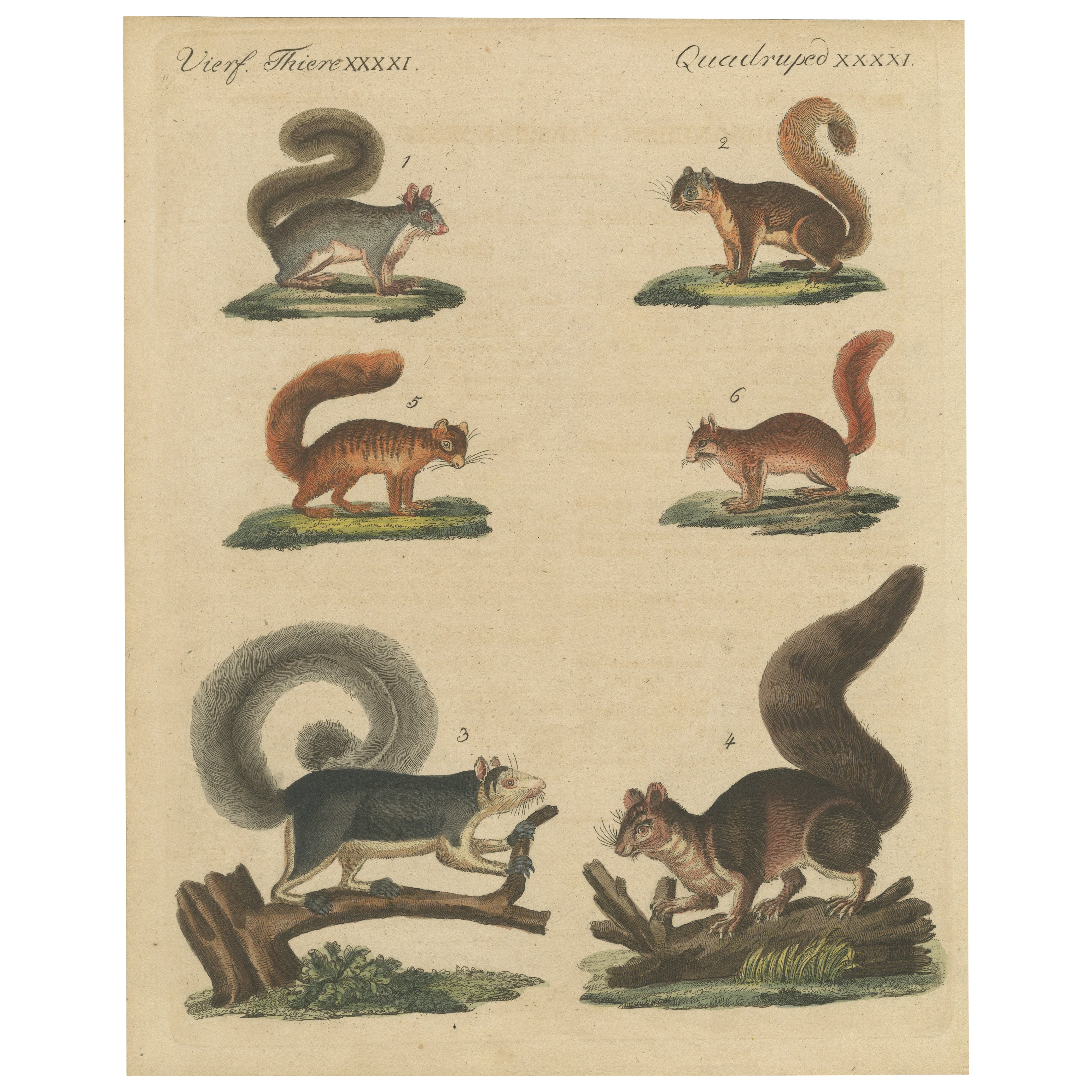
Antique Hand-Colored Engraving of Squirrels and Rodents, Quadrupeds Plate XXXXI
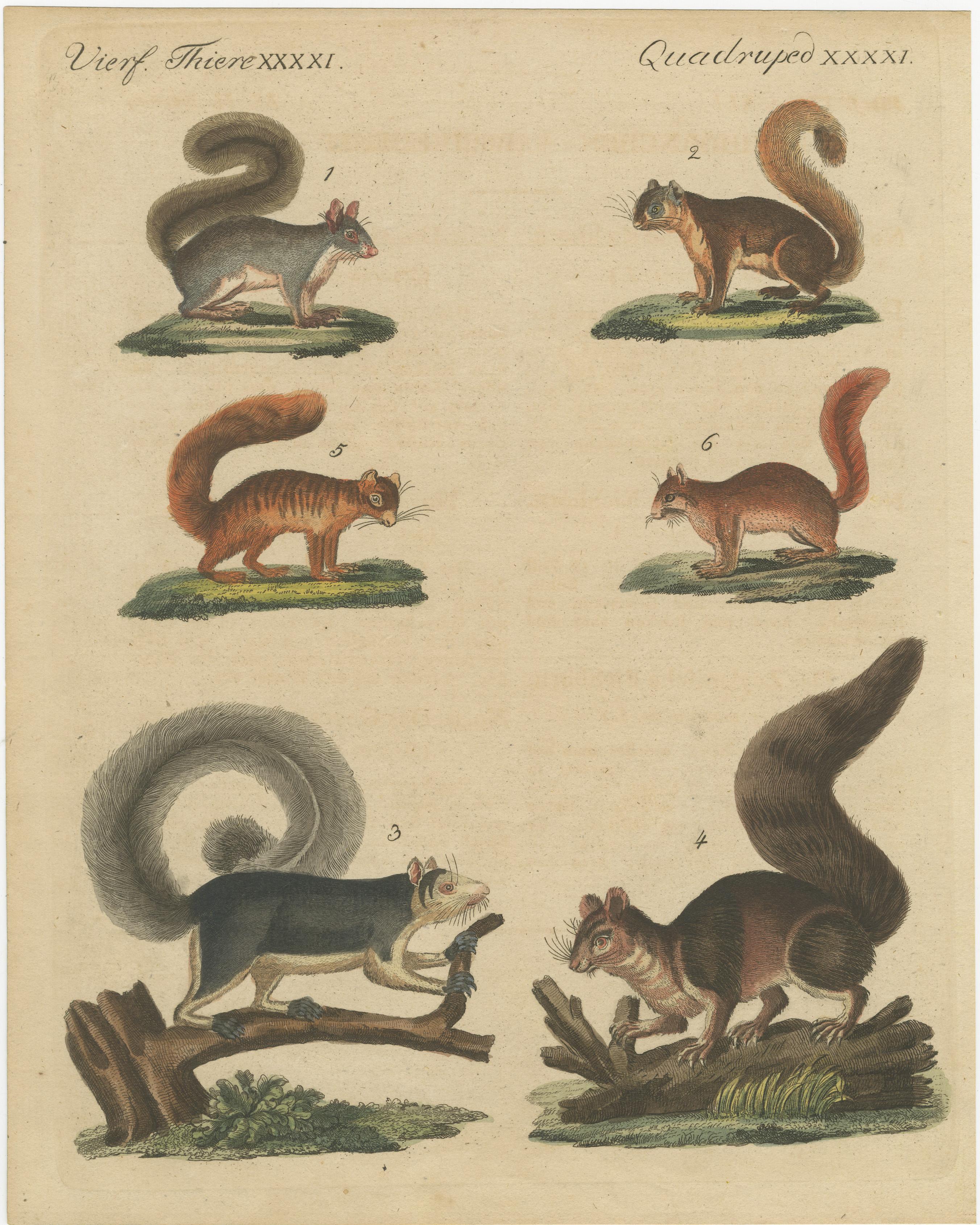
This fine antique hand-colored engraving, titled Vierf. Thiere XXXXI (Quadrupeds Plate 41), depicts a variety of squirrels and related rodents, and dates to the late 18th or early 19th century. The print forms part of a zoological series illustrating animal species for natural history education in Europe. The engravings are finely detailed and each animal is shown with distinctive postures and coloration, carefully enhanced with original hand coloring.
From the text leave:
Class: Mammals (Vierf. Thiere. XLI.) - SQUIRRELS OF VARIOUS KINDS
Vol. II. No. 6.
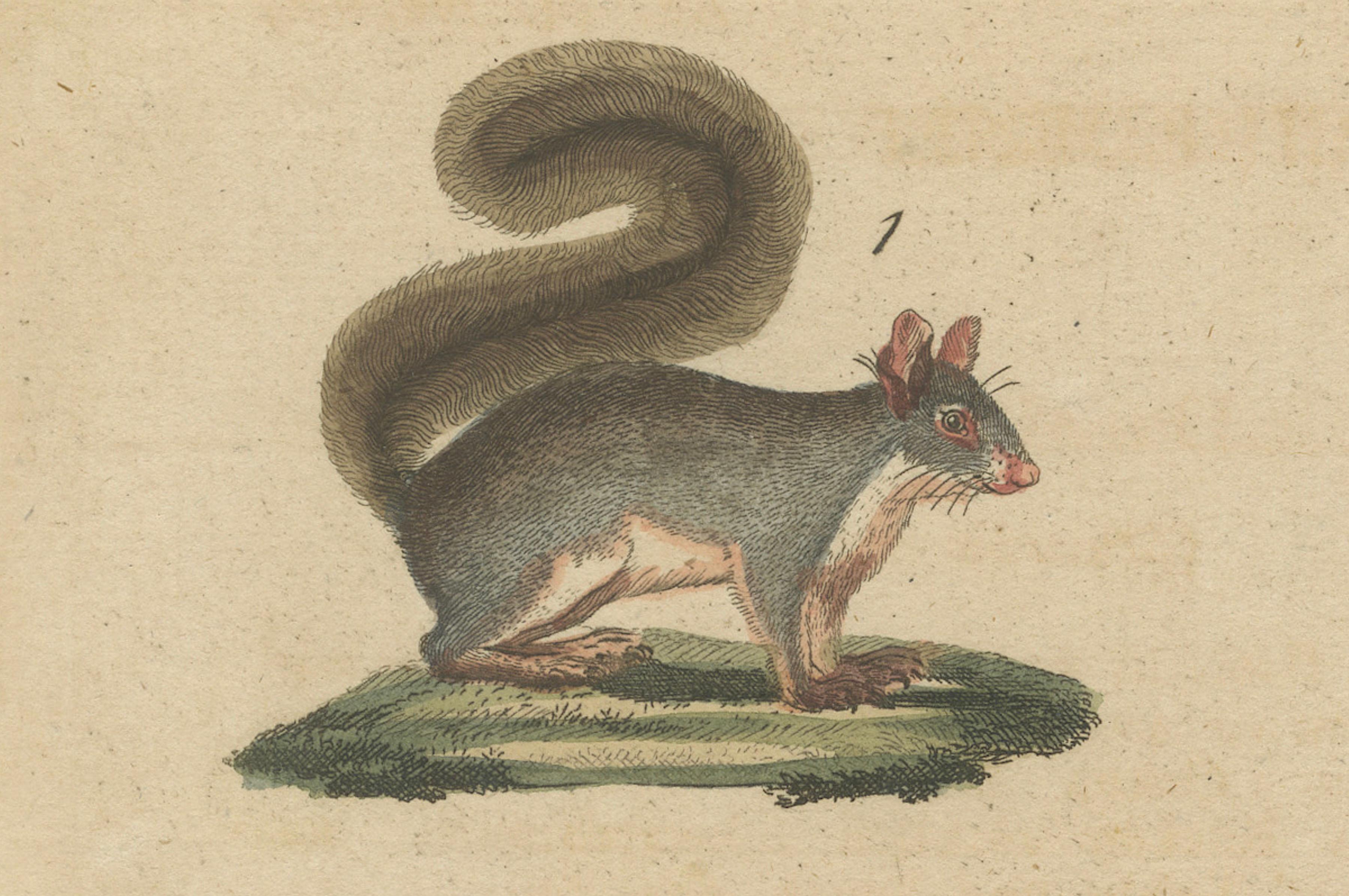
No. 1. The Virginian Squirrel
(Sciurus cinereus. L.)
This squirrel, which is larger and stronger than the common European squirrel, lives in Virginia and almost all of North America. It is 12 inches long, appears gray on its back and sides, and has a reddish hue on its mouth, ears, and belly, with a thick darker tail. It feeds similarly to the European squirrel on fruits, nuts, and seeds.
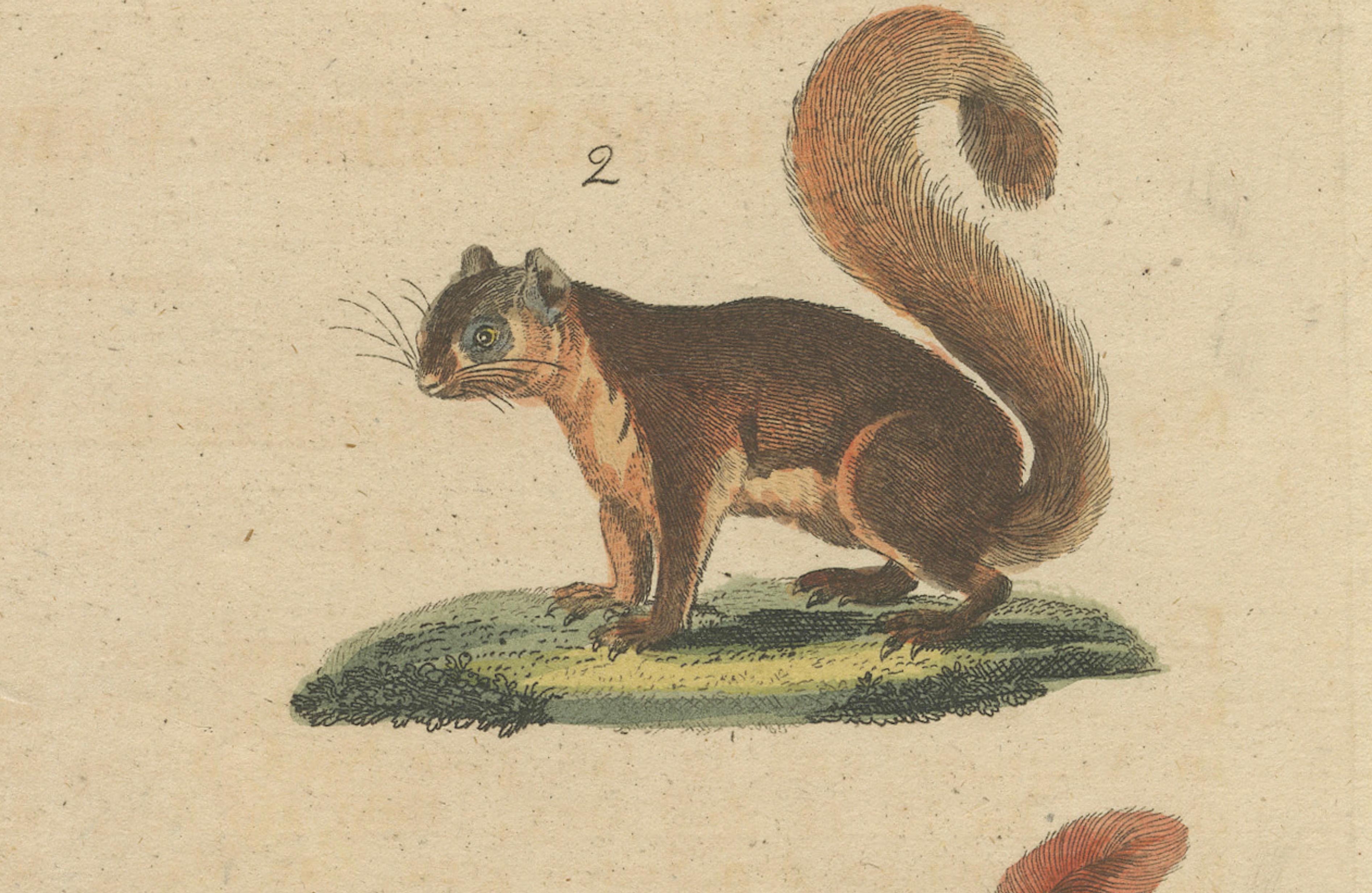
No. 2. The Javanese Squirrel
(Sciurus Javanis. L.)
Lives on the island of Java, is 12 inches long, and has three colors: throat, belly, and tail are light brownish red, while head and back are dark brown.
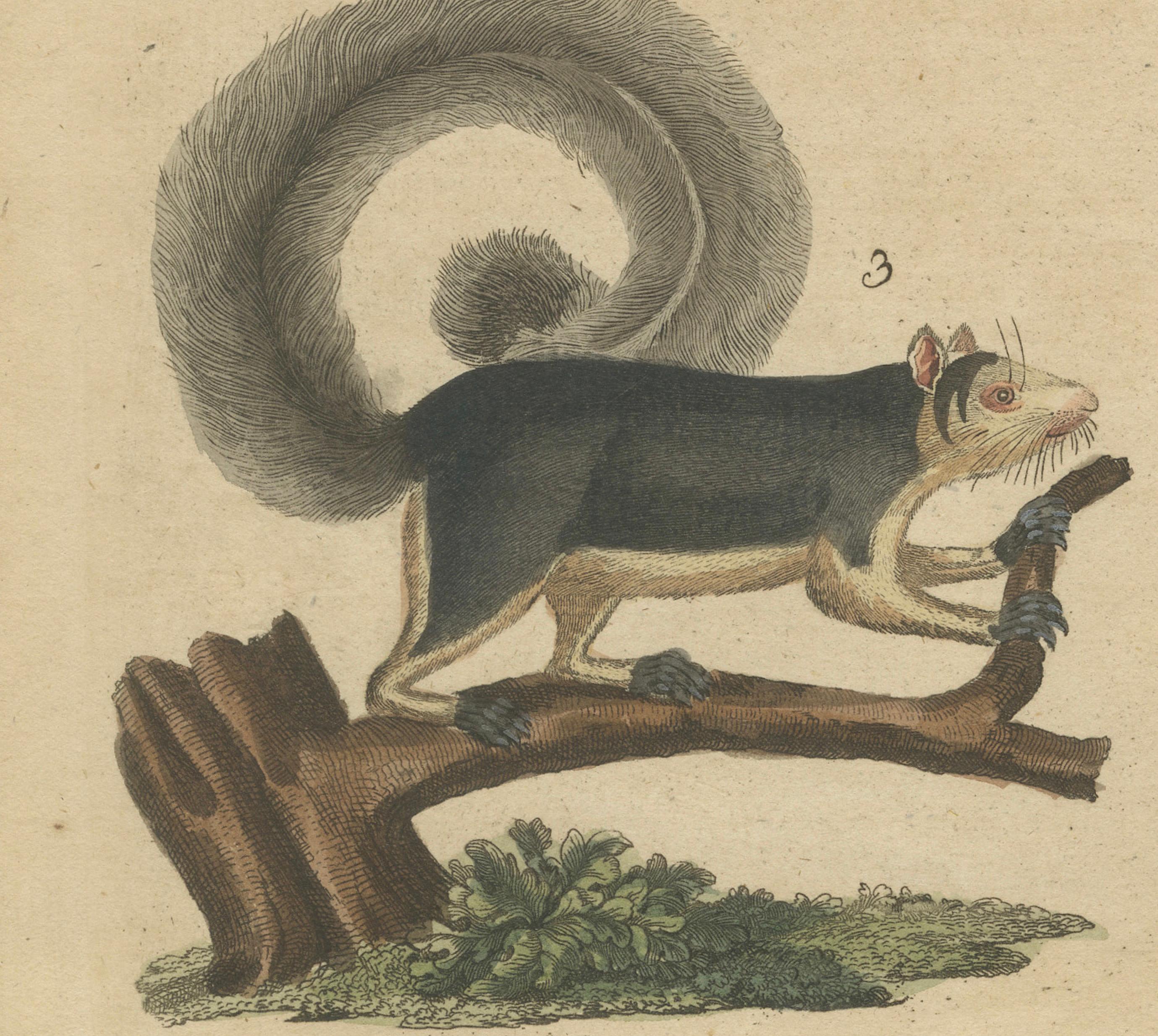
No. 3. The Ceylonese Squirrel
(Sciurus macrourus. L.)
This squirrel, found on the island of Ceylon (Sri Lanka), is three times the size of the common squirrel. Its back and sides are black, but its head, throat, belly, and legs are bluish-gray. It is 20 inches long, with a tail as long as its body and very thickly furred.
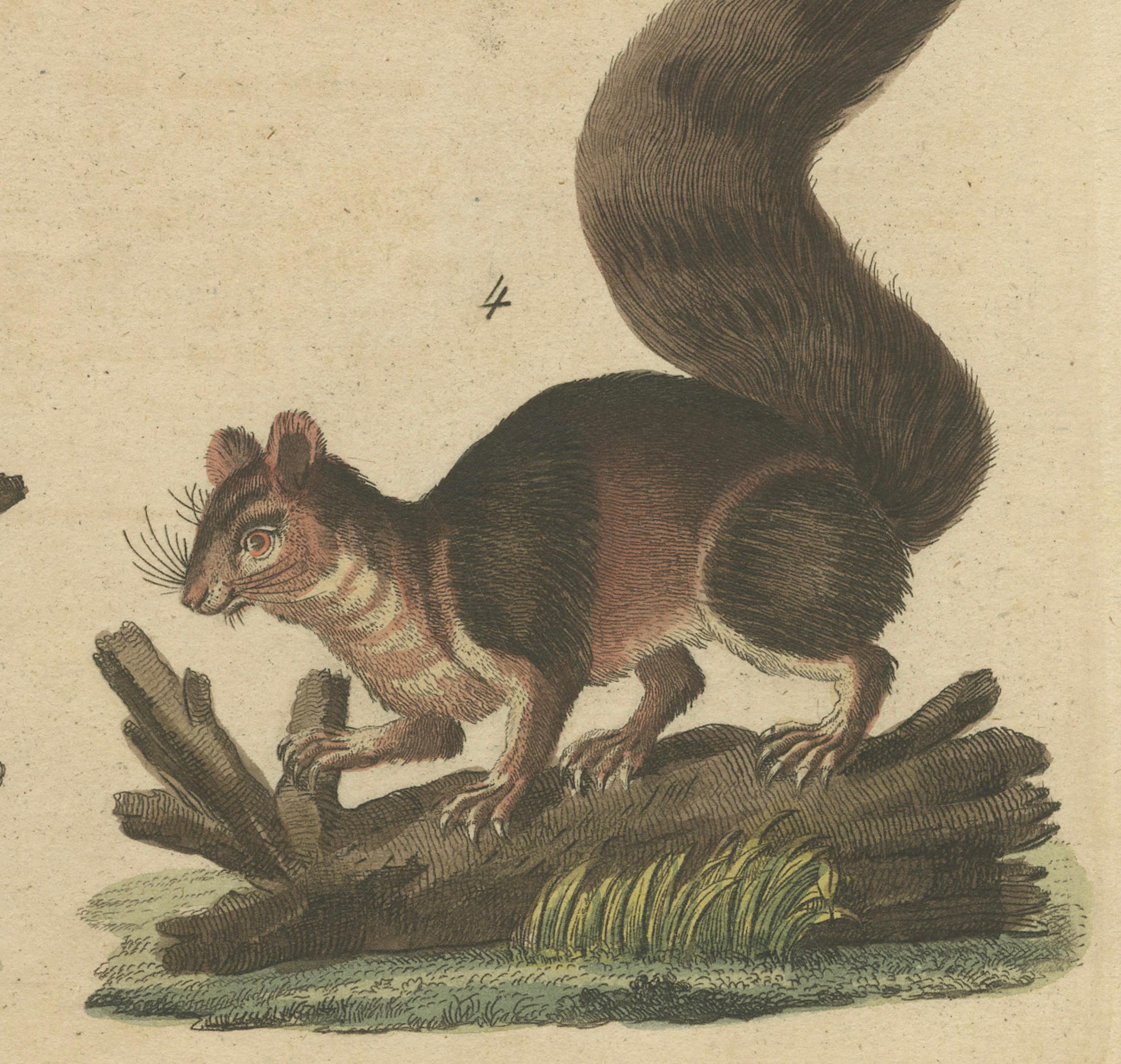
No. 4. The Malabar Squirrel
(Sciurus maximus. L.)
This is the largest squirrel known to us, 22 inches long, thickly furred, with a thick tail, and appears reddish blackish-brown on its back, and reddish-yellow on its head, throat, and belly. It lives on the Malabar Coast and especially likes to feed on the milk of coconuts, which it opens and sucks out.
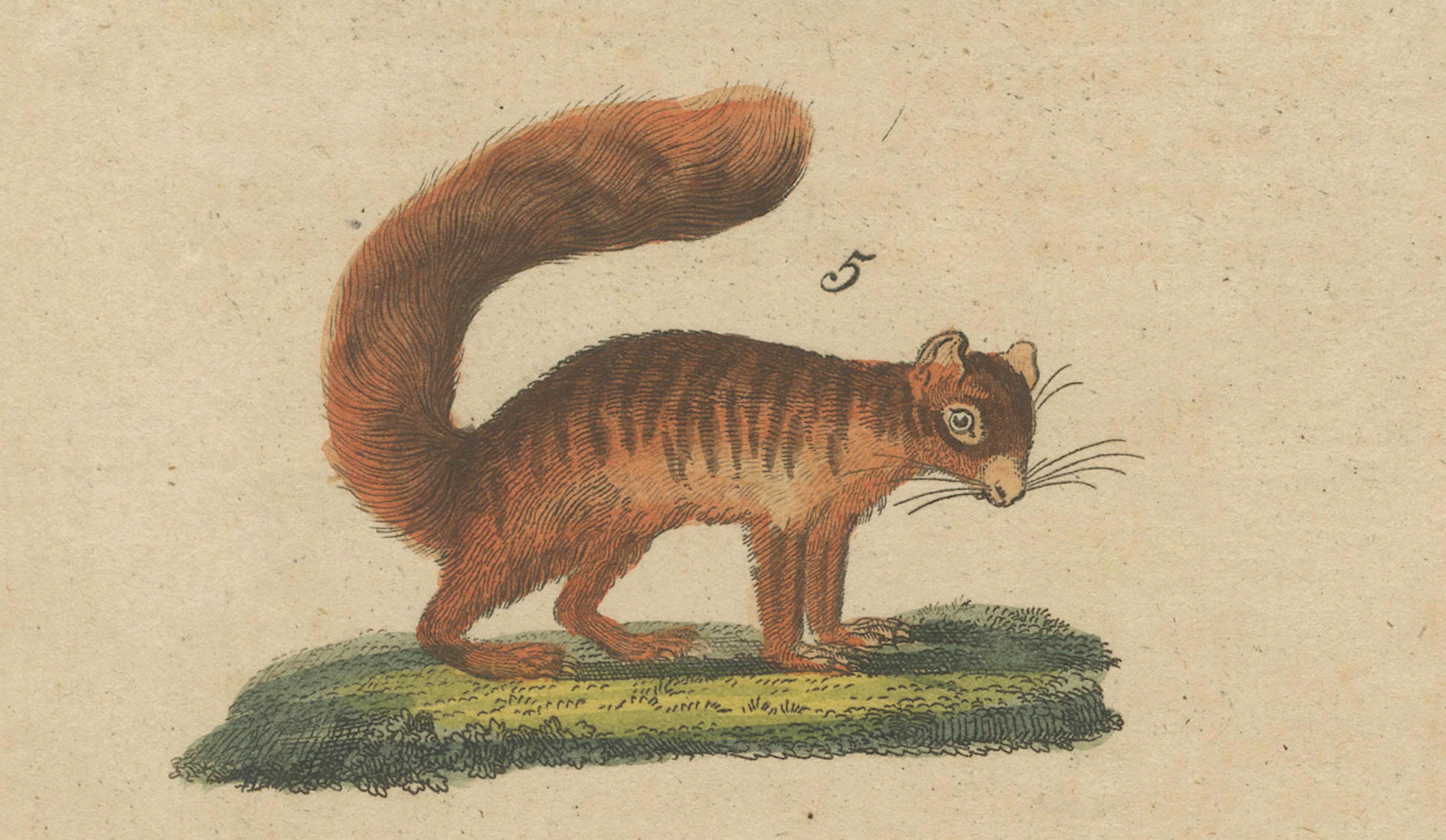
No. 5. The Coquallin
(Sciurus variegatus. L.)
The Coquallin lives in Mexico, is 11 inches long, orange-colored and reddish yellow, with transverse stripes. It lives in the ground, feeds especially on corn, and carries food in its cheek pouches like a hamster to store for winter.
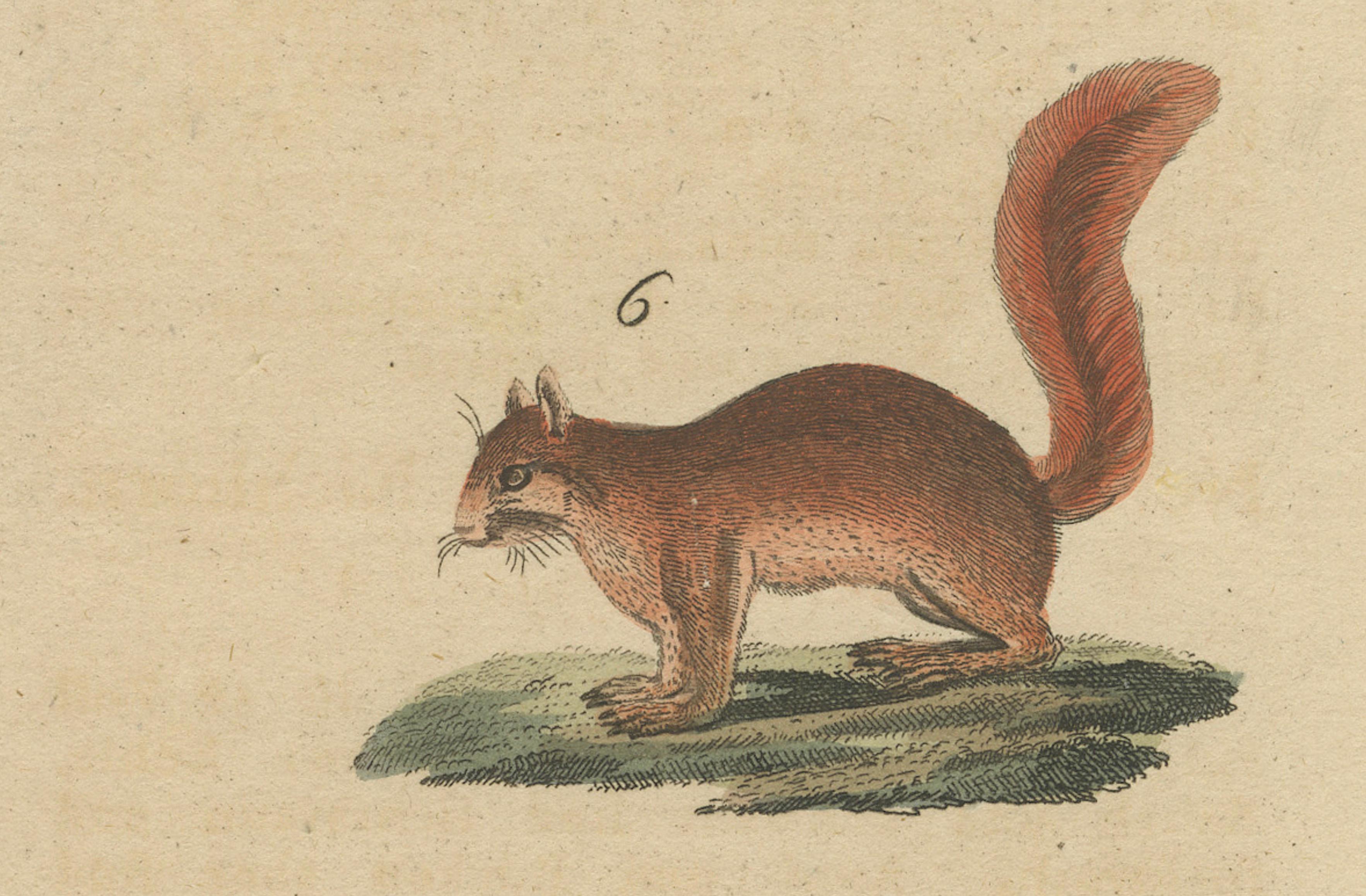
No. 6. The Georgian Squirrel
(Sciurus anomalus. L.)
This squirrel’s homeland is Georgia in Asia. It is 11 inches long; back and head are dark brown, throat, chest, belly, and legs are reddish-yellow. Otherwise, it feeds like our common squirrel.
These zoological engravings were used in encyclopedic works and natural history compendiums to illustrate global fauna for scholars, collectors, and students. They reflect both scientific curiosity and the aesthetic tradition of European Enlightenment publishing, combining taxonomy and artistry. Such prints remain valued today as decorative pieces and references for historical zoology.
Condition report:
The print is in good to very good condition with strong original coloring. Light age toning is visible across the sheet with scattered faint foxing typical for its age. There are no tears or repairs and the plate marks remain clear.
Framing tips:
This engraving would display well in a classic walnut or dark wood frame with a cream or light ivory mat to highlight the natural tones and hand coloring. For a more formal presentation, a gold frame can be used to enhance its historical and scientific appeal, ideal for a library, study, or natural history-themed gallery wall.