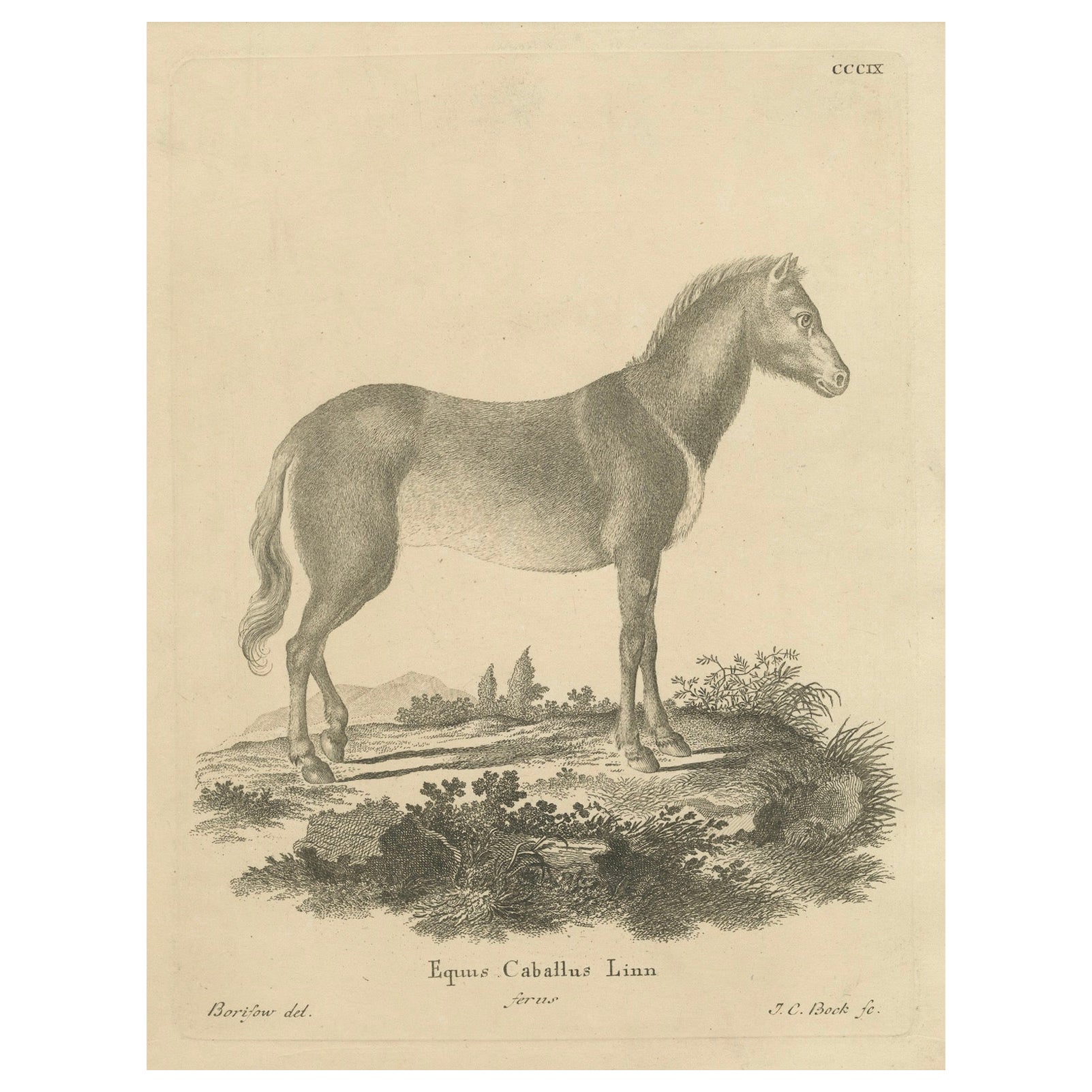
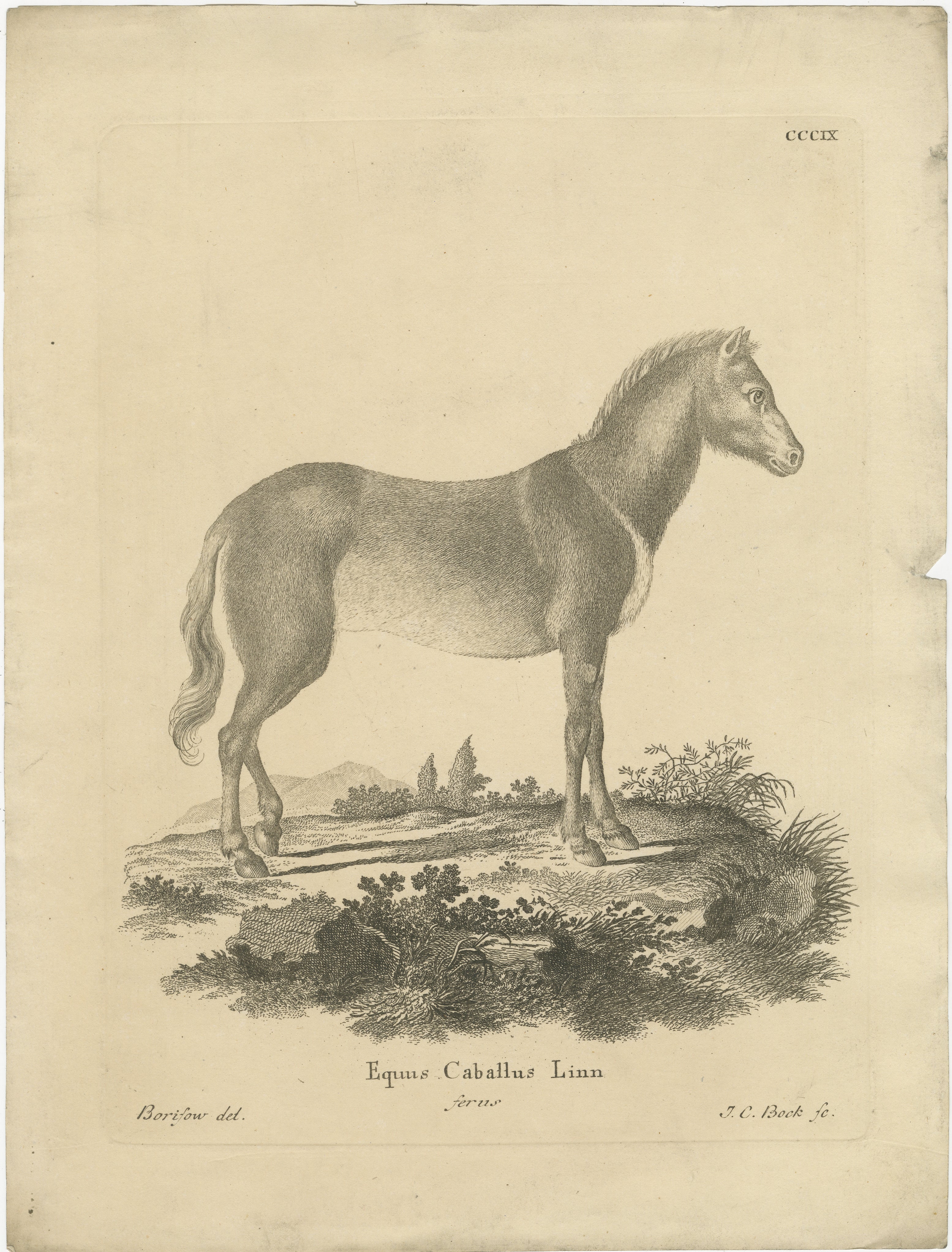
Antique Engraving of a Horse (Equus Caballus Linn.), drawn by Borifow, ca.1800
€ 240
Original antique · The actual sheet photographed · Certificate of authenticity on request · Sold unframed · Worldwide shipping from € 15 (rates)
Date
1800
Mapmaker / artist
J.C. Bock
Technique
Engraving on laid paper
Sheet size
28.7 × 21.9 cm (11.3 × 8.6 in)
Condition
Good
Reference
BG-13674-61
What the condition grades mean
Excellent
Bright and clean, with no faults worth mentioning.
Very good
Only light signs of age, such as faint toning.
Good
Normal signs of age for a sheet of this period: toning, some foxing, small marks or neat old repairs.
Fair
Clear faults such as staining, tears or repairs, priced to match.
Every fault we see is written in the condition note, and the whole sheet is shown uncropped in the photos.
Condition
Good condition with mild age toning and light handling marks consistent with age. Strong impression on laid paper with wide margins and visible plate mark. Slight binding traces along the left edge, otherwise clean and well preserved.
About this sheet
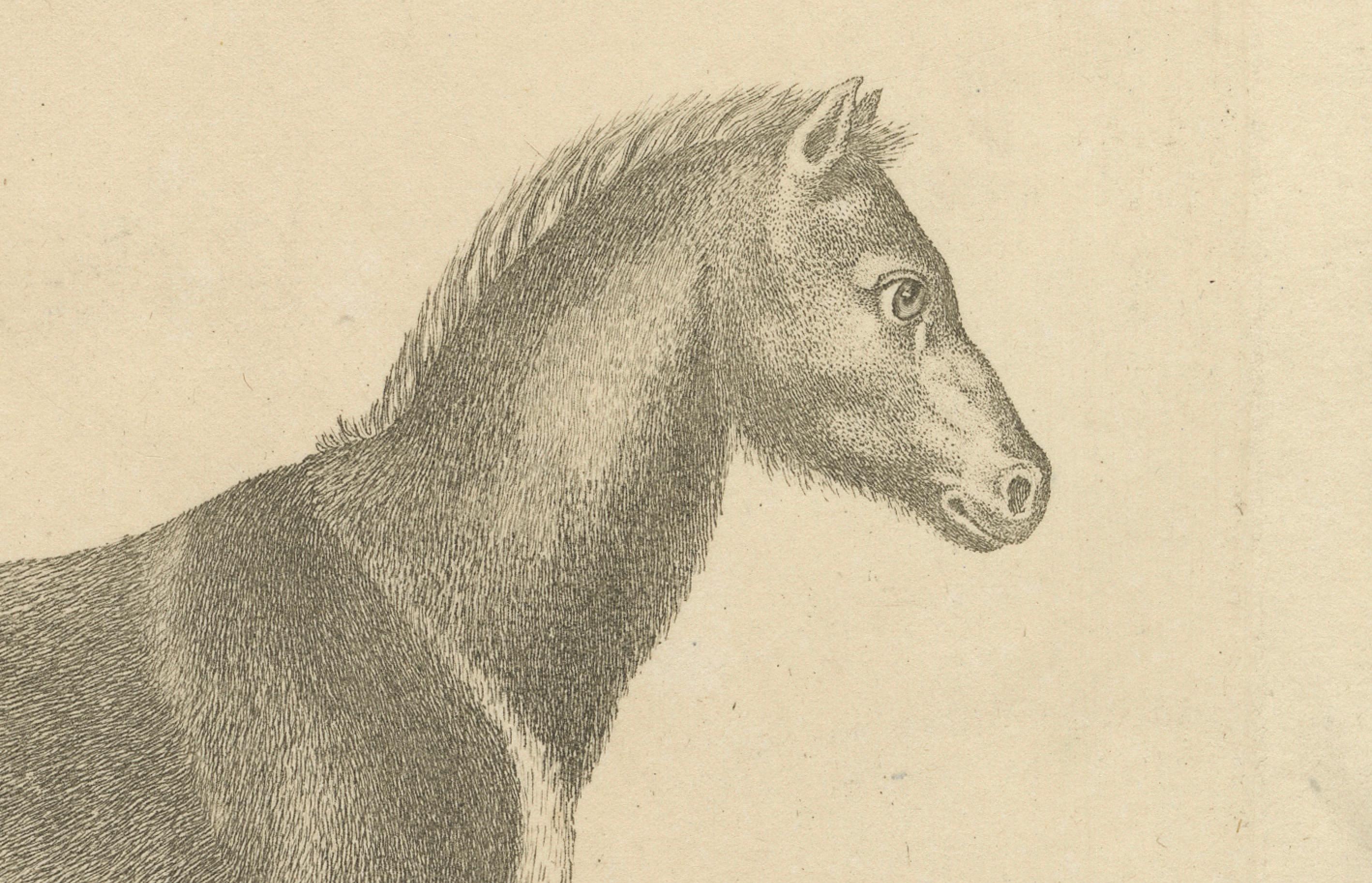
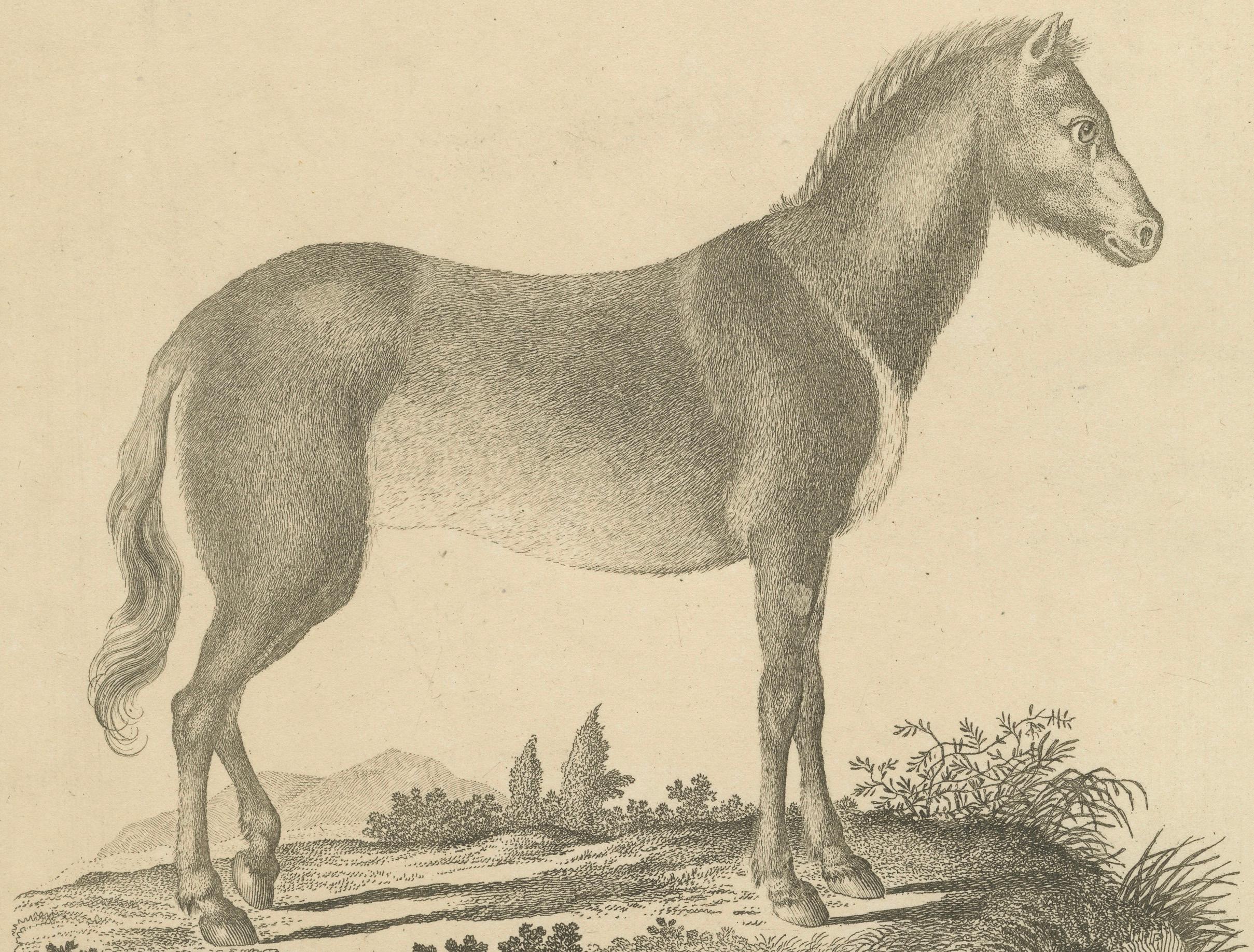
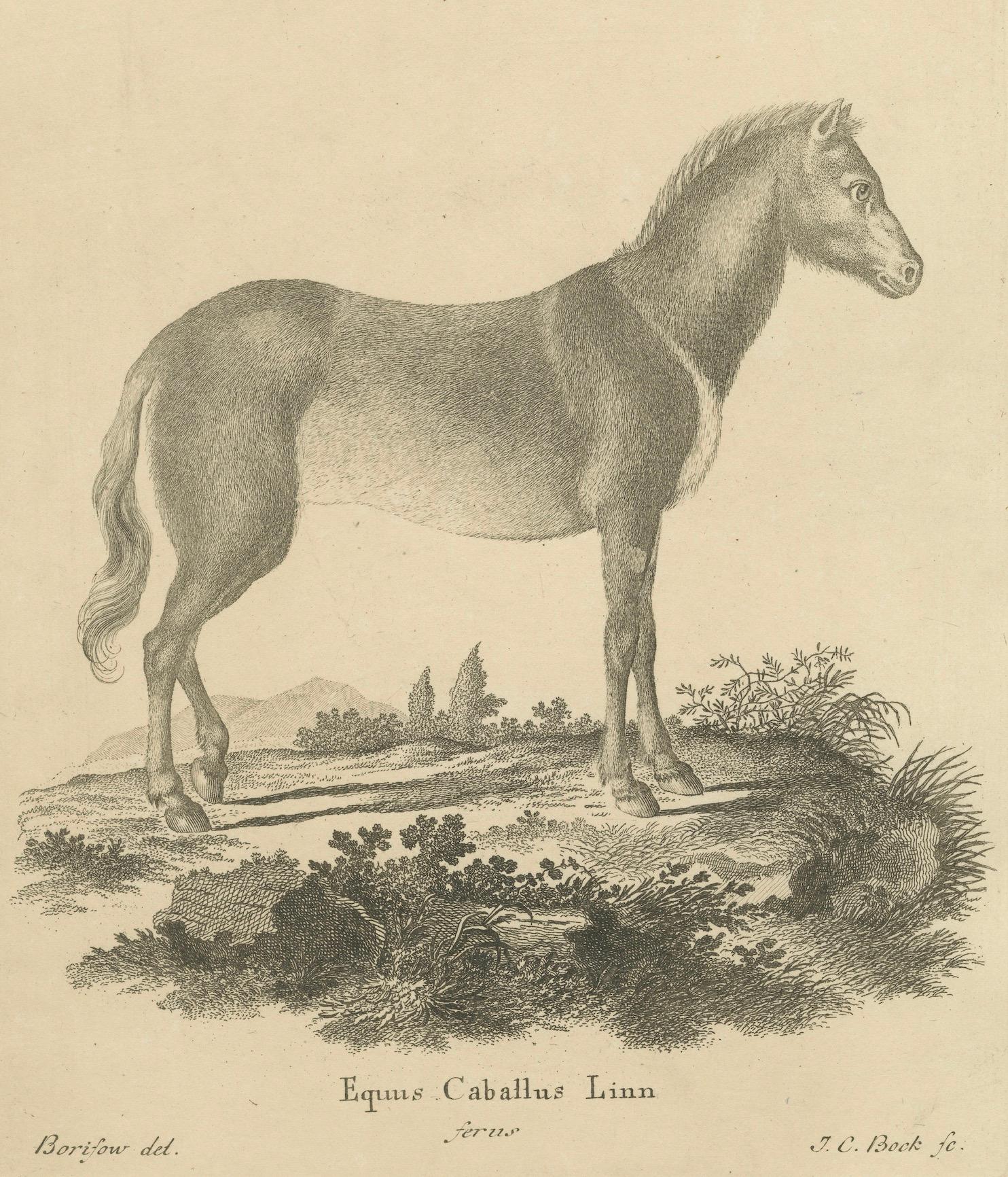
Antique Engraving of a Horse (Equus Caballus Linn.), drawn by Borifow, engraved by J.C. Bock, circa 1800
This finely detailed zoological engraving depicts a horse (Equus Caballus Linn.), drawn by Borifow and engraved by J.C. Bock around 1800. The print is a superb example of early 19th-century German natural history illustration, uniting scientific precision with elegant artistic execution.
The horse is shown standing gracefully in profile within a natural landscape of low vegetation and distant hills. Borifow’s drawing captures the animal’s anatomy with accuracy and sensitivity—the defined musculature, gentle posture, and alert expression convey both power and refinement. Bock’s expert engraving brings these qualities to life through finely graded lines and delicate shading that lend the image depth and texture.
The Latin title Equus Caballus Linn. follows the Linnaean system of classification, referring to the domestic horse, one of the most studied and celebrated animals in natural history. Such engravings were created for comprehensive zoological publications of the late 18th and early 19th centuries, many associated with scholars like Johann Christian Daniel von Schreber. These works aimed to document all known species of mammals with scientific accuracy and artistic grace, embodying the Enlightenment ideal of observing and classifying nature.
This plate exemplifies the harmonious balance between observation and aesthetics that defines the best natural history art of its era. Its elegant composition and technical mastery make it a timeless representation of one of humankind’s closest animal companions.
Condition report: Good condition with mild age toning and light handling marks consistent with age. Strong impression on laid paper with wide margins and visible plate mark. Slight binding traces along the left edge, otherwise clean and well preserved.
Framing tips: A cream or ivory mat enhances the soft tones of the paper, while a walnut or dark oak frame emphasizes the engraving’s classical character. For a refined presentation, a double mat with a fine brown or gold inner line adds subtle distinction.