About this sheet
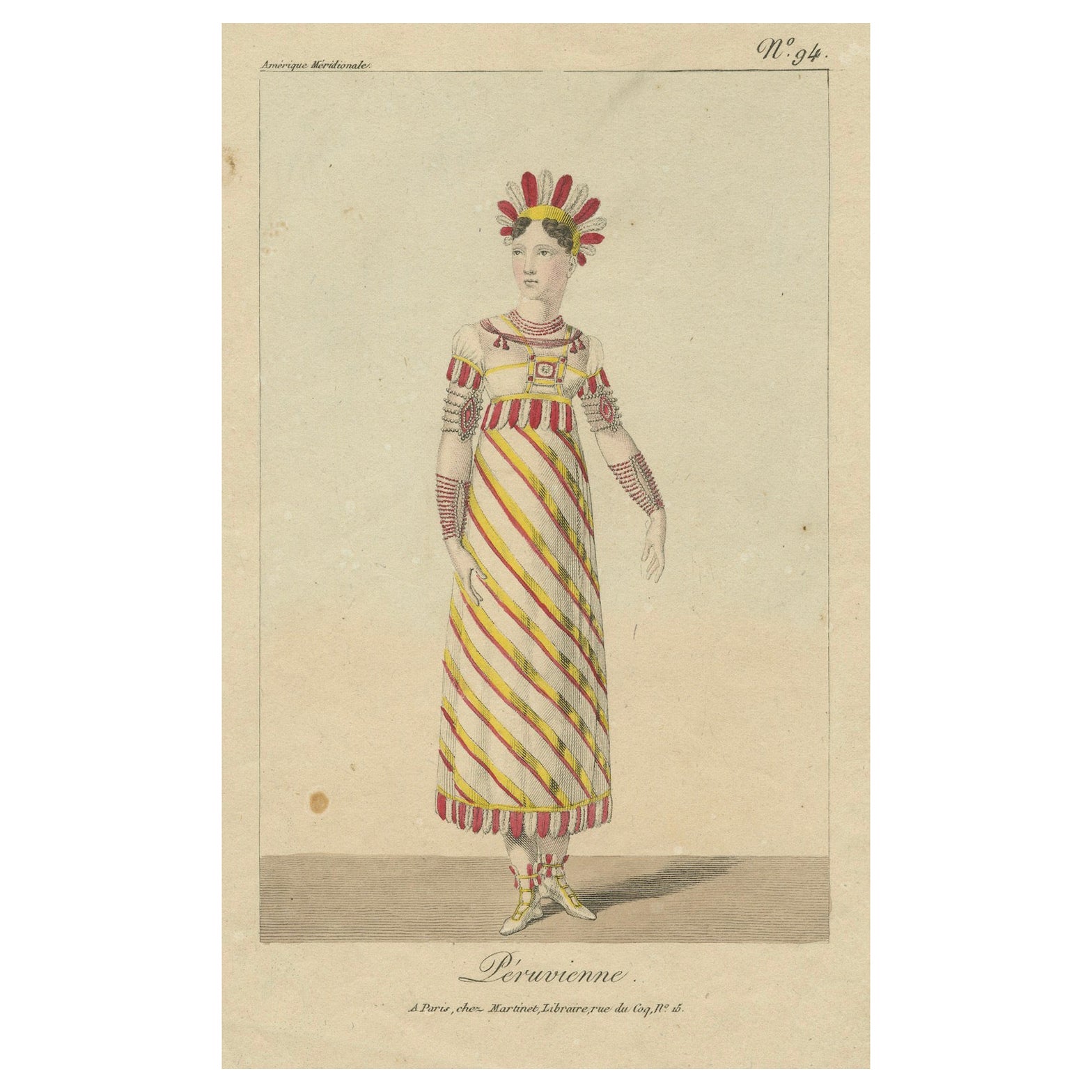
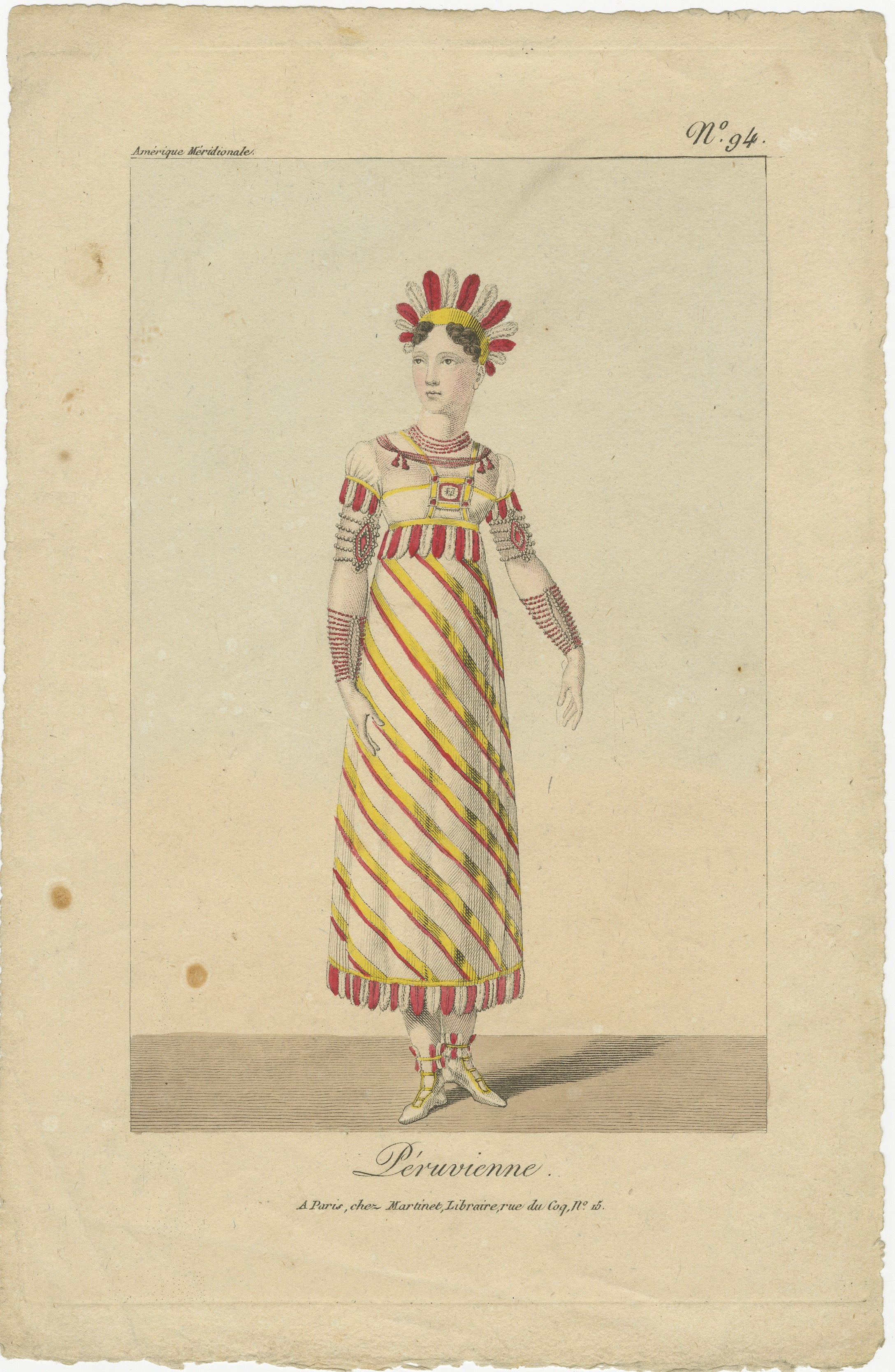
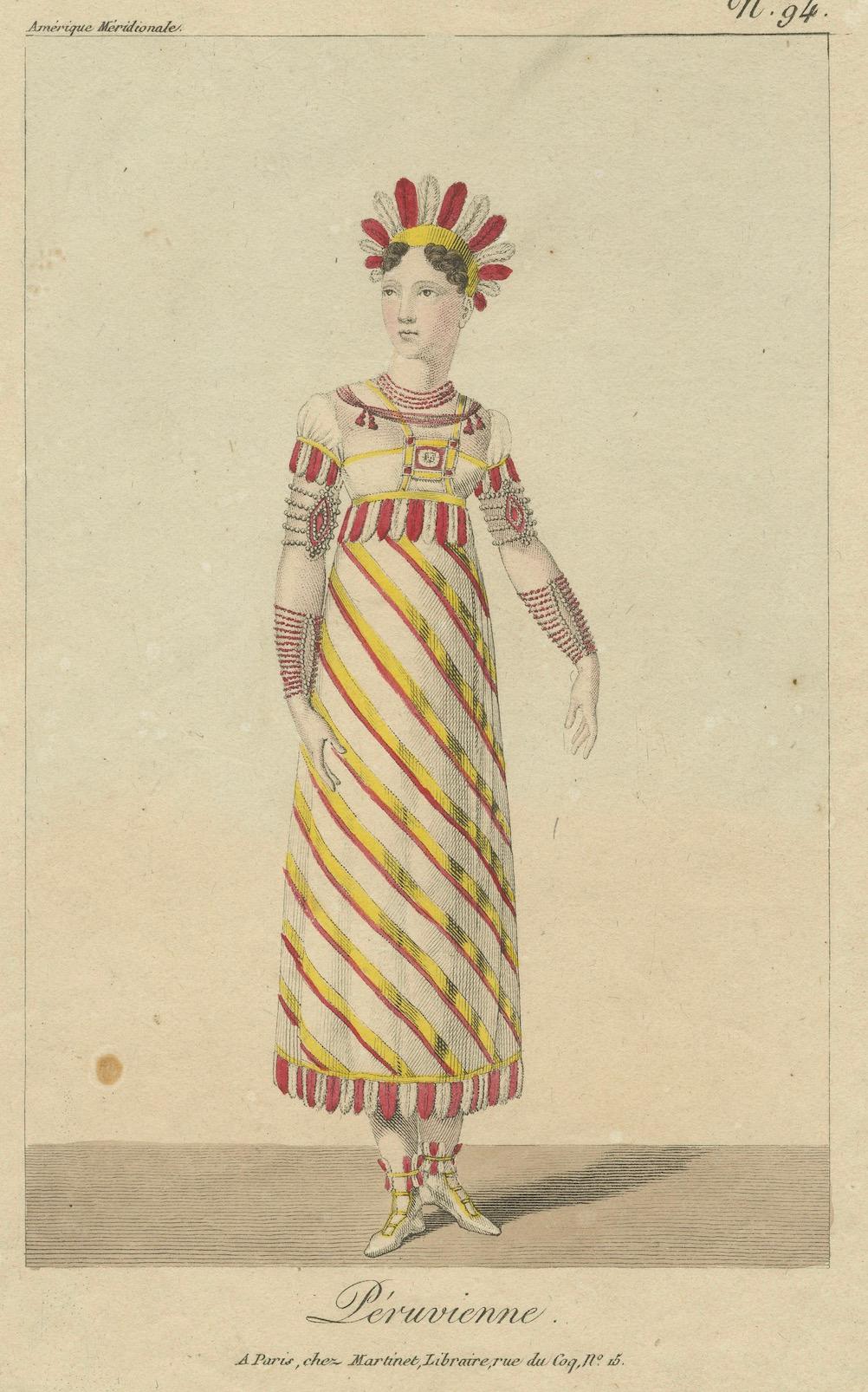
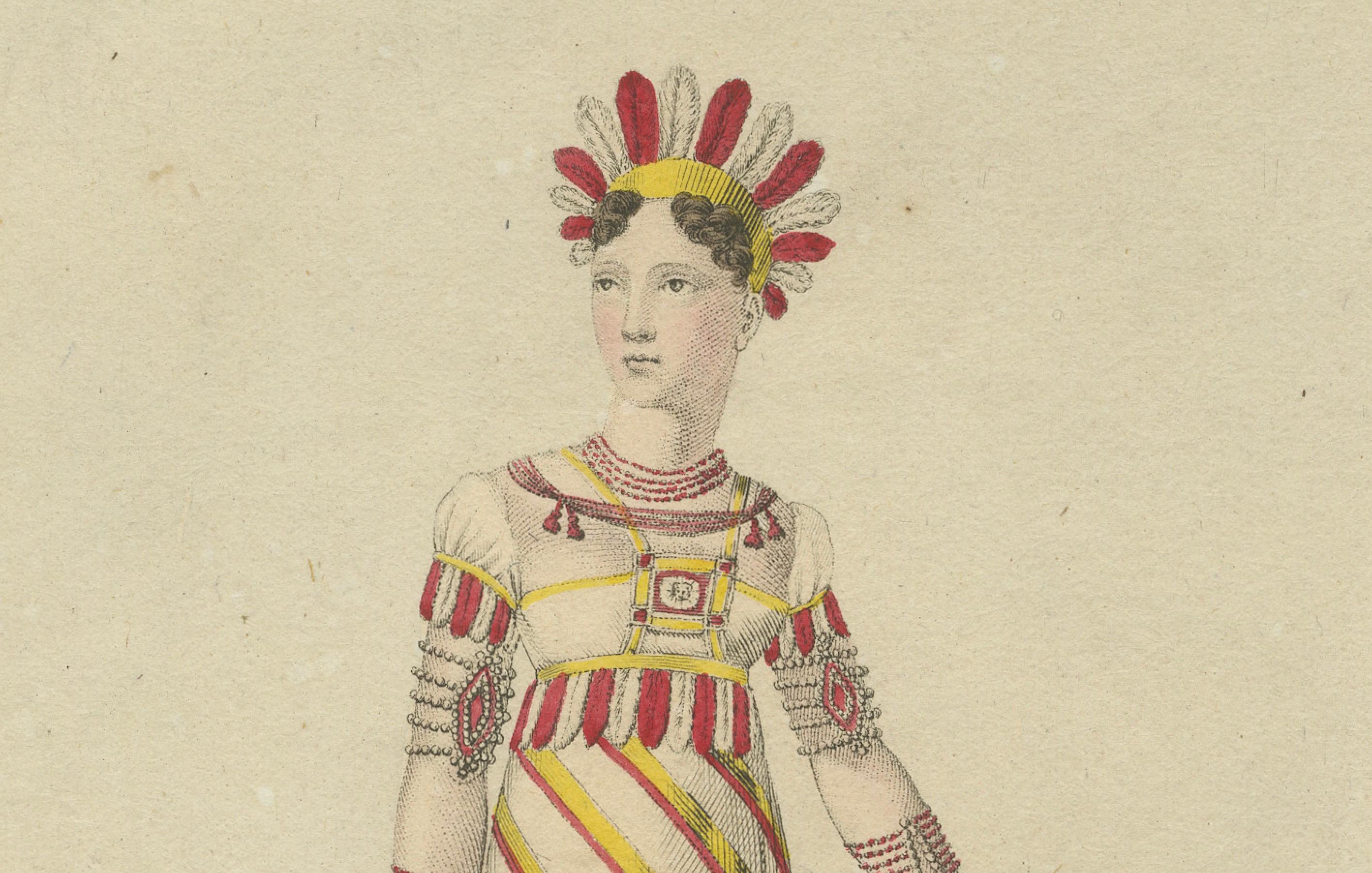
This illustration, titled "Péruvienne" and stemming from around 1820, likely portrays a European interpretation of a Peruvian woman, possibly an actress dressed for a theatrical role. This portrayal is a typical example of European artistic renderings of "exotic" subjects from the period, where authenticity in depicting other cultures was often sacrificed for aesthetic appeal or thematic resonance with European audiences.
Analysis of the Illustration:
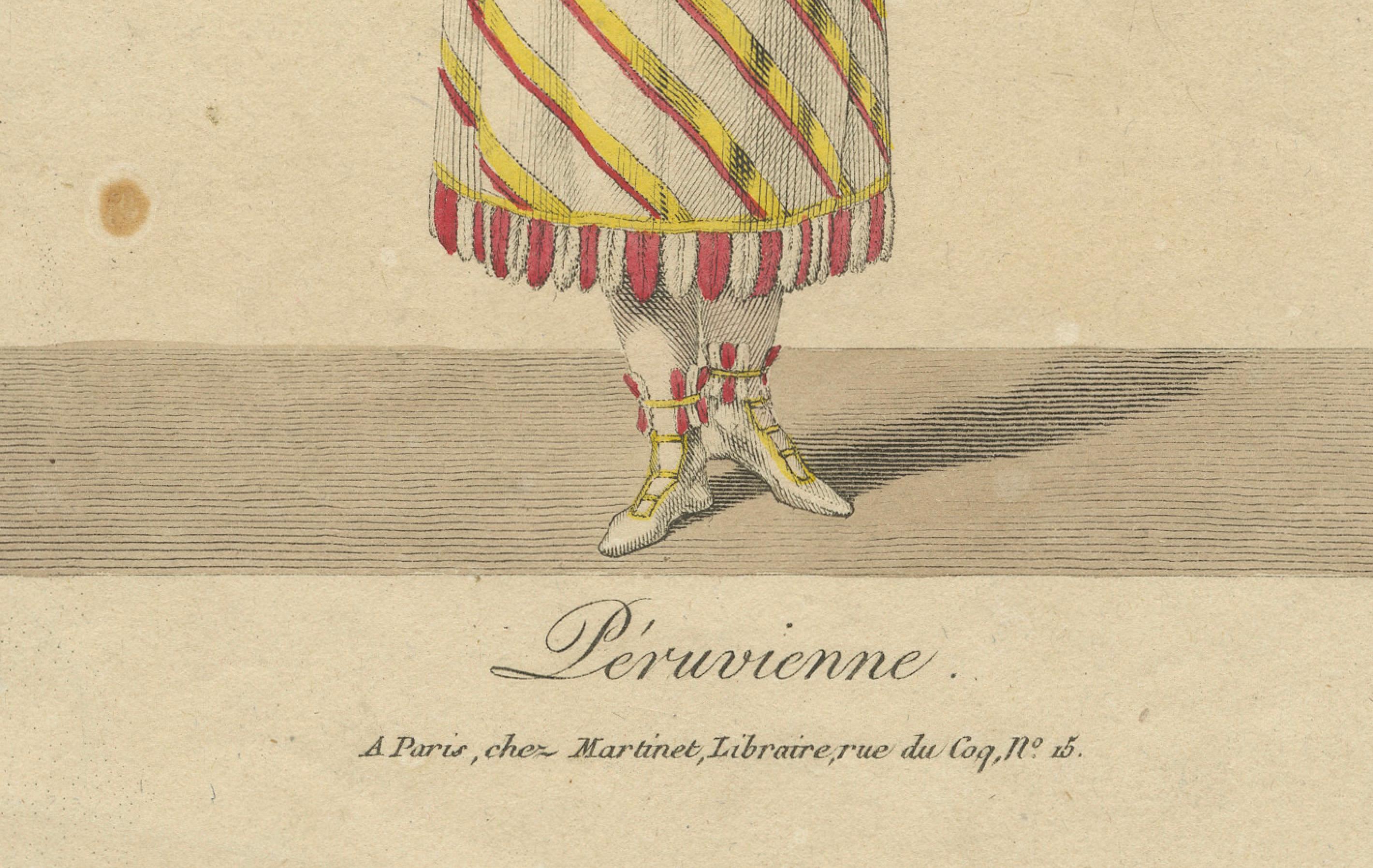
- Fashion Influence: The attire of the woman, while labeled as Peruvian, carries strong influences from contemporary French Empire fashions. The dress is characterized by its vivid, diagonal stripes and bold color combinations of red, yellow, and green, which are not traditionally Peruvian but rather reflect the European taste and style of the time.
- Ornamentation: Her accessories, including the headpiece adorned with feathers and the various ornamental bands on her arms, add a theatrical flair that aims to convey an exotic and culturally rich persona. These elements, while intended to represent Peruvian ornamentation, are largely imagined and stylized to fit European perceptions of what Peruvian dress might entail.
- Cultural Representation: The depiction is not an accurate representation of traditional Peruvian clothing or style but rather an imagined version that blends European fashion with exotic elements to create an appealing aesthetic for European viewers.
Contextual Significance:
- Exoticism in European Art: During the early 19th century, European artists and audiences were fascinated with exotic cultures, often using such themes to add intrigue and flair to various artistic works, including theater. These portrayals were less about cultural accuracy and more about using the "exotic" to comment on or critique contemporary European society.
- Theatrical and Artistic License: The image likely served as a theatrical portrayal, intended for an audience familiar with and intrigued by staged representations of foreign cultures. It reflects the romanticized and often superficial way in which non-European cultures were presented in European art and theater.
This illustration, like others from the period, is more a reflection of European artistic and cultural trends than a faithful depiction of Peruvian people or their attire. It exemplifies how European society viewed and represented "the other" through a lens of fascination, romanticism, and sometimes, misunderstanding.