About this sheet
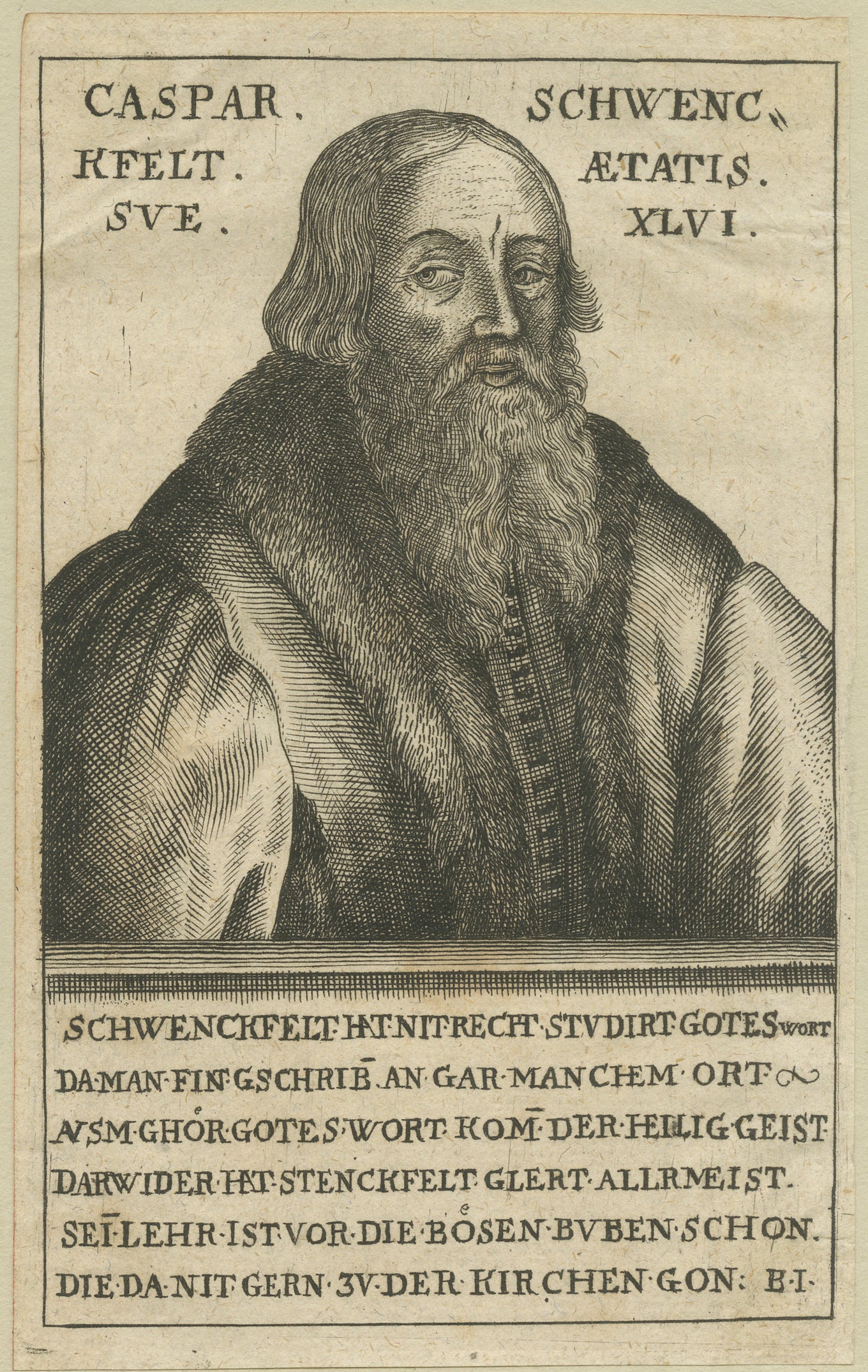
Caspar Schwenckfeld, Reformation Portrait, 16thC German Engraving
A rare and visually striking Reformation-era portrait with polemical inscription, reflecting the religious tensions of 16th-century Europe.
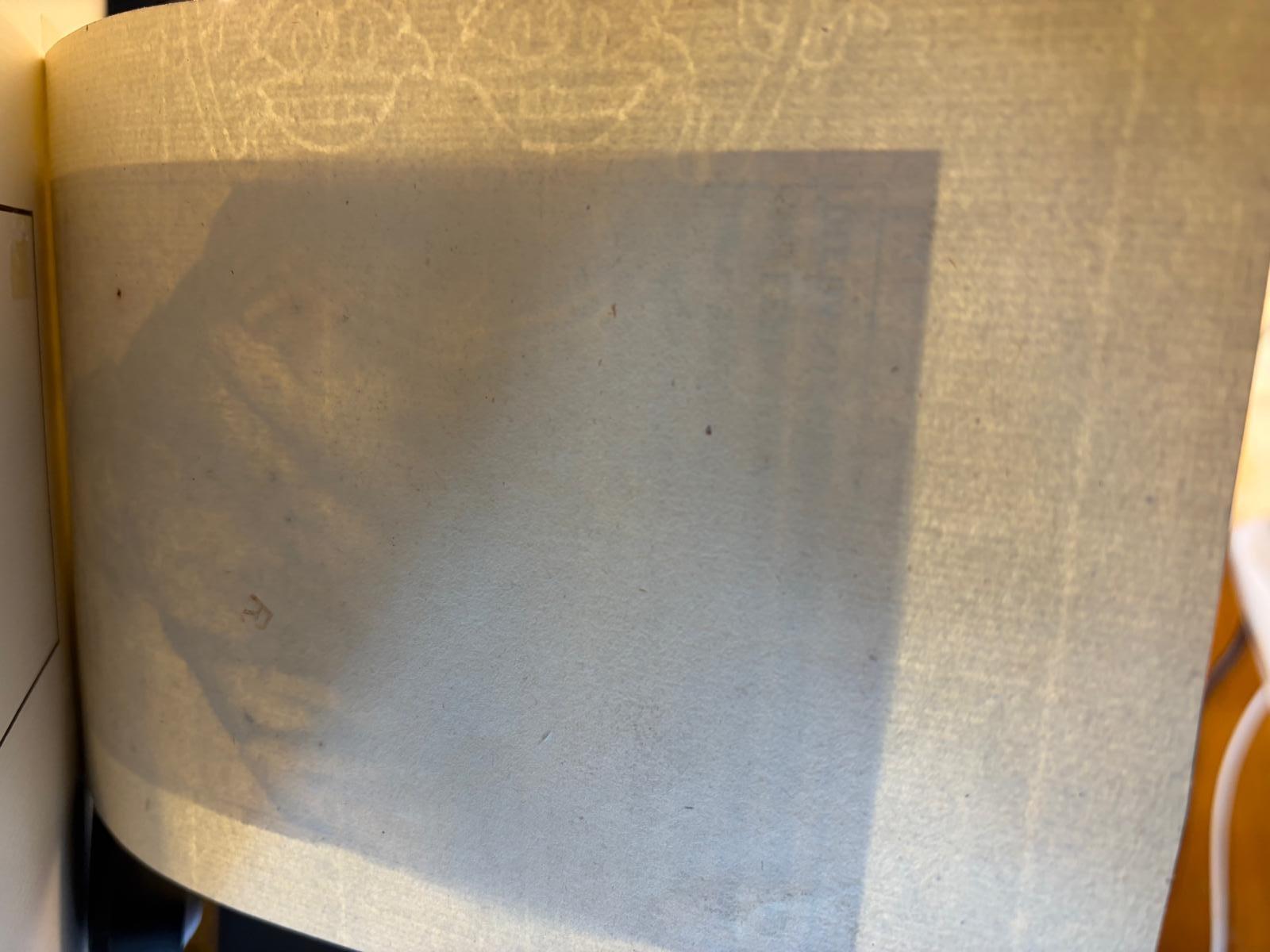
Printed on laid paper, likely issued as part of a theological or polemical publication during the Reformation, with a clearly visible double-shield watermark, typical of German papermaking in the late 16th century.
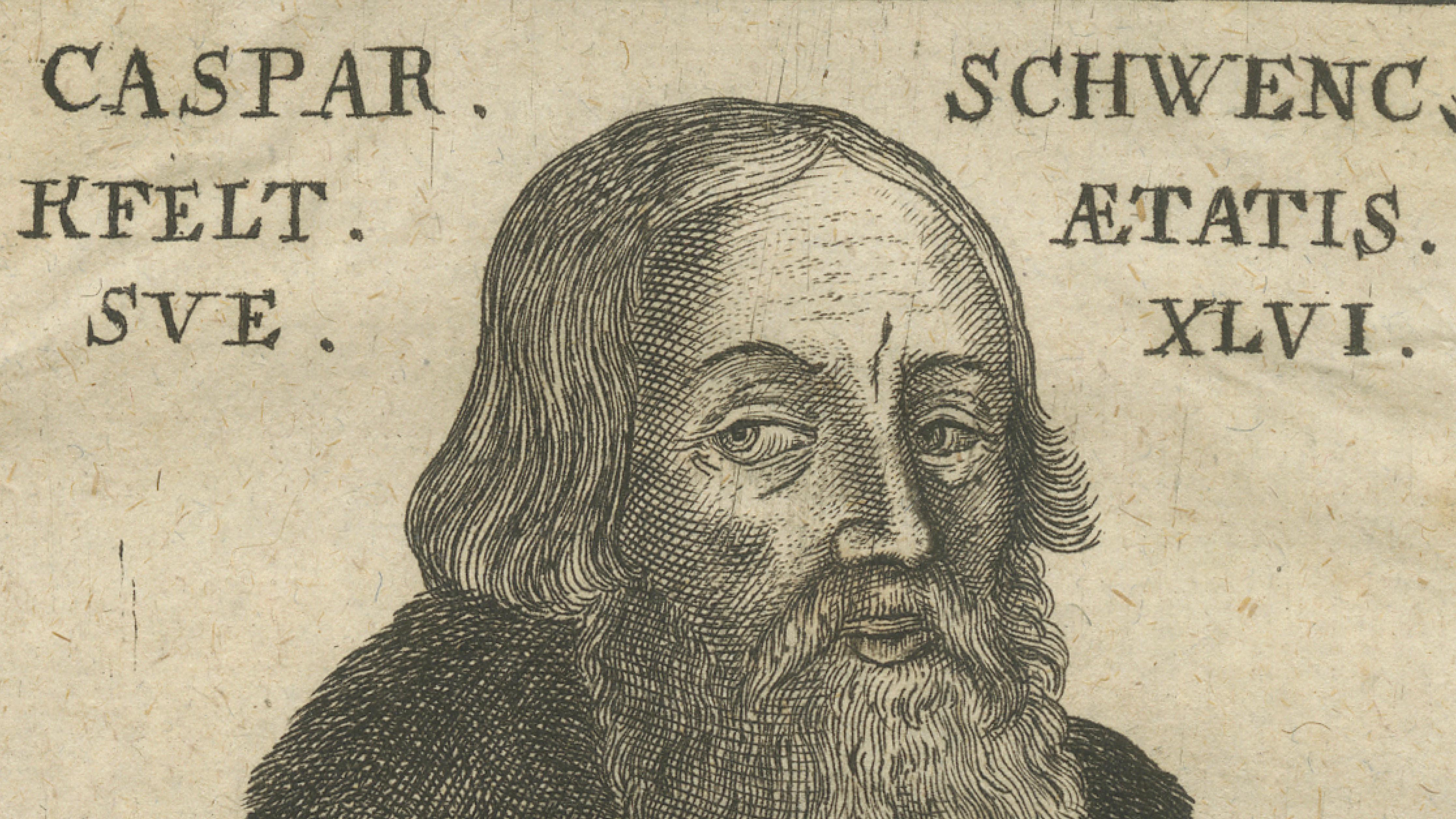
A striking and historically charged 16th-century portrait engraving depicting Caspar Schwenckfeld von Ossig (1489–1561), the Silesian nobleman, theologian, and radical Protestant reformer. This compelling print presents Schwenckfeld at the age of 46, as indicated by the Latin inscription “ÆTATIS XLVI,” placing the origin of the portrait design around 1535–1536, during the height of the Reformation.
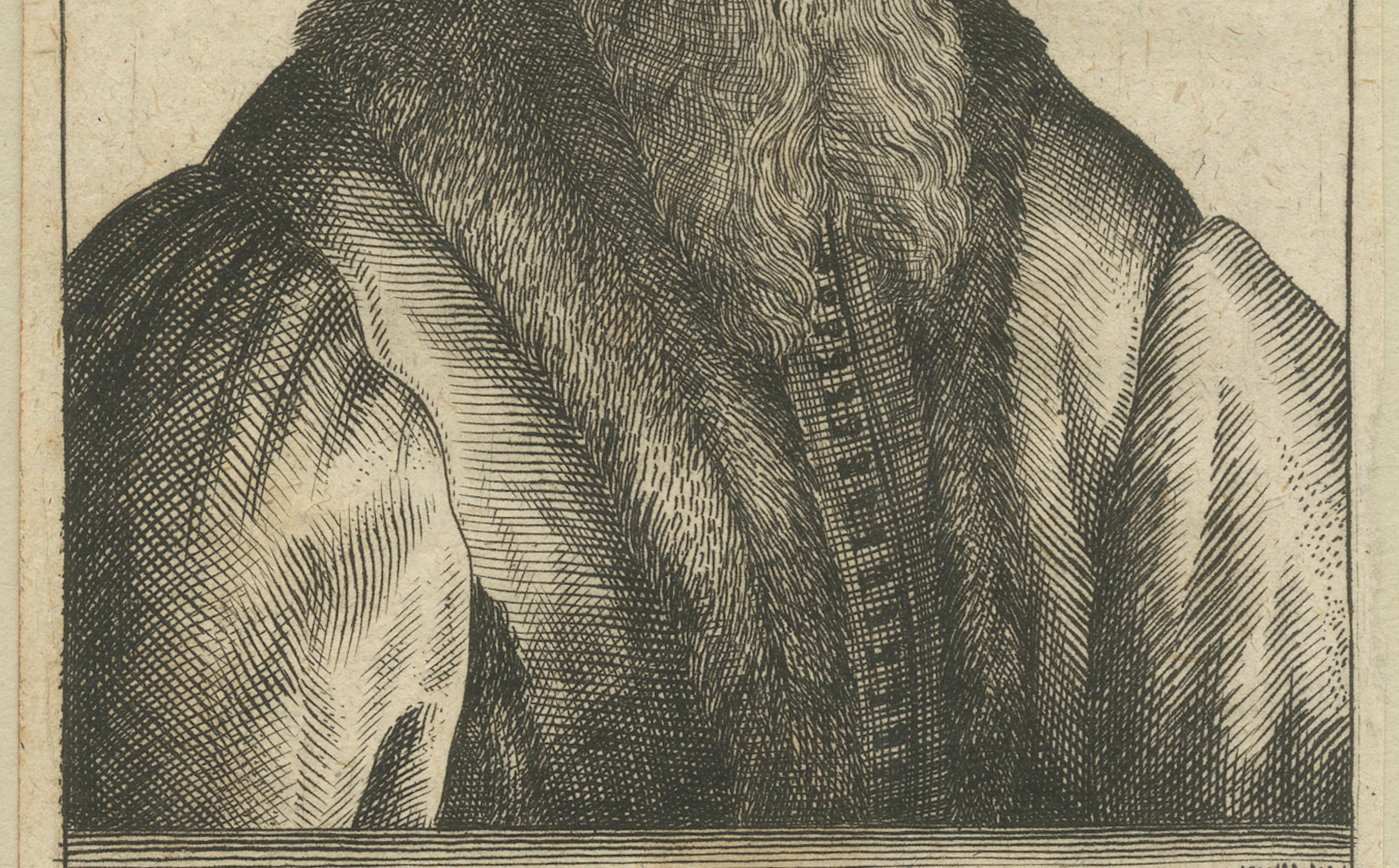
The portrait shows Schwenckfeld in half-length, dressed in a richly rendered fur-lined coat that reflects his noble status. His solemn expression and direct gaze convey intellectual authority, while the finely worked line engraving—particularly visible in the beard, drapery, and facial modeling—demonstrates the technical sophistication of German printmaking of the period. The composition is framed by inscriptions, with his name prominently displayed above.
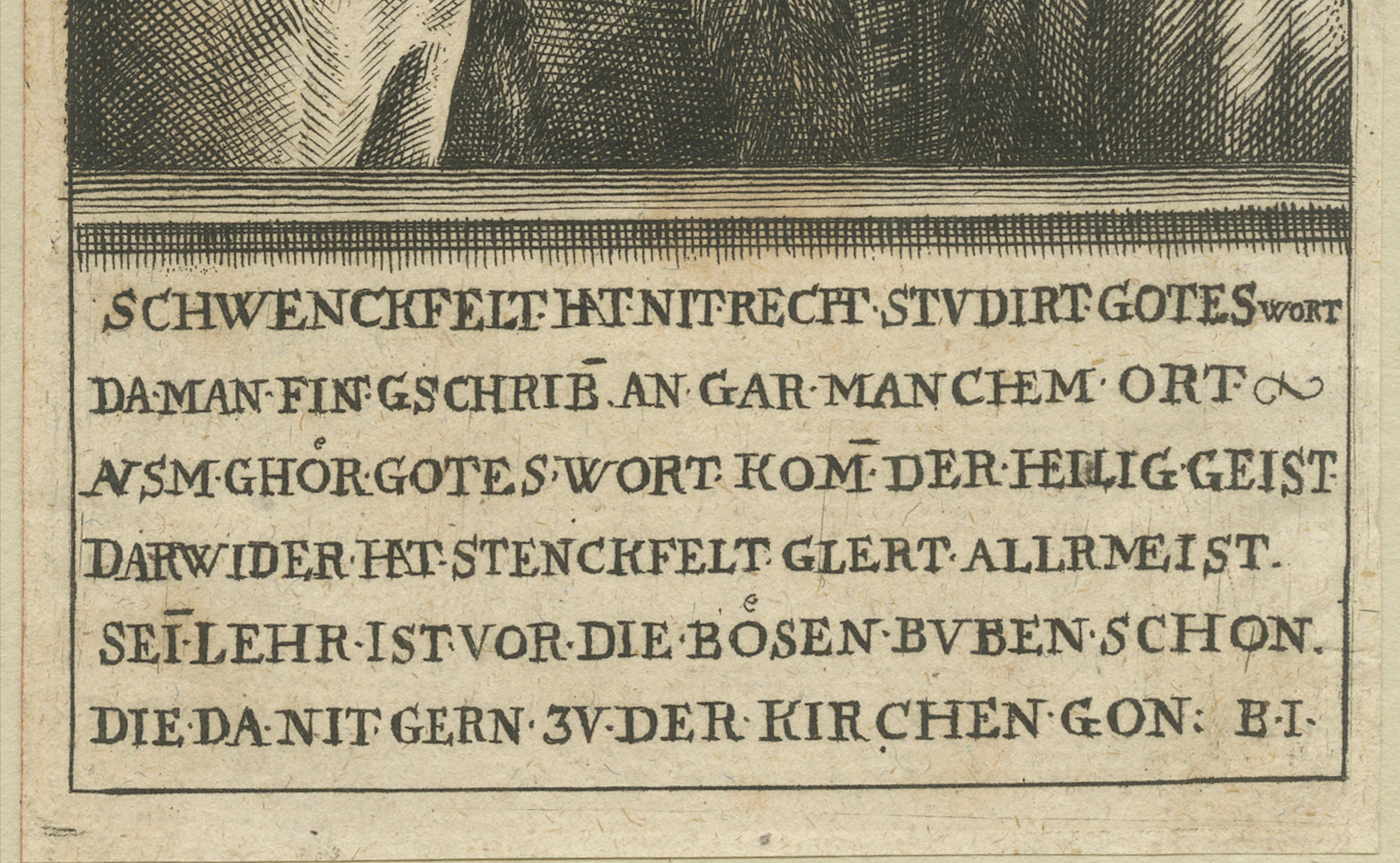
Below the image appears a dense German text, which is not merely descriptive but overtly polemical. Rather than honoring the sitter, the inscription criticizes Schwenckfeld’s theological views, particularly his belief in the “inner word” (direct spiritual revelation) over the “outer word” of scripture and church teaching. The text includes a deliberate distortion of his name—“Stenckfeld”—a contemporary insult used by opponents such as Martin Luther and Philipp Melanchthon. It further accuses his teachings of appealing to those who avoided formal church practice, reflecting the intense religious conflicts of the time.
Such prints were often produced not only as likenesses but as tools of ideological debate, making this piece a fascinating artifact of Reformation propaganda and intellectual history. The engraving is attributed to the circle of Frantz Friderich (c. 1520–1584), a German printmaker known for portrait prints of scholars and reformers, often accompanied by extensive textual commentary.
This work stands at the intersection of portraiture, theology, and early modern print culture, offering collectors a rare and tangible connection to the religious tensions that shaped 16th-century Europe.
Condition: Good antique condition with age toning to the paper and light scattered foxing. Minor handling wear consistent with age. The impression remains clear and well-defined, with strong linework throughout. Lightly mounted on backing.
Framing tips: Best presented in a classic museum-style setting with a warm ivory mount and a dark wood or black frame. A slightly wider mat will allow the inscriptions to breathe and emphasize the historical character of the piece.
Technique: Engraving (or woodcut, after earlier design)
Maker: Attributed to Frantz Friderich, Germany, mid-16th century