About this sheet
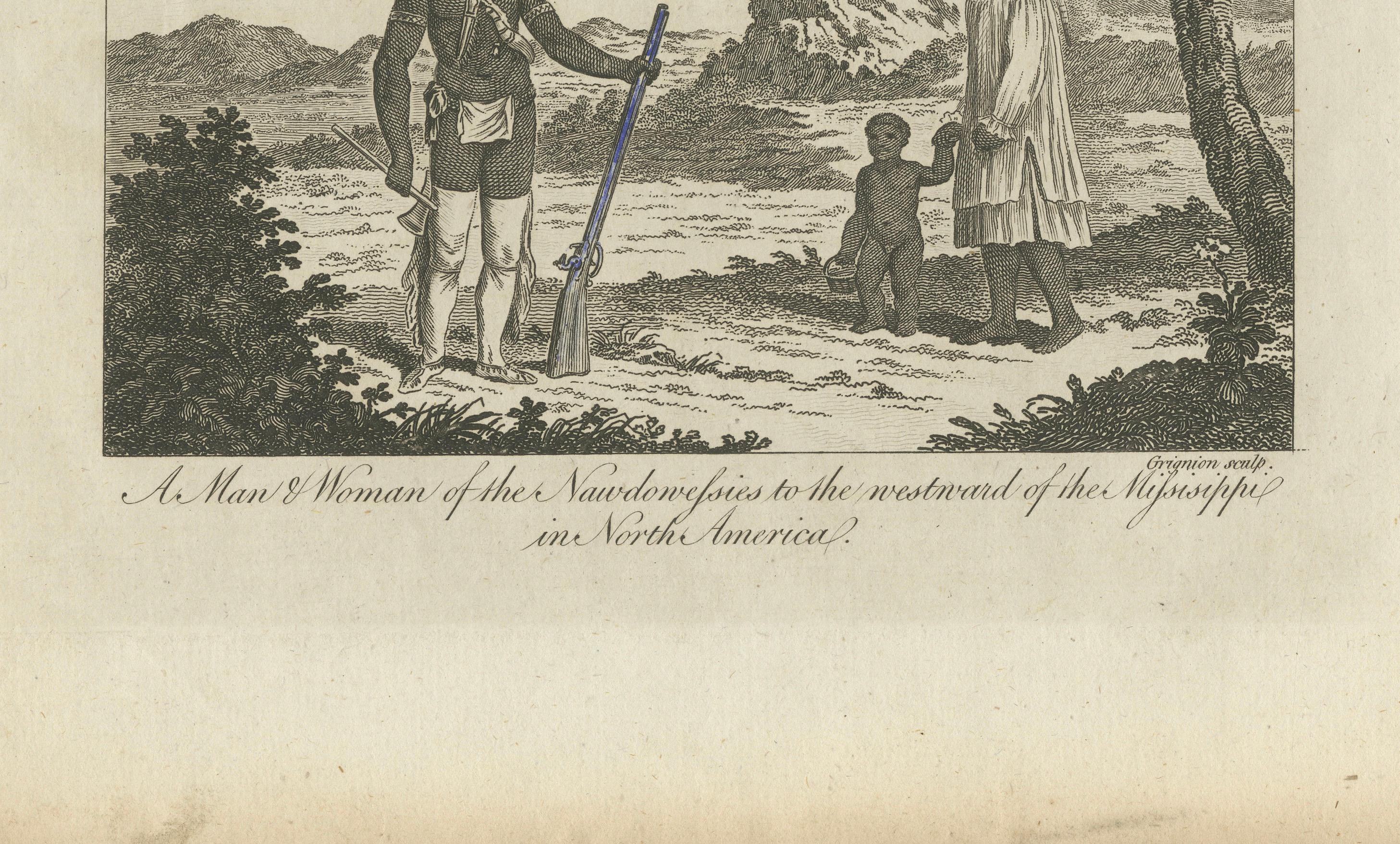
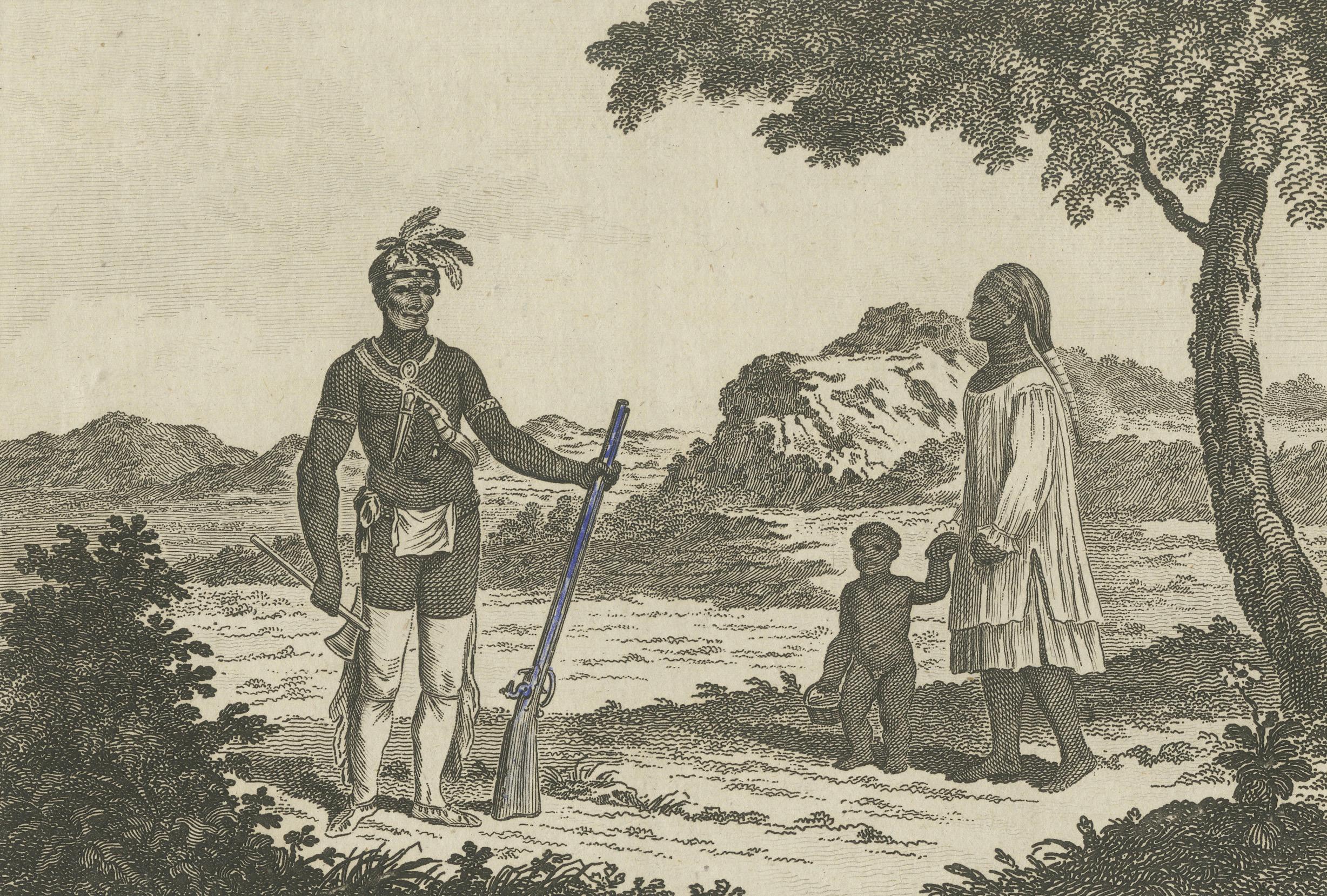
Man and Woman of the Naudowessies, Mississippi Region – 18th Century Engraving
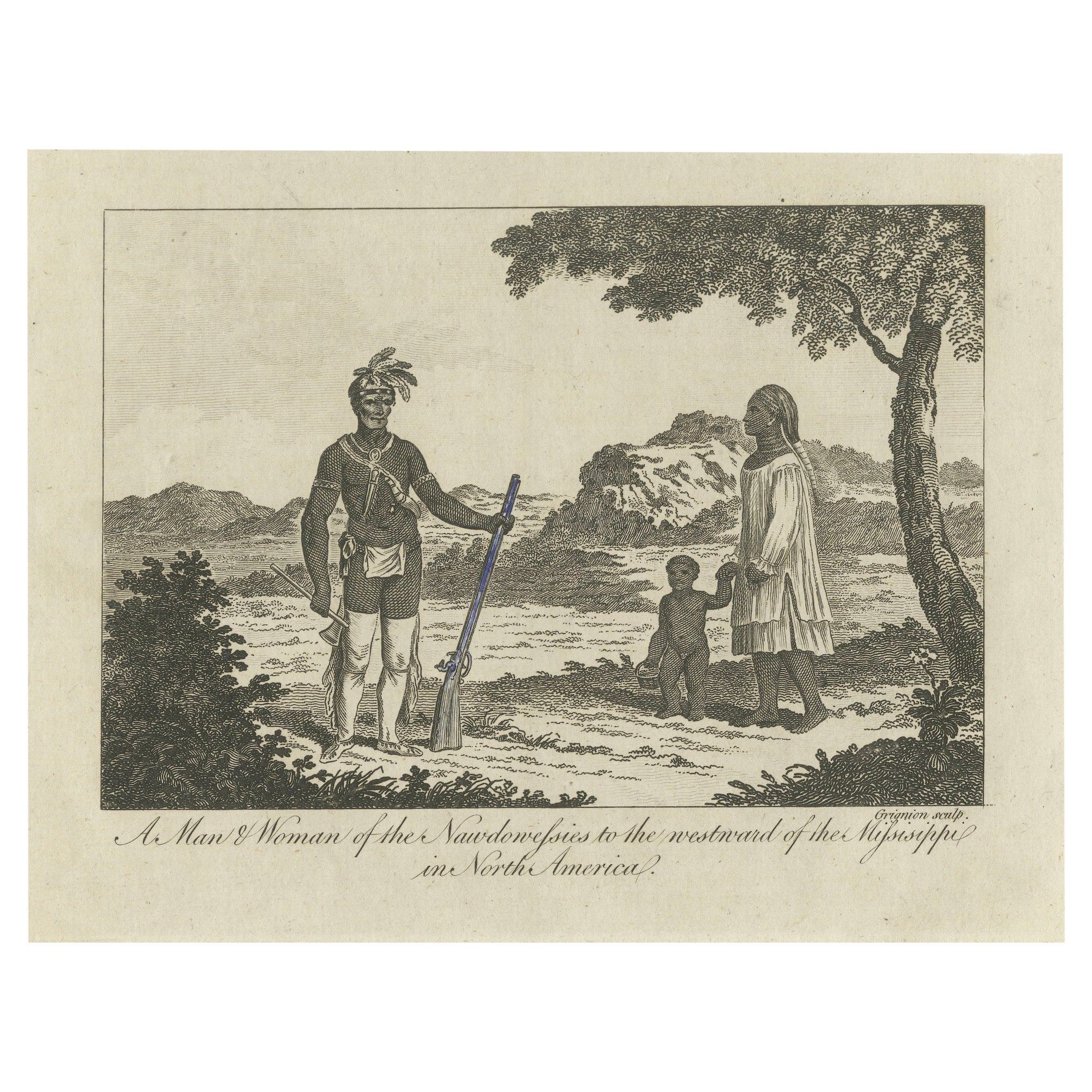
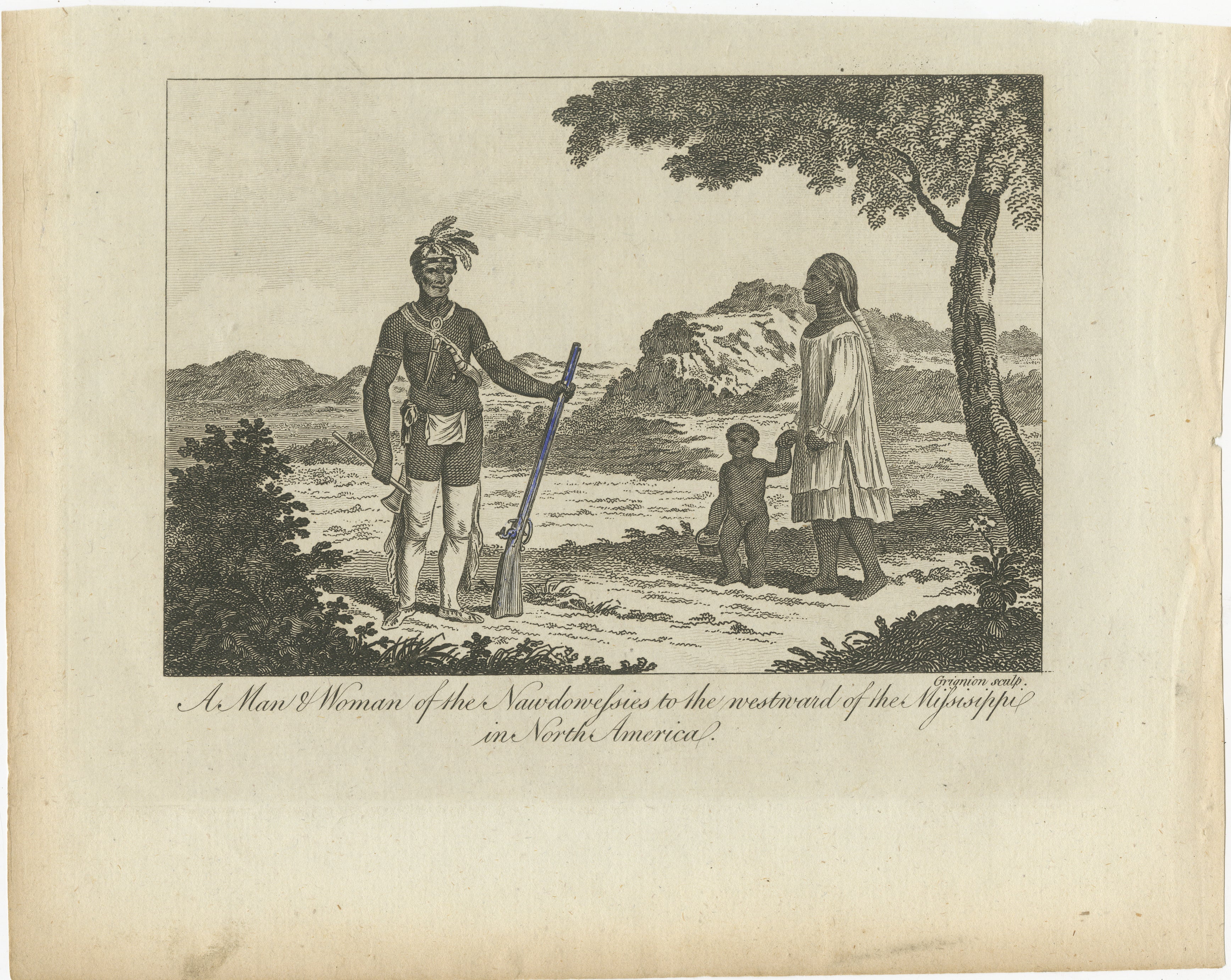
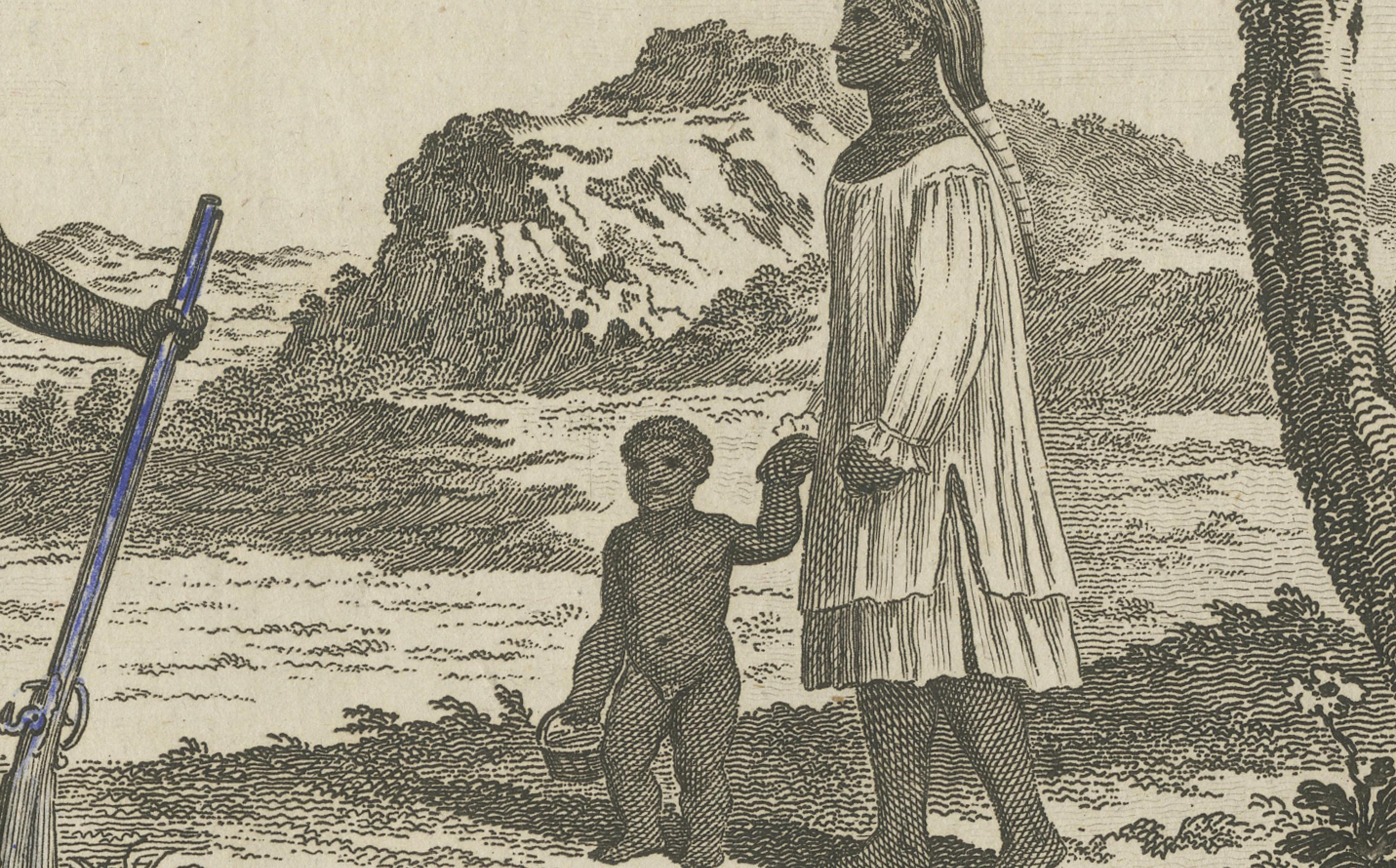
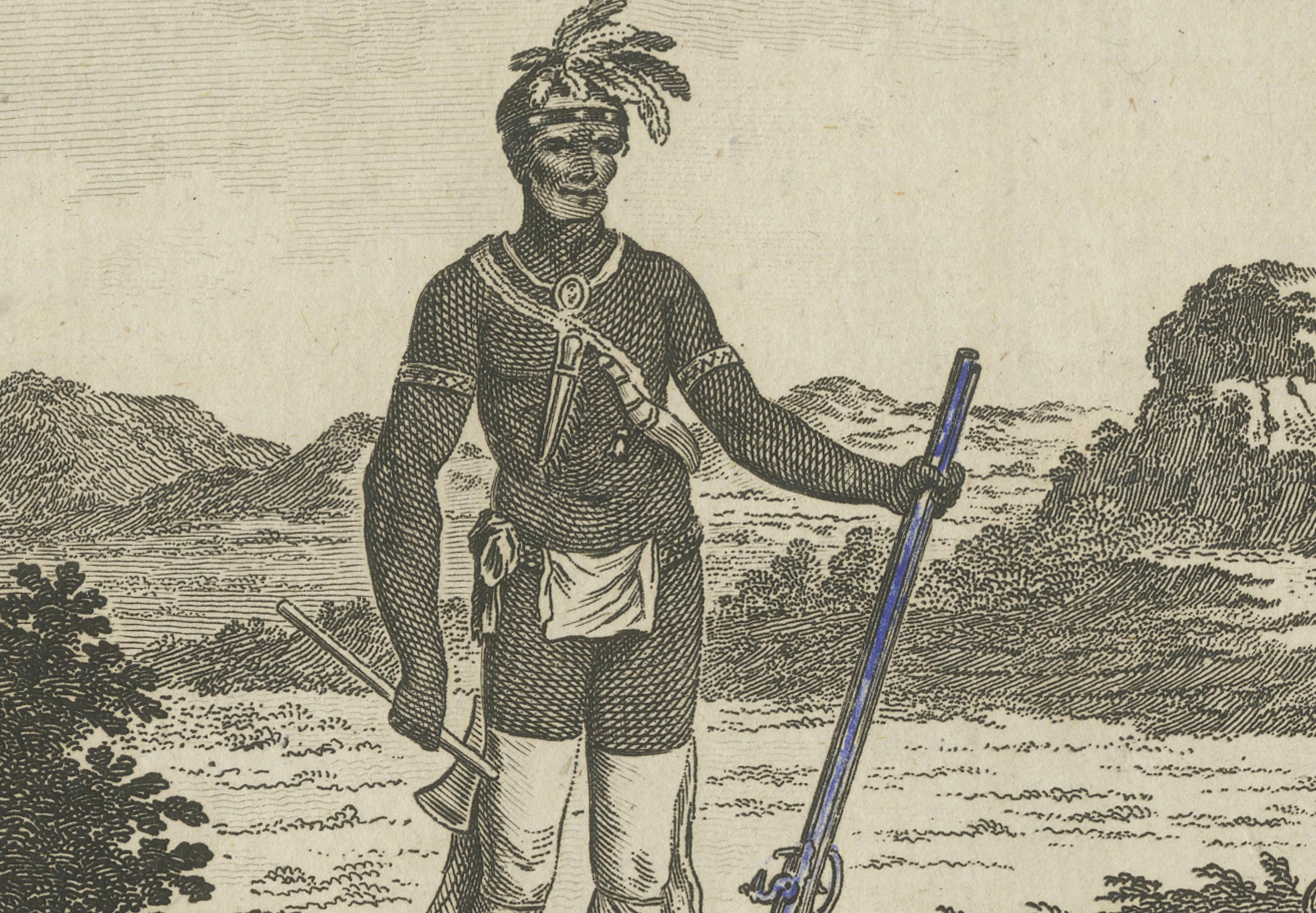
This rare 18th-century engraving titled A Man & Woman of the Naudowessies to the westward of the Mississippi in North America presents an early European ethnographic representation of the Naudowessies, a name historically used for groups associated with the Dakota (Sioux) peoples of the Upper Mississippi region. The scene shows a man armed with a long firearm and traditional dress, standing opposite a woman and child, set within an open landscape framed by trees and distant hills.
The print reflects Enlightenment-era European interest in documenting the peoples of North America through illustrated travel accounts. Such images were intended to convey information about appearance, dress, weaponry, and social structure, though they inevitably filter Indigenous life through a European visual and cultural lens. The inclusion of the firearm is particularly significant, illustrating early contact and trade relationships between Native communities and European settlers.
The engraving is executed with clear, confident line work, balancing figure study with landscape context. Costume details, including the man’s adornments and the woman’s loose garment, are carefully rendered, while the child introduces a domestic and familial dimension. The composition emphasizes calm interaction rather than conflict, aligning with contemporary European ideals of the “noble savage” and ordered Indigenous society.
This image is closely related to the tradition of illustrated ethnographic plates produced for 18th-century histories and voyages of discovery, often engraved in Paris or London for an educated audience. Such prints are now valued both for their documentary importance and as artifacts of early modern perceptions of Native American life.
The engraving is of strong interest to collectors of early Americana, Native American ethnography, Mississippi Valley history, and 18th-century travel illustration. It also carries significant decorative appeal, particularly when framed as part of a curated wall focused on exploration, anthropology, or early American history.
Condition report
Good antique condition. Overall age toning with scattered foxing and light surface marks, mainly in the margins. The engraved image remains strong and well-defined. Color on the riffle. Minor edge wear consistent with age.
Framing suggestions
A classic walnut, ebonized, or antique gilt frame with a wide off-white or light cream mat will suit the print’s 18th-century character. A subtle darker inner mat line can enhance depth and highlight the engraved border.
Technique: Copper engraving
Maker: Grignon, France, late 18th century