About this sheet
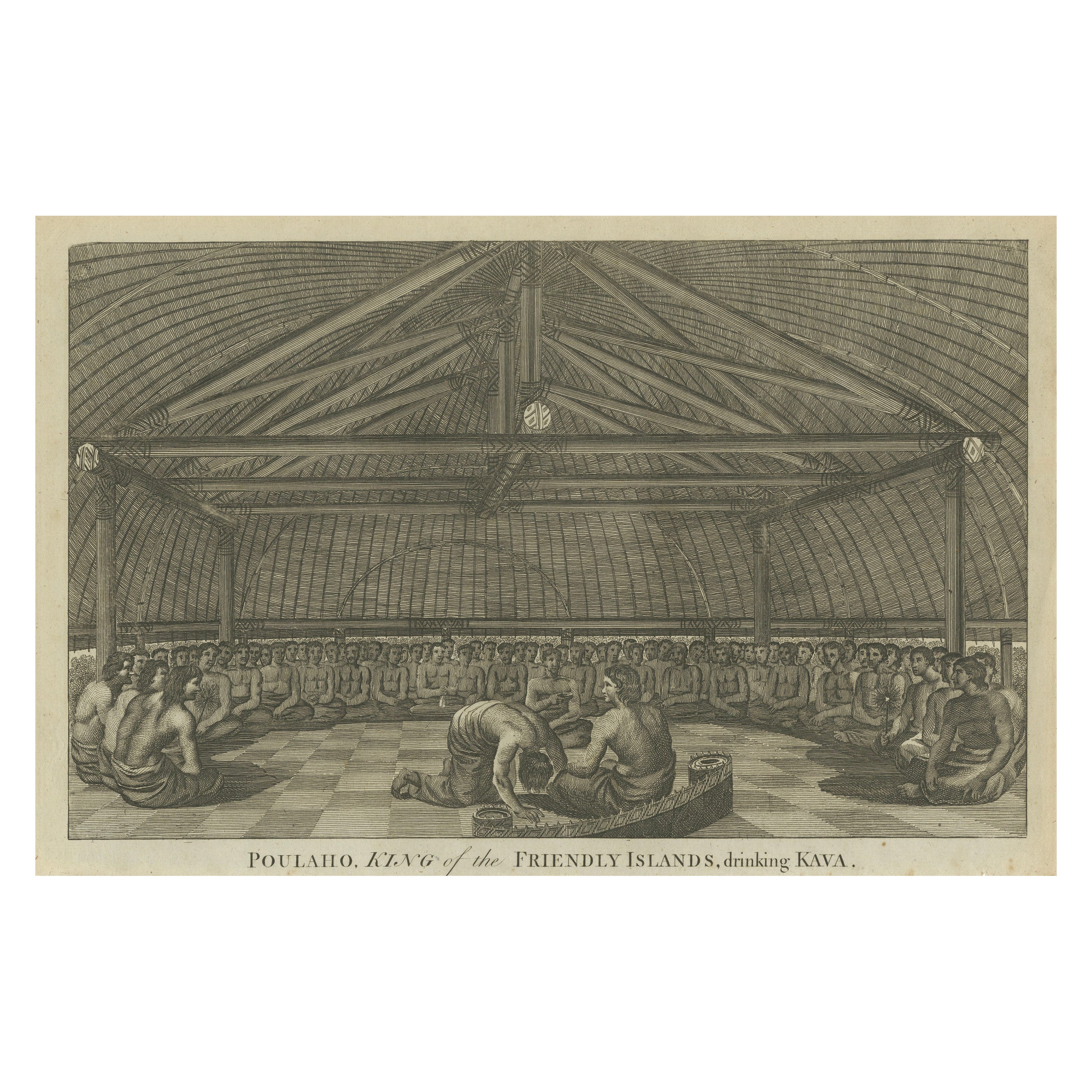
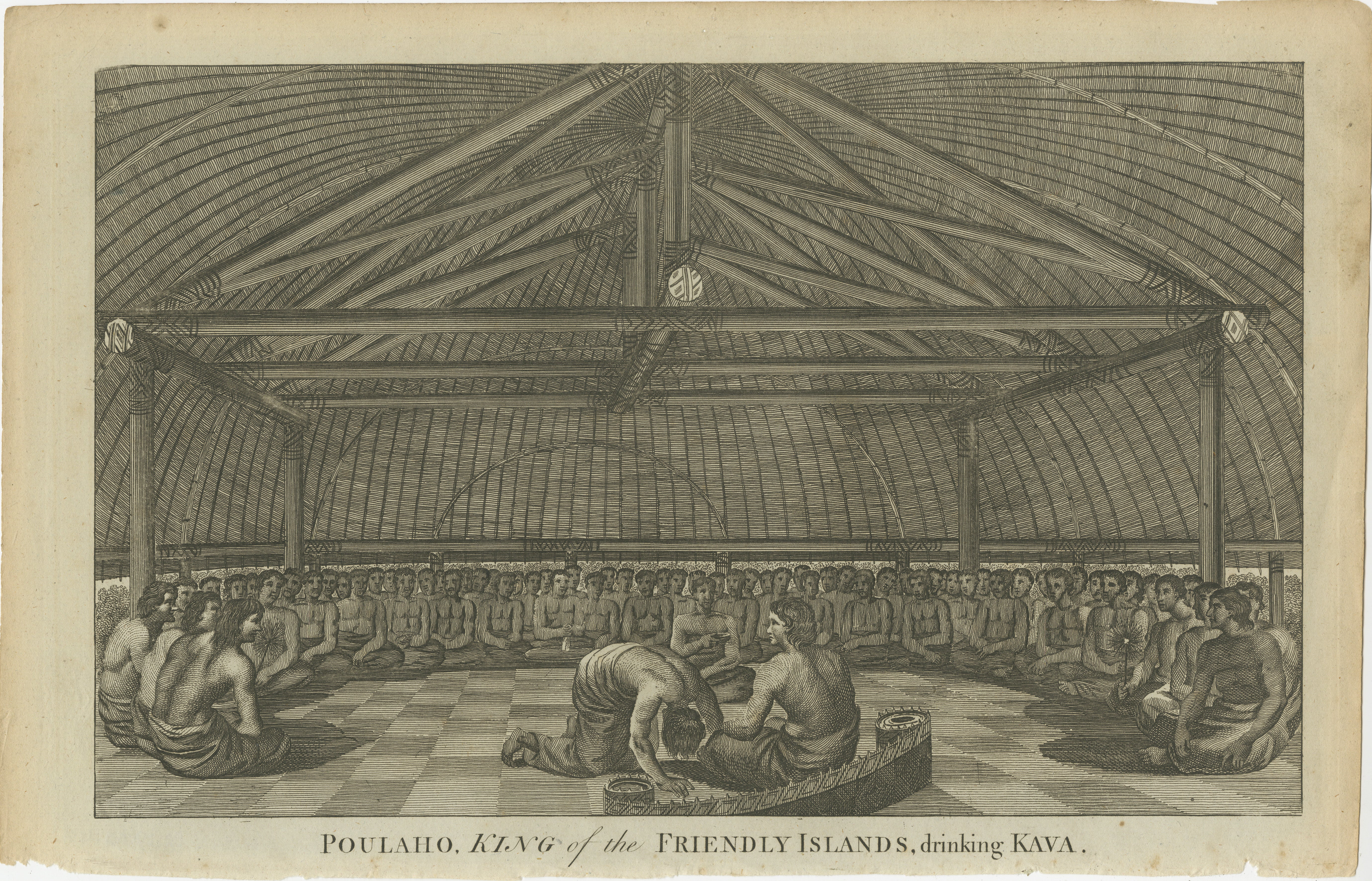
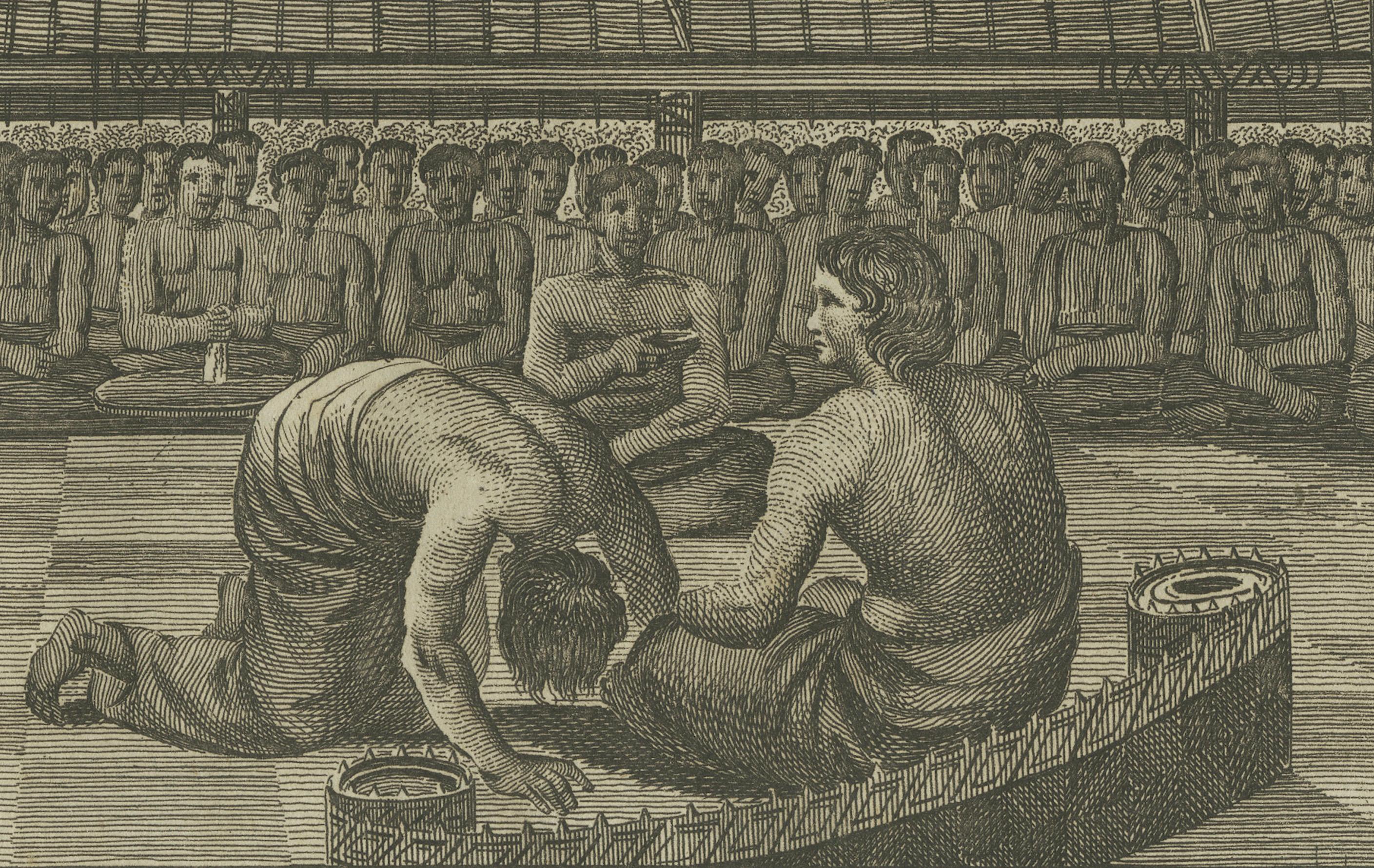
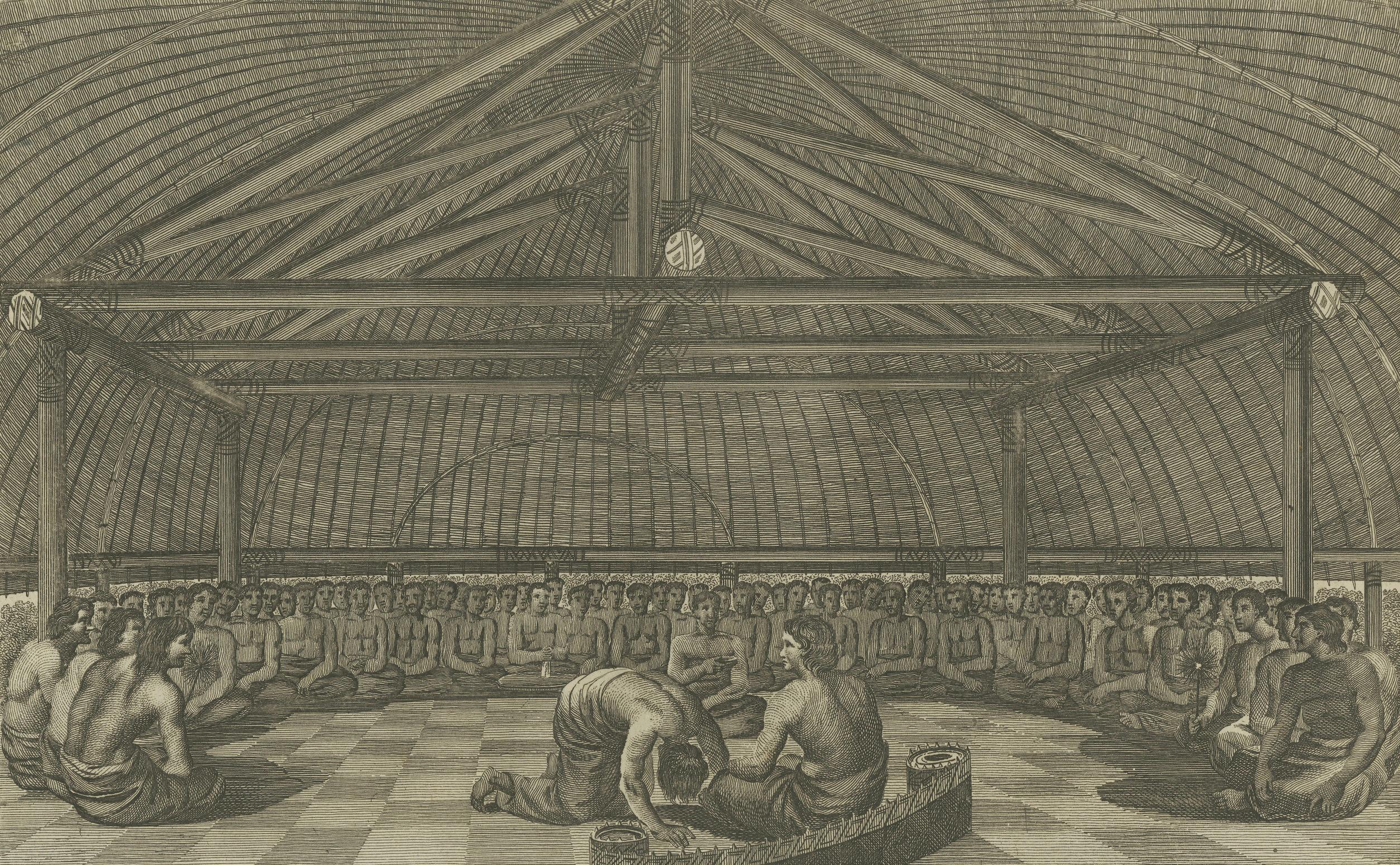
The engraving is titled "Poulaho, King of the Friendly Islands, Drinking Kava." It depicts a ceremonial scene with Poulaho, the King of the Friendly Islands (modern-day Tonga), participating in the traditional kava-drinking ceremony. The setting is a large meeting house, with many participants sitting in rows, observing the ritual. The image reflects the significance of kava as part of Tongan ceremonial and cultural life.
This engraving captures an important cultural ritual of the Friendly Islands (Tonga) in the late 18th century, showing King Poulaho engaged in the kava-drinking ceremony. Kava, a drink made from the root of the kava plant, holds great ceremonial importance in Tongan and other Pacific Island cultures, used in formal gatherings, religious rituals, and to honor chiefs and royalty. The king is shown seated with attendants, who are preparing the kava in front of him, while numerous individuals sit in concentric rows inside a large thatched meeting house, likely a traditional 'fale'.
This scene is drawn from accounts of Captain Cook’s third voyage, where he visited Tonga in 1777. The image is typical of 18th-century European engravings that sought to depict the customs and rituals of Indigenous cultures encountered during these explorations. The publication that features this engraving was published by Alex Hogg in London, around 1784-86, as part of a series that chronicled the voyages of Captain James Cook and other explorers. The kava ceremony was one of the many cultural practices noted during Cook’s interactions with Tongan society, particularly as it emphasized the hierarchical and ritualistic aspects of Polynesian governance.
This engraving serves as an ethnographic record of Tongan society and its customs, as observed by European explorers. The kava ceremony, a deeply significant cultural practice, is portrayed with attention to the social structure of the event, including the positioning of the king and the gathering of the people. The image also reflects the broader European interest in documenting the ceremonial practices of non-Western cultures during the age of exploration.
Interesting Aspects:
- The structure of the fale (meeting house) is intricately detailed, showcasing the traditional architecture with its wooden supports and thatched roof.
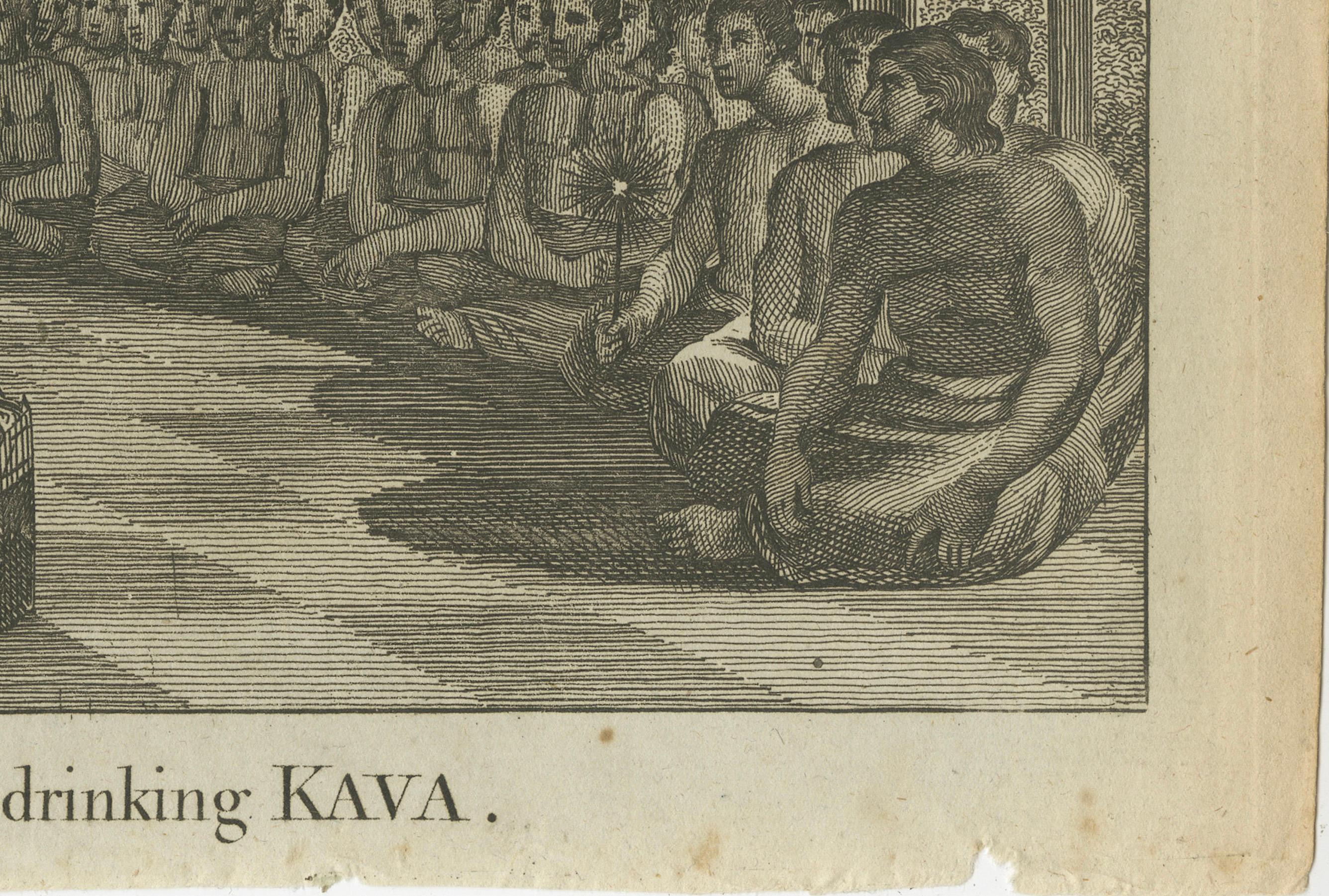
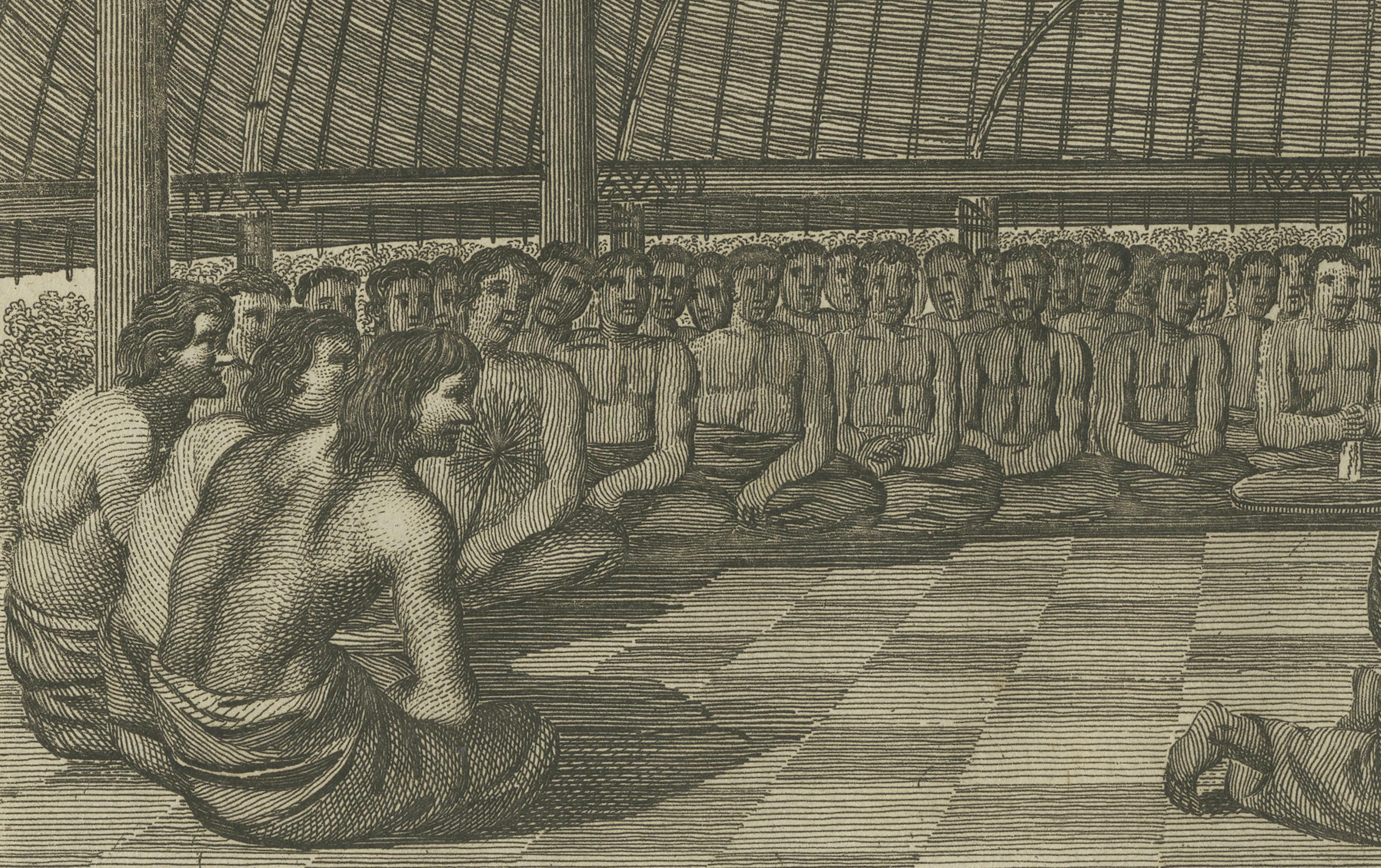
- The formal arrangement of the participants, all seated and watching the ceremony, reflects the respect and importance of the occasion.
- The focus on Poulaho, the king, emphasizes the hierarchical nature of Tongan society, where the kava ceremony is a key aspect of leadership and authority.
- The depiction of the kava preparation, with attendants working before the king, gives insight into the traditional roles involved in the ceremony.
This engraving provides valuable insight into the ceremonial life of the Friendly Islands and serves as a visual record of the interactions between European explorers and the cultures of the Pacific.