About this sheet
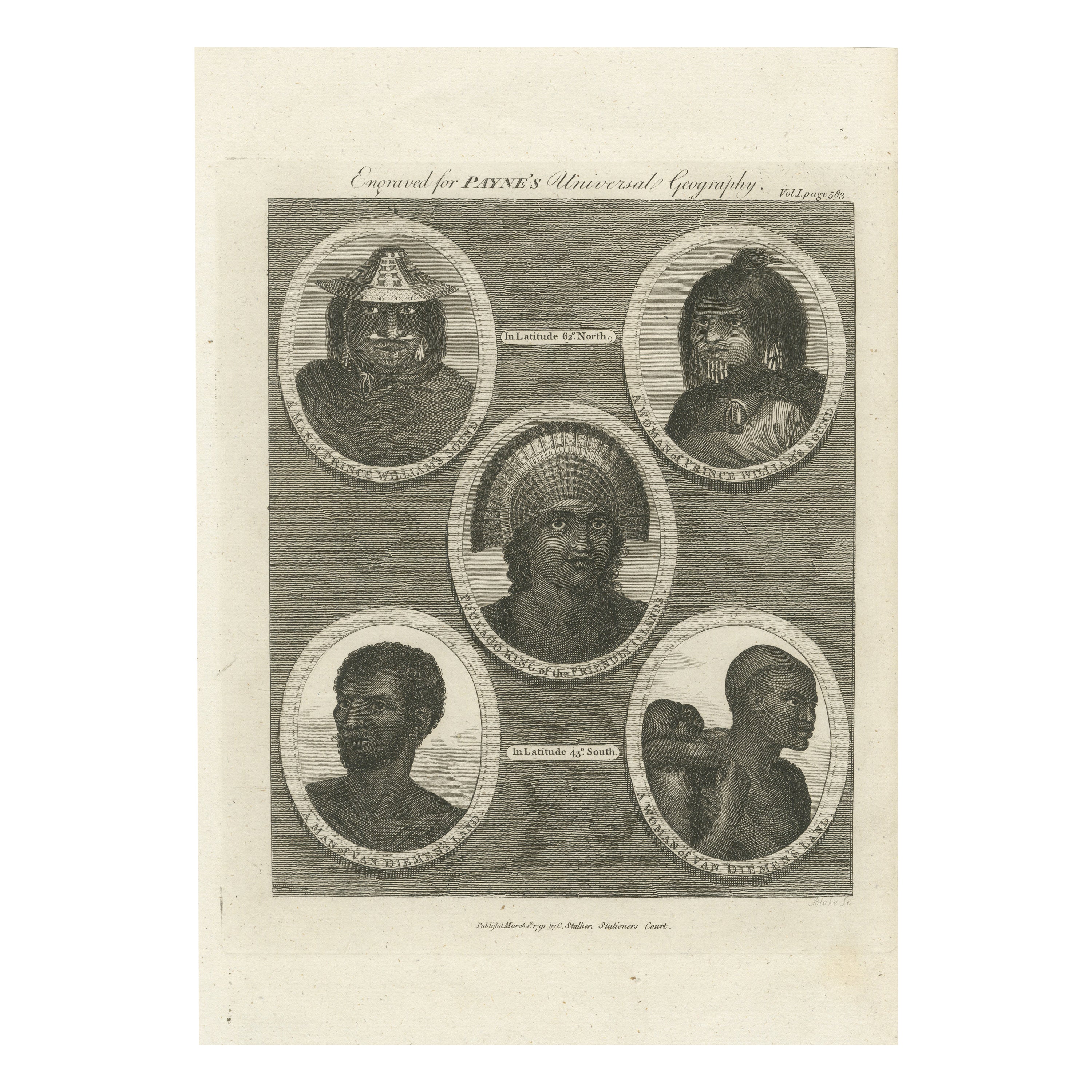
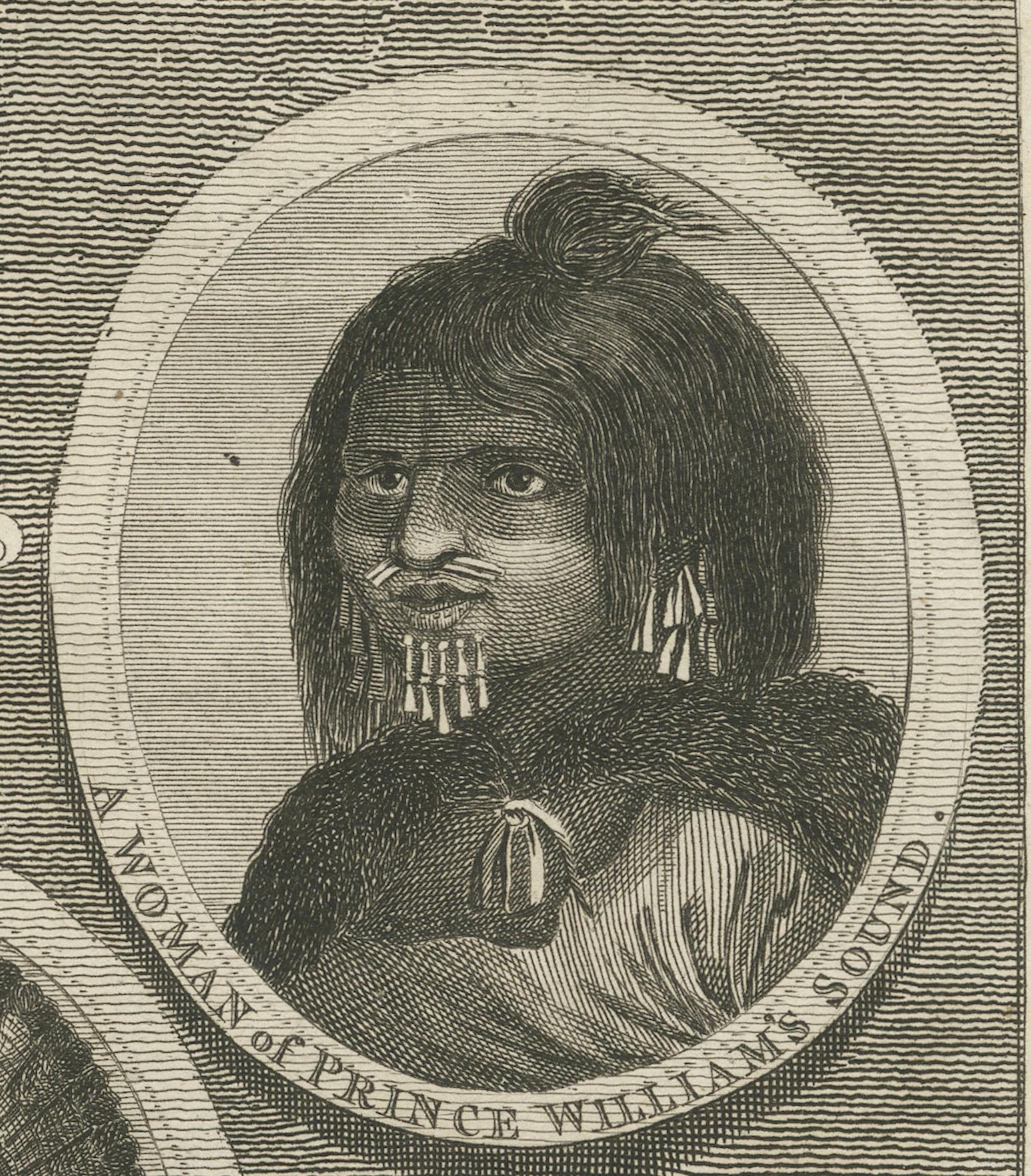
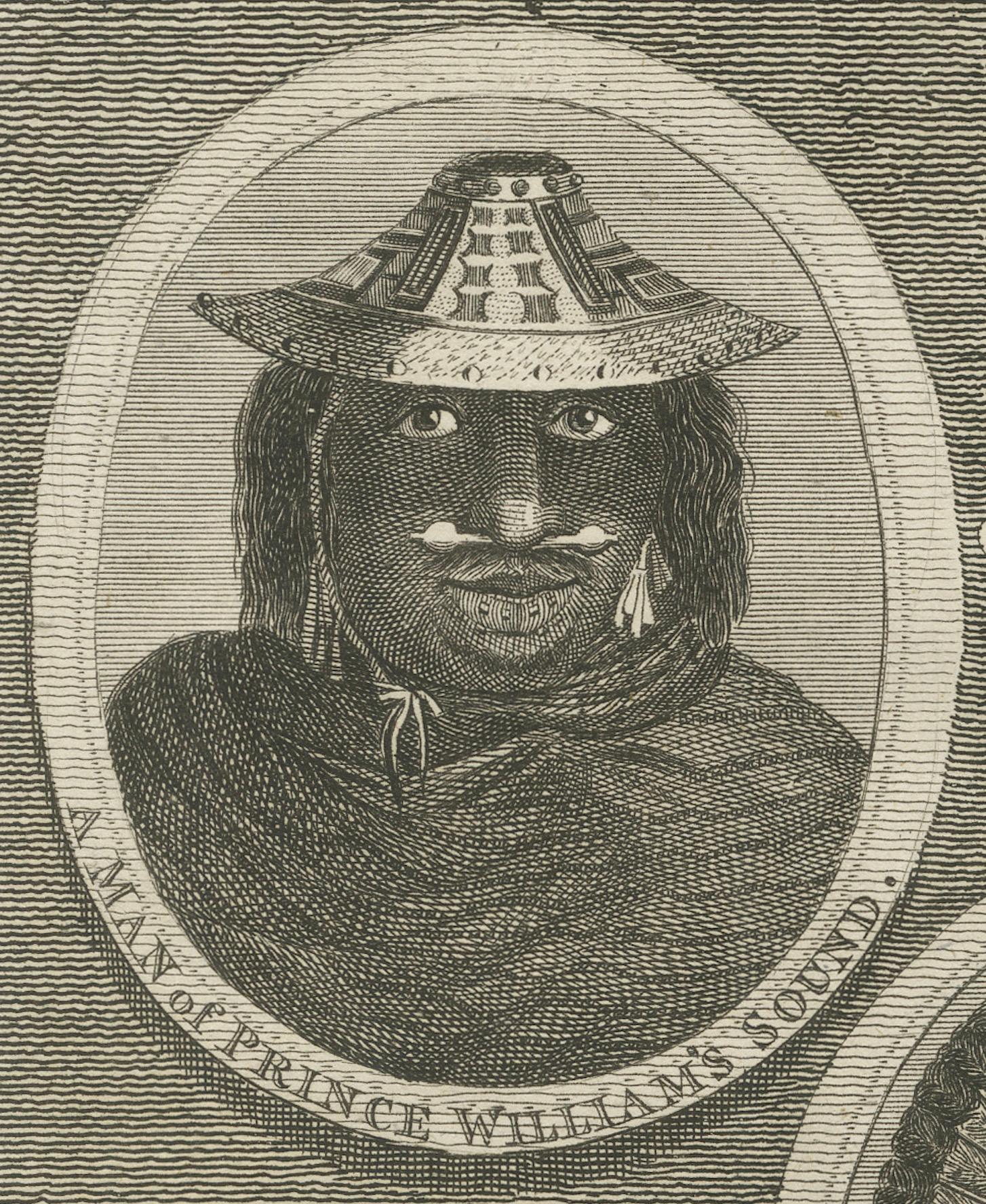
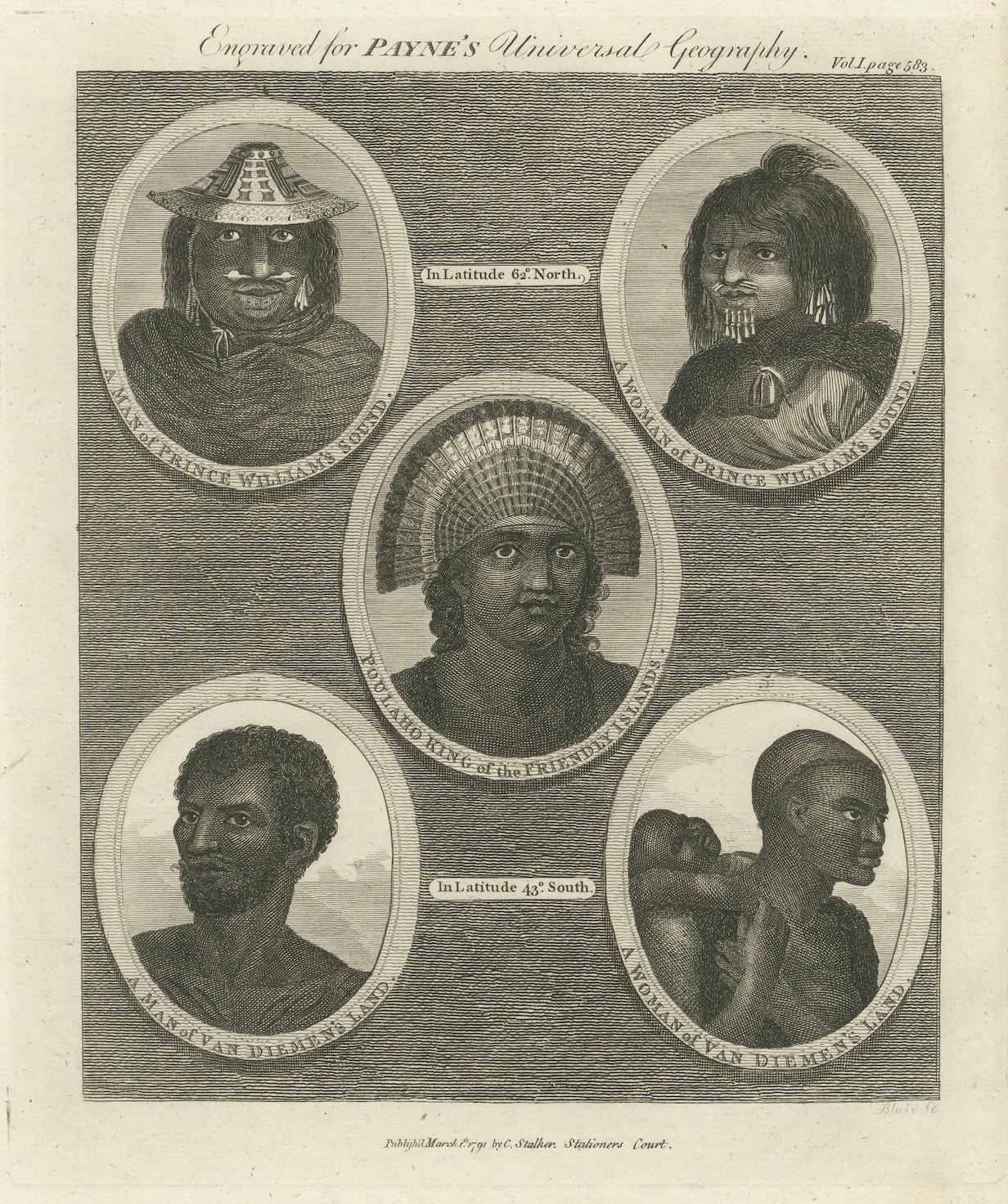
An original antique engraving titled "Engraved for PAYNE'S Universal Geography."
This title, along with the note "Vol.II page 648," suggests it is an illustration from a volume of a geographical compendium or encyclopedia. The engraving includes portraits labeled with different latitudes, suggesting that it represents individuals from various parts of the world as understood at the time of the work's publication.
As for the maker, the engraving is noted to be "Published March 1st 1791 by J. Wilkes." John Wilkes is likely the publisher or engraver associated with this piece. Unfortunately, without a more precise context or a visible engraver's mark that is common in such works, identifying the exact artist may require further research into the archives of John Wilkes's published works.
Payne's "Universal Geography" was a well-known work published in multiple volumes at the end of the 18th century and into the 19th century.
The locations associated with the individuals in the engraving are as follows and based on the names given:
1. **Prince William's Sound**: This is likely referring to the indigenous people of the Prince William Sound region of Alaska. The term "Prince William's Sound" would have been used during the time of European exploration and early contact with the native populations of that area.
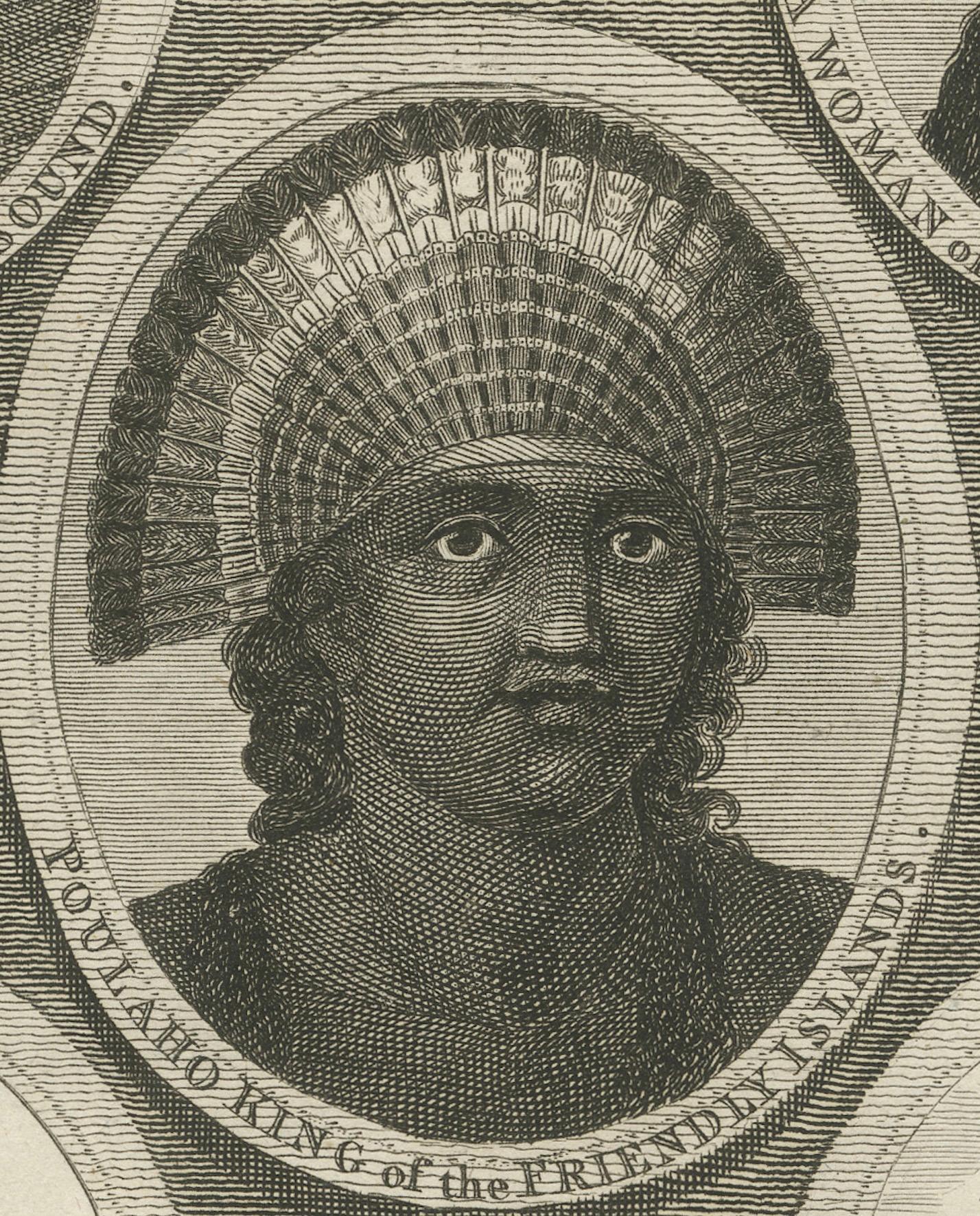
2. **The Friendly Islands**: This is an archaic name for the Kingdom of Tonga in the South Pacific. European explorers named Tonga the "Friendly Islands" due to the congenial reception they received from the locals when they arrived in the 18th century.
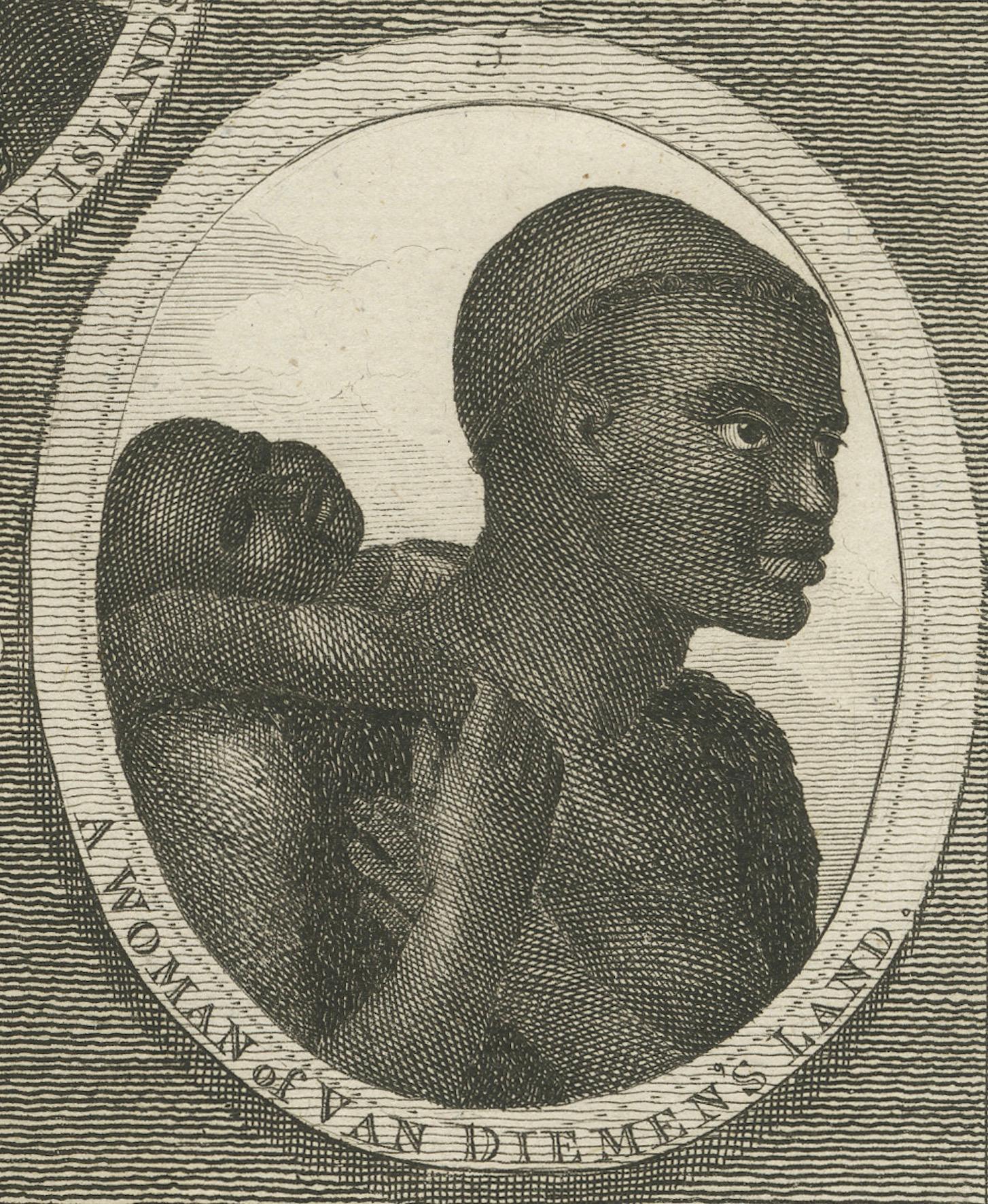
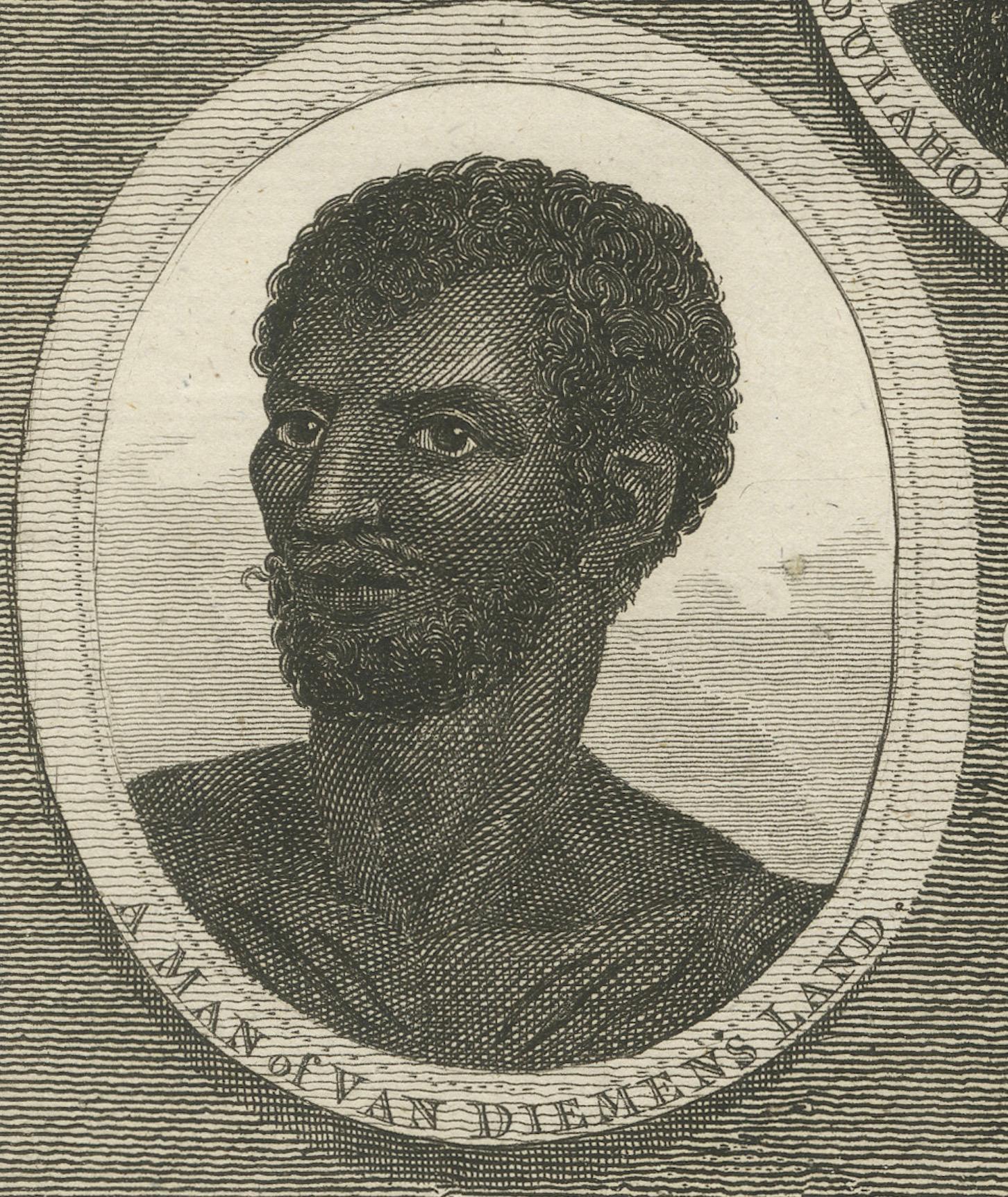
3. **Van Diemen's Land**: This is the historical name for Tasmania, an island state of Australia. It was named by the Dutch explorer Abel Tasman in 1642 and was known as Van Diemen's Land until it was renamed Tasmania in 1856, in honor of Tasman himself.
These locations are spread across different parts of the world and the indigenous peoples of these regions would have been depicted according to the European illustrators' interpretations at the time. The representations were intended to convey the diversity of human societies encountered by explorers and were typical of ethnographic illustrations of that period.