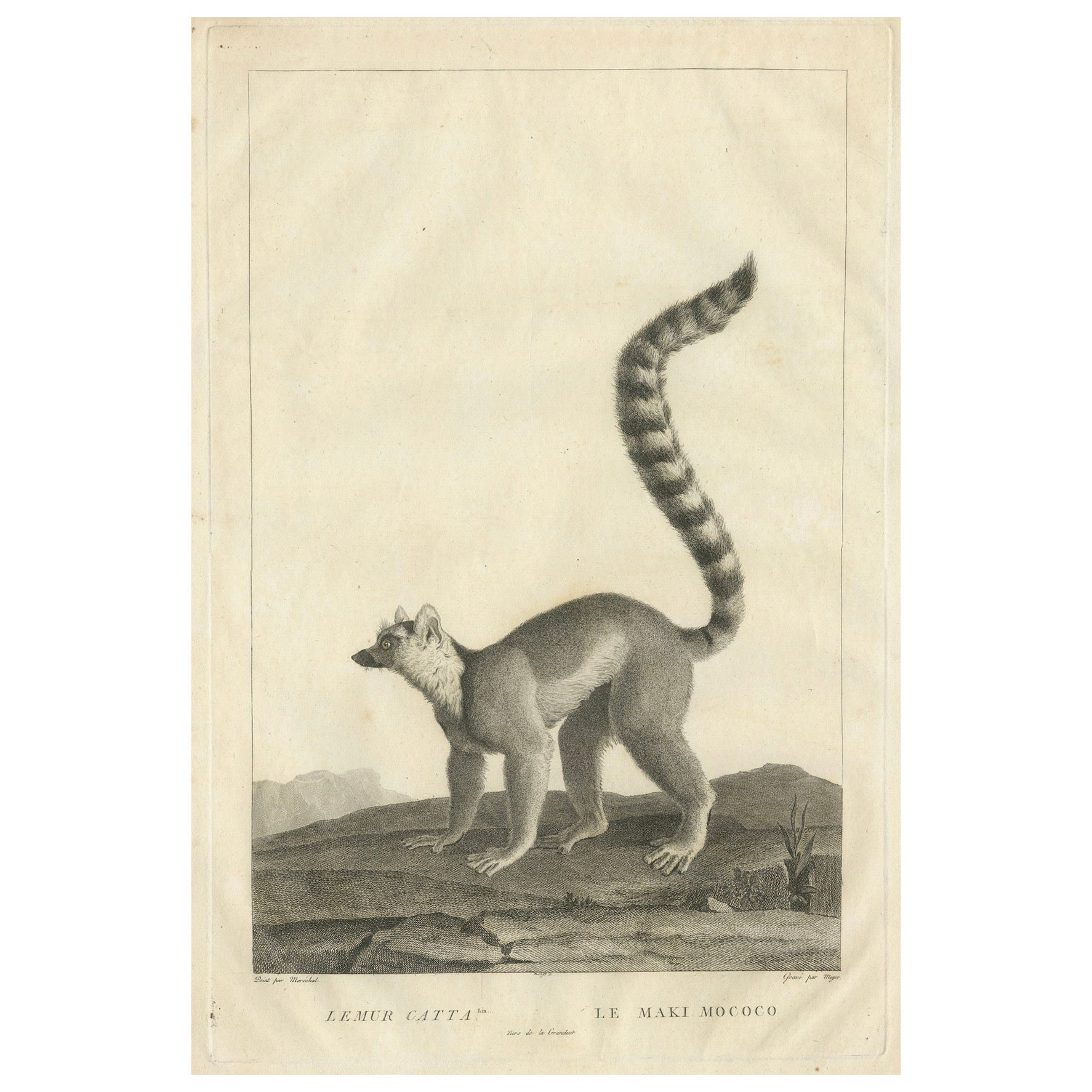
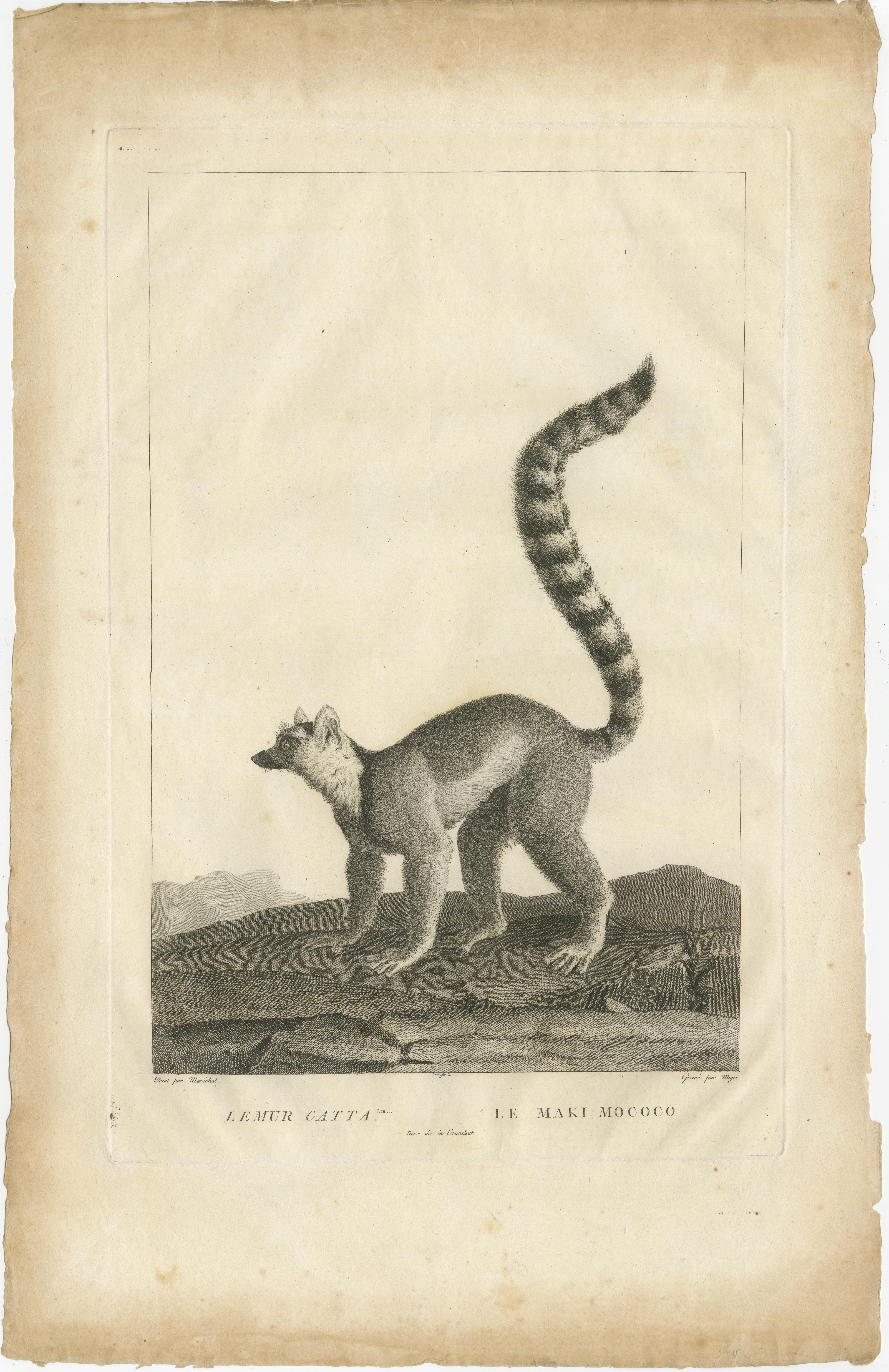
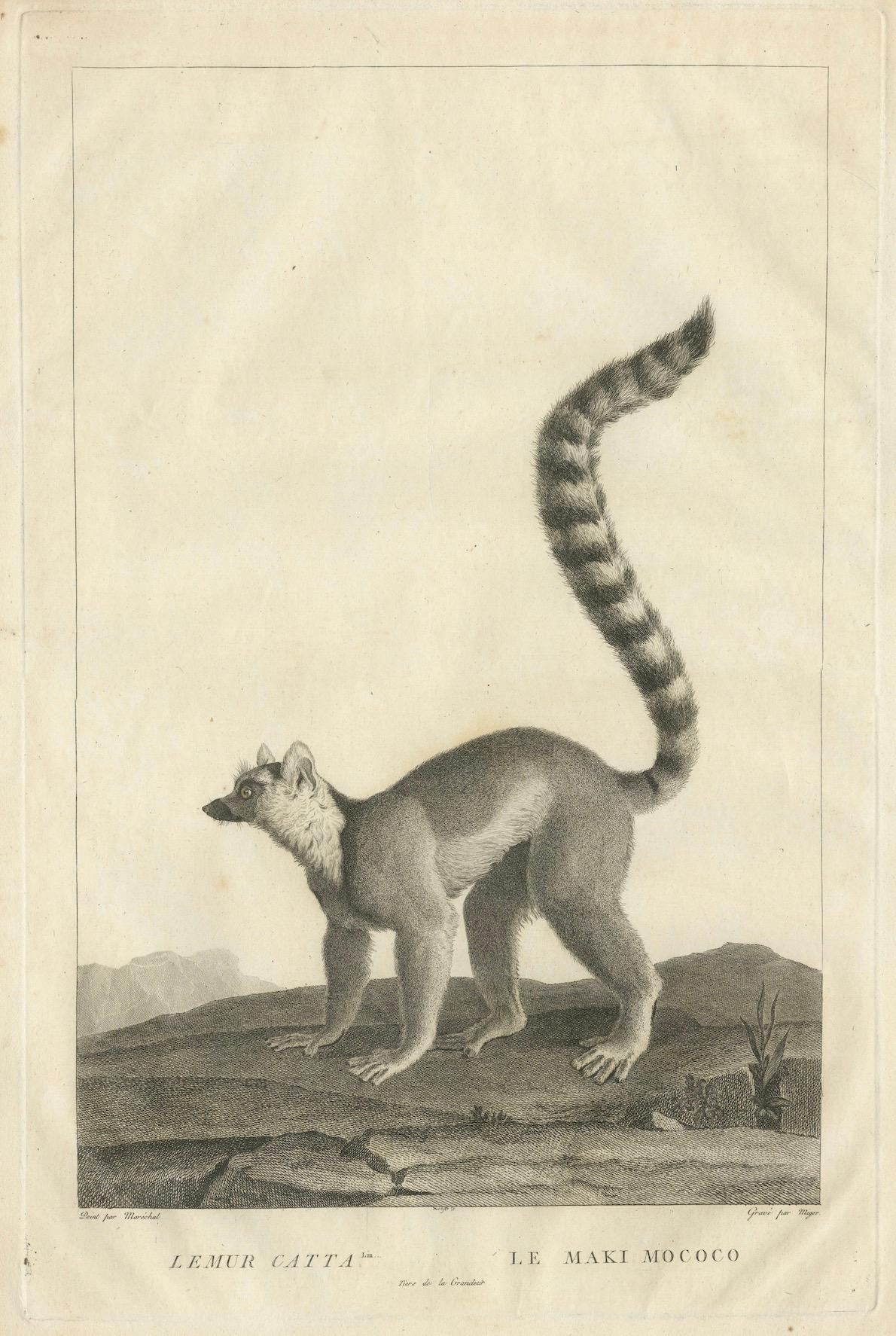
Early 19th-Century Engraving of Lemur Catta by S.C. Miger and N. Maréchal, Paris
€ 190
One of a kind: this is the sheet in the photographs. Ships from Langweer, the Netherlands.
Sheet size
53 × 34 cm (20.9 × 13.4 in)
Reference
BG-13358-5
Condition
good, given age. Overall light foxing and browning, especially around the borders. General age-related toning and/or occasional defects from handling around the borders. Please study scan carefully.
About this sheet
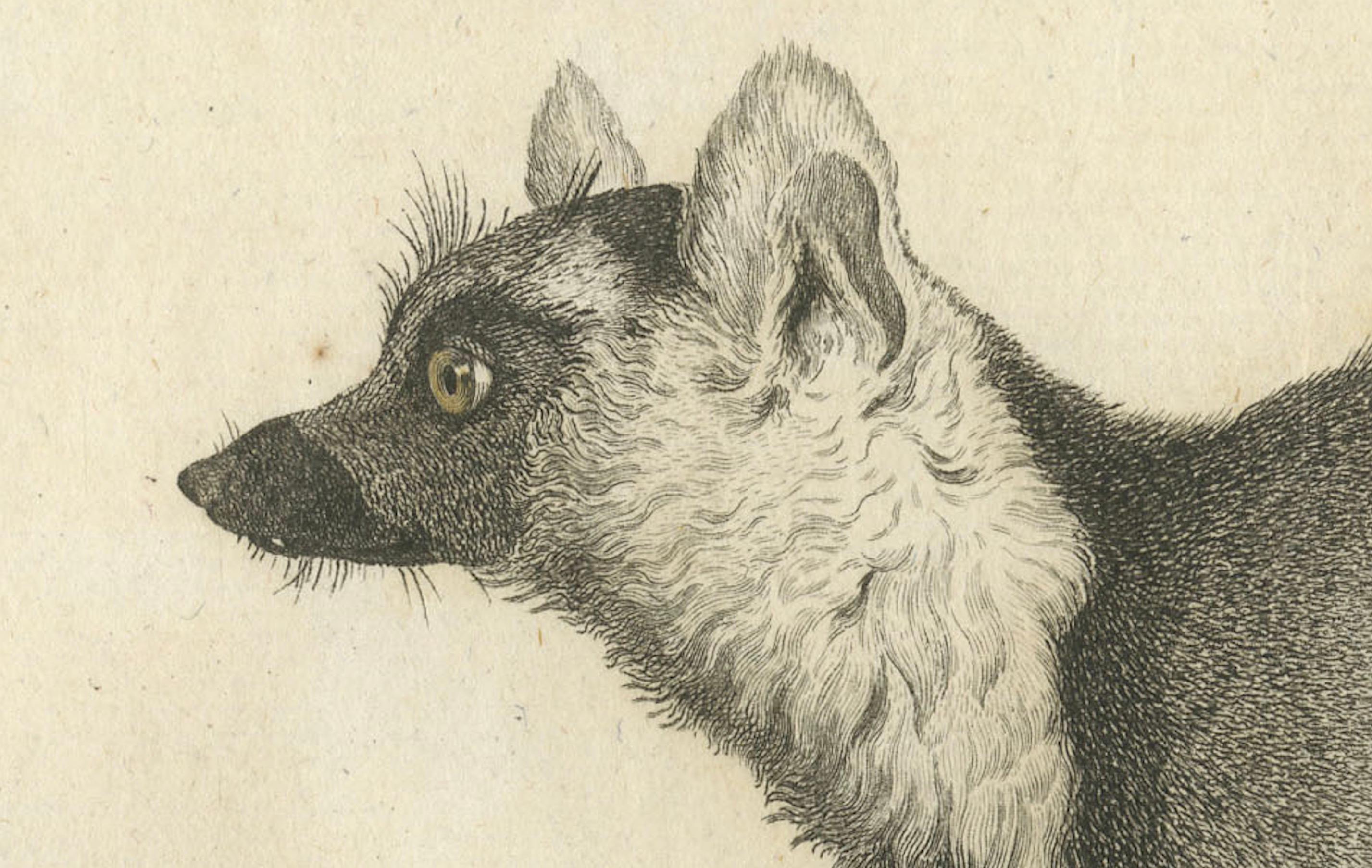
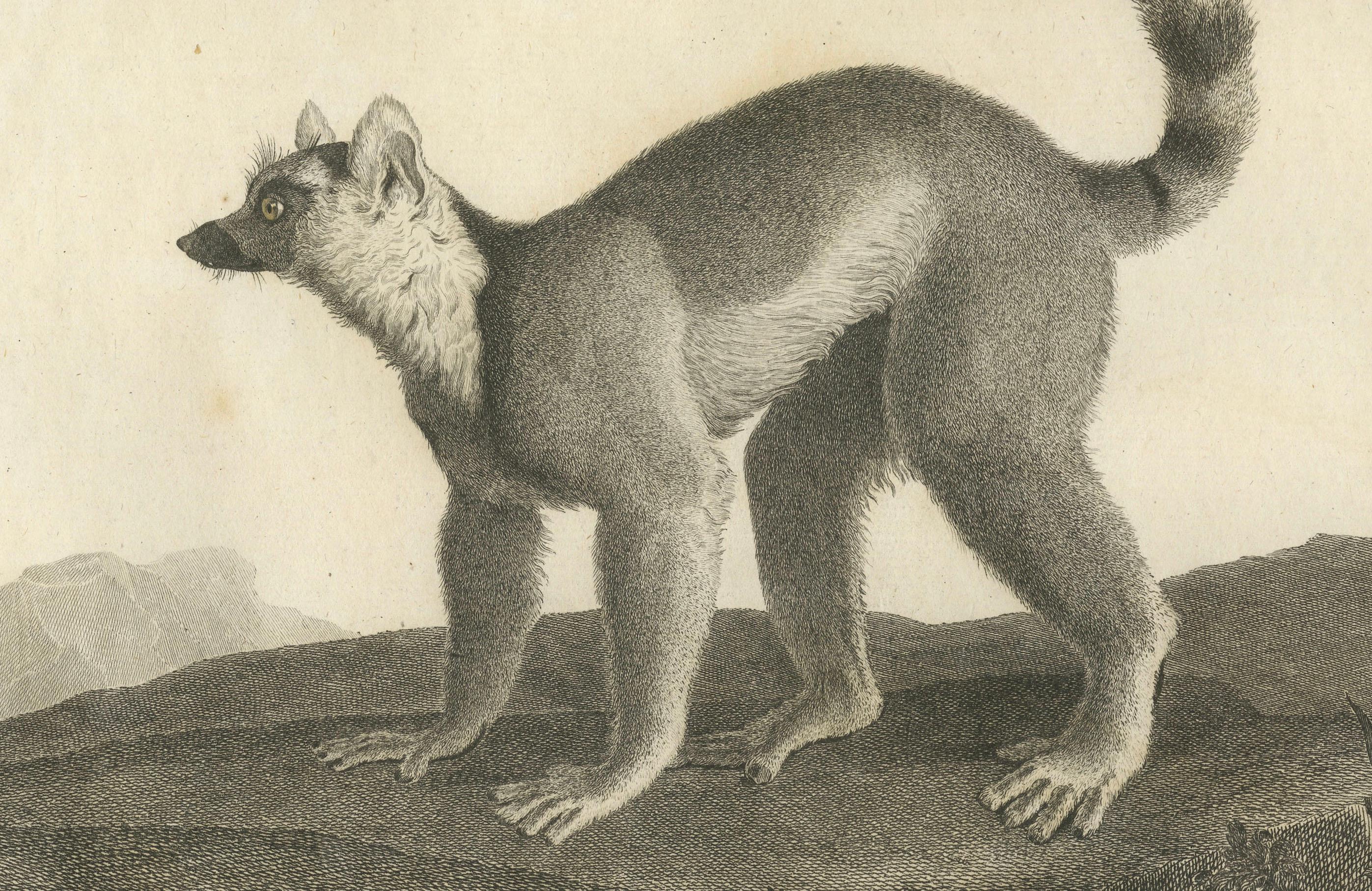
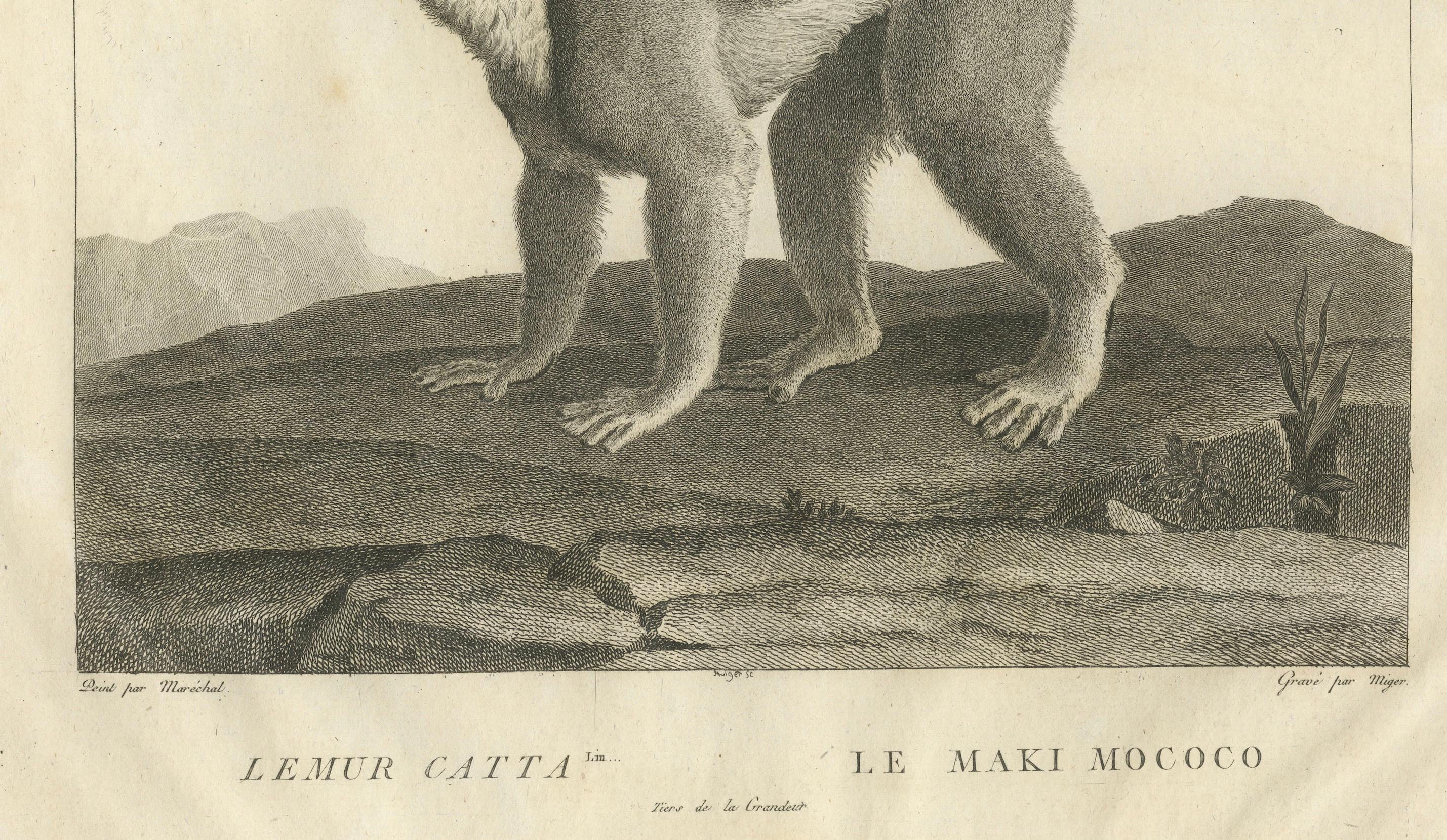
This engraving titled *Lemur Catta - Le Maki Mococo* depicts the ring-tailed lemur, native to Madagascar.
It was drawn by the artist Nicolas Maréchal and engraved by S.C. Miger, who was well-known for his zoological illustrations in the early 19th century. The ring-tailed lemur is famous for its distinctive striped tail, as highlighted in the engraving. The print likely originated from a larger natural history collection aimed at studying and documenting various species, reflecting the growing interest in wildlife and exploration during this period.
The *Lemur Catta*, commonly known as the ring-tailed lemur, is native to the island of Madagascar. It is one of the most recognizable lemur species due to its distinctive long, bushy tail with alternating black and white rings. These lemurs are highly social and live in matriarchal groups, relying on their keen sense of smell for communication. They are diurnal, meaning they are active during the day, and spend time both on the ground and in trees. Unfortunately, they are classified as endangered due to habitat loss and hunting.
Their distinctive tail is often used for communication and balance, particularly during group movements. In the wild, ring-tailed lemurs are primarily herbivores, feeding on fruits, leaves, and flowers, and are important for seed dispersal in their native habitats.