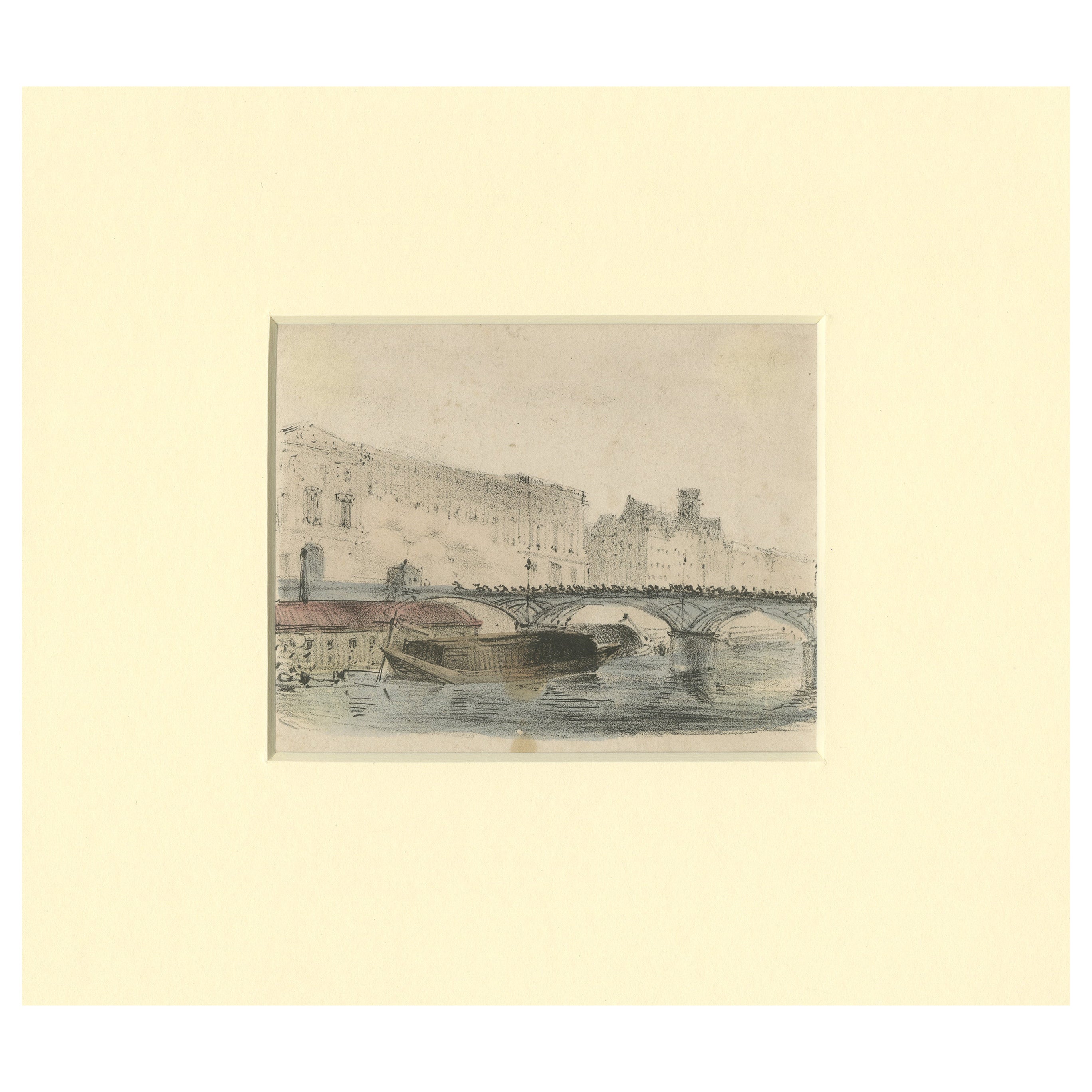
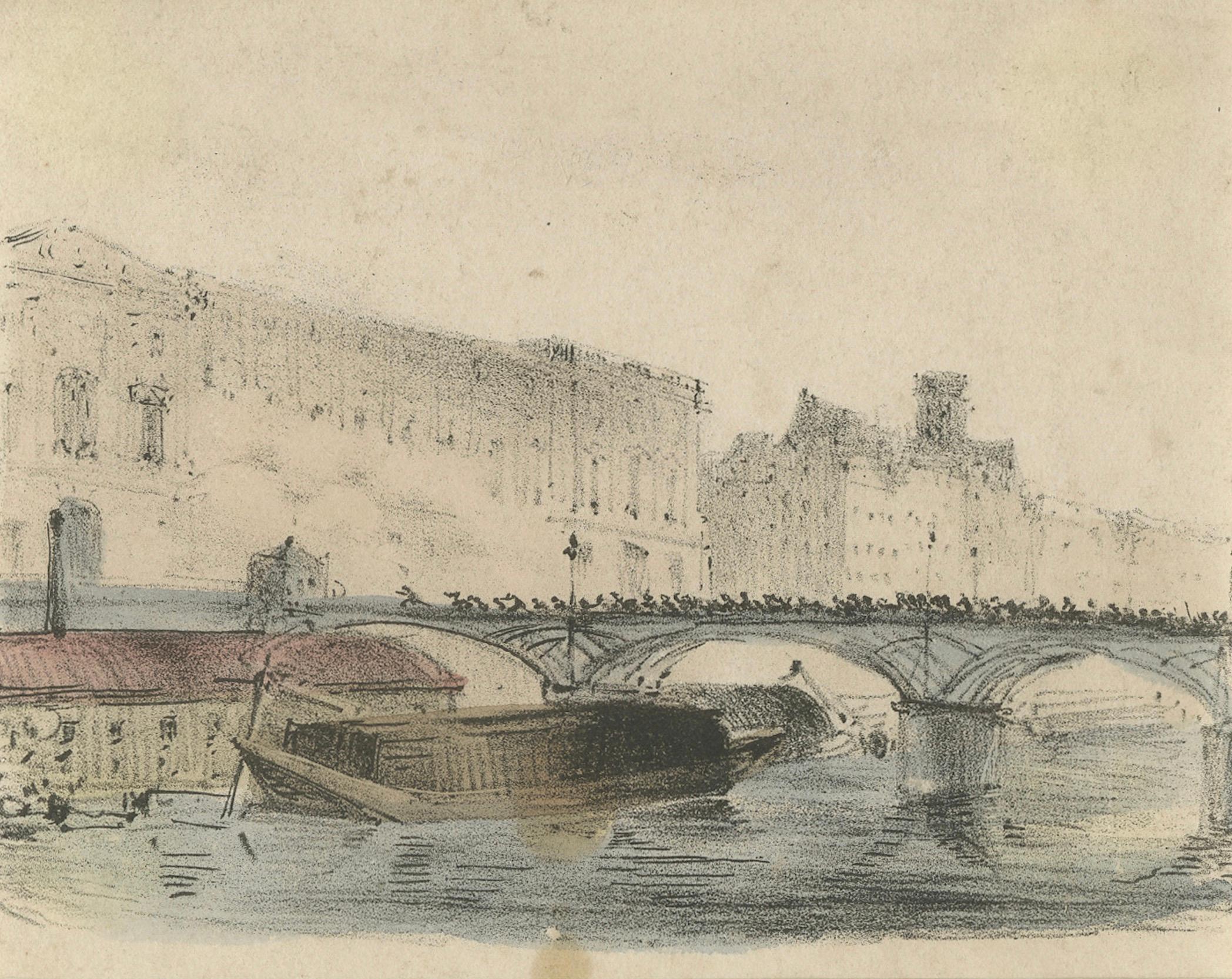
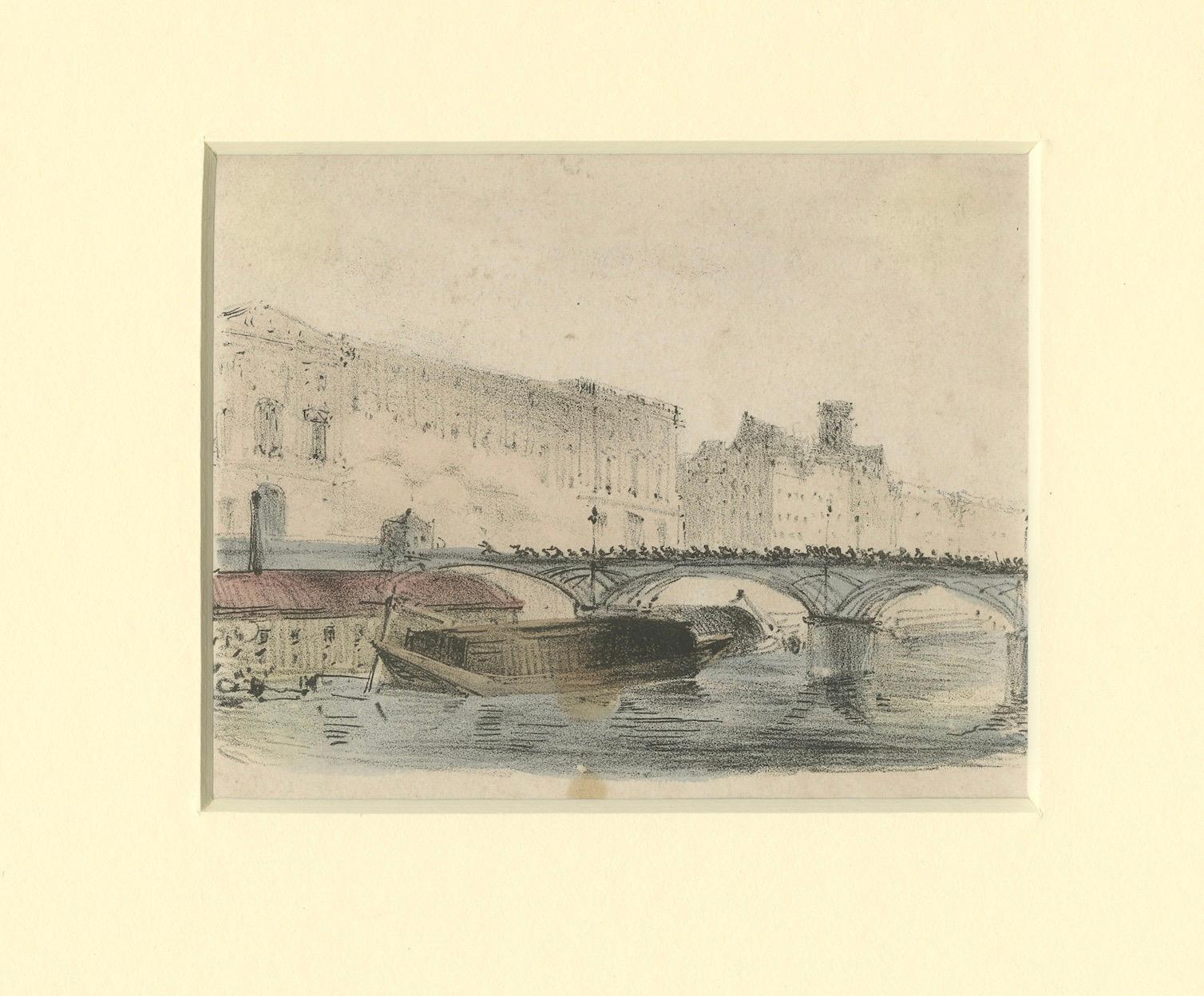
Le Pont des Arts – A 19th-Century Hand-Coloured View of Paris and the Seine
€ 110
One of a kind: this is the sheet in the photographs. Ships from Langweer, the Netherlands.
Sheet size
18 × 20 cm (7.1 × 7.9 in)
Condition
Good
Reference
BG-14035-3
Condition
The artwork is in good condition, though there is noticeable light toning and minor staining, particularly near the bottom. The lines and shading remain clear, and the matting enhances the presentation, making it suitable for framing or display.
About this sheet
The Pont des Arts, also known as the "Bridge of the Arts", is a historic pedestrian bridge in Paris that spans the River Seine. It connects the Institut de France on the left bank with the Louvre Palace on the right bank. Originally constructed between 1802 and 1804 under the reign of Napoleon Bonaparte, the bridge was the first iron bridge in Paris and became a cultural symbol for its elegant design and scenic views.
Over the years, it has been a favorite spot for artists, lovers, and tourists. Its significance as an artistic subject stems from its picturesque location and the panoramic view it offers of central Paris.
About the Artwork This artwork appears to be a 19th-century lithograph or watercolor print, depicting the Pont des Arts and the surrounding architecture along the Seine. The artist captures the bridge’s arches, the reflections in the water, and the activity on the riverbanks, creating a scene that feels both tranquil and dynamic.
While the specific artist and date are not immediately clear, it likely originates from the mid-to-late 19th century, a period when Paris and its landmarks were frequently illustrated in prints and drawings, particularly as the city underwent transformations during the Haussmann era. Artists such as Jean-Baptiste Camille Corot, Charles Meryon, and other printmakers of the time were known to create views of Paris, including bridges like the Pont des Arts.
Condition of the Artwork The artwork is in good condition, though there is noticeable light toning and minor staining, particularly near the bottom. The lines and shading remain clear, and the matting enhances the presentation, making it suitable for framing or display.
This piece not only celebrates the Pont des Arts as a symbol of Parisian elegance but also serves as a fine representation of 19th-century urban landscape art.