About this sheet
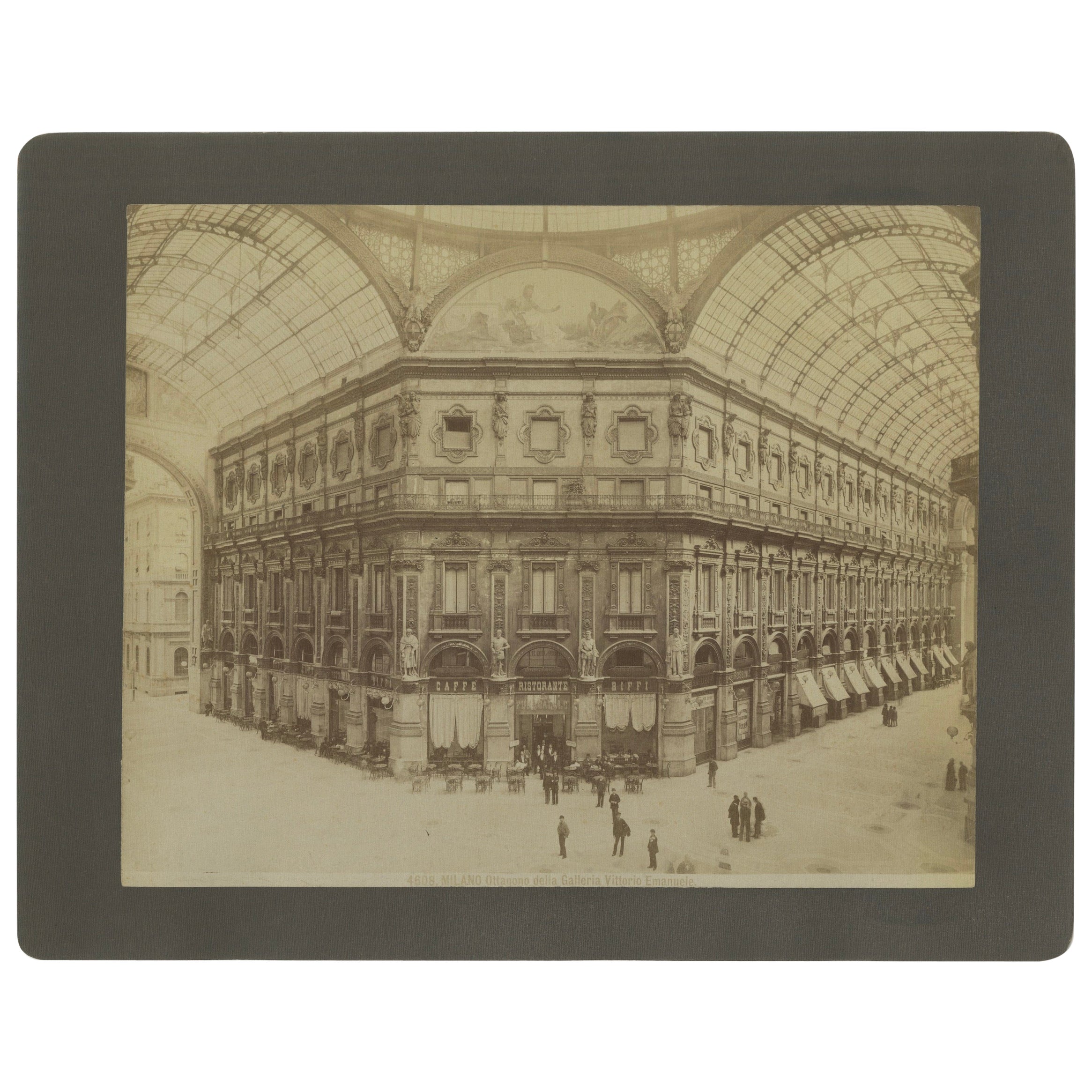
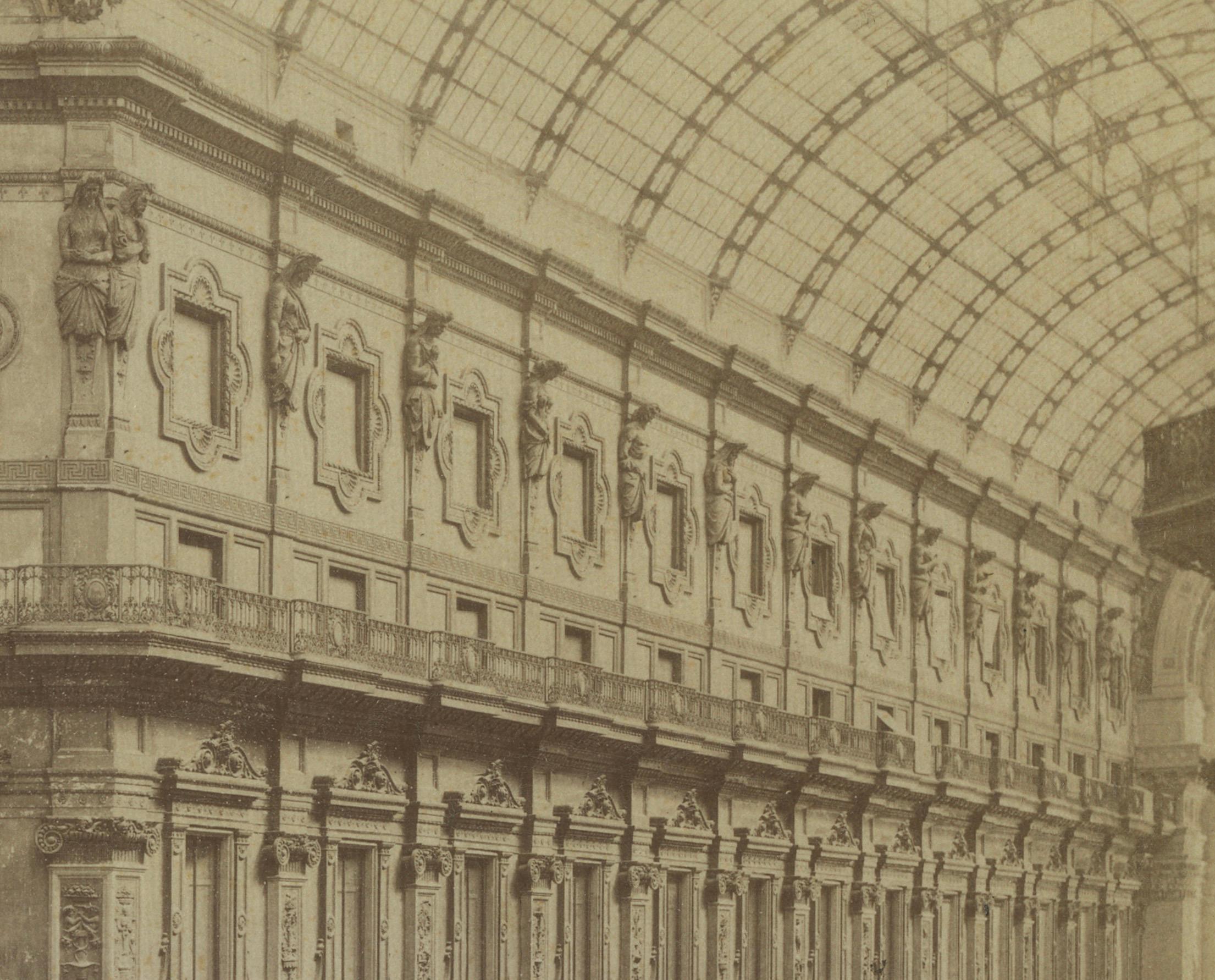
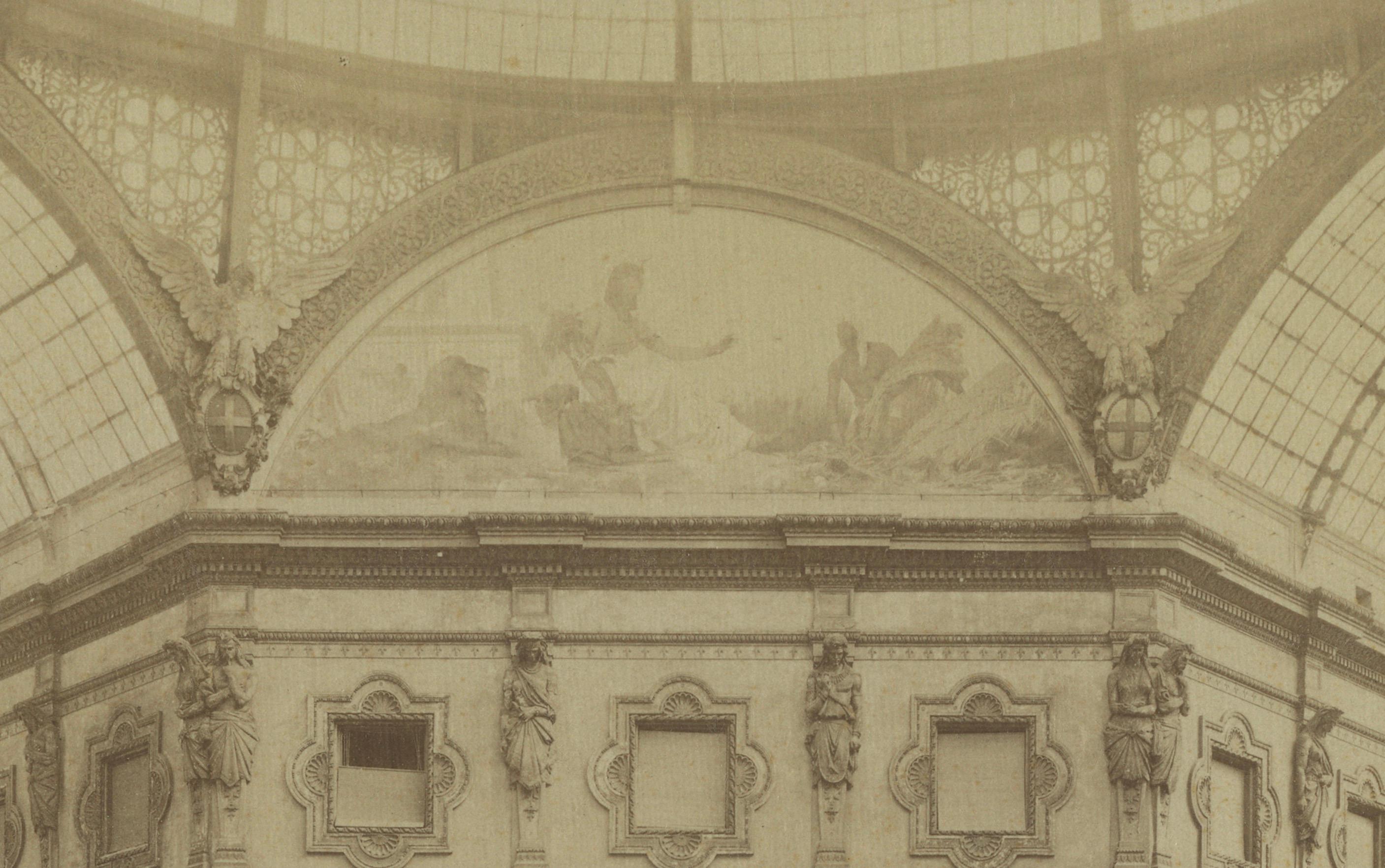
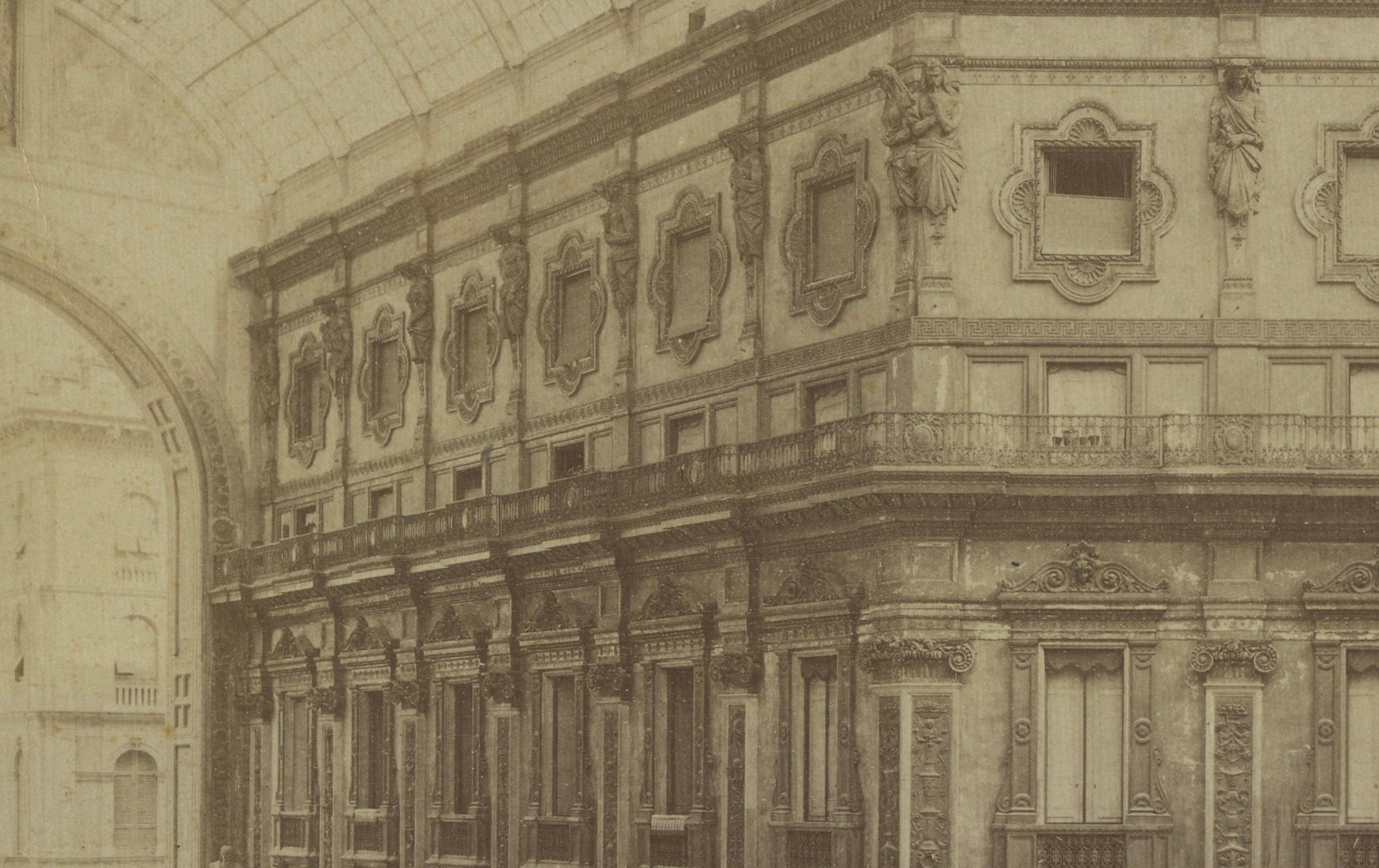
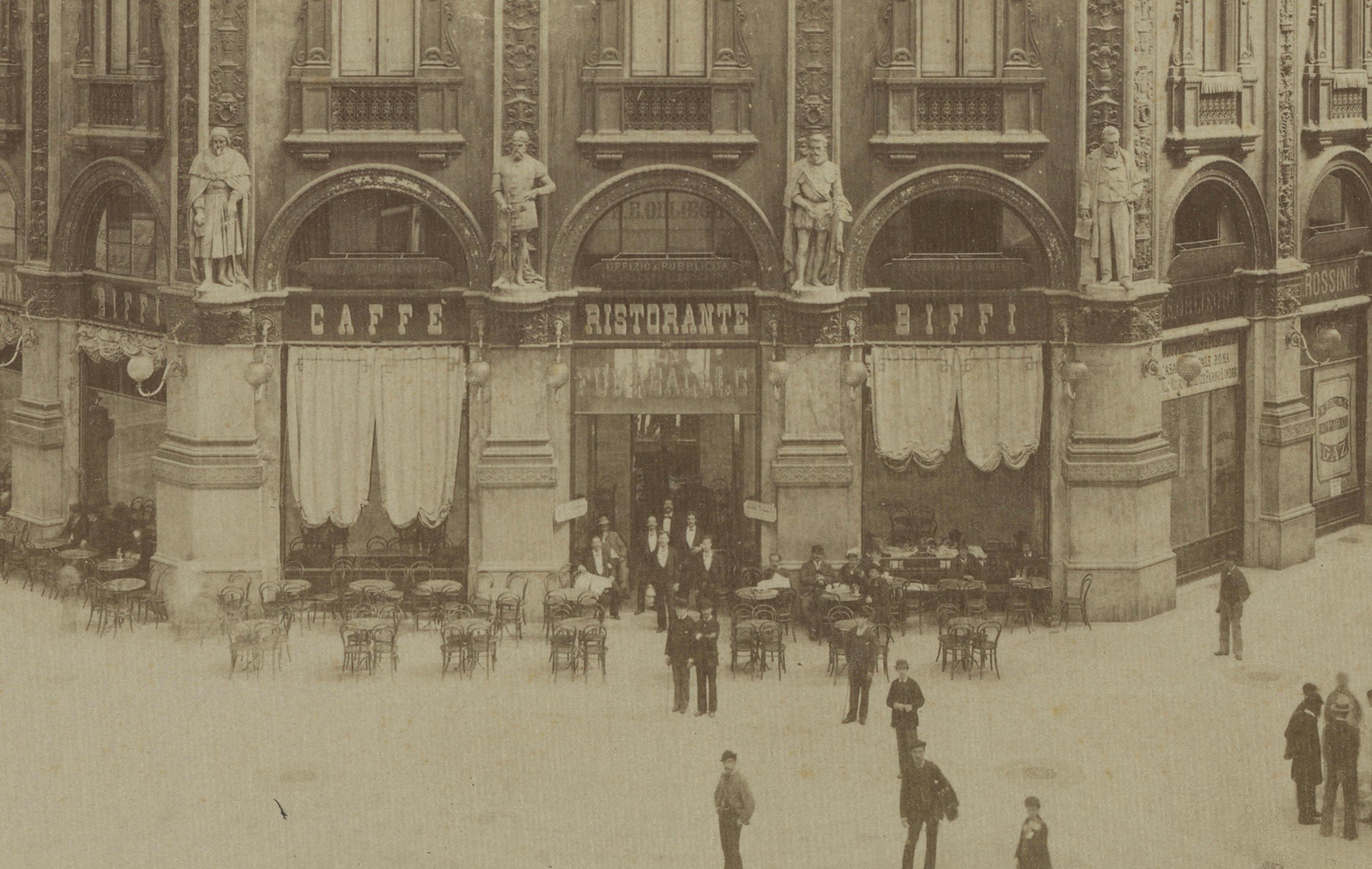
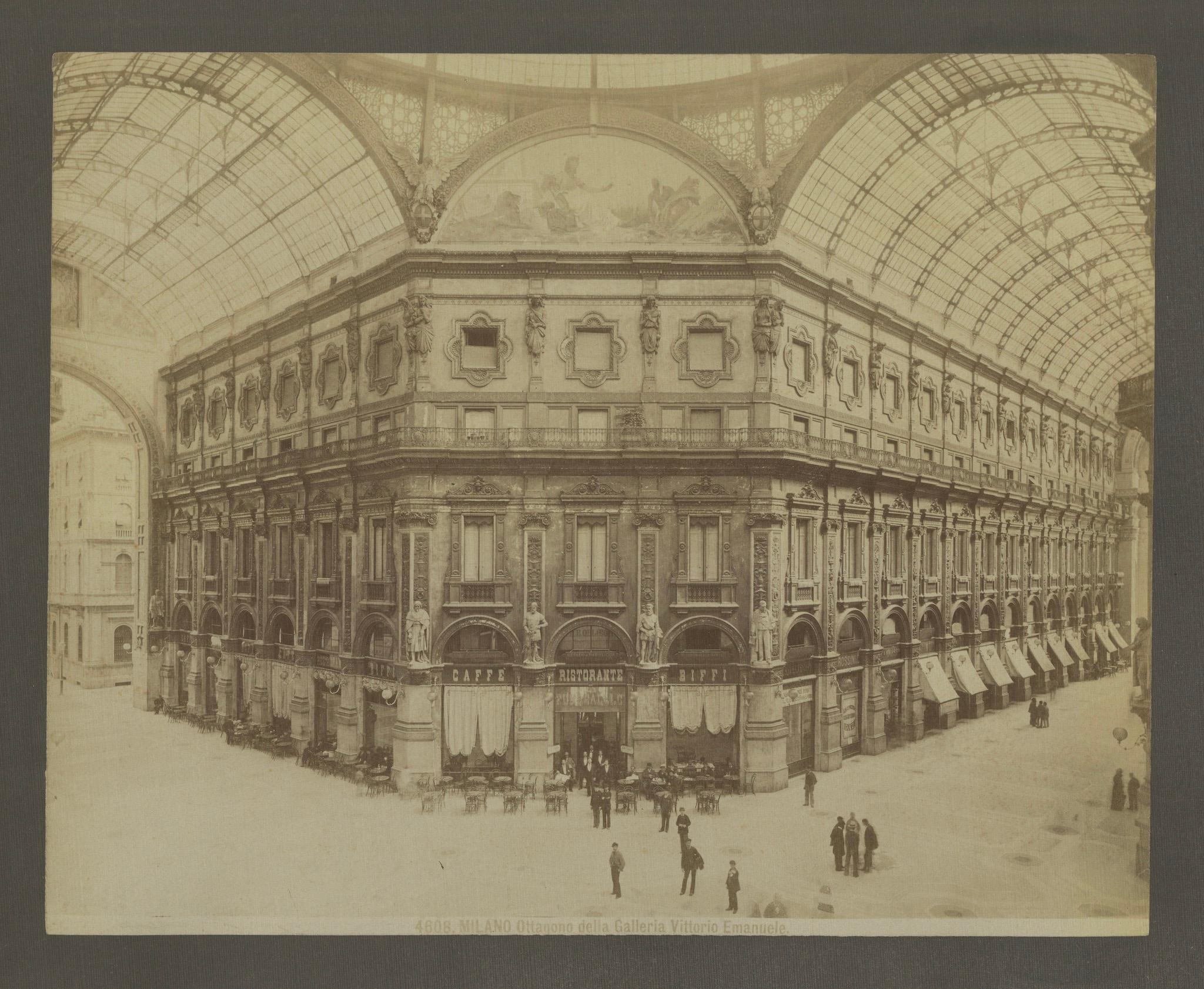
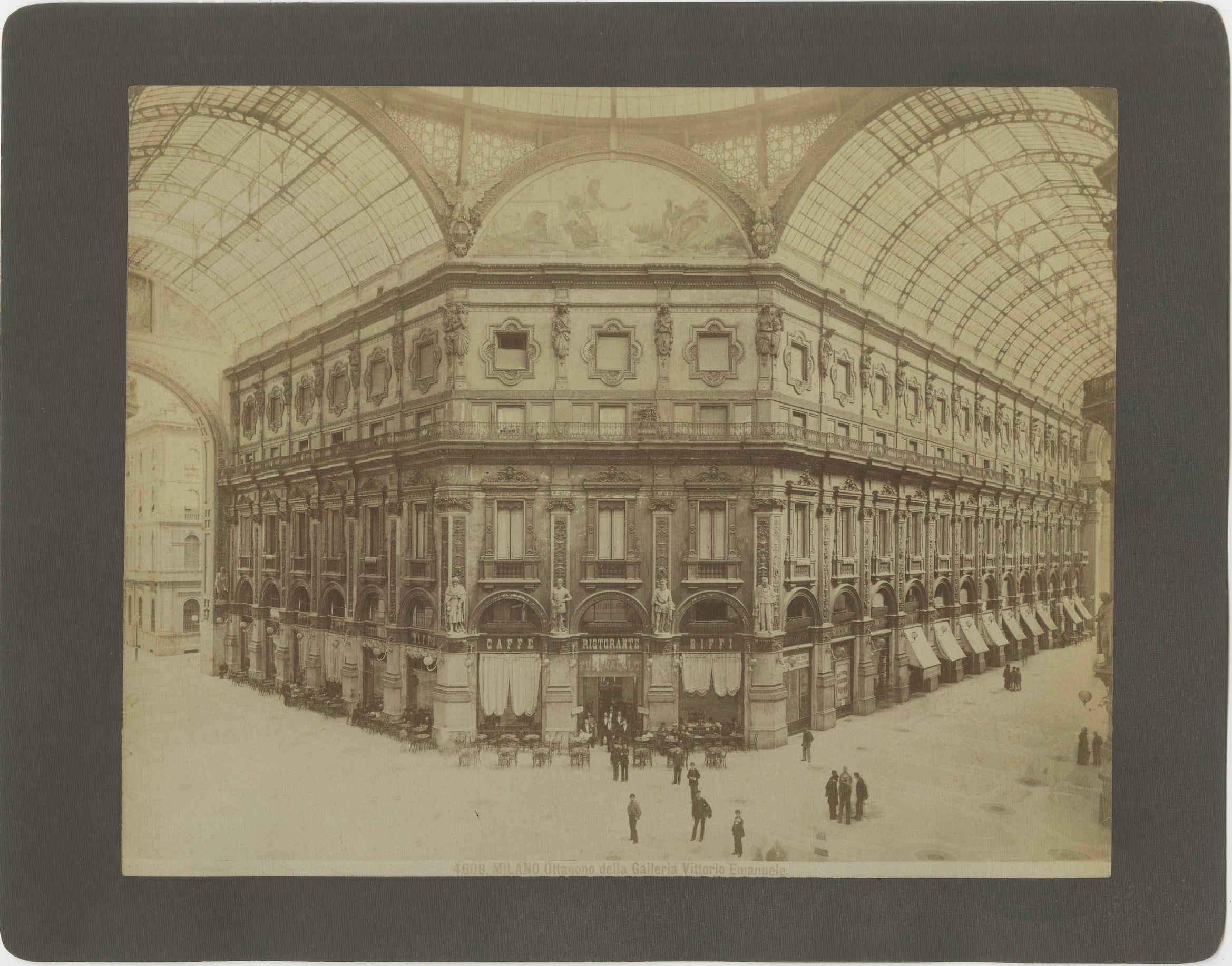
This photograph shows the Galleria Vittorio Emanuele II in Milan, Italy, one of the world’s oldest shopping malls and a prime example of 19th-century architectural grandeur. The view captured focuses on the octagonal center of the Galleria, with its iron-and-glass vaulted roof and elegant neoclassical facades housing cafes and shops.
The photo, labeled "4608. MILANO Ottagono della Galleria Vittorio Emanuele," was likely taken by Edizioni Brogi or a contemporary Milanese photographer.
Condition: The photo is mounted on a dark backing and is well-preserved, with some minor aging typical of photographs from this period. The sepia tones remain consistent, and there is good detail in both the building facades and the people in the plaza below. There is minimal fading, and the edges of the photograph and backing show only slight wear, typical for historical prints.
The photograph is an albumen print photography, a popular technique used from the mid-19th century until the early 20th century, particularly in the production of landscape and architectural images.
Key Aspects of the Albumen Print Process:
1. Process: Albumen prints were made by coating paper with a mixture of egg whites (albumen) and a salt solution, which would form a glossy surface. The paper was then sensitized with silver nitrate, making it light-sensitive.
2. Exposure: The sensitized paper was placed in contact with a glass negative (usually in large format for sharp detail), and exposed to sunlight. The exposure time could be long, depending on the light intensity, usually several minutes.
3. Development and Fixing: After exposure, the print was developed in a chemical solution and then fixed to remove unexposed silver salts. This would leave the image permanently on the paper.
4. Characteristics:
- Sepia Tone: Albumen prints often have a warm, sepia tone, which matches the slight yellowing visible in this photograph.
- Glossy Finish: The egg white coating gives these prints a smooth and shiny finish.
- Detail: This process allowed for a high level of detail, which is evident in the buildings in this photo.
Likely Timeframe:
The albumen process was widely used between the 1850s and 1890s, and continued somewhat into the early 20th century.
Other early photographic techniques like gelatin silver prints became more popular after 1900.
The Galleria Vittorio Emanuele II still exists and is one of Milan's most famous landmarks. It was completed in 1877 and remains a vibrant part of the city, serving as a major shopping arcade and tourist attraction. Located between Piazza del Duomo and Piazza della Scala, the Galleria houses high-end stores, cafes, and restaurants, and is renowned for its stunning architecture, including its iconic iron-and-glass roof and mosaic floors.
Today, it is considered a symbol of Milan’s elegance and a prime example of 19th-century architecture in Italy. The Galleria continues to be a hub of cultural and social activity, drawing both locals and international visitors.