About this sheet
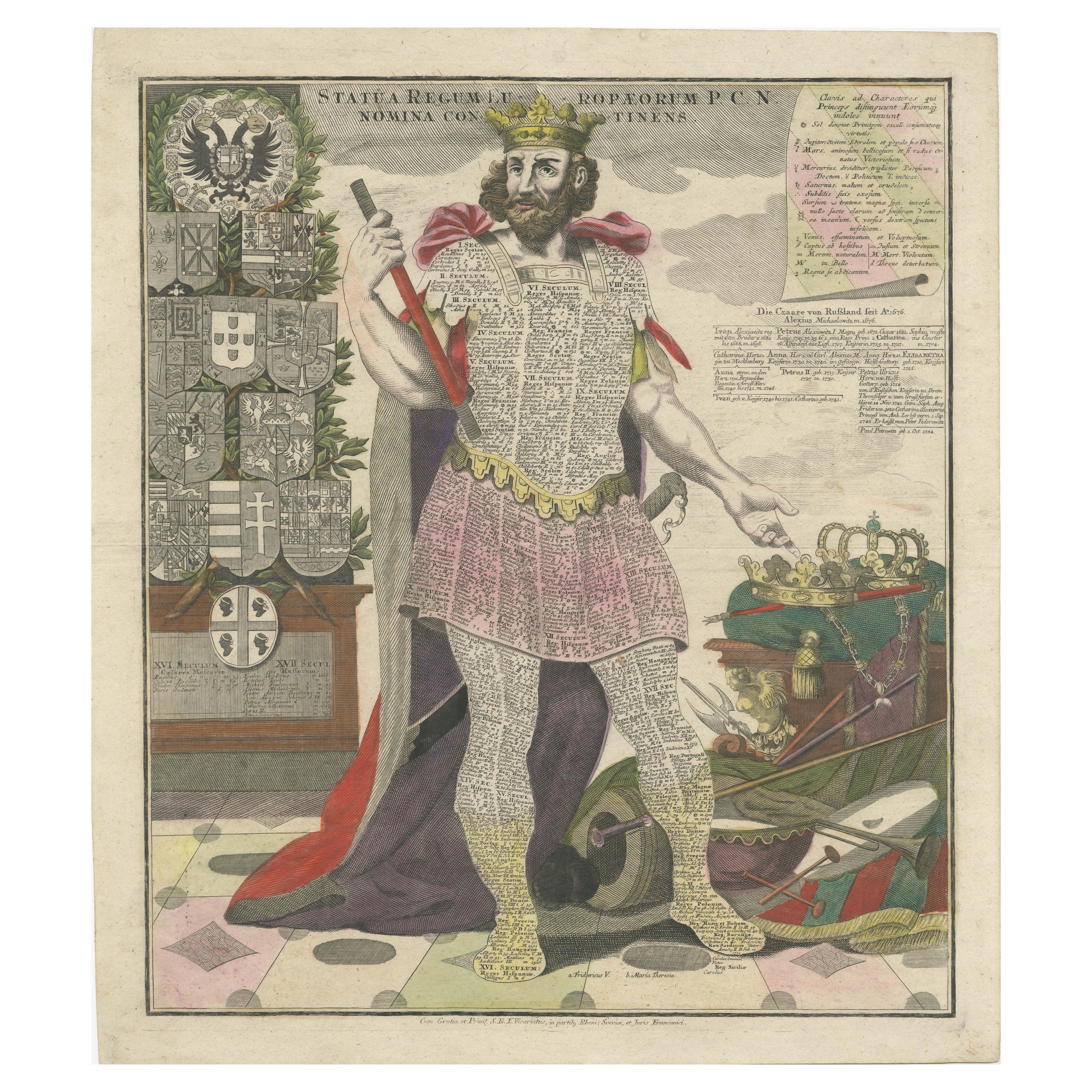
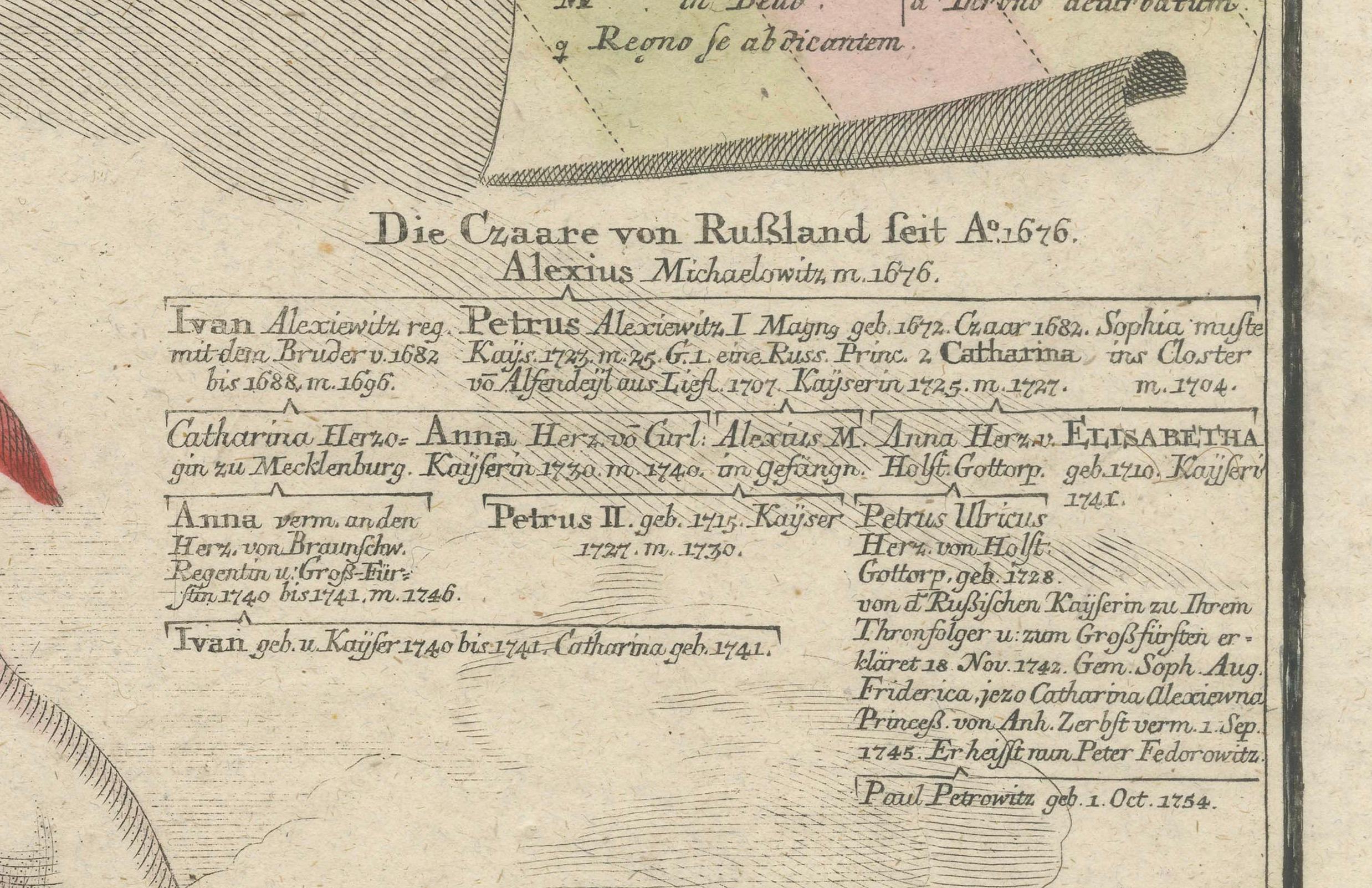
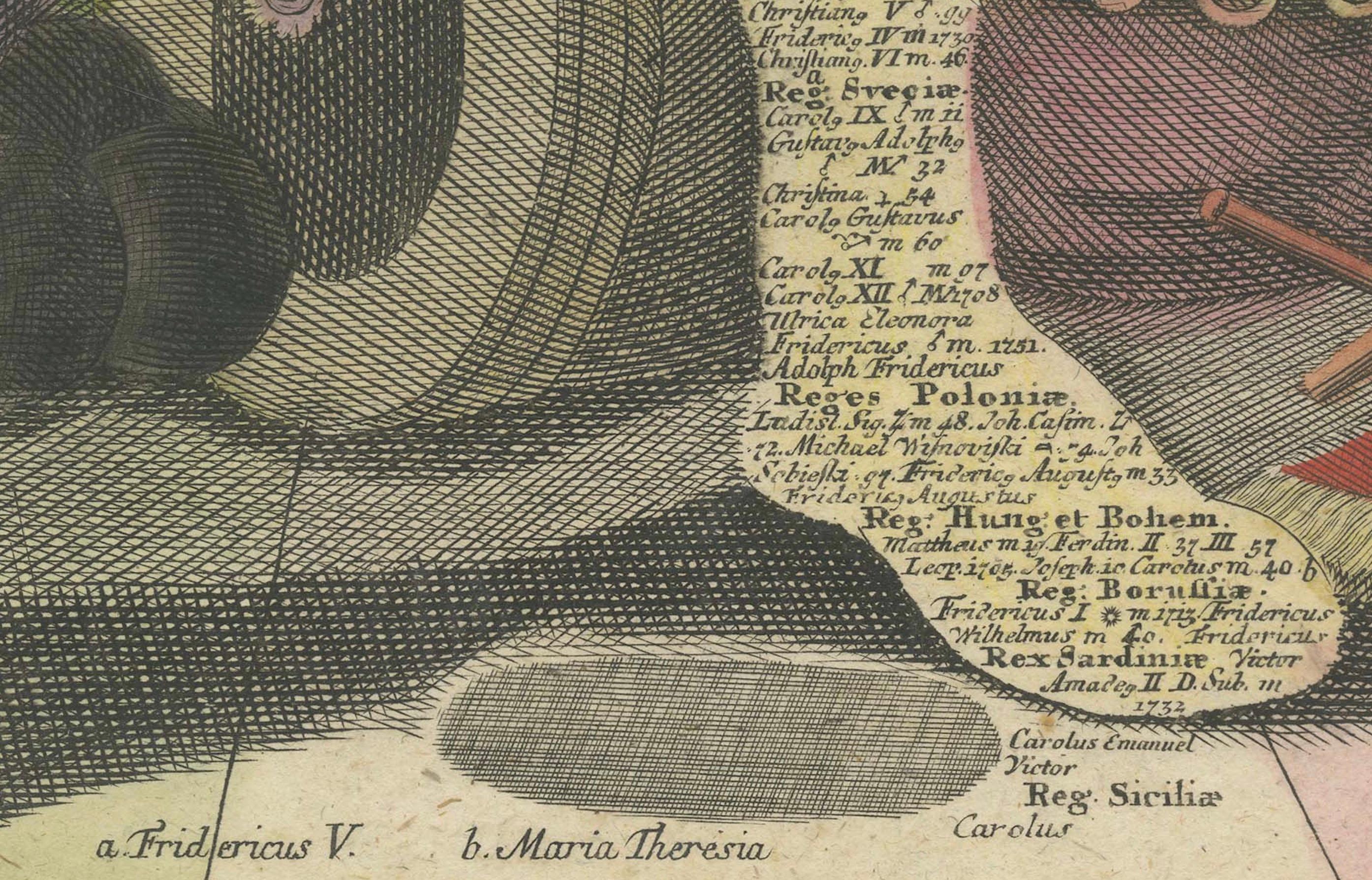
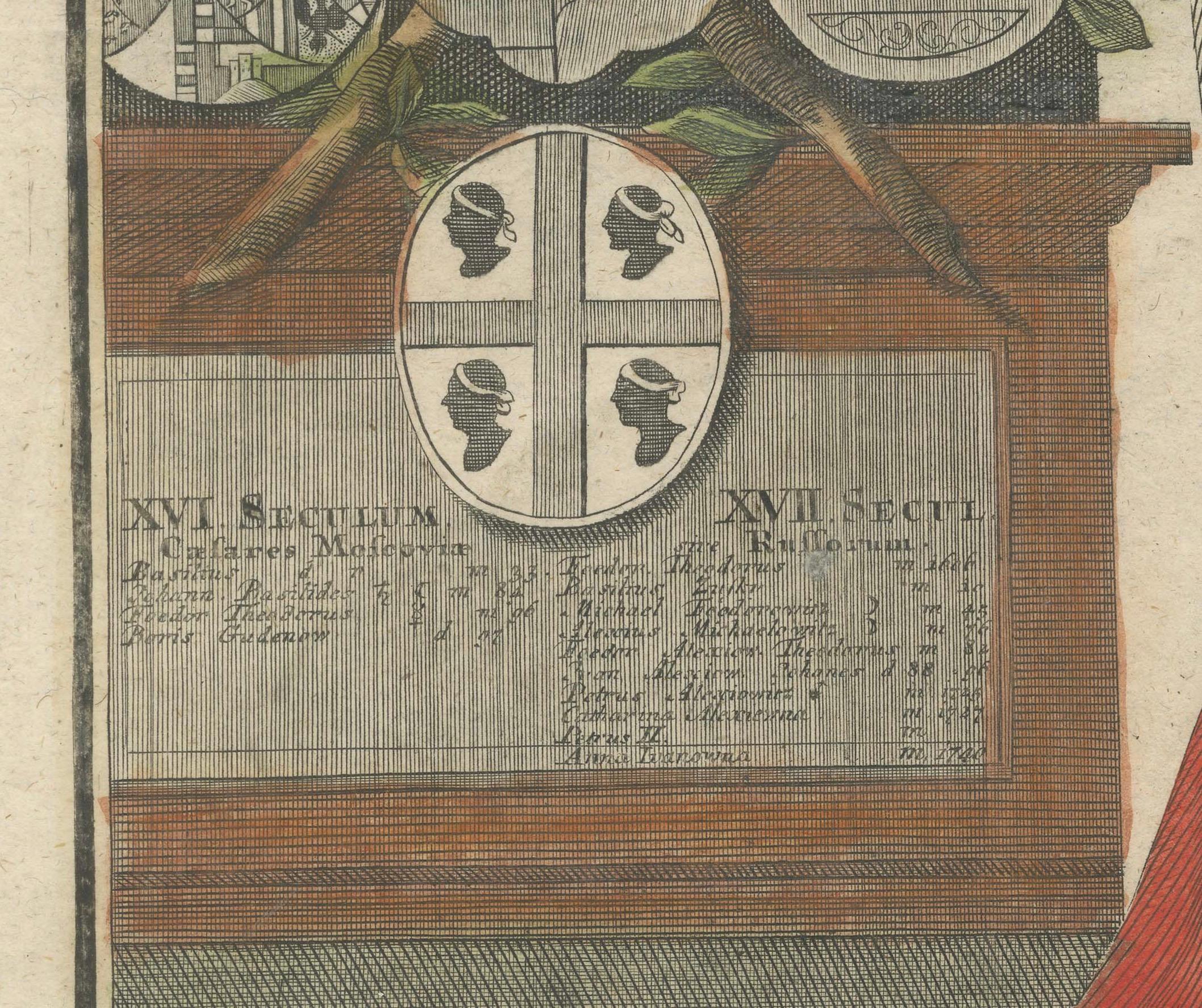
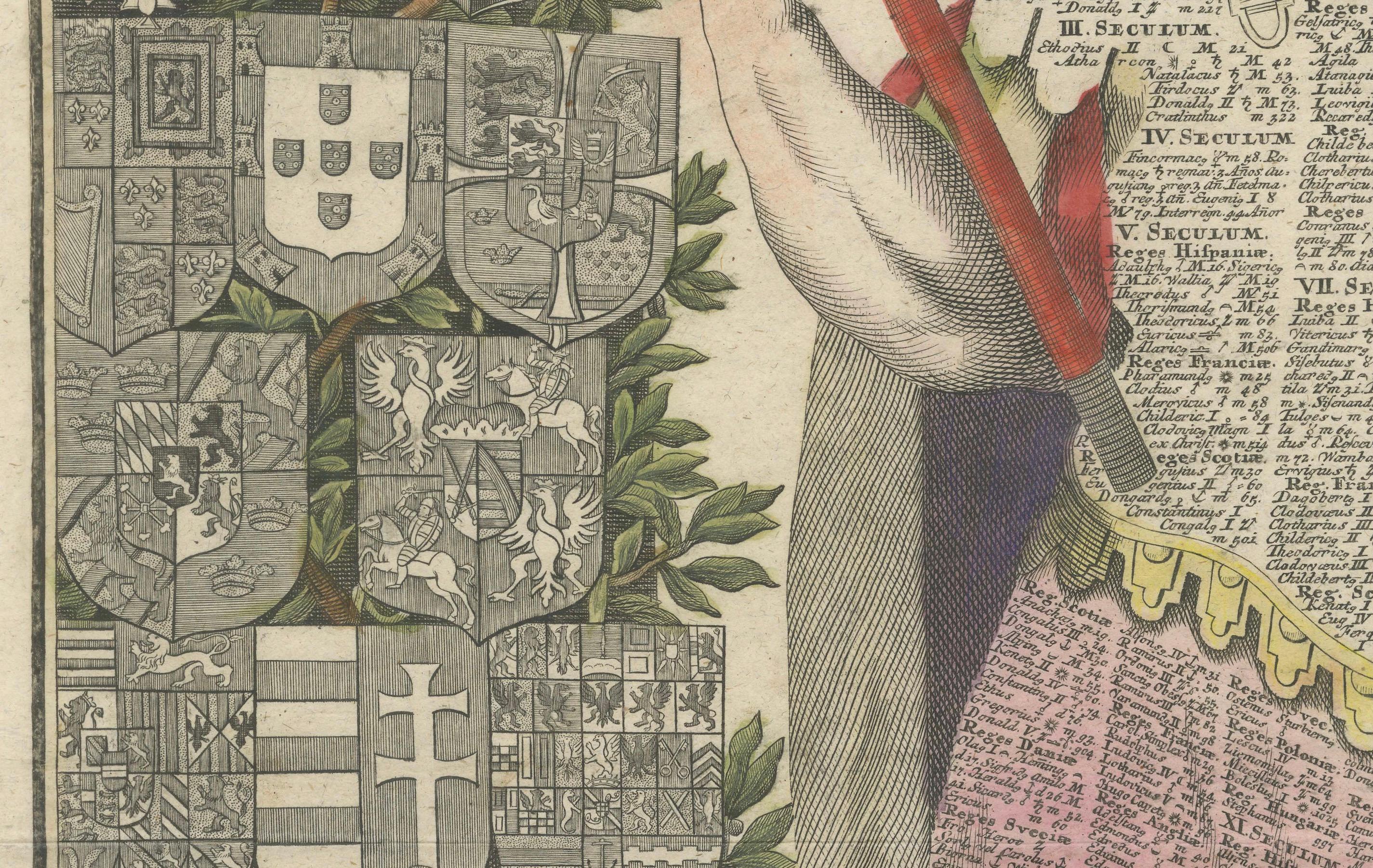
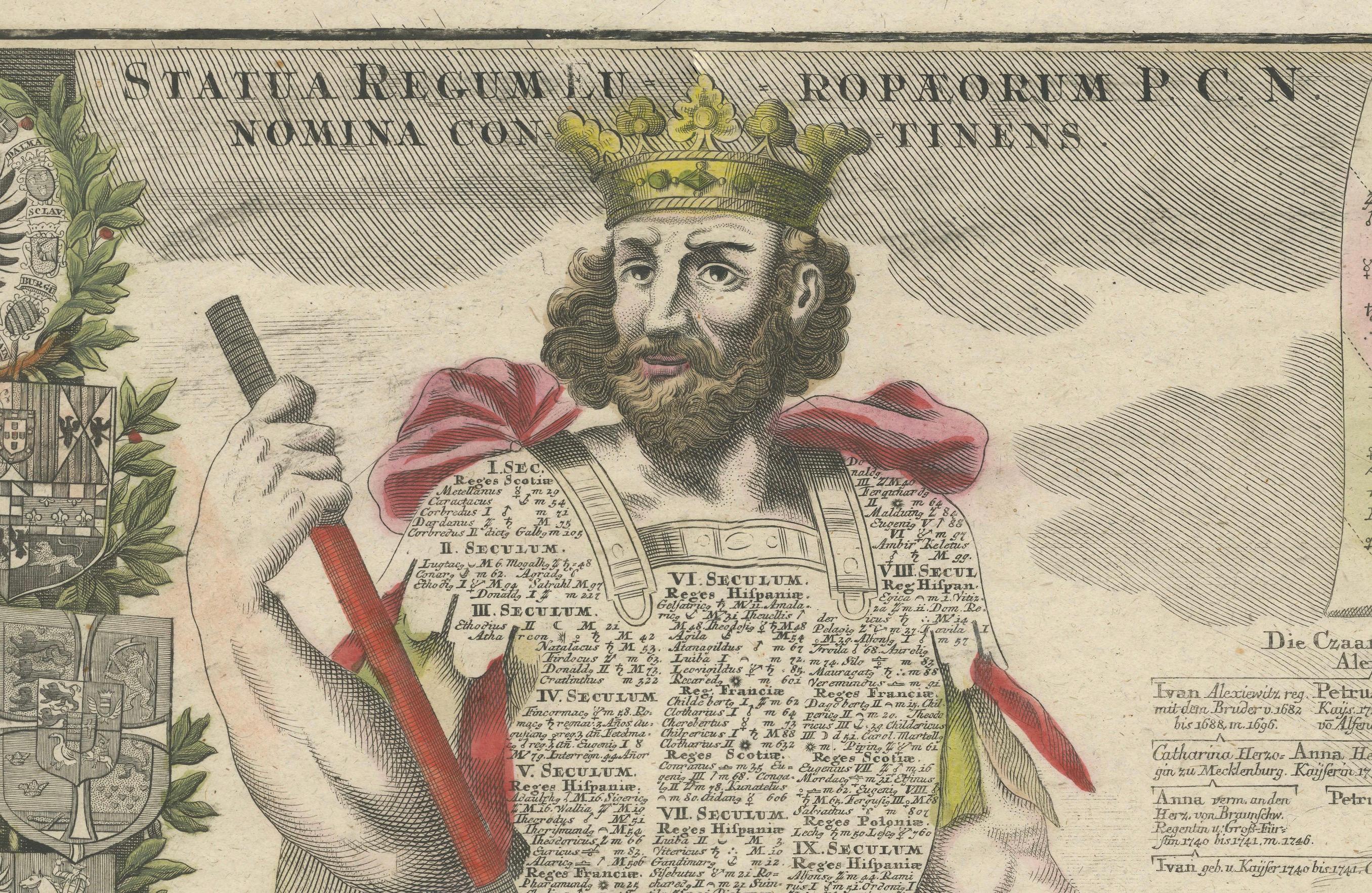
This intricately detailed 18th-century engraving, *Statua Regum et Ropotorum P.C.N.*, offers a fascinating visualization of European monarchies. The central figure, dressed as a king in armor, symbolizes the unity and power of European sovereigns. The inscriptions on the armor detail the names and titles of rulers, providing a chronological and territorial history of monarchies across Europe.
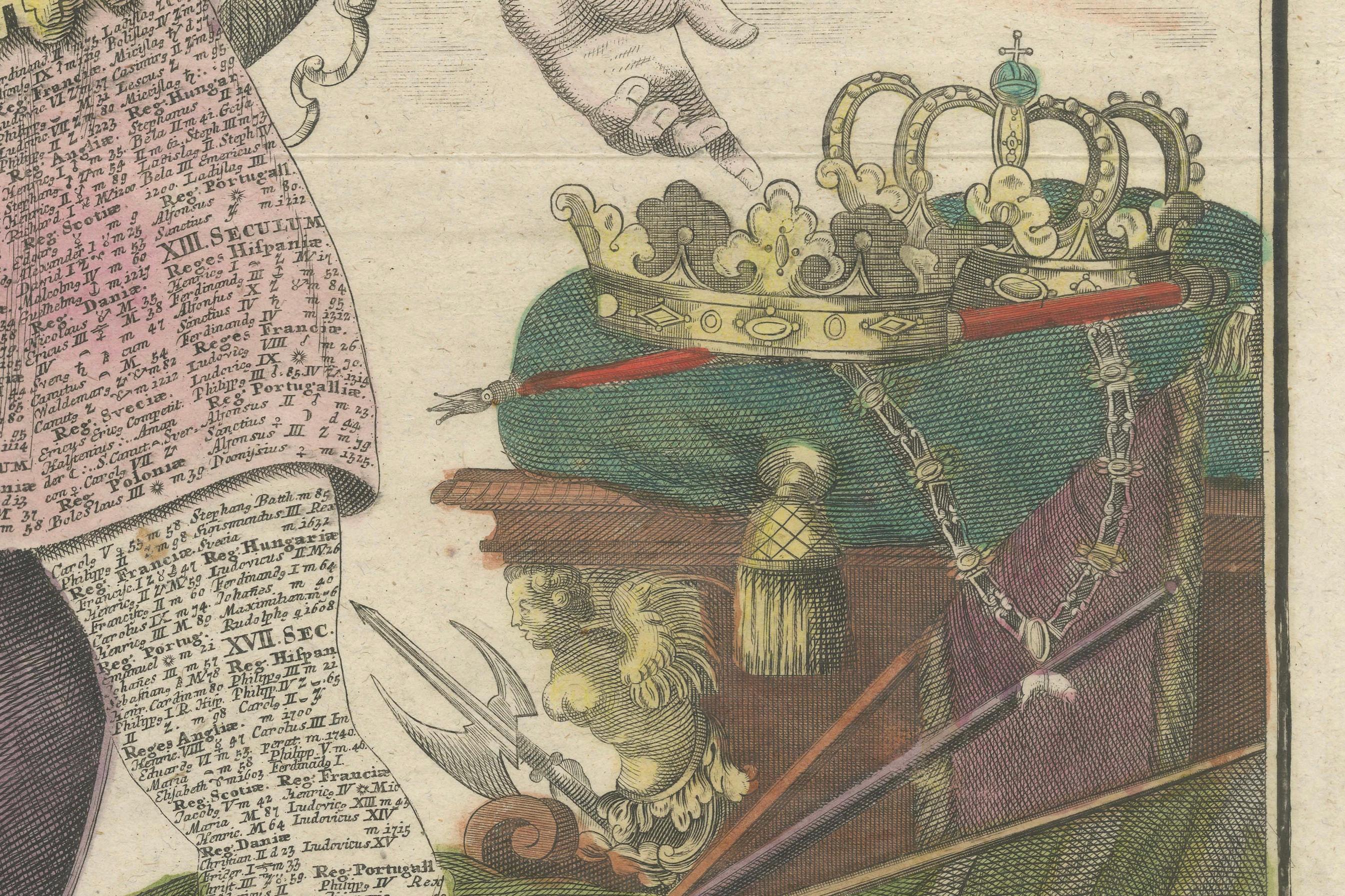
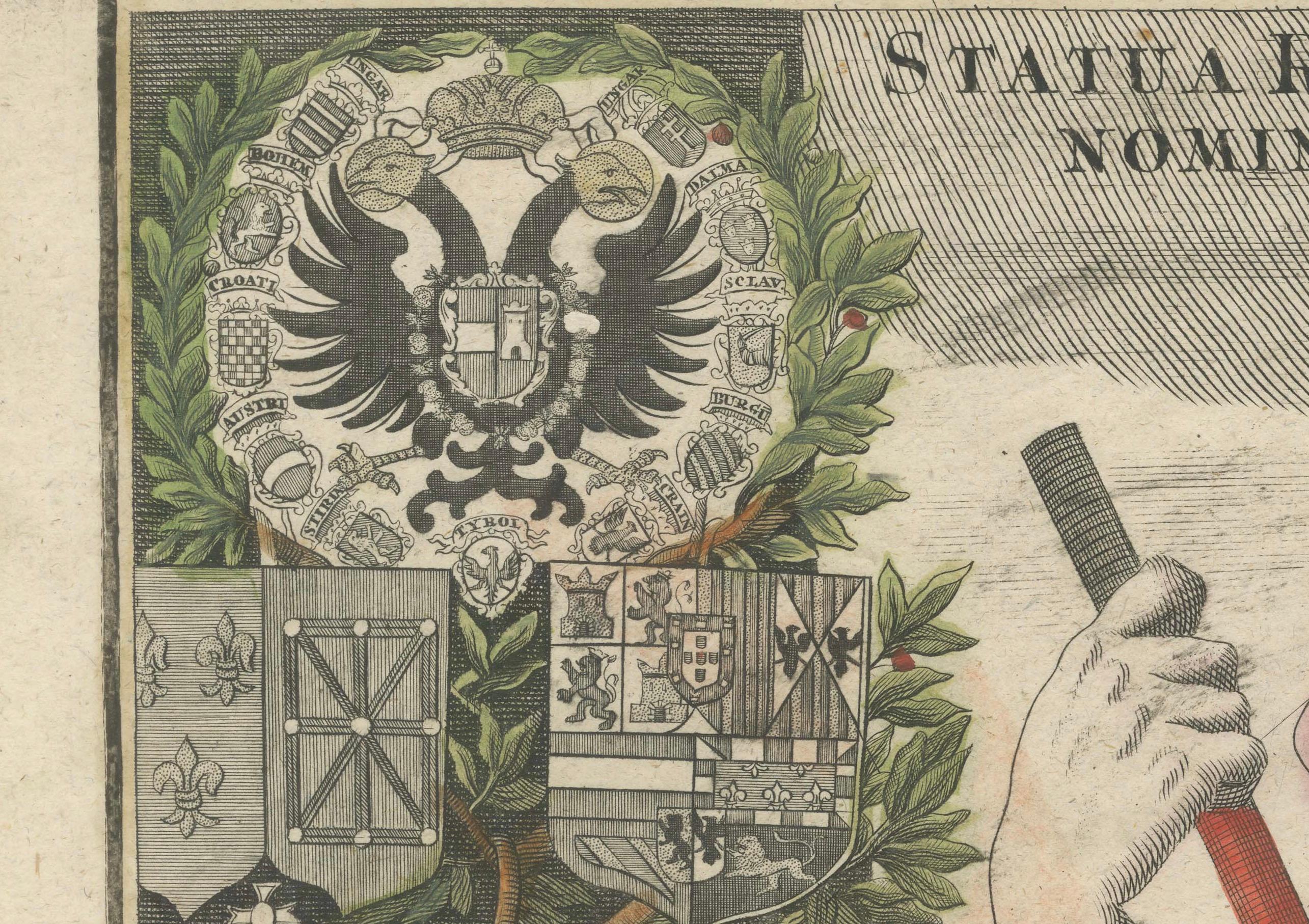
To the left, a heraldic tree showcases the coats of arms of various European kingdoms and noble houses, emphasizing their lineage and influence. On the right, symbols of royal power, such as crowns, scepters, and ceremonial weaponry, are depicted with artistic precision. A colorful legend in the upper right provides additional context for the various symbols and inscriptions.
This engraving was created using traditional copperplate techniques, known for their sharp detailing and intricate line work. The hand-coloring enhances the regal aesthetic, bringing life to the heraldry and royal attire. As both a decorative and historical piece, this print is a valuable artifact for collectors of European history, royal iconography, or Baroque prints.
About the artist: Matthäus Seutter (1678–1757) was a prominent German cartographer, engraver, and publisher based in Augsburg. He became one of the leading mapmakers of the 18th century, known for producing highly decorative and detailed maps, historical prints, and allegorical engravings.
Seutter initially trained as a brewer but later apprenticed under Johann Baptist Homann, a renowned mapmaker in Nuremberg. Homann's influence is evident in Seutter’s detailed and artistic style. After returning to Augsburg, Seutter established his own map publishing house, eventually rising to prominence. In 1727, he was awarded the title of Imperial Geographer by Emperor Charles VI, recognizing his significant contributions to cartography.
Seutter is best known for his Atlas Novus, published around 1730, which included over 400 maps and engravings. He also produced individual prints and thematic works, such as allegorical and historical engravings. His works often drew inspiration from earlier cartographers like the Homanns and Delisles, but he enhanced them with vibrant hand-coloring and elaborate decorative elements.
Seutter’s style is characterized by intricate engraving, detailed historical references, and ornate borders featuring coats of arms, allegorical scenes, and cartouches. His works are a blend of artistic beauty and informative content, appealing to collectors of both maps and historical prints.
After his death in 1757, Seutter’s business was continued by his son-in-law, Tobias Conrad Lotter, who became a renowned cartographer in his own right. Today, Seutter’s engravings are highly prized for their historical and artistic significance.
Condition: This piece is in very good condition, with vibrant hand-coloring and minimal signs of aging. Margins are clean and well-preserved.
Matting and Framing Tips: Use acid-free matting and UV-protective glass to ensure preservation. A gold-accented or dark wood frame complements its regal theme. Allow space between the print and glass to protect the artwork. Display in a stable environment, away from direct sunlight and humidity, to maintain its colors and condition.