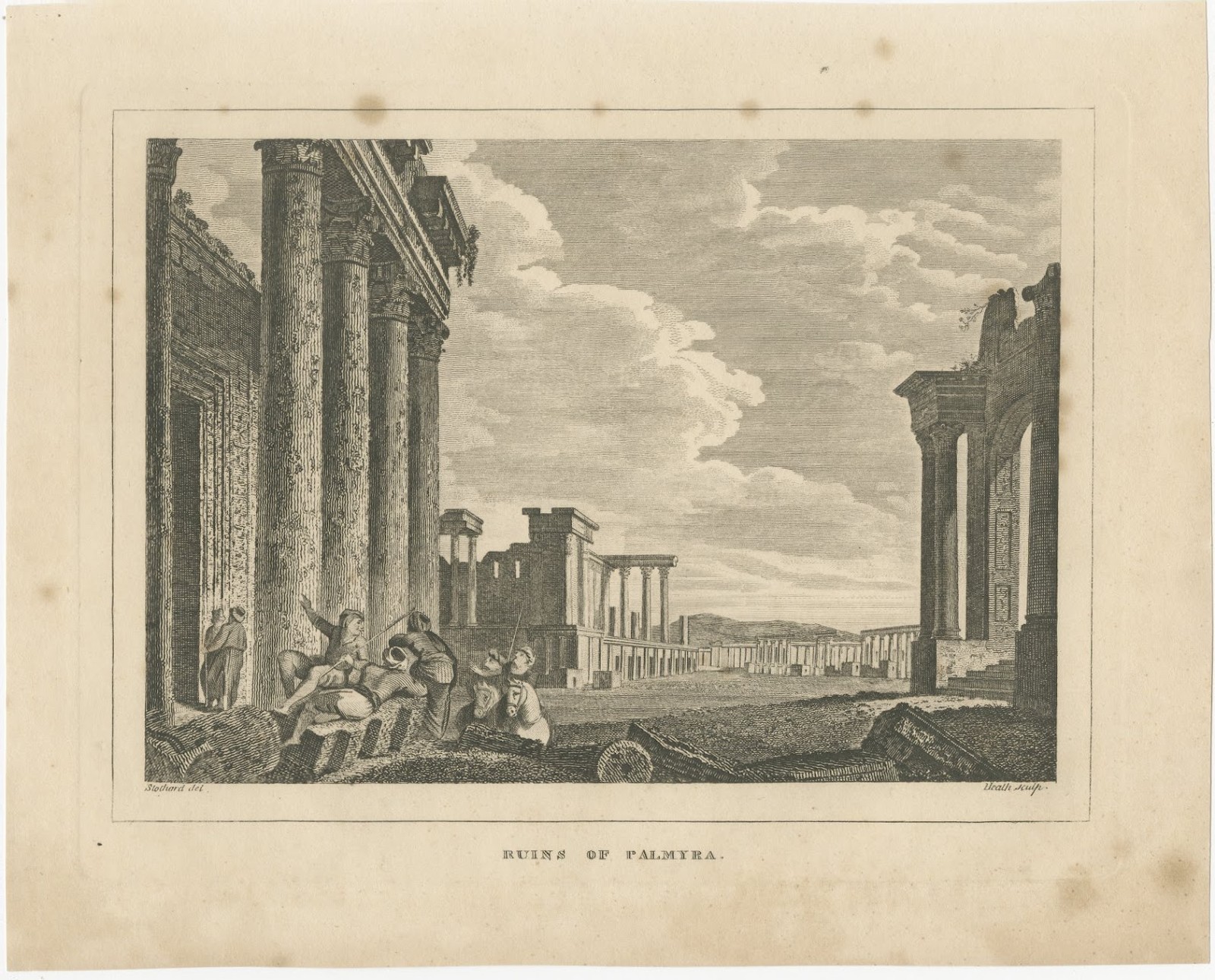
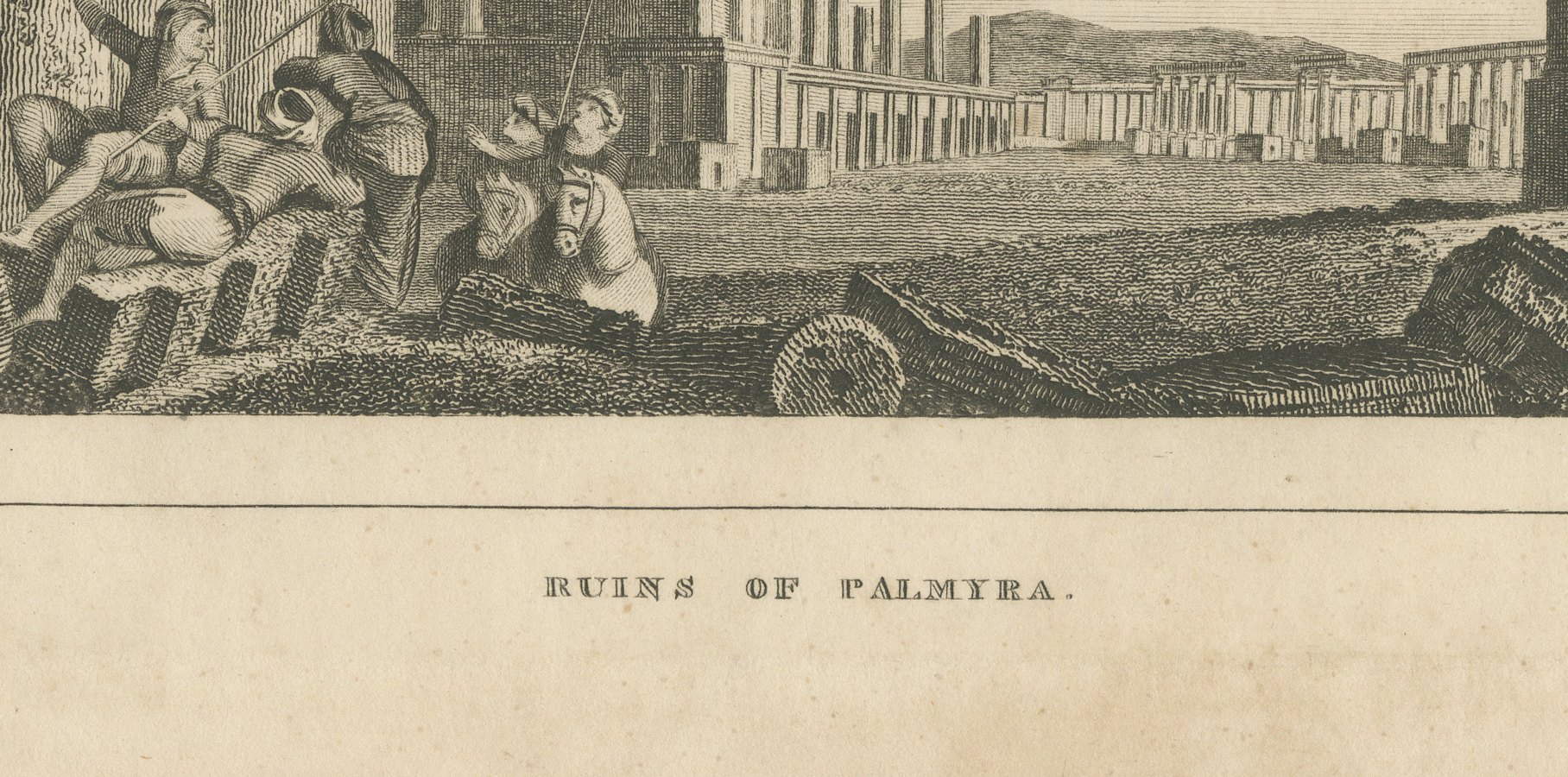
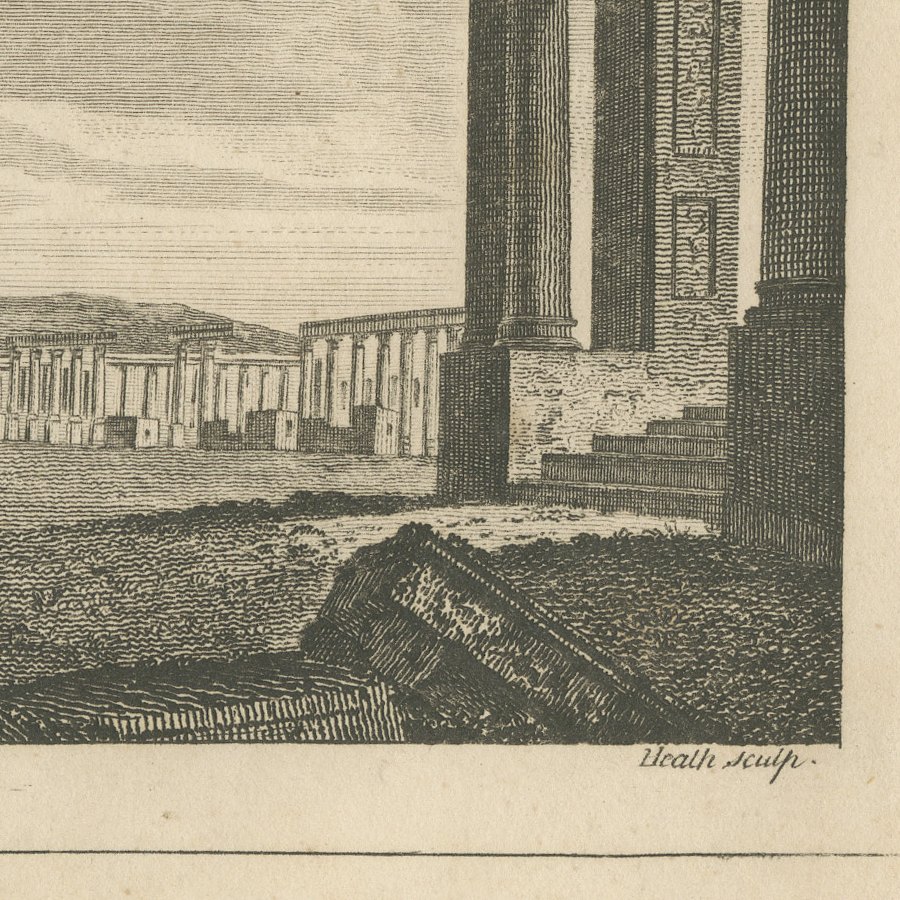
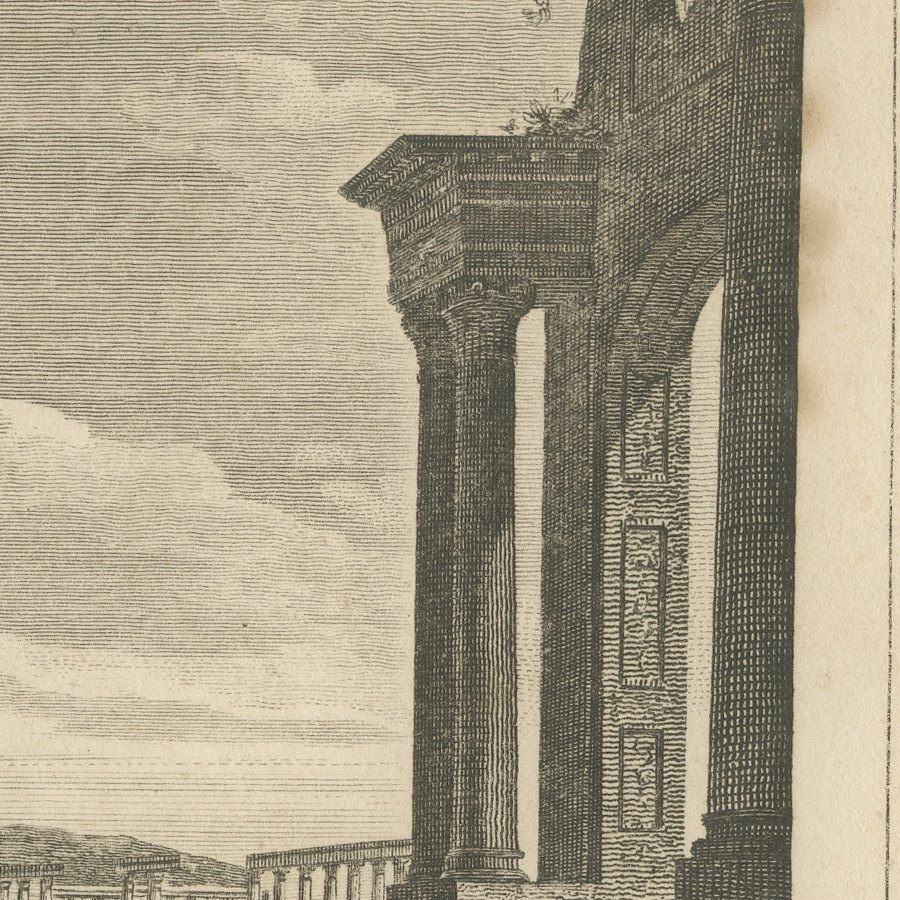
Ruins of Palmyra, Syria, Roman Colonnade, Engraving, after Stothard, circa 1820
€ 210
Original antique · The actual sheet photographed · Certificate of authenticity on request · Sold unframed · Worldwide shipping from € 15 (rates)
Date
circa 1820
Mapmaker / artist
Stothard (artist), Heath (engraver)
Publisher
No imprint
Technique
Line engraving
Colouring
Uncoloured
Condition
Good
Reference
BG-14391-38
Condition
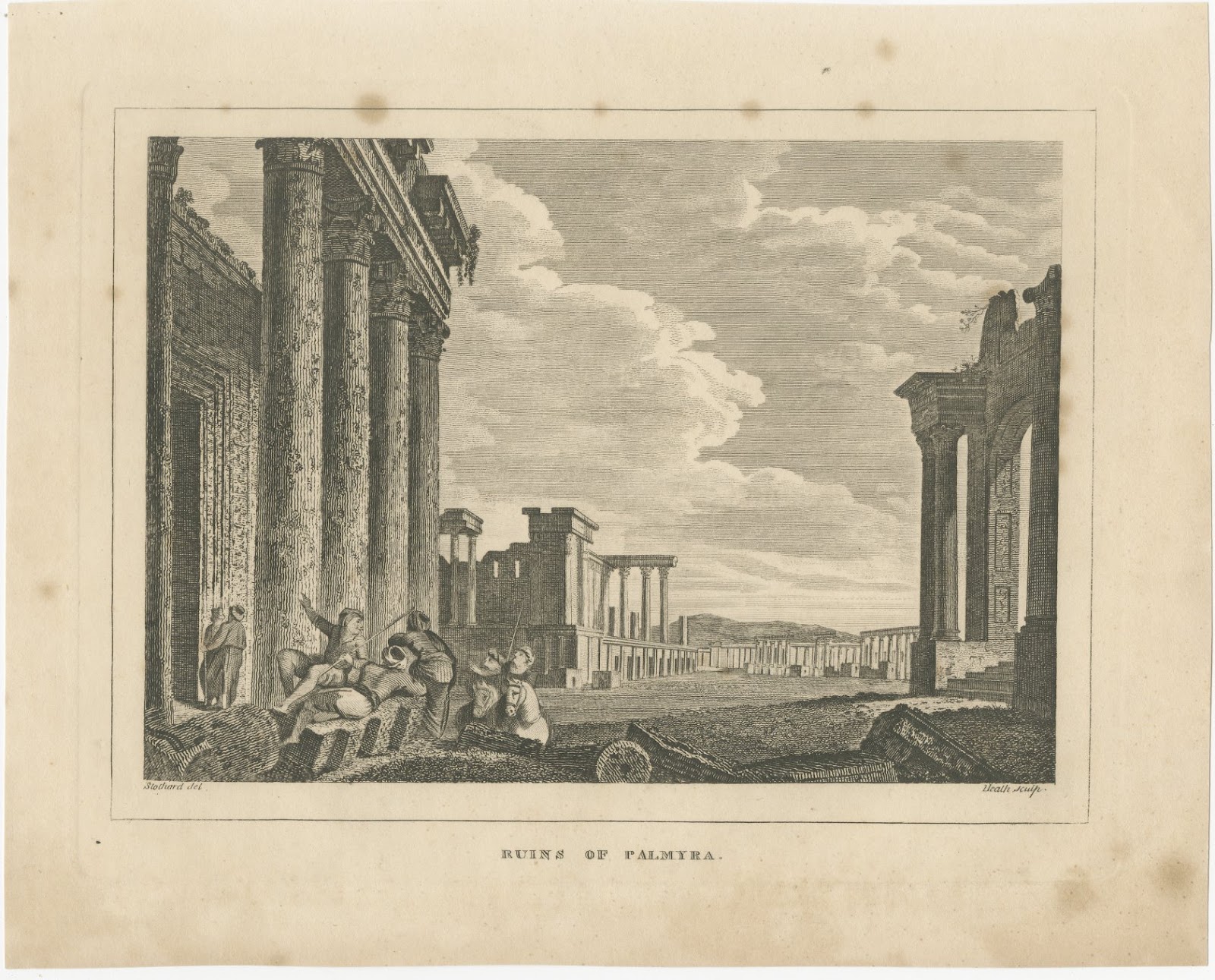
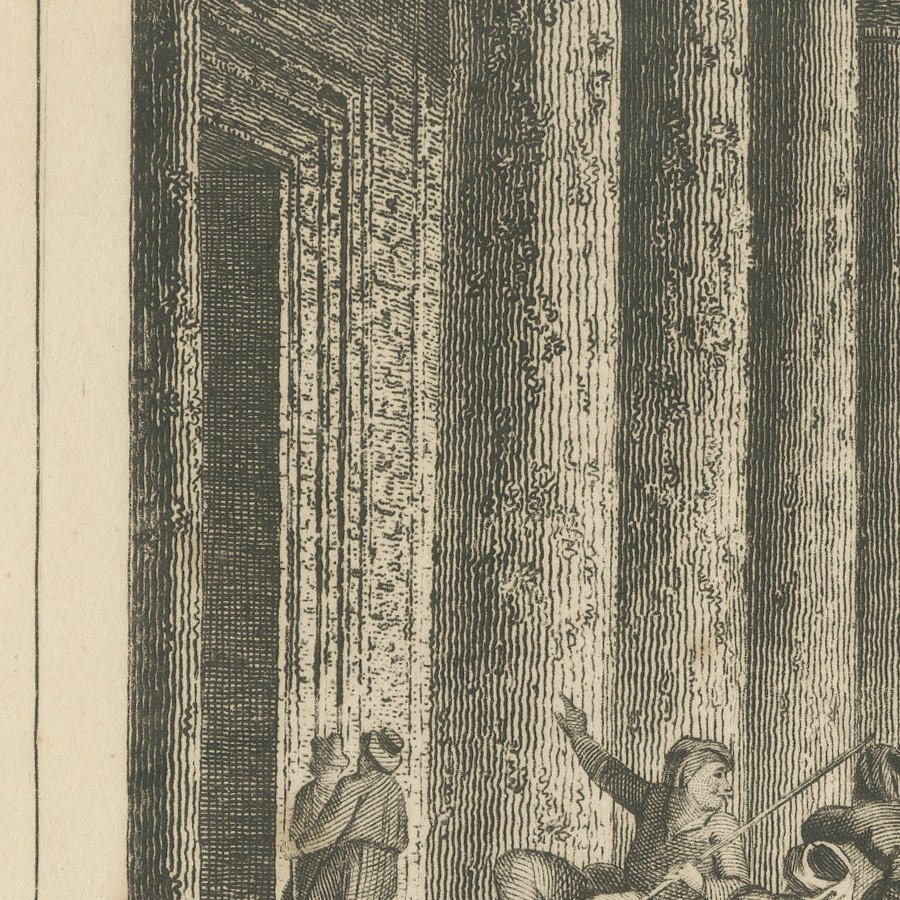
Good condition for its age. Toning with several light stains in the upper margin and lower right margin, and a small dark spot in the lower left margin. Please review the images for further condition details.
About this sheet
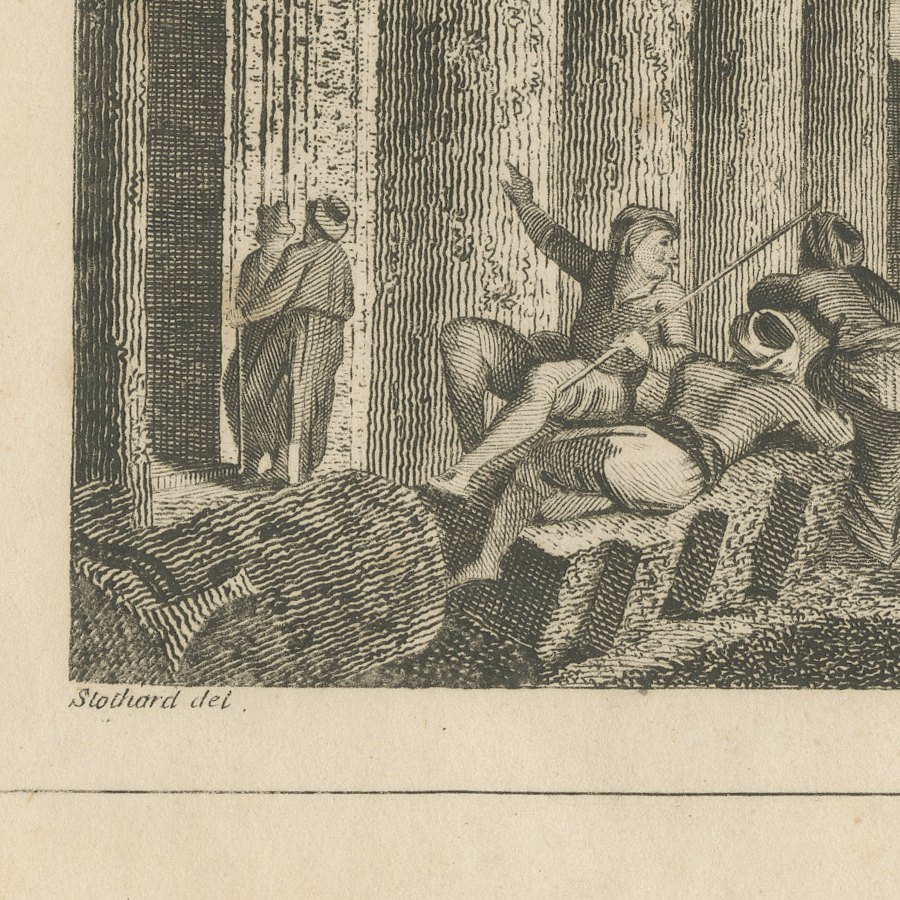
This antique engraving of the ruins of Palmyra in Syria, showing the great colonnaded avenue of the ancient city, is an original early nineteenth century London engraving, circa 1815 to 1830, lettered as drawn by Stothard and engraved by Heath. The plate is lettered "Ruins of Palmyra" and has no publisher's imprint.
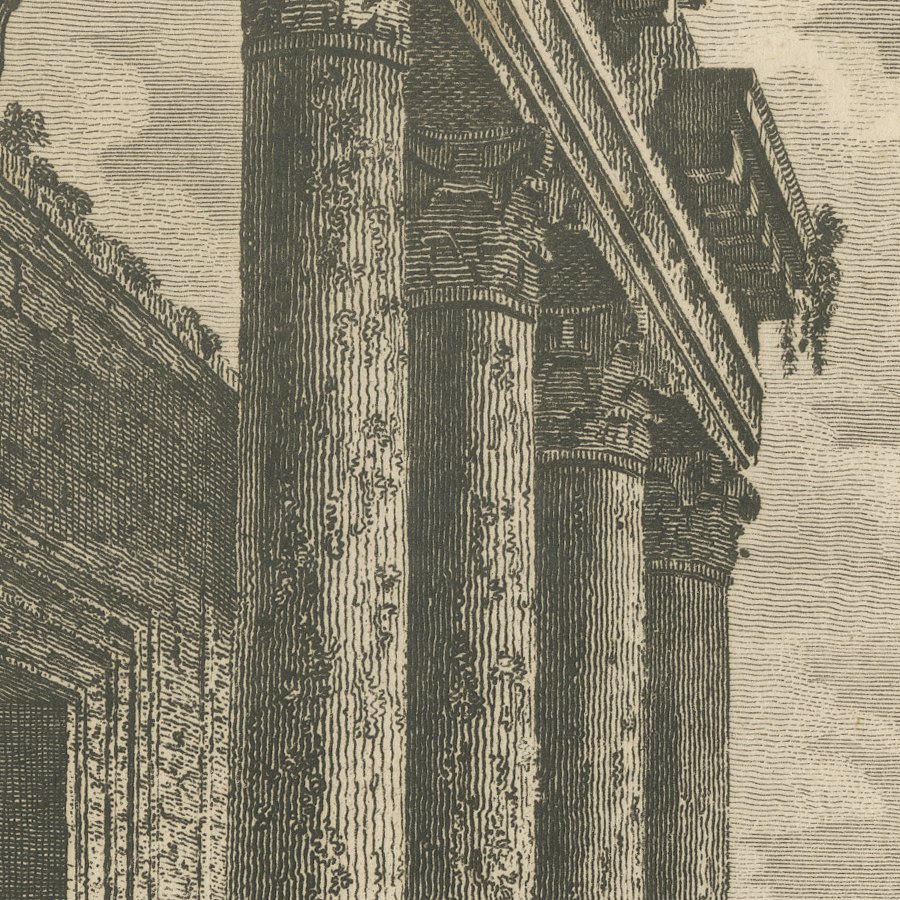
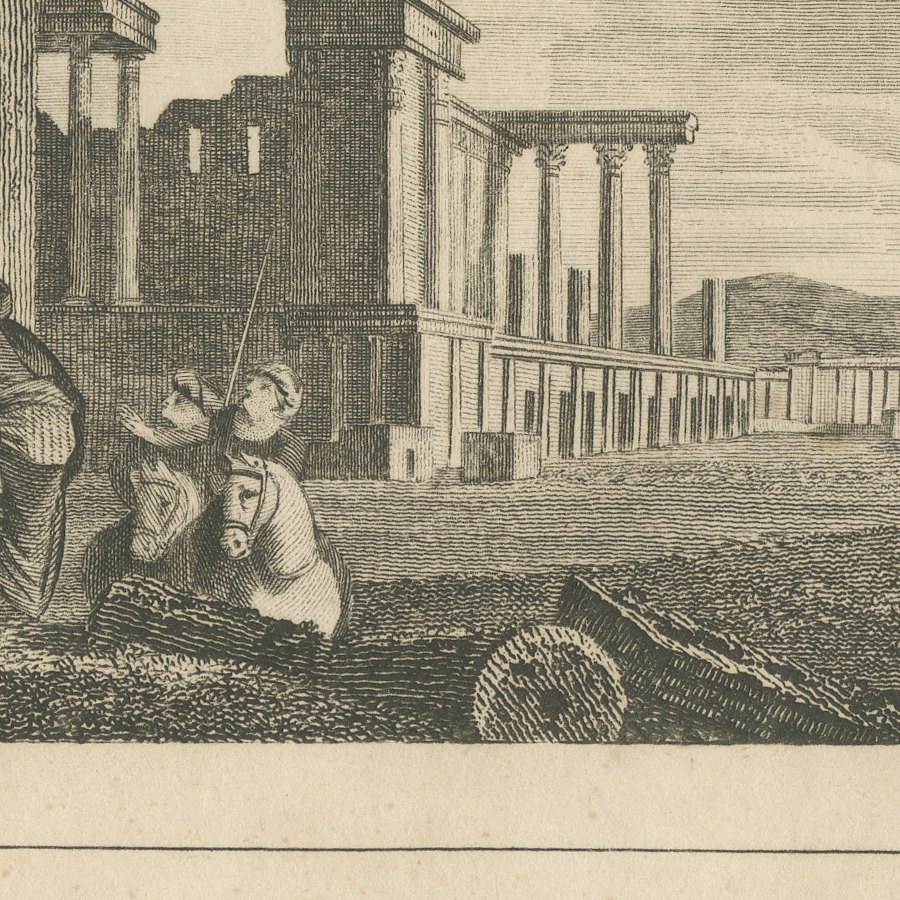
The view looks along the long rows of columns that once lined the main street of Palmyra, with fragments of arches and fallen masonry, while Arab figures and a horse rest in the foreground. Palmyra, the oasis city of Queen Zenobia, was one of the great discoveries of eighteenth century travellers, and the publication of its ruins by Robert Wood in 1753 made it a byword for vanished grandeur in European literature and art.
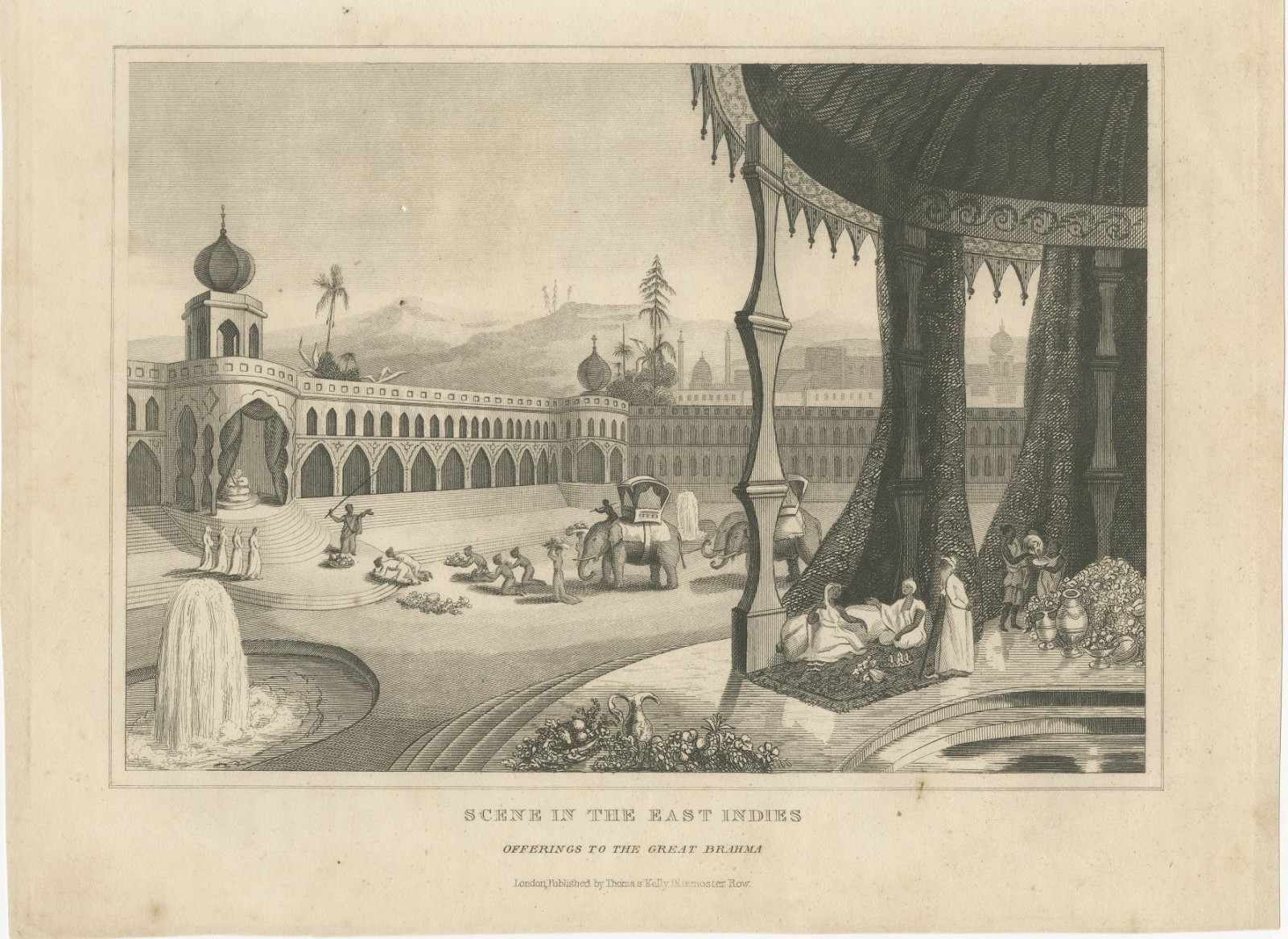
The draughtsman is probably Thomas Stothard, the prolific London painter and book illustrator, and the engraver probably a member of the Heath family of engravers, though the lettering gives surnames only. The plate is in the style of the Kelly plates in this group and probably comes from a London geography or book of travels, but without an imprint its publication cannot be named with confidence. It is described here as an early nineteenth century London engraving.
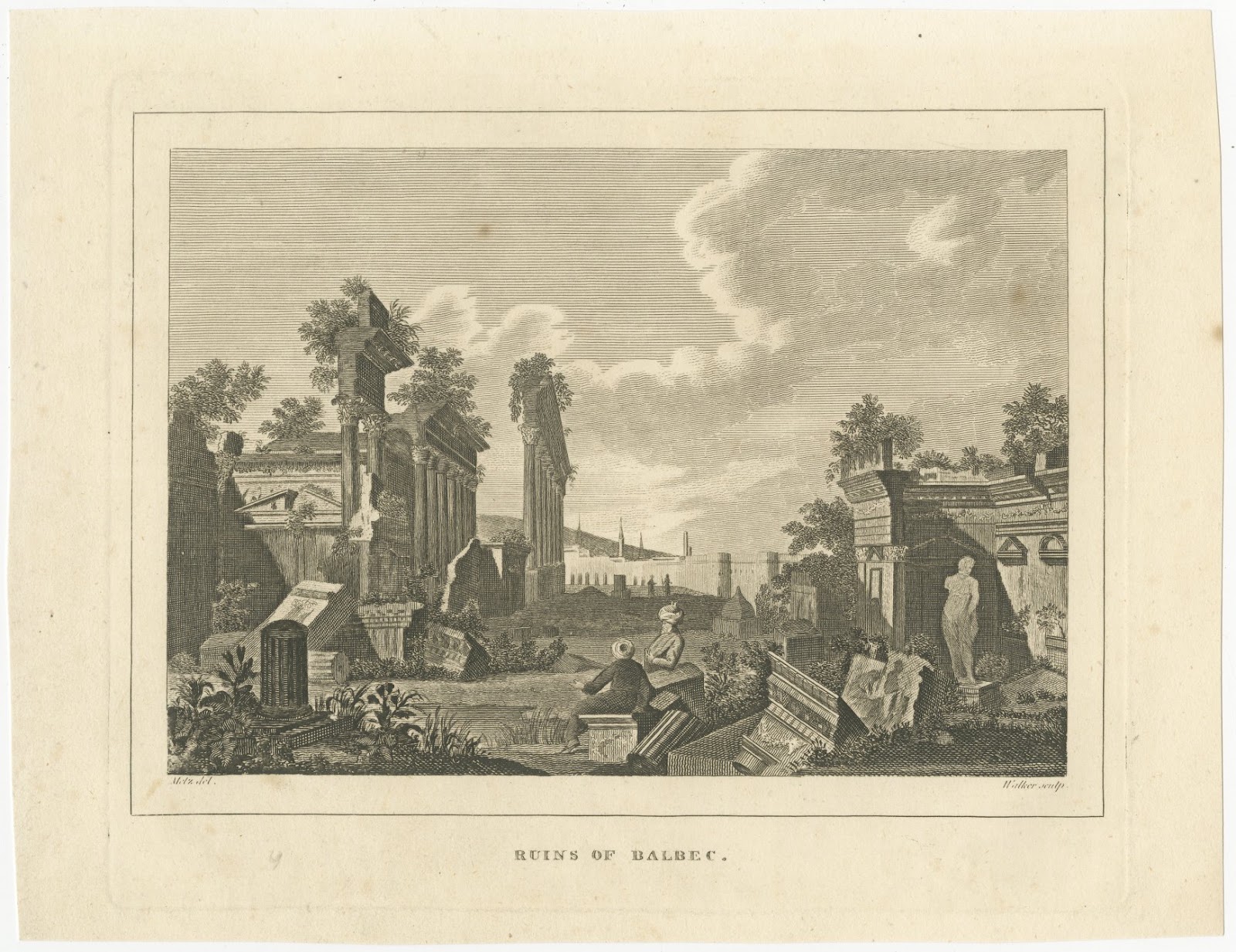
The print is an uncoloured line engraving with good tonal contrast between the sunlit columns and the shaded ground. It would suit a collector of classical antiquities or views of the Near East, and it would look handsome in a study or library, paired with the Ruins of Balbec from the same volume.
The sheet is in good condition for its age, with toning and several light stains confined to the margins; the image itself is clean and strong.
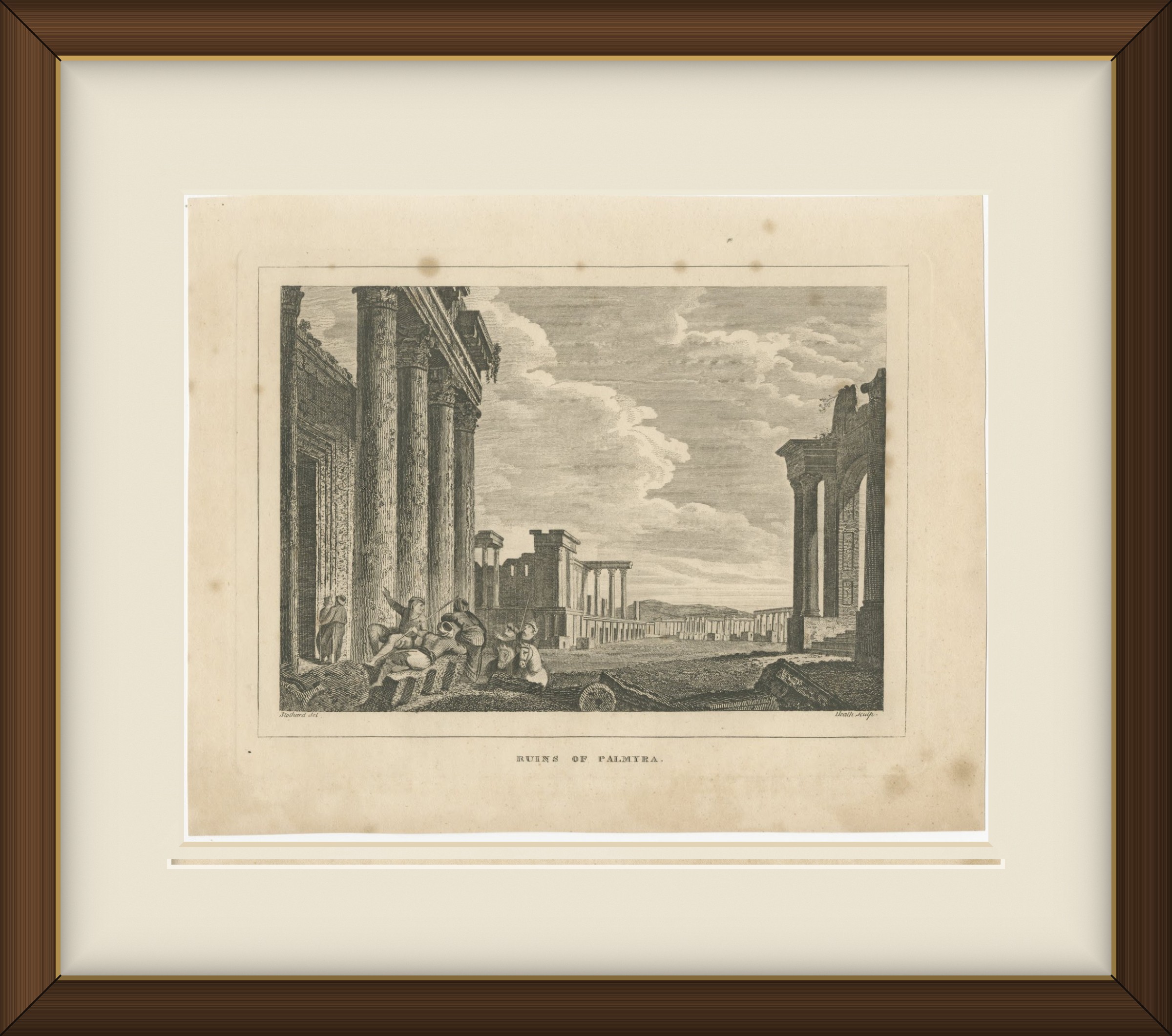
This is an original antique print, not a modern reproduction. This item is sold unframed. Any framed or interior images are shown for presentation and inspiration only, unless the listing explicitly states that the item is sold framed.