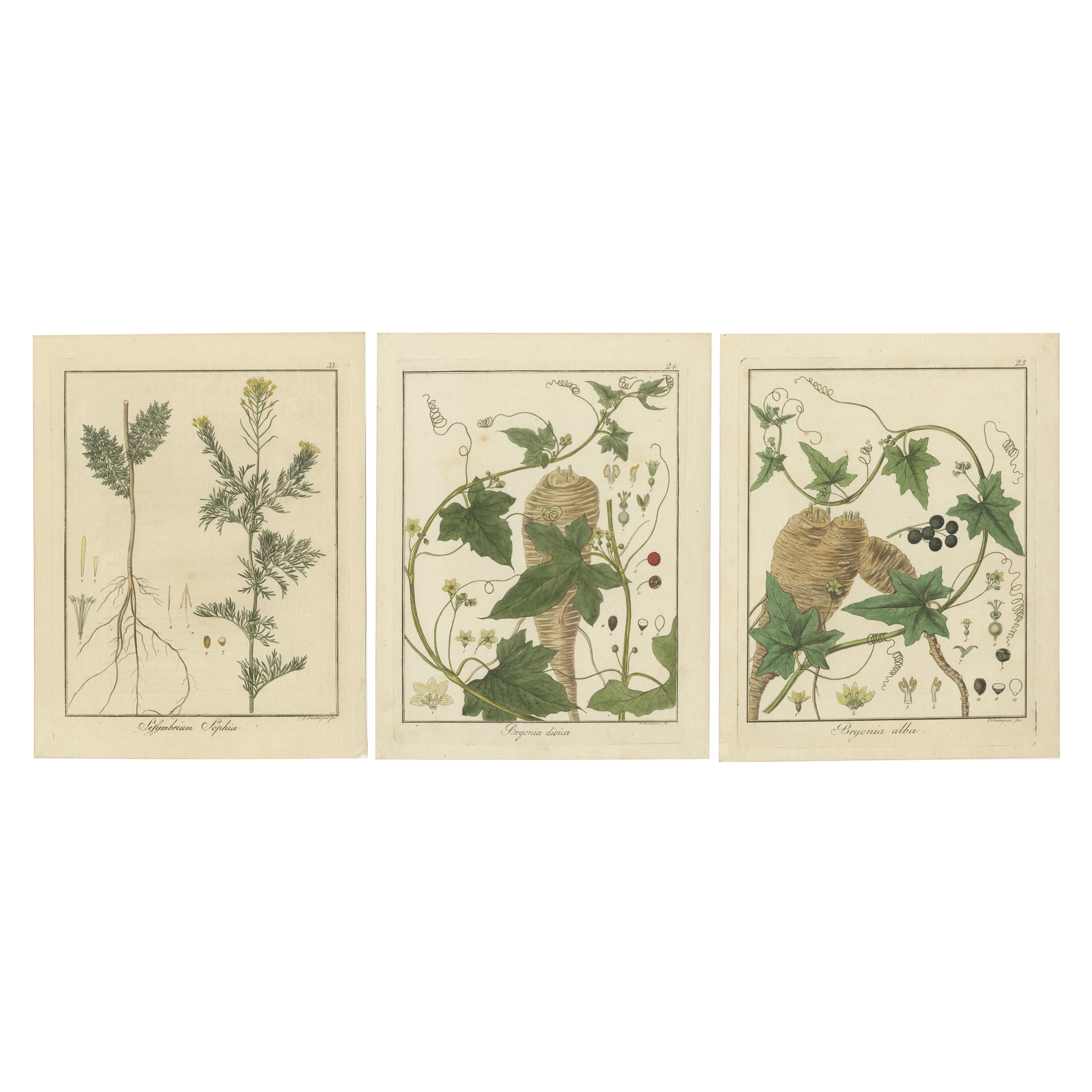
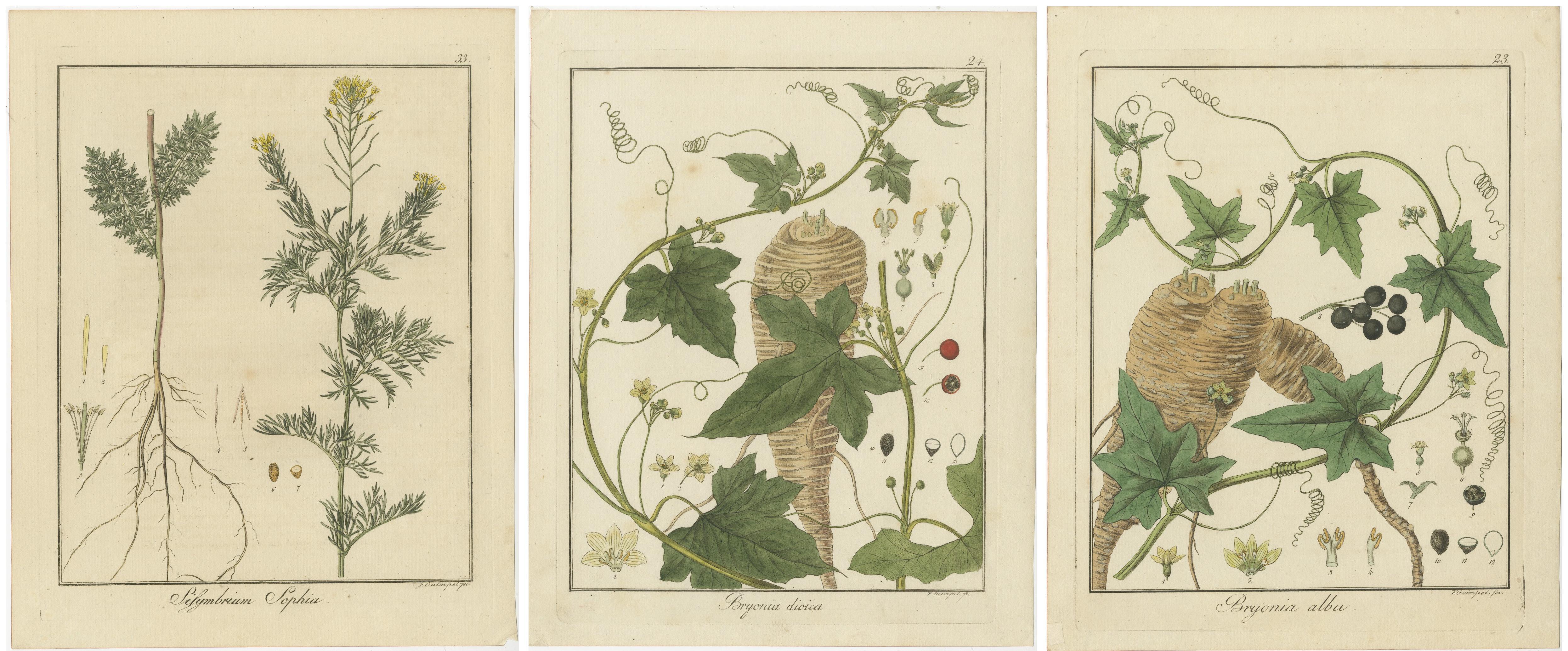
Engravings of Flixweed, Red Bryony, and White Bryony, Published in 1819
€ 590
Original antique · The actual sheet photographed · Certificate of authenticity on request · Sold unframed · Worldwide shipping from € 15 (rates)
Date
1819
Sheet size
27.5 × 21.7 cm (10.8 × 8.5 in)
Reference
BG-13747-22, BG-13747-23, BG-13747-24
What the condition grades mean
Excellent
Bright and clean, with no faults worth mentioning.
Very good
Only light signs of age, such as faint toning.
Good
Normal signs of age for a sheet of this period: toning, some foxing, small marks or neat old repairs.
Fair
Clear faults such as staining, tears or repairs, priced to match.
Every fault we see is written in the condition note, and the whole sheet is shown uncropped in the photos.
Condition
Very good given age. General age-related toning and maybe one minor brown spot. Original hand-colored etching / engraving on hand laid (verge) paper with matermark. The Please study scans carefully.
About this sheet
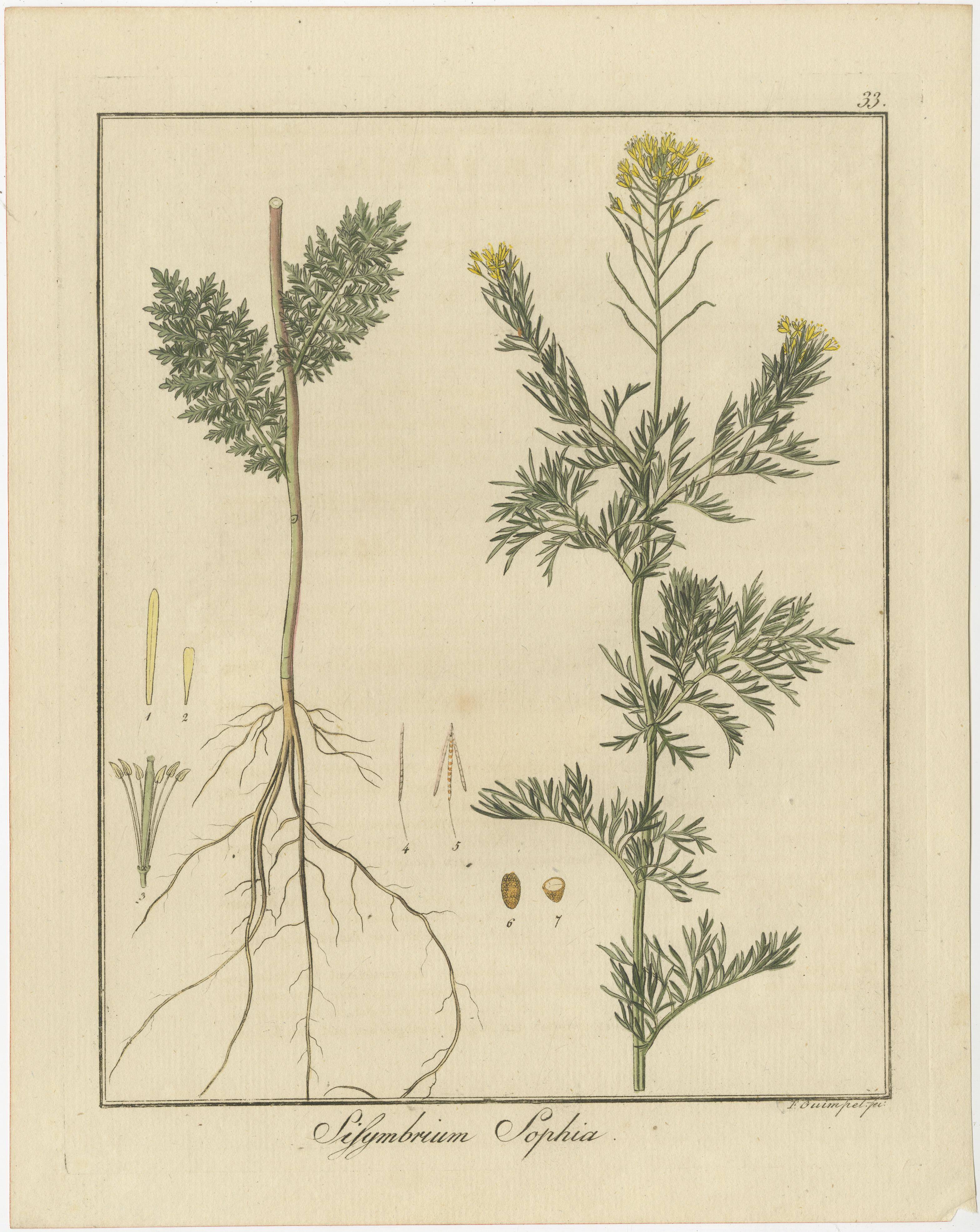
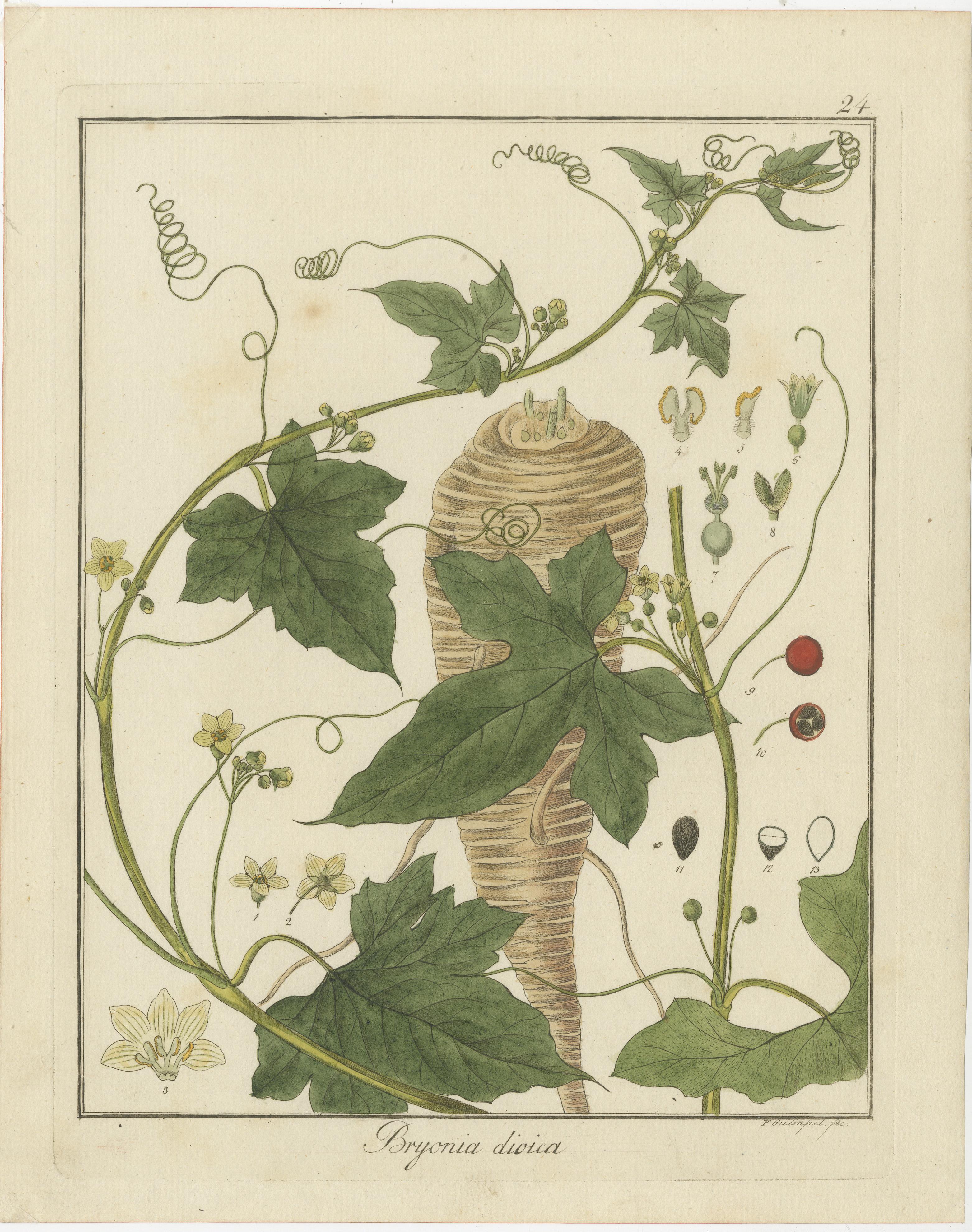
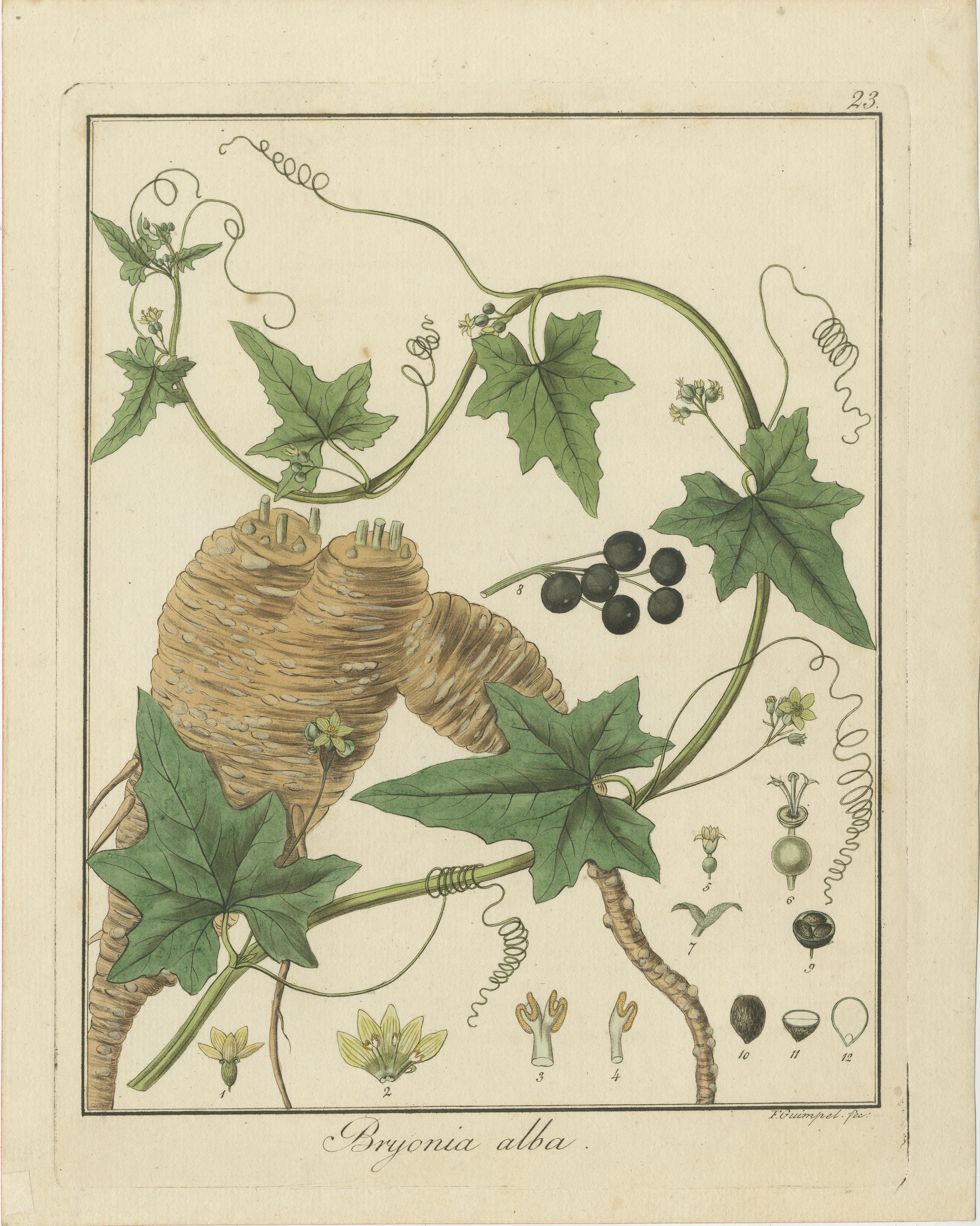
Three botanical engravings
1. Sisymbrium sophia (Common Name: Flixweed) - This engraving depicts Sisymbrium sophia, commonly known as Flixweed. It is an annual plant native to Europe and Asia, often found in disturbed soils, roadsides, and fields. The plant is recognized by its finely divided leaves and small yellow flowers. Historically, Flixweed has been used in traditional medicine for its diuretic and expectorant properties.
2. Bryonia dioica (Common Name: Red Bryony) - The second engraving shows Bryonia dioica, commonly known as Red Bryony. This perennial climbing plant is native to Europe and Northern Africa. It features broad, lobed leaves, and small white flowers, and produces red berries. Despite its toxicity, Red Bryony was used traditionally for medicinal purposes, including as a cathartic and for treating joint pain.
3. Bryonia alba (Common Name: White Bryony) - The third engraving illustrates Bryonia alba, known as White Bryony. Similar to Red Bryony, this climbing plant is found in Europe and Asia. It is characterized by its large, palmate leaves and white flowers, producing black berries. Like its relative, White Bryony has been used in traditional medicine, although it is highly toxic and should be used with caution.
These illustrations are from the 6th edition of "Getreue Darstellung und Beschreibung der in der Arzenykunde gebrauchlichen Gewächse" by Dr. Friedrich Gottlob Hayne, published in 1819, highlighting the medicinal and botanical significance of these species.