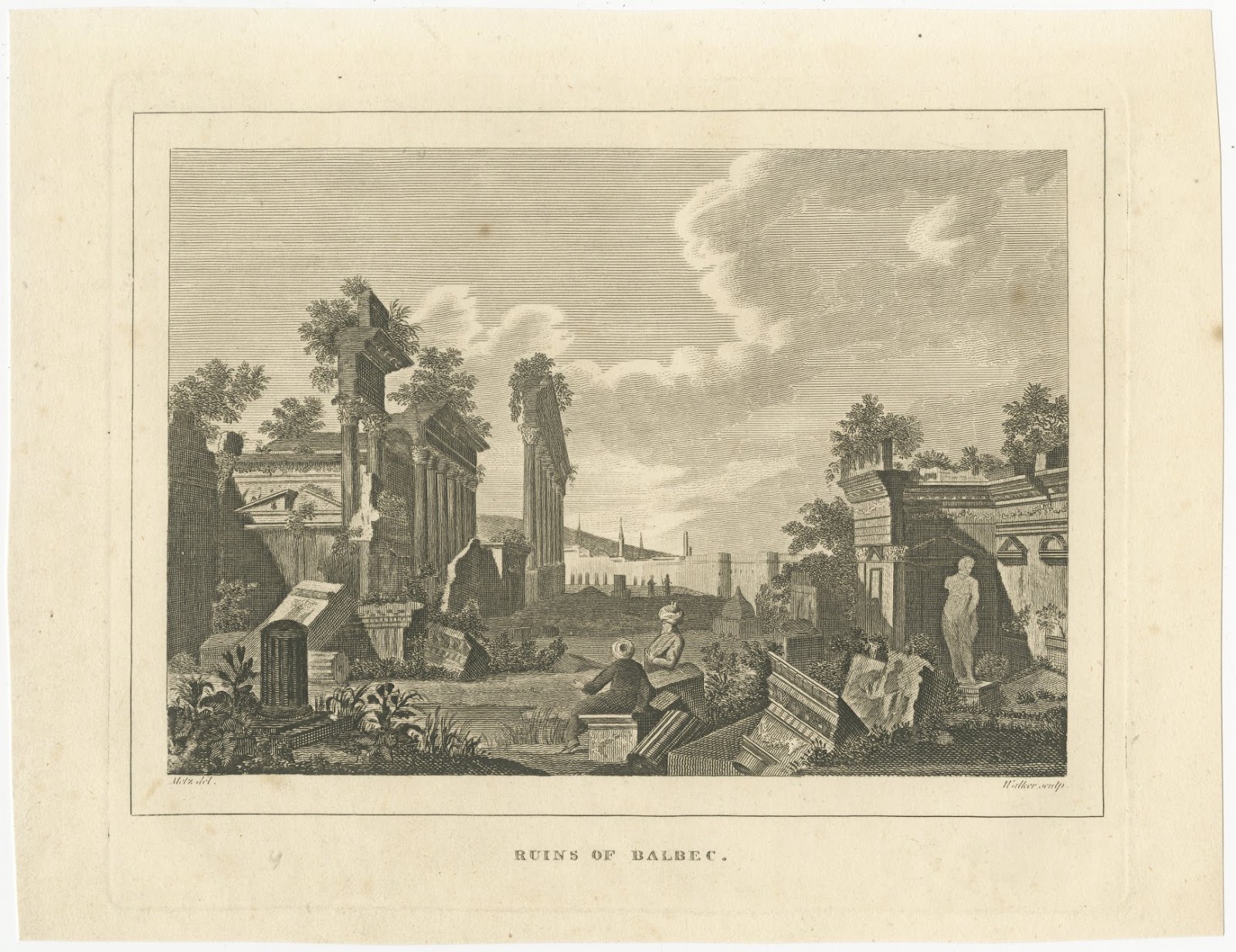
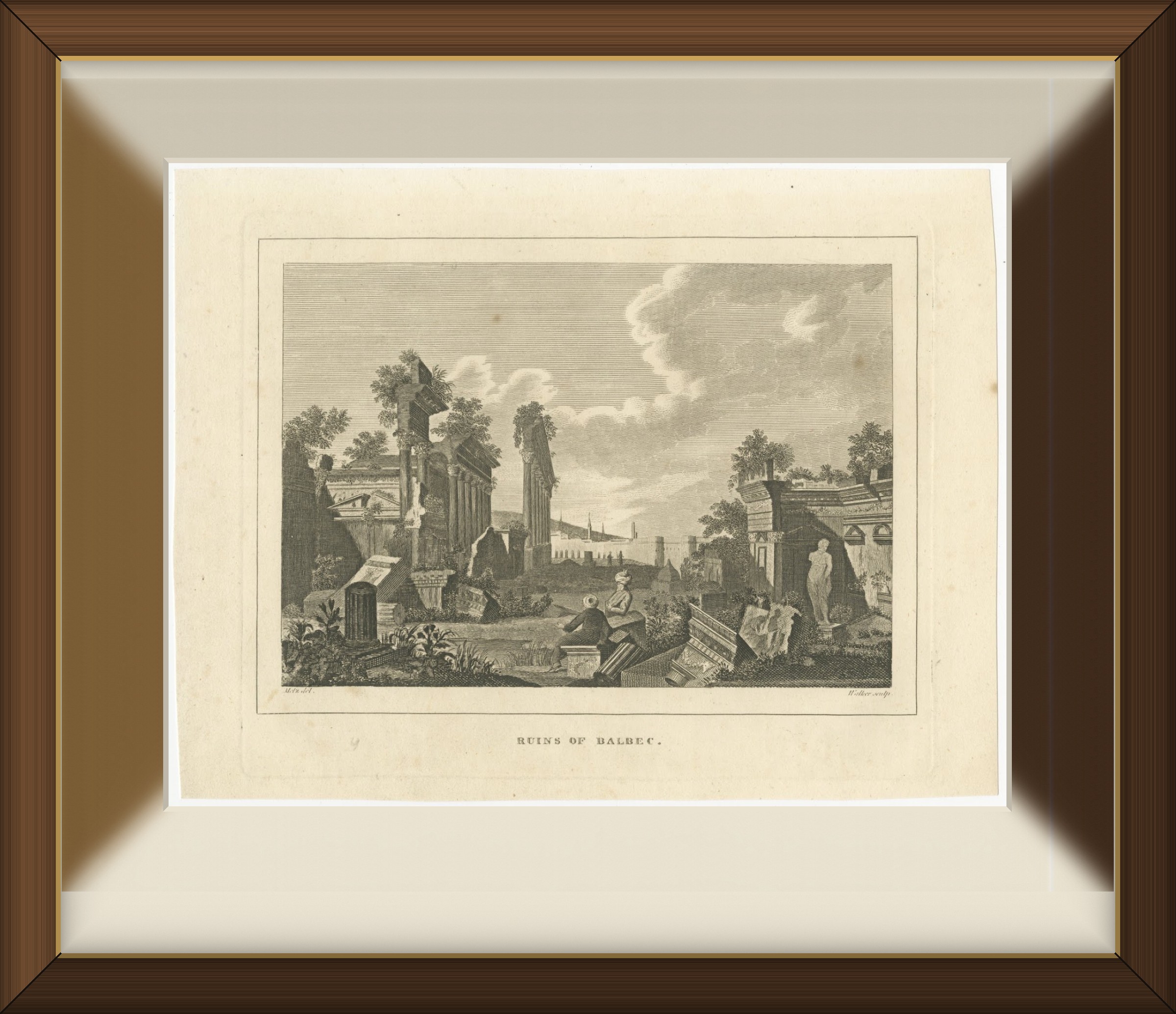
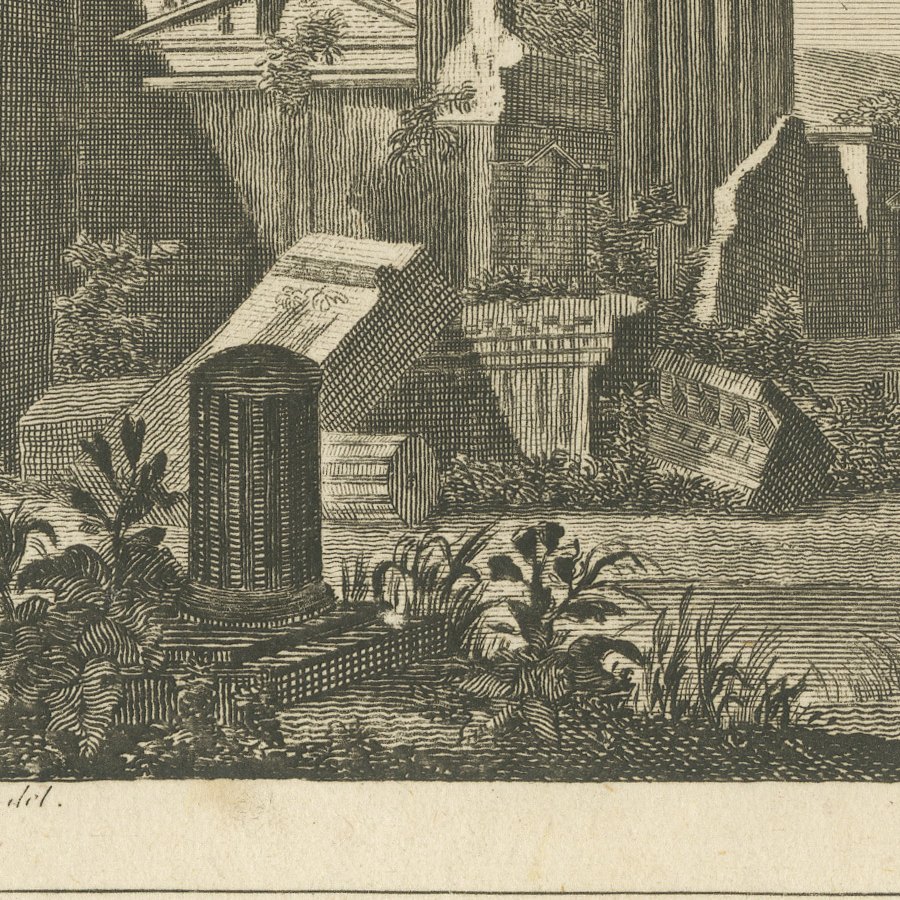
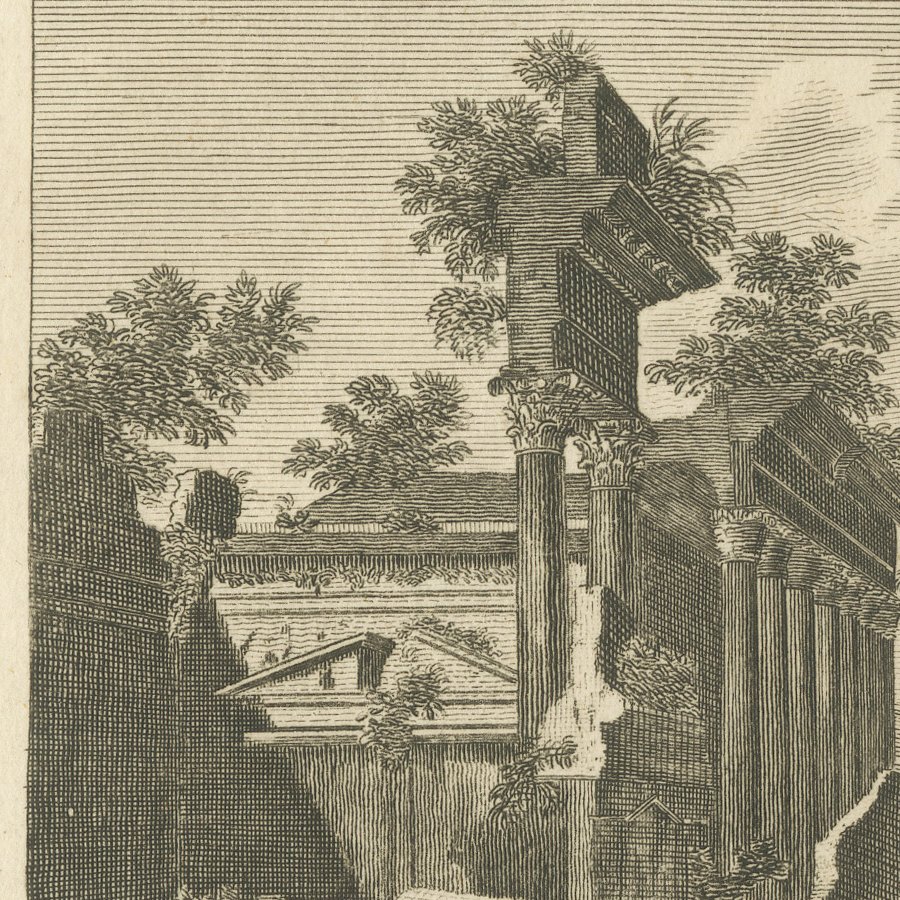
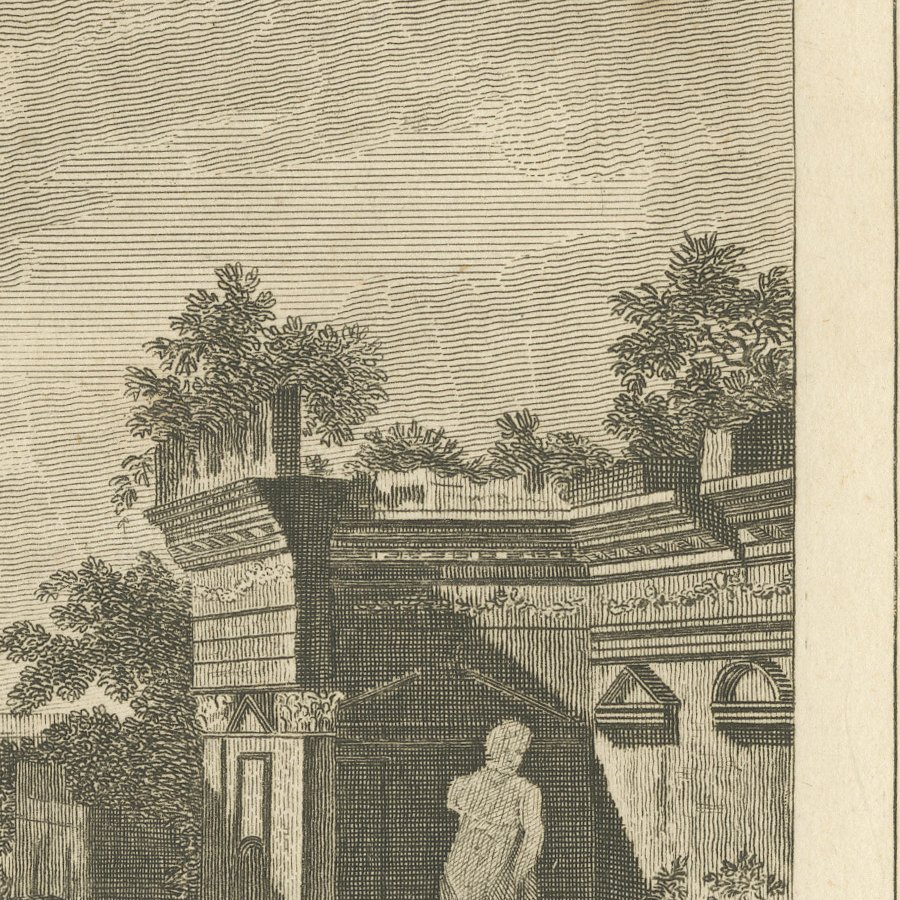
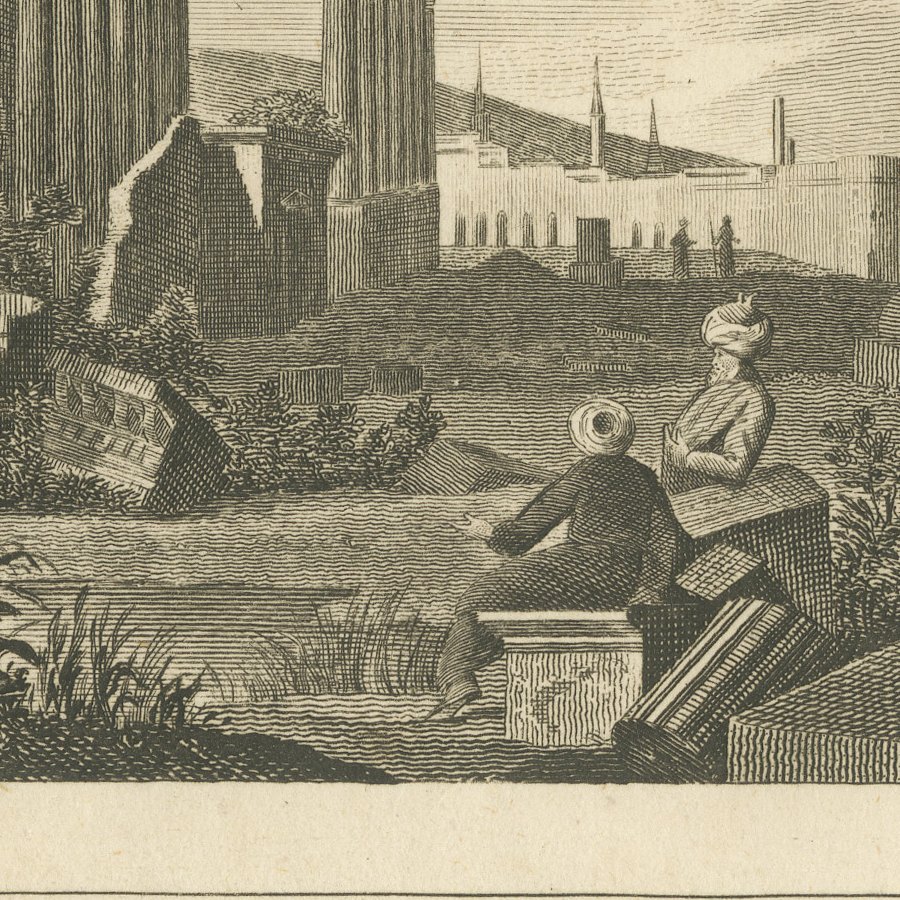
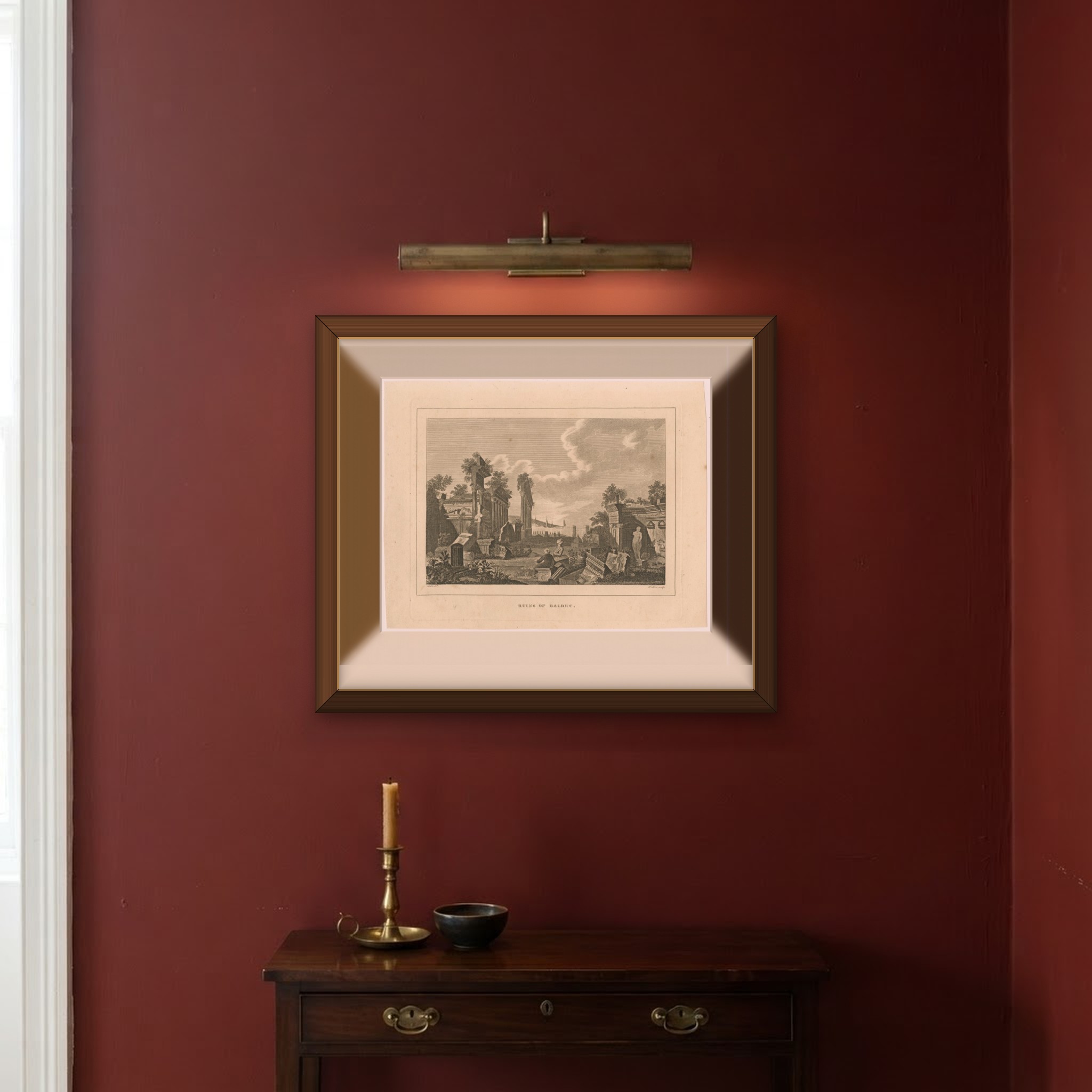
Ruins of Balbec, Baalbek, Lebanon, Antique Engraving, after Metz, circa 1820
€ 190
Original antique · The actual sheet photographed · Certificate of authenticity on request · Sold unframed · Worldwide shipping from € 15 (rates)
Date
circa 1820
Mapmaker / artist
Metz (artist), Walker (engraver)
Publisher
No imprint
Technique
Line engraving
Colouring
Uncoloured
Condition
Good
Reference
BG-14391-37
Condition
Good condition for its age. Toning, scattered small spots in the margins, a small pencil numeral in the lower left margin and a slightly uneven right edge. Please review the images for further condition details.
About this sheet
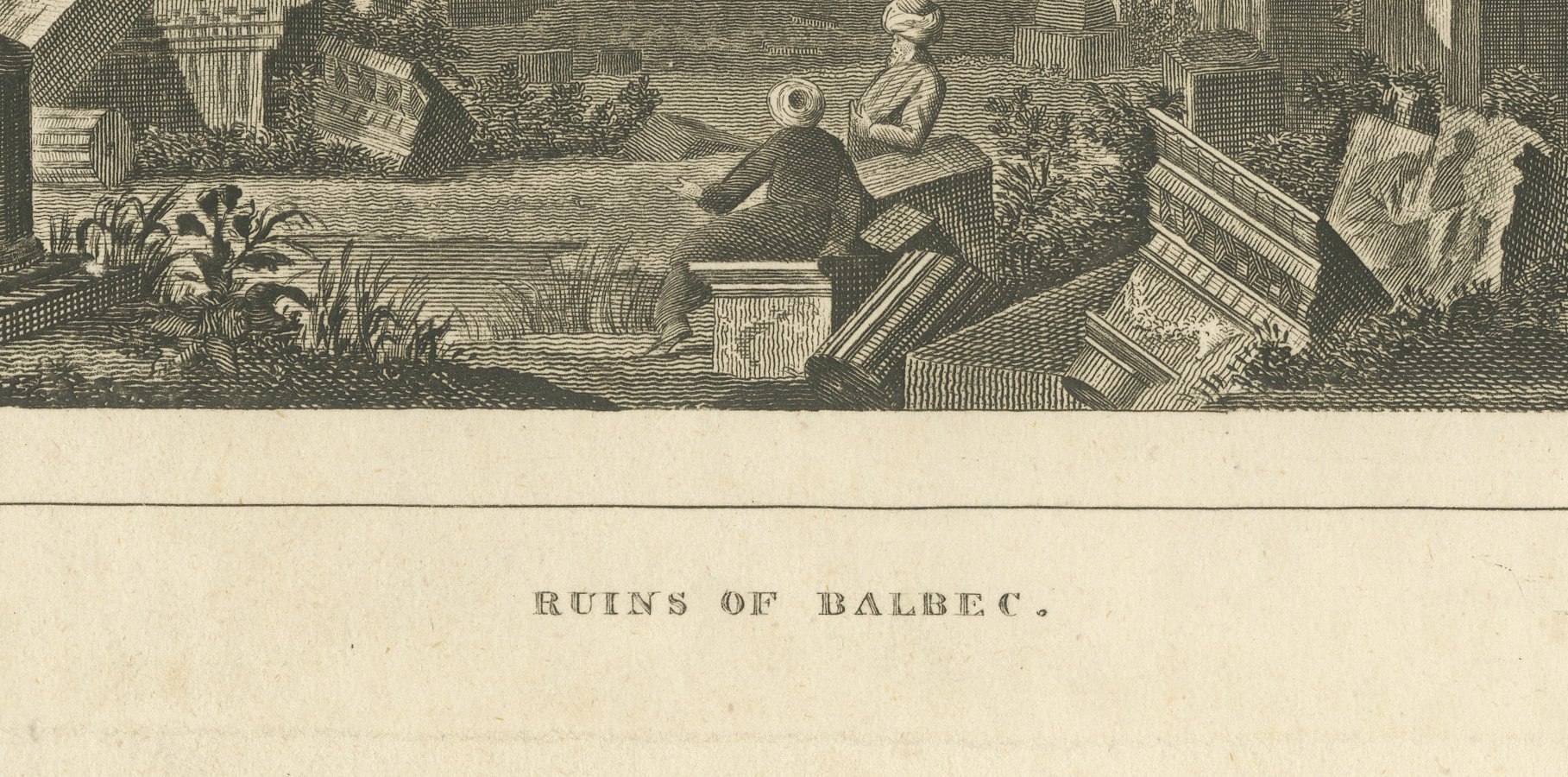
This antique engraving of the ruins of Baalbek in Lebanon, the great Roman temple site known to earlier travellers as Balbec, is an original early nineteenth century London engraving, circa 1815 to 1830, drawn by an artist lettered Metz and engraved by an engraver lettered Walker. The plate is lettered "Ruins of Balbec" and carries no publisher's imprint.
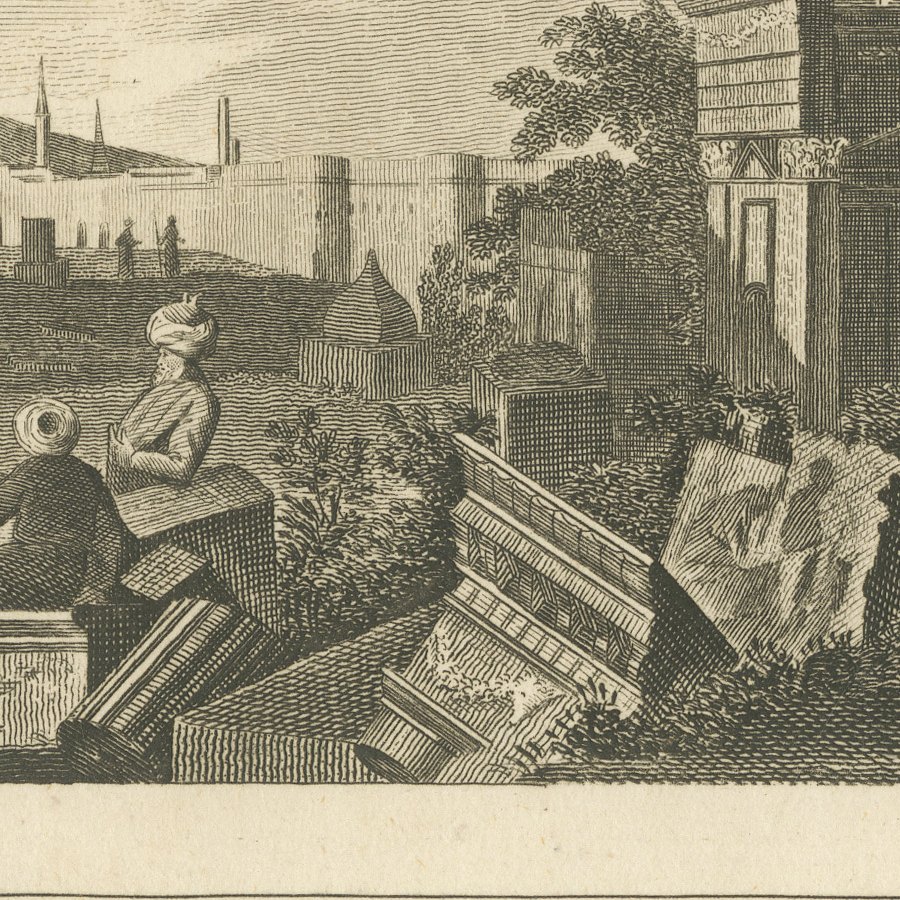
The view shows the massive columns and carved entablatures of the temples of Baalbek, the ancient Heliopolis, rising above fallen blocks, with turbaned figures among the ruins to give scale. Baalbek was one of the most celebrated antiquities of the Levant, made famous in Britain by Robert Wood's publication of 1757, and views of its temples were widely copied in popular books of travel and geography.
The names on the plate probably refer to Conrad Martin Metz, a draughtsman active in London, and to an engraver of the Walker family, though neither is given in full. The engraving is in the style of the Kelly plates in this group and probably comes from a London geography or collection of travels, but without an imprint the publication cannot be named with confidence. It is described here as an early nineteenth century London engraving.
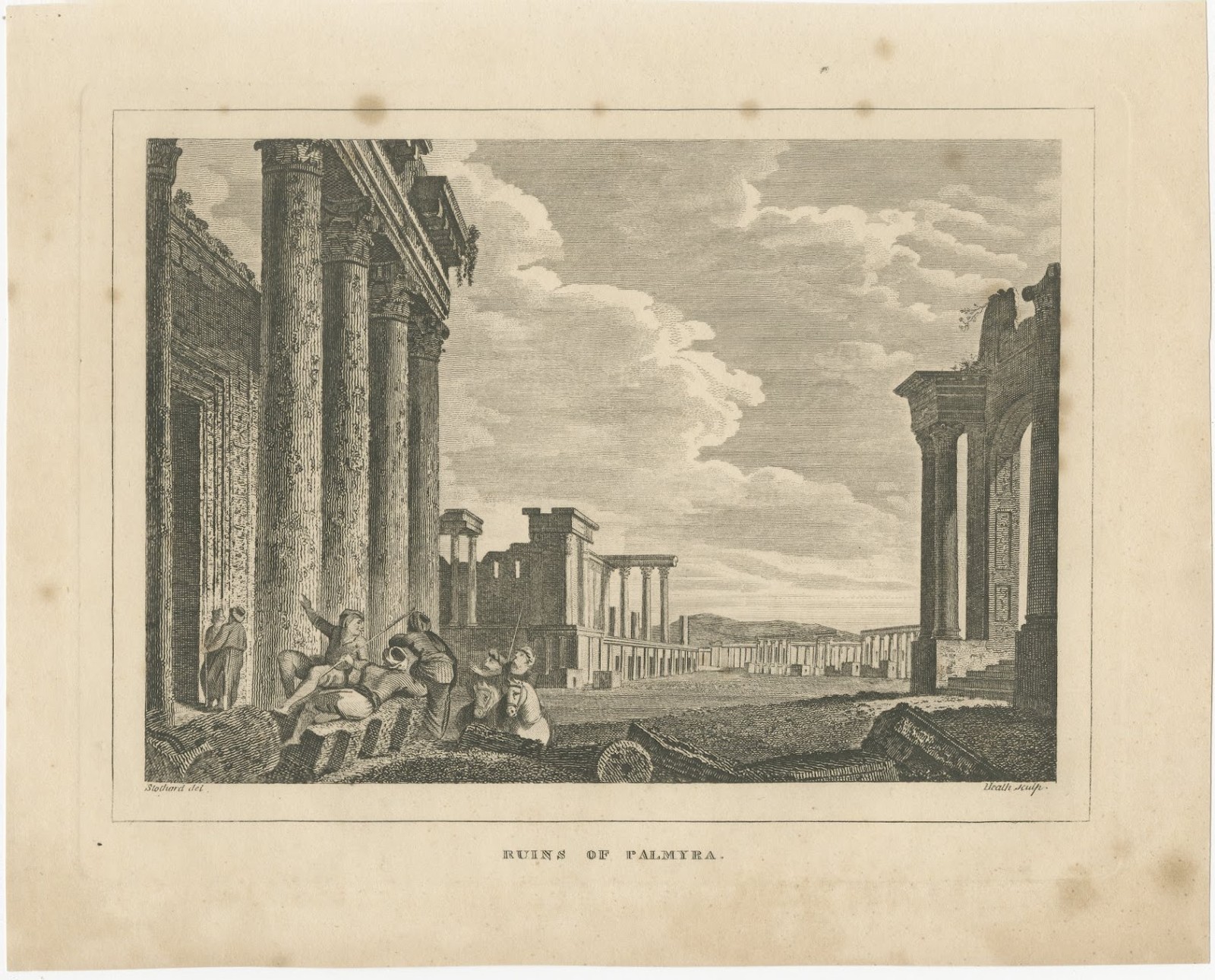
The print is an uncoloured line engraving with careful rendering of the classical architecture and the light on the stone. It would suit a collector of Holy Land and Levant views or of classical architecture, and it would hang well in a library or study, perhaps beside the Ruins of Palmyra from the same volume.
The sheet is in good condition for its age, with toning, scattered small marginal spots, a small pencil numeral and a slightly uneven edge; the image is clean.
This is an original antique print, not a modern reproduction. This item is sold unframed. Any framed or interior images are shown for presentation and inspiration only, unless the listing explicitly states that the item is sold framed.