About this sheet
The Devil's Bridge at Gotthard Pass and 12th-Century Rhone Bridge at St. Maurice: Hand-Colored Engraving from Bertuch’s *Bilderbuch für Kinder*
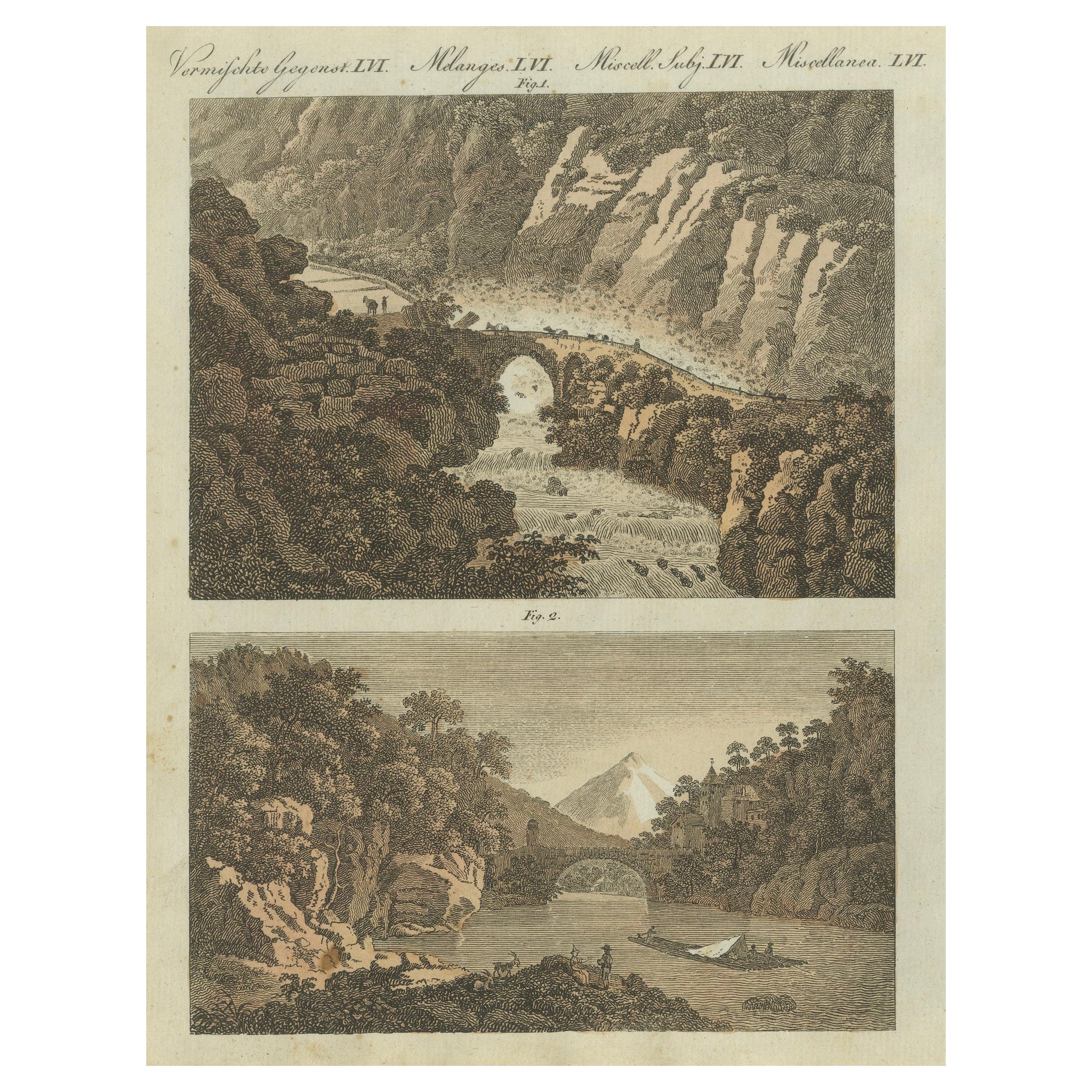
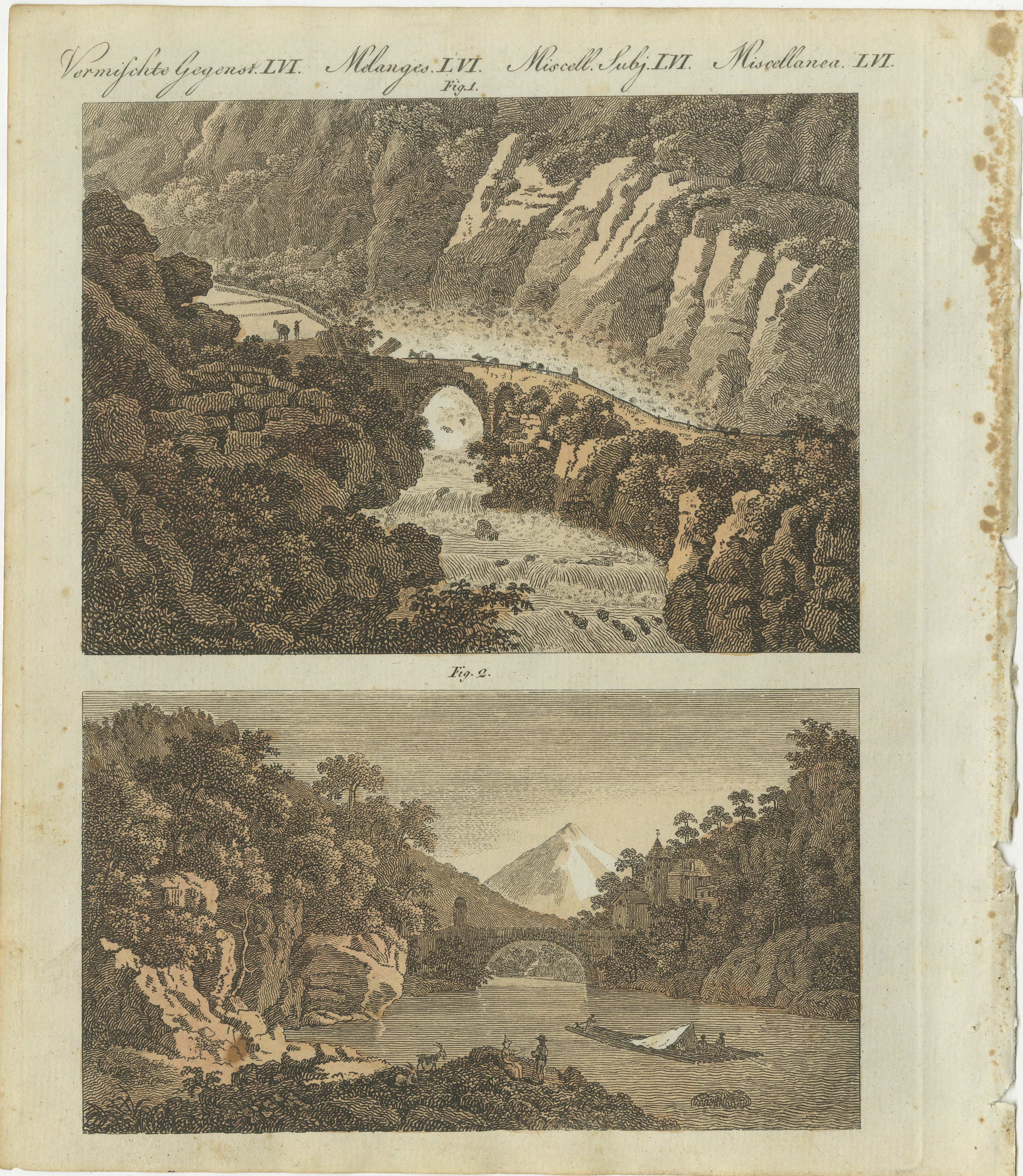
This captivating hand-colored copperplate engraving showcases two iconic Swiss landmarks, blending the awe-inspiring natural landscape with feats of architectural ingenuity. Published in 1805 as part of Friedrich Johann Bertuch’s celebrated *Bilderbuch für Kinder* (Picture Book for Children), the engraving highlights the Devil's Bridge at Gotthard Pass and the medieval bridge over the Rhone at St. Maurice, revealing the harmony between nature and human craftsmanship.
Figures include:
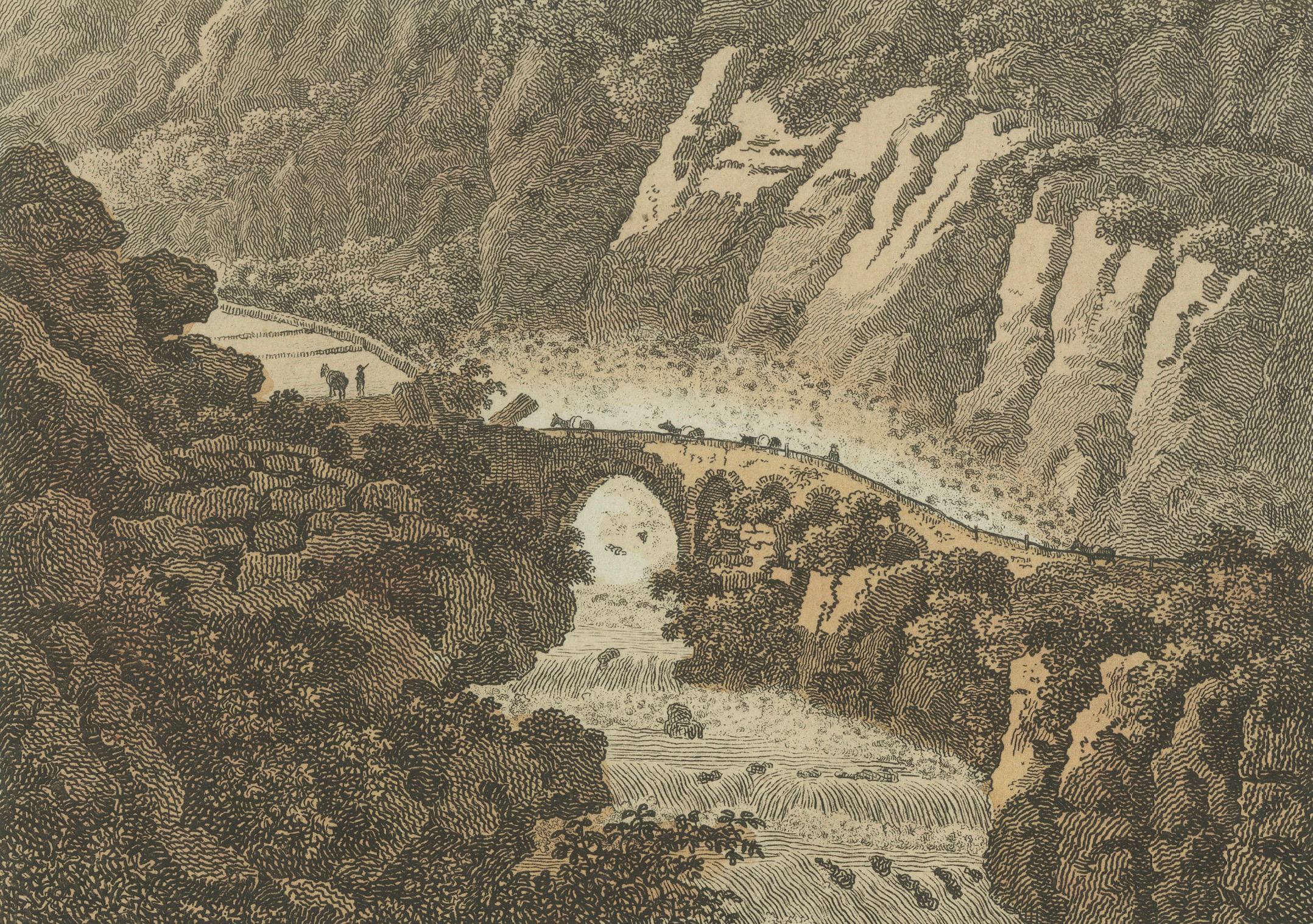
1. The Devil's Bridge at Gotthard Pass, Switzerland (Figure 1): A dramatic depiction of the rugged mountain terrain, where a narrow stone bridge spans a cascading river. This legendary bridge, set against towering cliffs, evokes the perilous journeys and engineering marvels of the region.
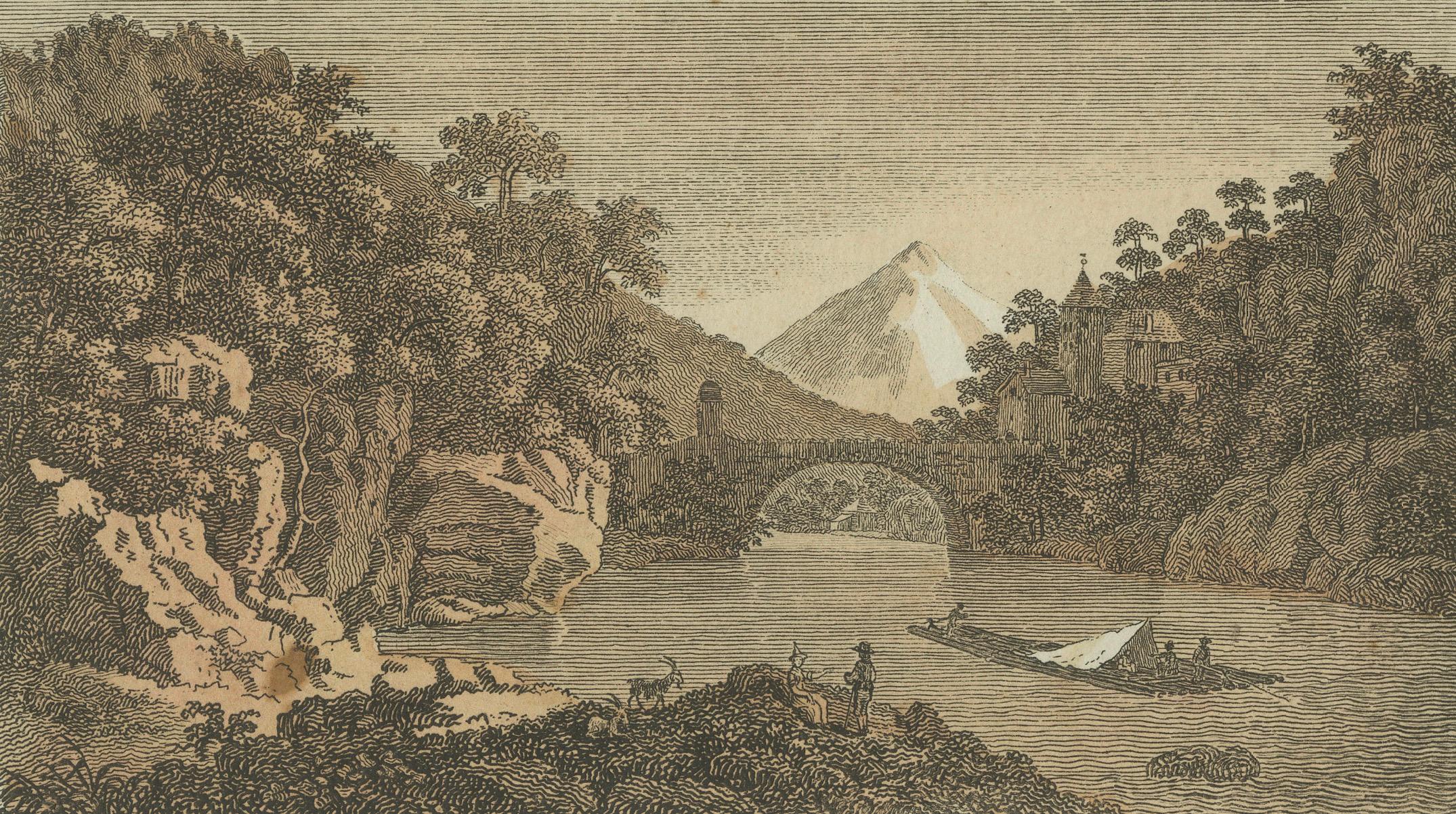
2. The 12th-Century Bridge Over the Rhone at St. Maurice, Switzerland (Figure 2): A serene yet majestic scene featuring the iconic arched bridge with the Rhone River flowing beneath. Surrounded by lush foliage and a distant snow-capped peak, the composition highlights the historic significance and timeless beauty of this medieval structure.
Published by Friedrich Johann Bertuch (1747–1822), a renowned German publisher and artist, this engraving is part of a 12-volume encyclopedia for children. Issued between 1790 and 1830, the series includes over 1,200 engraved plates covering natural history, science, mythology, and more, making it a cornerstone of Enlightenment-era education and art.
Condition:
The engraving is in very good condition with minor age-related foxing and slight edge discoloration. The hand-coloring remains vivid, capturing the dramatic and tranquil qualities of each scene.
Advice on presentation:
1. Frame the engraving in a classic wooden or antique-style frame to complement its historical and artistic appeal. Use an acid-free mat in soft cream or light gray for a refined presentation.
2. Display in a gallery, library, or study alongside other architectural or landscape engravings to emphasize its cultural significance.
3. Add a descriptive plaque to provide historical context and highlight the importance of these bridges in Swiss history and folklore.
4. For archival purposes, store in a high-quality portfolio to preserve the piece and make it accessible for study or research.
This engraving is an exceptional choice for collectors, historians, or admirers of Swiss landmarks and architectural history.