About this sheet
Astor House New York – Antique Broadway Hotel Steel Engraving 1850s
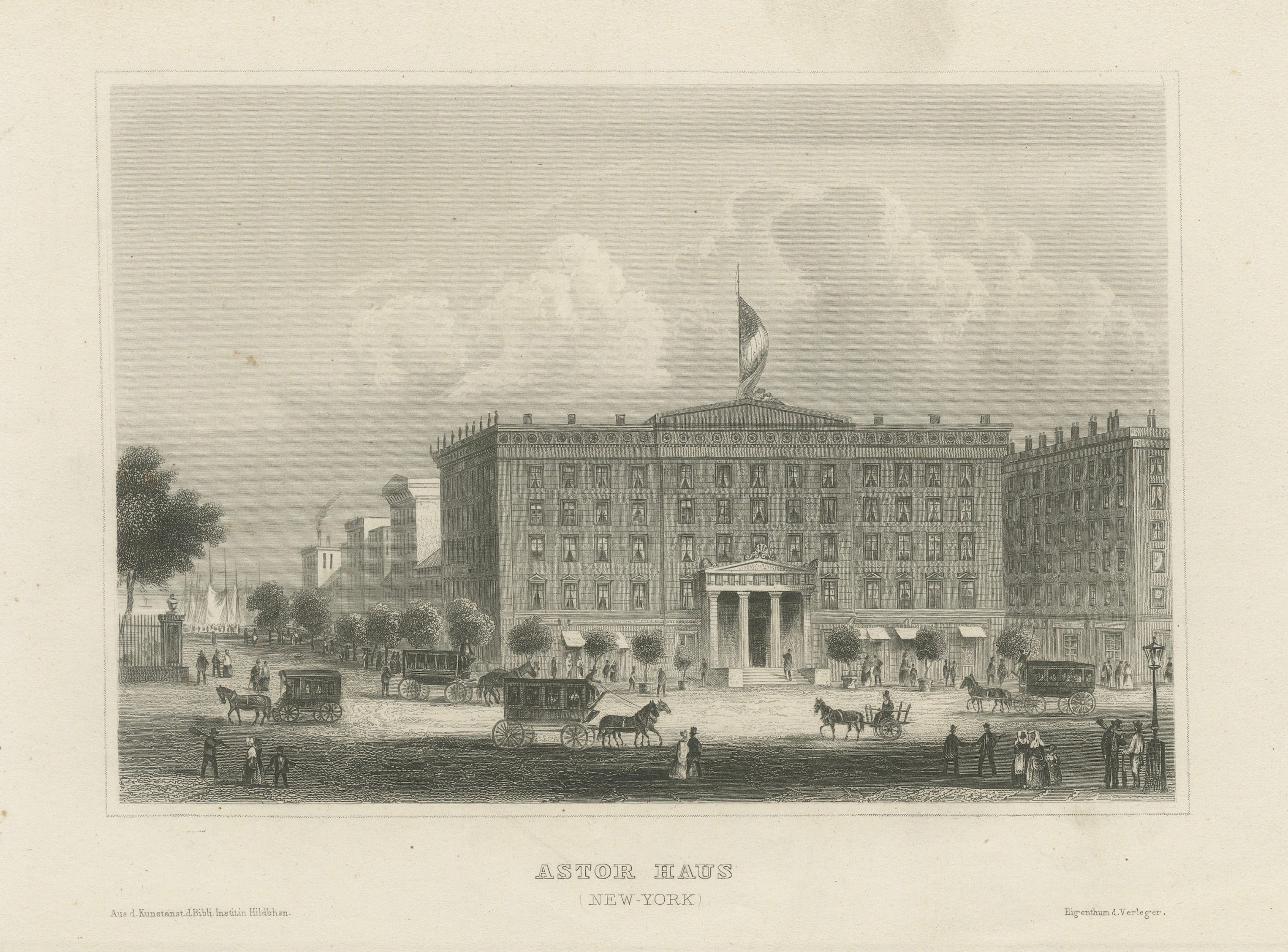
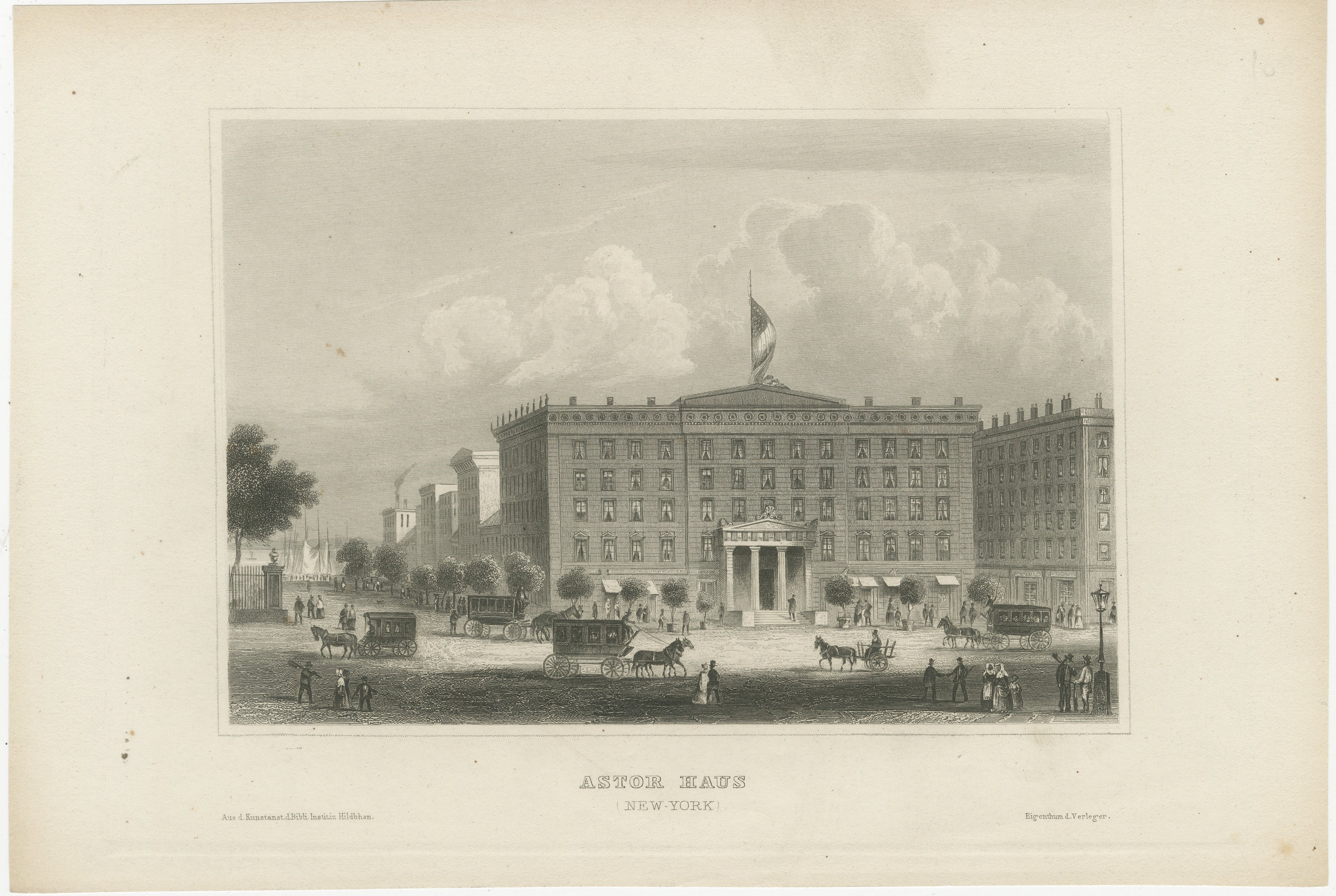
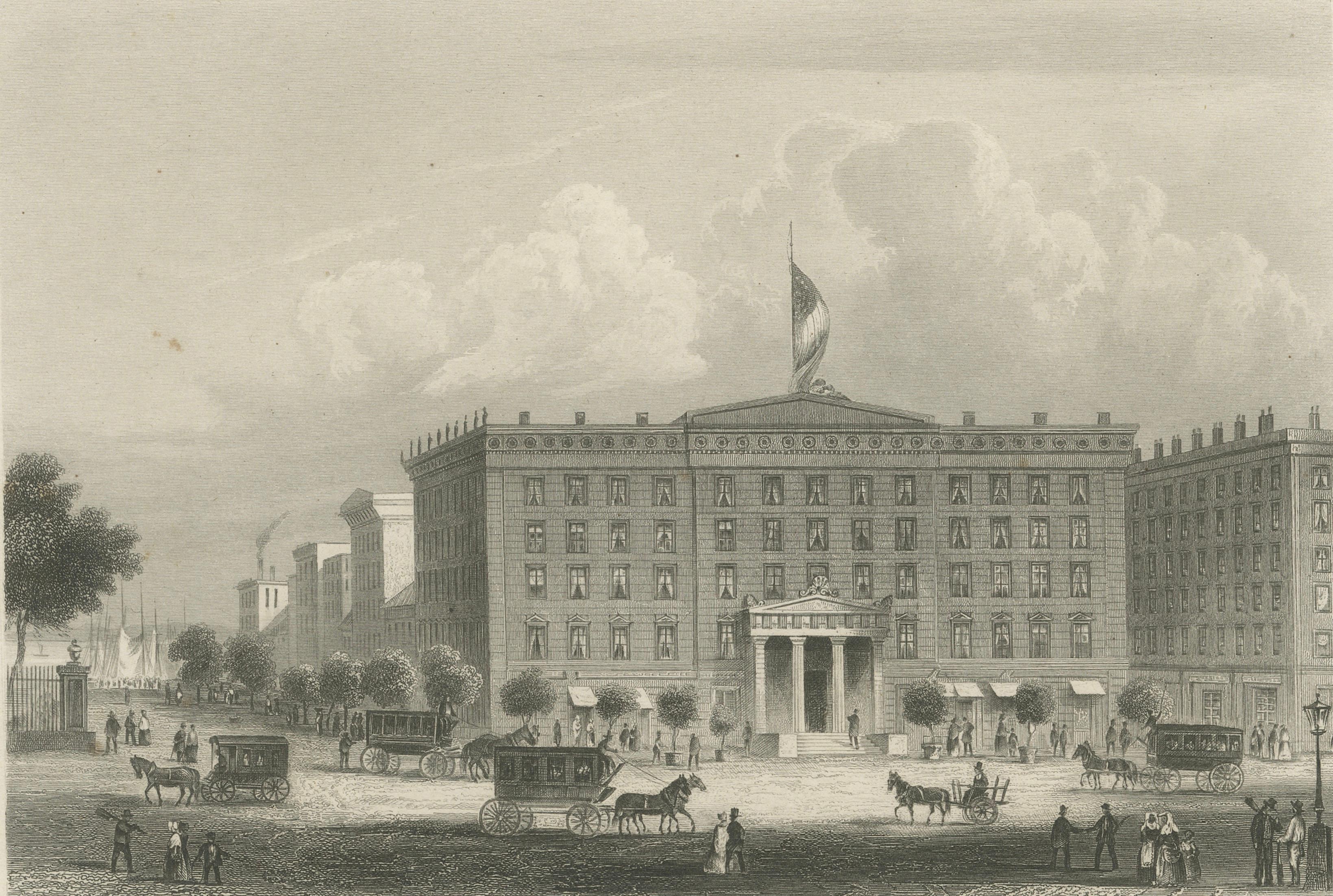
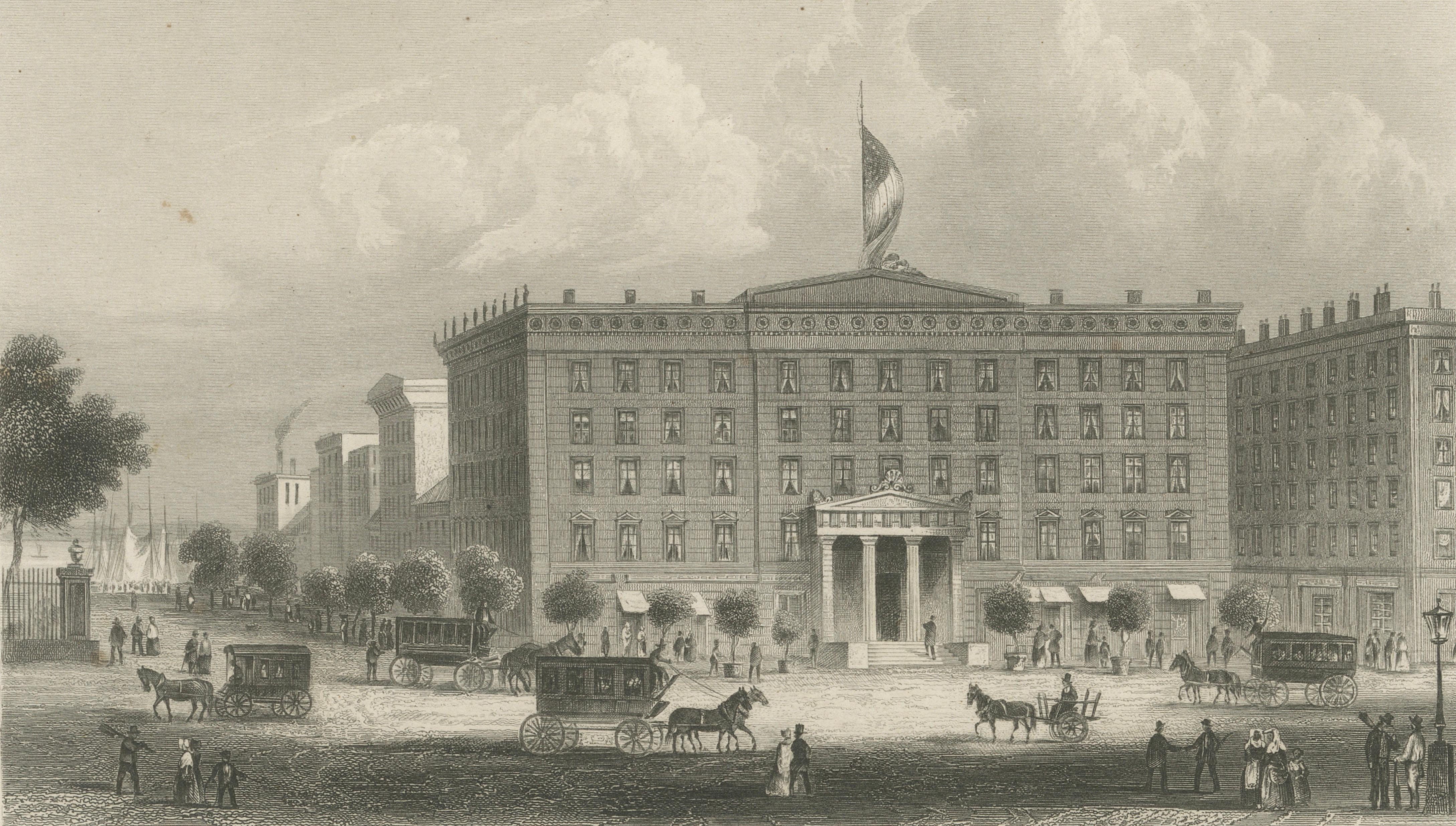
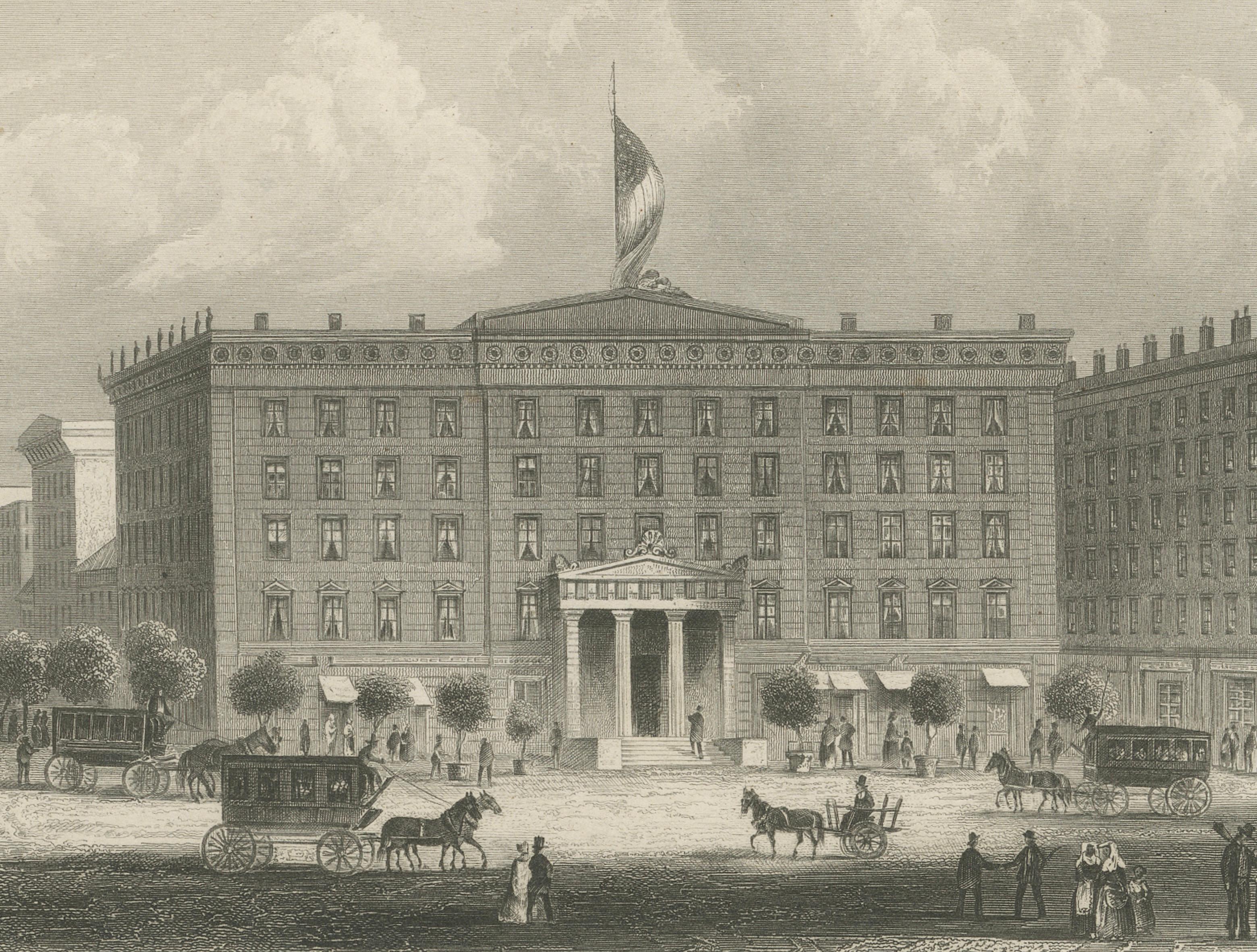
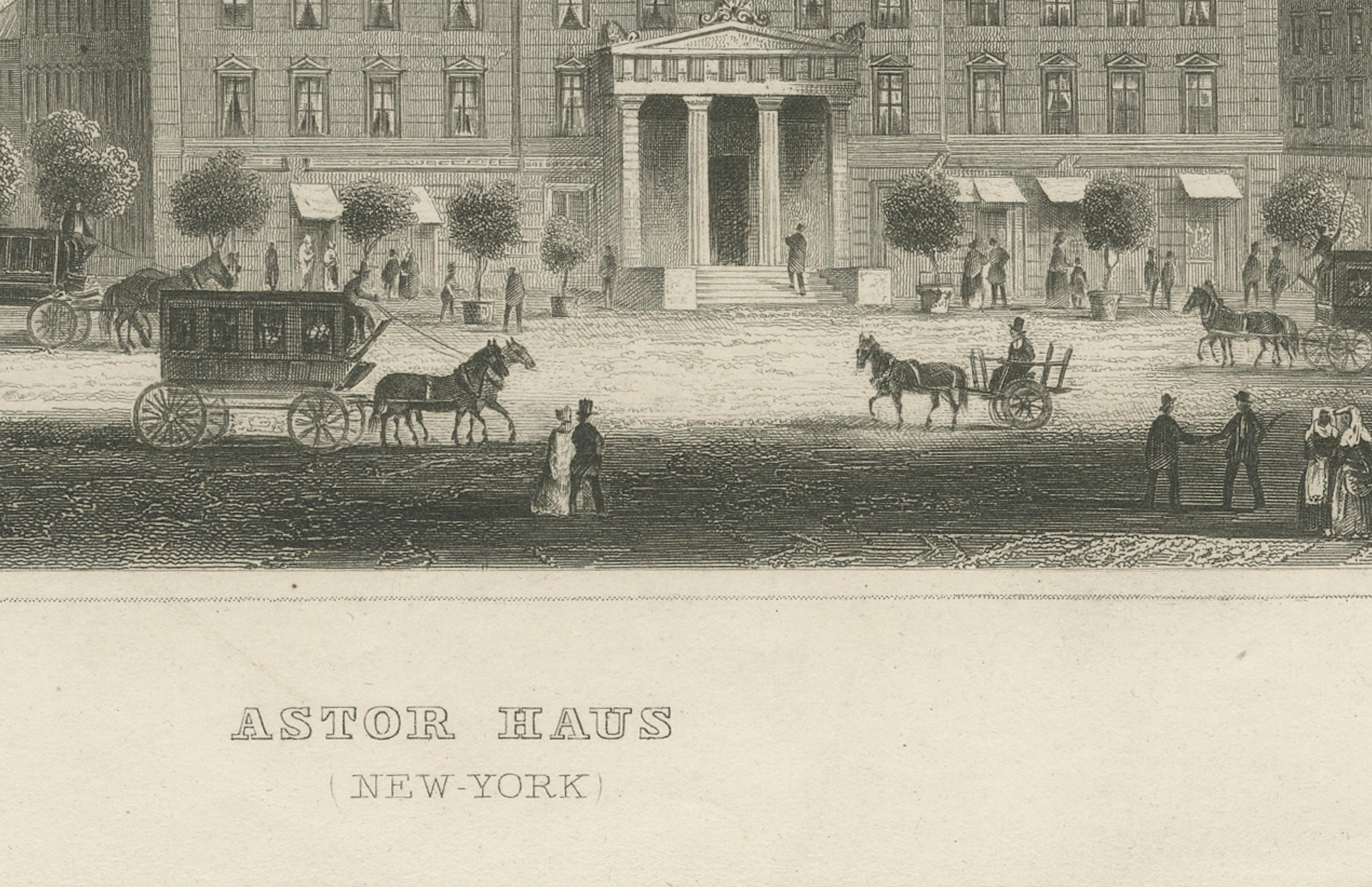
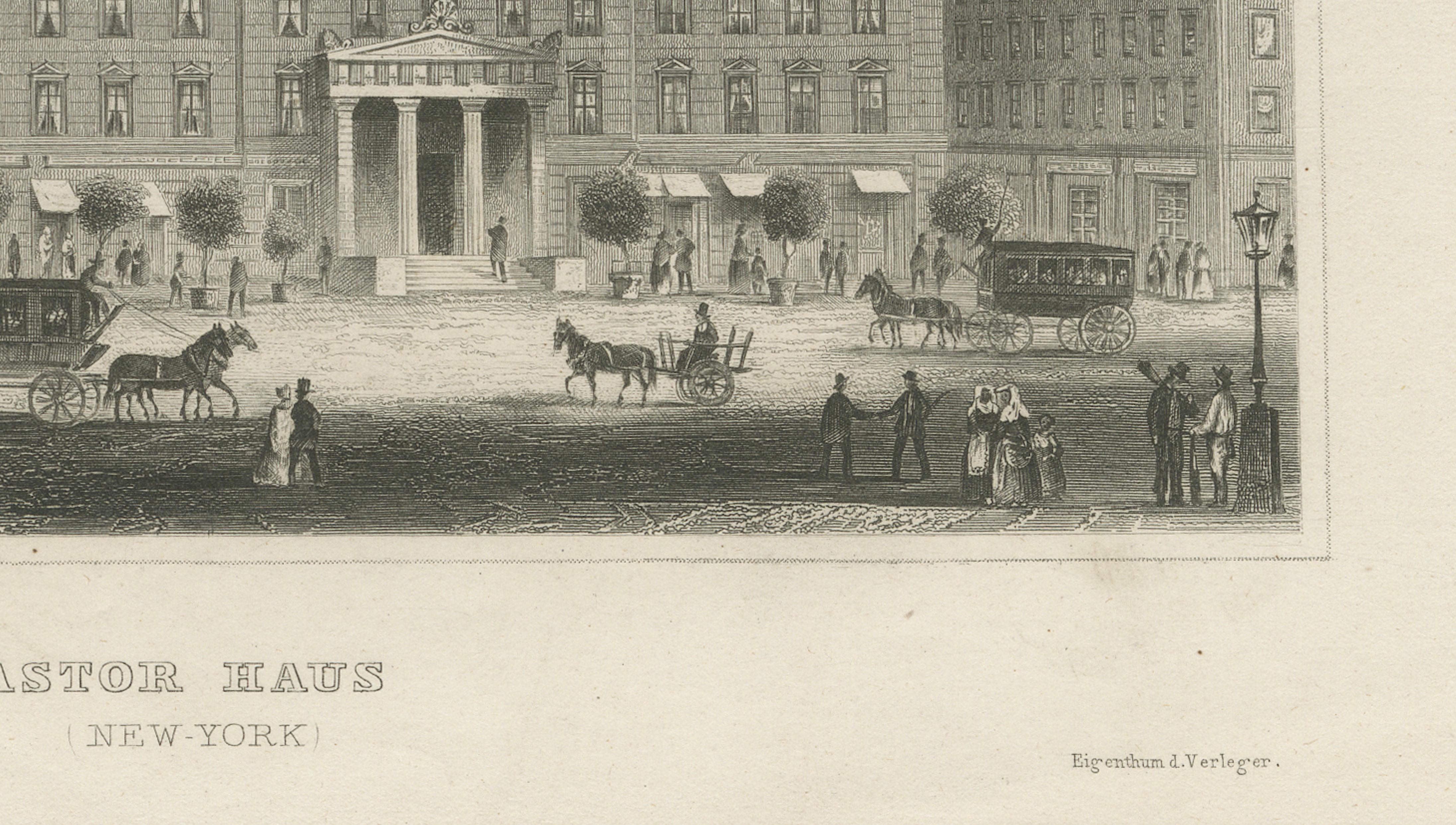
This finely executed 19th-century steel engraving depicts the celebrated Astor House, once the most prestigious hotel in the United States. The print shows the grand hotel façade along Broadway in Lower Manhattan and was published in the mid-19th century as part of the famous European illustrated series Meyers Universum, issued by the Bibliographisches Institut in Germany. These engravings introduced readers across Europe to the most important cities, landmarks, and architectural achievements of the rapidly developing United States.
The Astor House opened in 1836 and quickly became the premier hotel in New York City and one of the most renowned hotels in America. It was built by the wealthy merchant and real-estate magnate John Jacob Astor, one of the richest men of his era. Astor assembled the entire block between Vesey Street and Barclay Street on Broadway to construct what was then considered an exceptionally modern and luxurious establishment.
The engraving portrays the imposing granite building dominating the streetscape. Its dignified classical architecture, symmetrical façade, and central portico entrance reflect the architectural taste of the period. A large American flag flies from the roof, symbolizing the growing confidence of the young nation during the mid-19th century.
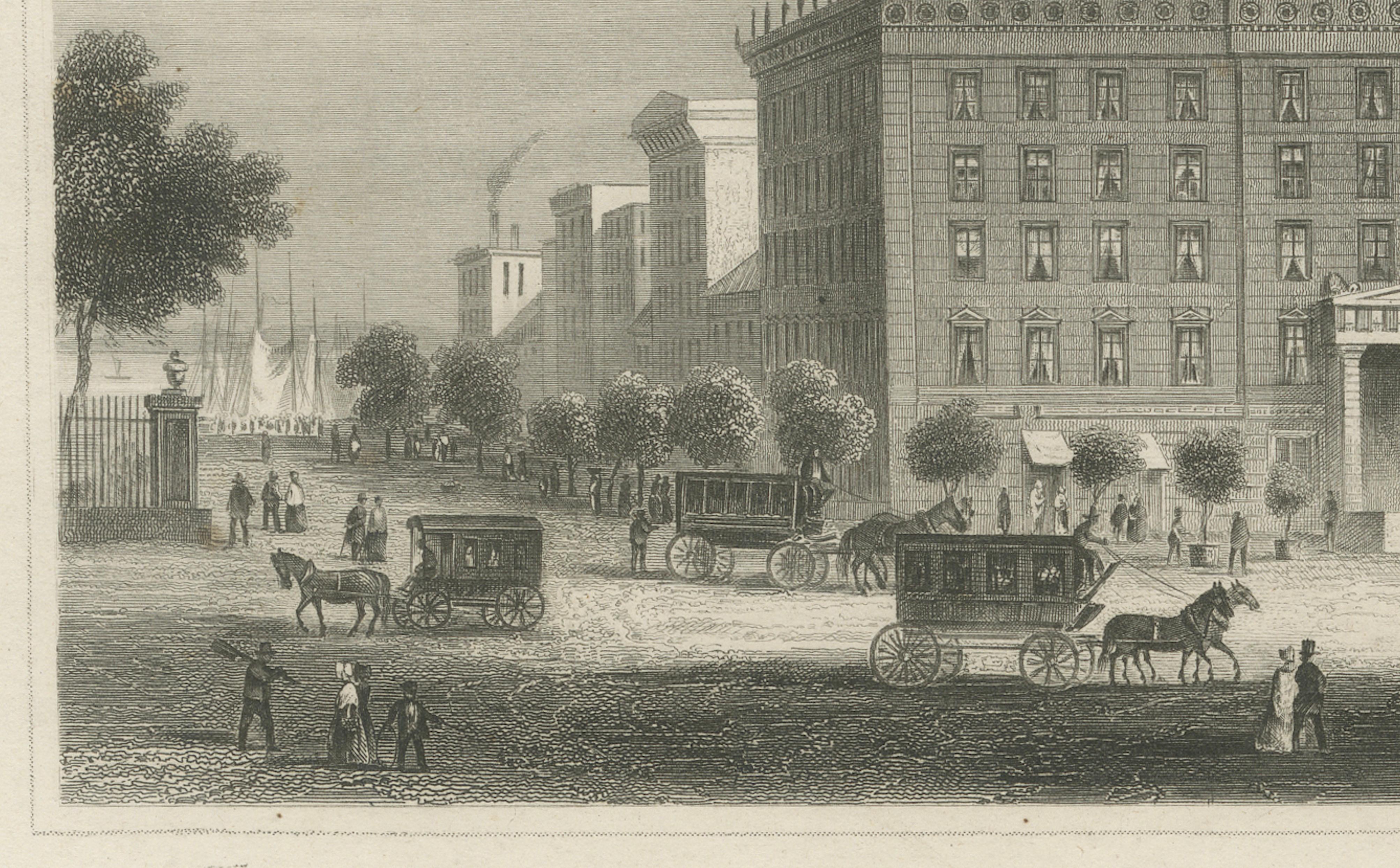
The lively street scene in the foreground illustrates daily life in Lower Manhattan during this period. Horse-drawn carriages, stagecoaches, and pedestrians animate the busy avenue, while well-dressed visitors arrive and depart from the hotel. Such activity emphasizes the role of the Astor House as a central meeting point for politicians, businessmen, travelers, and diplomats.
Technologically, the hotel was far ahead of its time. It featured its own gas plant for lighting and an innovative steam-powered pumping system that supplied water throughout the building—luxuries that few buildings possessed at the time. These innovations made the Astor House a symbol of modern urban comfort and sophistication.
For decades the hotel remained the social and commercial heart of New York. Famous guests included statesmen, writers, international visitors, and wealthy merchants conducting business in the rapidly expanding metropolis. As New York grew northward and new luxury hotels appeared uptown, the Astor House gradually lost its prominence. The building was partially demolished in 1913 during subway construction, and the remainder was removed in 1926.
Today engravings such as this provide a rare visual record of one of the most important early landmarks of New York City. The print captures both the architectural grandeur of the hotel and the dynamic urban life of Broadway in the mid-19th century.
Condition report:
Good condition for its age with light age toning and minor spotting mainly in the margins. Plate mark visible. Paper remains strong and well preserved.
Framing tips:
This engraving displays beautifully in a dark walnut or black frame with a generous ivory or museum-white mat. The neutral tones of the engraving pair well with classic framing, making it an elegant decorative piece for both historic and contemporary interiors.
Technique: Steel engraving
Maker: Bibliographisches Institut (Meyers Universum), Germany, circa 1840–1855
Keyword block (nearby towns and neighborhoods):
New York City, Lower Manhattan, Broadway New York, Tribeca New York, Financial District Manhattan, City Hall New York, Battery Park New York, Greenwich Village New York, SoHo New York, Chinatown Manhattan, Brooklyn New York, Hoboken New Jersey, Jersey City New Jersey, Newark New Jersey, Harlem New York, Williamsburg Brooklyn, Manhattan historic districts.
SEO keyword block:
Astor House print, Astor House New York engraving, antique New York hotel print, Broadway New York engraving, historic Manhattan city view, 19th century New York City print, antique NYC architecture engraving, John Jacob Astor hotel print, historic Broadway street scene, New York carriage scene engraving, decorative antique cityscape print, Meyers Universum engraving, Bibliographisches Institut print, collectible New York history print, antique American city view, early New York architecture artwork.