About this sheet
Monumental Bavarian Altars – Architectural Triptych, Munich 1874
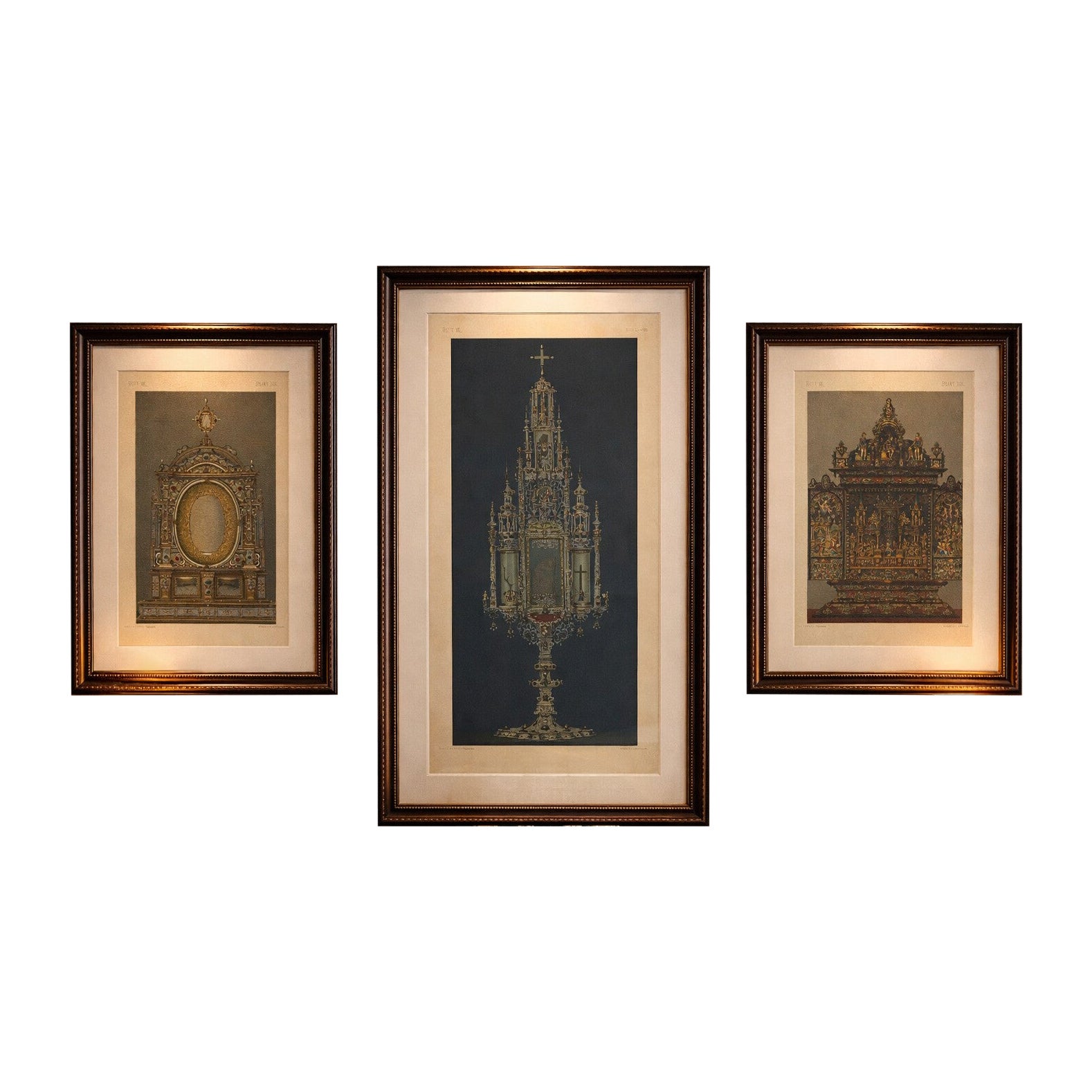
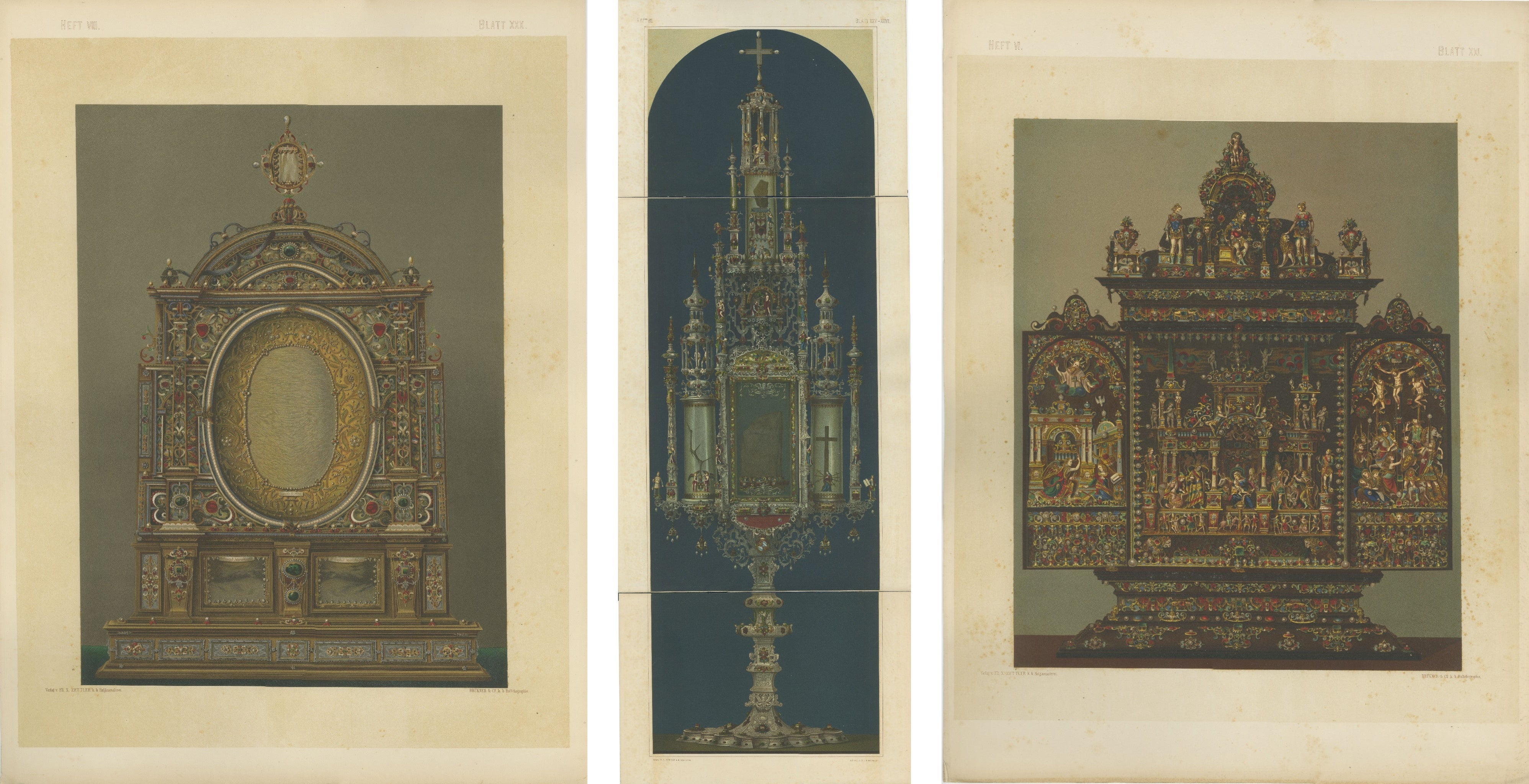
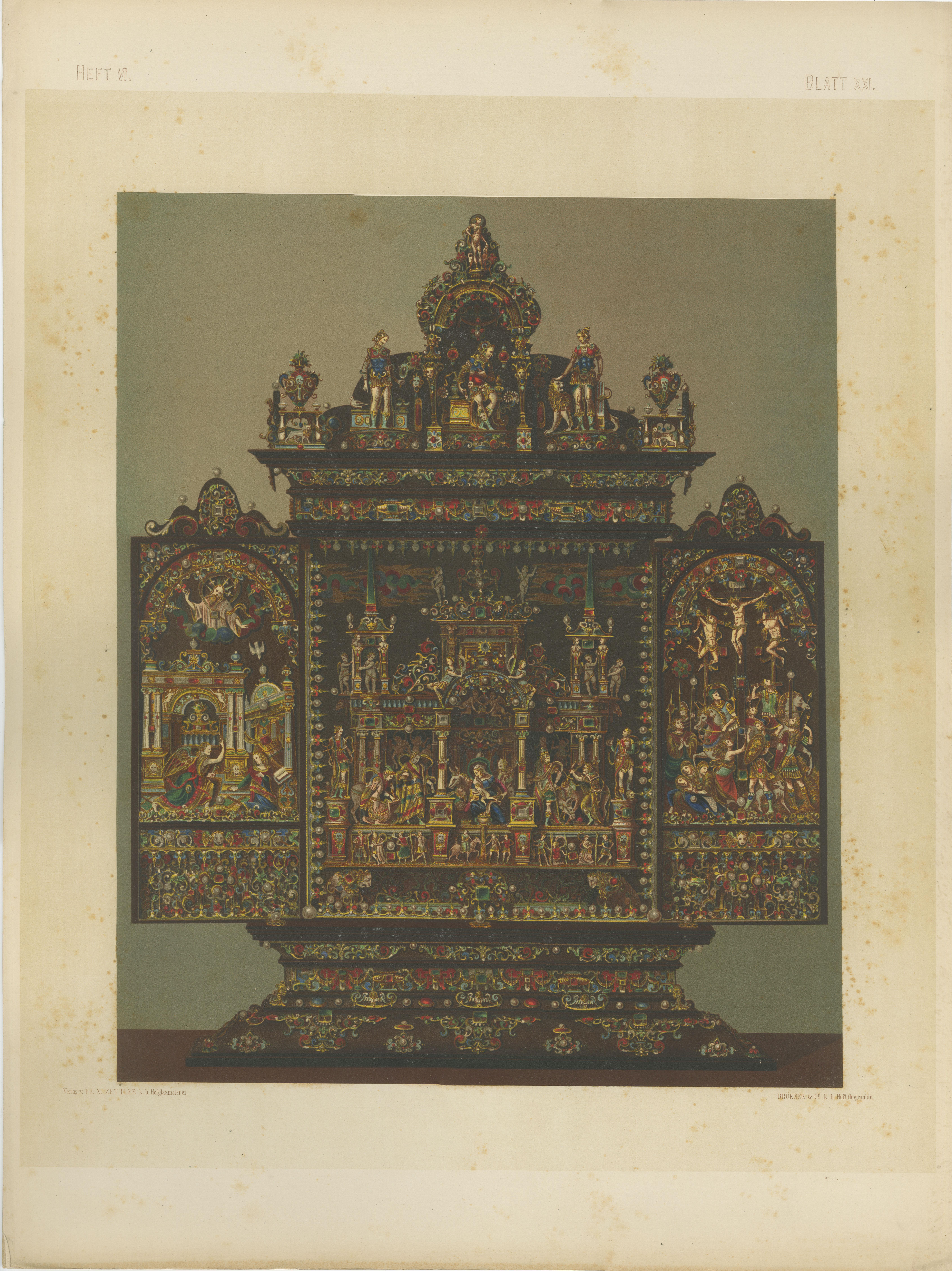
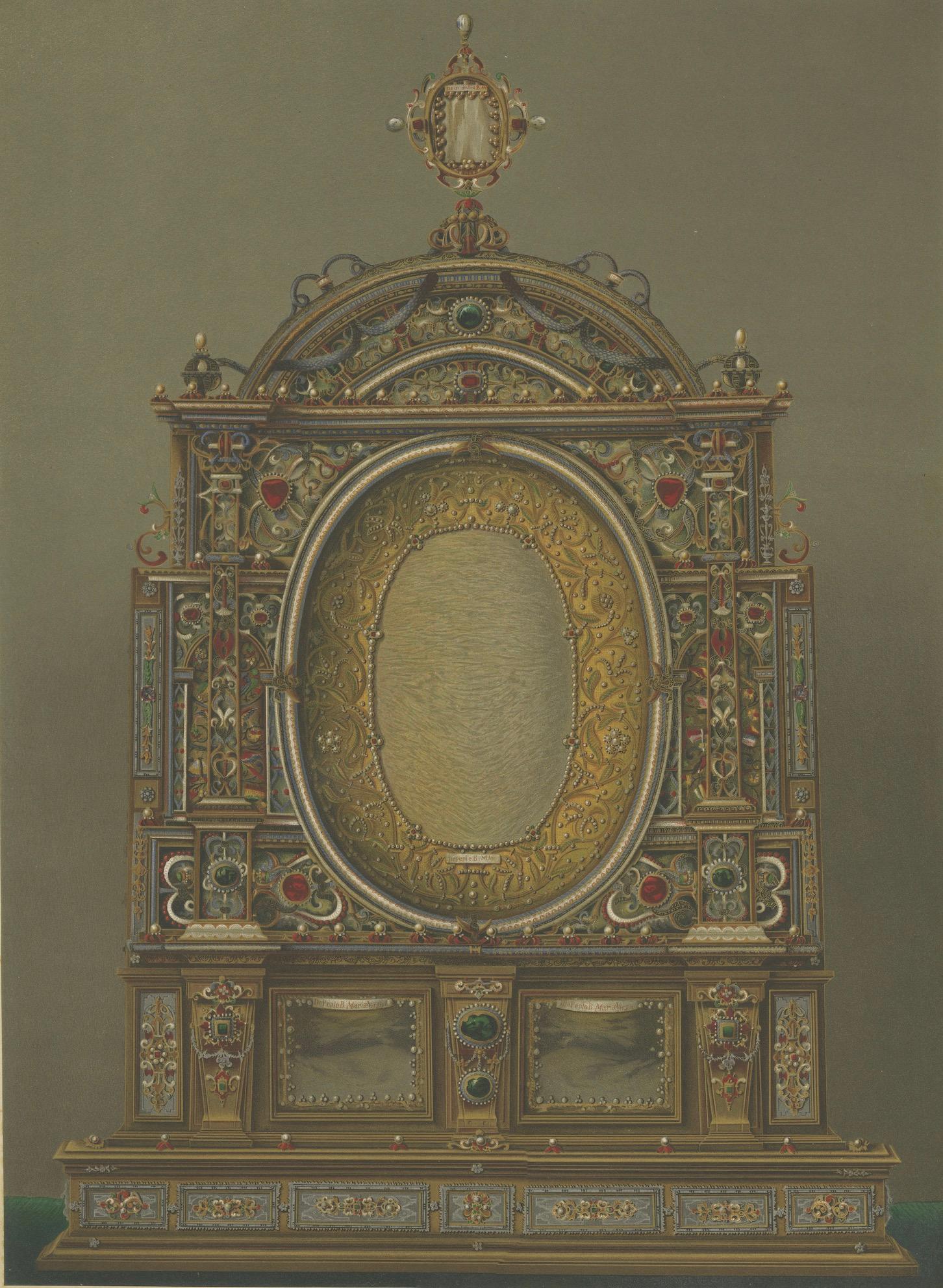
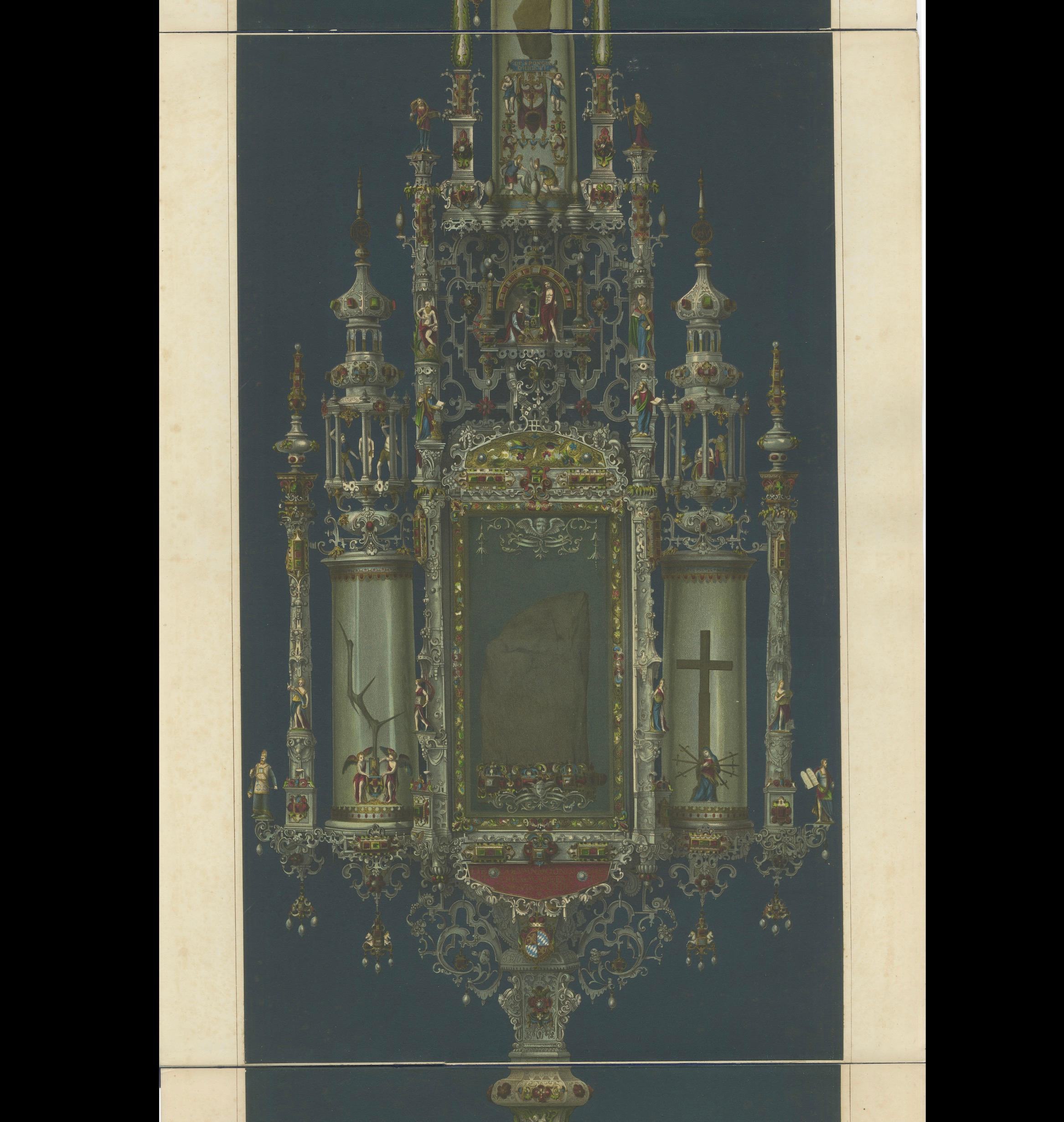
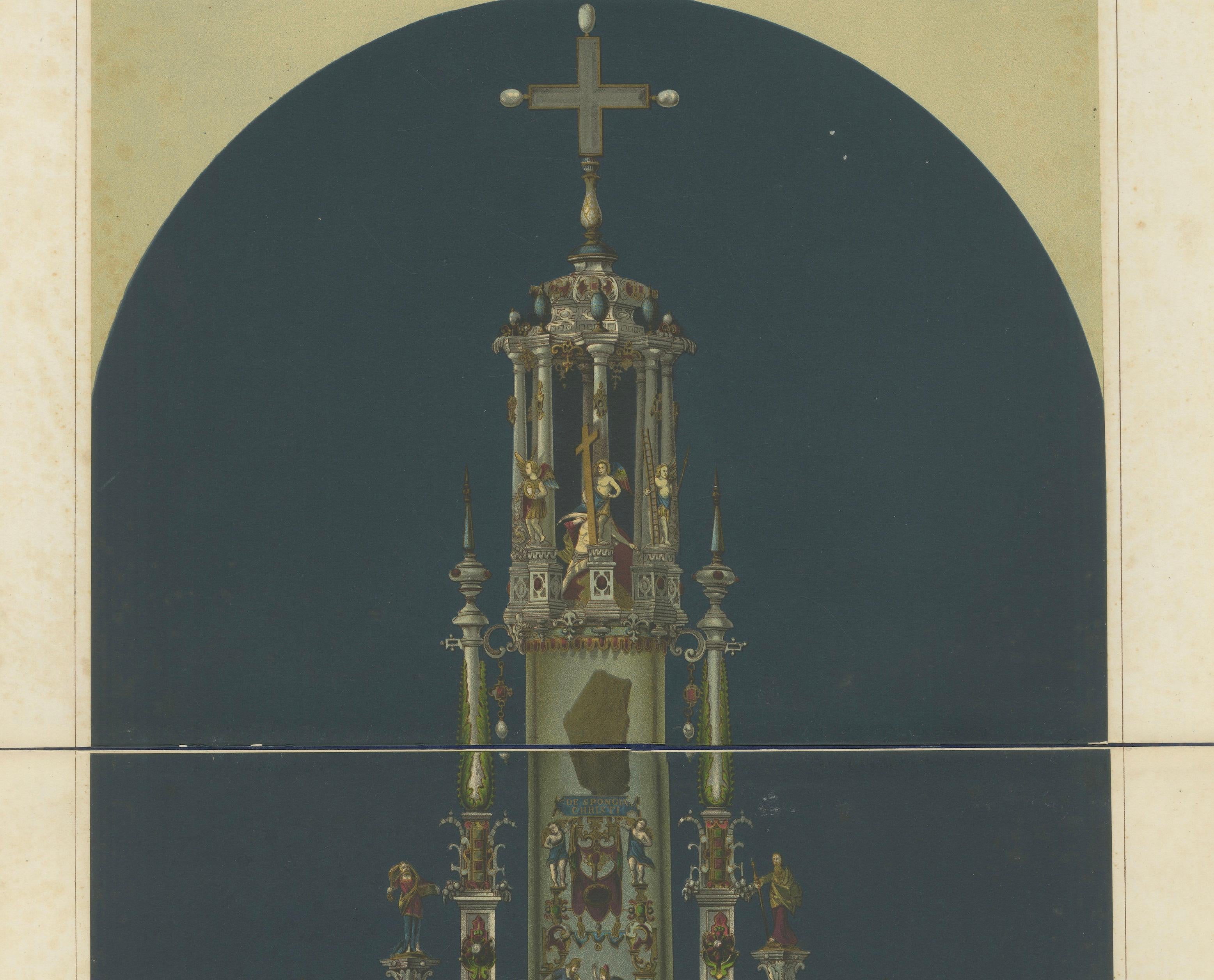
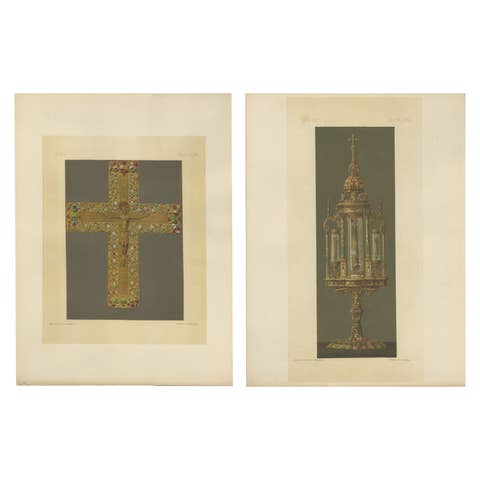
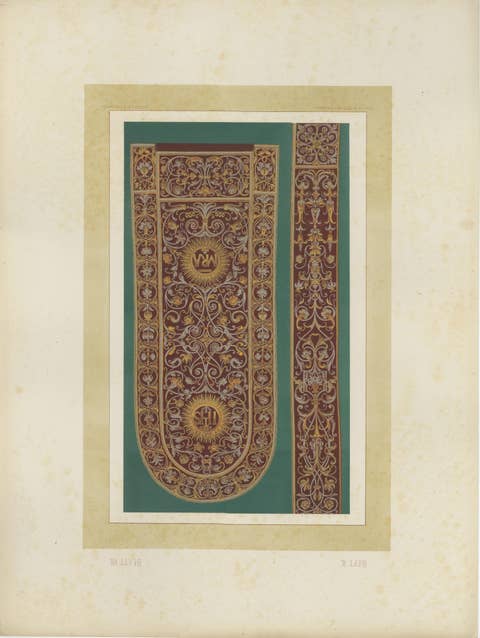
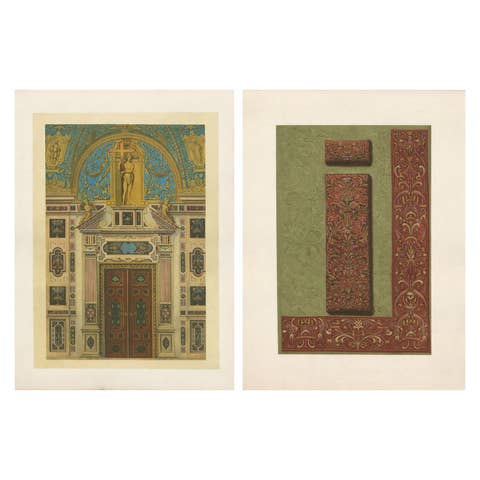
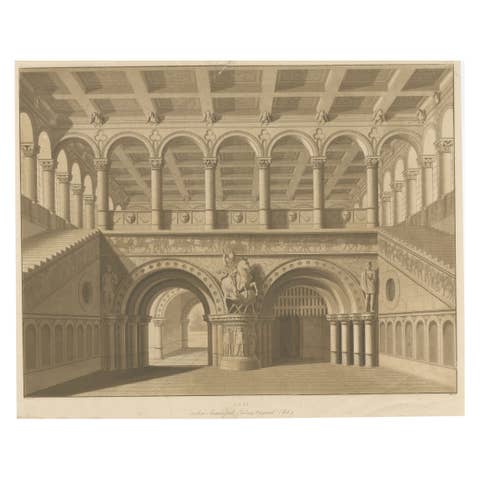
This exceptional triptych presents three monumental chromolithographs depicting grand altar and shrine architecture from the royal treasury of the Reiche Kapelle (Royal Chapel) in the Munich Residenz. Published in 1874 by F. X. Zettler during the reign of King Ludwig II of Bavaria, these works belong to the celebrated series Ausgewählte Kunstwerke aus dem Schatze der Reichen Capelle in der königlichen Residenz zu München, documenting the ceremonial splendor and artistic ambition of the Bavarian court.
The plates are offered unframed, giving flexibility to select a frame that best suits the intended interior.
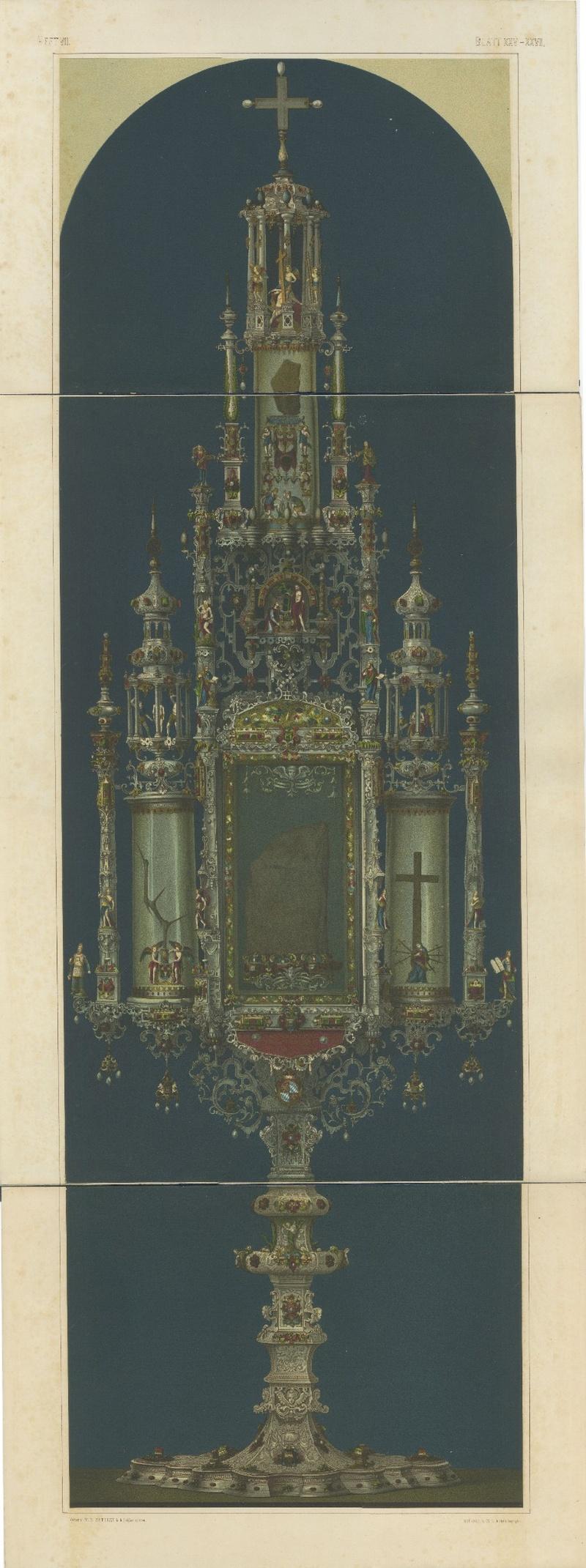
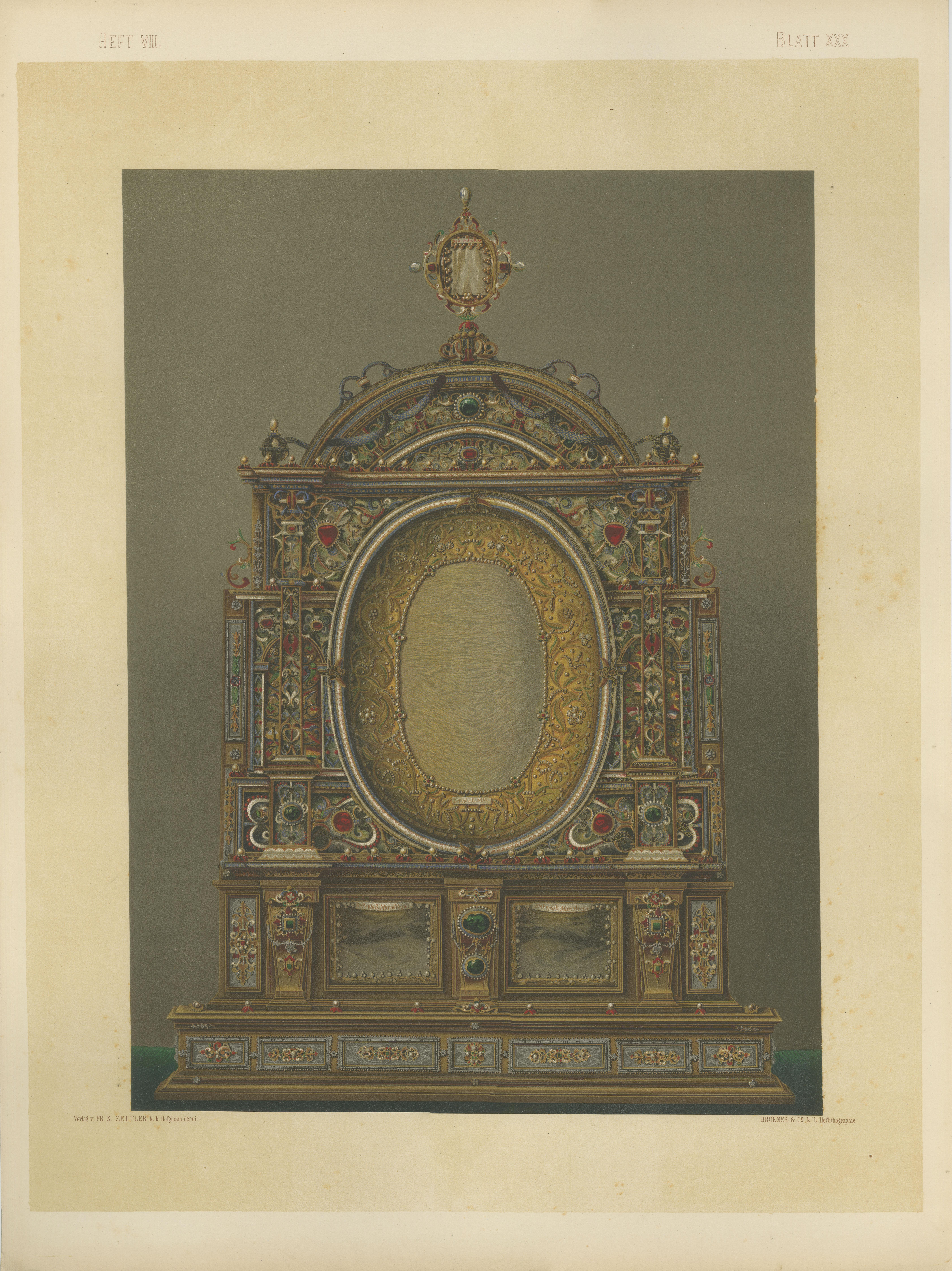
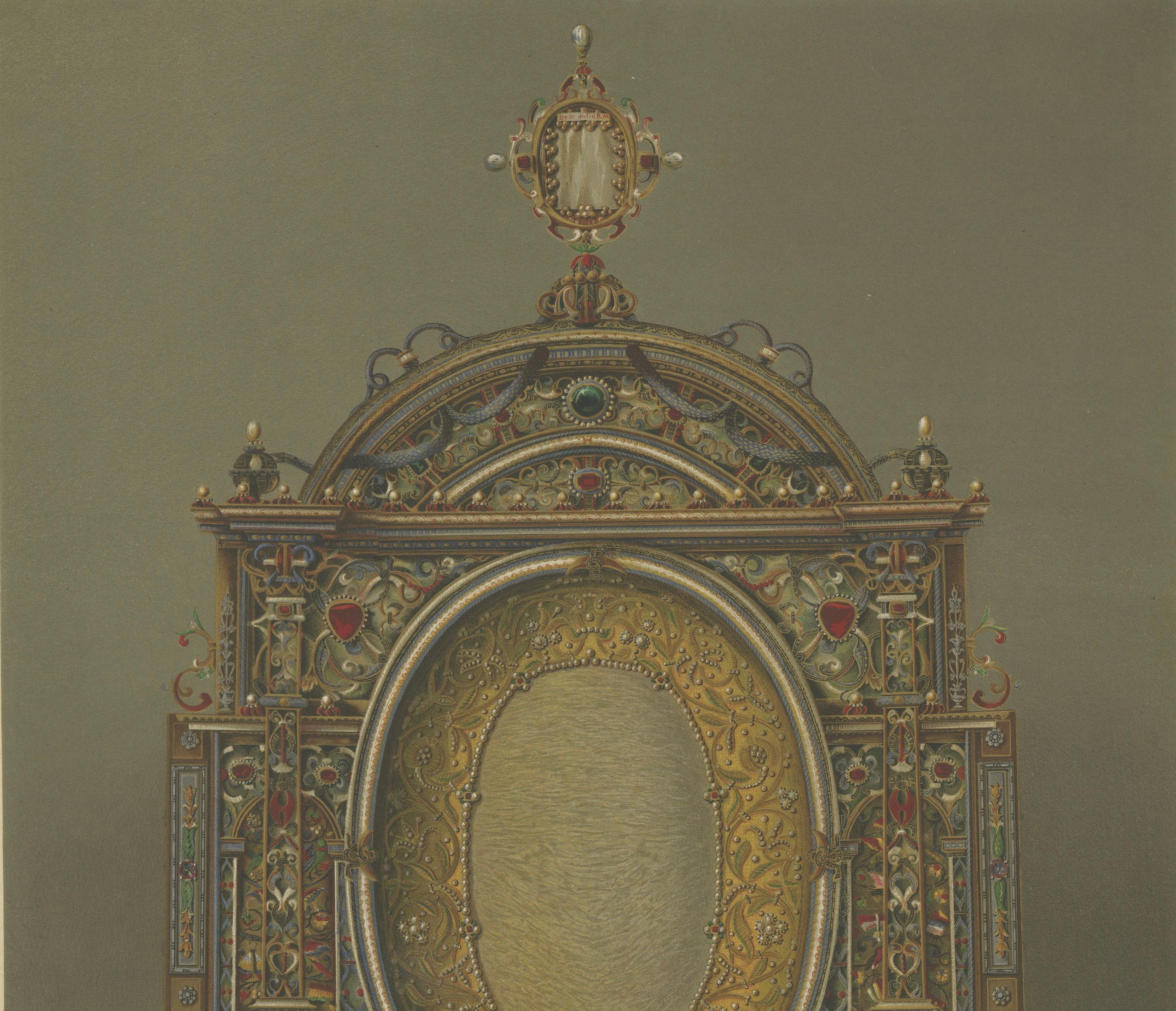
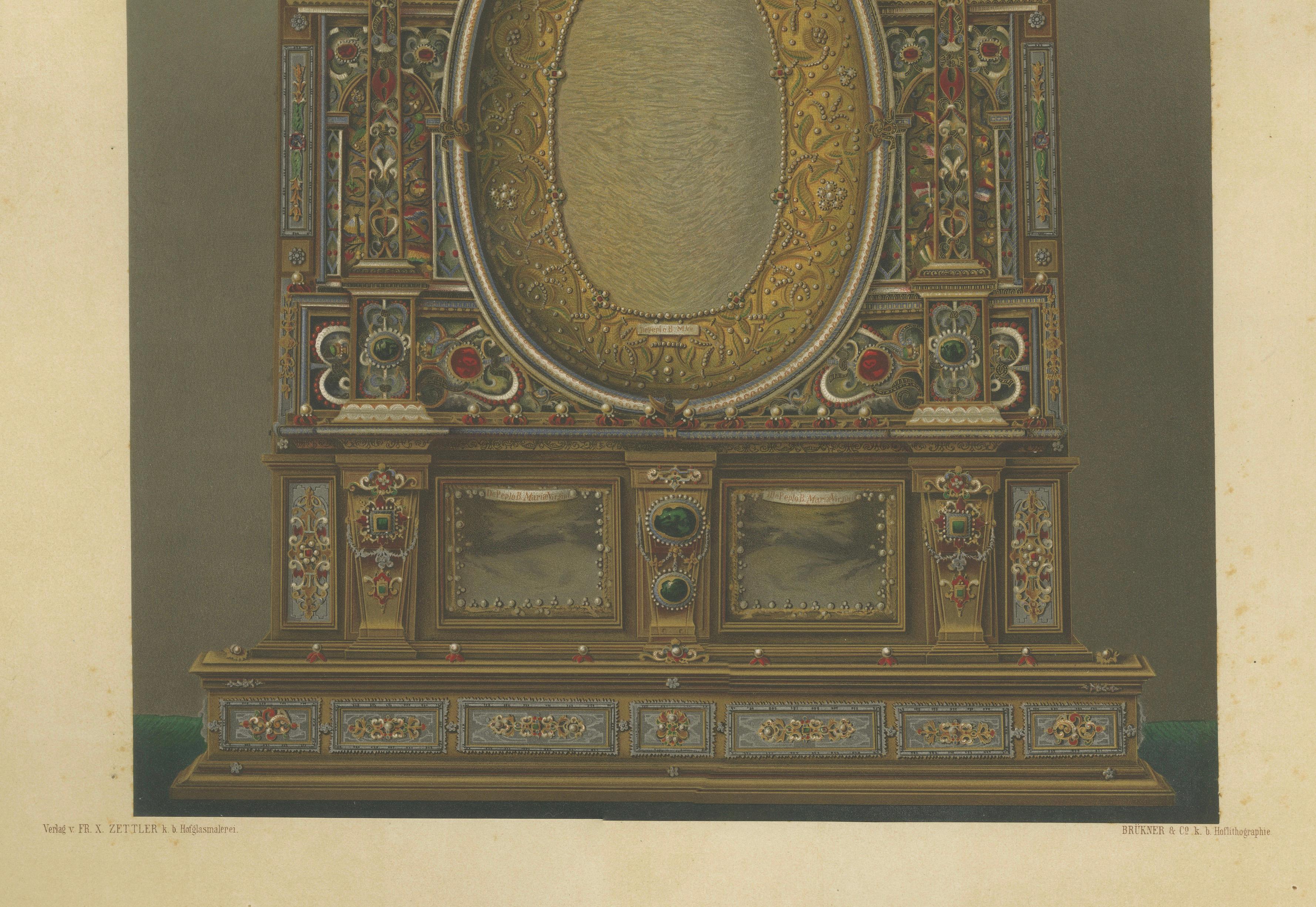
The group is conceived as a deliberate architectural ensemble rather than a set of matching images. At its center stands an exceptionally tall, multi-tiered shrine crowned by a cross finial, conceived as the axial and liturgical focus of the group. This dominant vertical structure is flanked by two monumental altar compositions: one an ornate architectural reliquary façade articulated around an oval opening, the other a richly polychrome altar with narrative panels and sculptural detail. Together, the three plates evoke the spatial hierarchy of a cathedral interior, with a central relic shrine framed by narrative and architectural supports.
Each plate is rendered as an isolated object against a muted ground, emphasizing form, scale, and craftsmanship. The chromolithographic technique captures jewel-like color, gilded surfaces, and intricate ornament with remarkable precision, reflecting the high technical standards of late 19th-century Bavarian art publishing. The differences in scale and proportion between the plates are intentional and historically appropriate, reinforcing the sense of architectural hierarchy rather than visual uniformity.
Offered here as a unified triptych, this ensemble is particularly suited to collectors, institutions, or historically informed interiors seeking works of significant presence and intellectual weight. It is not a decorative grouping but a curated architectural statement, rare to encounter intact in this form on the market.
Condition:
Overall good antique condition. Light foxing, edge wear, and minor fraying to the outer margins, primarily confined to the blank paper areas. Images remain strong and well-preserved with vivid original color. The central tall plate shows expected handling wear consistent with size.
Framing tips:
This triptych benefits from framing that acknowledges hierarchy rather than uniformity. Use generous ivory or soft warm-white mats throughout, with the central plate framed slightly taller or given additional mat depth. Dark walnut, ebonized wood, or restrained antiqued gilt frames complement the rich polychromy. Hang with the tallest plate centered, flanked by the two broader altars, allowing balanced spacing to reinforce the architectural dialogue. The plates are sold unframed.
Technique: Chromolithograph
Maker: F. X. Zettler, Munich, 1874
Keywords:
monumental altar architecture, Bavarian altar design, church architectural art, Munich Residenz chapel, Ludwig II Bavaria, German historicist architecture, 19th century ecclesiastical architecture, altar shrine architecture, cathedral altar design, royal chapel Munich, German chromolithography, museum scale religious art, architectural wall art, European sacred architecture, polychrome altar illustration, historic church interiors, devotional architecture, collectible architectural prints, institutional religious art, F. X. Zettler Munich, Bavarian court architecture, altar structure illustration, sacred architecture study, large folio chromolithographs, architectural triptych