Original antique · The actual sheet photographed · Certificate of authenticity on request · Sold unframed · Worldwide shipping from € 15 (rates)
Date
1874
Mapmaker / artist
F. X. Zettler, Munich, 1874
Technique
Chromolithograph
Sheet size
66 × 48 cm (26.0 × 18.9 in)
Condition
Good
Reference
BG-14257-3-1 & BG-14257-3-17
What the condition grades mean
Excellent
Bright and clean, with no faults worth mentioning.
Very good
Only light signs of age, such as faint toning.
Good
Normal signs of age for a sheet of this period: toning, some foxing, small marks or neat old repairs.
Fair
Clear faults such as staining, tears or repairs, priced to match.
Every fault we see is written in the condition note, and the whole sheet is shown uncropped in the photos.
Condition
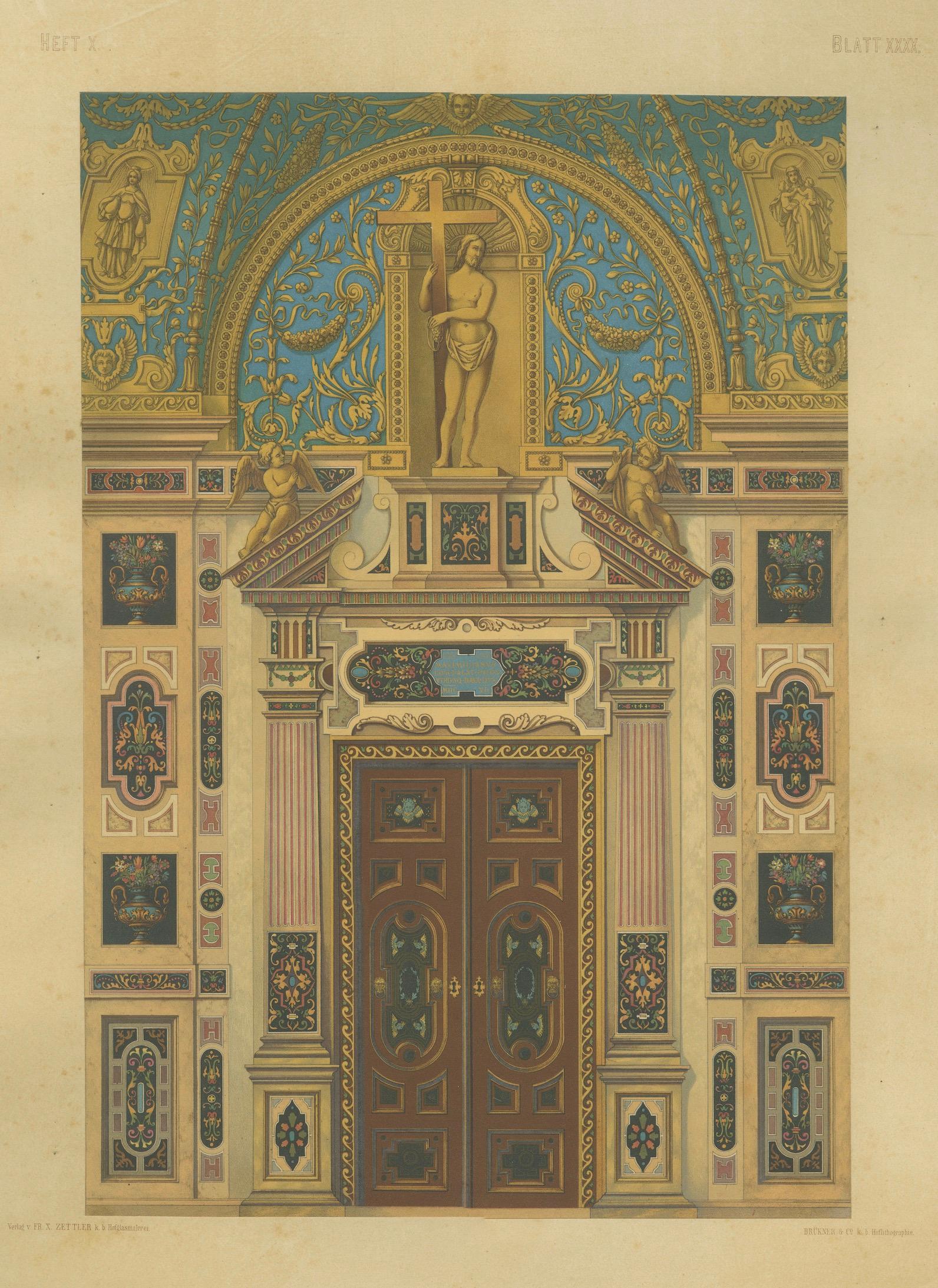
Overall good antique condition. Some fraying, edge wear, and light discoloration to the outer margins of the paper, primarily affecting the blank text-bearing areas. Images remain clean and well-preserved with strong original color.
About this sheet
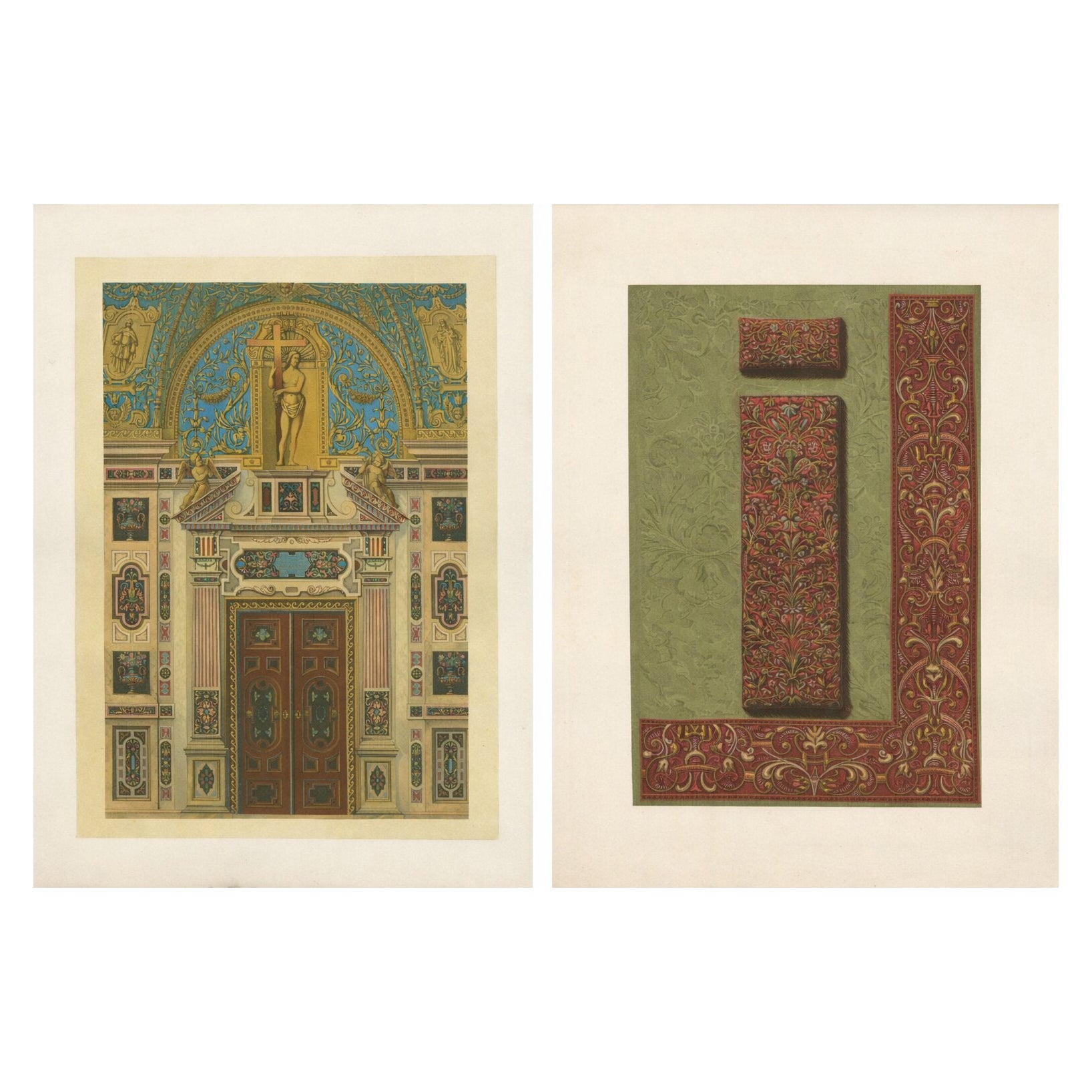
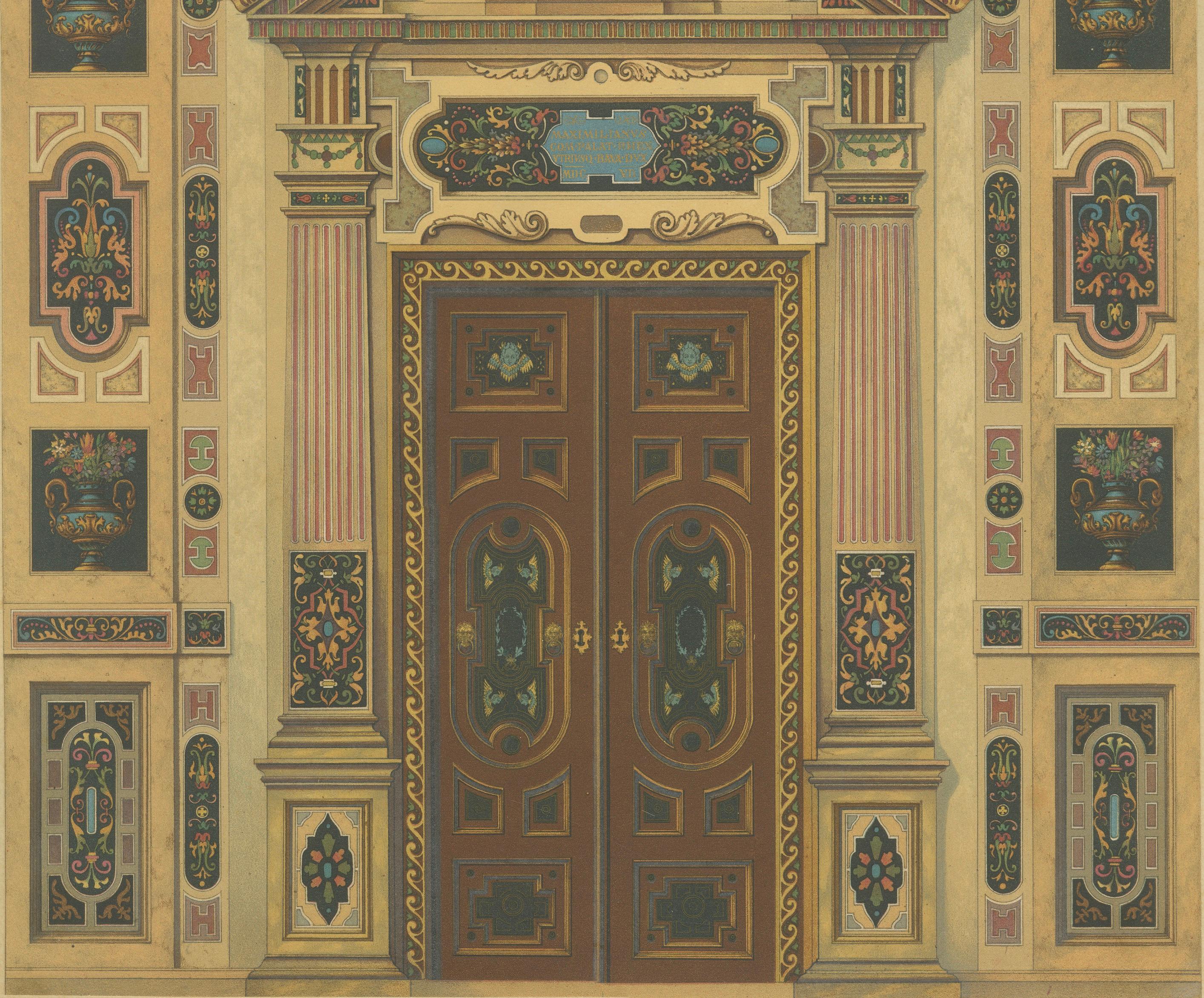
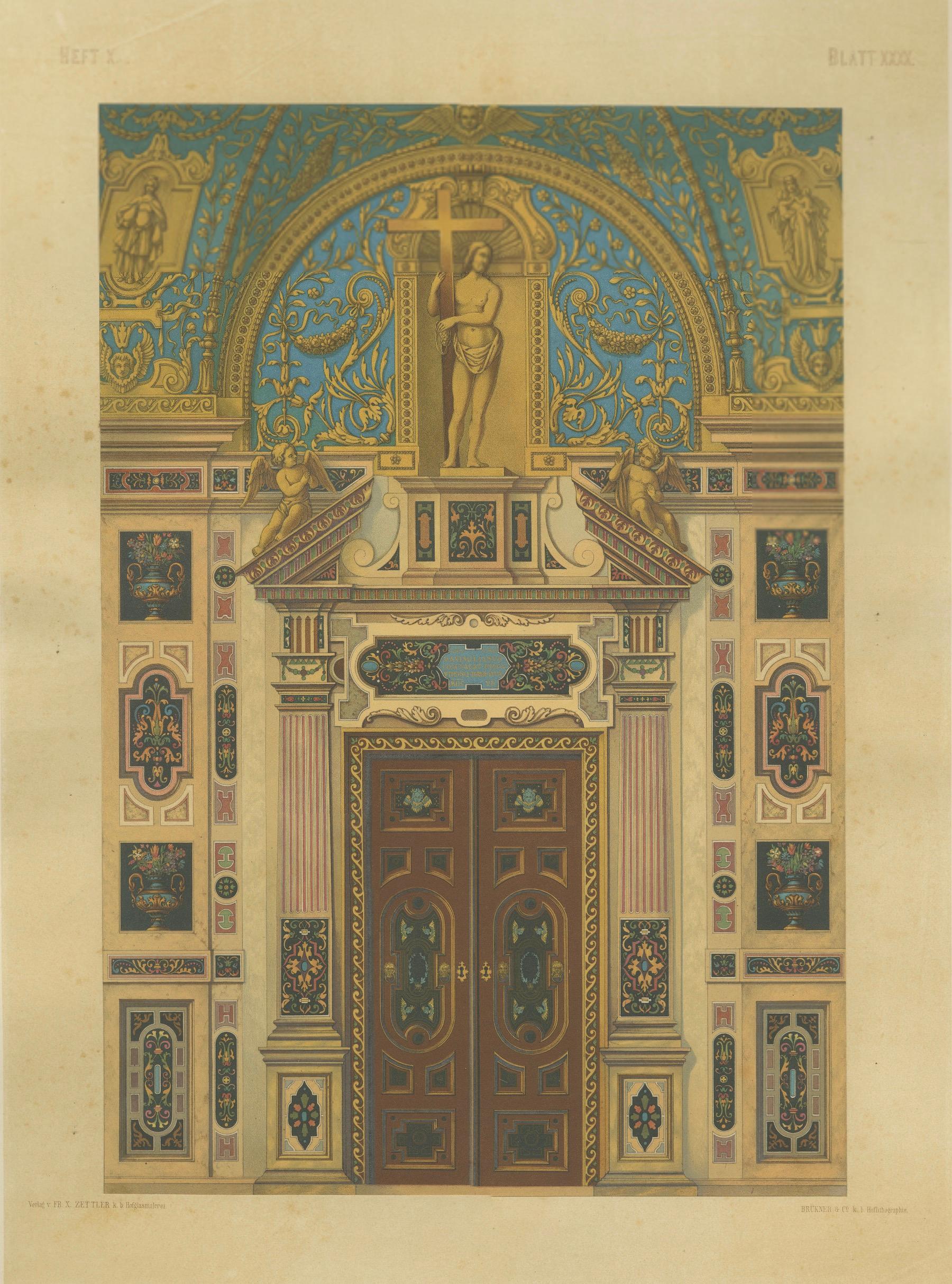
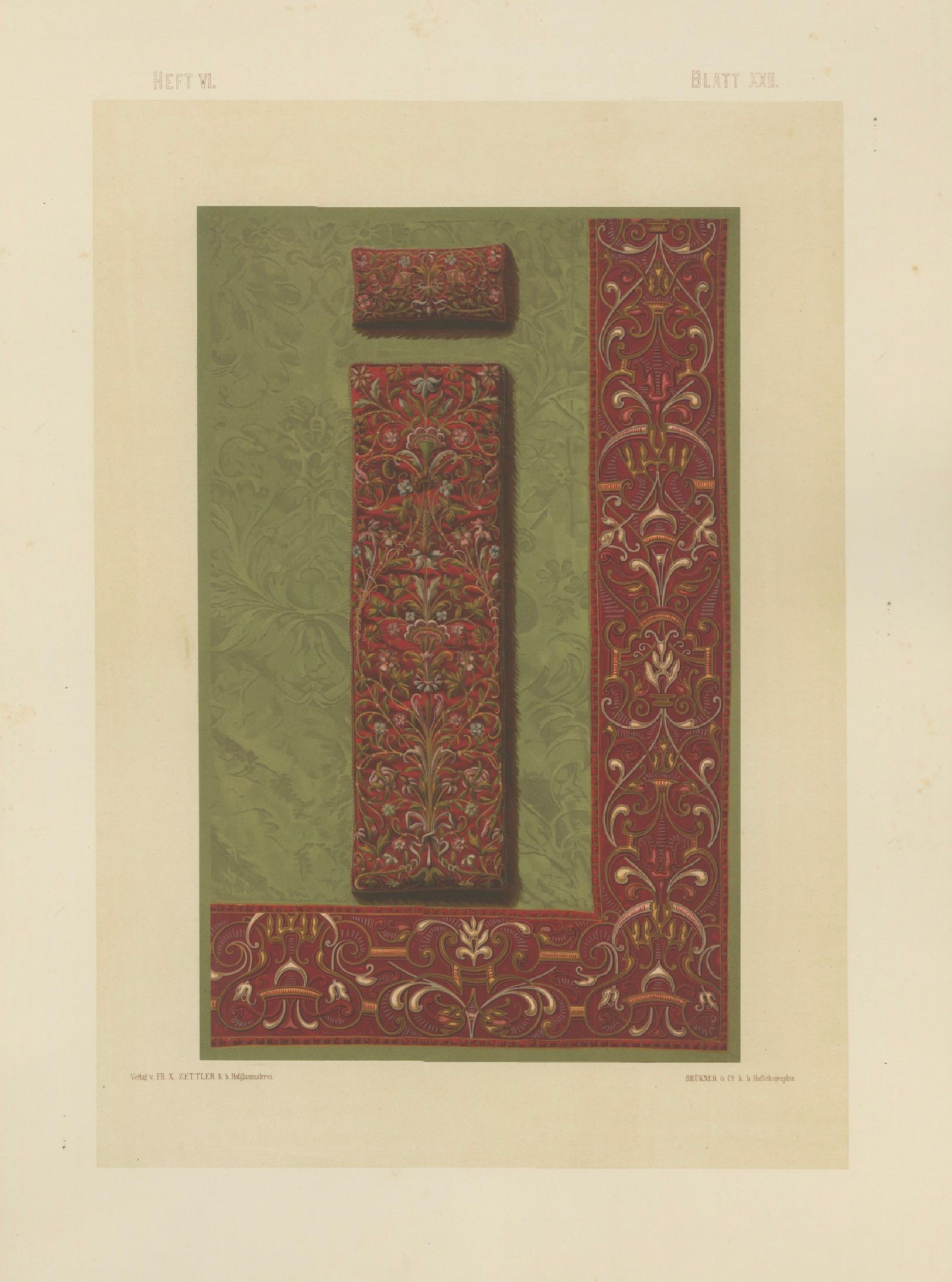
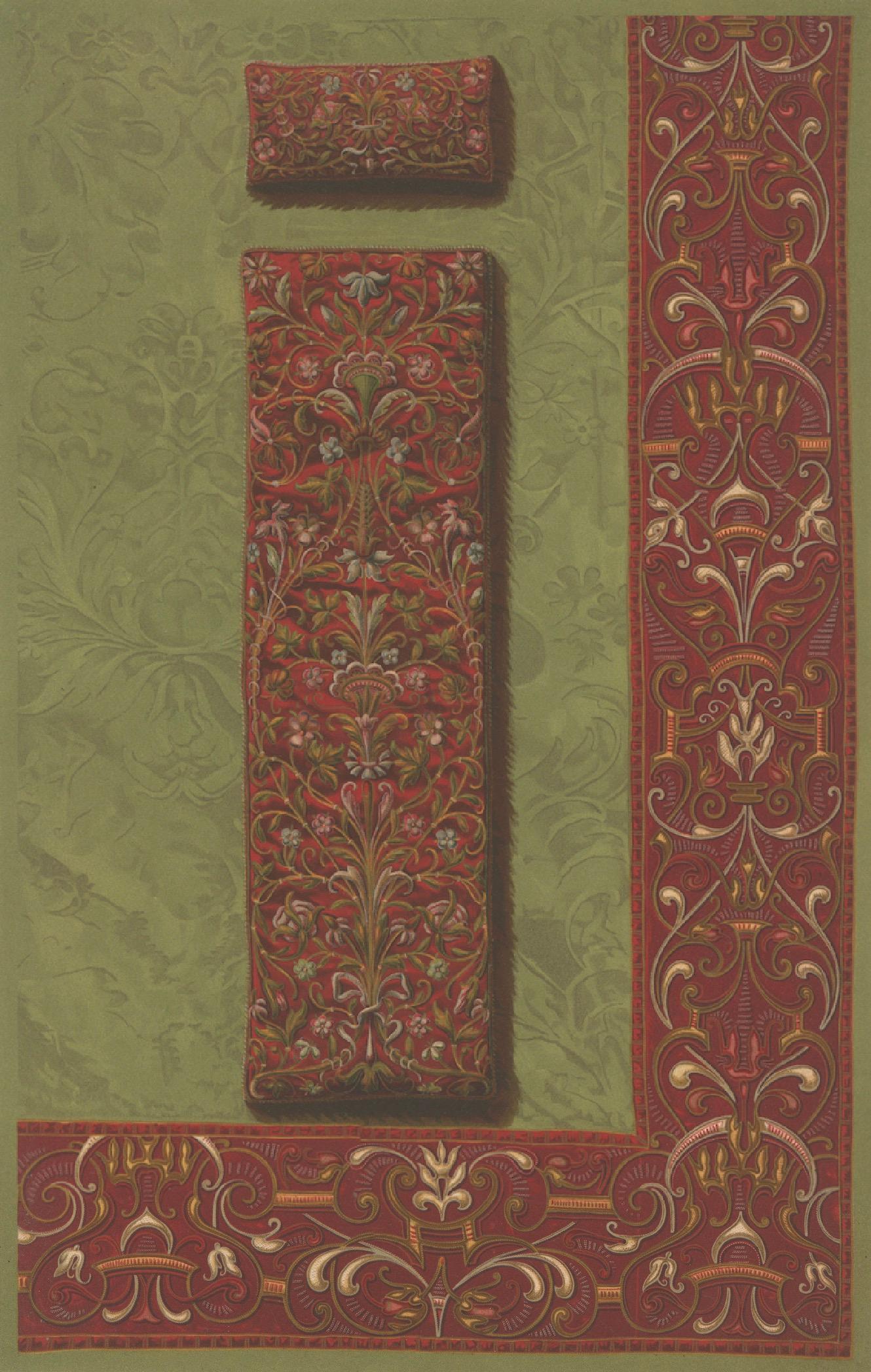
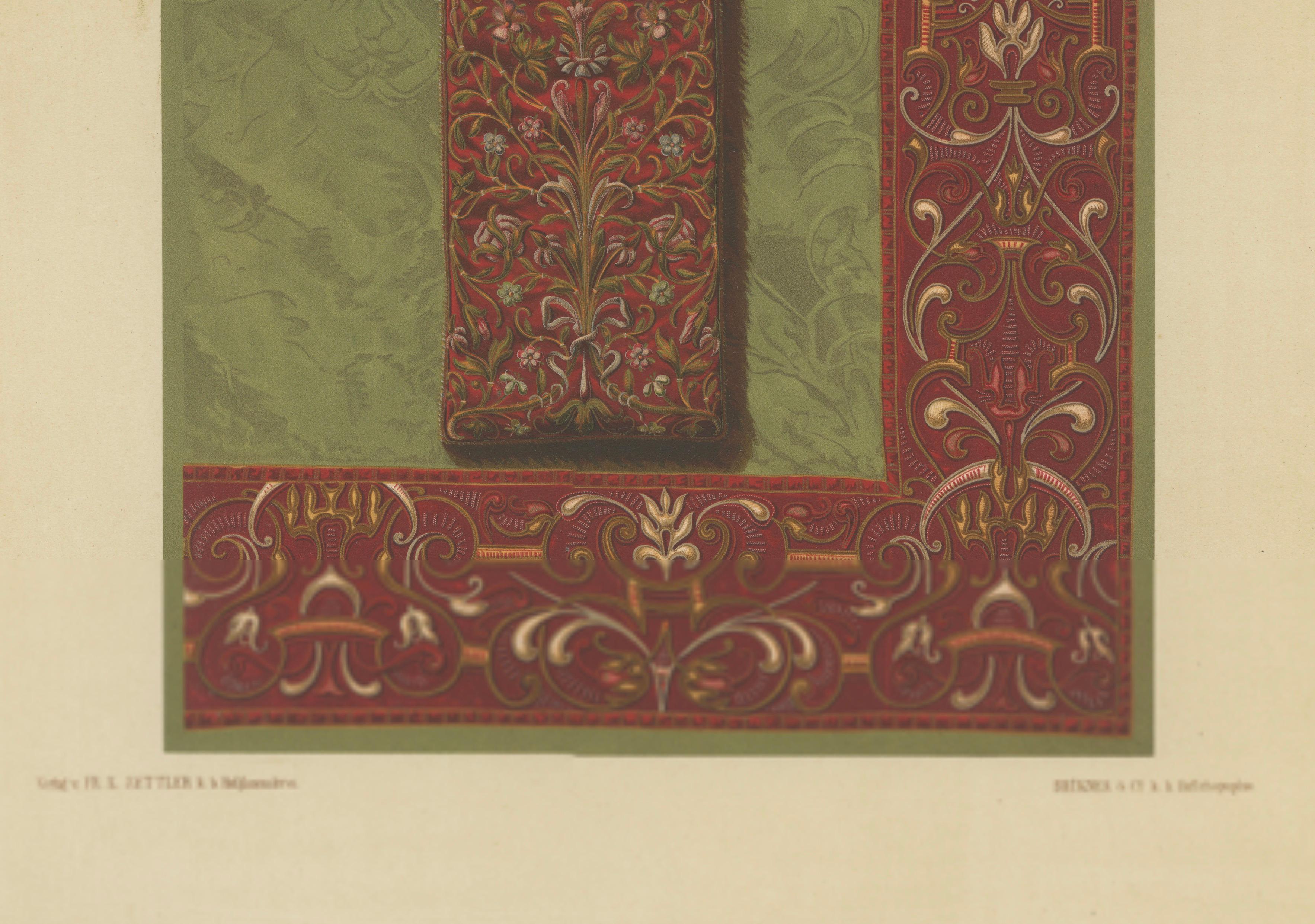
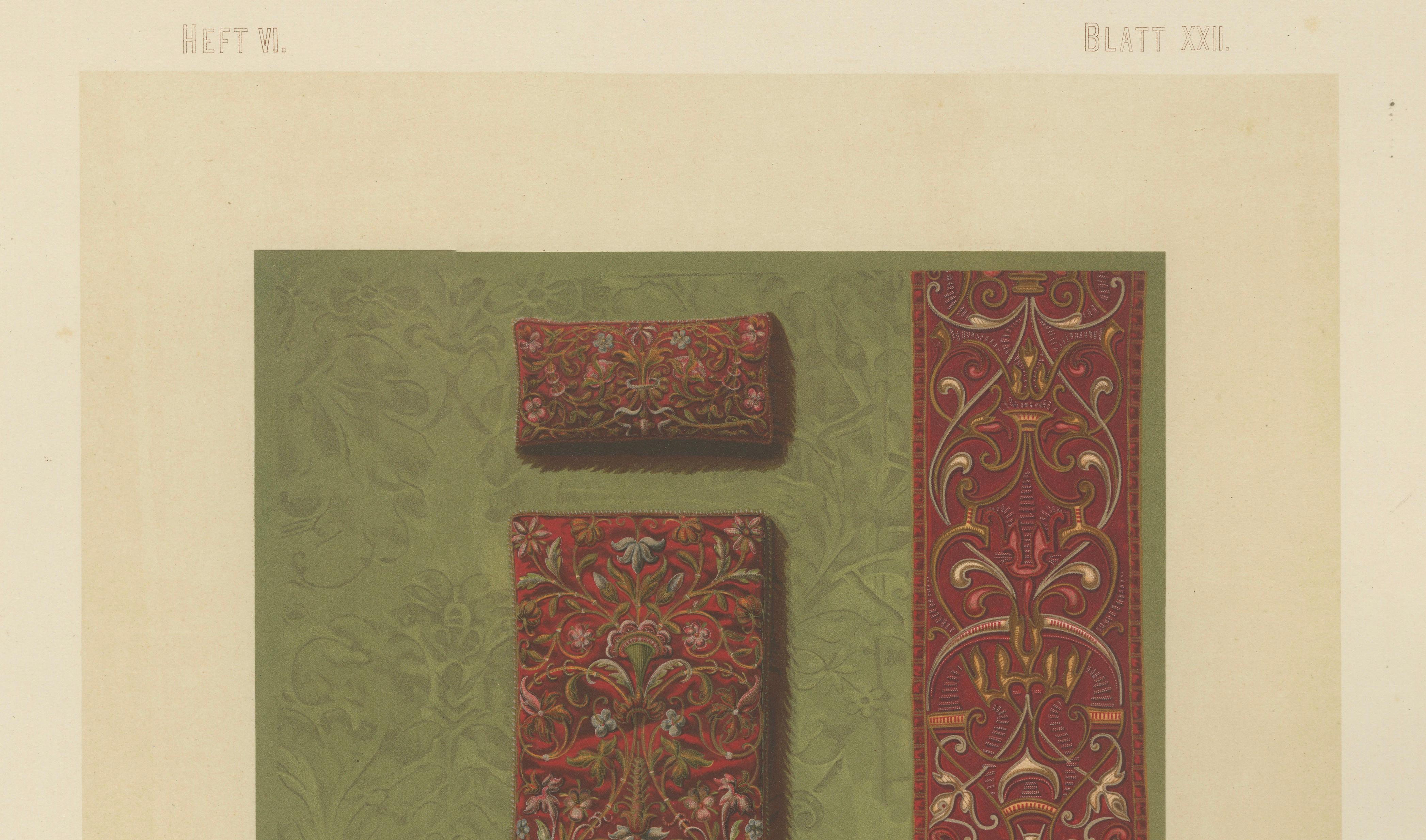
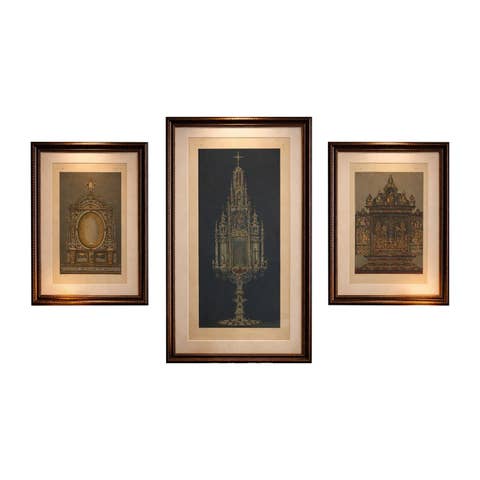
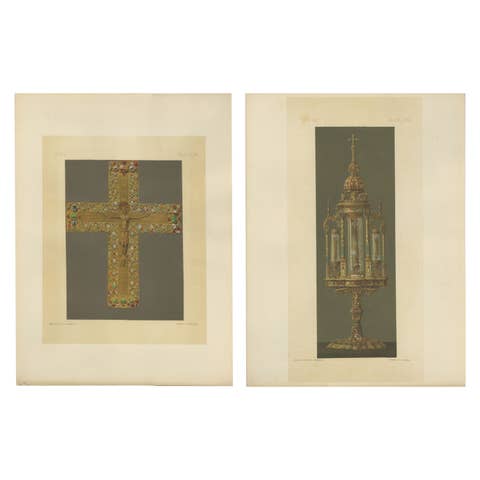
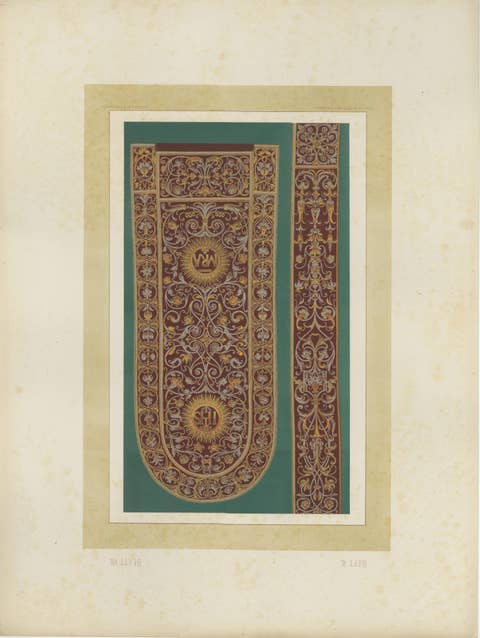
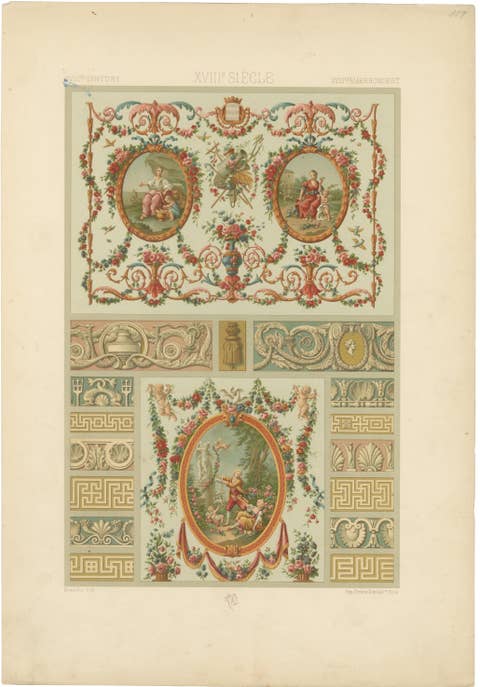
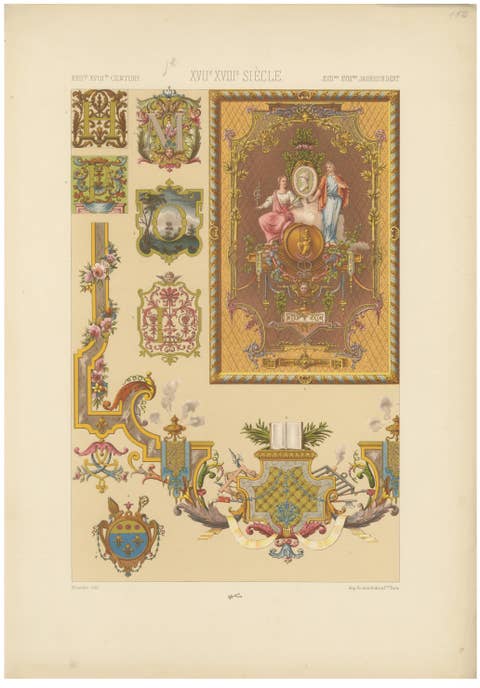
This striking pair of chromolithographs, produced in Munich in 1874 by the renowned workshop of F. X. Zettler, presents two richly decorative studies derived from the sacred treasures and architectural ornamentation of the Bavarian royal court. Issued as part of the celebrated portfolio Ausgewählte Kunstwerke aus dem Schatze der Reichen Capelle in der königlichen Residenz zu München, the prints document the elaborate ecclesiastical and ornamental design language preserved within the Reiche Kapelle (Rich Chapel) of the Munich Residenz during the reign of King Ludwig II of Bavaria.
These plates are offered unframed, enabling custom framing to personal or interior preferences.
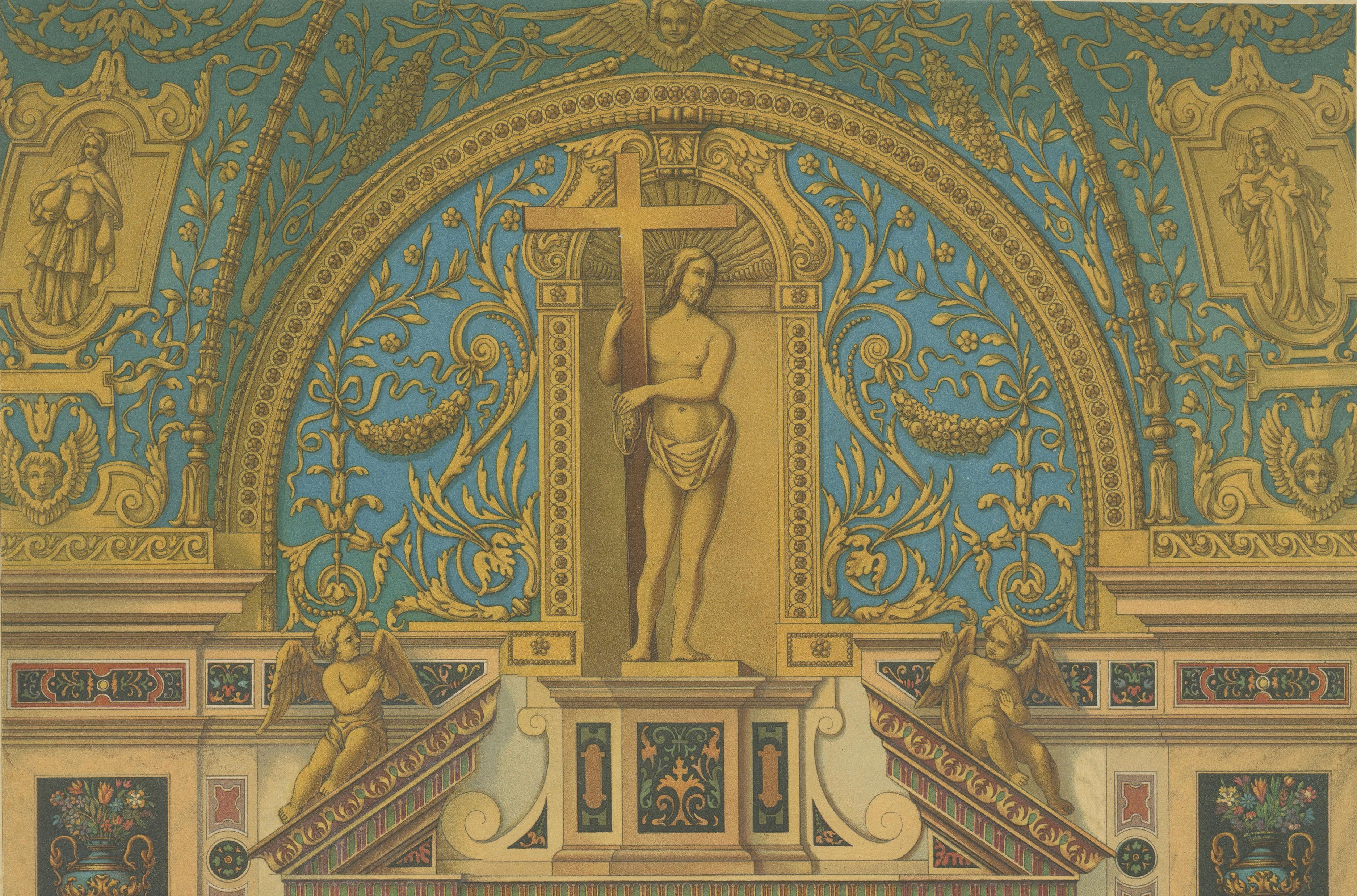
The first plate depicts an elaborate architectural altar or portal design, characterized by a harmonious combination of Gothic revival and historicist decorative motifs. A central sculptural figure beneath a cross is framed by ornate arches, scrolling foliage, and carefully structured architectural elements. The chromolithographic process faithfully captures the subtle tonal contrasts and vibrant color palette, emphasizing both the structural clarity and ornamental richness of the original work.
The second plate presents a detailed study of decorative textile or ornamental borders, likely derived from ecclesiastical vestments or interior ornamentation. The intricate vegetal patterns and rhythmic symmetry reflect the nineteenth-century revival of medieval design aesthetics, illustrating how historic sources were studied, documented, and reinterpreted by artists and designers of the period. Together, the pair highlights the breadth of artistic craftsmanship preserved within the Bavarian royal collections, from monumental architectural design to refined ornamental detail.
F. X. Zettler’s Munich workshop was internationally recognized for its mastery of chromolithography, producing prints that combined scholarly documentation with exceptional artistic quality. These plates were intended both as visual records of royal treasures and as inspirational references for artists, architects, and designers interested in ecclesiastical and historicist decoration.
Presented as a set, the prints offer strong visual balance, pairing architectural structure with ornamental detail. They appeal to collectors of sacred art, Gothic revival design, architectural ornament, and nineteenth-century decorative chromolithography. Their refined color harmonies and intricate compositions also make them particularly attractive for interior display, especially in traditional or design-focused environments.
Condition report: Age-related toning to margins with scattered foxing consistent with nineteenth-century paper; images remain strong with good color saturation and clear detail.
Framing tips: Display as a pair using matching dark wood or gilt frames with generous neutral mats to emphasize the architectural and ornamental contrast while maintaining visual cohesion.