Burning of a Village in Chahary, Madagascar: Hand-Colored 19th Century Engraving
€ 140
One of a kind: this is the sheet in the photographs. Ships from Langweer, the Netherlands.
Sheet size
15.5 × 24.5 cm (6.1 × 9.6 in)
Reference
BG-13093-10
Condition
good, given age. General age-related toning, especially around the text below the image and/or occasional minor defects from handling. Please study scan carefully.
About this sheet
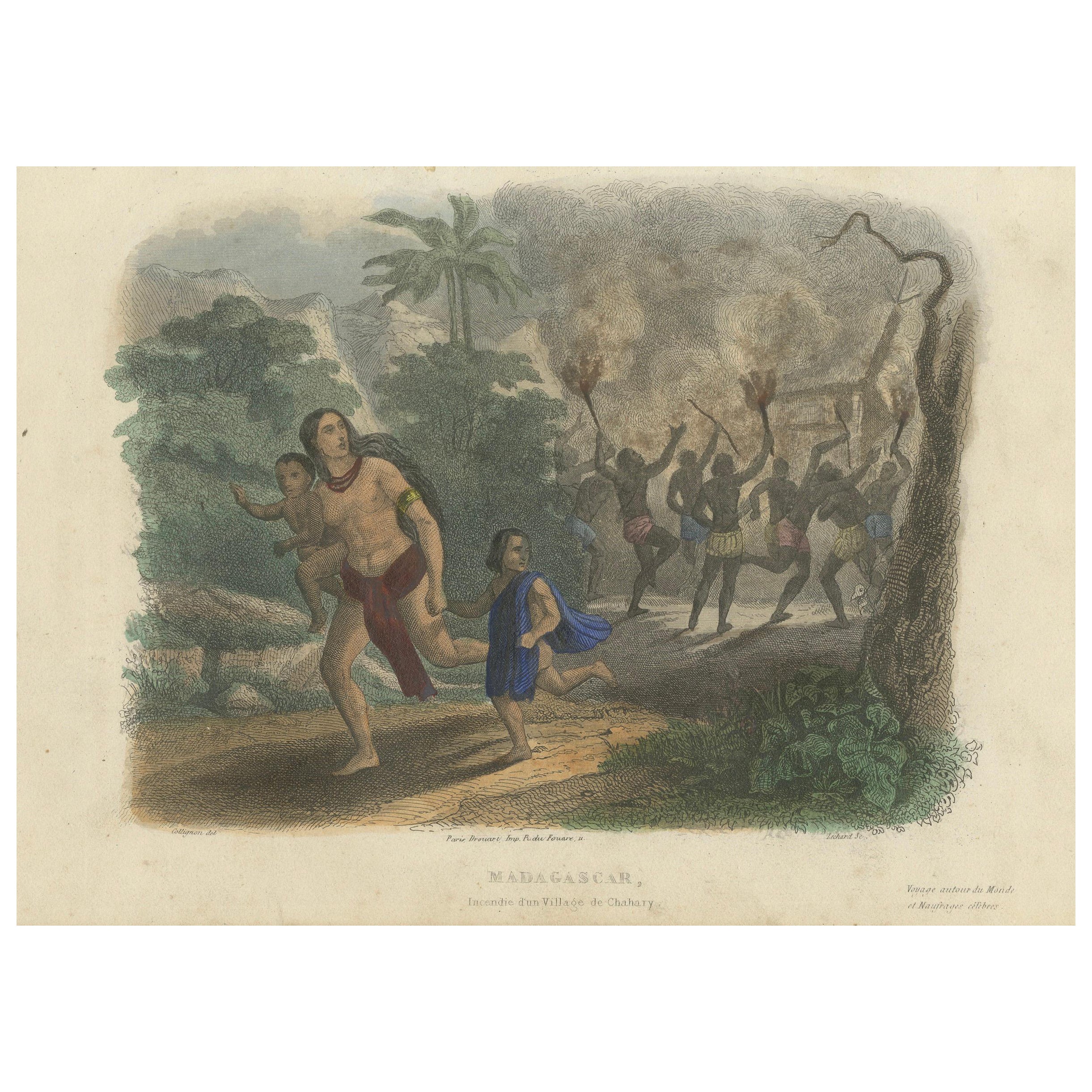
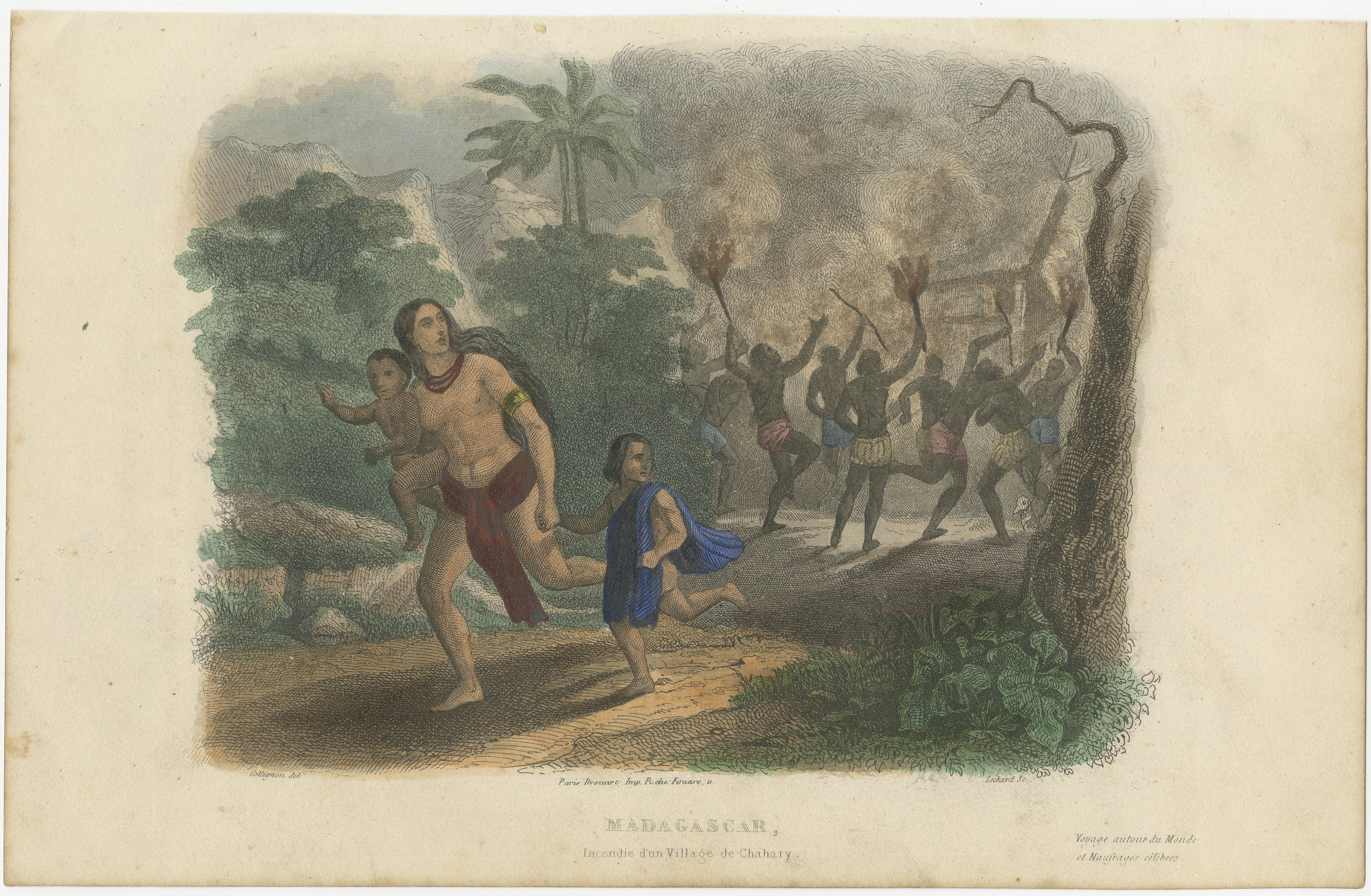
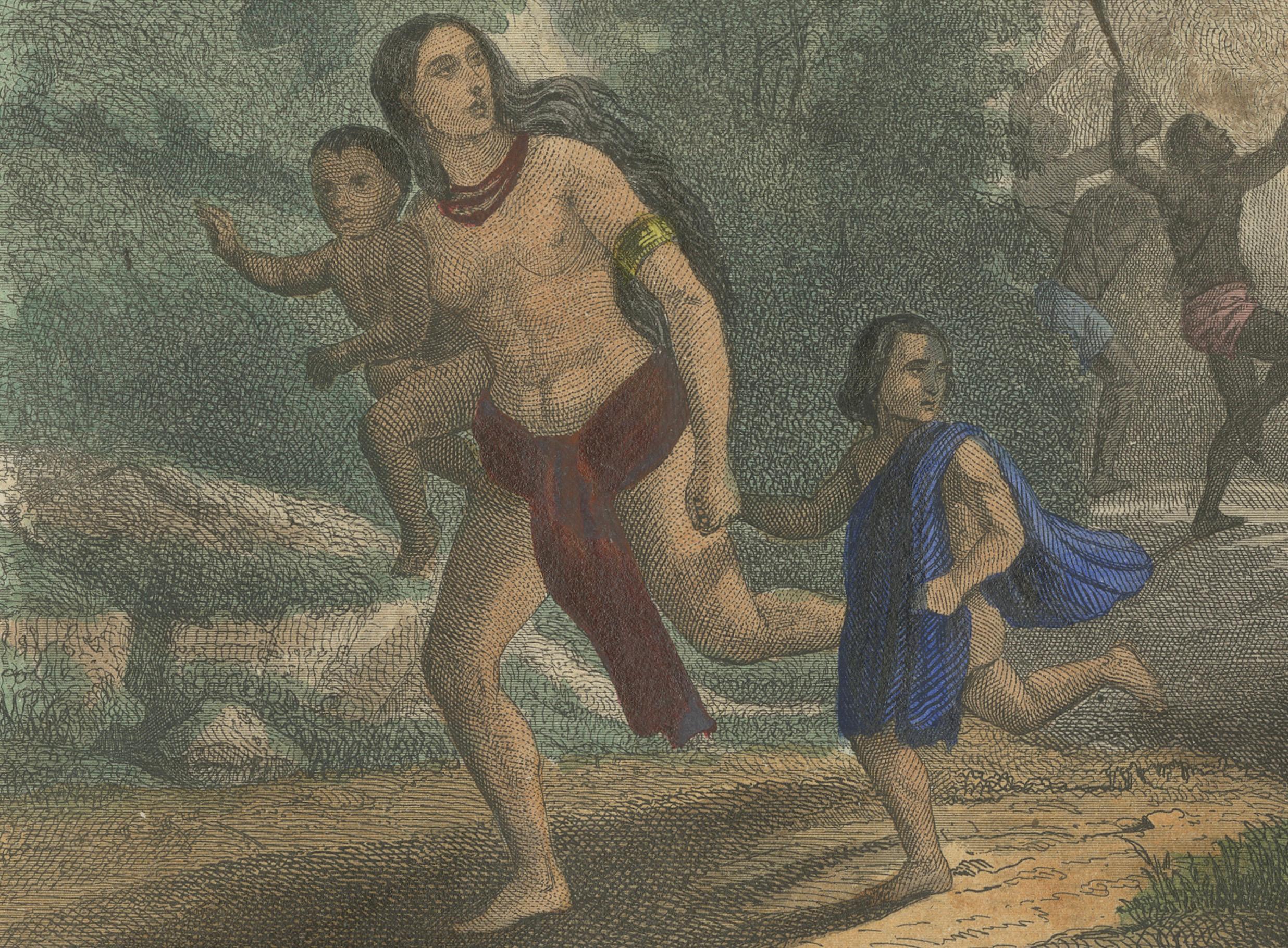
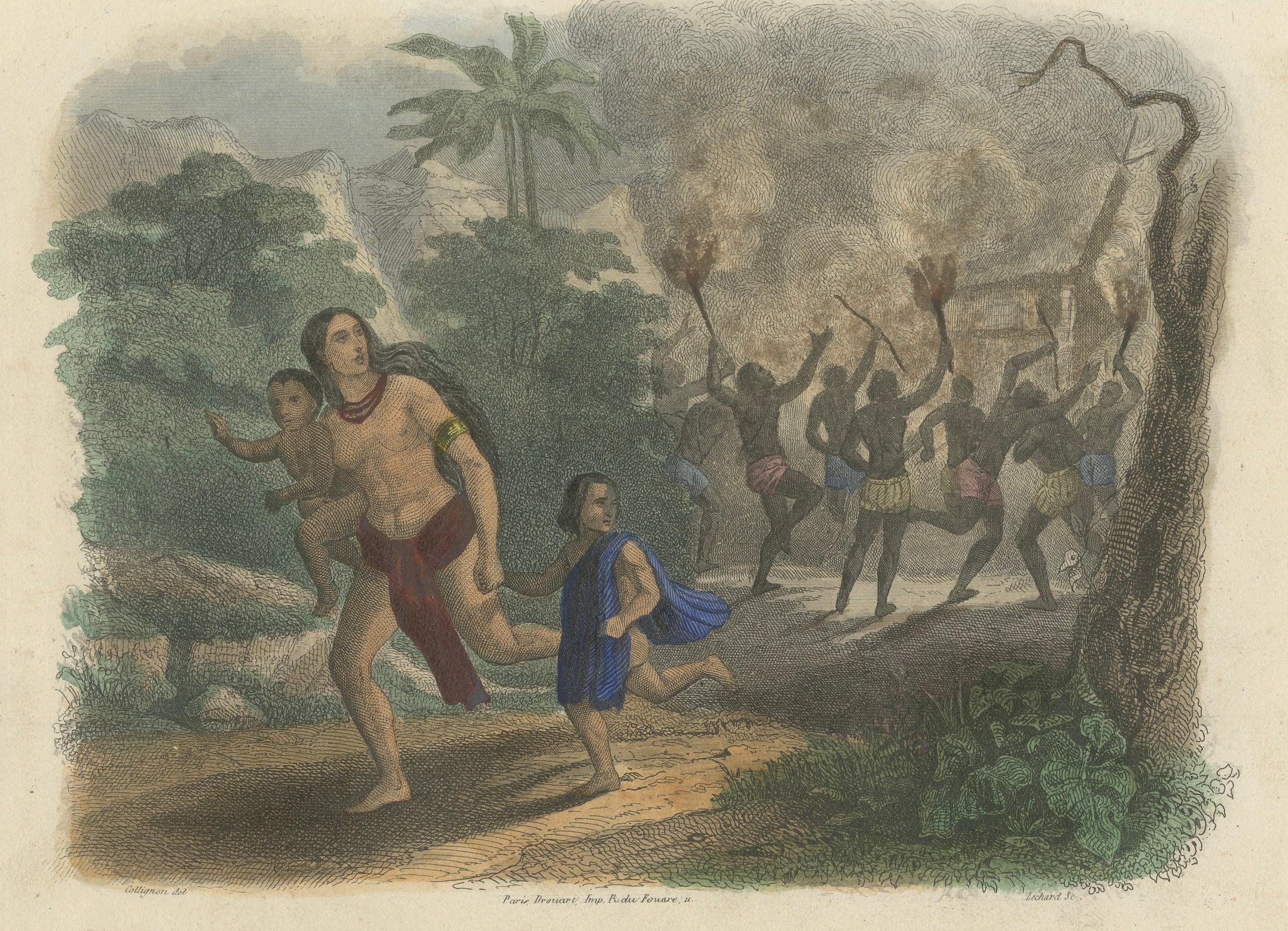
This hand-colored engraving titled "Madagascar - Incendie d’un Village de Chahary" (Burning of a Village in Chahary, Madagascar) depicts a dramatic and intense scene in which a village is set ablaze. In the foreground, a woman with a child in her arms and another child running beside her flee from the burning village. The woman appears distressed, while her children, one clinging to her and the other running ahead, exhibit fear and urgency.
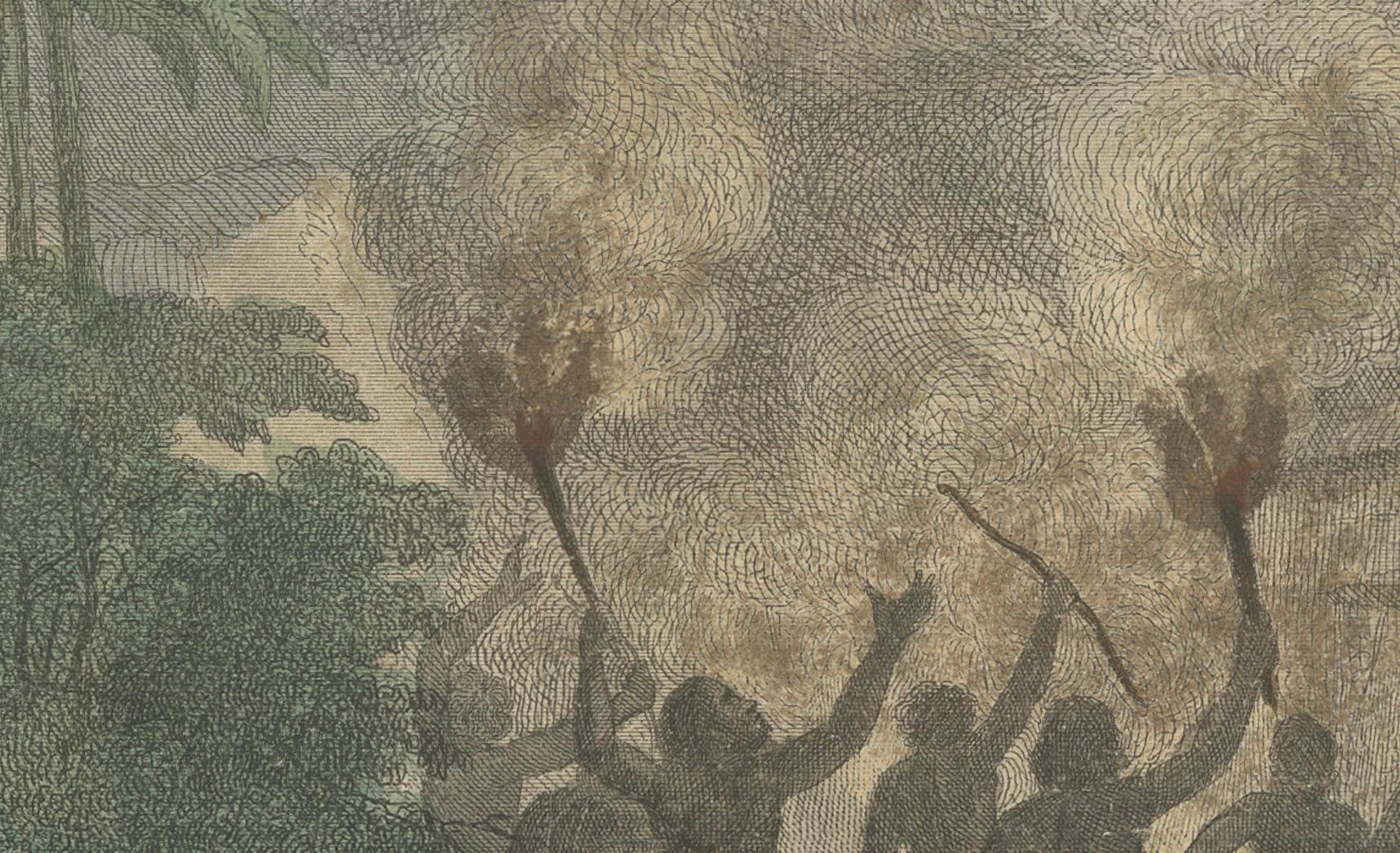
Scene Description: - In the background, a group of men carrying flaming torches can be seen running towards the burning village. The scene is filled with smoke and fire, highlighting the chaos and destruction. - The lush tropical landscape, with large trees and hills, contrasts with the violent action in the background, reinforcing the sense of danger and unrest.
Maker and Technique: - The engraving was drawn by Delagnier and engraved by Lebel. It was published by Bureau de l’Ing. de Montevideo and printed by París Dumenil, both indicating this was part of a broader geographical or exploratory series. - The scene is rendered using hand-colored engraving, where the initial black-and-white print is meticulously colored by hand to give it a vivid, lifelike quality.
Historical Context: - This image likely portrays a scene of conflict or war in Madagascar, possibly during the period of French colonial expansion or local resistance against colonial powers in the 19th century. The burning of villages was a tactic often used during territorial conflicts. - The caption at the bottom mentions "Voyage autour du Monde et Naufrage célèbre" (Journey Around the World and Famous Shipwreck), suggesting this scene may have been part of a series documenting significant voyages, explorations, or historical events.
This print would have been intended for European audiences interested in the exotic and often turbulent events occurring in far-off lands like Madagascar during the colonial period.