About this sheet
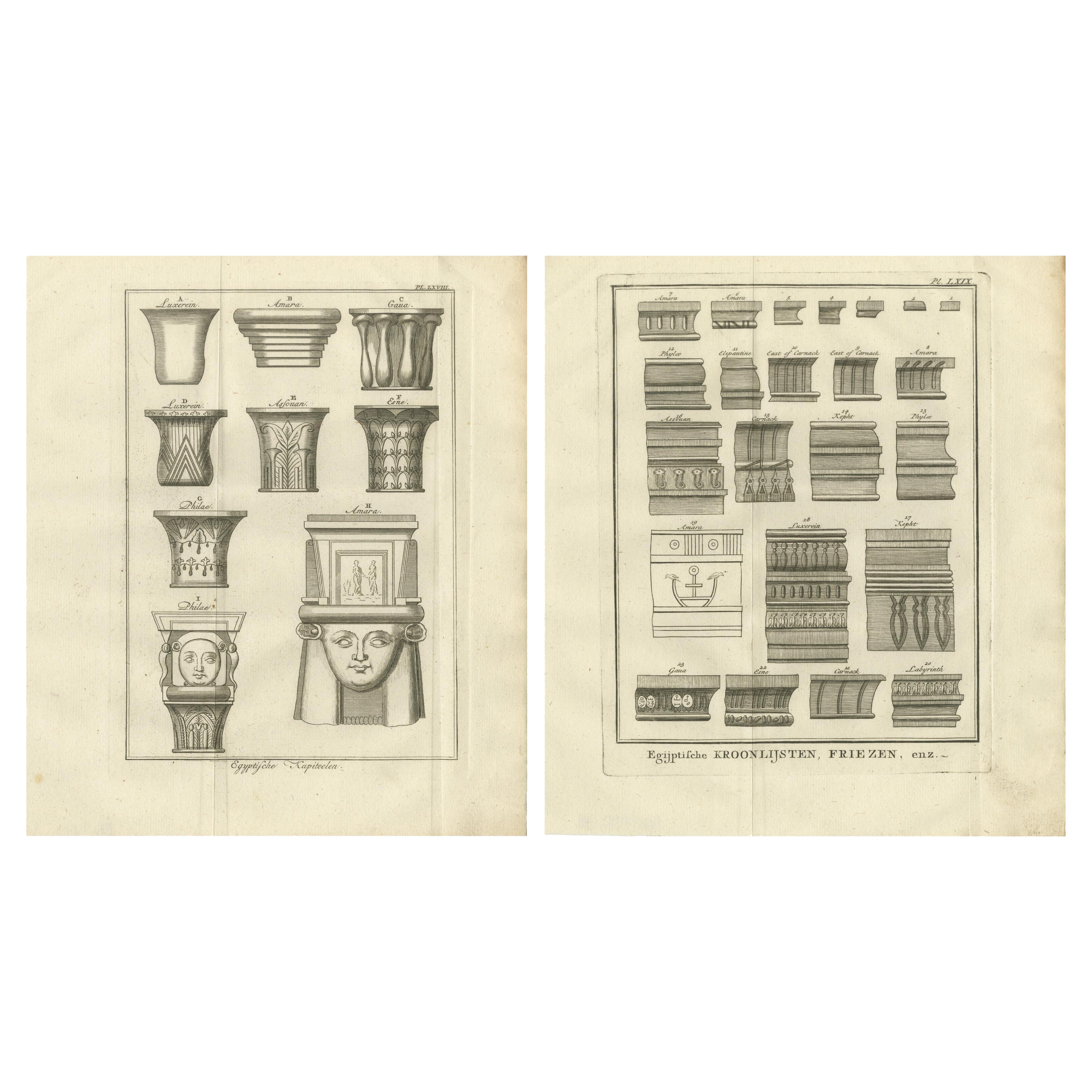
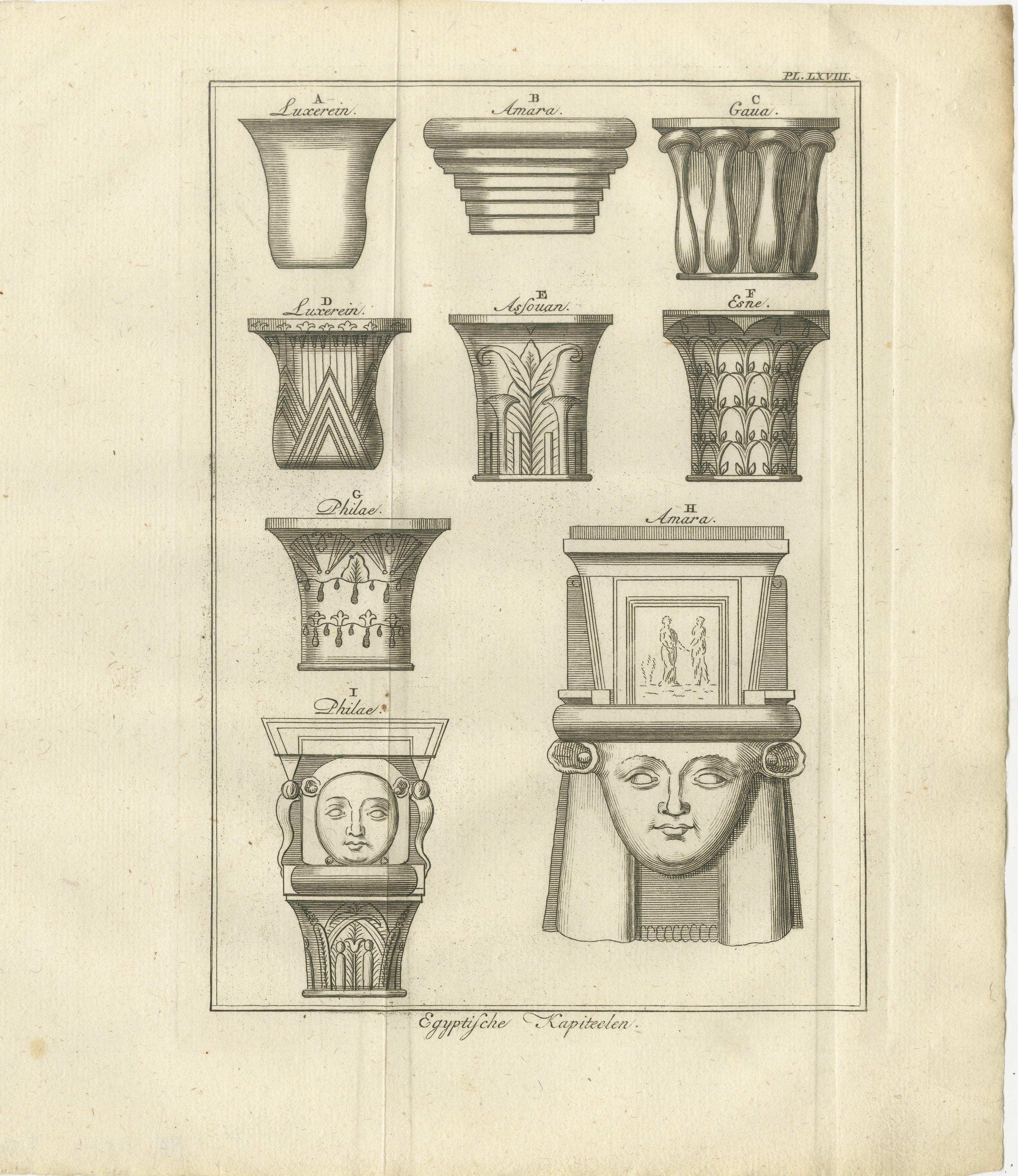
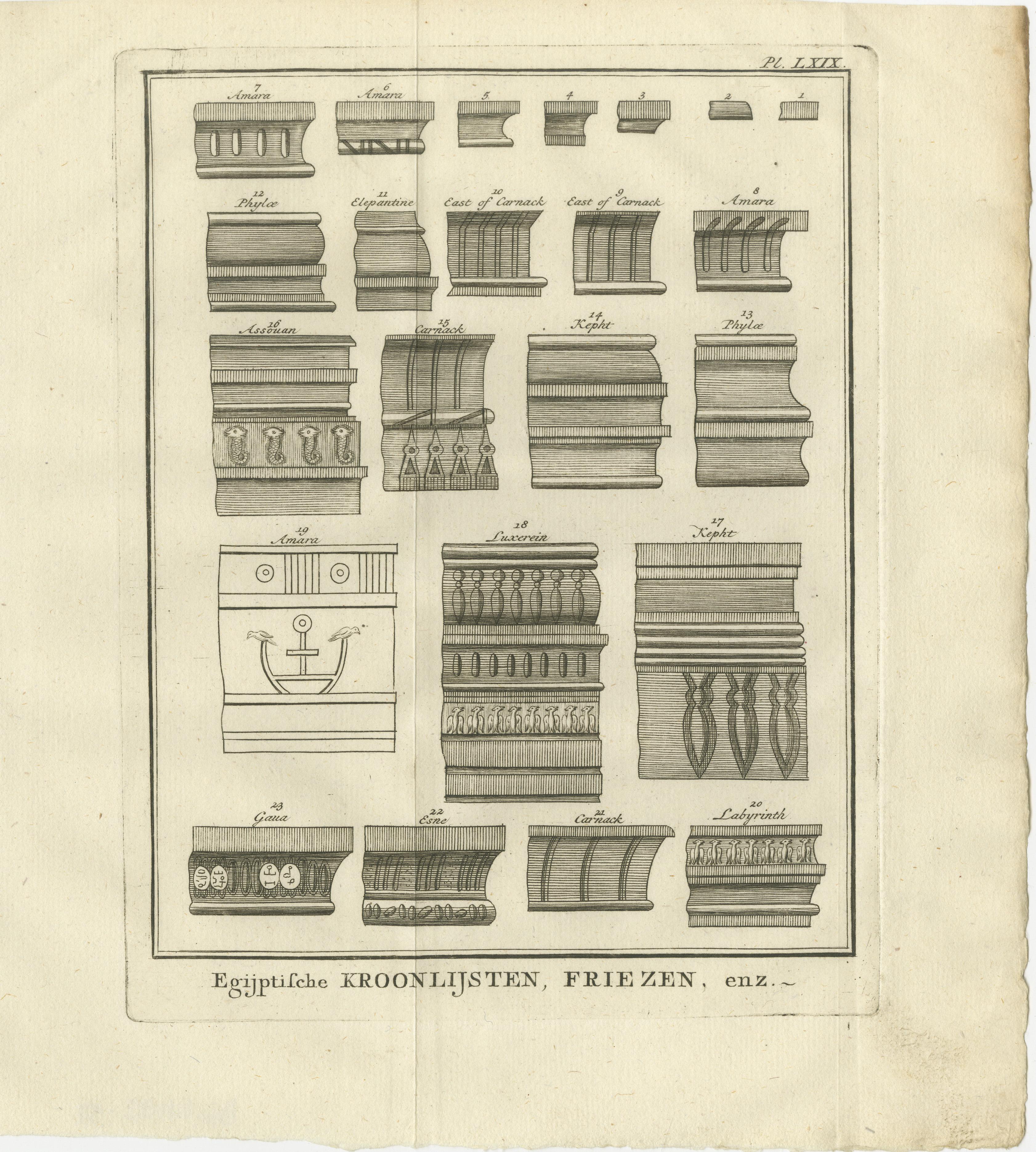
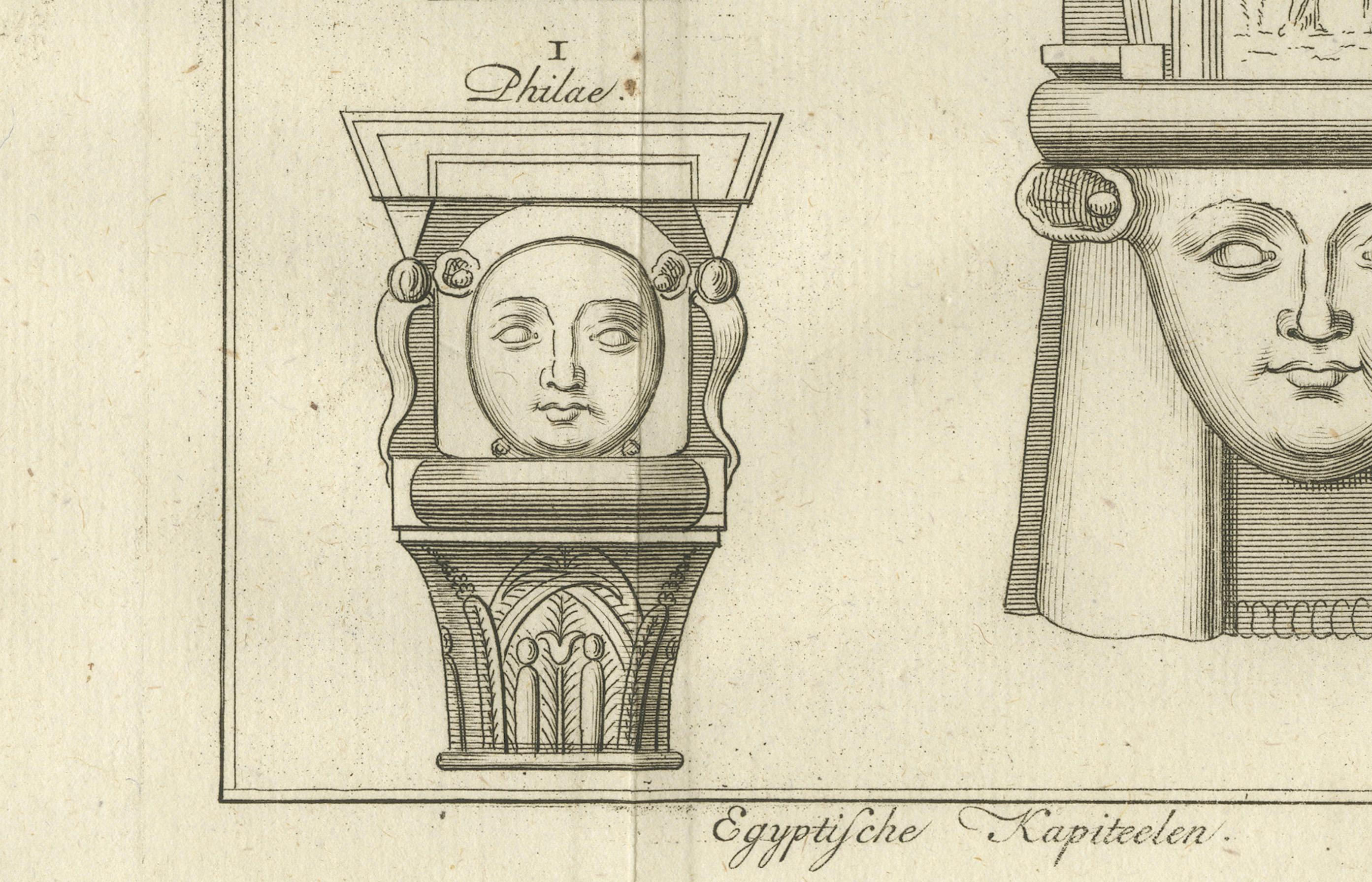
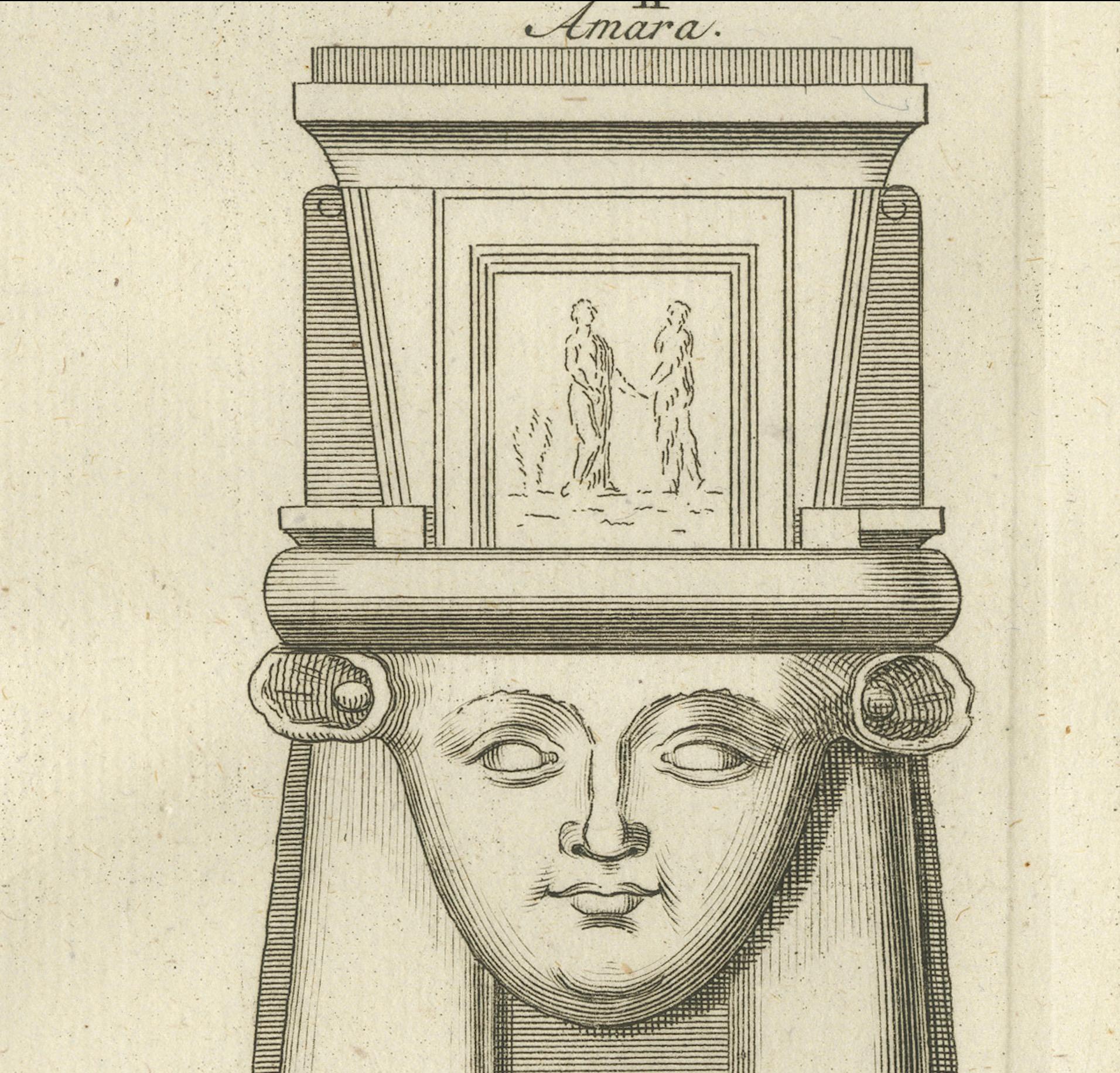
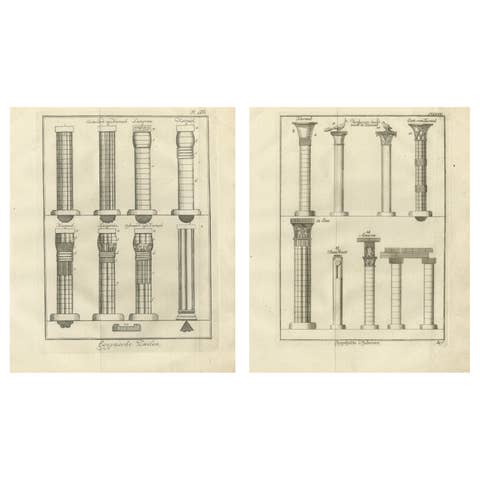
This finely detailed pair of 18th-century engravings presents a comparative visual study of ancient Egyptian capitals and friezes, highlighting architectural styles drawn from key temple sites such as Luxor, Karnak, Philae, Amara, and Elephantine. The left sheet (Pl. LXVIII) focuses on capitals—those crowning elements that sit atop columns—while the right sheet (Pl. LXX) shows a variety of Egyptian cornices, friezes, and decorative mouldings used in sacred and monumental architecture.
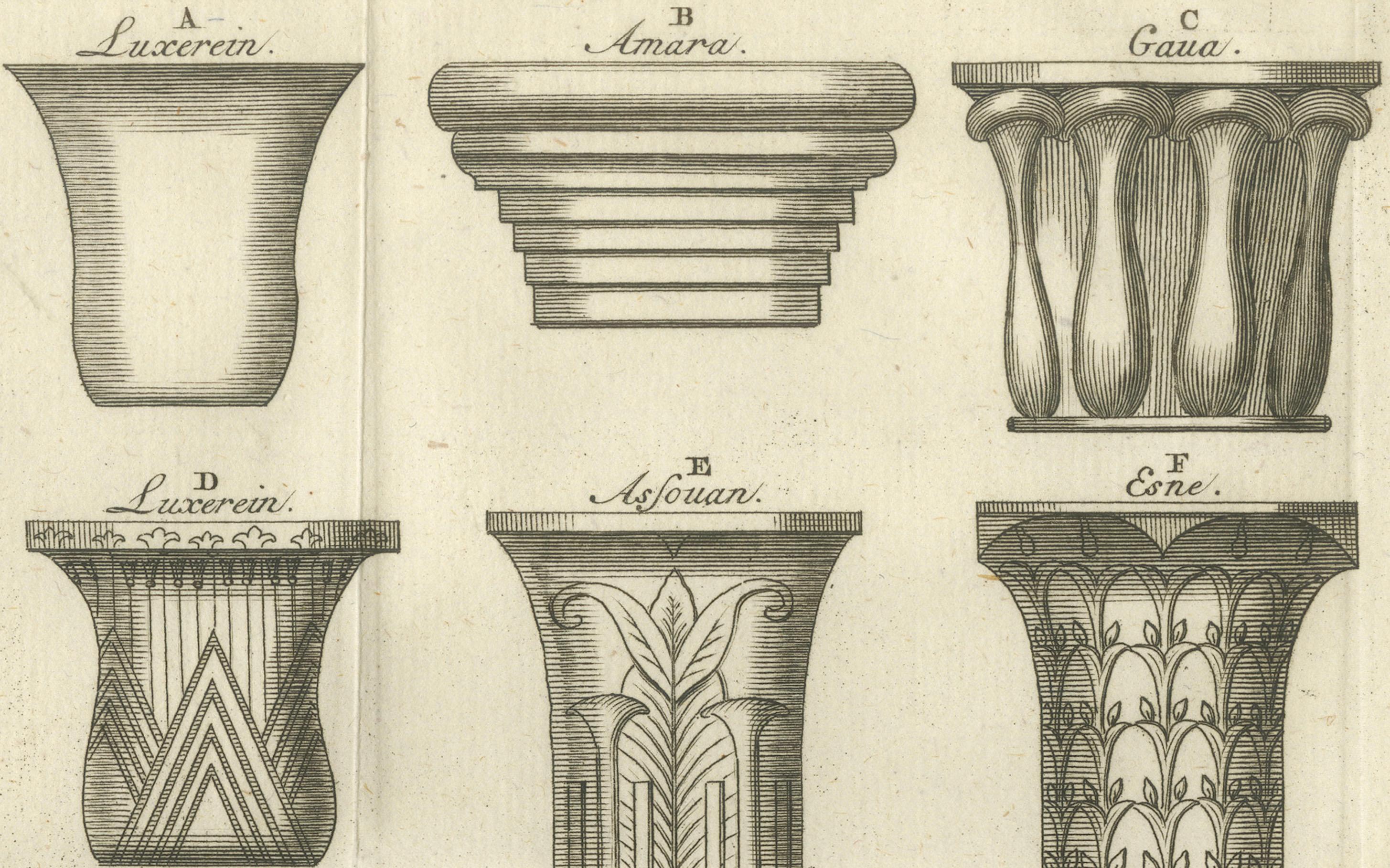
On the left plate, the capitals are arranged in a taxonomic fashion, with each labeled according to its archaeological origin. These include classic examples of lotus and papyrus capitals from Karnak and Luxor, both of which are among the most recognizable forms in Egyptian column design. Some, such as the entries from Philae and Amara, show more elaborate Hathor-headed designs, where the face of the goddess Hathor (with cow ears) appears beneath a shrine-like structure. These stylistic elements were central to the decoration of temples dedicated to goddesses or female royalty and are rich in religious symbolism.
Each capital’s floral or figural design served not only aesthetic purposes but also expressed aspects of cosmology, fertility, and royal power. Capitals labeled “Edfou” and “Esné” further illustrate regional variations in column design, showing how Egyptian architecture was locally adapted across Upper and Lower Egypt.
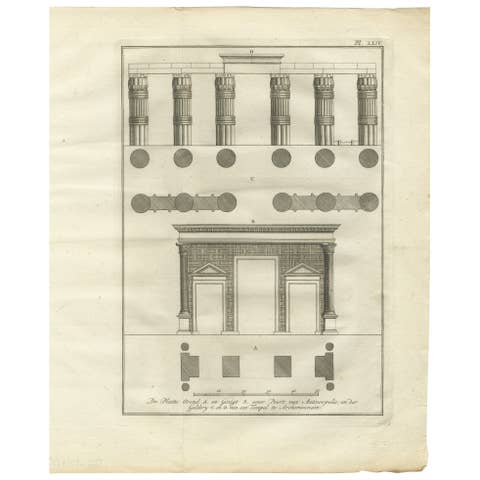
On the right sheet, a diverse range of cornices, friezes, and mouldings are presented. These include flat and stepped cornices from Karnak, geometric banding from Esna and Thebes, and deeply carved decorative registers featuring papyrus bundles, rosettes, and sacred symbols. Friezes bearing repeating motifs such as uraei (rearing cobras), ankhs, and sun disks indicate how visual repetition was a hallmark of ancient Egyptian religious art.
This set of engravings would have been essential in educating European architects, scholars, and artists during the period of Enlightenment and Neoclassicism. As interest in Egypt grew—especially during and after Napoleon’s campaign in Egypt—such plates were frequently consulted by designers aiming to emulate Egyptian motifs in European buildings.
Condition: Excellent impression with full plate marks. Center fold as issued. Minimal age toning and no tears. Very fine margins all around.
Framing tips: Ideal as a diptych in a horizontal double frame, using a warm-toned mat to echo the parchment hue. Choose a sleek black, dark wood, or gilt frame to contrast with the linear formality of the architectural content.
Technique: Engraving
Maker: Anonymous, Dutch, circa 1750–1770