About this sheet
Ancient Egyptian Temple Plans – Edfu, Erment, Esna & Thebes, c.1776 Engravings
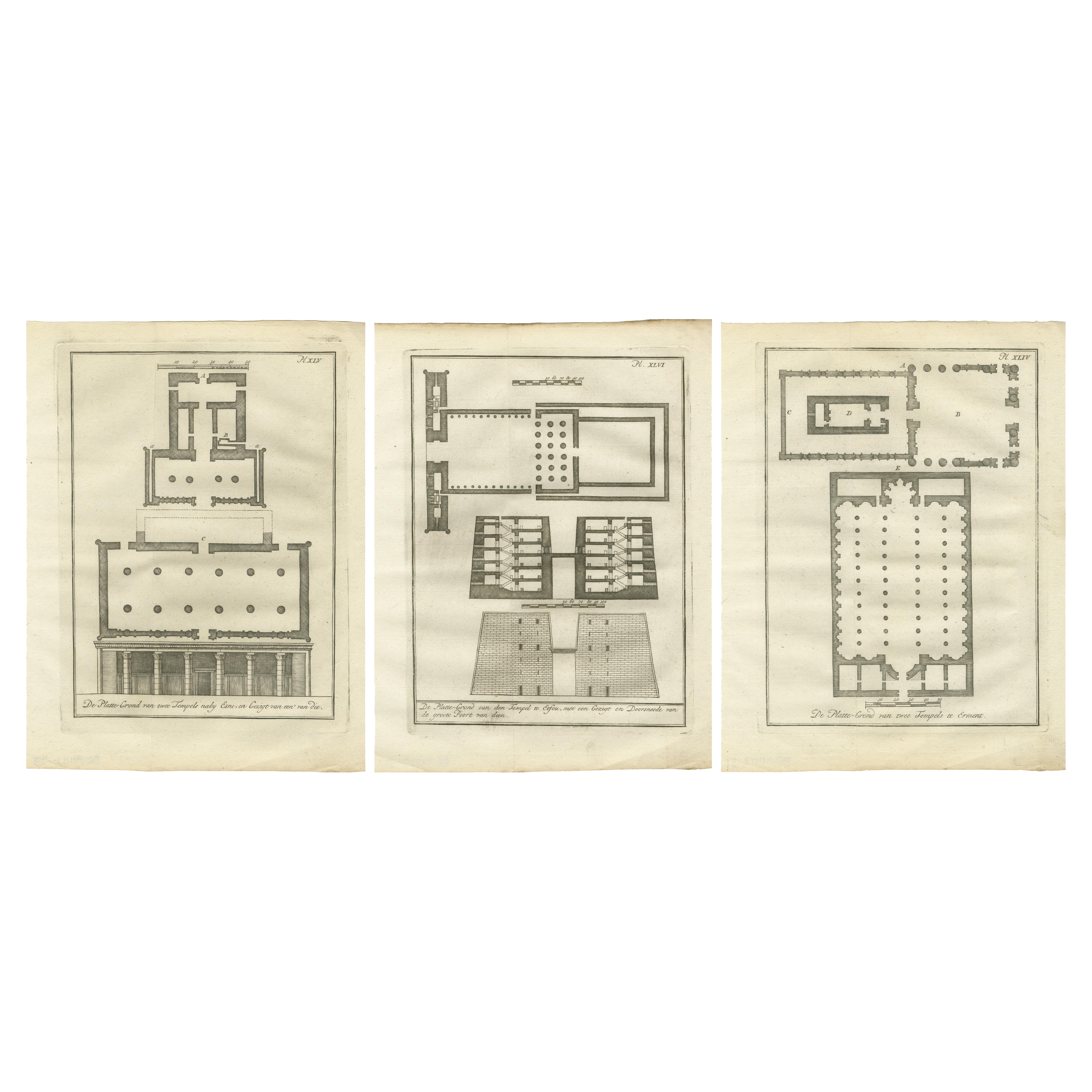
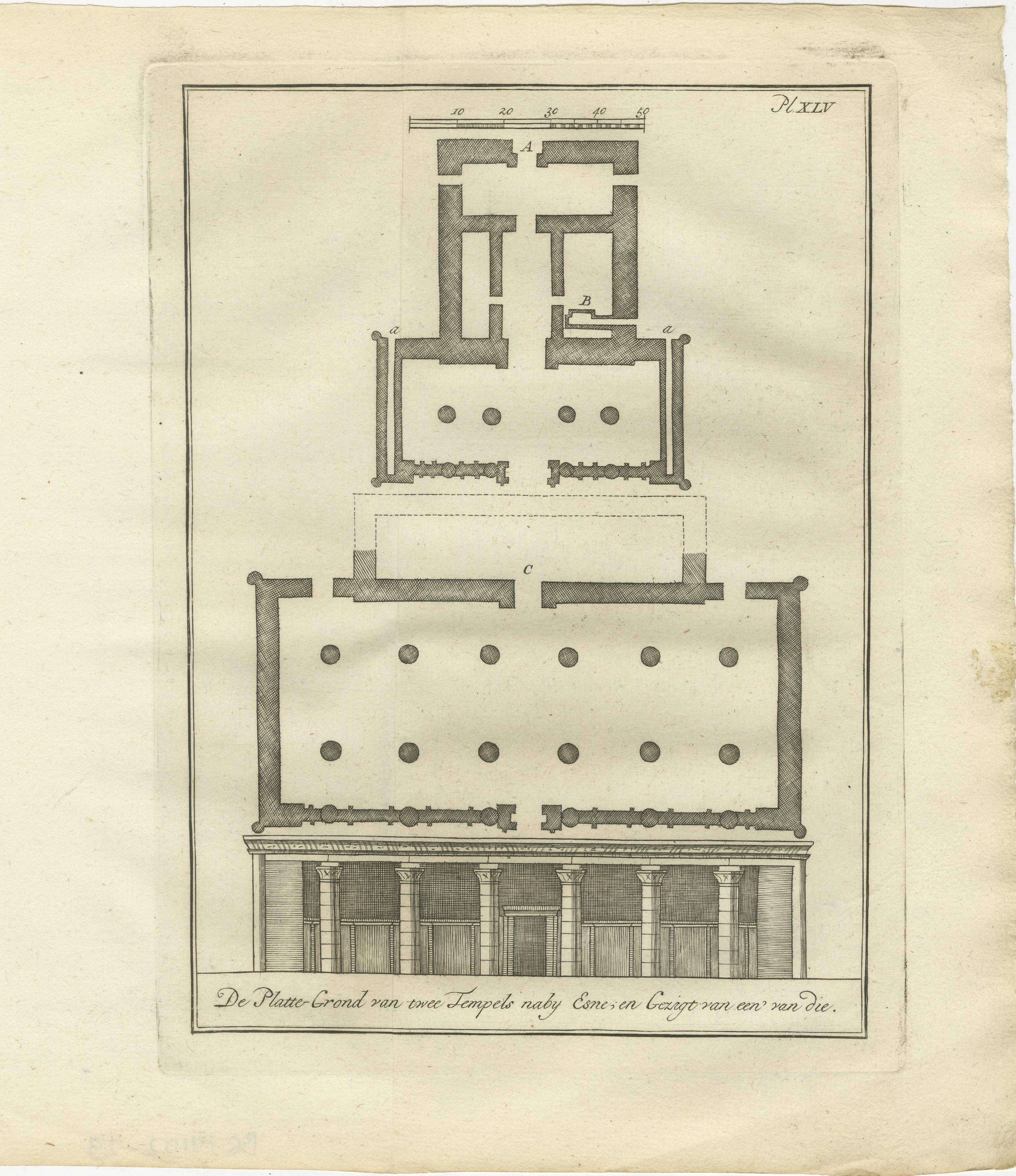
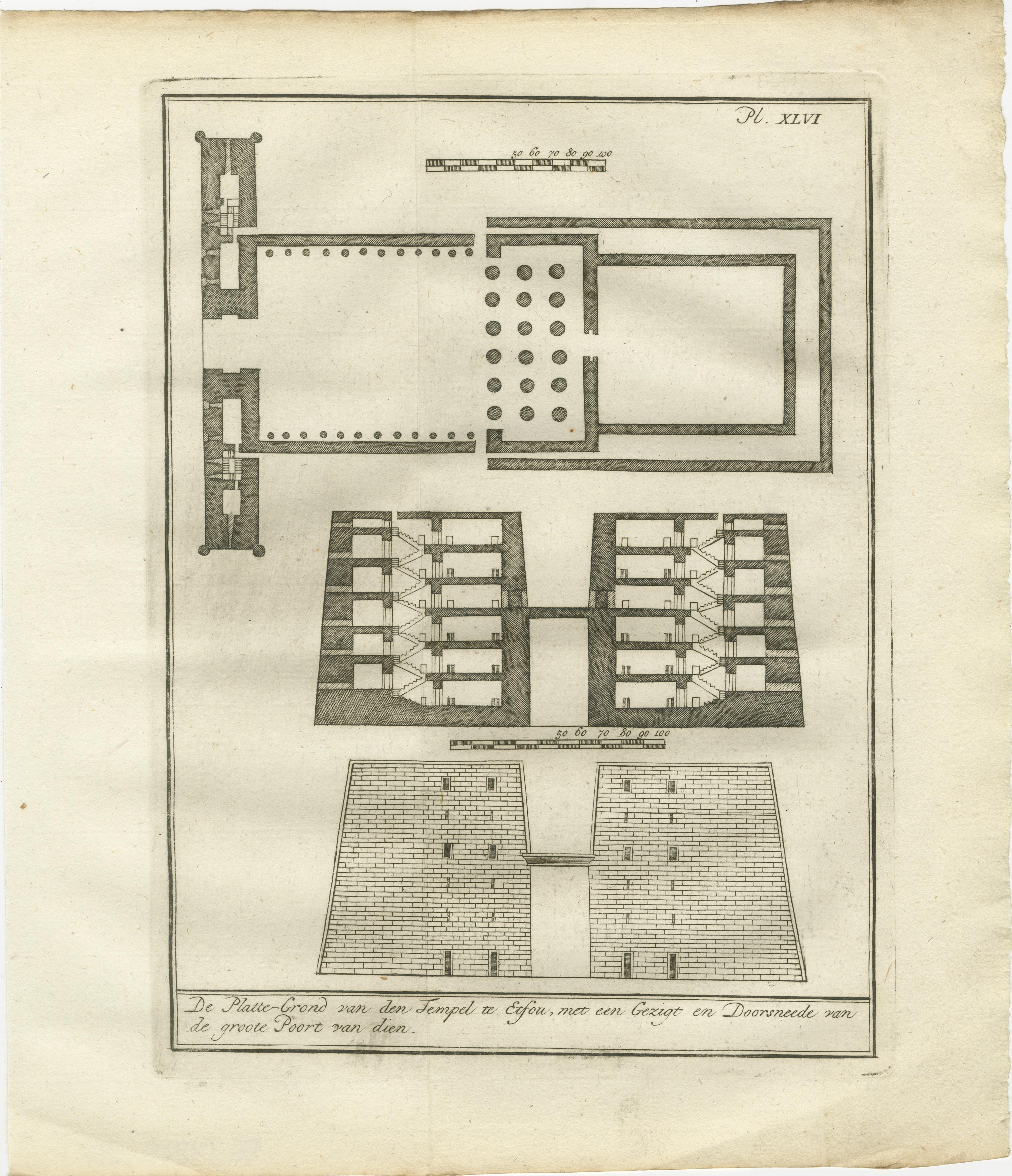
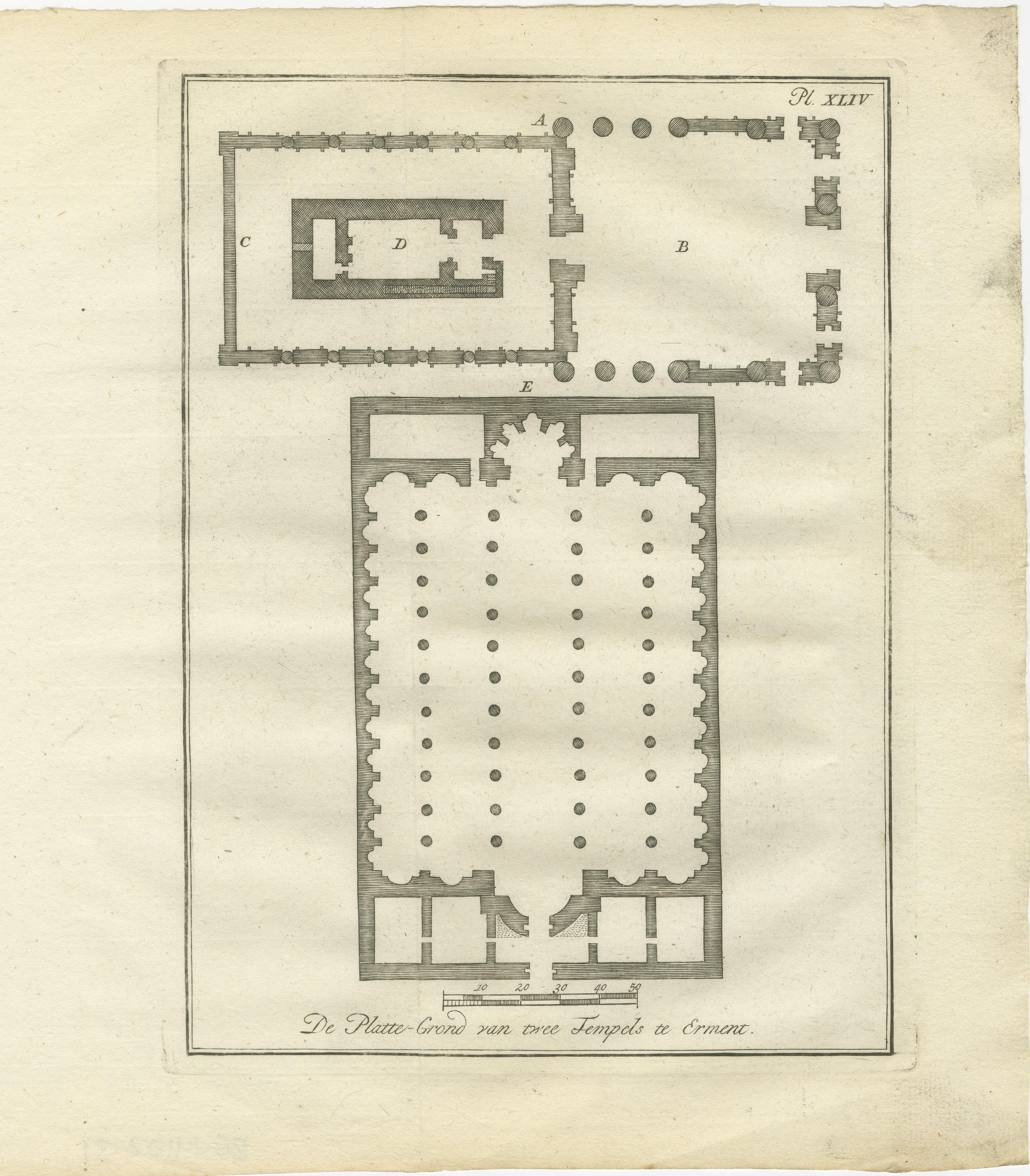
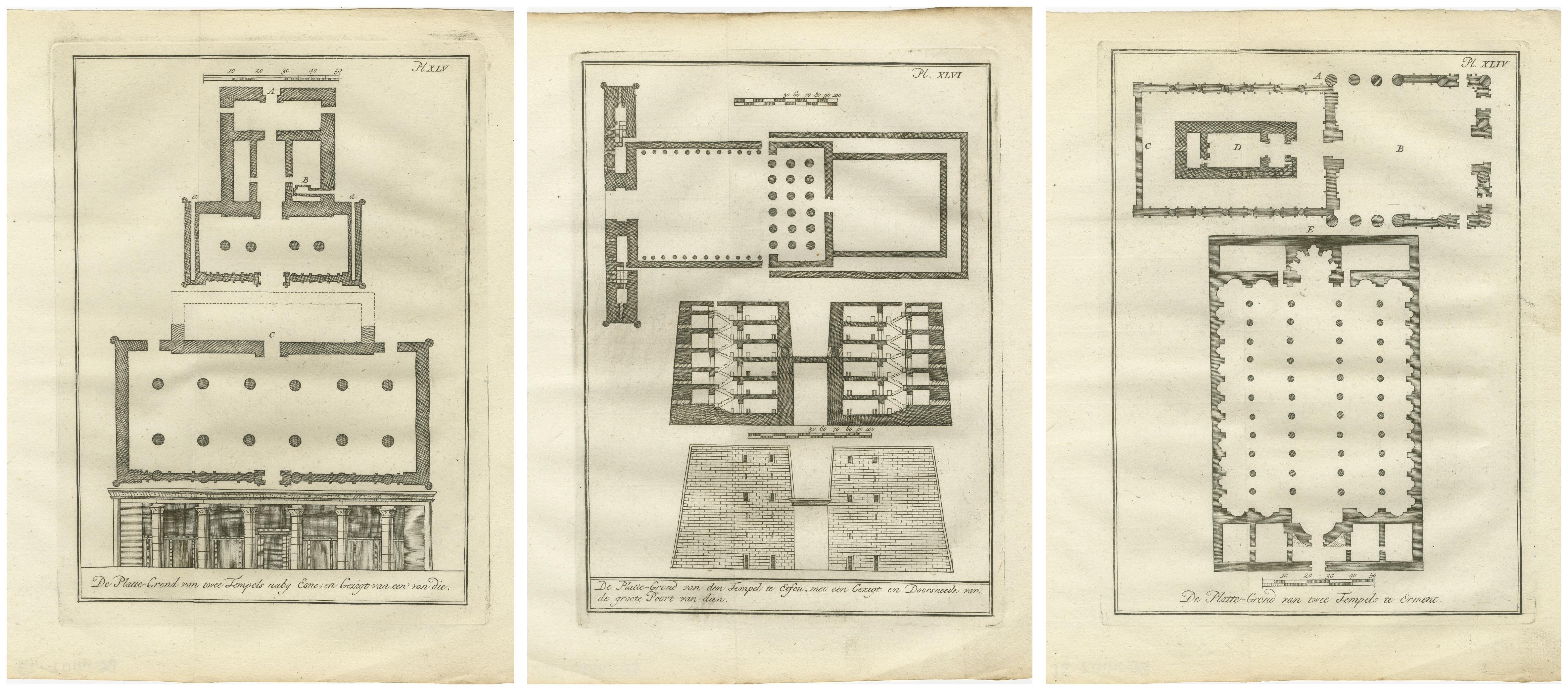
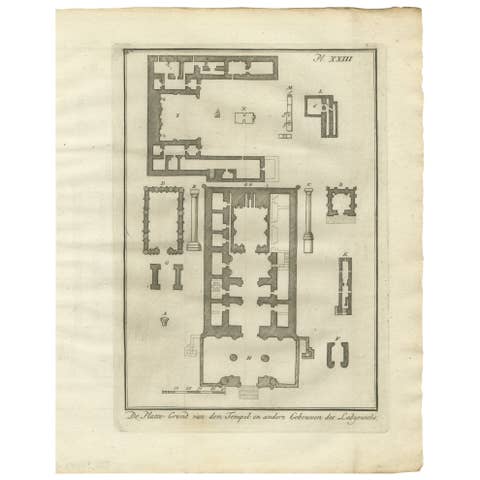
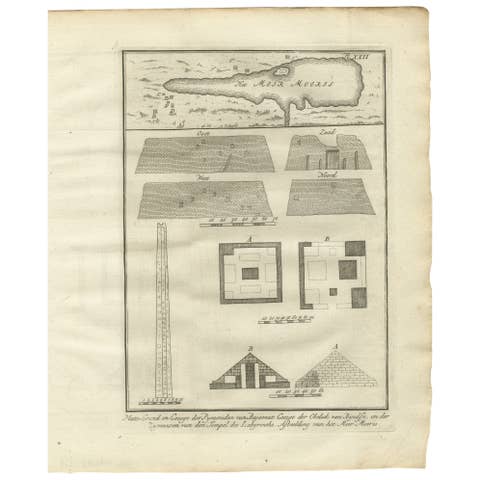
This finely detailed set of three architectural engravings illustrates the floor plans and elevations of notable ancient Egyptian temples, including those at Edfu, Esna, Thebes, and Erment. These prints were made in the late 18th century as part of a European scholarly effort to document the grandeur of Egyptian antiquities through neoclassical illustration.
The first print (left) presents a floor plan and elevation of two temples, possibly modeled after the structures in Esna or Karnak. The lower portion shows a frontal elevation featuring a classic portico with columns in the pharaonic style. The floor plan reveals successive chambers and a large hypostyle hall, marked by rows of columns, reflecting the architectural symmetry and progression of sacred space typical in Egyptian temple design.
The central print focuses on the temple at Edfu (also spelled Edfoo), dedicated to the falcon god Horus. The upper section depicts the layout of the temple and its surrounding walls, complete with a columned hall and sanctum. Below, we see a detailed section of its monumental pylons—massive gateway towers that framed the entrance—along with a longitudinal view of staircases and internal chambers. Edfu is one of the best-preserved temples in Egypt, and this engraving captures its structural logic with geometric clarity.
The third print (right) shows the ground plan of a temple at Erment (Hermonthis), an ancient site south of Thebes. The drawing emphasizes the temple's pillared hall, surrounded by thick outer walls and a processional approach. Smaller architectural elements and secondary rooms are labeled and integrated into the structure. It reflects the methodical analysis that European draftsmen brought to documenting pharaonic architecture.
Together, these engravings provide valuable insight into the spatial organization, ritual pathways, and monumental architecture of ancient Egypt. They serve as a bridge between field observation and Enlightenment-era publishing, ideal for collectors interested in early archaeology or architectural history.
Condition summary:
Very good overall. Minor toning to edges, occasional fox marks in margin areas. Crisp plate impressions, clean surfaces, and strong lines throughout. Folding lines as issued.
Framing tips:
These prints work well as a triptych. Use identical frames in black or dark walnut with a soft cream mount. Ideal for display in libraries, studies, or architectural settings.
Technique: Engraving
Maker: Unknown (Netherlands, circa 1776)