About this sheet
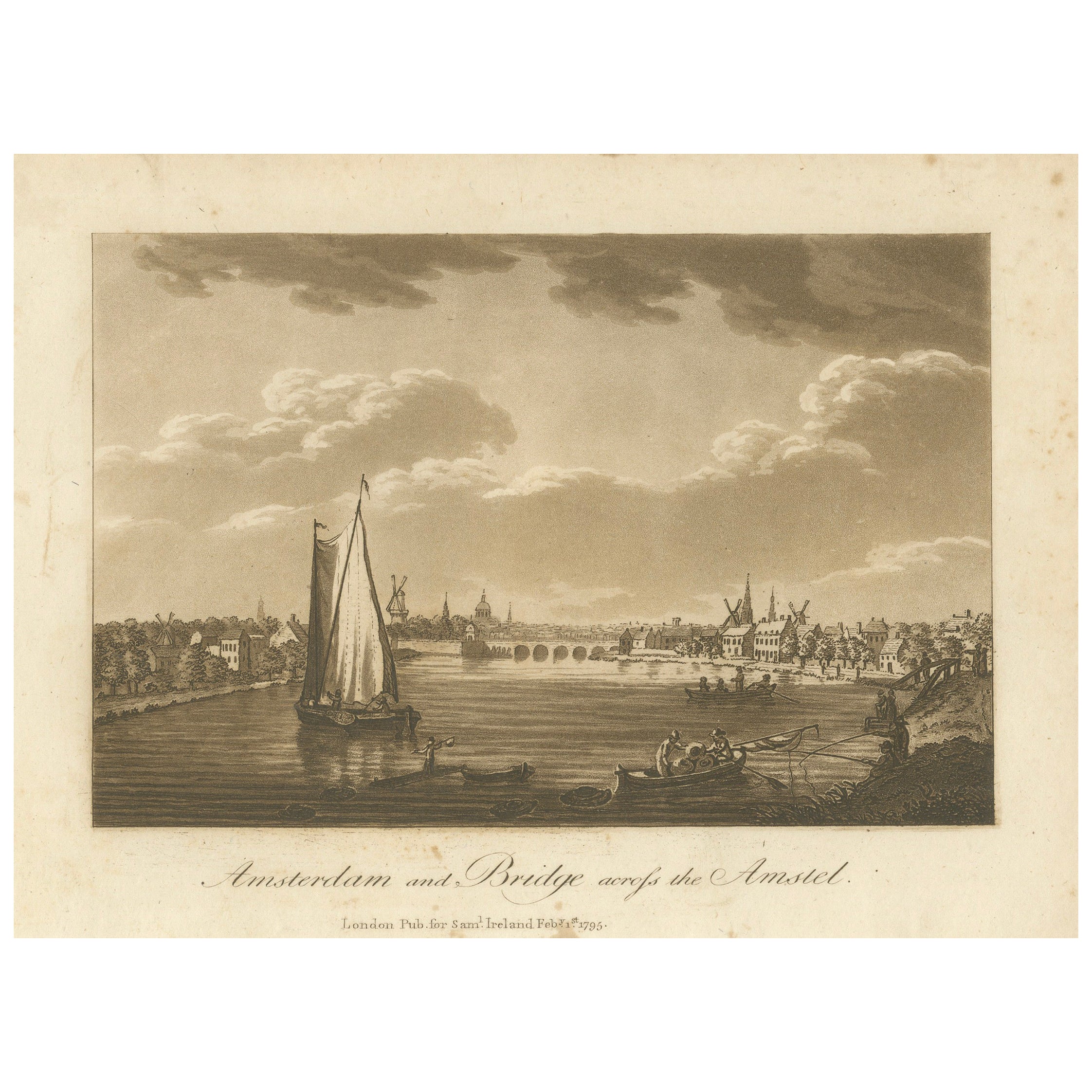
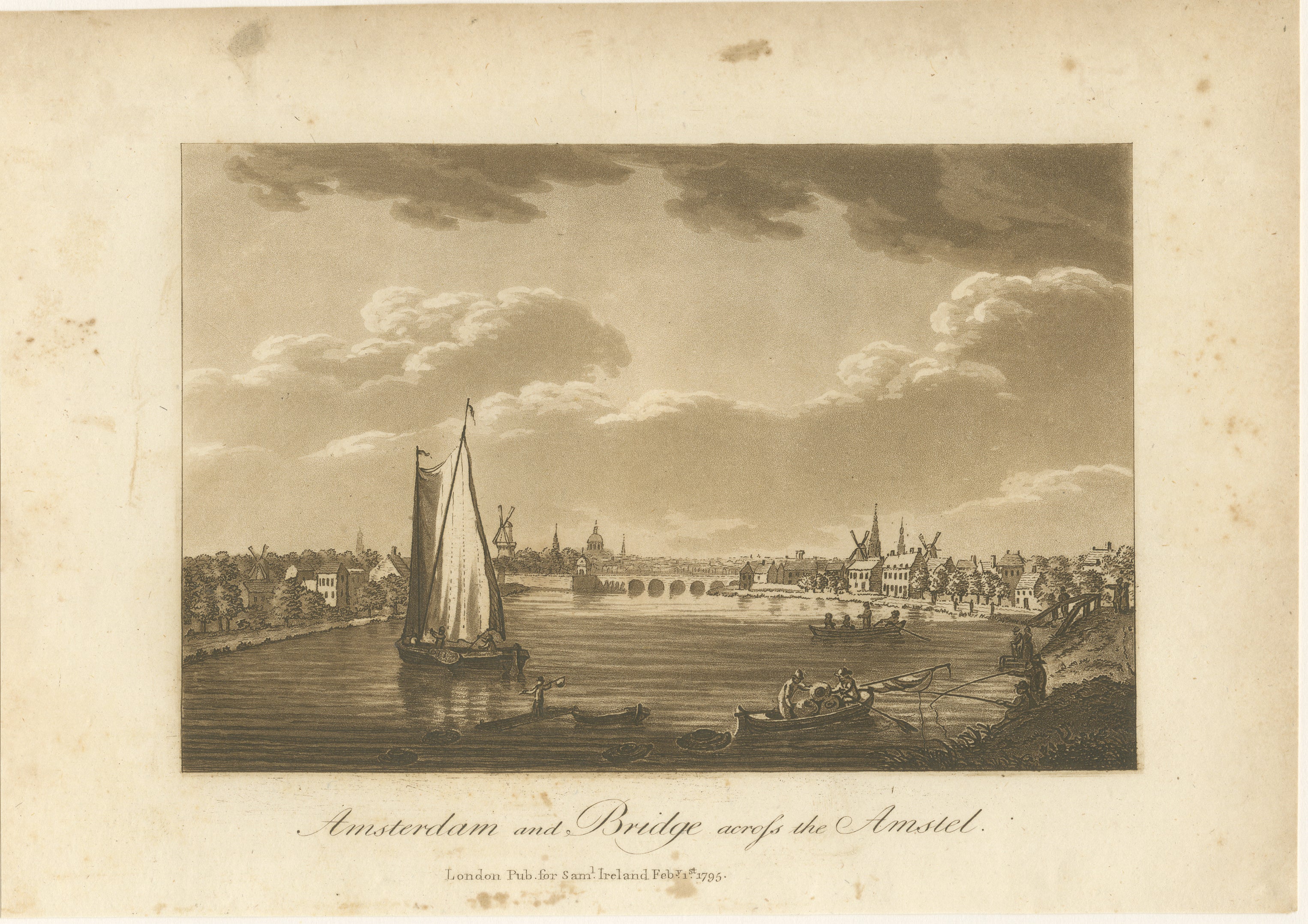
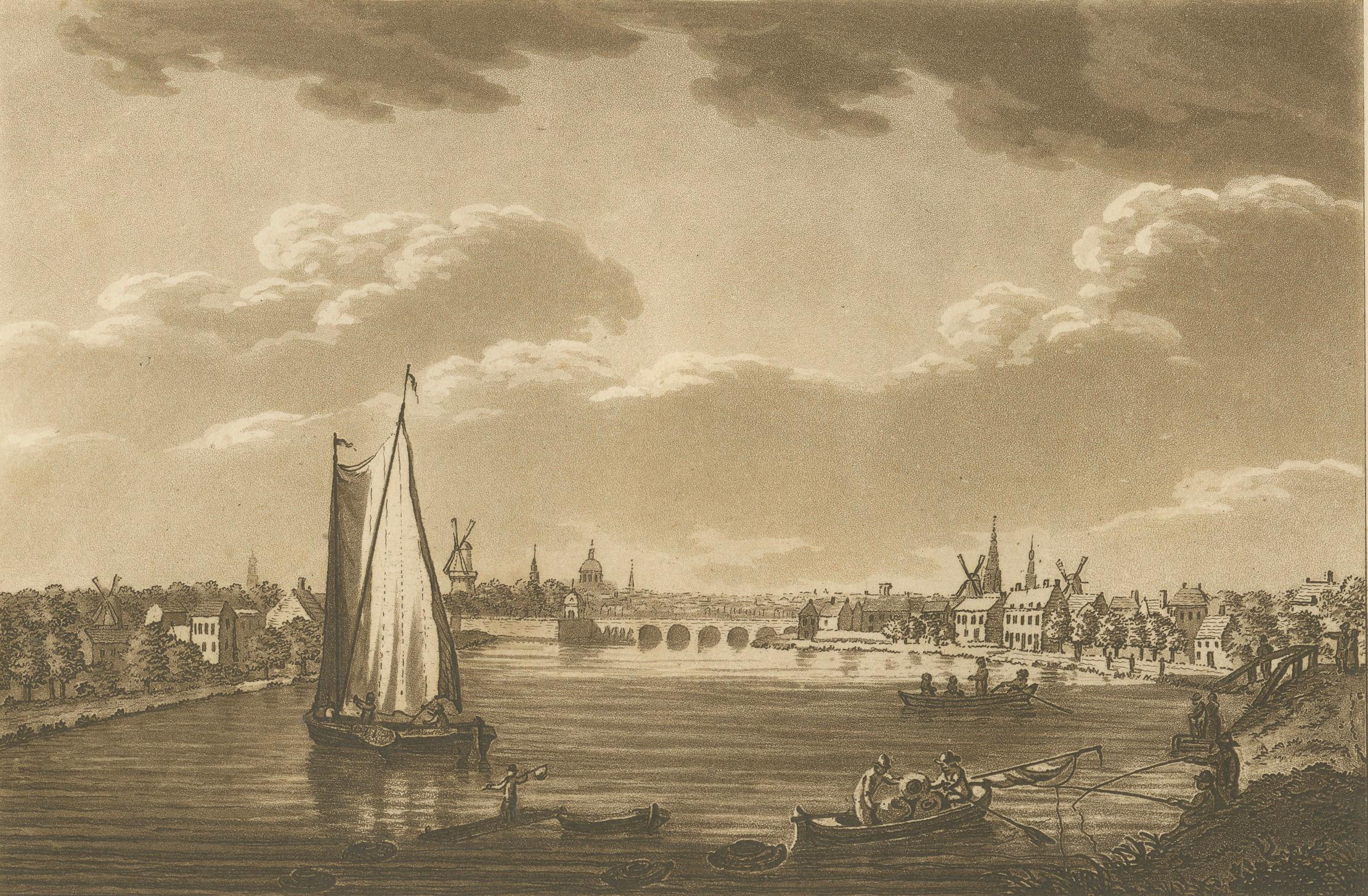
Amsterdam and the Bridge across the Amstel River, aquatint by Samuel Ireland, 1795
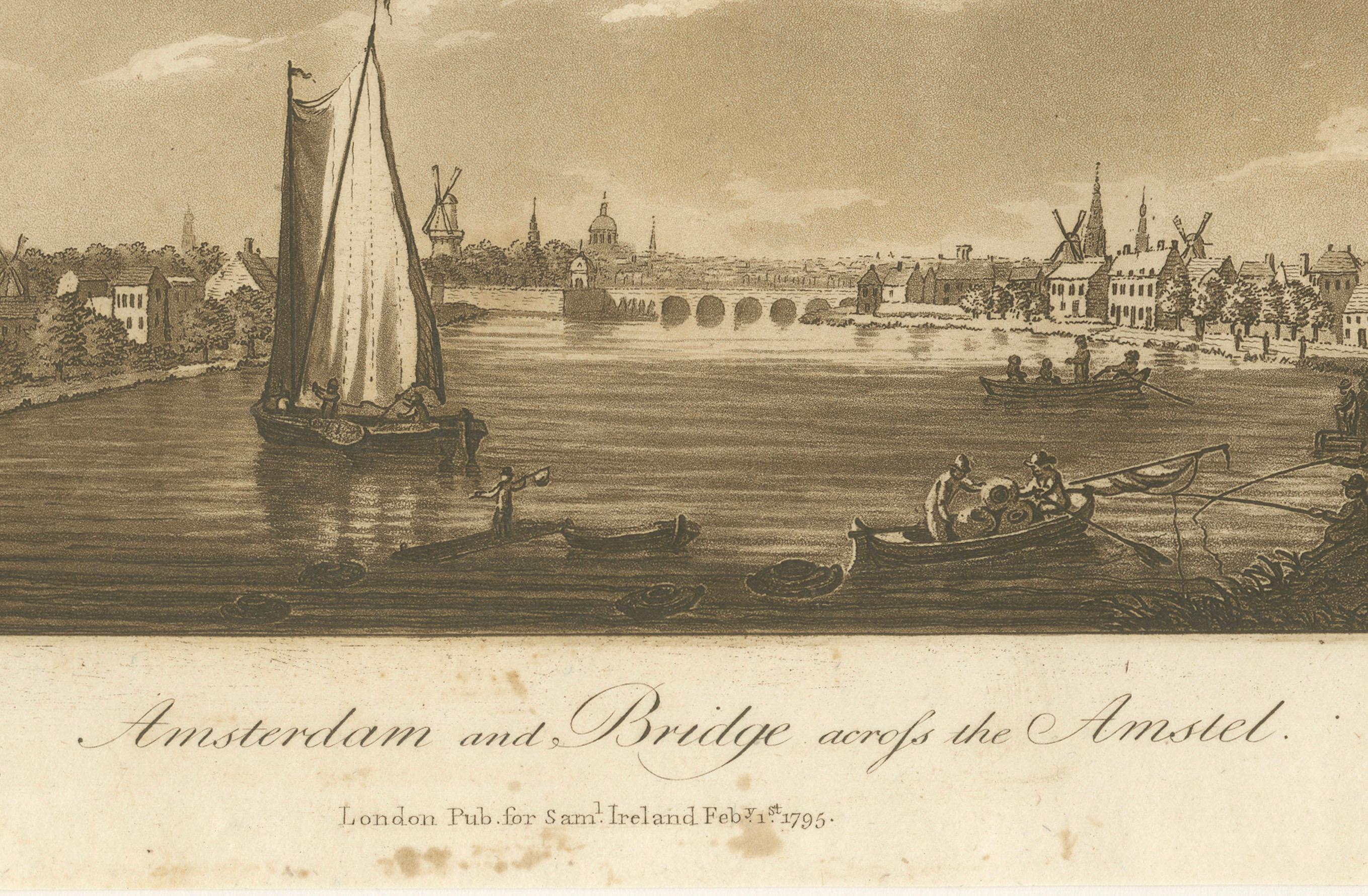
This finely executed sepia-tone aquatint titled 'Amsterdam and Bridge across the Amstel' was both drawn and engraved by Samuel Ireland and published in London in February 1795.
As one of the earliest English visual records of Amsterdam's riverfront, it offers a picturesque and atmospheric panorama of the city as viewed from the south, with the iconic Amstel River flowing gently through the composition.
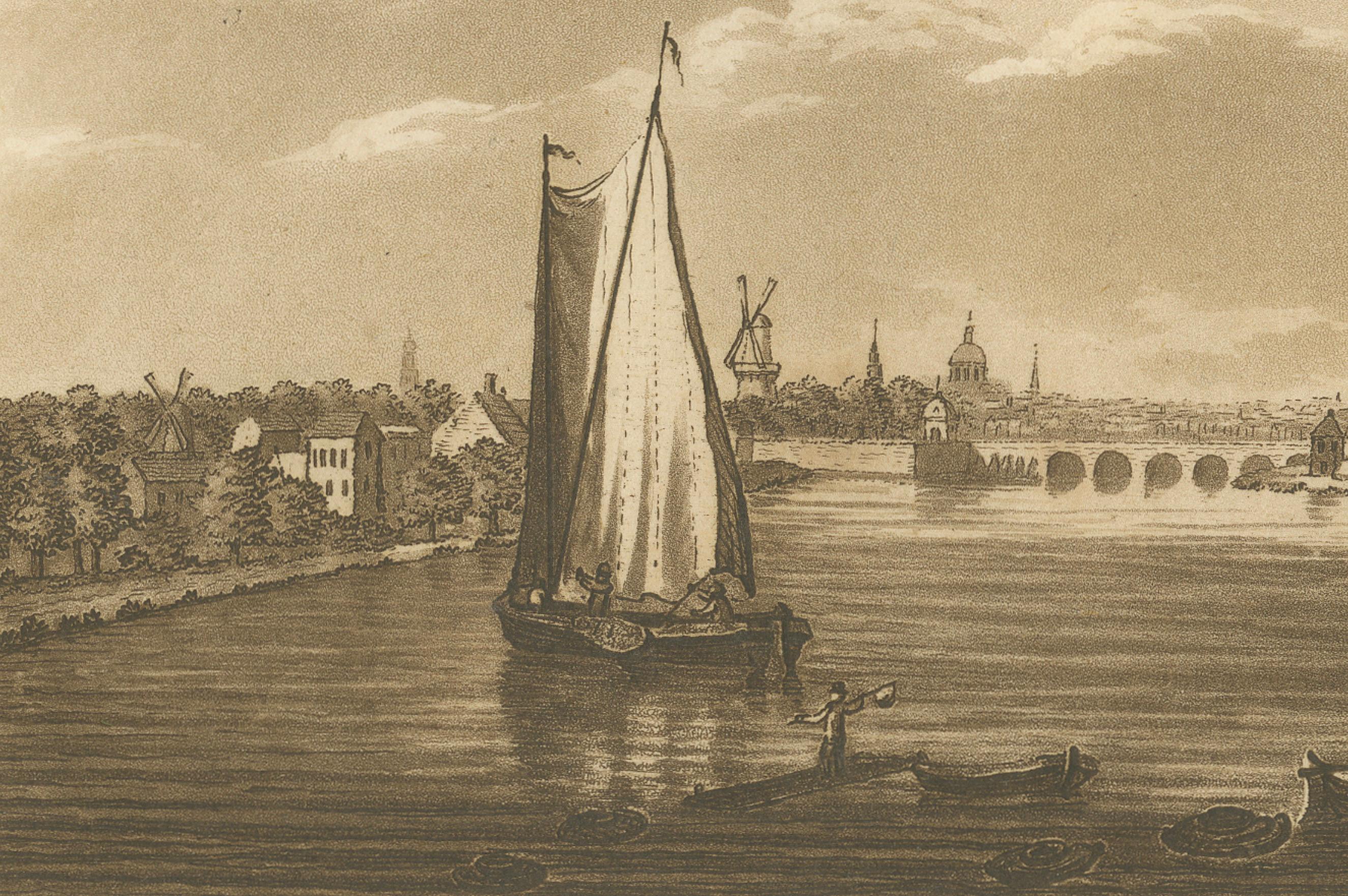
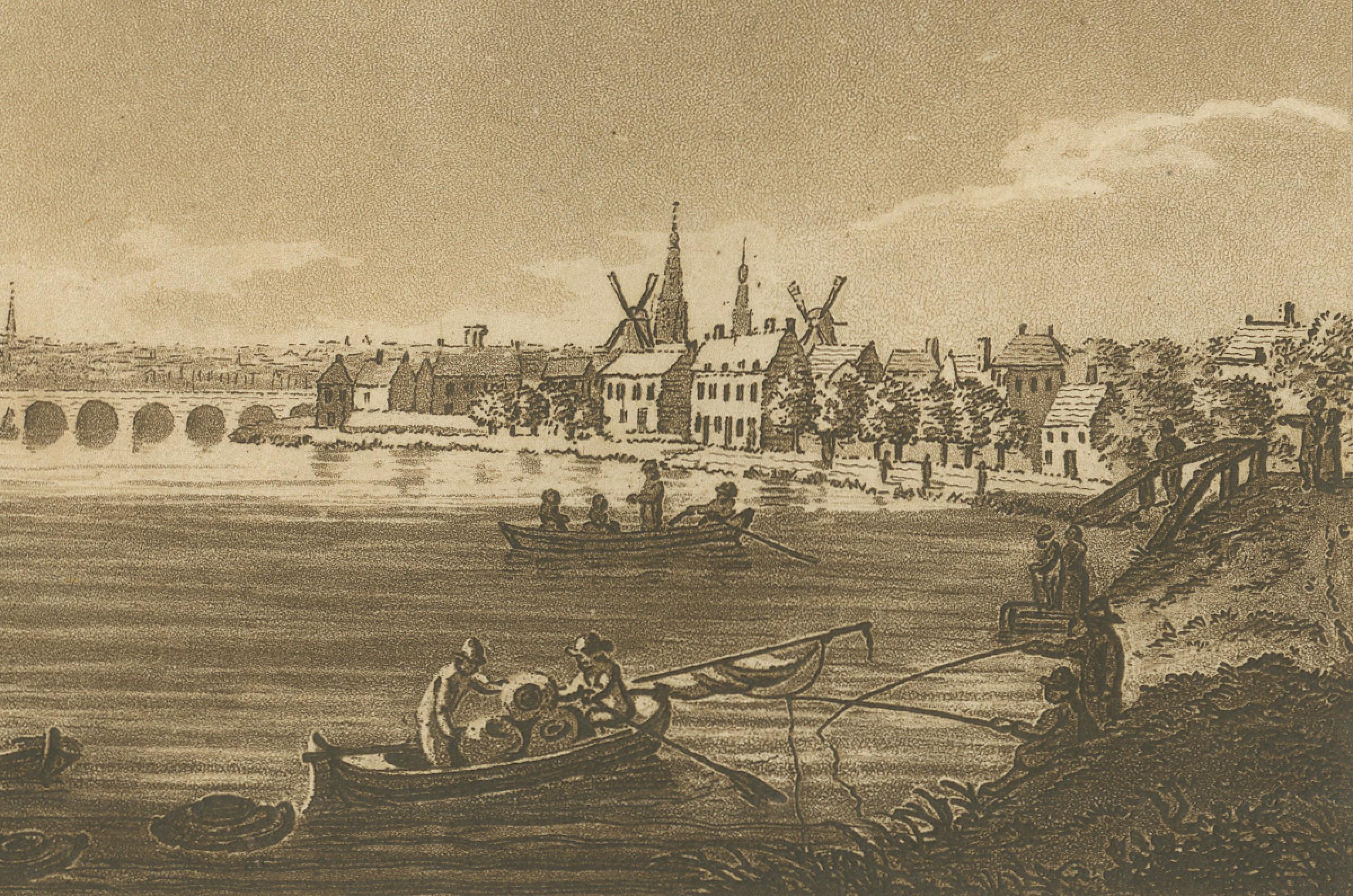
The central focus is the elegant stone bridge spanning the Amstel, connecting the developed edges of the city. The view is enriched by numerous architectural and cultural details, including windmills, Dutch canal houses, spired churches, and groups of boats traversing the water. In the foreground, finely dressed figures can be seen seated in a skiff, emphasizing the leisurely pace of life along the riverbank.
Ireland’s use of aquatint, a technique prized for its ability to render tonal variations and soft shadows, brings great depth and nuance to the sky, water, and cityscape. The darkening clouds and the mirrored reflection in the river create a moody, almost romantic atmosphere. This type of print was popular in late 18th-century England, aimed at travelers and art collectors with a taste for picturesque European scenes.
Samuel Ireland (1744–1800) was a respected artist, engraver, and writer known for his travel books and engraved views. This plate likely comes from his series documenting his journey through the Low Countries, which combined informative commentary with finely detailed illustrations.
This antique print is a valuable historical document and a charming decorative piece, suitable for collectors of early city views, Dutch topography, or 18th-century English engraving.
Condition Report:
Fair condition for its age. Mild age toning and foxing visible, mainly in the margins. Image remains crisp and detailed with excellent contrast. Blank verso, full sheet preserved.
Framing Tips:
Use a dark wood or mahogany frame to echo the sepia tones. Pair with a warm cream or tan mat to complement the print’s coloring. UV-protective glass is recommended to preserve the delicate aquatint technique.