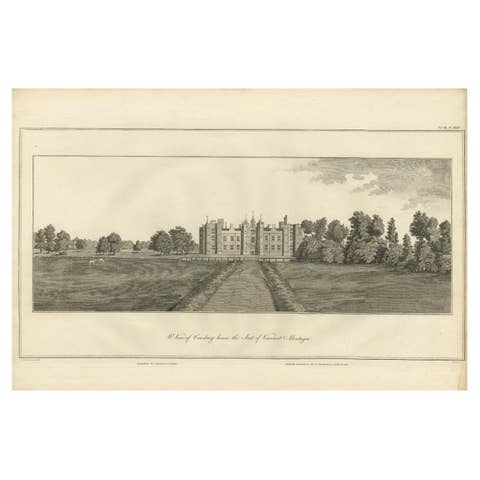
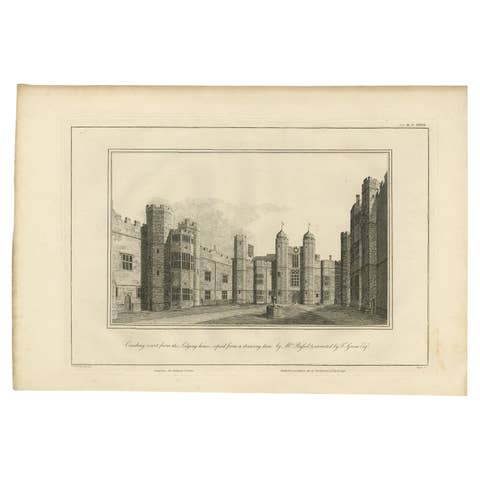
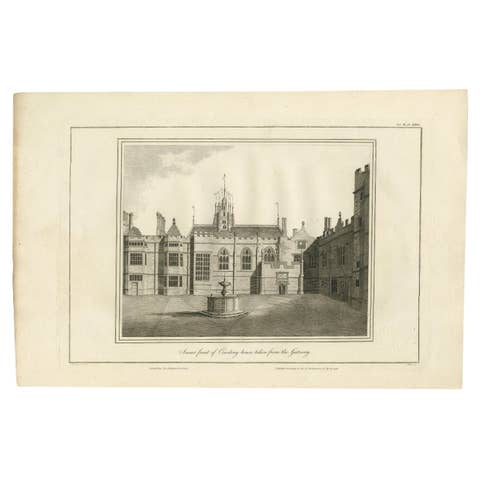
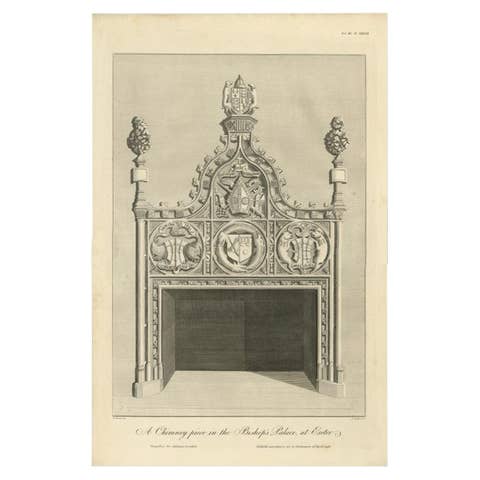
Views of Cowdray House – Engraving of South & North Aspects, Sussex, 1796
€ 159
Original antique · The actual sheet photographed · Certificate of authenticity on request · Sold unframed · Worldwide shipping from € 15 (rates)
Date
1796
Technique
Engraved
Sheet size
58 × 37 cm (22.8 × 14.6 in)
Condition
Good
Reference
BGI-00013
What the condition grades mean
Excellent
Bright and clean, with no faults worth mentioning.
Very good
Only light signs of age, such as faint toning.
Good
Normal signs of age for a sheet of this period: toning, some foxing, small marks or neat old repairs.
Fair
Clear faults such as staining, tears or repairs, priced to match.
Every fault we see is written in the condition note, and the whole sheet is shown uncropped in the photos.
Condition
Very good impression with general age-related toning. Plate marks clearly visible, strong paper with full margins and slightly frayed edge at the bottom.
About this sheet
Views of Cowdray House – Engraving of South & North Aspects, Sussex, 1796
This finely executed antique engraving presents two distinct views of Cowdray House, the once-grand Tudor mansion in West Sussex, England. The upper image, titled “South View of Cowdray from the Cottage,” captures the estate’s stately silhouette framed by rolling parkland and mature trees, with architectural details of the house visible in the mid-distance. The lower image, “North View of Cowdray House,” offers a complementary perspective, showing the building’s facade as it rises above gently undulating grounds, with figures and livestock animating the rural setting.
Cowdray House, built in the early 16th century and associated with the influential Montague family, was one of England’s great Tudor homes, famed for hosting monarchs and dignitaries. These views date from a period shortly before the devastating fire of 1793, which left the mansion in ruins. As such, they serve as valuable historical records of the estate’s original grandeur.
Engraved by James Basire (1730–1802), renowned for his architectural precision and historical accuracy, after drawings by Samuel Hieronymus Grimm (1733–1794), a Swiss-born artist celebrated for his topographical works, these plates reflect the Georgian era’s fascination with documenting significant historic sites.
Ideal for collectors of English country house views, Tudor architecture, or antiquarian engravings, this piece offers both aesthetic appeal and historical significance.
Framing tips: Present both views together in a single mount with a warm ivory or pale gray mat, complemented by a gilt or dark wood frame to highlight the fine engraved lines and tonal contrasts.