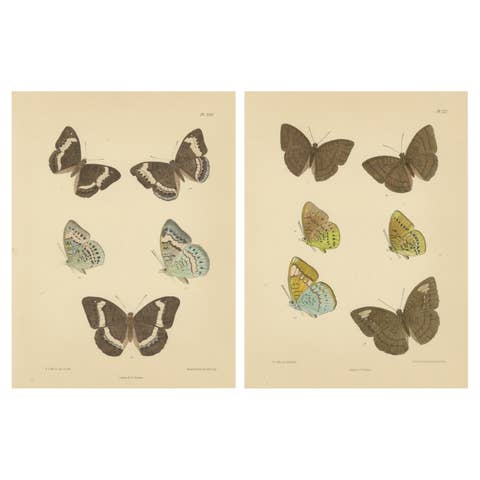
Victorian Moth Illustrations by William Forsell Kirby, 1882
€ 240
One of a kind: this is the sheet in the photographs. Ships from Langweer, the Netherlands.
Date
1882
Sheet size
27.5 × 21 cm (10.8 × 8.3 in)
Reference
BG-13748-53 and BG-13748-54
Condition
good, given age. General age-related toning and/or occasional minor defects from handling. Please study scan carefully.
About this sheet
Description of the Prints
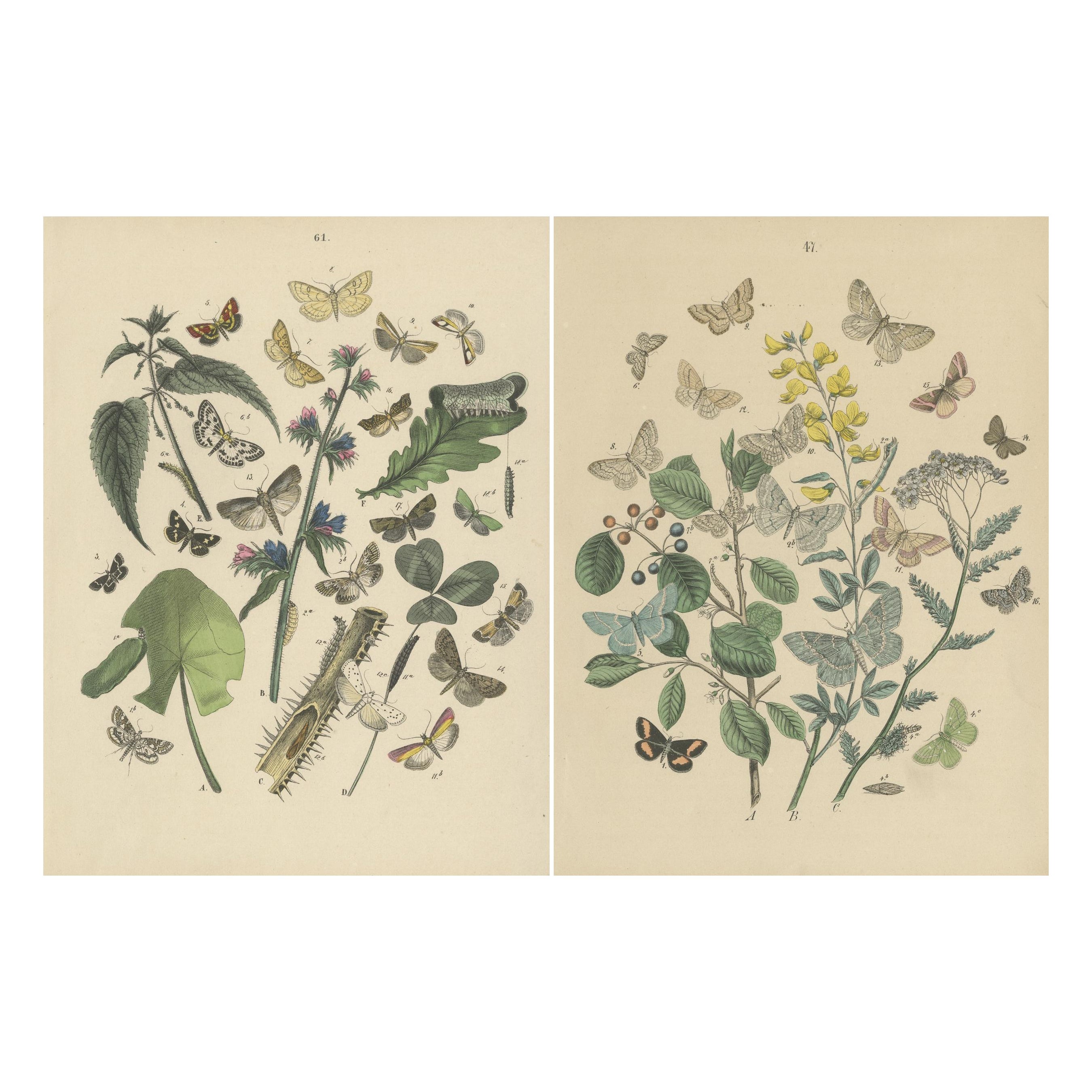
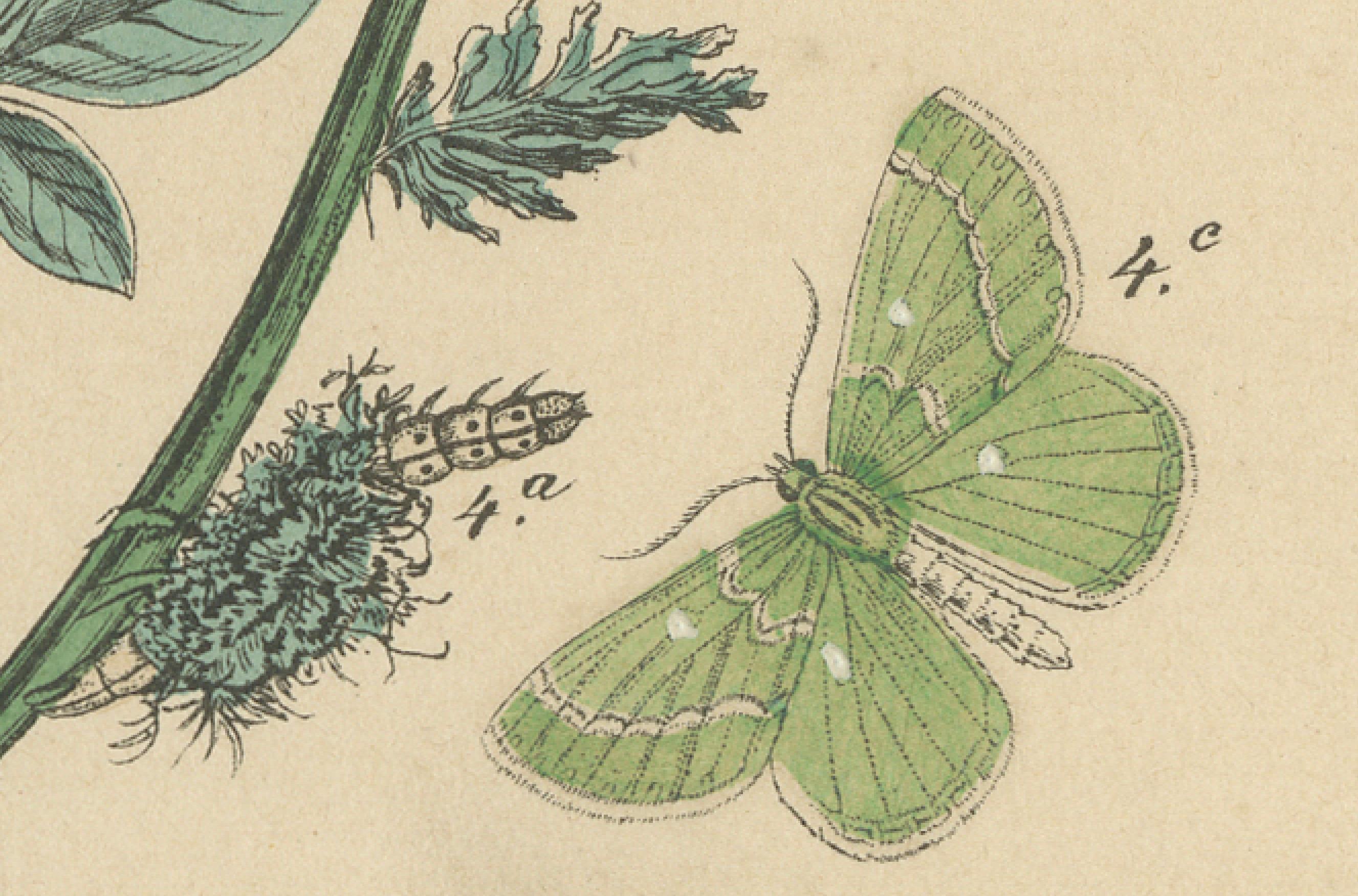
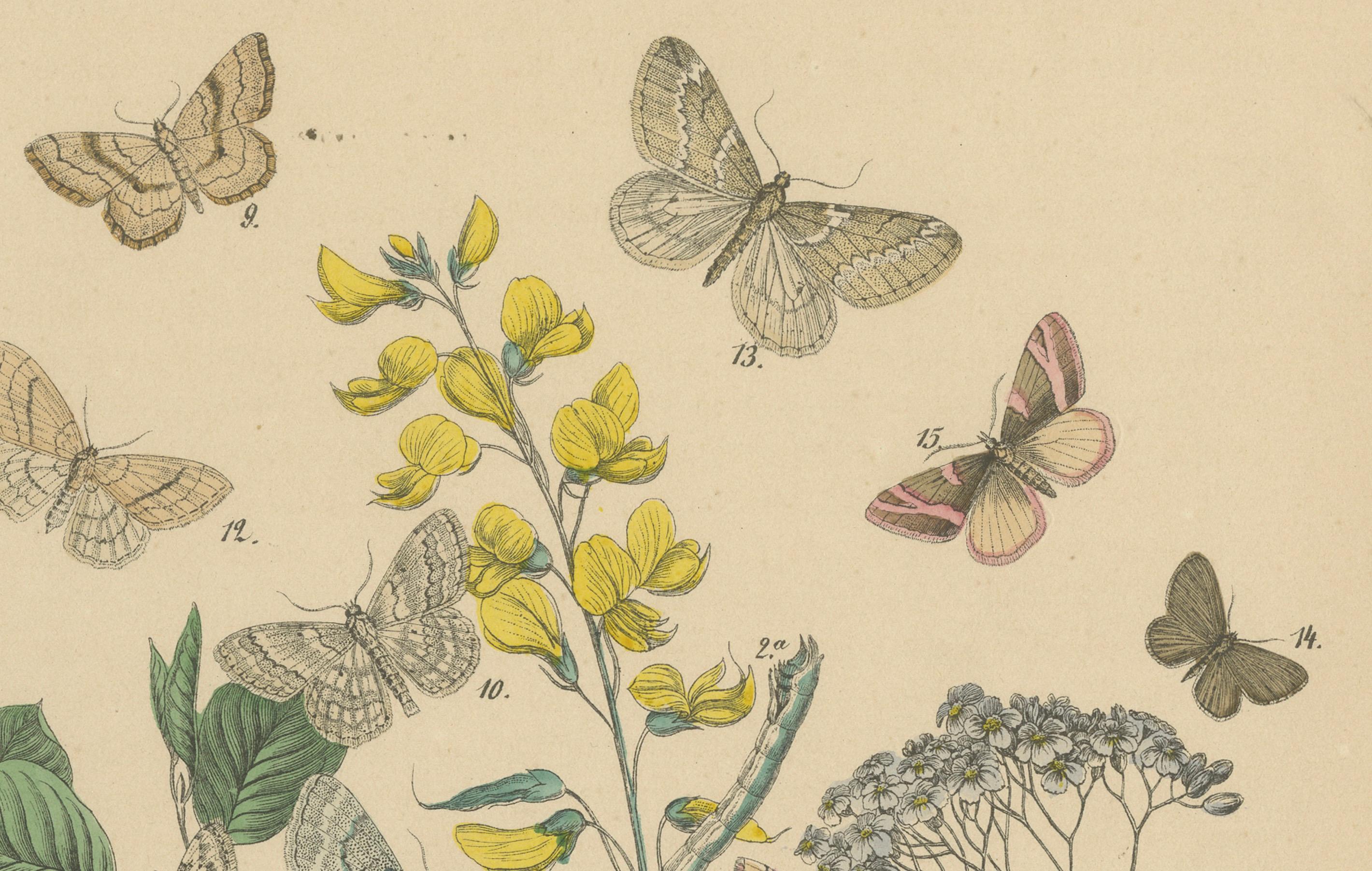
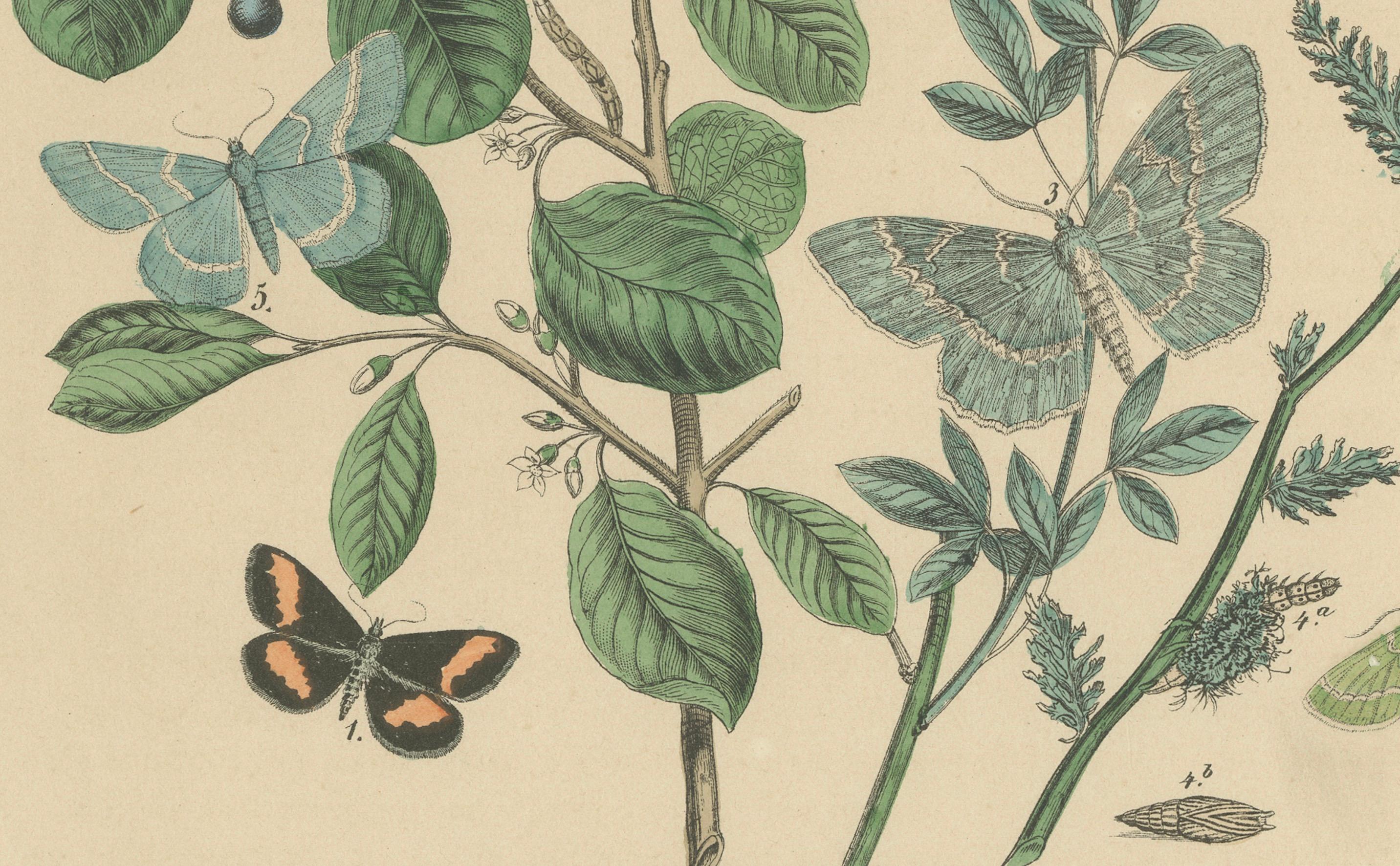
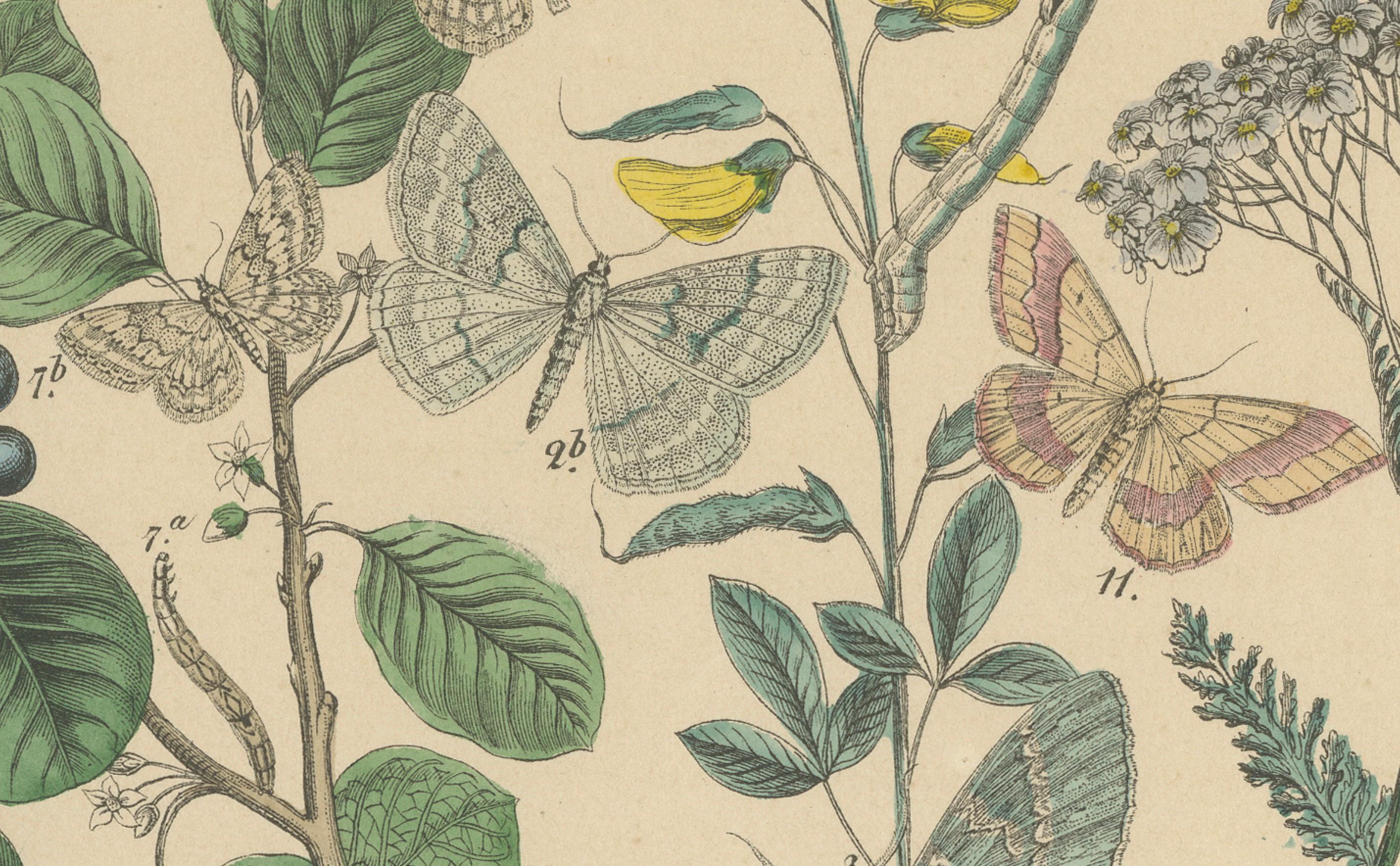
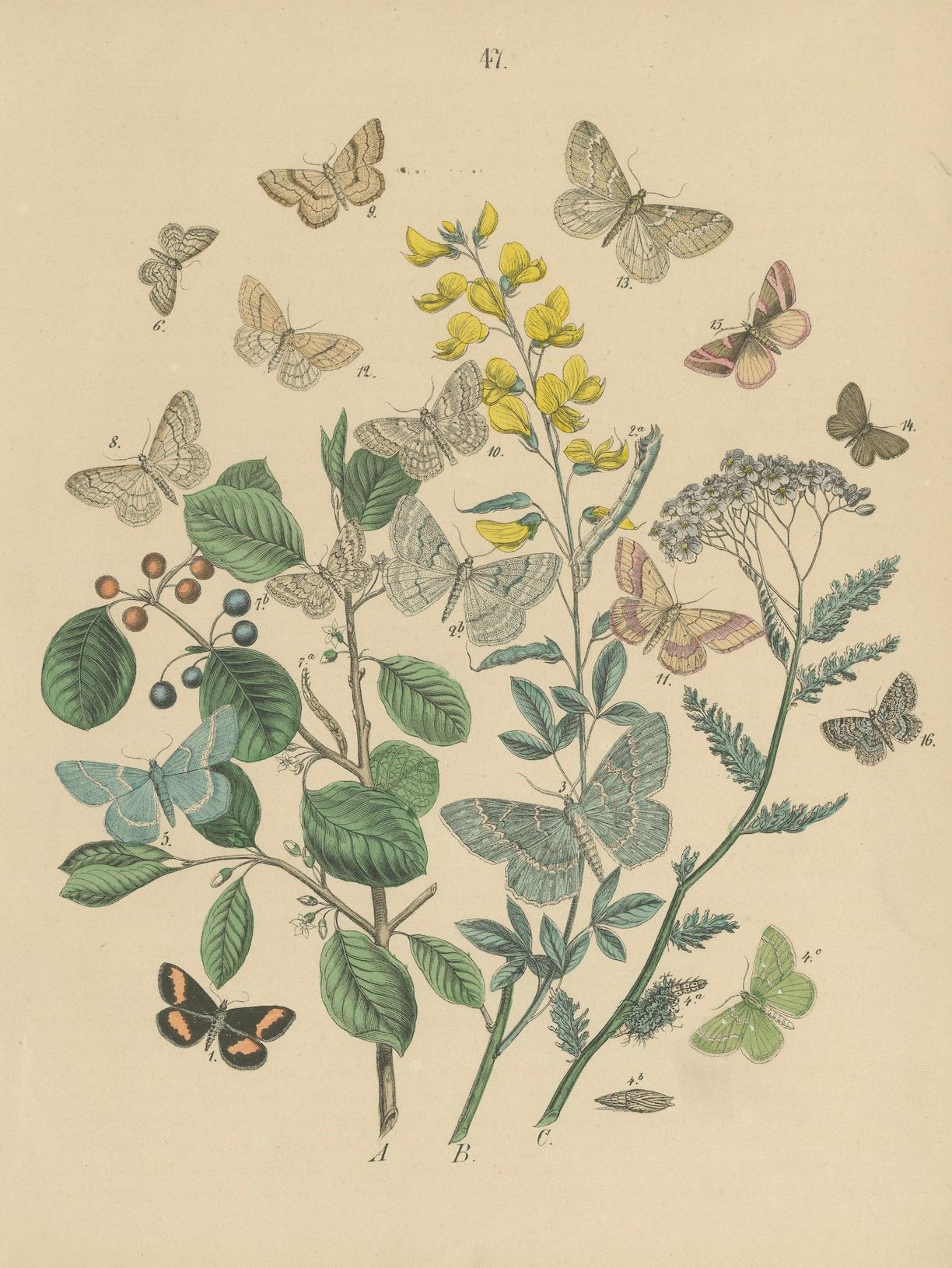
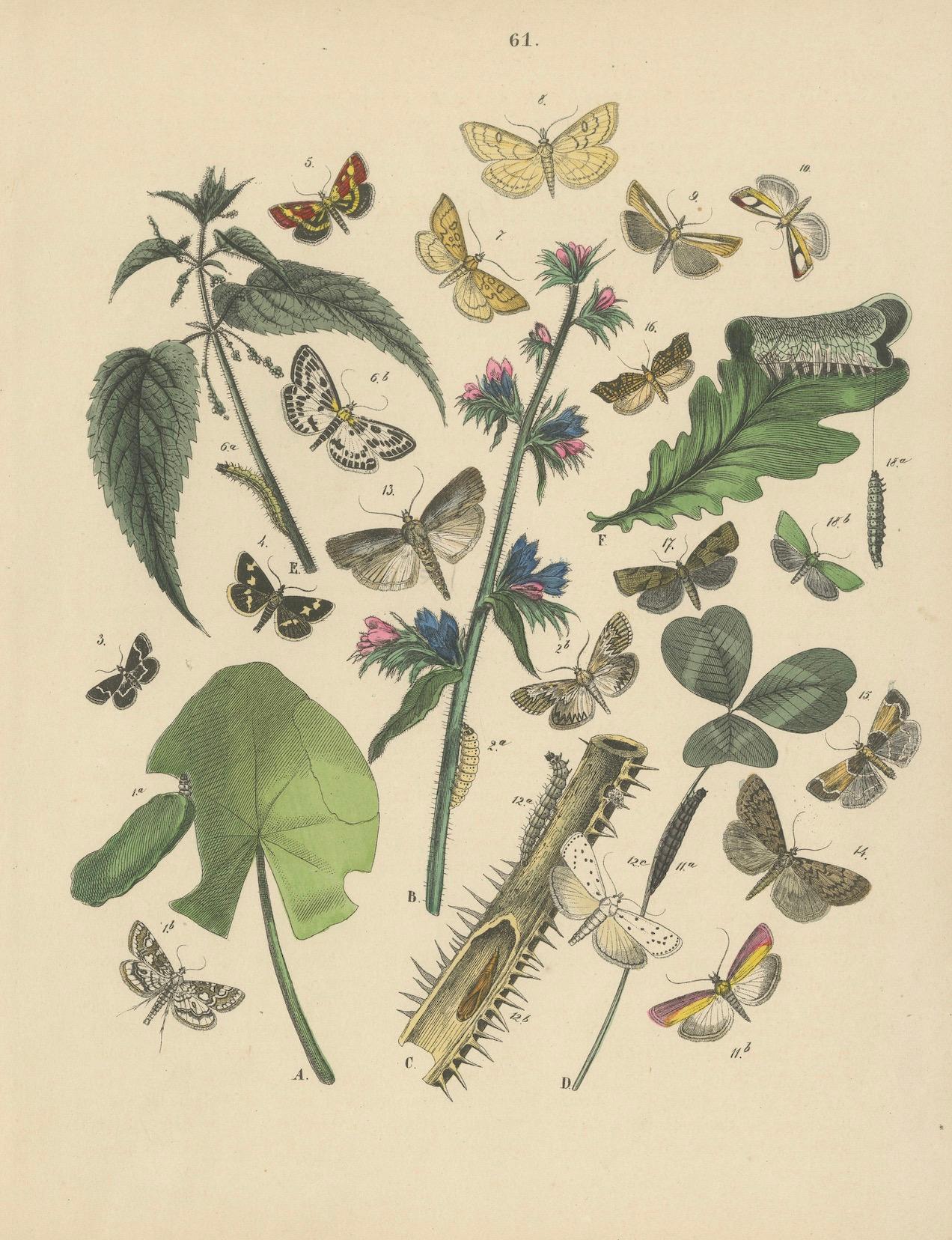
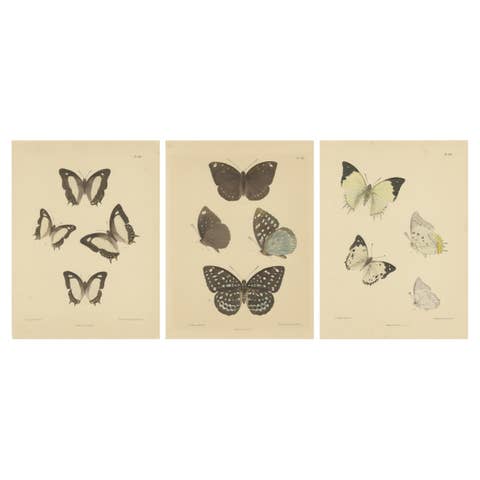
First Print: Beauty, Peacock, and Waved Moths
This print showcases an array of intricately detailed moths and their associated flora. The Beauty, Peacock, and Waved Moths are depicted among lush green leaves and vibrant flowers, capturing the natural environment in which these species thrive. The artistic rendering highlights the moths' distinct wing patterns and colors, set against a serene backdrop of plants they frequent, creating a vivid representation of a summer day in nature.
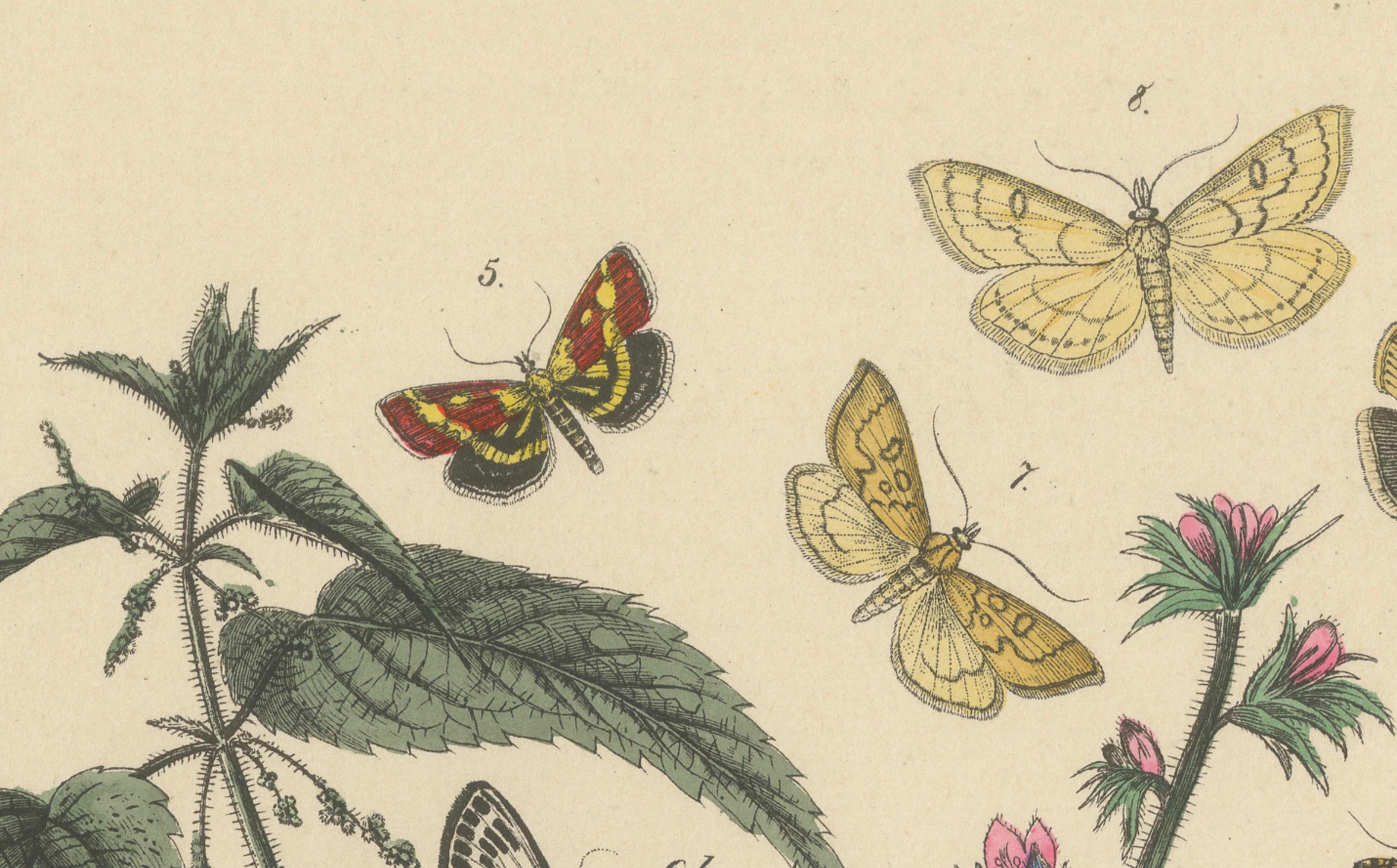
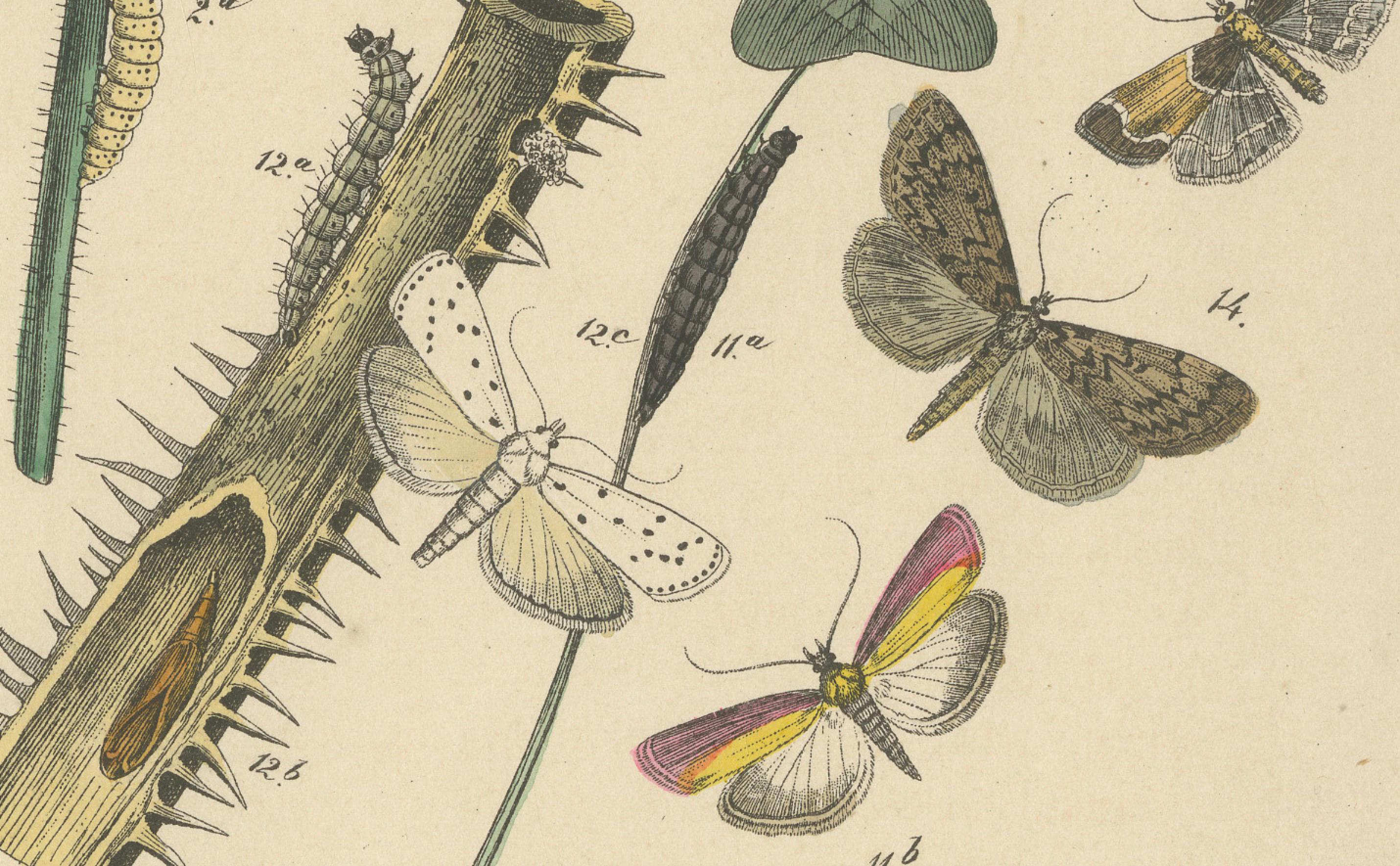
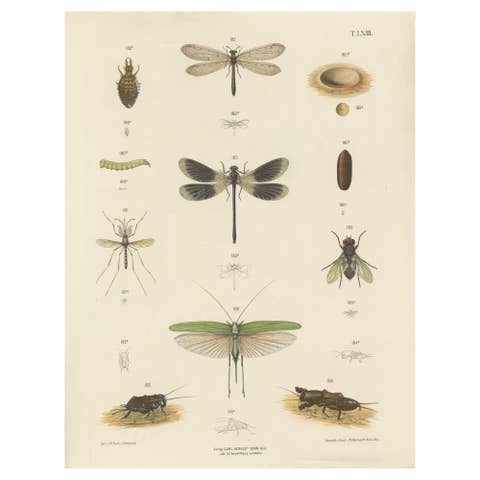
Second Print: White-spotted and Marbled Moths
The second print features the White-spotted and Marbled Moths, elegantly poised among foliage and blossoming flowers. Similar to the first, this print emphasizes the delicate interplay between these nocturnal creatures and their natural habitats. The moths are depicted with a high degree of accuracy, showcasing their unique markings and the subtle gradations in their wings, complemented by the botanical accuracy of the plants around them.
About the Maker: William Forsell Kirby
William Forsell Kirby (1844–1912) was a renowned entomologist and folklorist, who contributed significantly to the scientific illustrations of insects, particularly butterflies and moths. Working for Cassell and Company, Kirby's lithographs were made in 1882 and are known for their precision and the beauty with which they render the subjects. His works not only served scientific purposes but also catered to the Victorian era's fascination with natural history and the decorative arts. The use of chromolithography allowed for vibrant, lasting colors, and the hand-finished detailing in each lithograph ensured that each piece was both scientifically valuable and aesthetically pleasing. Kirby's illustrations reflect a period of intense scientific discovery and public curiosity about the natural world, appealing to both amateur naturalists and dedicated scientists of his time.