Large Antique Zoology Poster – Crayfish, Leeches, Snails, Insects c.1880
€ 690
One of a kind: this is the sheet in the photographs. Ships from Langweer, the Netherlands.
Date
1880
Sheet size
84 × 65 cm (33.1 × 25.6 in)
Condition
Good
Reference
BG-13646-6
Condition
Good condition overall. Clean paper with vibrant original colours. Some age-related browning to margins, occasional small tears or handling marks at edges, and faint foxing, typical for its age, not affecting the main illustration. Ready to frame.
About this sheet
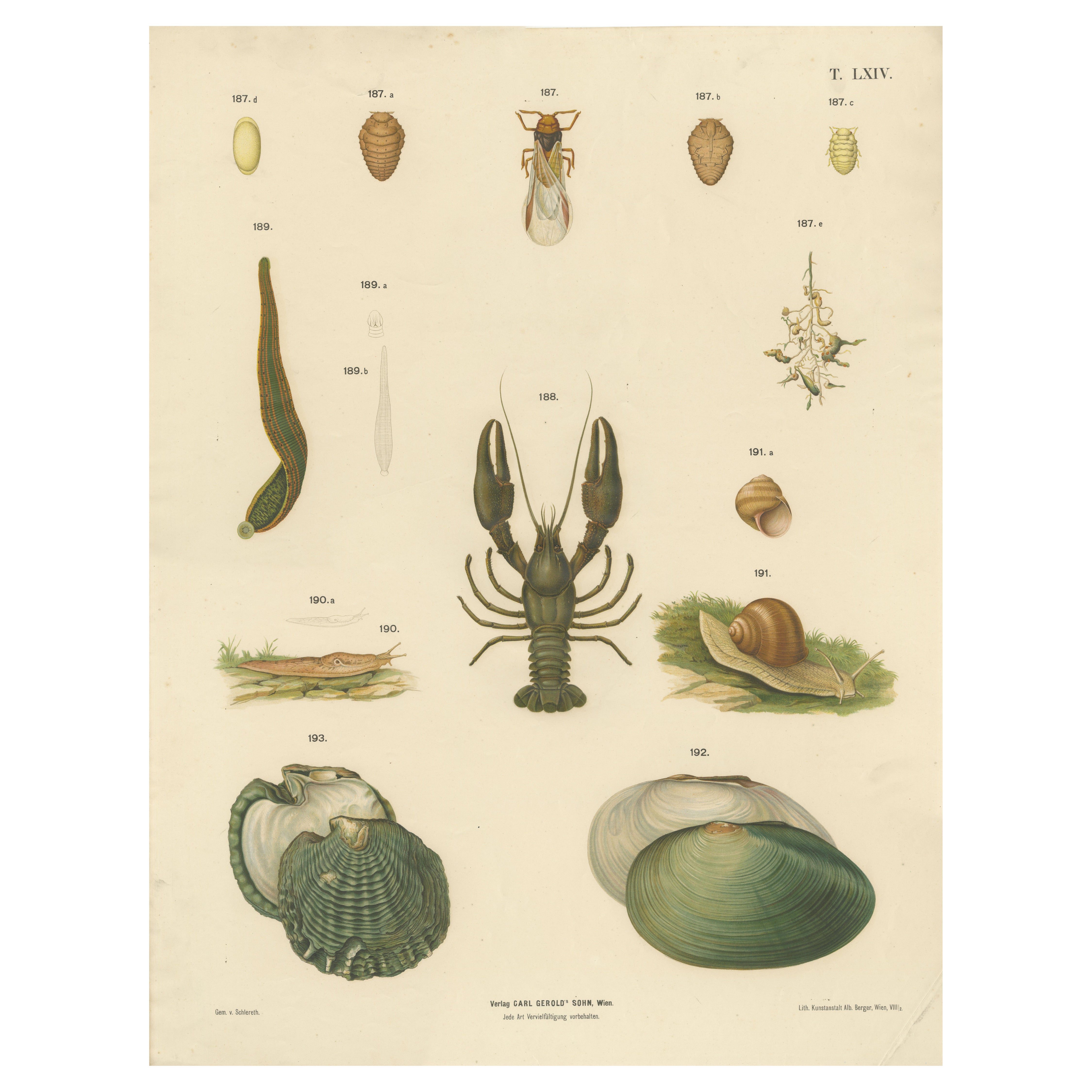
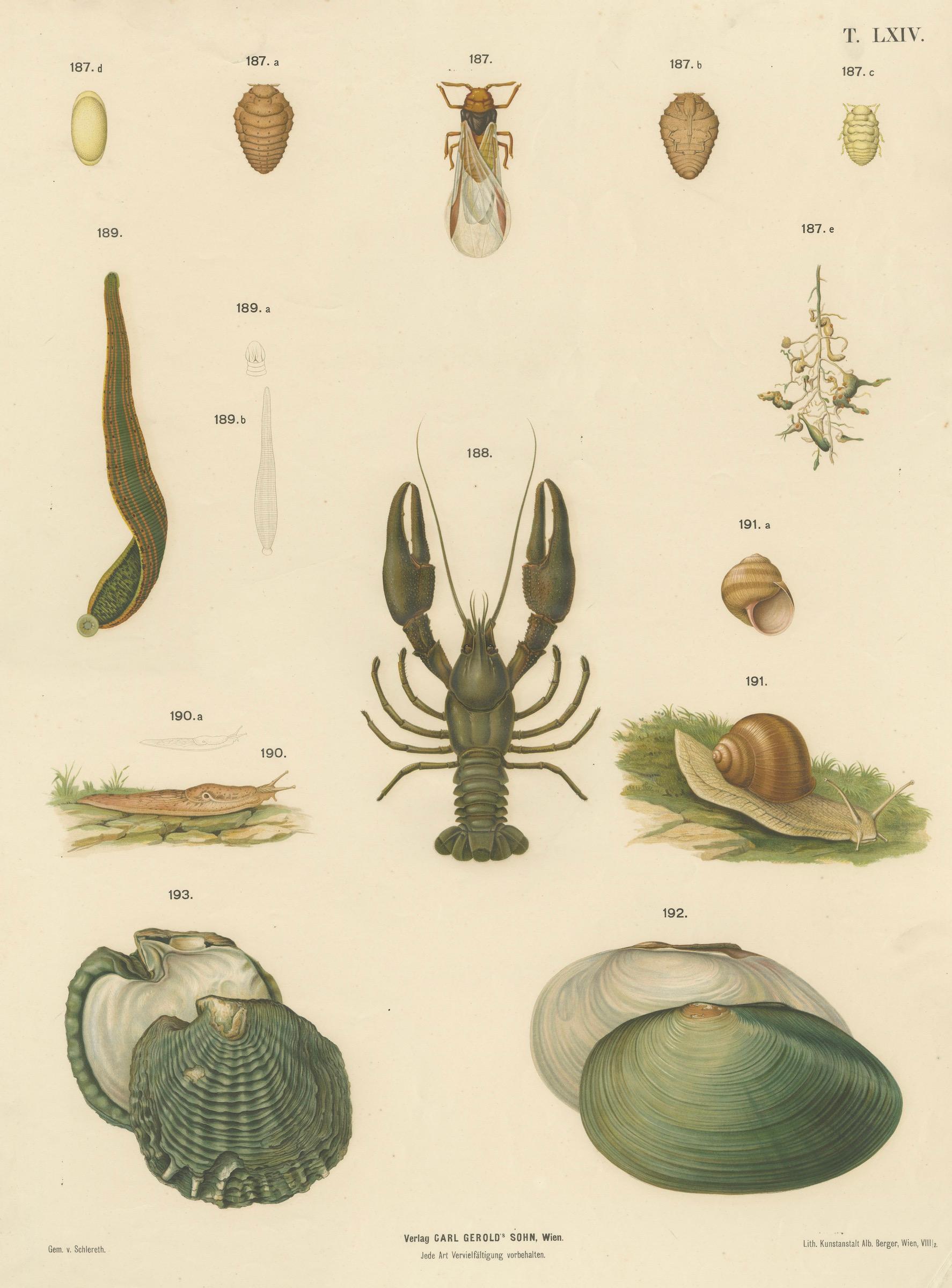

Large Antique Zoology Poster – Crayfish, Leeches, Snails, Insects c.1880 This large antique zoological teaching poster was published circa 1880 by Carl Gerold’s Sohn in Vienna. The lithographed plate measures approximately 65 x 84 cm and depicts various freshwater and land invertebrates with scientific precision. Illustrated animals include:
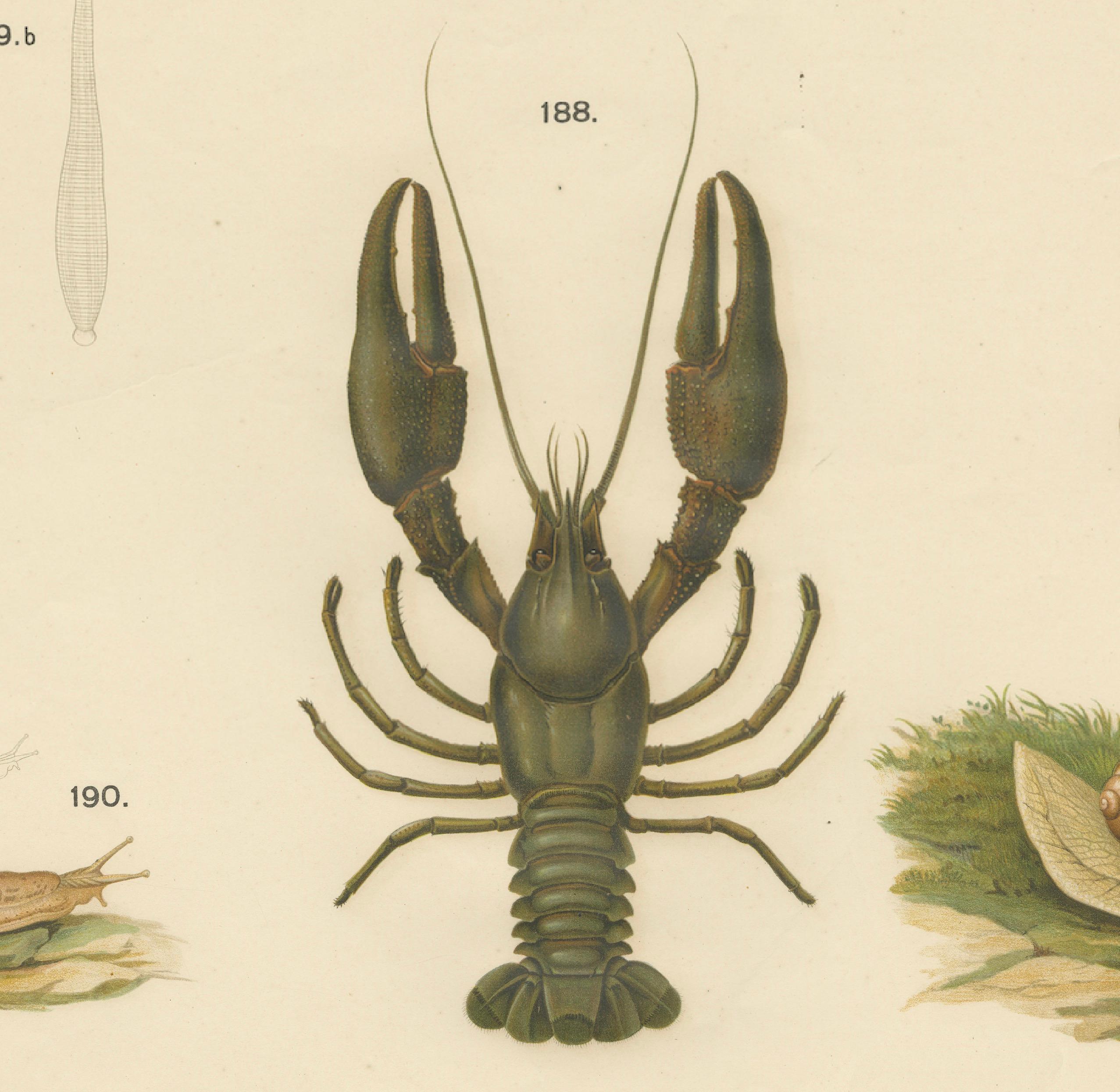
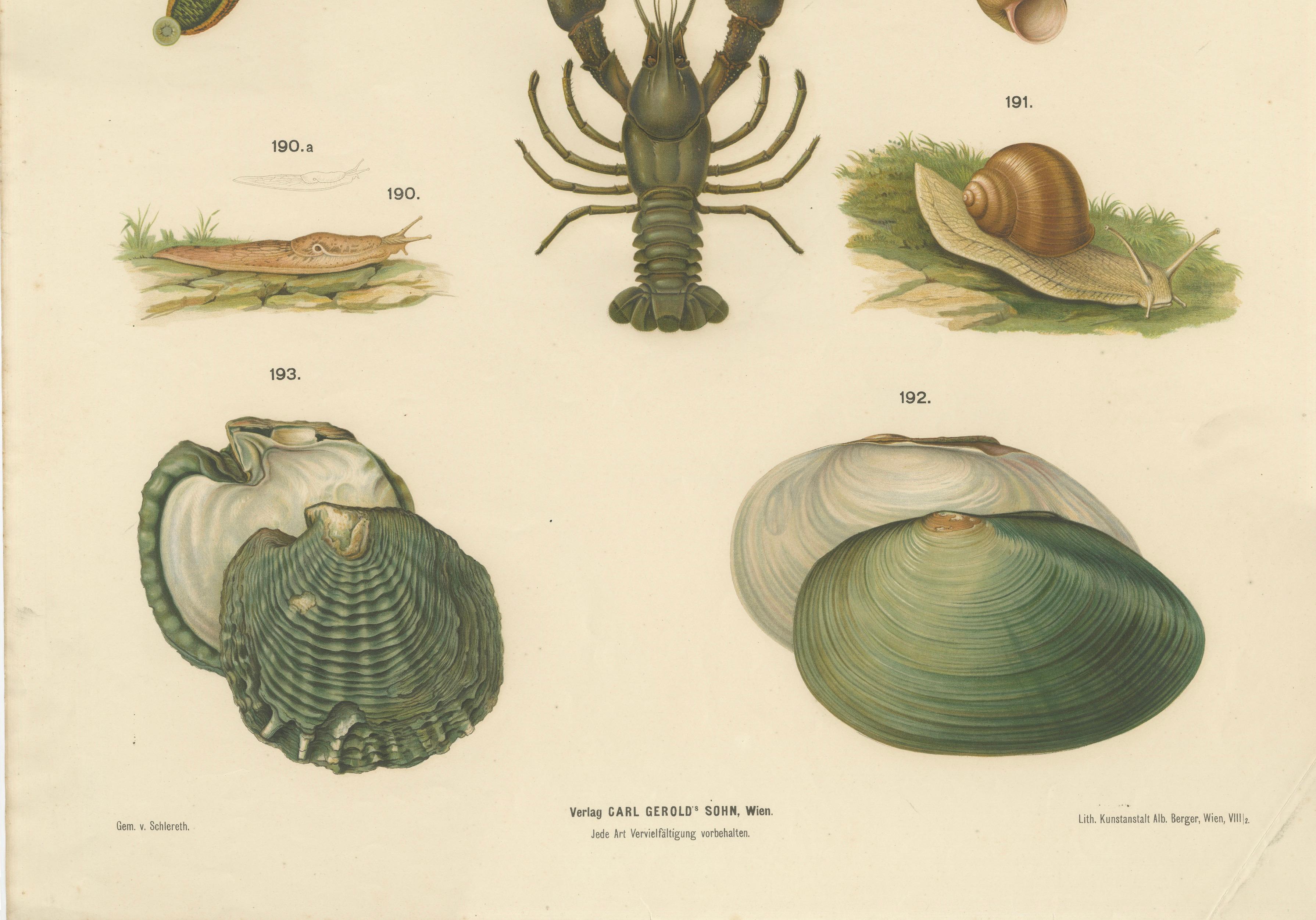
187 cicada life stages, showing adult insect, pupa, and larval forms 188 European crayfish (Astacus astacus) with detailed claws and anatomy 189 medicinal leech (Hirudo medicinalis) with anatomical cross-section 190 pond snail (Lymnaea stagnalis) shown both in shell and extended 191 Roman snail or Burgundy snail (Helix pomatia), common edible snail 192 large freshwater clam or mussel 193 freshwater mussel (Unionidae) with shell interior and exterior view
These species are rendered with great care, capturing their structural details, life cycles, and ecological significance. The artwork is by zoological illustrator M. Schedler and printed by Albert Berger’s lithography workshop in Vienna. Originally produced for educational use in schools and universities, such prints were essential tools for teaching natural history, comparative anatomy, and invertebrate biology.
Today, these posters are appreciated for their timeless scientific aesthetic and are ideal decorative pieces for libraries, studies, restaurants, or any space with a natural history or vintage academic theme.
Condition: Good condition overall. Clean paper with vibrant original colours. Some age-related browning to margins, occasional small tears or handling marks at edges, and faint foxing, typical for its age, not affecting the main illustration and fully suitable for framing.
Framing tips: Due to its large poster format, it is best displayed in a simple dark wood or black metal frame without glass reflections if placed in a public or educational space. Alternatively, it can be mounted with a narrow neutral mat to emphasise its academic character, ideal for creating a historical zoology or science wall alongside other related plates.