Original antique · The actual sheet photographed · Certificate of authenticity on request · Sold unframed · Worldwide shipping from € 15 (rates)
Date
1878
Sheet size
27.5 × 21 cm (10.8 × 8.3 in)
Condition
Good
Reference
BG-13887-28, -29, -30
What the condition grades mean
Excellent
Bright and clean, with no faults worth mentioning.
Very good
Only light signs of age, such as faint toning.
Good
Normal signs of age for a sheet of this period: toning, some foxing, small marks or neat old repairs.
Fair
Clear faults such as staining, tears or repairs, priced to match.
Every fault we see is written in the condition note, and the whole sheet is shown uncropped in the photos.
Condition
Good condition. The prints are well preserved, with rich, vibrant colors. There is minor age-related toning along the edges and some occasional light foxing, which is typical for works of this vintage and does not affect the central image.
About this sheet
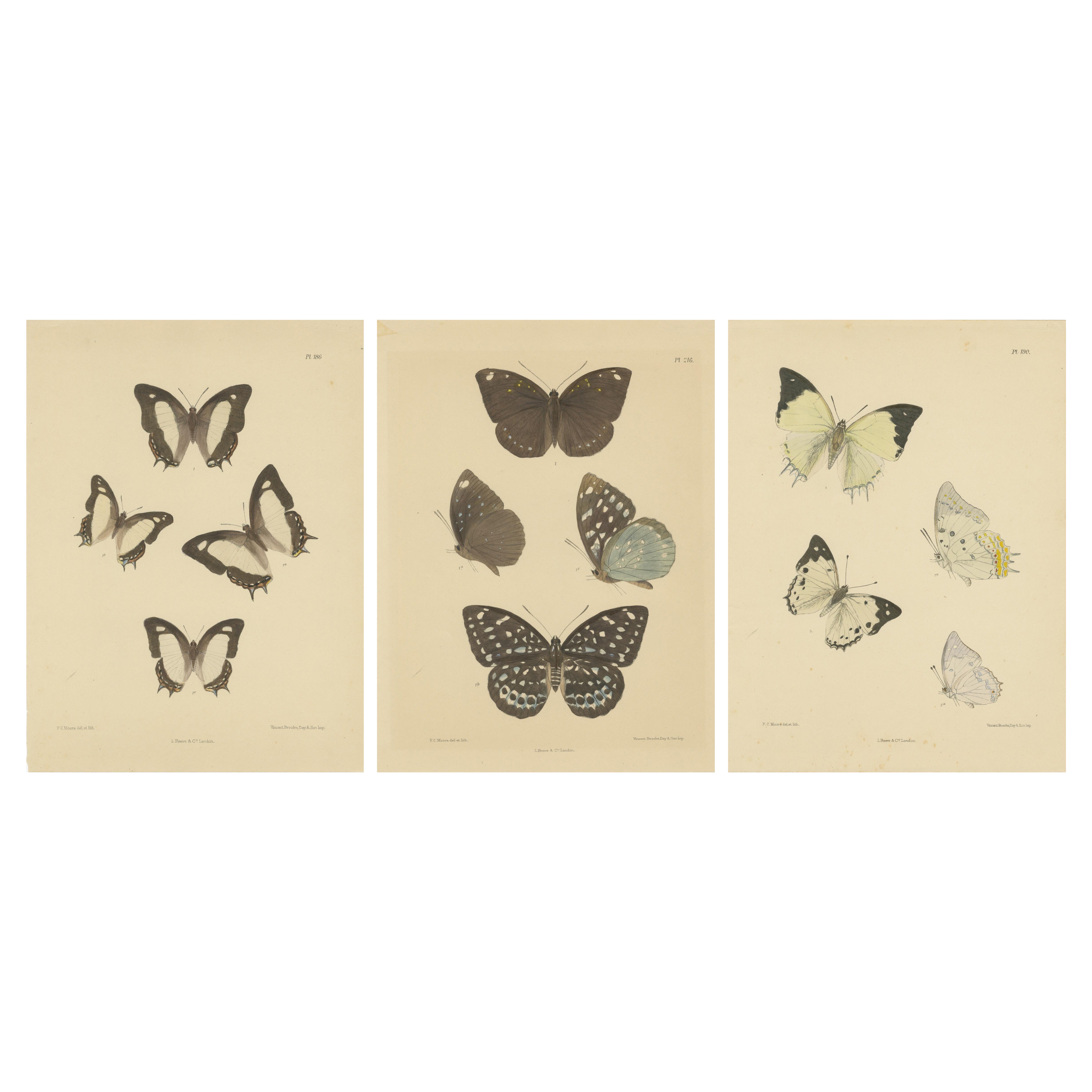
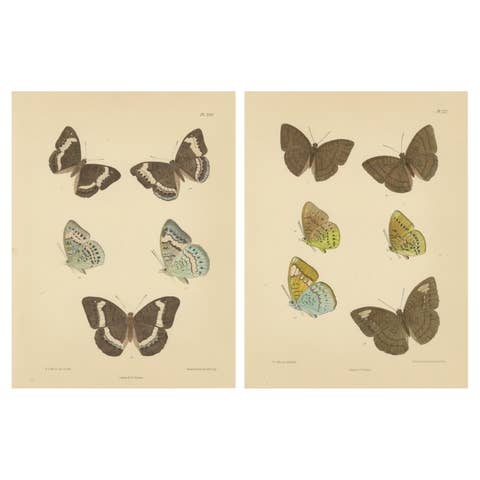
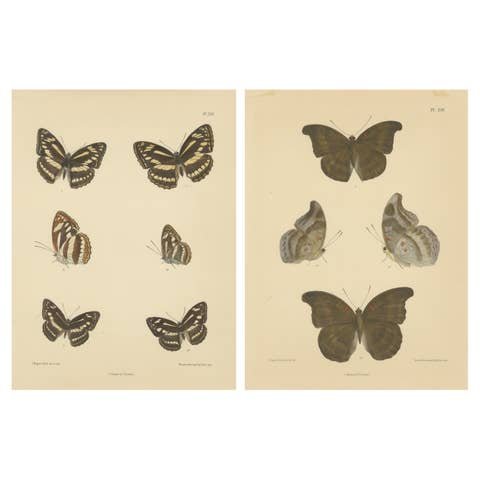
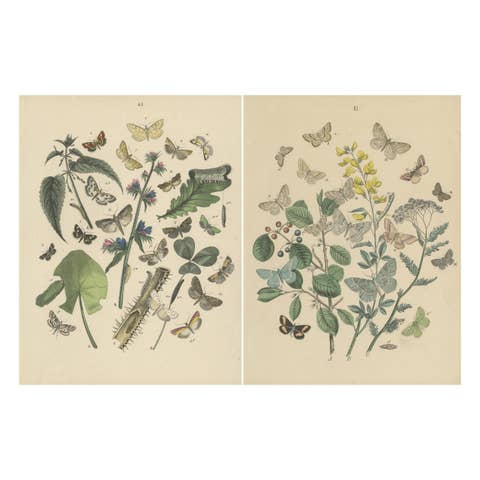
Victorian Butterfly Treasures: Captivating Hand-Colored Lithographs by Frederic C. Moore This exquisite set of lithographs by Frederic C. Moore, created in 1878, offers a breathtaking look at diverse butterfly species, captured in stunning detail and vibrant color. The plates—Pl. 186, Pl. 188, and Pl. 190—depict various species, each with distinctive features that highlight the beauty of the natural world. The butterflies include 'Charaxes tiridates' (White-barred Emperor), 'Euploea core' (Common Indian Crow), and 'Hebomoia glaucippe' (Great Orange Tip), showcasing the range of colors, from the delicate blues to the bold contrasting patterns of black and white. Moore’s attention to the intricate wing structures and naturalistic postures brings these butterflies to life, allowing for both an artistic and scientific appreciation. His work exemplifies the Victorian fascination with natural history and stands as a testament to the beauty and diversity of butterflies.
Condition Report: The lithographs are in good condition, with colors that remain vibrant. Some light age-related toning and minimal foxing are present along the edges, typical of prints from this era, but they do not affect the quality of the central images.