About this sheet
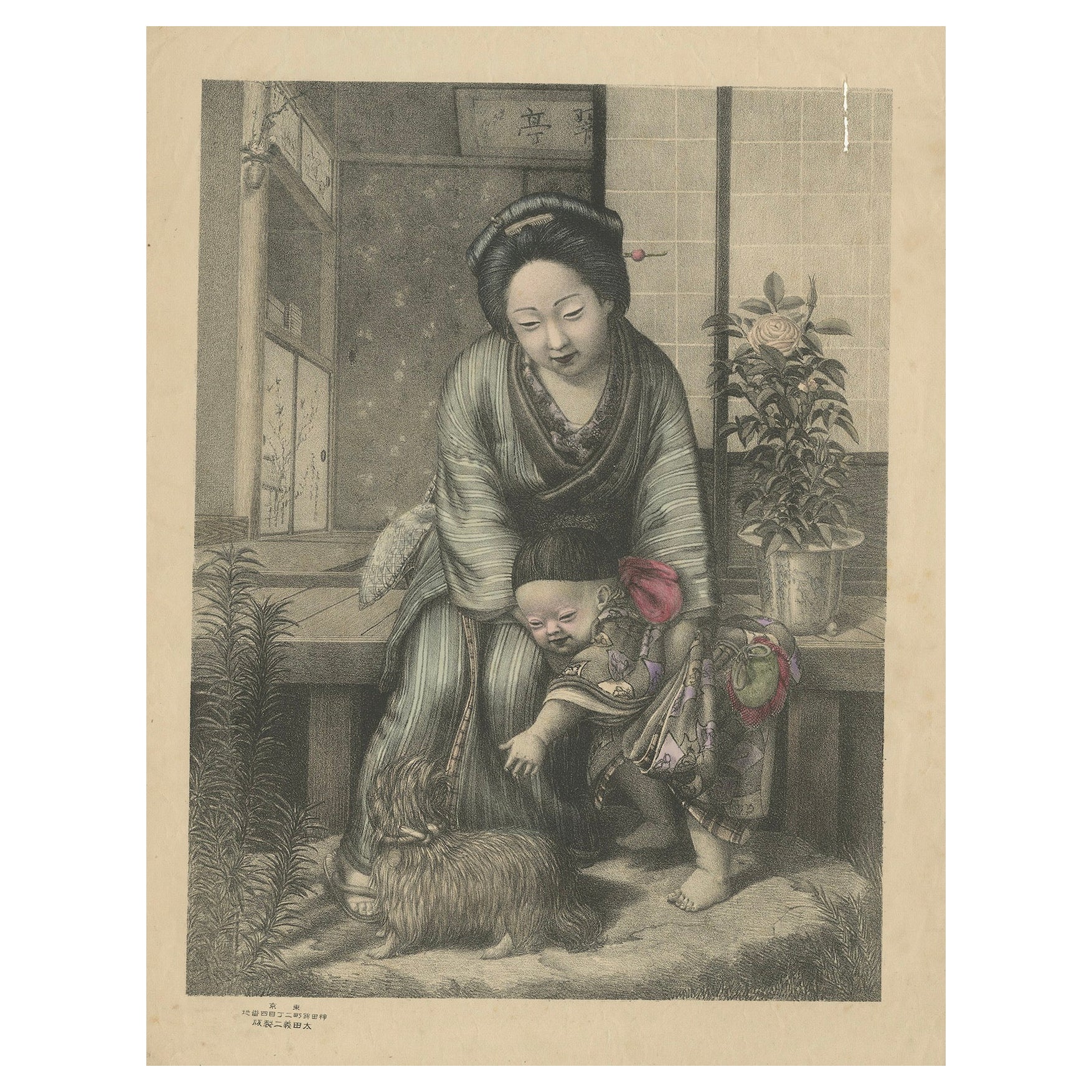
Antique Hand-Colored Japanese Lithograph: Mother, Child, and Dog Scene
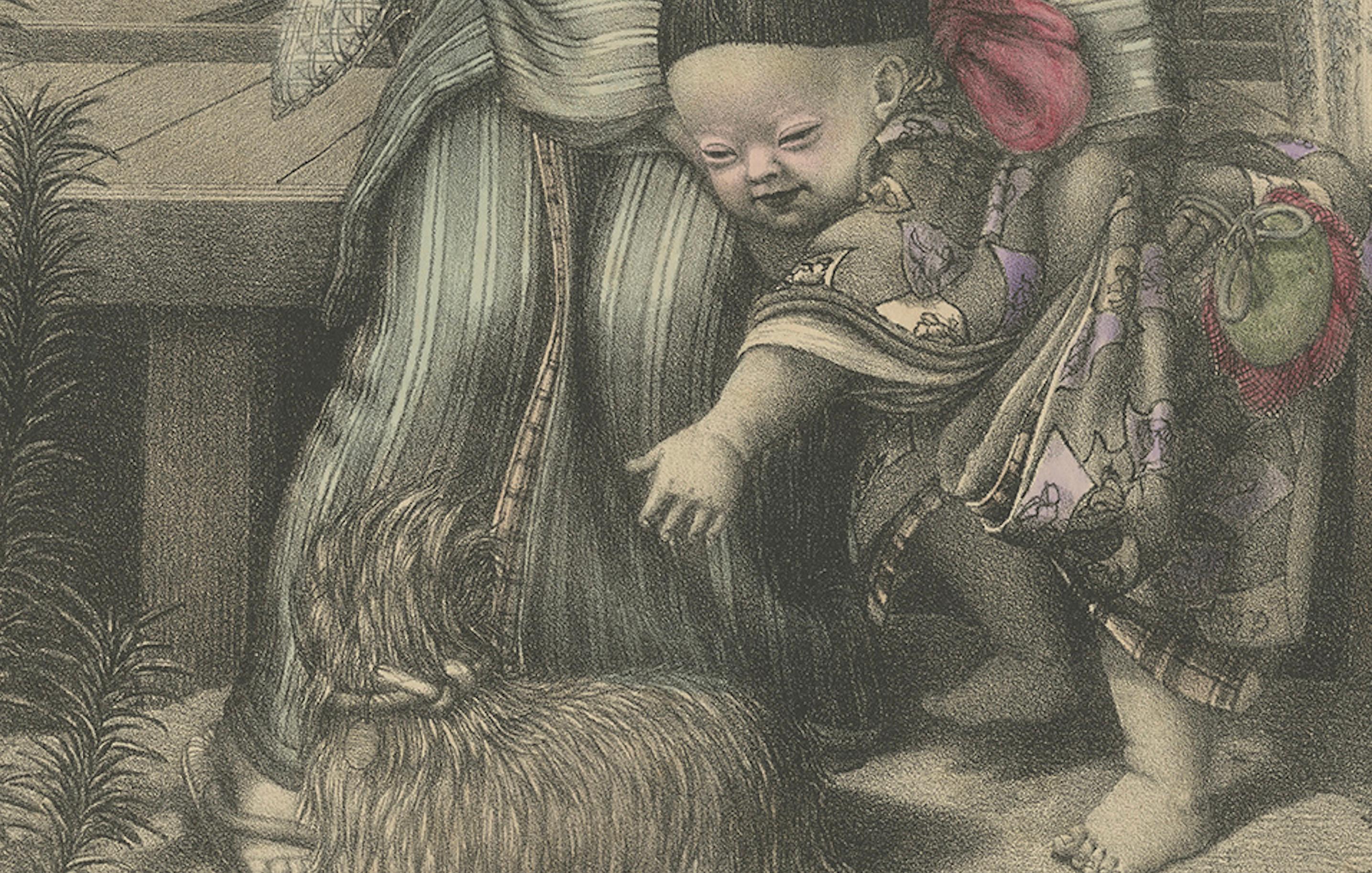
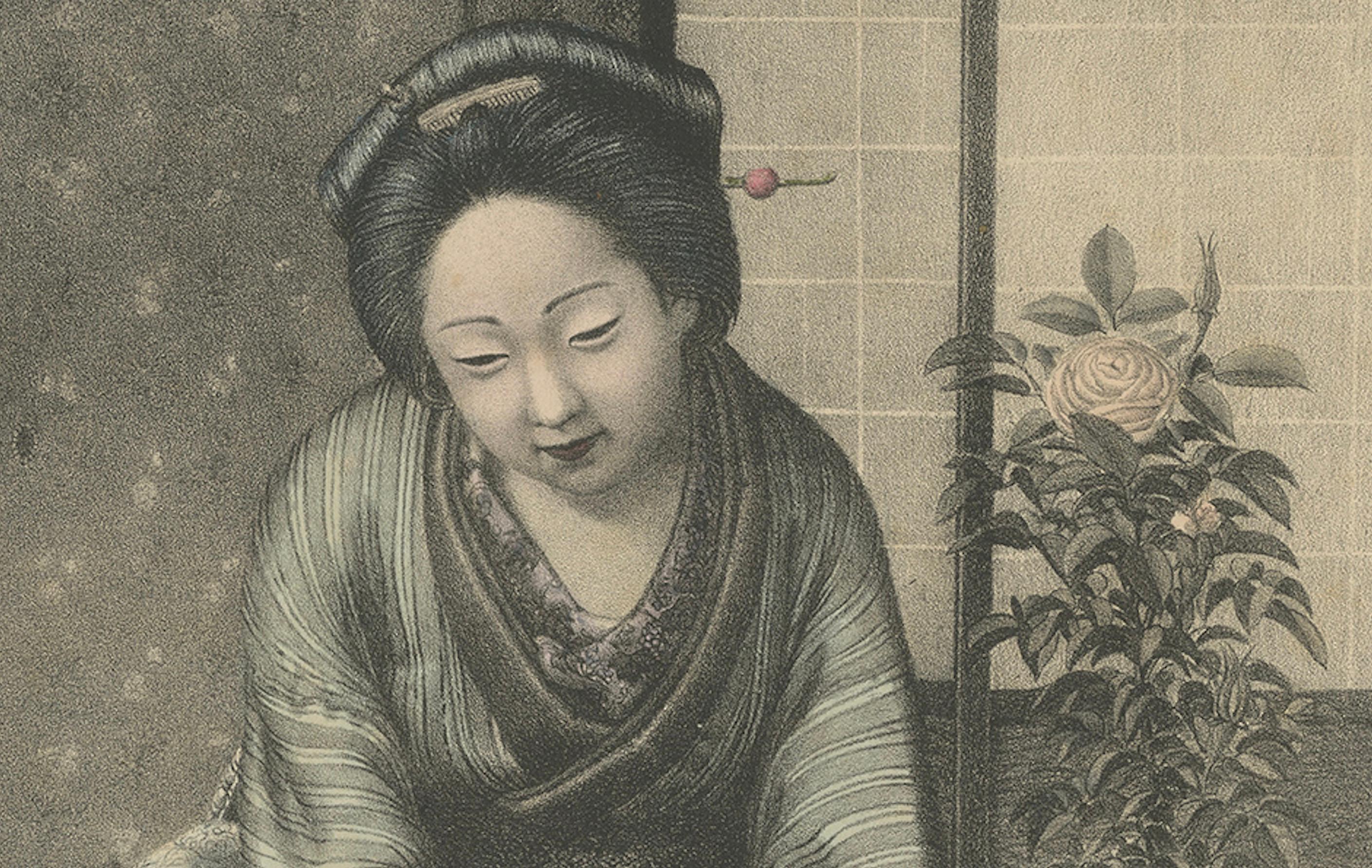
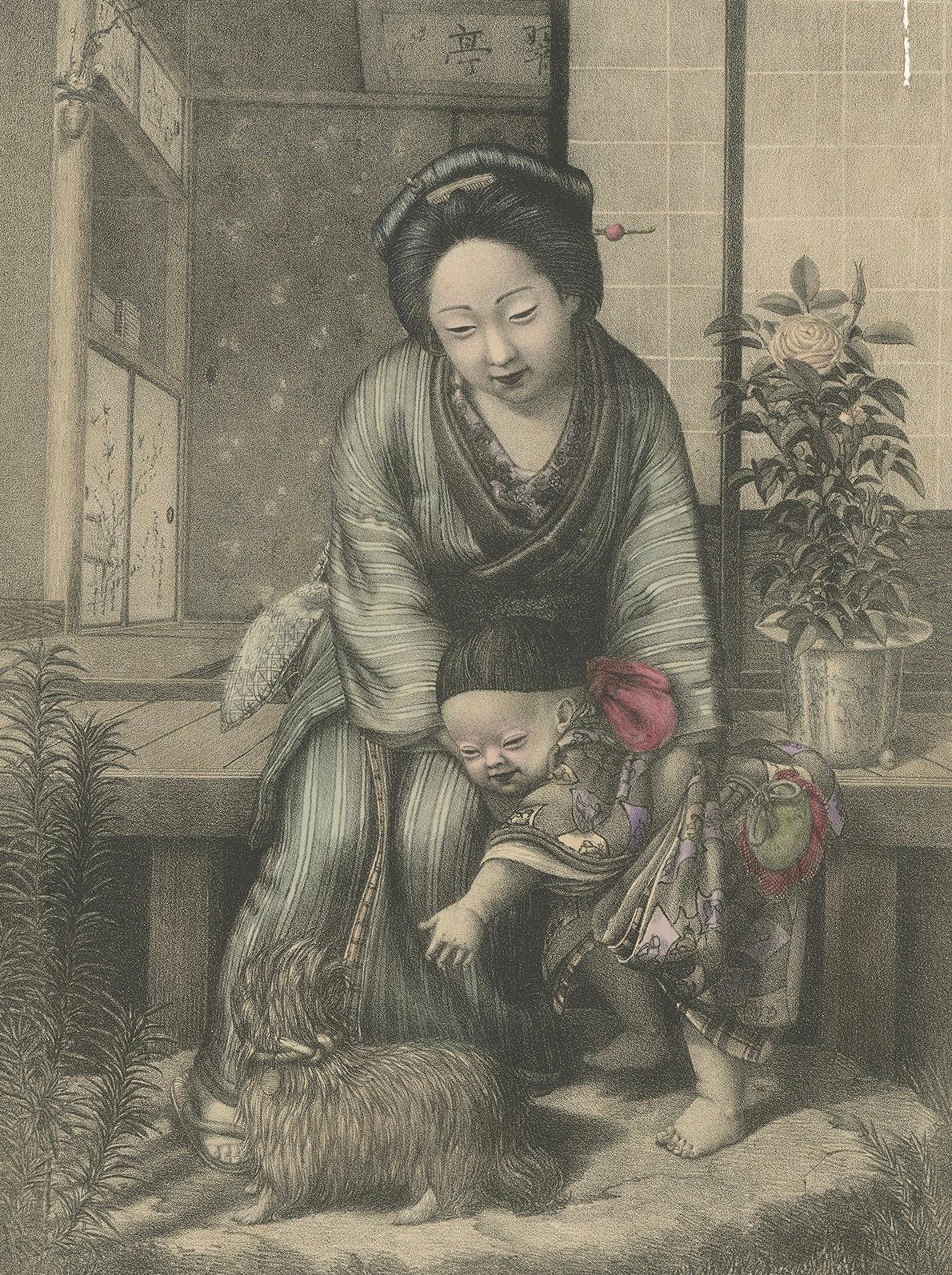
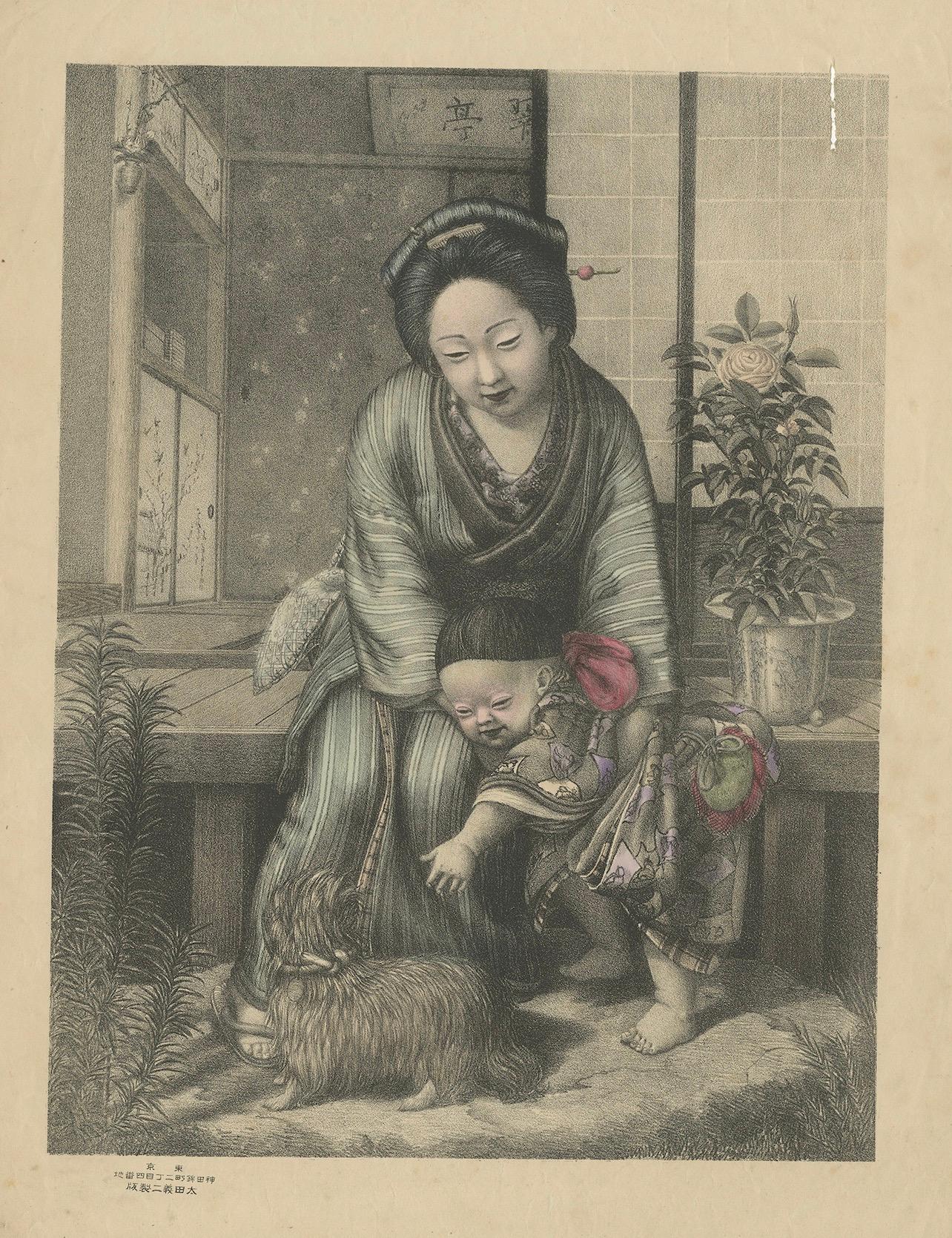
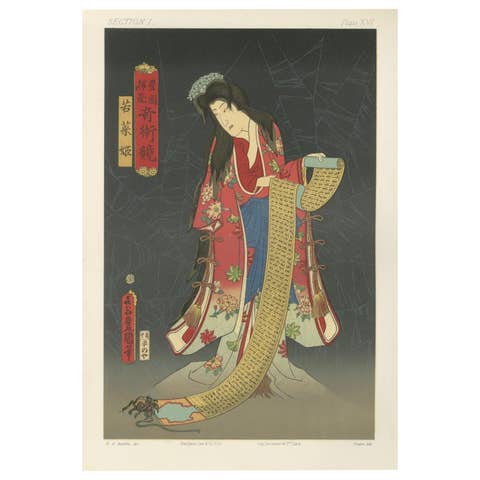
This charming antique lithograph depicts a peaceful domestic scene of a Japanese mother and child, rendered in delicate detail. The mother, dressed in a traditional kimono, gently watches over her young child, who is playfully engaging with a small, fluffy dog. The interaction between the child and the dog evokes warmth and a sense of family life.
The hand-colored elements are evident in the soft pastels of the kimono and the child’s clothing, with subtle tints of pink, green, and purple. The interior setting features classic Japanese decor, including sliding doors with delicate patterns and a small flowering plant in the background. The serene expression of the mother and the joyful nature of the child contribute to a tender atmosphere of tranquility and care.
The lithograph showcases traditional Japanese family life and aesthetics from the Meiji period (late 19th to early 20th century). Despite minor wear around the edges, typical of aged prints, this artwork retains its original beauty and provides insight into both the culture and artistry of the era.
The print is likely hand-colored, as indicated by the distinct, individualized coloring on the clothing and other elements, adding a unique charm to each piece from this edition.
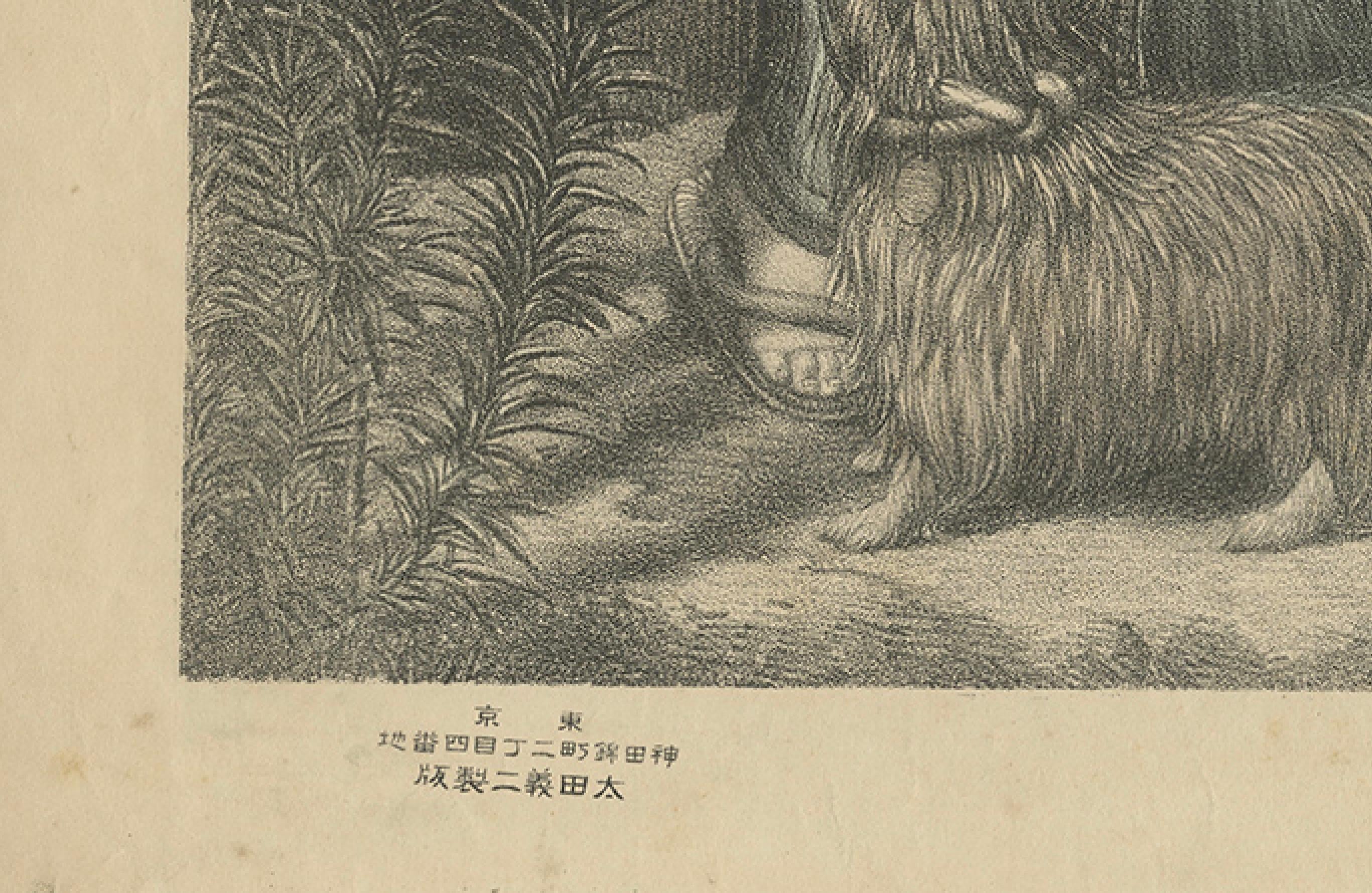
The Japanese text at the bottom of the image appears to read:
京東 (Kyōtō) – This likely refers to "Kyoto," the historical capital of Japan.
神田須田町二丁目四番地 (Kanda Sudachō Ni-chome Yon-banchi) – This is an address in Tokyo’s Kanda district, specifically in Sudachō, indicating the location of the publisher or printing house.
版製 二義田太 (Hansei Nigita Tai) – This can be translated as "Published by Nigita Tai." The word *版製* (hansei) means "published" or "printed by."
Translation: "Printed by Nigita Tai, located at 2-Chome, 4 Banchi, Kanda Sudachō, Kyoto."
This text provides the name of the publisher, Nigita Tai, and the address of the printing location, which is in Kanda Sudachō, an area of Tokyo. The use of "Kyoto" may indicate the cultural or traditional connection to the artwork, while the actual publishing address is in Tokyo.