About this sheet
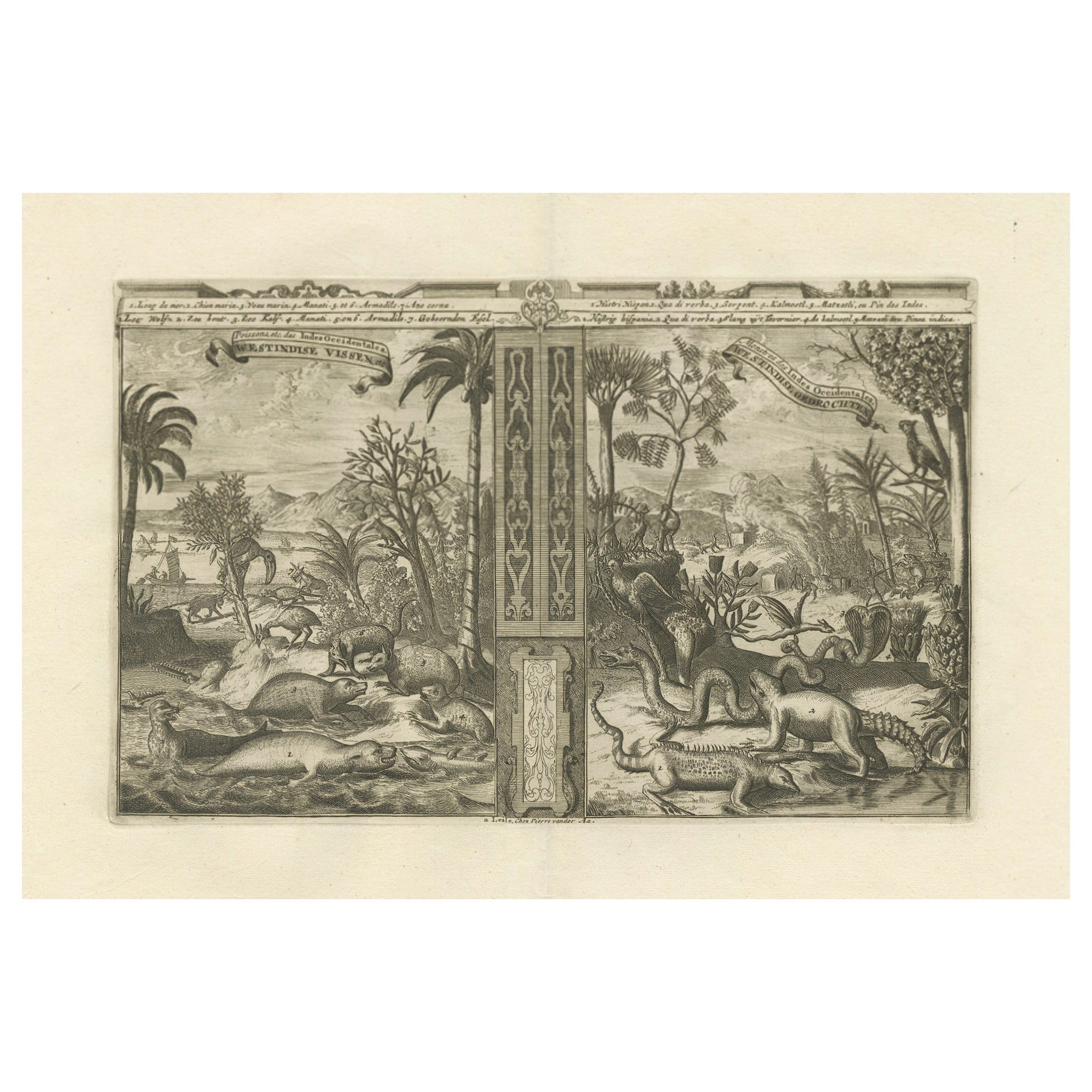
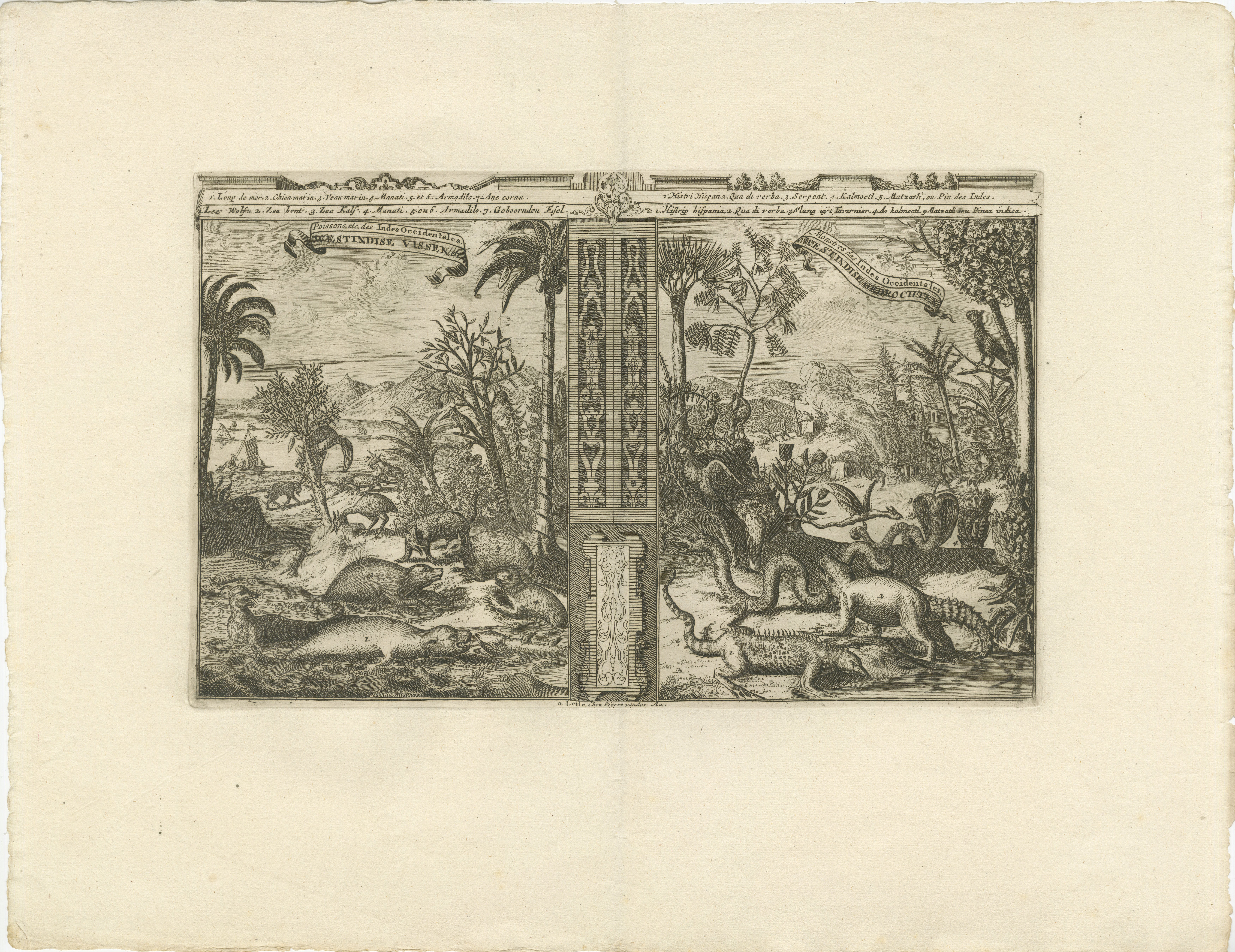
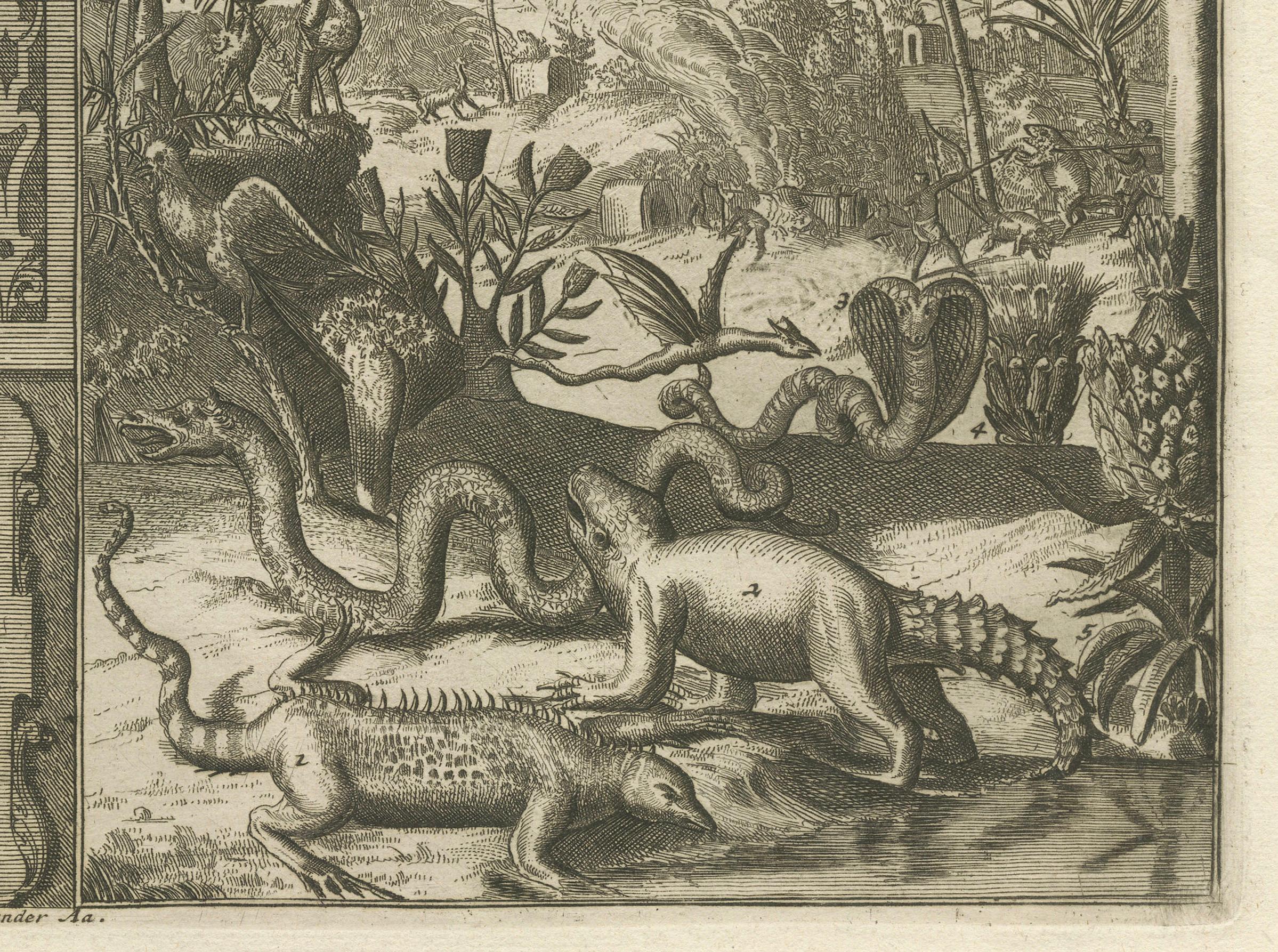
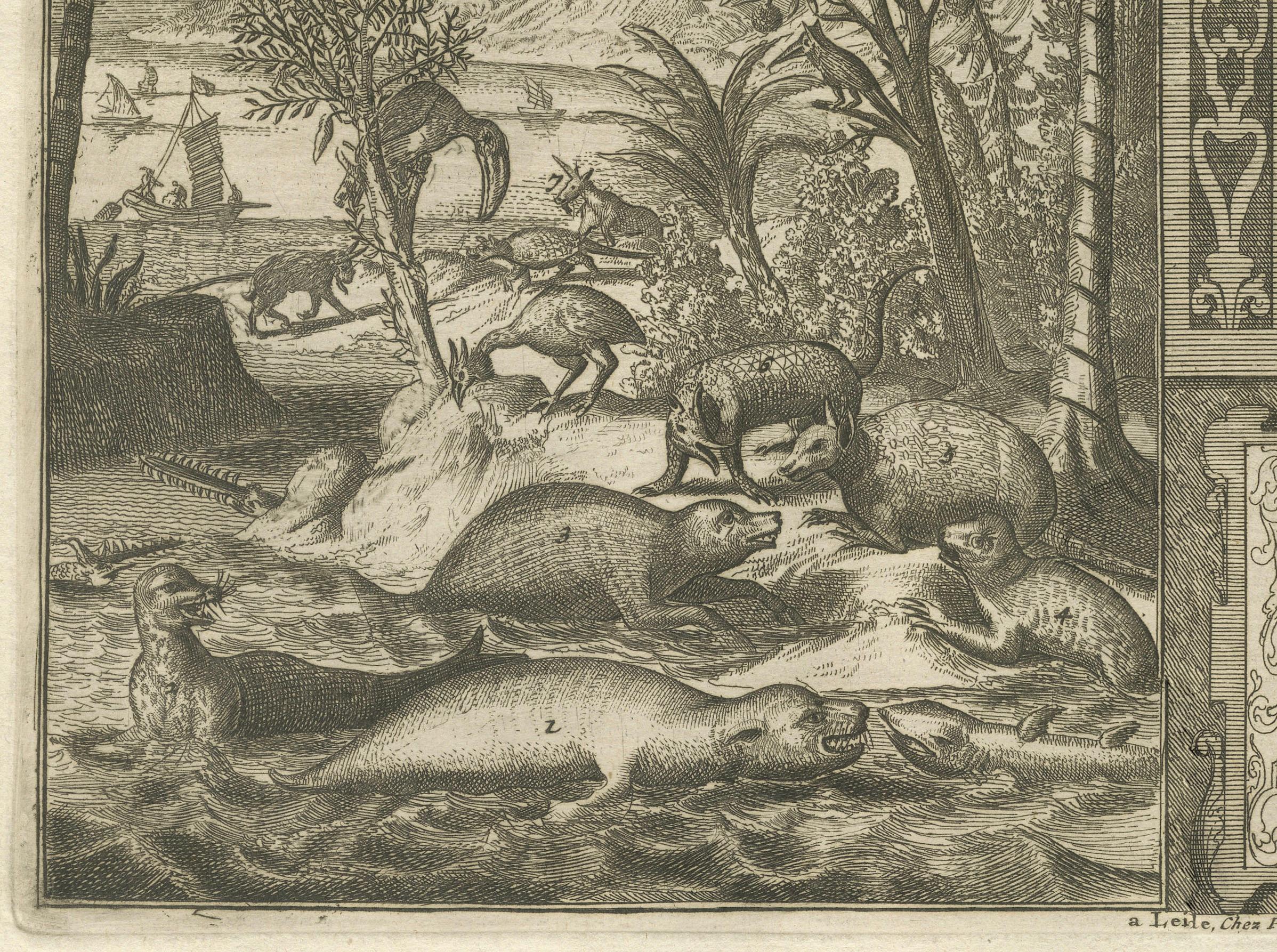
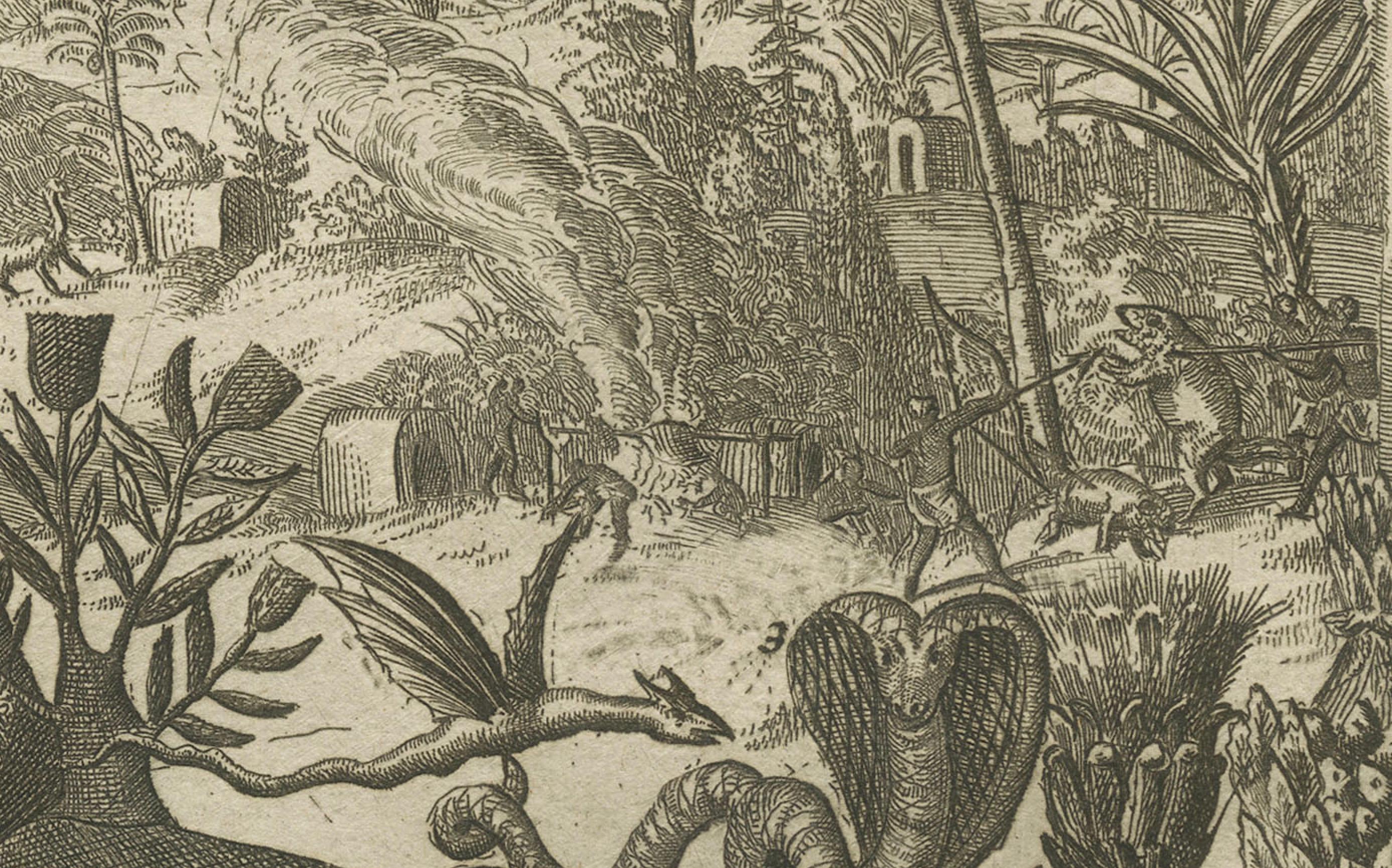
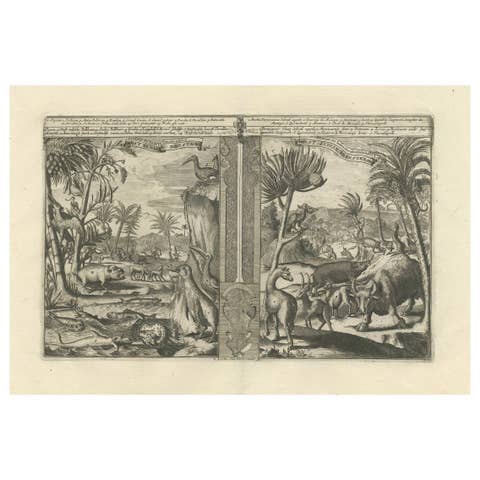
The engraving titled "Westindische Visserij" (West Indian Fisheries) is a fascinating artwork by Romeyn de Hooghe, printed by Pieter van der Aa, which vividly depicts the rich biodiversity and the imagined exotic landscape of the West Indies. This antique print is part of the broader series "Les Indes Orientales et Occidentales et autres lieux," reflecting the European fascination with distant lands during the era of exploration.
Detailed Description:
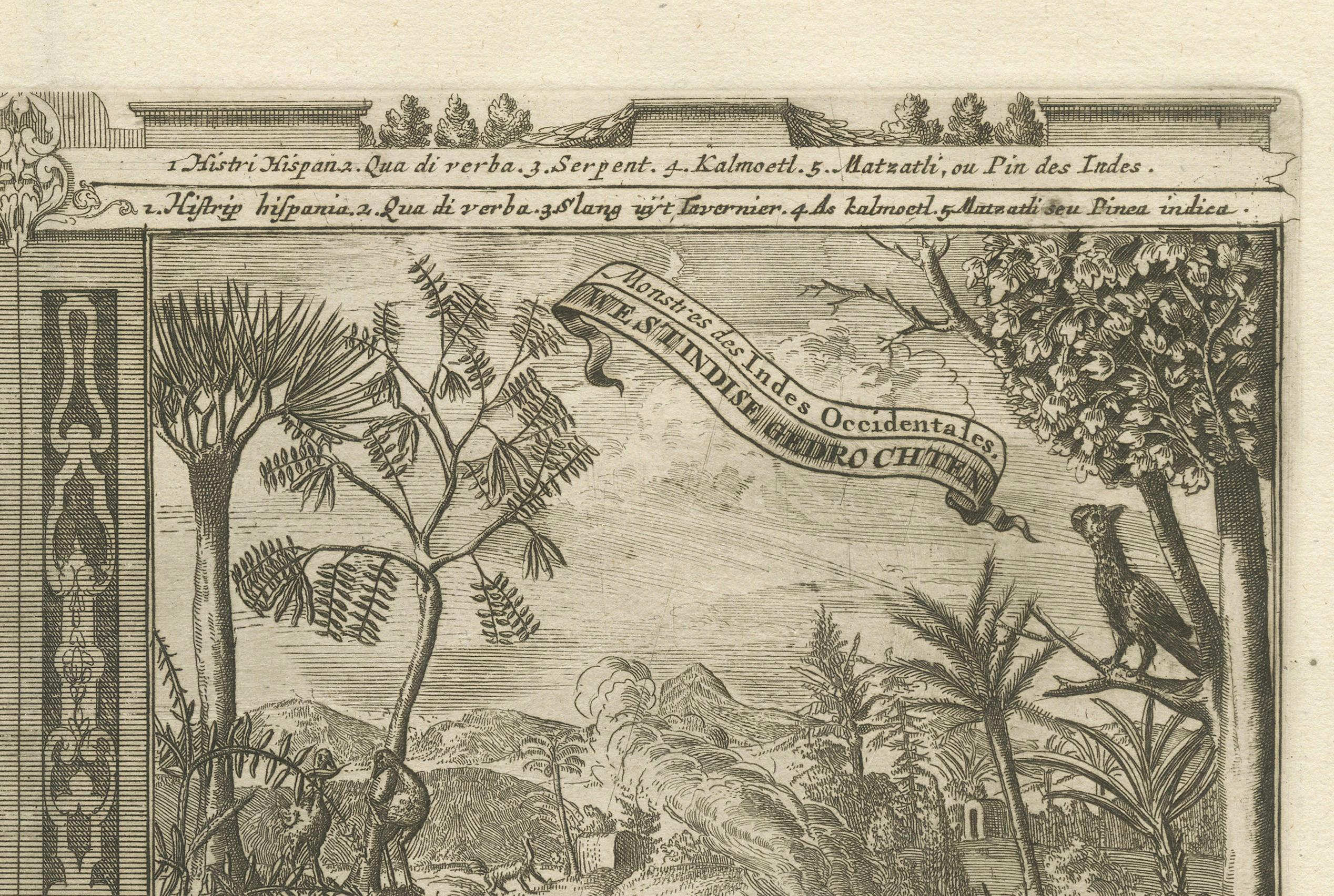
This intricate work showcases a blend of realistic and mythical elements. The engraving portrays a dynamic scene filled with a variety of animals, both terrestrial and aquatic, set against a lush backdrop of tropical vegetation and distant mountainous landscapes. The detailed rendering of the flora and fauna, combined with the active poses of the animals, brings this exotic locale to life, emphasizing the European perception of these distant regions as wild and untamed.
List of Notable Animals Depicted:
1. Manatees (Sea Cows) - Featured prominently, these gentle giants of the seas symbolize the marine life of the region.
2. Various Birds - Including exotic species, likely imagined or based on early descriptions from explorers.
3. Tropical Fish - Illustrating the diversity of marine life in the West Indian waters.
4. Sea Serpents and Mythical Creatures - Adding a fantastical element that was popular in artwork of this period, reflecting myths and legends of the sea.
5. Crocodiles or Alligators - Representing the dangerous wildlife encountered by explorers.
6. Armadillos and Other Mammals - Showcased within the engraving, highlighting the variety of terrestrial animals found in the region.
Artistic and Cultural Significance:
Romeyn de Hooghe's work is renowned for its detailed and dramatic style, making use of Baroque influences to enhance the visual impact of his engravings. This piece serves not only as a work of art but also as a historical document, offering insights into the European mindset during the Age of Discovery. It reflects the blend of accurate depictions based on traveler’s reports and imaginative interpretations that were common in early modern cartography and natural history illustrations.
This engraving would appeal to collectors and enthusiasts interested in natural history, maritime history, and the art of engraving, providing a window into how the natural world of the West Indies was seen through European eyes during a time when these regions were still being explored and mythologized.
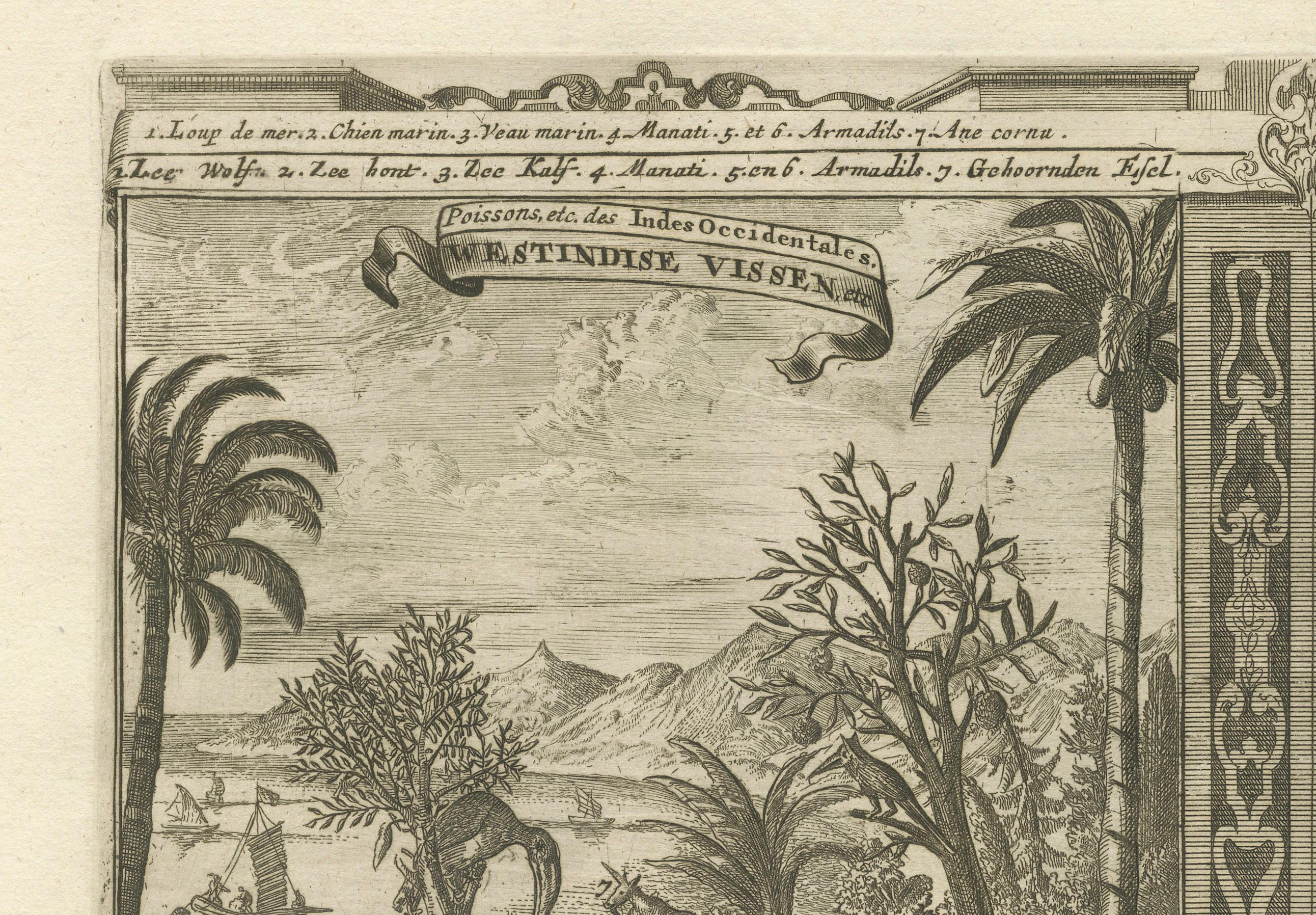
The text in the image includes the names of various animals depicted in the engraving, and here is the translation and identification of the text shown:
1. **"Loup de mer"** - Sea wolf, likely referring to a seal or a type of shark.
2. **"Chien marin"** - Sea dog, which could be a colloquial name for a seal.
3. **"Eau marin"** - Sea water, possibly indicating the aquatic environment.
4. **"Manati"** - Manatee, a large marine mammal known to inhabit the Caribbean waters.
5. **"Armadis"** - Likely armadillo, a terrestrial mammal not native to the marine environment but possibly included to showcase regional fauna.
6. **"Ane cornu"** - Horned donkey, perhaps a mythical creature or a misidentified animal.
7. **"Zee hont"** - Sea dog, another term for a seal.
8. **"Zee Kalf"** - Sea calf, a term often used for young seals.
9. **"Armadis senéb"** - Another reference to the armadillo, with "senéb" possibly a descriptor or error in text.
10. **"Gehoornuden Hysel"** - Horned weasel, which could be another mythical or misidentified animal, or a playful addition to the nautical theme.
These names reflect a mix of real and possibly mythological animals, highlighting the blend of knowledge and imagination that characterized European perceptions of the New World during the Age of Discovery. This engraving, rich with both factual and fantastical elements, serves as a fascinating historical document, illustrating how the boundaries between known and unknown were creatively explored in art and literature of that era.