Rare 17th Century View of St. Augustine Florida, Hand-Colored, 1671
€ 1 350
Original antique · The actual sheet photographed · Certificate of authenticity on request · Sold unframed · Worldwide shipping from € 15 (rates)
Date
1671
Sheet size
31.8 × 36.2 cm (12.5 × 14.3 in)
Condition
Good
Reference
BG-13384-13
What the condition grades mean
Excellent
Bright and clean, with no faults worth mentioning.
Very good
Only light signs of age, such as faint toning.
Good
Normal signs of age for a sheet of this period: toning, some foxing, small marks or neat old repairs.
Fair
Clear faults such as staining, tears or repairs, priced to match.
Every fault we see is written in the condition note, and the whole sheet is shown uncropped in the photos.
Condition
Wear consistent with age and use. Good antique condition with age-related toning and minor handling marks consistent with a work of this age. Visible central vertical fold as issued. Please study the photographs carefully, as they form an important part of the condition description.Seller Locati.
About this sheet
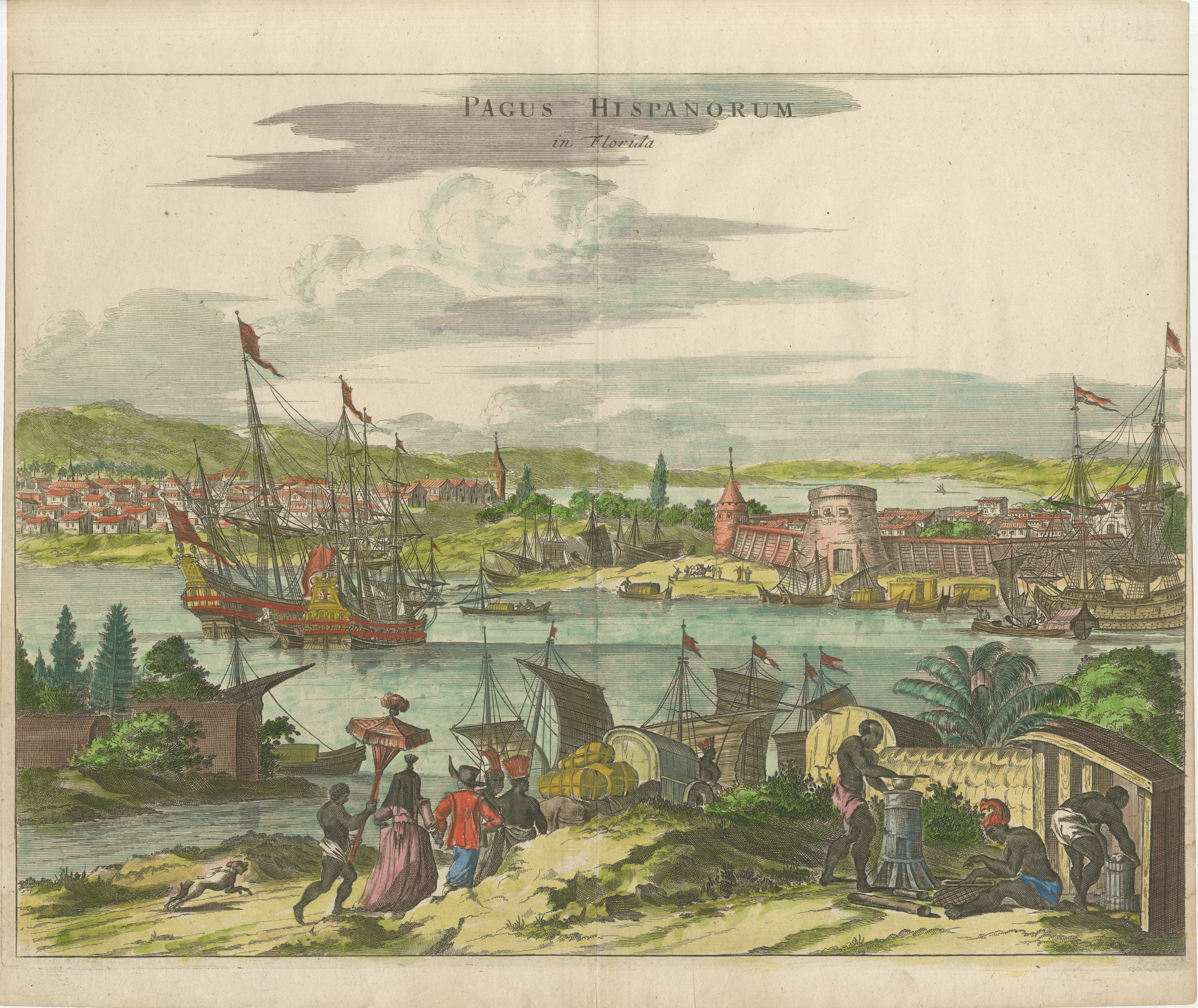
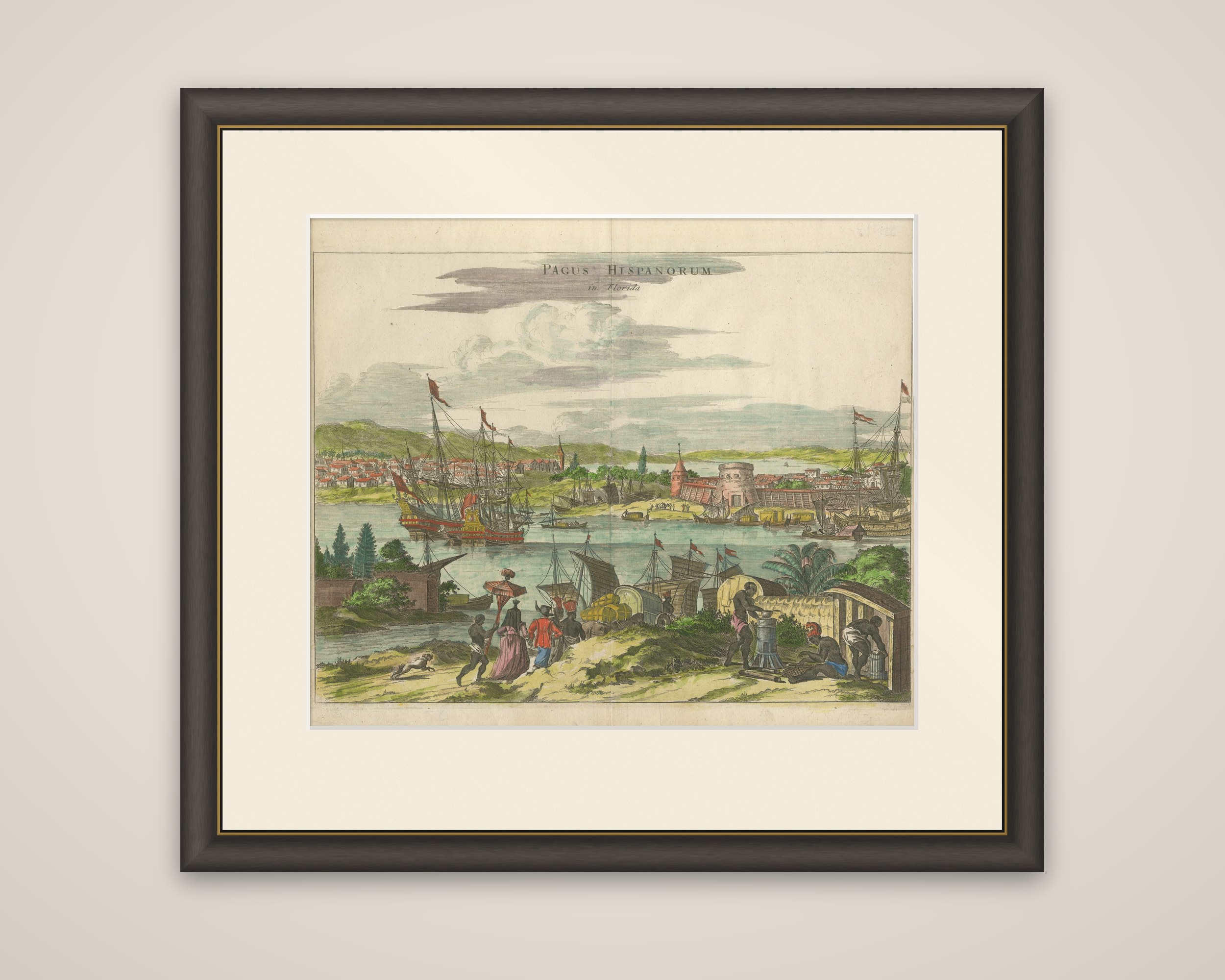
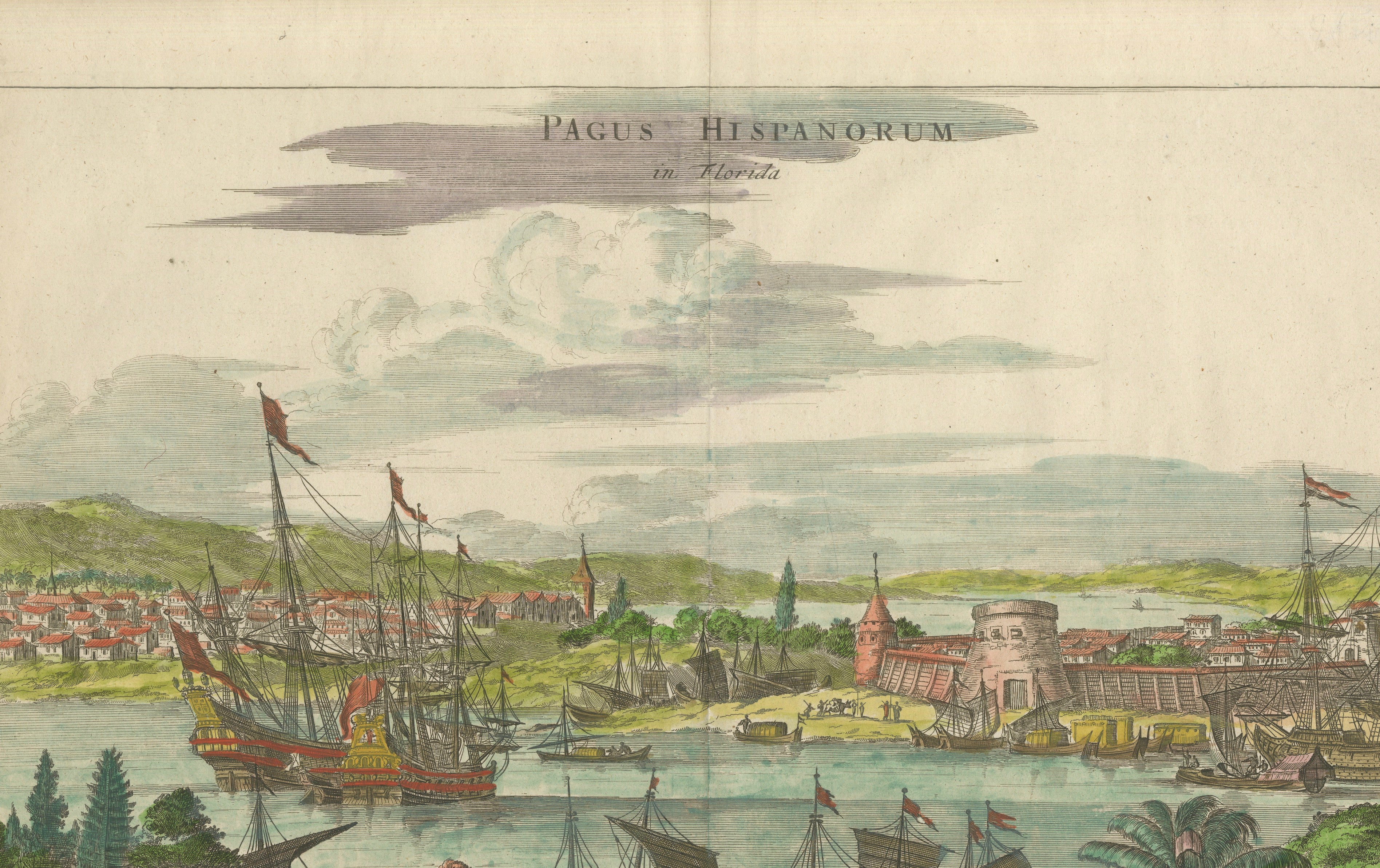
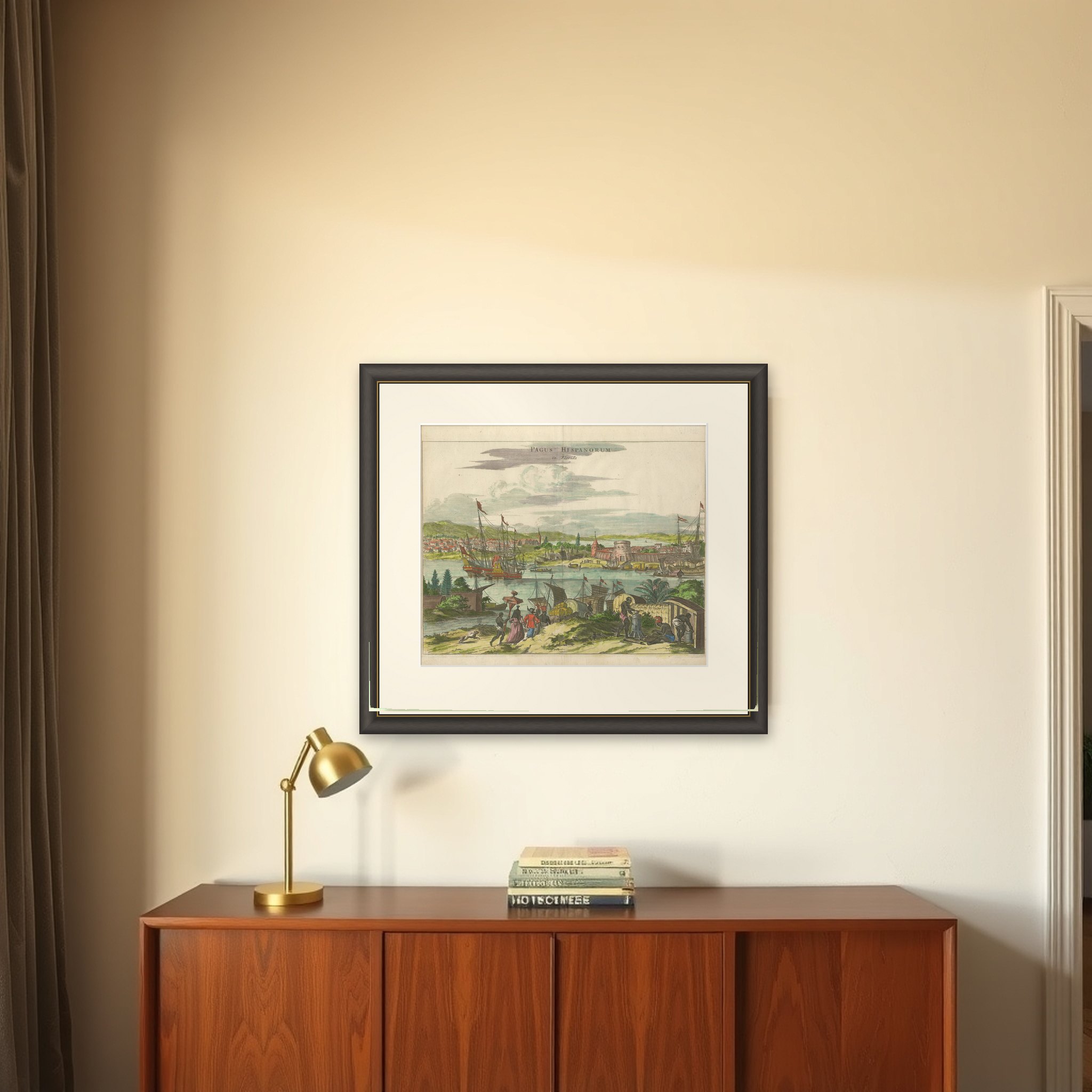
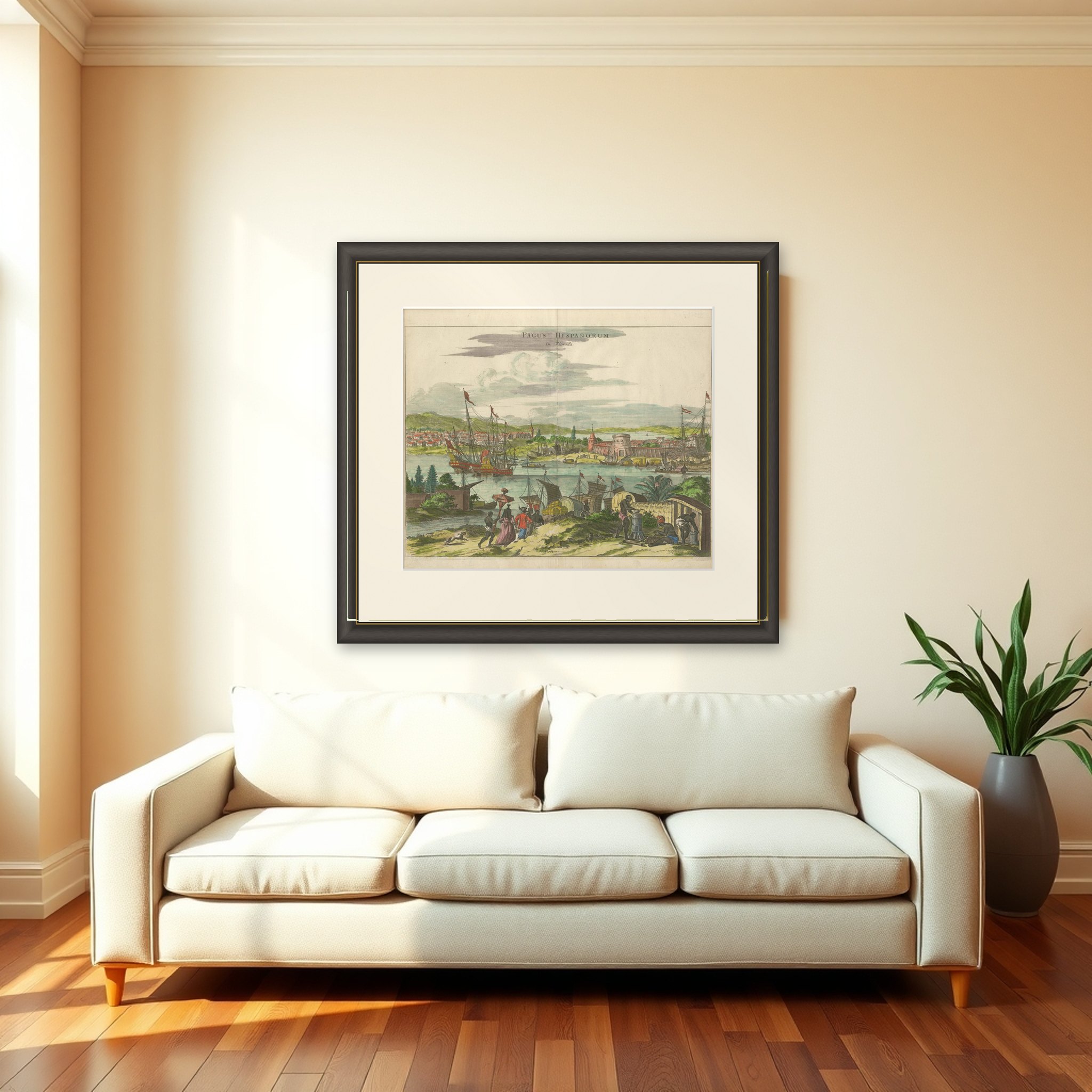
A Spanish settlement on Florida's coast, "Pagus Hispanorum in Florida", an original hand-colored copper engraving from Arnoldus Montanus' De Nieuwe en Onbekende Weereld, published in Amsterdam by Jacob van Meurs in 1671. The Latin title is engraved across the sky at the top, and the sheet has a central fold as issued.
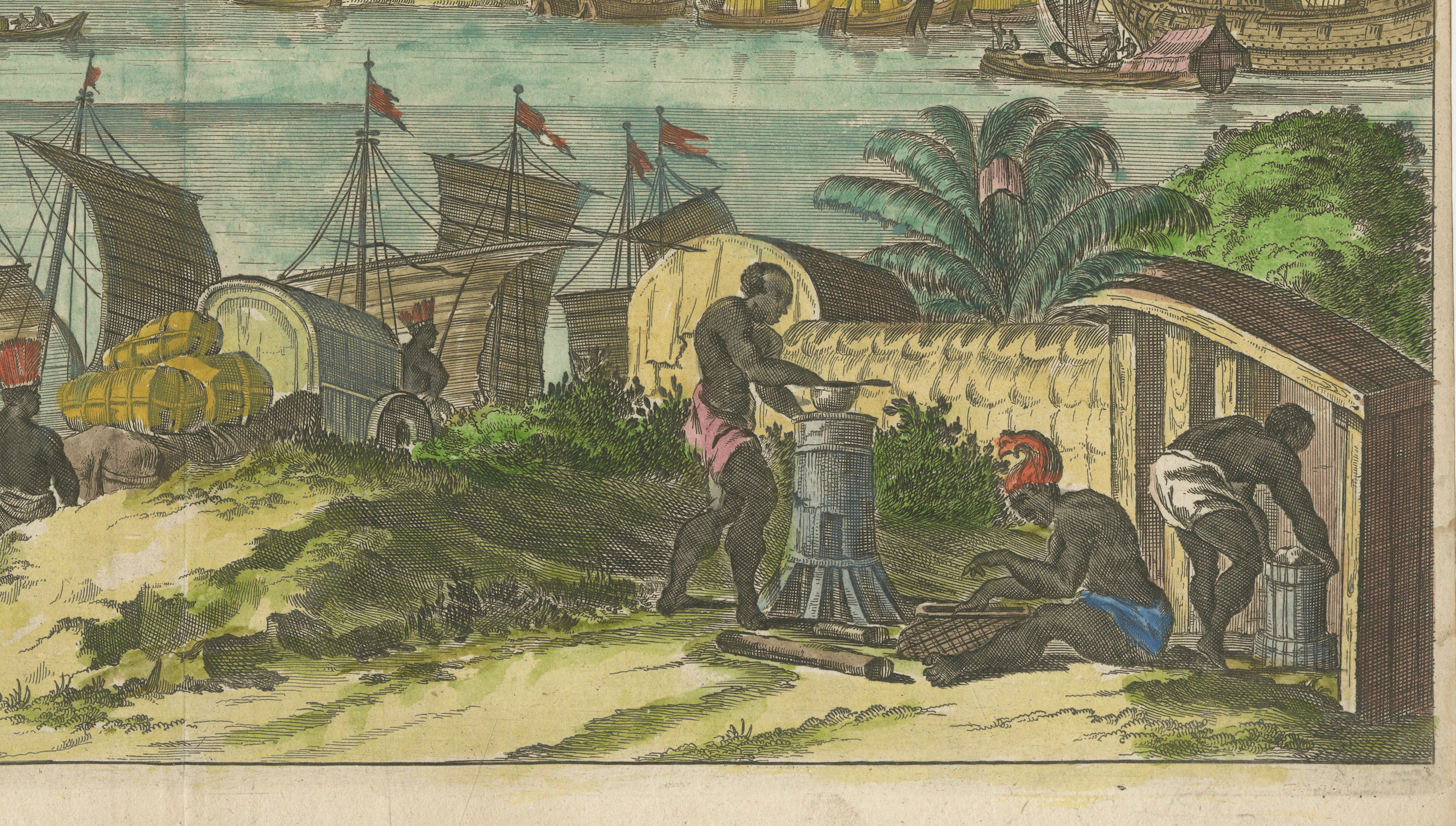
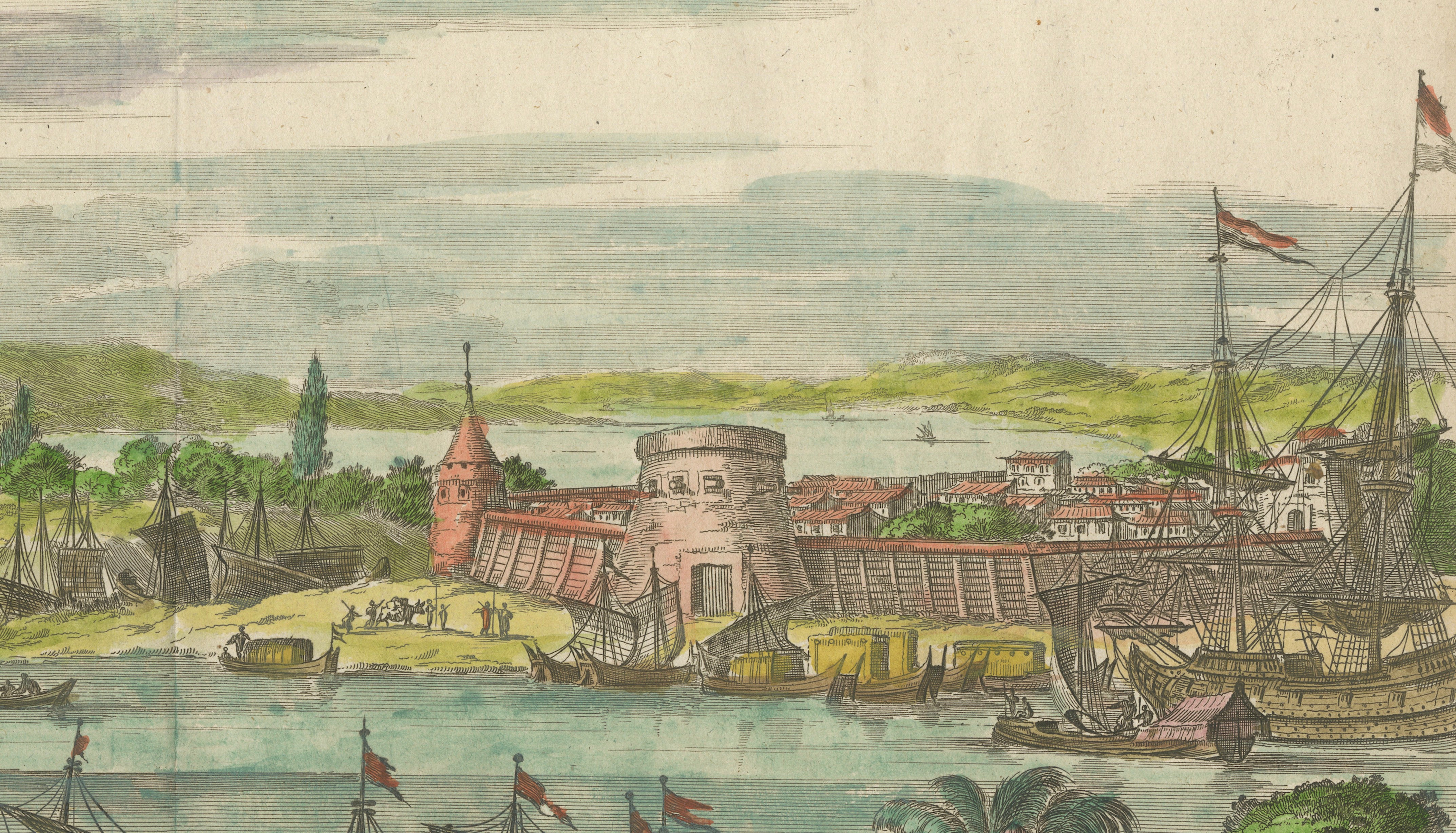
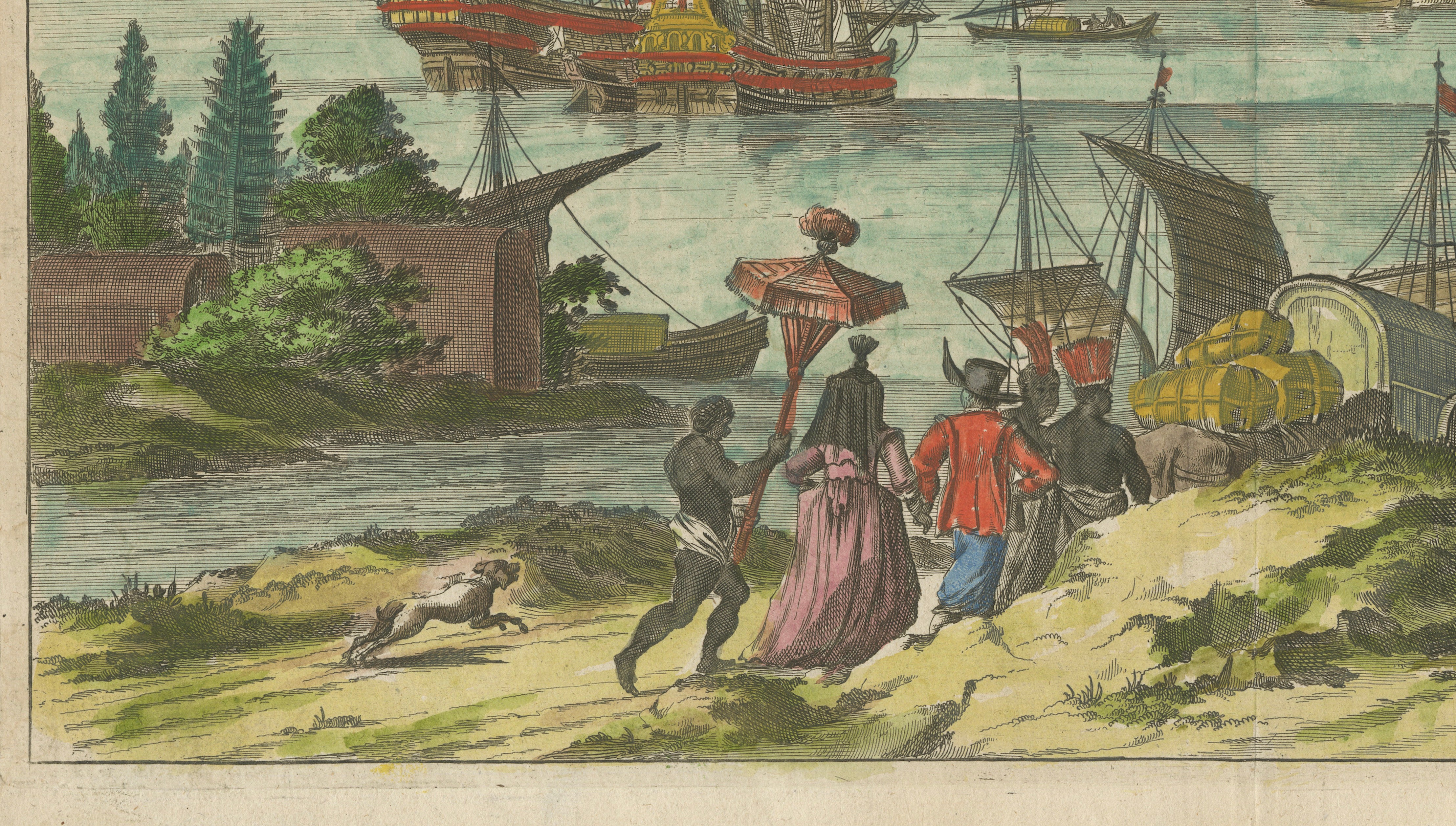
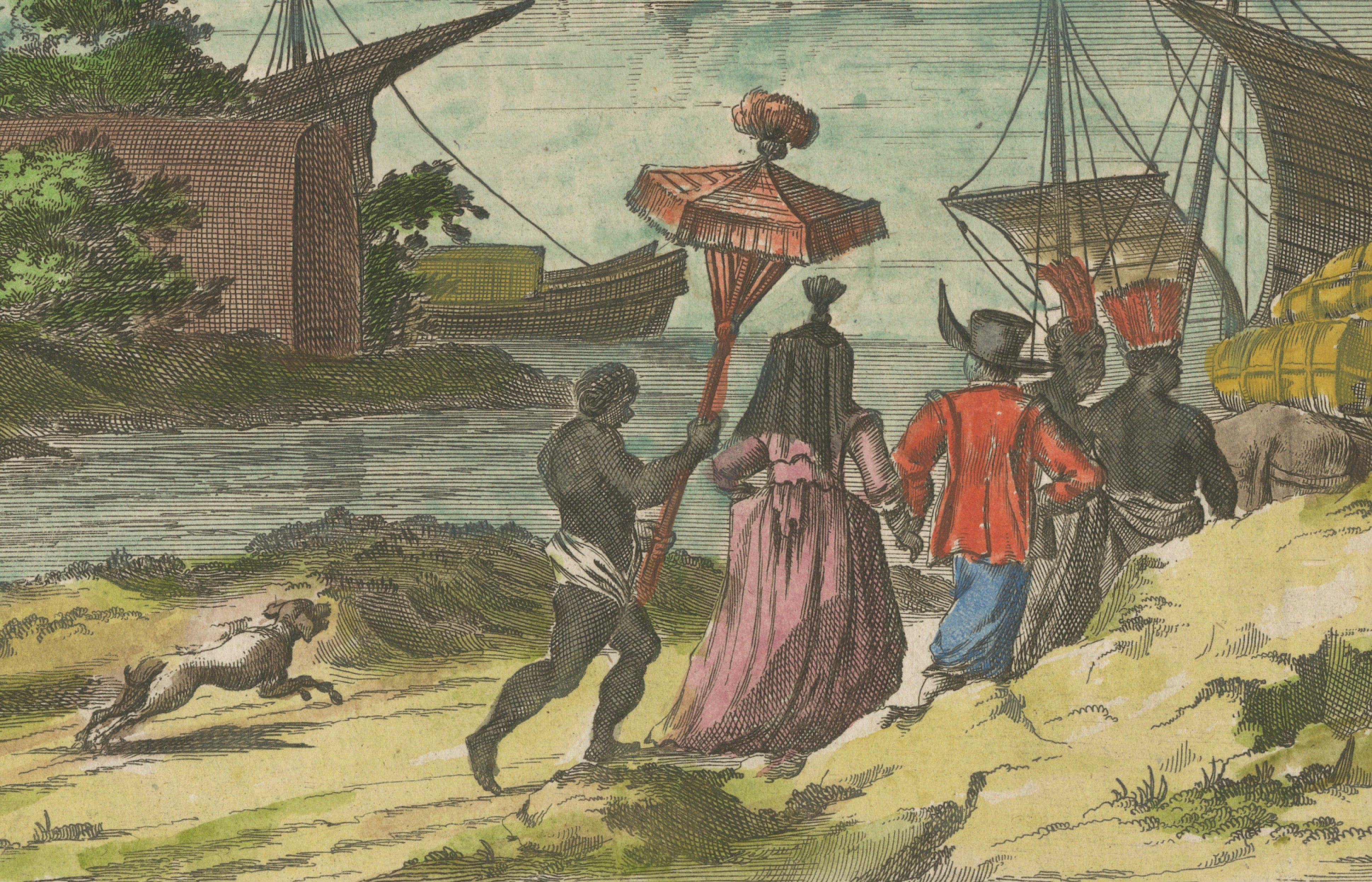
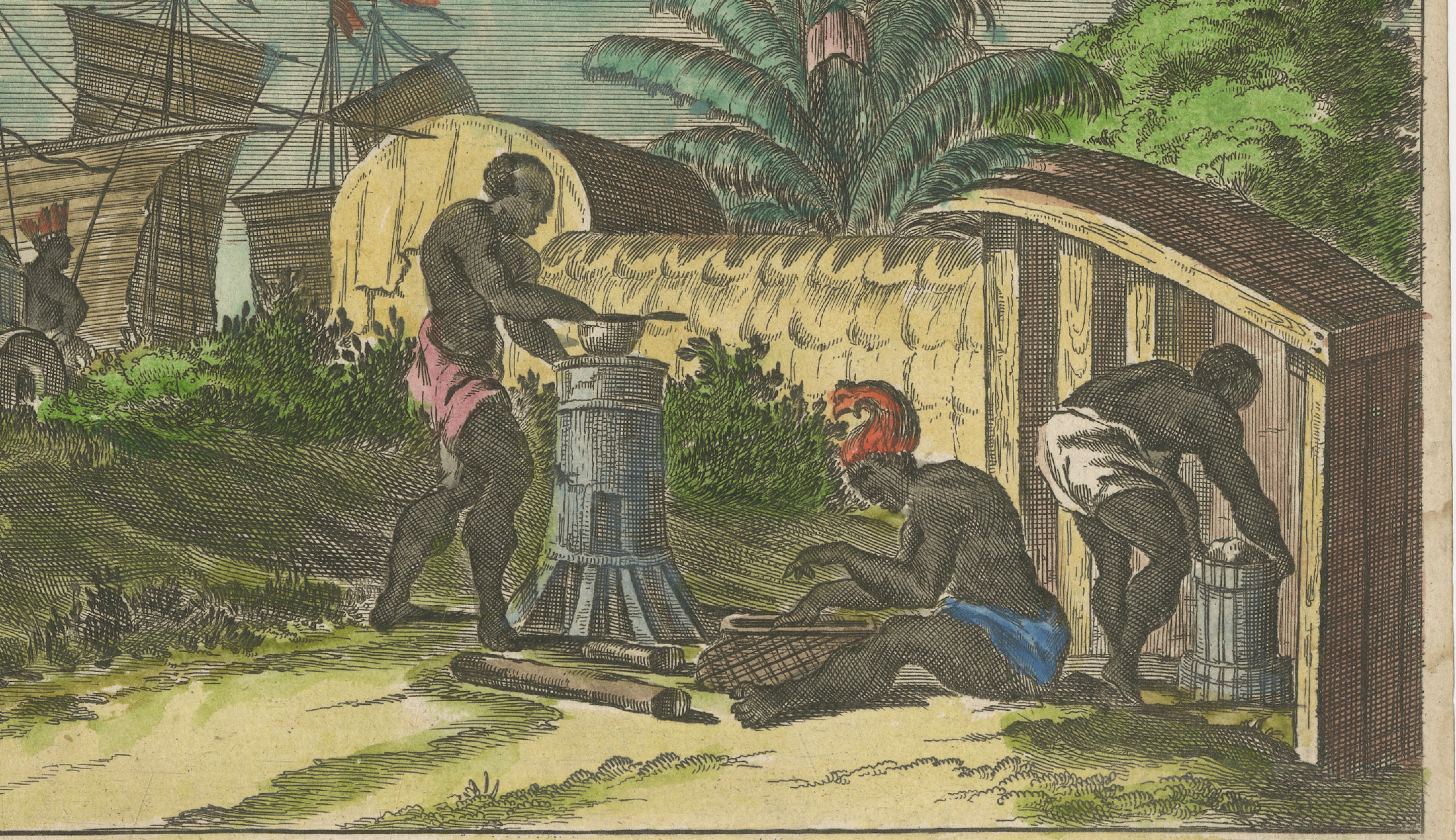
The view looks across a harbor to a town. At the left, red-roofed houses and a church tower line the shore behind a large red and yellow galleon and other tall ships with flags. Across the middle a round stone tower and walls guard the water, and more ships crowd at the right and in the foreground, where small boats carry bales and canvas covers. On the near shore a party in European dress walks along the path with a parasol and a dog, while at the right enslaved men work at a boiler and a thatched shed. The hand coloring is in muted blues, greens, reds and yellows.
The old description identifies the settlement as St. Augustine. Montanus and his publisher composed such plates from earlier accounts, maps and visual sources rather than from observation, so the scene is a European picture of a colonial port.